Bonds as Performance Drivers? No, Sir!

By: Russ Kamp, CEO, Ryan ALM, Inc.

U.S. fixed income benefitted tremendously from the nearly 4-decade decline in interest rates. From 1981 through 2021, the U.S. enjoyed a significant collapse in bond yields helping to fuel an unprecedented rally in risk assets. However, as Bob Dylan said, “the times they are a changin”!

The U.S. Federal Reserve’s FOMC announced on March 16, 2022, that the new Fed Fund’s target would be 0.25%-0.5% beginning on St. Patrick’s day 2022. This action marked the beginning of a rate regime change resulting from Covid-19 implications, including abundant stimulus creating massive demand for goods and services that couldn’t be met as production/manufacturing activities were disrupted.

The U.S. Fed Fund’s rate would eventually rise to 5.25%-5.50% in July 2023 (following 11 rate increases). Today, the Fed Fund’s rate stands at 3.5%-3.75%. For context, the average Fed Fund’s rate since 1971 is 5.39%, which includes a peak of nearly 20% in December 1980, and ultimately 0% in December 2008, in reaction to the GFC. It would once again hit 0% during Covid.

As a result, bond investors, such as pension plans, have ridden a rollercoaster of performance. Performance looked terrific for much of the nearly 40-year bull market but has been challenging since the Fed’s initial action in 2022. In fact, the Aggregate Index (Lehman, Barclays, Bloomberg, etc.) has produced only a 3.3% return for 20-years through March 2026. It is worse if you look at shorter timeframes, as the Index was up only 1.7% for 10-years, 0.3% for 5-years, and -0.1% YTD (all through March 31, 2026).

For pension plan sponsors and their advisors who are reluctant to utilize cash flow matching (CFM) as it might harm the pension plan’s ability to achieve the ROA, those performance #s above should be a wake-up call! As a reminder, the YTM of a CFM portfolio is a good proxy for what the fund will achieve for the period that liabilities are defeased. Given that Ryan ALM, Inc. is currently generating a YTM of 5.02% for a client with a 30-year defeasement and a 4.6% YTM for another with a 10-year CFM mandate, which result do you think is more harmful to the pension plan?

Furthermore, the CFM portfolio’s return is not predicated on the direction of interest rates, as it very much is with active core fixed income strategies. Importantly, CFM provides all the liquidity needed to meet the monthly benefit payments without having to sell assets, perhaps at inappropriate times. By cash flow matching bond principal and interest income with the plan’s liability cash flows (benefits and expenses), CFM secures the pension promises and reduces the FV cost (with certainty) of those obligations in the process. For the client with the 30-year CFM mandate, we are reducing future funding costs by -31.1% and for the 10-year CFM program, we have reduced funding cost by -28.0%.

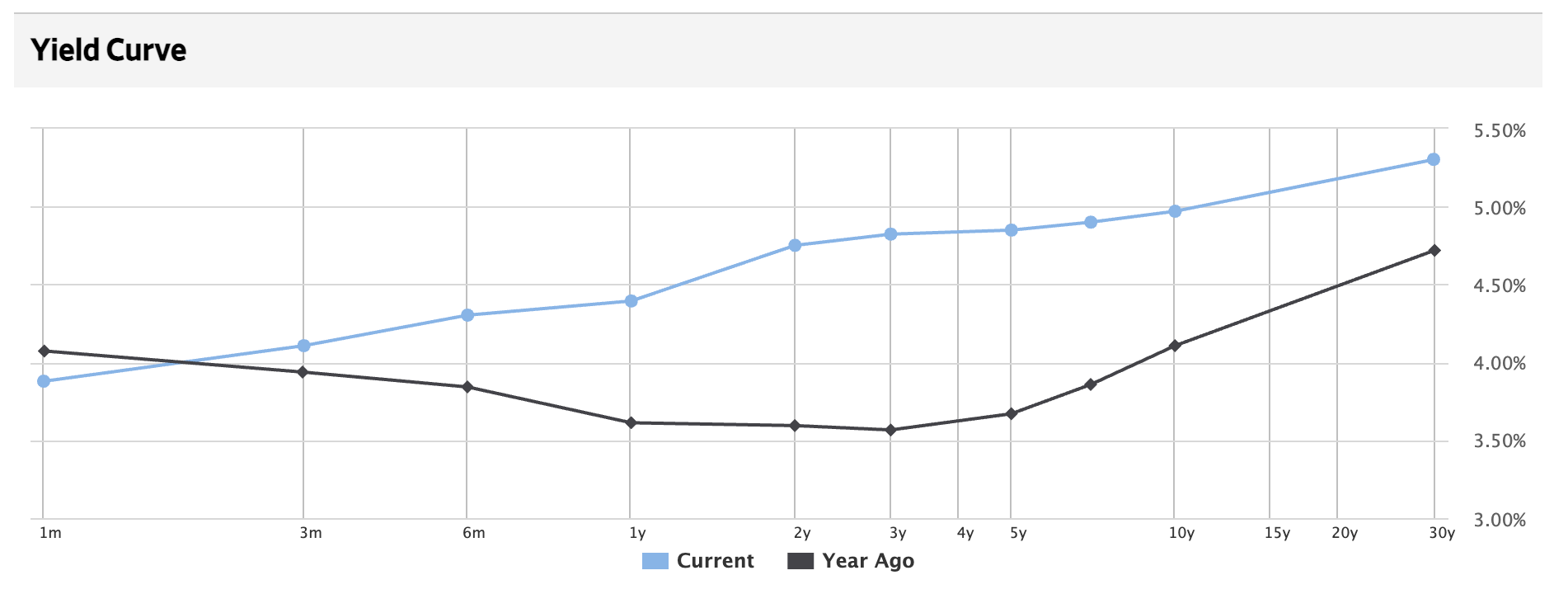
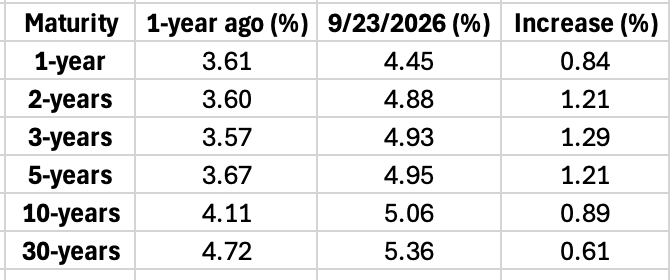
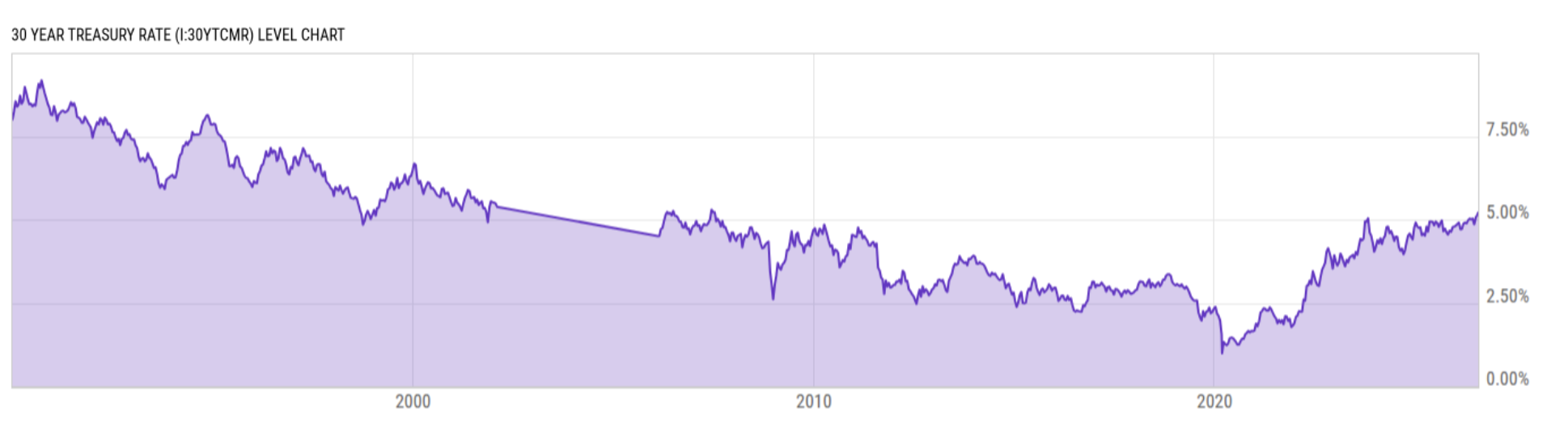
Where are we today? After a brief respite, U.S interest rates are once again trending higher, as greater inflation takes hold. Who knows where inflation and interest rates will eventually land, but a pension plan (or E&F) could benefit tremendously in this environment by engaging Ryan ALM, Inc. and our CFM capability. The 30-year Treasury bond yield history below highlights the rising rate environment. As a reminder, Ryan ALM builds CFM portfolios using investment-grade corporate that have yields substantially higher than comparable Treasury maturities.

So, I ask: Why sit with active fixed income and subject your plan’s bond allocation to the whims of an unknown interest rate environment when you can SECURE the pension promise with near certainty (absent any defaults)? Wouldn’t it be wonderful to know that your liquidity needs are all set for some prescribed period? Wouldn’t your plan participants want to know that the promises given have been secured? Now is the time to bring an element of certainty to the management of pension assets that doesn’t currently exist. Given the geopolitical uncertainty and the potential impact on inflation, rates, and other markets, creating funding certainty should be priority #1. Why isn’t it?

Why Wouldn’t You Prefer a SD of +/-0%?

By: Russ Kamp, CEO, Ryan ALM, Inc.

I continue to be surprised that more pension plans don’t embrace greater certainty in the management of their funds. The Iran War is leading to great uncertainty related to inflation, interest rates, and economic growth. Yes, U.S. equities have enjoyed a healthy recovery following the initial outbreak in the Middle East, but is that sustainable?

Callan does a good job of providing a regular review of what asset allocation would be necessary to achieve a 7% return and the risk (measured as standard deviation) to achieve that return objective. Callan indicated that it was very easy to achieve a 7% return all the way back in 1994 when U.S. interest rates were higher than they are today. In fact, an allocation of 85% to fixed income and small allocations to L.C. equity, SC equity, and int’l stocks would have produced a 7% return with only a 5.6% annual standard deviation.

However, in the most recent update from 2024, Callan suggests the following asset allocation is necessary to achieve a 7% return:

This means that 68% of the time, a plan sponsor should expect an annual return of 7% +/- 8.6%. At two standard deviations (95% of the observations or 19/20 years), the annual return will fall between +/- 17.2% of the 7% target. Would you be comfortable knowing that your fund could generate an annual return of -10.2%? Think about the impact a return like that would have on contributions?

What if I said that cash flow matching (CFM) a portion of your pension fund would result in those assets having an annual SD of 0% barring a default which occurs at a rate of 0.18% annually among investment grade corporate bonds for the last 40-years. How’s that possible? When CFM is implemented, the plan’s asset cash flows and matched agains the plan’s liability cash flows (benefits and expenses). They mover in lockstep with each other no matter where rates go. Today’s U.S. interest environment is attractive and getting more attractive as I write this post, as the 30-year Treasury bond yield has topped 5% (5.02% at 11:47 am DST). Higher rates are great for CFM, as they lower the present value of those future promises.

Furthermore, the use of a CFM portfolio secures the pension promises, dramatically improves plan liquidity, eliminates interest rate risk for the portion of the plan, extends the investing horizon for the residual plan assets, and reduces the cost of those future pension promises. Again, why wouldn’t you embrace an element of certainty?

I’m not sure what the Callan team would identify as the proper allocation to achieve a 7% return today, but I suspect that the annual standard deviation is greater than the 8.6% from 2024. Every time a pension plan falls short of the annual ROA, contributions must increase to make up for the shortfall. Greater investment certainty, like that associated with using CFM, reduces the likelihood that the pension plan sponsor with suffer from a negative surprise associate from increased contributions.

Is Now Really the Time to Buy Stocks?

By: Russ Kamp, CEO, Ryan ALM, Inc.

U.S. equity markets enjoyed a robust April despite myriad economic and geopolitical inputs that might have given investors pause. Should equity investors remain bullish at this time? The graph below caught my attention primarily because of the recent disconnect between the two lines related to the Shiller Excess Cape Yield (ECY) and subsequent 10-year Real Return for equities. There are many, many valuation tools that claim to provide clues about the future direction of stocks, and this is such an example. Those tools can be short-, medium-, and long-term in nature. The ECY happens to be one valuation metric that provides “guidance” for longer time frames. The current reading of 1.60% certainly looks rich relative to its long history.

In case you don’t know, the Shiller excess CAPE yield is a valuation measure that compares the stock market’s earnings yield with the “real” yield on the 10-year Treasury note. In simple terms, it asks how much extra return stocks may offer over inflation-adjusted government bonds.

How it is calculated

  • Take the inverse of the CAPE ratio, which is the market’s “earnings yield.”
  • Subtract the real 10-year Treasury yield.

So, ECY=(1/CAPE)10-year real Treasury yield

A higher excess CAPE yield suggests stocks might look more attractive relative to bonds. A lower reading suggests the equity risk premium is thinner, meaning stocks offer less return versus bonds. As mentioned above, current readings show the S&P 500 Shiller Excess CAPE Yield around 1.60% for April 2026, which is well below its long-term average of 4.60%. Another data source put it at 1.41 as of April 30, 2026.

Investors have historically used the ECY as a long-term asset allocation tool, especially when comparing stocks with Treasury bonds. It is not a short-term trading signal, but rather a rough guide to whether equities look cheap or expensive relative to real bond yields. A CAPE yield below 2% has generally signaled subdued future equity returns over the next 5 to 10 years, providing a valuation warning sign, and not an exact measure.

As a reminder, there are many valuation techniques used to identify opportunities and risk when investing in U.S. equities. Depending on a pension plan’s liquidity needs, funded ratio, willingness to take risk, etc. today’s current environment may be providing an opportunity to reduce risk by trimming equities and using the proceeds along with core fixed income assets to establish a cash flow matching mandate. In the process, the plan’s liquidity is improved, promised benefits secured, and the investing horizon extended for the residual assets. Give us a call. We are always willing to provide a free analysis showcasing how CFM can help your fund.

A Ryan ALM, Inc. Client Portfolio Review

By: Russ Kamp, CEO, Ryan ALM, Inc.

We are blessed to work with a wonderful array of clients, both pension and E&F. They have chosen to bring an element of certainty to the management of their fund. We commend them for that decision and thank them for the confidence that they’ve shown in us and our cash flow matching (CFM) strategy/capability.

Our client relationships begin with the acquisition of important inputs including projections of benefits/grants, expenses, and contributions as far into the future as possible. Most often these are provided by the fund’s actuary. The next step in building a portfolio is to create a Custom Liability Index (CLI), that will establish the framework for monthly distributions.

Upon completion of the CLI, we will work with the client and their advisors to determine the appropriate allocation to CFM. We often suggest converting the current core fixed income allocation since bonds should only be used for their cash flows. Once that has been determined, we will build a high quality bond portfolio (most often 100% IG corporate bonds) that carefully matches asset cash flows of interest and principal with the liability cash flows (benefits and expenses (B&E)).

Once this portfolio is built, we have created an element of certainty for the plan sponsor, as asset cash flow will march in harmony with the liability cash flows barring a bond default, which occurs <0.2% annually (40-year study by S&P). It is only upon changes in the actuaries forecast that lead us to adjust the portfolio, and those annual changes tend to be quite insignificant.

Now the fun part: We are often asked to provide quarterly updates on our portfolio, which couldn’t be any easier. My last portfolio review lasted about 37 seconds. I stated that the projected cash flows that had been shared with us were matched by the asset cash flows, and that there have been no instances in which monthly cash flow needs were not met in their entirety. Furthermore, there have been no defaults in our portfolio ensuring that future cash flow needs will also be met as required. Any questions?

As you can see, there is no need to fret about the direction of U.S. interest rates. No worry about what the “Fed” may do today, tomorrow, or next year. No forecasting of the economic environment, inflation, and/or the geopolitical landscape. Once the CFM portfolio is constructed, the cost savings (cost to fund future B&E) is known and locked in. How many investment managers can tell you how the portfolio will perform over the duration of the program?

Why wouldn’t you want to bring an element of certainty to your fund? Wouldn’t a “sleep-well-at-night” strategy bring comfort to you and those that you serve? If the true objective in managing a defined benefit fund is to SECURE the promised benefits at low cost and with prudent risk, is there another investment strategy that can match the positive attributes of CFM? If we’ve grabbed your attention, reach out. We provide a free analysis of how CFM can make your fund less volatile and uncertain.

March Proves Challenging for Core Fixed Income

By: Russ Kamp, CEO, Ryan ALM, Inc.

March was a difficult month for active core fixed income managers, as the Bloomberg U.S. Aggregate Index fell -1.8%. Uncertainty related to the impact of the Iran War on oil prices and subsequently inflation, pushed rates higher across the Treasury yield curve. The U.S. 10-year Treasury note saw yields rise 38 bps to 4.31%.

Agencies fell -1.7% in line with Treasuries, while the Corporate sector declined -2.0%. Corporate spreads ended March with an option adjusted spread (OAS) of 88.6 bps. The best performing Corporate sector was Financials (-1.7%), while Utilities performed worst at -2.2%.

The greatest risk managing bonds is interest rate risk. Given both geopolitical (Iran, Taiwan, Ukraine) and economic risks (oil, inflation, interest rates), now is the time to significantly reduce risk within your fund, whether that be a DB pension or E&F. Why continue to ride active fixed income through these uncertain markets? One can use a cash flow matching (CFM) strategy to SECURE and fund net liabilities chronologically well into the future. In the process, interest rate risk is eliminated as future benefits and expenses are not interest rate sensitive.

Furthermore, by securing near-term liabilities, the non-bond assets can now grow unencumbered providing more time to wade through these challenging times. I have no idea how long this conflict will last. I also don’t know how much damage has occurred and that which might still happen to oil production in the Middle East. Implementing a strategy that doesn’t rely on forecasting U.S. interest rates should be a high priority today.

Making the switch is easy. Rotate your current core fixed income assets from an active investment strategy to a CFM portfolio. There isn’t a need to revisit the fund’s asset allocation. We’ll even look for opportunities to take-in-kind some of your existing holdings. You’ll appreciate not having to search each month for the liquidity to meet the monthly promises that have been made to your participants, as the CFM strategy will provide all the liquidity that you need. Moreover, the Ryan ALM CFM model is skewed to A/BBB+ corporate bonds which should outyield most generic bond indexes that are skewed to Treasuries (e.g. the AGG).


What is the PCE Price Index Telling Us?

By: Russ Kamp, CEO, Ryan ALM, Inc.

As most investors know, the Federal Reserve’s primary inflation measure is the Core Personal Consumption Expenditures (PCE) price index. The Federal Open Market Committee (FOMC) targets 2% annual PCE inflation while trying to balance long-term price stability and maximum employment. The PCE is produced by the Department of Commerce. Why the PCE? The PCE inflation index covers broad household spending and importantly it adjusts for shifts in consumer behavior, unlike fixed-basket indexes, such as the Consumer Price Index (CPI). Furthermore, the PCE reflects actual expenditures economy-wide and updates the index weights more dynamically. The goal of the PCE inflation measure is to help gauge underlying trends in the broader economy.

The most recent PCE inflation data was published as of today, March 13, 2026, covering a period through January 2026. Core PCE (excluding food and energy) ticked up to 3.06% in January 2026, after having touched 3% at year-end. Cleary, this reading remains well above the Fed’s 2% target, reflecting persistent underlying pressures that may become even more dramatic with the 41% increase per barrel of WTI registered since the close on Friday, February 27th.

The PCE inflation measure has recently accelerated while CPI cooled primarily due to differences in housing weights (lower in PCE) and consumer behavior adjustments.

MonthHeadline PCE (%)Core PCE (%)Headline CPI (%)Core CPI (%)
Dec 20252.93.02.72.9
Jan 20262.93.12.42.5
Feb 2026 (est)??2.4?

The fact that core PCE has now exceeded 3% must be worrying for the FOMC/FED that are also dealing with broader economic pressures, such as employment and US interest rates. Speaking of rates, historically the U.S. 10-year Treasury note has traded at a premium yield to inflation of roughly 2%, with periods as high as 3% or greater. The 10-year Treasury note is currently trading at a yield of 4.25% (as of 10:29 am) suggesting that a “normal” spread should have the YTM at 5.1%.

Given the great uncertainty related to current economic and geopolitical issues, it would not be surprising to see the Treasury yield curve continue to shift upwards. Such a move would create a wonderful environment for pension plan sponsors to de-risk through a cash flow matching (CFM) strategy. It is time to bring an element of certainty to the management of DB pensions to reside in a state of great uncertainty! Don’t wait to explore the amazing benefits provided by CFM.

It’s Not Just the Price of Gasoline!

By: Russ Kamp, CEO, Ryan ALM, Inc.

Folks (the investment community) seem to be focused on the rising price of oil for its effect on gasoline prices, but the impact of rising oil prices has far greater implications for the broader U.S. economy. Evidence indicates that a vast majority of manufactured goods and industrial processes use petroleum products that are feedstocks to make plastics, synthetic fibers, solvents, and many chemicals, which then become inputs into consumer goods, packaging, vehicles, electronics, building materials, and more.

Because plastics, synthetic fibers, and petrochemical-derived materials pervade sectors from automotive to consumer goods to packaging, a large majority of U.S. manufactured products (“most”) depend on oil products somewhere in their supply chain, either as material or as critical process input.

An extended increase in the price oil could have a dramatic impact on inflation, U.S. interest rates, the labor force, and overall economic activity. Have pension plans done enough to secure the necessary liquidity to meet the promised benefits and the expenses incurred to meet those monthly payments? Has the significant migration of pension assets to alternatives significantly reduced the available liquidity? Do plans understand that in crisis most asset classes tend to find correlations closer to 1 than 0, making the forced sale of assets to meet benefits challenging and more expensive.

Dividing a pension plans asset allocation into two buckets – liquidity and growth – as opposed to having the plan’s assets focused on the return on asset (ROA) assumption can mitigate liquidity risk. Use a cash flow matching (CFM) strategy to ensure that the necessary liquidity (asset cash flows of interest and maturing principal from bonds) is available to meet the liability cash flows of benefits and expenses monthly. While the CFM strategy is SECURING the promised benefits, the remainder of the assets can just grow unencumbered – no forced selling.

Who knows how long this conflict in the Middle East will last. Pension plans may be “long-term” investors, but they have short-term cash needs that must be met. There is no kicking the can down the road. Adopt this bi-furcated asset allocation and enjoy the benefits that come from the knowledge that your promises have been secured.

Eliminate the Uncertainty

By: Russ Kamp, CEO, Ryan ALM, Inc.

There are many benefits to using Cash Flow Matching (CFM) for your pension plan, endowment or foundation. The obvious benefit is the liquidity that is created to meet ongoing expenditures, whether benefit payments or grants. That liquidity comes at a premium today for many entities that have migrated significant financial resources to alternative investments, which are having a difficult time providing their investors with capital distributions.

The other significant benefit is the certainty that comes from using CFM. I’ve appreciated the opportunity to speak at NCPERS, IFEBP, LATEC, and OPAL in the last few months and in each case, I asked the audience if there was any investment strategy within their fund that brought certainty? Not a single hand was raised. They could have mentioned cash reserves as an example, but that is an expensive long-term strategy because of the low short-term yields available today.

The cloud of uncertainty under which we live is not comfortable! Yes, both pension funds and E&Fs are long-term investors, but the riding of markets up and down often leads to a significant increase in the contributions necessary to maintain their funding. That activity is not helpful to anyone. Who knows what will transpire as our country navigates through several potential geopolitical landmines. Combine that reality with uncertain economic growth, weaker labor markets, sticky inflation, and equity valuations that seem stretched, and markets could be in for a rocky period.

Wouldn’t it be a blessing to have CFM in place that not only provides the necessary liquidity so that assets aren’t forced to be sold at less than opportune times, but a strategy (service) that provides certainty since your obligations (liability cash flows) are matched with asset cash flows of bond principal and interest income for as far out as the bond and cash allocation will provide. It isn’t often that we are presented with an investment strategy that is truly a sleep-well-at-night offering for the long term. 

As a reminder, humans hate uncertainty, as it impacts us in both psychological and physiological ways. Yet, in the management of pensions and E&Fs, sponsors have wholeheartedly embraced uncertainty. The disconnect is quite surprising. Again, I don’t know what will transpire in markets today, tomorrow, or next year. I don’t know how the Iran situation will impact shipping lanes and the price of oil and inflation or worse, destabilize the entire region by bringing into the conflict Iran’s friends, such as Russia and China. I’m not a gambler and I don’t believe that managers of pension assets should be either.

I think it is critically important to SECURE the promises given to your plan’s participants and to achieve that objective with low cost and prudent risk. Riding the asset allocation rollercoaster accomplishes neither objective. Now’s the time to act. Not after markets have been rocked.

ARPA Update as of February 27, 2026

By: Russ Kamp, CEO, Ryan ALM, Inc.

Welcome to March and all the “madness” that comes with it!

Regarding ARPA and the PBGC’s implementation of this critical pension legislation, last week proved to be fairly quiet, and I imagine it will continue to be so, as the PBGC works through the remaining applications currently under review (14) and those that will likely be resubmitted (25). Quiet, unless some action is taken on the 80 plans sitting on the waitlist that were terminated by mass withdrawal prior to 2020.

During the past week there were no applications approved or denied, no pension plans were asked to repay a portion of their SFA and no pension funds asked to be added to the waitlist.

In other news, there was one revised application filed. Bricklayers Local No. 55 Pension Plan, a non-priority group member, is seeking $6.4 million for its 483 members. The PBGC has 120-days to review and approve the application before it is automatically accepted. The only other news of note related to two pension funds that withdrew applications. Non-priority group member, Retail Bakers’ Pension Trust Fund of St. Louis, withdrew its initial application. They’d been seeking $5.7 million for 566 plan members. Warehouse Employees Union Local 169 and Employers Joint Pension Plan, another non-priority group member, withdrew an already revised application in which they were hoping to secure $77.8 million for 3,609 plan participants.

The uncertainty related to action in Iran has U.S. Treasury yields rising across the Treasury yield curve as inflation concerns once again come into focus. Rising rates are challenging for bond investors unless a cash flow matching (CFM) strategy has been used. As a reminder, CFM will secure the promised benefits (and expenses, if desired) for as long as the SFA allocation lasts. As a reminder, those B&E are future values which are not interest rate sensitive. Importantly, higher interest rates will create more cost savings related to those future promises for pension plans still waiting to receive their SFA.

Oh, Canada!

By: Russ Kamp, CEO, Ryan ALM, Inc.

There were significant trade developments announced yesterday between the U.S. and Canada, which don’t seem to be getting the attention that they deserve. I wish that these developments were driven by Canada in retaliation for both the women’s and men’s gold medal performances in Italy, but it seems as if the U.S. is being a sore winner in this situation.

So, what happened yesterday? U.S. under President Trump has reclassified Canada from a Tier 1 allied trading partner to a Tier 3 restricted commerce nation through an executive order.​ Oh, boy, that sounds onerous. It seems as if this escalation follows tensions brought about by new U.S. tariffs on Canadian goods such as steel, lumber, and energy products prompting Canada to diversify partnerships with China, Mexico, and others. Previously, Canada ranked as the U.S.’s top export market and second-largest trading partner overall, with highly integrated supply chains in autos and energy. The move to tier 3 immediately increases tariffs to 35% on ALL Canadian goods – ouch! Furthermore, this classification places Canada in the same trading bucket as countries such as Belarus and Venezuela.

Not surprisingly, Canada, led by Prime Minister Mark Carney, is countering by pursuing deeper relations with China, Ecuador, Indonesia, and India to reduce U.S. reliance, which still accounts for nearly 70% of its exports. According to various press reports, the White House announced the order approximately two hours before it became public, automatically imposing a 35% tariff on all Canadian goods, financial restrictions, and a freeze on joint military contracts. Canadian Prime Minister Mark Carney responded within 90 minutes by announcing countermeasures in Parliament, including export controls on critical minerals, such as potash, and withdrawal from NORAD data sharing.​

This move is highly disruptive to integrated North American supply chains. The decision followed escalating U.S. tariffs and was defended in Trump’s recent State of the Union address.​​ Canada now faces sharp export declines to its largest market, potentially worsening its trade balance and likely depreciating the Canadian $. Business investment drops due to higher costs for US machinery, leading to layoffs, reduced GDP growth, and sustained inflation from tariff pass-throughs. The potential for retaliatory measures like export controls on minerals will further strain relations between these two long-term allies.

Please don’t think that this development only strikes at Canada’s economy. US consumers and industries will see higher input costs such as steel, which estimates suggest could be as high as $7.5B+, leading to inflation and eroding competitiveness in batteries, clean energy, and defense. Canadian retaliation reduces US exports, impacts GDP, and exacerbates supply chain vulnerabilities with no quick domestic substitutes.

Higher inflation will impact interest rates, leading to higher costs of borrowing, and depending on the significance of these developments could lead to a bear market environment and an economic slowdown concurrent with existing labor force concerns. So, why isn’t this getting more attention?