This is Embarrassing!

By: Russ Kamp, CEO, Ryan ALM, Inc.

The United States has by far the deepest capital markets in the world, an enormous asset-management industry that has made many participants quite wealthy, and trillions of $s in retirement assets. Yet we rank only 24th of 44 countries for retirement security based on the results from the Natixis Investment Managers’ 2026 Global Retirement index. I find that result embarrassing and you should, too.

The countries ahead of us aren’t necessarily better investors. Many have simply done a better job of making retirement saving broad-based, automatic, and oriented toward producing sustainable retirement income. In addition, they’ve simultaneously reduced risks related to healthcare and longevity that Americans are asked to manage mostly through a defined contribution structure. As regular readers of this blog know, I remain a fan of 401(k)-type plans if they are supplemental to a DB pension offering, but unfortunately, that is rarely the case these days. Again, asking an individual to fund, manage, and then disburse a “retirement” benefit with little to no disposable income, investment acumen, or a crystal ball is just silly.

So why are we so poorly ranked? According to the survey, in which we were once ranked 14th just a decade ago, the U.S. is facing mounting pressures on its traditional “three-pillar” retirement model of government benefits, employer-sponsored plans, and personal savings, as a result of us living longer, DB pension plans going away, and a Social Security trust fund that is projected to be depleted by 2032.

The U.S. score of only 68% looks dismal when compared to Norway’s 83%, which claimed the No. 1 spot from the 44 developed countries included in the survey. Ireland was second with 81%, and the Netherlands came in third with a score of 79%. What do they do better than us? First, the survey isn’t just about retirement security. Natixis evaluates 18 indicators across four broad categories:

Finances in Retirement — inflation, interest rates, tax pressure, government indebtedness, old-age dependency and the strength of the financial system.

Material Wellbeing — income per capita, unemployment and income equality.

Health — life expectancy, healthcare spending and insured health expenditures.

Quality of Life — happiness, environmental conditions, biodiversity and related measures.

So, a country may have a decent, or even good, retirement system but still rank poorly because healthcare, inequality, inflation or government finances create retirement insecurity. Furthermore, most countries ranking ahead of us don’t leave retirement to chance or the individual. The other countries get virtually everyone into a retirement system making savings largely automatic and they make contributions sufficient to produce meaningful retirement income not focused on the size of one’s account “balance”.

Unfortunately, our model since the mid-80s been much more dependent upon individual decisions. An employee has to first work for an employer offering a plan, become eligible, elect to participate, contribute enough, select investments appropriately, avoid withdrawing the money, continue saving after changing jobs, and eventually determine how to convert an accumulated balance into lifetime retirement income. Again, not an exercise designed for the average American worker!

Furthermore, we’ve heaped huge financial burdens on our citizens related to housing, healthcare, education, childcare, insurance, food, energy, utilities, etc. that financing a retirement is nearly a pipe-dream. Not only do we need to once again offer a retirement vehicle that isn’t dependent on the individual for funding, but we need for the U.S. to make living in this country affordable for the masses. Why is it that we spend more $ on healthcare than any other nation yet rank so poorly (only 25th/44) in the survey.

Despite the move from DB to DC offerings, retirement-plan coverage remains an issue. Natixis cites Pew research which estimates that more than 56 million private-sector American workers lack access to a workplace retirement plan. That is a sorrowful statistic. I’ve spent most of my 45-years in the retirement industry focused on protecting and preserving defined benefit plans. I was thrilled to join Ron Ryan and Ryan ALM in 2019 given their similar mission. We need others in our industry to join the fight. Are you ready?
ARPA Update as of July 24, 2026

By: Russ Kamp, CEO, Ryan ALM, Inc.

I hope that you are enjoying a wonderful summer weekend. I’m currently writing this post from an Amtrak train on my way to the Opal Public Fund Forum in Newport, RI. What a beautiful day for a train ride.

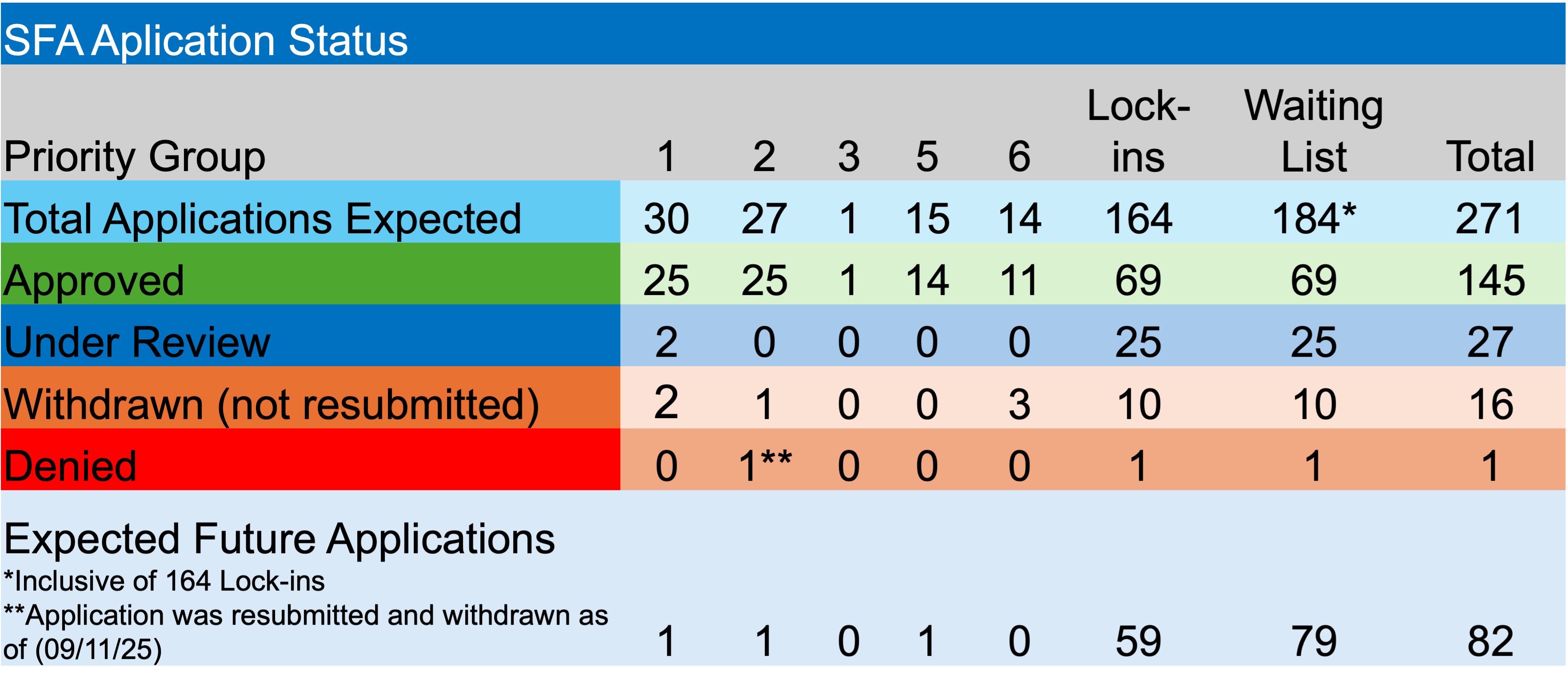
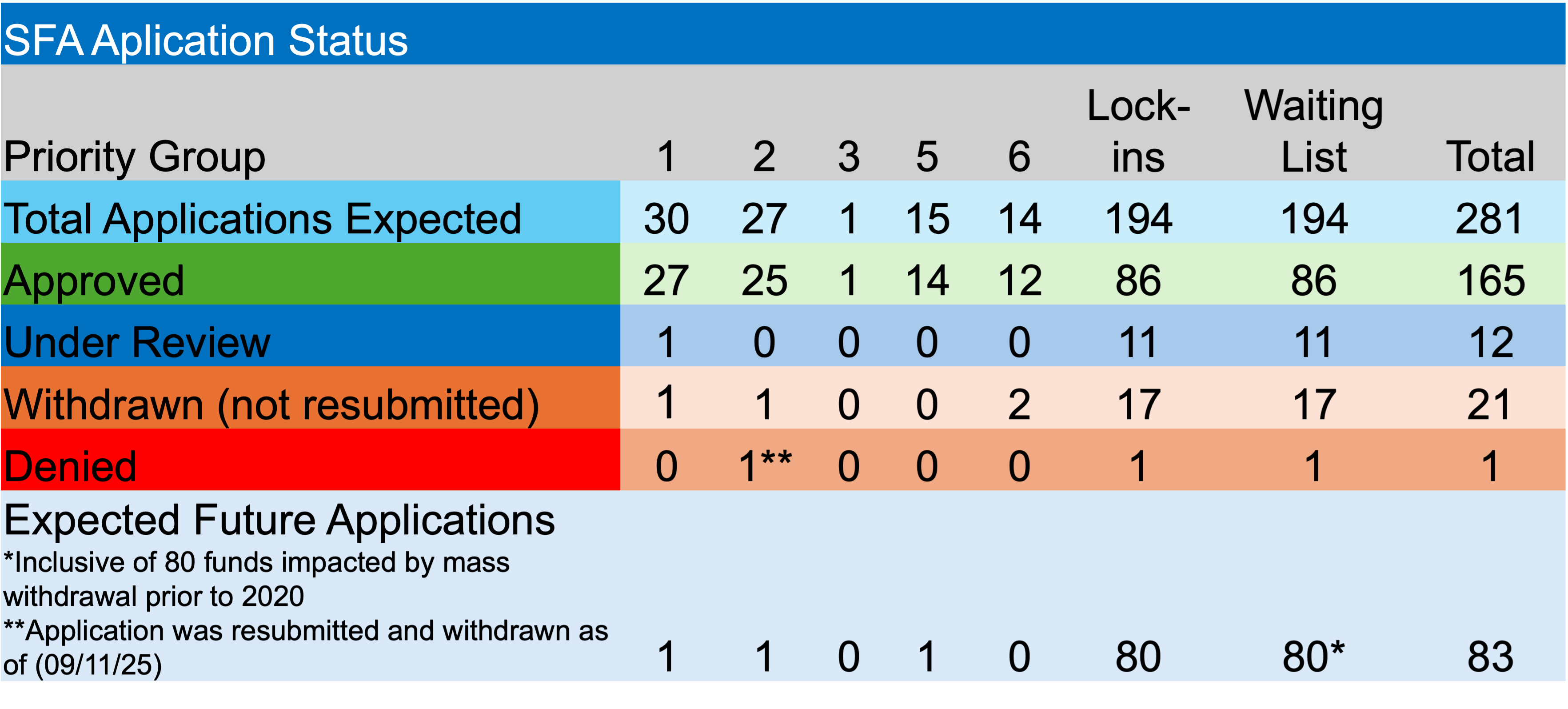
There is some very exciting news to report in this week’s update following several ho hum weeks with little to disclose. I’m pleased to report that a “Plan Terminated by Mass Withdrawal before 2020 Plan Year” has been invited to submit an application seeking Special Financial Assistance (SFA). As a reminder, there are 80 such plans on the “waitlist”. Could this be the crack in the dam that opens the flood gates?

Retirement Plan of Local 1102 Retirement Fund, the first mass withdrawal applicant, is seeking just over $3.7 million for 220 plan participants. I’ll be following this story closely and reporting as information becomes available. In addition to 1102, four other pension funds were permitted to submit revised applications, including America’s Family Benefit Retirement Plan, a Priority Group 1 member. They are one of just three members from that cohort that have not yet received SFA. They are hoping to secure $186.7 million for its 3,109 members.

The other three plans resubmitting applications are UFCW, Local 23 and Giant Eagle Pension Plan, Plasterers Local #1 Pension Plan, and Colorado Cement Masons Pension Trust Fund, who collectively are trying to secure $37.1 million for just under 7.5k plan members.

There is little to report this week beside the activity associate with the resubmission of four applications and the one initial application, as there were no applications approved, denied, or withdrawn.

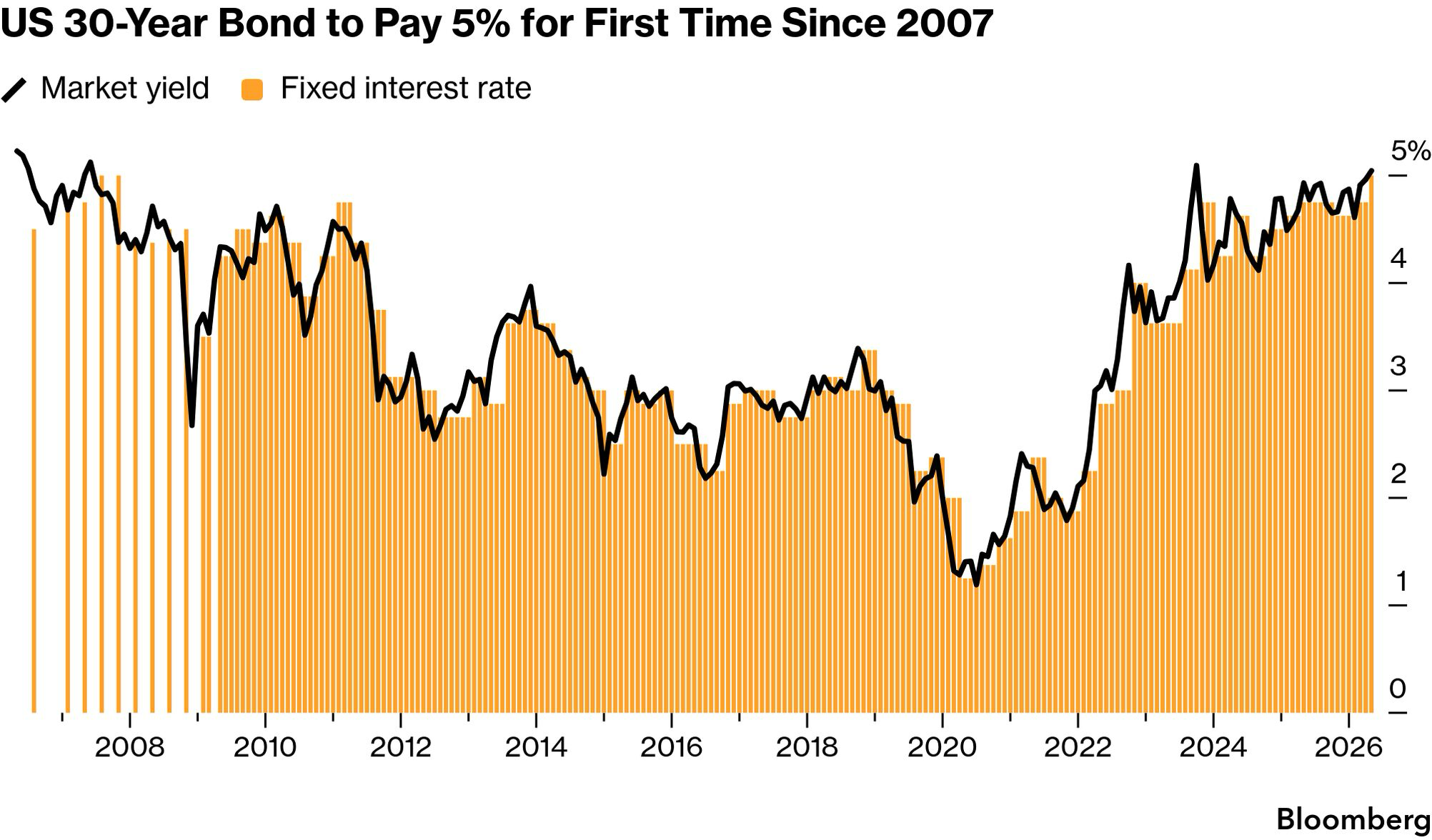
U.S. interest rates (based on the Treasury yield curve) continued to rise last week as inflationary concerns escalated primarily due to uncertainty in the Middle East and its impact on the price of oil. Given the higher rates, new and future SFA recipients will be able secure those future benefits at a reduced cost. We’re pleased to provide you with a free analysis on just what those cost savings could be and how far into the future those benefits could be secured.

Bonds as Performance Drivers? No, Sir!

By: Russ Kamp, CEO, Ryan ALM, Inc.

U.S. fixed income benefitted tremendously from the nearly 4-decade decline in interest rates. From 1981 through 2021, the U.S. enjoyed a significant collapse in bond yields helping to fuel an unprecedented rally in risk assets. However, as Bob Dylan said, “the times they are a changin”!

The U.S. Federal Reserve’s FOMC announced on March 16, 2022, that the new Fed Fund’s target would be 0.25%-0.5% beginning on St. Patrick’s day 2022. This action marked the beginning of a rate regime change resulting from Covid-19 implications, including abundant stimulus creating massive demand for goods and services that couldn’t be met as production/manufacturing activities were disrupted.

The U.S. Fed Fund’s rate would eventually rise to 5.25%-5.50% in July 2023 (following 11 rate increases). Today, the Fed Fund’s rate stands at 3.5%-3.75%. For context, the average Fed Fund’s rate since 1971 is 5.39%, which includes a peak of nearly 20% in December 1980, and ultimately 0% in December 2008, in reaction to the GFC. It would once again hit 0% during Covid.

As a result, bond investors, such as pension plans, have ridden a rollercoaster of performance. Performance looked terrific for much of the nearly 40-year bull market but has been challenging since the Fed’s initial action in 2022. In fact, the Aggregate Index (Lehman, Barclays, Bloomberg, etc.) has produced only a 3.3% return for 20-years through March 2026. It is worse if you look at shorter timeframes, as the Index was up only 1.7% for 10-years, 0.3% for 5-years, and -0.1% YTD (all through March 31, 2026).

For pension plan sponsors and their advisors who are reluctant to utilize cash flow matching (CFM) as it might harm the pension plan’s ability to achieve the ROA, those performance #s above should be a wake-up call! As a reminder, the YTM of a CFM portfolio is a good proxy for what the fund will achieve for the period that liabilities are defeased. Given that Ryan ALM, Inc. is currently generating a YTM of 5.02% for a client with a 30-year defeasement and a 4.6% YTM for another with a 10-year CFM mandate, which result do you think is more harmful to the pension plan?

Furthermore, the CFM portfolio’s return is not predicated on the direction of interest rates, as it very much is with active core fixed income strategies. Importantly, CFM provides all the liquidity needed to meet the monthly benefit payments without having to sell assets, perhaps at inappropriate times. By cash flow matching bond principal and interest income with the plan’s liability cash flows (benefits and expenses), CFM secures the pension promises and reduces the FV cost (with certainty) of those obligations in the process. For the client with the 30-year CFM mandate, we are reducing future funding costs by -31.1% and for the 10-year CFM program, we have reduced funding cost by -28.0%.

Where are we today? After a brief respite, U.S interest rates are once again trending higher, as greater inflation takes hold. Who knows where inflation and interest rates will eventually land, but a pension plan (or E&F) could benefit tremendously in this environment by engaging Ryan ALM, Inc. and our CFM capability. The 30-year Treasury bond yield history below highlights the rising rate environment. As a reminder, Ryan ALM builds CFM portfolios using investment-grade corporate that have yields substantially higher than comparable Treasury maturities.

So, I ask: Why sit with active fixed income and subject your plan’s bond allocation to the whims of an unknown interest rate environment when you can SECURE the pension promise with near certainty (absent any defaults)? Wouldn’t it be wonderful to know that your liquidity needs are all set for some prescribed period? Wouldn’t your plan participants want to know that the promises given have been secured? Now is the time to bring an element of certainty to the management of pension assets that doesn’t currently exist. Given the geopolitical uncertainty and the potential impact on inflation, rates, and other markets, creating funding certainty should be priority #1. Why isn’t it?

New Jersey’s Pension System’s “High” Investment Return

By: Russ Kamp, CEO, Ryan ALM, Inc.

As a taxpaying resident in New Jersey and a huge supporter of defined benefit plans who has a daughter in the system, I was happy to read that NJ’s pension systems generated strong investment returns in fiscal year 2025, reporting a nearly 11% return. Terrific. Yet, despite the above target return (7.0% ROA), the impact on the system’s funded status was negative. Yes, the funded ratio improved (assets/liabilities), but the funded status further deteriorated (funding gap in $s). Since the system is striving for 7% and the combined funded ratio of the various plans is <50%, a system like NJ’s would need to double the annual return on asset target just to keep the $ deficit stable.

It is great to see that NJ is finally bringing some financial discipline to the management of its pensions, with contributions at least matching the Actuarial Determined Contribution (ADC), but after decades of failing to do so (I think since Washington slept here), the systems are in need of significant funding improvement. Trying to generate outsized gains through a riskier asset allocation is not a long-term winning formula, often leading to greater annually required contributions when markets behave badly and assets get whacked.

The management of DB pension plans is not rocket science if the basics of sound pension management are followed. For instance, plans receiving the full ADC have on average an 80% funded ratio, while those not receiving the full ADC sit with funded ratios <70% (NCPERS study). Plans sitting with funded ratios below 50% are not likely to create enough excess return relative to the annual ROA to be able to close the funding gap. This often leads to plans making difficult decisions such as creating plans with multiple tiers, which I really despise.

Plans should focus on meeting the ADC, securing the promised benefits in the near-term, which buys time for the growth or alpha assets to perform, and reduce costs of administration, including management fees. DB plans are critical to the creation of a dignified retirement. Having a significant percentage of our seniors lacking the financial wherewithal to remain active in our economy is a major problem with long-term implications.

Good Question!

By: Russ Kamp, CEO, Ryan ALM, Inc.

We occasionally post questions received in reaction to our blogs in new blog posts since many of our readers might have similar thoughts/ideas. In reaction to yesterday’s post, “All-time High Funded Ratio” a reader calling themselves LoudlyObservant (great name) stated the following:

Why wouldn’t such well-funded plans take steps to lock in the funding of their beneficiary payments through a cash flow matching portfolio? Isn’t the first fiduciary duty of loyalty expressed in controlling the relevant risk to the beneficiaries, which involves BOTH securing adequate assets and then actually funding the payments? Many of these plans have hit the first goal but are still exposed to funding risk. With a ready solution at hand, the plan sponsors open themselves to criticism for not acting on their second responsibility.

Thank you, Loudly! Great questions and observations. We often talk about the fact that pension plans at all funding levels need liquidity, not just well-funded plans, but when you have a universe of plans that on average are fully funded, why not dramatically reduce risk. We witnessed what happened to DB pension plans at the end of 1999, when most plans were well overfunded only to see the funded status plummet and contribution expenses explode following two major market corrections.

I’m neither smart enough nor is my crystal ball better than anyone else’s to know if a major market correction is on the horizon but why take the chance unnecessarily. We’ve seen a significant percentage of Special Financial Assistance (SFA) recipients engage in cash flow matching to secure the SFA assets and the benefits that they will protect. Why not adopt CFM for the legacy assets, too? As we’ve mentioned, we are providing a service to you and your plan participants. It isn’t just another product. Time to get off the proverbial rollercoaster of returns and secure the promises and your plan’s funded status.

Pension Reform or Just Benefit Cuts?

By: Russ Kamp, CEO, Ryan ALM, Inc.

According to NIRS, at least 48 U.S. states undertook significant public pension reforms in the years following the global financial crisis (GFC), with virtually every state making some form of change to its public pension retirement systems. I’ve questioned for some time that those “reforms” were nothing more than benefit cuts. When I think of reform, I think of how pension plans are managed, and not what they pay out in promised benefits. However, this wasn’t the case for those 48 states which mostly asked their participants to contribute more, work for more years, and ultimately get less in benefits.

Equable Institute released the second edition of its Retirement Security Report, a comprehensive assessment of the retirement income security provided to U.S. state and local government workers. The report evaluated 1,953 retirement plans across the country to determine how well public employees are being put on a path to secure and adequate retirement income. Unfortunately, the reports findings support my view that pension reforms were nothing more than benefit cuts. Here are a couple of the points:

“Retirement benefit values have declined significantly: The expected lifetime value of retirement benefits for a typical full-career public employee has dropped by more than $140,000 since 2006, primarily due to policy changes after the Great Recession such as higher retirement ages, longer vesting, and reduced COLAs.“

“Only 46.6% of public workers are being served well by their retirement plans.“

Yes, newer plan designs are allowing for greater portability through hybrid and defined contribution plans, but as I’ve discussed in many blog posts, asking untrained individuals to fund, manage, and then disburse a “benefit” without the necessary disposable income, investment acumen, and a crystal ball to help with longevity issues is poor policy. We have an affordability issue in this country and it is being compounded by this push away from DB pensions to DC offerings.

Pension reform needs to be more than just benefit adjustments. We need a rethink regarding how these plans are managed. As we have said on many occasions, the primary objective in managing a pension plan is not one focused on return, which just guarantees volatility in outcomes. Managing a pension plan, public or private, should be about securing the promises that were given to the plan’s participants. That should be accomplished at a reasonable cost and with prudent risk.

Regrettably, most pensions are taking on more risk as they migrate significant assets to alternatives. In the process they have reduced liquidity to meet benefits and dramatically increased costs with no promise of actually meeting return projections. Furthermore, many of the alternative assets have become overcrowded trades that ultimately drive down future returns. Higher fees and lower returns – not a great formula for success.

It is time to get off the performance rollercoaster. Sure, recent returns have been quite good (for public markets), but as we’ve witnessed many times in the past, markets don’t always cooperate and when they don’t, years of good performance can evaporate very quickly. Changing one’s approach to managing a pension plan doesn’t have to be revolutionary. In fact, it is quite simple. All one needs to do is bifurcate the plan’s assets into two buckets – liquidity and growth – as opposed to having 100% of the assets focused on the ROA. Your plan likely has a healthy exposure to core fixed income that comes with great interest rate risk. Use that exposure to fill your liquidity bucket and convert those assets from an active strategy to a cash flow matching (CFM) portfolio focused on your fund’s unique liabilities.

Once that simple task has been done, you will now have SECURED a portion of your plan’s promises (benefits) chronologically from next month as far into the future as that allocation will take you. In the process the growth assets now have a longer investing horizon that should enhance the probability of achieving the desired outcome. Contribution expenses and the funded status will become more stable. As your plan’s funded status improves, allocate more of the growth assets to the liquidity bucket further stabilizing and securing the benefits.

This modest change will get your fund off that rollercoaster of returns. The primary objective of securing benefits at a reasonable cost and with prudent risk will become a reality and true pension reform will be realized.

A Time to Look Back

By: Russ Kamp, CEO, Ryan ALM, Inc.

Nearly eight years ago (2/28/18), I produced a blog post titled, “Let’s Just Cut Them Off!”, in which I took offense to an article trashing pension legislation then referred to as the “Butch Lewis Act” (BLA). The writer of the article, Rachel Greszler, The Heritage Foundation, stated that the BLA (as well as other potential solutions at that time) were nothing more than tax-payer bailouts.  She estimated that these bailouts could amount to as much as $1 trillion. I stated at that time that “I don’t know where she has gotten this figure, but it is not close to reality.”

Ms. Greszler defined the potential recipients of these loans (now grants) as the entire universe of multi-employer plans totaling roughly 1,375 (at that time) with an unfunded liability of $500 billion.  However, the Butch Lewis Act, and subsequently ARPA) was only designed for those plans that were designated as “Critical and Declining”.  The total amount of underfunding for that cohort was roughly $70 billion.  A far cry from the $1 trillion that she highlighted above.

So, where are we today? I’m happy to report that as of 12/19/25, the PBGC has approved Special Financial Assistance to 151 pension plans totaling $75.2 billion. These grants are ensuring that 1,873,112 American workers will receive the retirement benefits they were promised! Amazing!

In my original post, I wrote “given the author’s concern for the million or so union workers whose benefits may be trashed, she certainly doesn’t propose any solutions other than to say that a “bailout” is a horrible way to go.  If these plans don’t receive assistance, they are likely to fail, placing a greater burden on the Pension Benefit Guaranty Corporation (PBGC), which is already financially troubled.” Fortunately, through the ARPA pension legislation, the PBGC’s multiemployer insurance fund is stronger today than it has been in decades.

I finished my post with the following thoughts: “Retirement benefits stimulate economic activity, and usually on the local level. The loss of retirement benefits will have a direct impact on these economies. Also, these benefits are taxed, which helps pay for a portion of the loans (now grants). Doing nothing is not an answer. I applaud the effort of those individuals who are driving the Butch Lewis Act. I encourage everyone to reach out to your legislatures to educate them on the BLA and to gain their support. There are millions of Americans who need your support.  Thank you!”

I was thrilled to work with Ron Ryan and the BLA team headed by John Murphy and David Blitzstein. It remains one of the highlights of my 44-year career. Who knew when I began working with Ron and that team it would lead me to eventually join Ryan ALM, Inc. We continue to fight to protect and preserve DB pensions for the masses. There is a ton of work remaining to do. Securing those promises through cash flow matching (CFM) is an important first step. Let us help you accomplish that objective.

It’s Not Getting Any Easier

By: Russ Kamp, CEO, Ryan ALM, Inc.

I wish for you and your family, friends, and acquaintances a joyous holiday season. I hope that 2026 proves to be an incredibly wonderful year in which the average American once again prospers. As regular readers of this blog know, I mostly focus my attention of DB pension plans, but I’ll occasionally write about the struggles that the American worker faces funding a defined contribution (DC) plan, such as a 401(k). A few months back, I wrote about the burden of homeownership on the American worker and the impact paying roughly 50% of the median household income has on one’s ability to then fund a retirement program.

Unfortunately, it isn’t getting any easier. I read today in the WSJ that the average monthly car payment is now >$750 per month. Oh, my! It is leading buyers of these cars to take out 8-, 9-, and 10-year auto loans. Can you imagine the interest that is paid on a 10-year loan? I suspect that most of today’s car buyers aren’t buying Lamborghinis. Folks not living in areas where mass transportation is abundant are forced to have a car available to get them to work. It is an essential expenditure, just as owning or renting a home/apartment.

In addition, I read yesterday that wage growth continues to moderate, with average hourly earnings only increasing by 3.5% for the 12-months ending November 30, 2025. That represents the slowest pace since 2021, and well below the near 6% peak reached in early 2022. As a result, an incomprehensible 57% of Americans rely on financial support from family or friends. Among parents with adult children, 40% provide ongoing support, with 53% drawing on retirement savings to provide the assistance. Given the cost of housing, it shouldn’t be surprising that 49% live with their adult children or more likely, the adult children are living with them.

Given these financial realities, do we really believe that self-funding a retirement program is truly in the cards for the average American worker? The financial burdens placed on them through costs associated with housing, healthcare, education, childcare, transportation, food, utilities, etc. is crushing. We have a bifurcated society at this time with too few halves actively participating. I don’t think that works longer-term for any economy. It certainly is not going to work when roughly 20% of the American population is 65-years old or older by an estimated 2030.

ARPA Update as of November 21, 2025

By: Russ Kamp, CEO, Ryan ALM, Inc.

Welcome to Thanksgiving week. I don’t think that I’m alone when I say that Thanksgiving is my absolute favorite holiday. I hope that you and your family enjoy a truly special day. I’m thankful that we’ll have all of our kids and grandkids together and also very happy not to have to watch the Giants that day!

With regard to ARPA and the PBGC’s implementation of this critically important legislation, after a week of “rest”, there was some activity posted by the PBGC through the weekly update on their website. Not as much activity as one would expect, given the significant waiting list (81 funds) of pension plans to submit an initial application.

Happy to report that there was an application approved. It is the first one in more than one month (10/16/25). Emeryville, CA-based, Distributors Association Warehousemen’s Pension Trust, will receive $32.7 million in SFA for 3,358 plan participants. Their revised application was approved on November 20th.

In other ARPA news, Cumberland, Maryland Teamsters Construction and Miscellaneous Pension Plan, has submitted a revised application. They are hoping to get approval for $8.4 million in SFA for 101 members. In addition, there were no pension funds asked to repay a portion of the SFA due to census errors, which has been the case for the last couple of months. There were also no applications denied due to eligibility issues.

I’ve discussed quite often the growing list of funds that have asked to be added to the waitlist. These non-priority funds appear to be running out of time to have their initial application reviewed. Two more funds were added in the last week. By my estimate, there remain 79 pension systems yet to file the initial application. As a reminder, the legislation specifically reads that initial applications must be filed with the PBGC by December 31, 2025. Unfortunately, the PBGC’s e-Filing portal remains temporarily closed.

PBGC Increases Premium Rates – Why?

By: Russ Kamp, CEO, Ryan ALM, Inc.

The demise of the defined benefit (DB) plan, most notably within the private sector, is harming the American worker and significantly reducing the odds of a dignified retirement. The Federal government should be doing everything that it can to protect the remaining pensions, including keeping fees low to ensure that these critically important retirement vehicles continue to operate. But unfortunately that doesn’t seem to be the case in this particular situation.

I have been very impressed with and supportive of the PBGC’s effort implementing the ARPA pension legislation, but I question the need to raise premium rates for 2026, which the PBGC has just announced. Why? As of fiscal year-end 2024, the PBGC’s single employer insurance program had a $54.1 BILLION surplus, as assets totaled $146.1 billion and liabilities stood at $92.0 billion. Despite these significant excess resources, the PBGC is increasing rates for the “flat rate premium per participant” in single-employer plans to $111 per participant in 2026 from $106. This 4.7% increase was described in a Chief Investment Officer article as modest! That increase doesn’t seem modest anyway you look at it, but certainly not when one remembers that $54 billion surplus. What is the justification? The rate per $1,000 in “unvested benefits”, not subject to indexing, was frozen by Congress in Section 349 of the SECURE 2.0 Act of 2022 and therefore remains $52. Seems like we need more legislation to freeze the flat-rate premium.

Despite the significant improvement in the multiemployer pension program due to the Special Financial Assistance (SFA) related to ARPA pension reform, that insurance pool is still underwater. As a result, multiemployer plans that only pay a per-participant premium will see the per-participant rate for flat rate premiums rise to $40 from $39 next year. That amounts to an increase of 2.6%. So, the program that is underwater sees a premium increase of 2.6%, while the insurance pool with the massive surplus gets an outsized 4.7% increase? I guess one must work for the government to understand that decision.

Again, we need to do much more to protect DB pensions for all American workers. Asking untrained individuals to fund, manage, and then disburse a “retirement benefit” with little to no disposable income, low investment knowledge, and no crystal ball to help with longevity considerations is just poor policy doomed to failure. We are the wealthiest country in the world, yet we can’t seem to figure out how to control costs associated with retirement, healthcare, education, childcare, etc. and in the process, we are crippling a majority of American families. It isn’t right!