ARPA Update as of July 3, 2025

By: Russ Kamp, CEO, Ryan ALM, Inc.

Welcome to the Summer doldrums. The PBGC’s ARPA activity appears to have been impacted by the holiday-shortened week. We hope that you and your family had a terrific Fourth of July weekend.

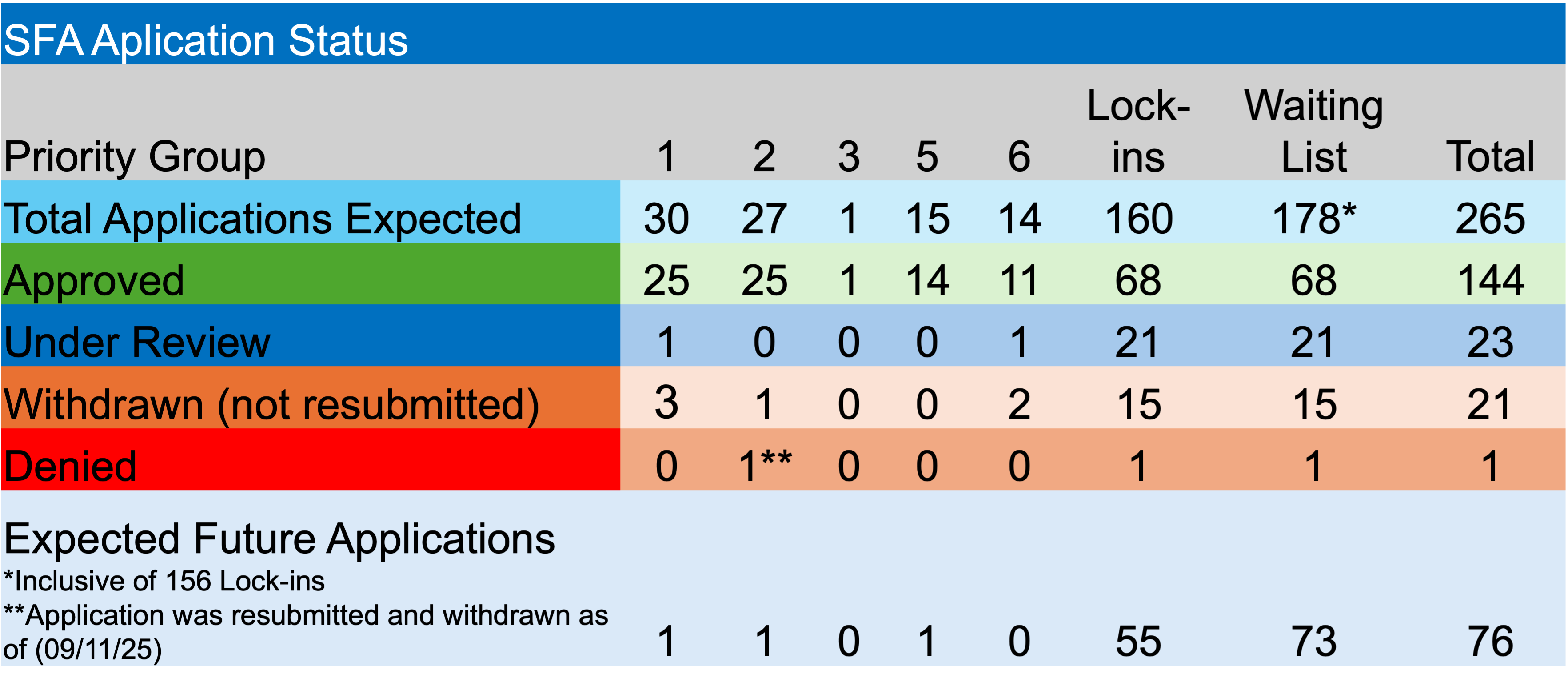
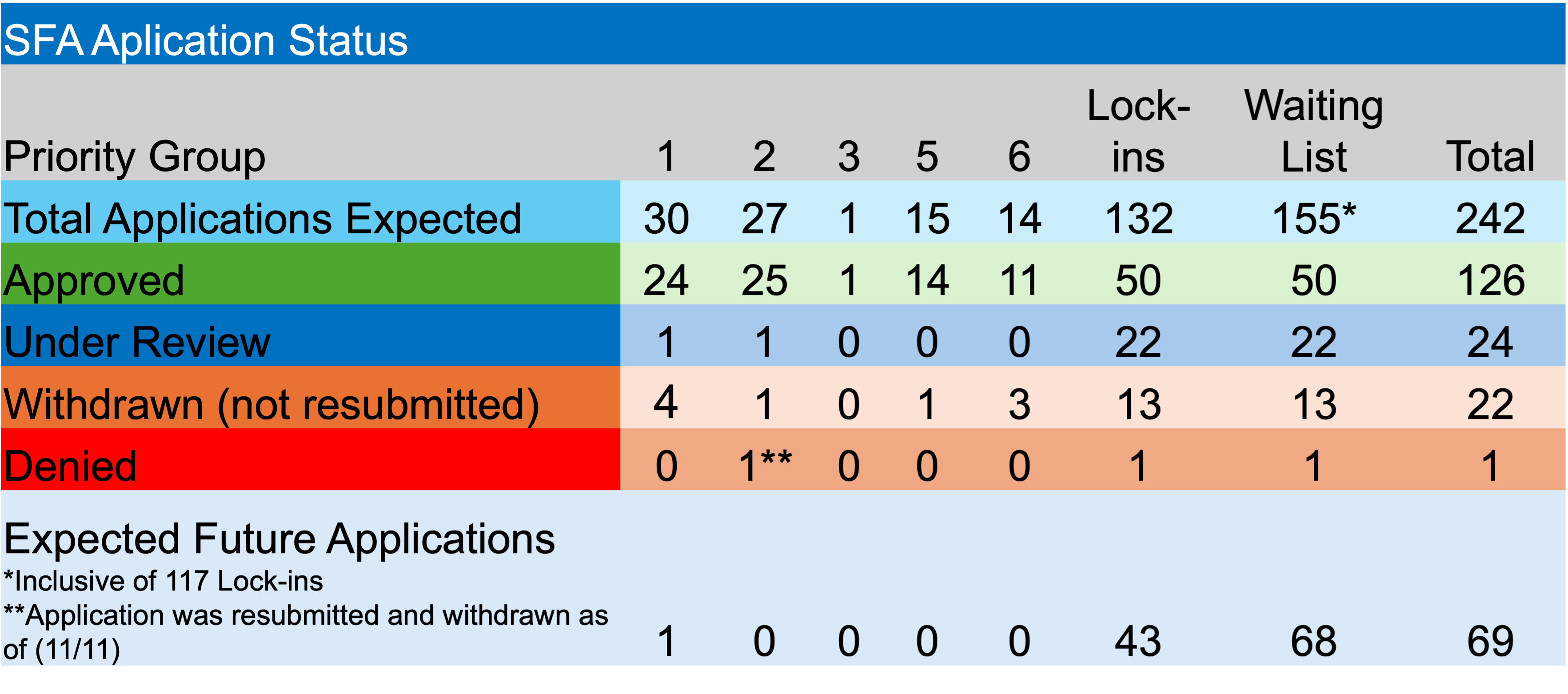
There isn’t a whole lot to discuss about last week. There were no applications received as the PBGC’s e-Filing portal remains temporarily closed. No applications were approved or denied, and there were no pension funds looking to be added to a very crowded waiting list.

However, there was one fund, Trucking Employees of North Jersey Welfare Fund, Inc. Pension Plan, that repaid a portion of the Special Financial Assistance (SFA) received earlier. The $7.7 million repayment represents 0.99% of the $774.3 million grant. The Truckers’ fund is the 55th fund to repay a portion of the SFA grant. There are four funds that had no census errors. It was estimated that roughly 60 pension funds had been granted SFA prior to the PBGC’s use of the Social Security Master Death file. In total, $229.4 million has been recouped from $50.9 billion in grants (0.45%).

In other ARPA news, eight funds currently on the waitlist have elected their measurement lock-in date. As a reminder, the measurement date refers to the date on which a plan submits a lock-in application to PBGC. This date is crucial because it sets and permanently establishes the plan’s SFA measurement date and base data for its eventual SFA application, regardless of when the full application is later submitted. Specifically, the lock-in application fixes: 1) the non-SFA and SFA interest rates, 2) the SFA measurement date, and 3) participant census data. Five of the funds chose March 31, 2025, while the other three selected April 30, 2025, as the measurement date for their pension plans.

According to the ARPA legislation, the PBGC is prohibited from accepting initial applications after December 31, 2025. They may receive and review revised applications until December 31, 2026. They currently have about 70 plans on the waitlist, in addition to the 46 that are under review or have been withdrawn. It will take a tremendous effort to process these initial applications prior to the legislation’s deadline.

The Buying Of Time Can Reap Huge Rewards

By: Russ Kamp, CEO, Ryan ALM, Inc.

When we present the list of benefits associated with using Cash Flow Matching (CFM), one of the benefits that we highlight is the buying of time a.k.a. an extended investing horizon. Our pension community tends to fall prey to short-termism despite claiming to be long-term investors. Quarterly observations are presented through the consultants regular performance reviews and managers are often dismissed after a relatively short period of “underperformance”. Actuarial reports tend to be annual which dictate projected contribution expenses. Yet, by extending the investment horizon to something more meaningful like 10-years or more, the probability of achieving the desired outcome is dramatically improved.

I recently played around with some S&P 500 data dating back to 12/31/69 and looked at the return and standard deviation of observations encompassing 1-10-year moving averages and longer periods such as 15-, 20-, 30-, and even 50-year moving averages for the industry’s primary domestic equity benchmark. Living in a one-year timeframe may produce decent annual returns, but is also comes with tremendous volatility. In fact, the average one-year return from 12/69 to 2/25 has been 12.5%, but the annual standard deviation is +/- 16.6%, meaning that 68% of the time your annual return could be +29.1% to -4.1%. Extending the analysis to 2 standard deviations (95% of the observations) means that in 19 out of 20 years the range of results can be as broad as +45.7% to -20.7%.

However, extend out your investing horizon to 10-years, and the average return from 12/69 dips to 11.4%, but the standard deviation collapses to only 5.0% for a much more comfortable range of +16.4% to 6.4%. Extend to 2 standard deviations and you still have a positive observation in 19 out of 20 years at +1.4% as the lower boundary. Extend to 30-years and the volatility craters to only +/-1.2% around an average return of 11.25%.

We, at Ryan ALM, were blessed in 2024 to take on an assignment to cash flow match 30+ years of this plan’s liabilities. We covered all of the projected liability cash flows through 2056 and still had about $8 million in surplus assets, which were invested in two equity funds, that can now just grow and grow and grow since all of the plan’s liquidity needs are being covered by the CFM strategy! So, how important is a long investing runway? Well, if this plan’s surplus assets achieve the average S&P 500 30-year return during the next 30-years, that $8 million will grow to >$195 million.

We often speak with prospects about the importance of bifurcating one’s asset base into two buckets – liquidity and growth. It is critically important that the plan’s liquidity be covered through the asset cash flows of interest and principal produced by bonds since they are the only asset with a known future value. CFM eliminates the need for a cash sweep which would severely reduce the ROA of growth assets. This practice will allow the growth or alpha assets to wade through choppy markets, such as the one we are currently witnessing, without fear that liquidity must be raised to meet benefits at a less than opportune time.

The plan sponsor highlighted above was fortunate to have a well-funded plan, but even plans that are less well-funded need liquidity. Ensuring that benefits and expenses can be met monthly (chronologically) without forcing liquidity that might not naturally exist is critical to the successful operation of a pension plan. CFM can be used over any time frame that the plan sponsor desires or the plan can afford. We believe that extending the investment horizon out to 10-years should be the minimum goal, but every plan is unique and that uniqueness will ultimately drive the decision on the appropriate allocation to CFM.

FOMC and Powell Deliver Worrying Message

By: Russ Kamp, CEO, Ryan ALM, Inc.

I produced a post recently titled, “Parallels to the 1970s?” in which I discussed the challenging economic environment that existed during the 1970s as a result of two oil shocks and some sketchy decision making on the part of the US Federal Reserve. The decade brought us a new economic condition called stagflation, which was a term coined in 1965 by British politician Lain Macleod, but not widely used or recognized until the first oil embargo in 1973. Stagflation is created when slow economic growth and inflation are evident at the same time.

According to the graph above, the FOMC is beginning to worry about stagflation reappearing in our current economy, as they reduced the expectations for GDP growth (the Atlanta Fed’s GDPNow model has Q1’25 growth at -1.8%), while simultaneously forecasting the likelihood of rising inflation. Not good. If you think that the FOMC is being overly cautious, look at the recent inflation forecasts from several other entities. Seems like a pattern to me.

Yet, market participants absorbed the Powell update as being quite positive for both stocks and bonds, as markets rallied soon after the announcement that the FOMC had held rates steady. Why? There is great uncertainty as to the magnitude and impact of tariffs on US trade and economic growth. If inflation does move as forecasted, why would you want to own an active bond strategy? If growth is moderating, and in some cases forecasted to collapse, why would you want to own stocks? Aren’t earnings going to be hurt in an environment of weaker economic activity? Given current valuations, despite the recent pullback, caution should be the name of the game. But, it seems like risk on.

Given the uncertainty, I would want to engage in a strategy, like cash flow matching (CFM), that brought an element of certainty to this very confusing environment. CFM will fully fund the liability cash flows (benefits and expenses) with certainty providing timely and proper liquidity to meet my near-term obligations, so that I was never in a position where I had to force liquidity where natural liquidity wasn’t available. Protecting the funded ratio of my pension plan would be a paramount objective, especially given how far most plans have come to achieve an improved funding status.

I’ve written on many occasions that the nearly four decades decline in rates was the rocket fuel that drove risk assets to incredible heights. It covered up a lot of sins in how pensions operated. If a decline in rates is the only thing that is going to prop up these markets, I doubt that you’ll be pleased in the near-term. Bifurcate your assets into two buckets – liquidity and growth – and buy time for your pension plan to wade through what might be a very challenging market environment. The FOMC was right to hold rates steady. Who knows what their next move will be, but in the meantime don’t bet the ranch that inflation will be corralled anytime soon.

Real GDP Exceeding Real Potential GDP

By: Russ Kamp, CEO, Ryan ALM, Inc.

I was introduced to the St. Louis Fed’s amazing data base – FRED – many years ago by a former Invesco colleague. What is FRED? According to the St. Louis Fed’s website, “FRED is short for Federal Reserve Economic Data, and FRED is an online database consisting of hundreds of thousands of economic data time series (presently >825k) from scores of national, international, public, and private sources. FRED, created and maintained by the Research Department at the Federal Reserve Bank of St. Louis, goes far beyond simply providing data: It combines data with a powerful mix of tools that help the user understand, interact with, display, and disseminate the data.”

FRED is an amazing tool, but the purpose of this blog today is not to laud FRED, but to highlight two data series that I have followed for several years – Real GDP and Real Potential GDP. Real GDP is self-explanatory, but what is Real Potential GDP? “Real potential GDP is the CBO’s estimate of the output the economy would produce with a high rate of use of its capital and labor resources. The data is adjusted to remove the effects of inflation.” The data series starts in Q1’49 and currently runs to Q4’2034, which forecasts Real GDP to be $27.8 trillion at that time. Real GDP is currently (Q4’24) at $23.5 trillion.

Currently, Real GDP is exceeding what the CBO believes is the Real Potential GDP for our economy by a record amount of $616 billion in $ terms or about 2.5%. If you believe that the CBO’s estimate of potential GDP is close to reality, then it shouldn’t be surprising that inflation remains an issue, despite the marginal improvement disclosed earlier this week (core CPI at 3.1%). As my former colleague and mentor, Charles DuBois has said, “if government spending (or private spending, for that matter) exceeds the economy’s real resources available to absorb that spending, then inflation will likely result.” That’s where we are today, folks.

The growing and fairly consistent fiscal deficit continues to provide stimulus to the private sector (all spending = all income) creating demand for goods and services that exceeds the natural capacity of our economy as measured by the CBO despite the Fed’s aggressive action to temper some of that demand through elevated interest rates, which began in March 2022. While this relationship exists, it makes sense for the Fed to pause its easing of rates, which they seem to have at this time, but we’ll get more insight when they meet next week.

Also reflected in the graph above, previous peaks in Real GDP exceeding the CBO’s Real Potential GDP (’73, ’78, ’89, ’99, ’07) have been followed by economic and market disruptions, some quite significant. What does that portend for today’s market given the current levels?

What’s Your Duration?

By: Russ Kamp, CEO, Ryan ALM, Inc.

The recent rise in U.S. Treasuries had us redoubling our effort to encourage plan sponsors of U.S. pension plans to take some risk off the table by using cash flow matching (CFM) to defease a portion of the plan’s liabilities, given all the uncertainties in the markets and our economy. We were successful in some instances, but for a majority of Pension America, the use of CFM is still not the norm. Instead, many sponsors and their advisors have elected to continue to use highly interest rate sensitive “core” fixed income offerings most likely benchmarked to the Bloomberg Barclays Aggregate Index (Agg).

For those plan sponsors that maintained the let-it-ride mentality, they are probably celebrating the fact that Treasury rates have fallen rather significantly in the last week or so as a result of all of the uncertainties cited above – including inflation, tariffs, geopolitical risk, stretched equity valuations, etc. Their “core” fixed income allocation will have benefited from the decline in rates, but by how much? The Bloomberg Barclays Aggregate Index (Agg) has a duration of 6.1 years and a YTW of 4.58%, as of yesterday. YTD performance had the Agg up 2.78%. Not bad for fixed income 2+ months into the new year, but again, equities have been spanked in the last week, and the S&P 500 is down -3.1% in the last 5 days. So, maintaining that exposure sure hasn’t been beneficial.

Also, remember that the duration of the average DB pension plan is around 12 years. Given the 12-year duration, the price movement of pension liabilities, which are bond-like in nature, is currently twice that of the Aggregate index. A decline in rates might help your core fixed income exposure, but it is doing little to protect your plan’s funded status/funded ratio. The use of CFM would have insulated your plan from the interest rate risk associated with your pension liabilities. As rates fell, both assets and the present value of those liabilities would have appreciated, but in lockstep! The funded status for that segment of your asset allocation would have been insulated.

Why wait to protect your hard work in getting funded ratios to levels not seen in recent years? A CFM strategy provides numerous benefits, including providing liquidity on a monthly basis to ensure that benefits and expenses are met when due, reducing the cost to fund liabilities by 20% to 40% extending the investing horizon allowing for choppy markets to come and go with little impact on the plan, and protecting your funded status which helps mitigate volatility in contributions. Seems pretty compelling to me.

Parallels to the 1970s?

By: Russ Kamp, CEO, Ryan ALM, Inc.

My recollection of the 1970s has more to do with playing high school sports, graduating from PPHS in 1977, and then going off to Fordham where I would meet my wife in an economics class in 1979. I wasn’t really focused on the economy throughout much of the decade. You see, college was reasonably affordable, and gas and tolls (GWB) were not priced outrageously, so getting back and forth to the Bronx wasn’t crushing for me and my parents.

However, I do recall the two oil embargoes that rocked the economy during the decade. I vividly recall the 1973 oil embargo that was triggered by the Yom Kippur War. I was a newspaper delivery boy for the Hudson Dispatch and was frequently amazed by the long gas lines that would stretch for blocks on both odd and even days, as I drove by on my bike. The Organization of Arab Petroleum Exporting Countries instituted the oil embargo against any country supporting Israel, including the U.S. This led to a dramatic increase in oil prices from about $3/barrel to roughly $12/barrel. This action led to widespread economic disruption, and as you can imagine, significant inflationary pressures.

The 1979 oil crisis was precipitated by the Iranian Revolution which saw the overthrow of the Shah of Iran in February 1979. The Revolution created a significant disruption in oil production in Iran, causing global oil supply issues. Similarly, to the 1973 crisis, oil prices surged from about $14/barrel to nearly $40/barrel. Once again, gasoline shortages materialized and inflation rose rather dramatically. This oil impact would lead to a period of economic stagnation that would eventually be defined as “stagflation”.

Now, I am NOT saying that we are about to face significant oil embargoes. But I am reminding everyone that history does have a tendency to repeat itself even if the players aren’t exactly the same. The graph below is pretty eye-opening, at least to me.

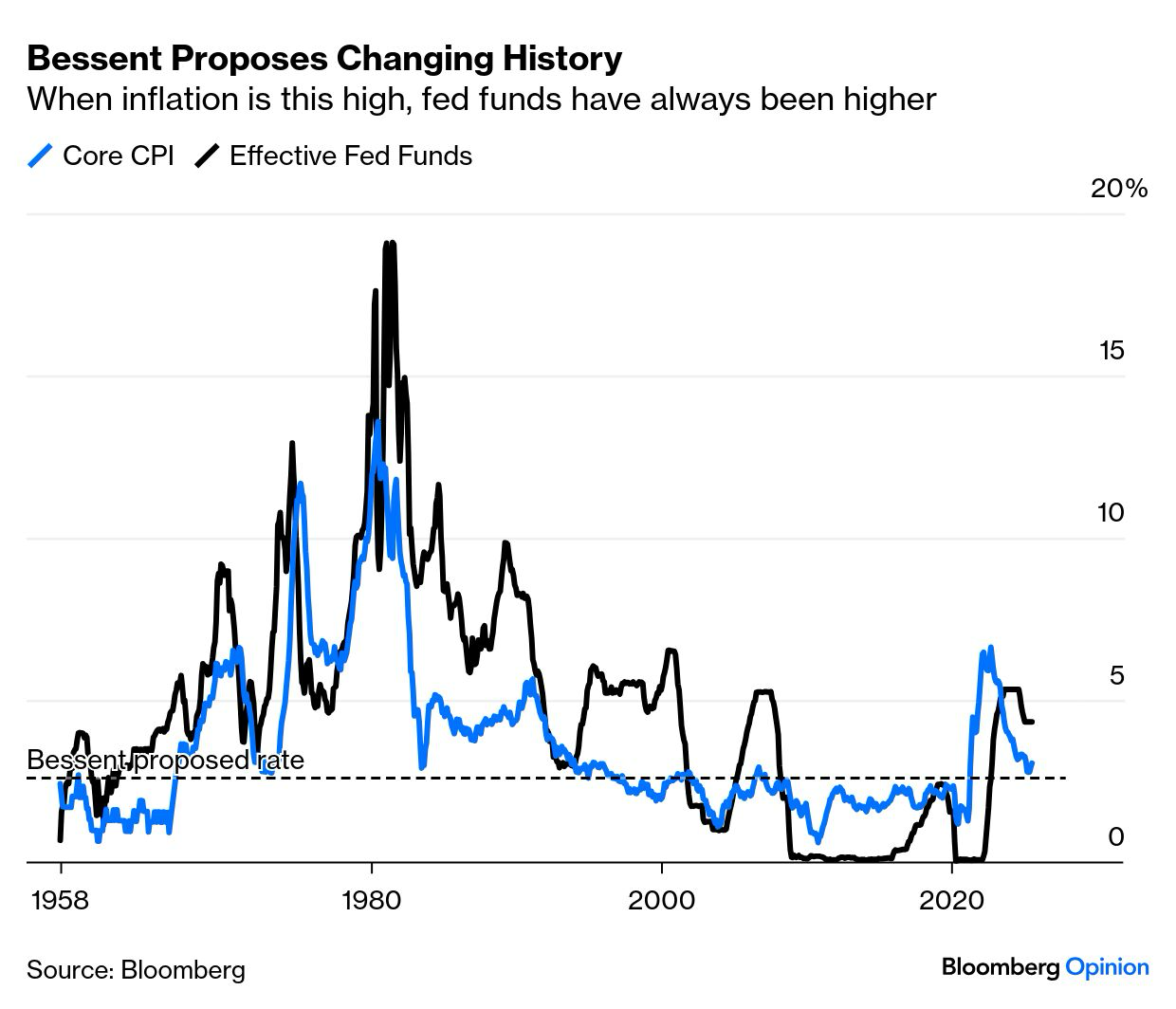
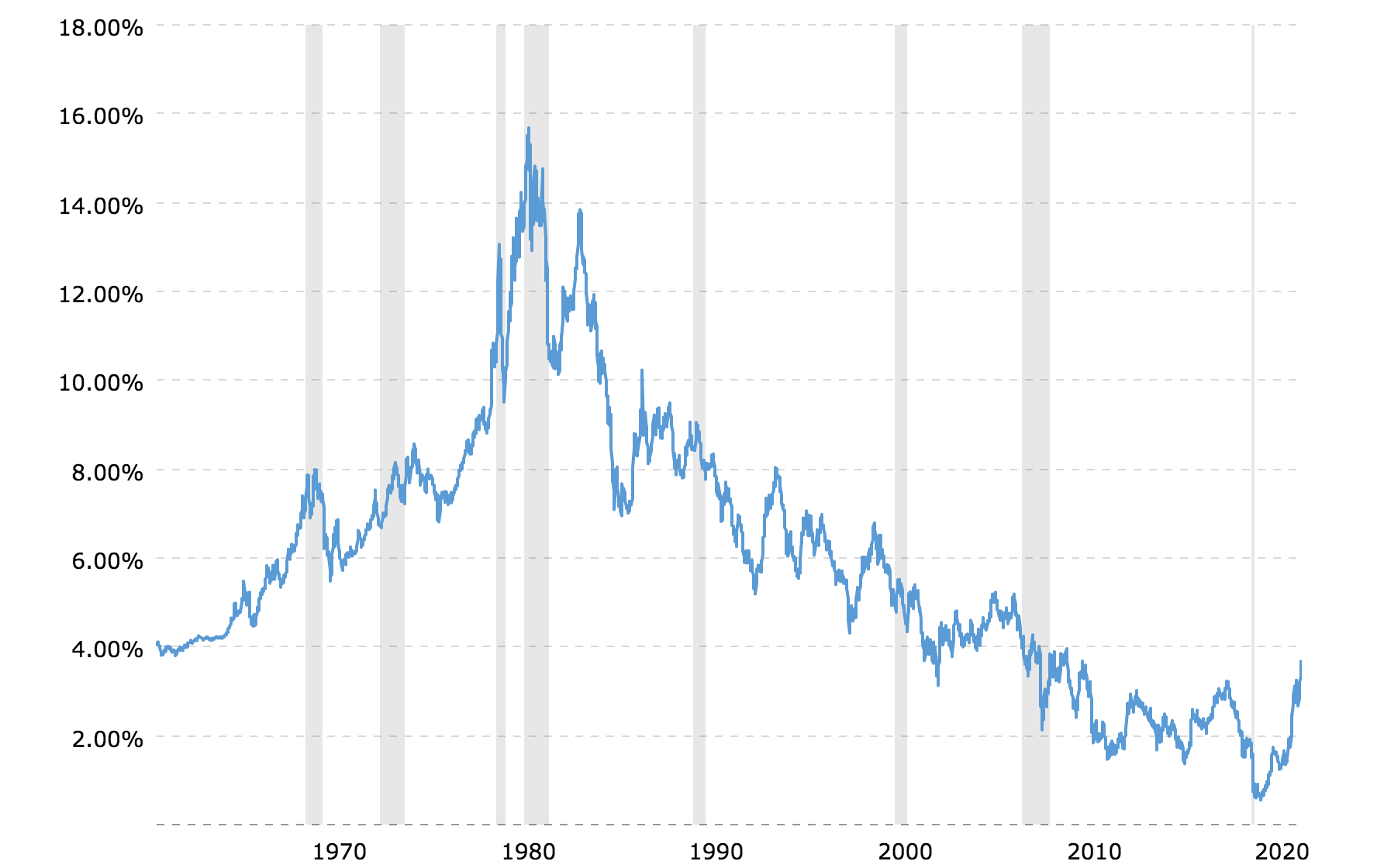
For those of you who can recall the 1970s, you’ll remember that the US Federal Reserve tried to mitigate inflation through aggressive increases in the Fed Funds Rate, which would eventually hit 20% in March 1980. As a result of their action, U.S. Treasury yields rose dramatically, too. For instance, the yield on the US 10-year Treasury note would peak at 15.84% in September 1981. As an FYI, I would enter our industry in October 1981.

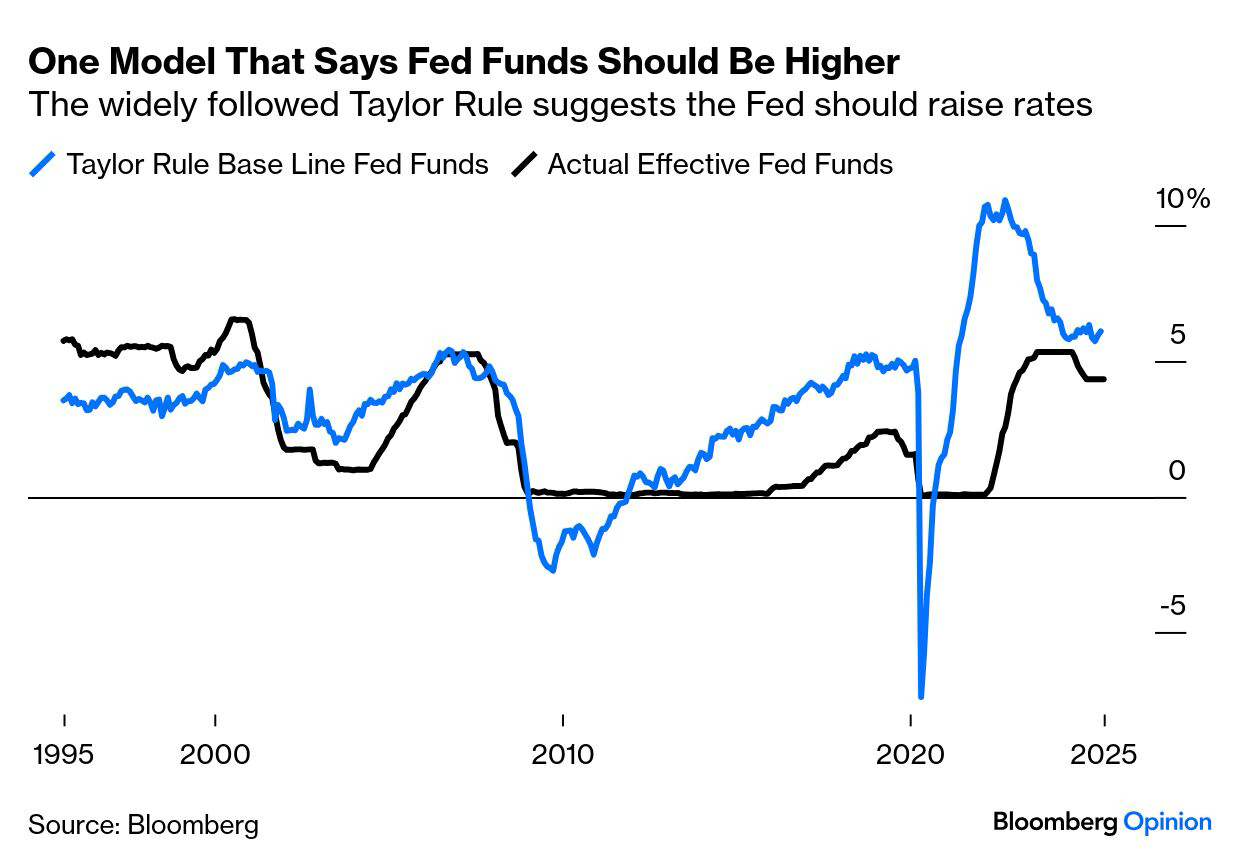
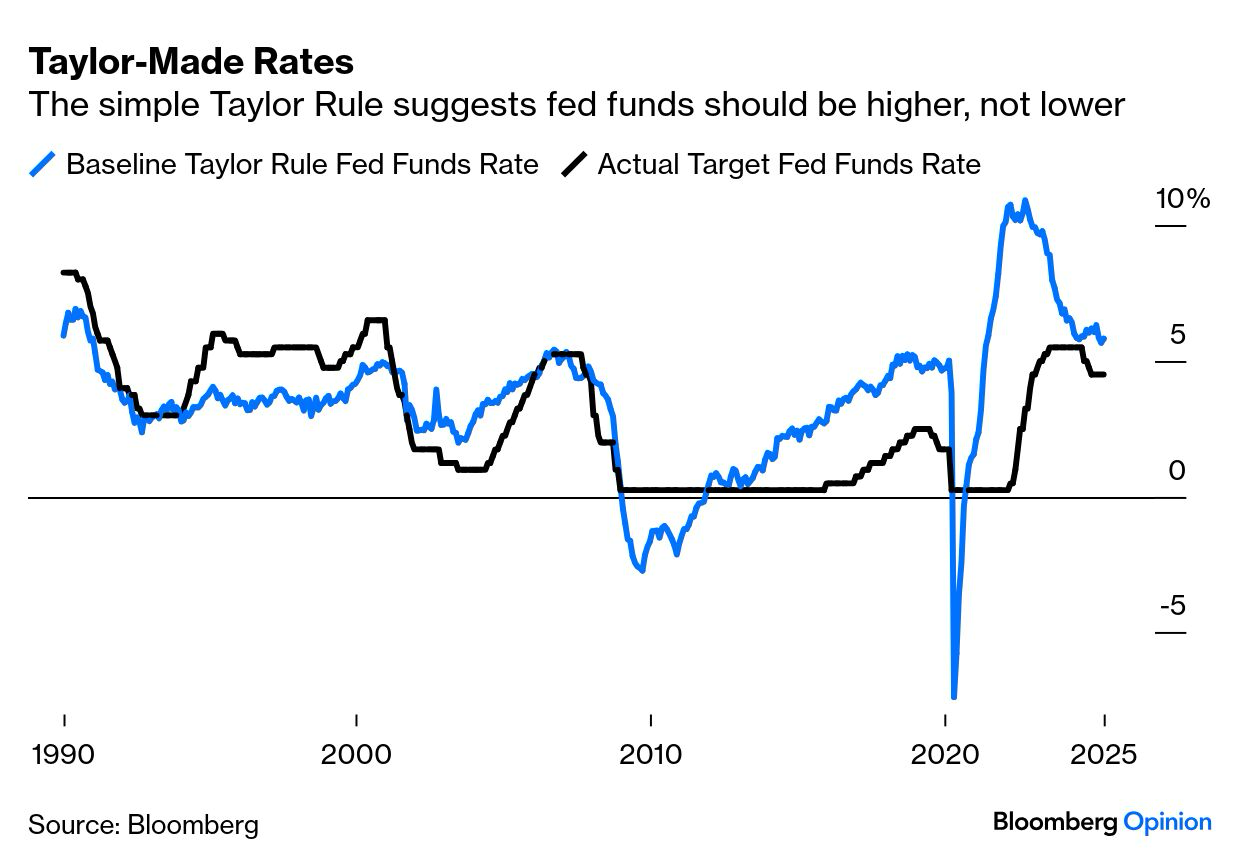
Despite the aggressive action by the Fed’s FOMC beginning in March 2022, inflation has not been brought under control. Were they premature in reducing the FFR 3 times and by 1% to end 2024? A case could certainly be made that they were. So, where do we go from here? There certainly appears to be some warning signs that inflation could raise its ugly head once more. We are in the midst of a rebound in food inflation, and not just eggs. I just read this morning that those heating with natural gas will see about a 10% increase in their bills relative to last year – ouch. There are other worrying signs as well without even getting into the potential impact from policy changes brought about by the new administration.

It is quite doubtful that we will witness peaks in inflation and interest rates described above, but who really knows? Given the great uncertainty, and the potentially significant ramifications of a renewed inflationary cycle (2022 was not that long ago), plan sponsors should be working diligently to secure the current funding levels for their plans. Why continue to subject all of the assets to the whims of the markets for which they have no control over? Inflationary concerns rocked both the equity and bond markets in 2022. In fact, the BB Aggregate Index suffered its worst loss (-13%) by more than 4X the previous worst annual return (-2.9% in 1994). Rising rates crush traditional core fixed income strategies, but they are a beautiful benefit when matching asset cash flows (principal and interest) to liability cash flows (benefits and expenses) through CFM.

As a plan sponsor, I’d want to find as much certainty as possible, given the abundant uncertainty of markets each and every day. As Milliman has reported, both private and public pension funded ratios are at levels not seen in years. Don’t blow it now!

Nothing Here! Really?

By: Russ Kamp, CEO, Ryan ALM, Inc.

Yesterday’s financial news delivered an inflation surprise (0.5% vs. 0.3%), at least to me and the bond market, if not to the U.S. equity market. The Federal reserve had recently announced a likely pause in their rate reduction activity given their concerns about the lack of pace in the inflation march back to its 2% target. This came on the heels of “Street” expectations after the first 0.5% cut in the FFR that there were “likely” to be eight (8!) interest rate cuts by the summer of 2025. Oh, well, the two cuts that we’ve witnessed since that first move last September may be all we get for a while. “Ho hum” replied the U.S. stock market.

The discounting of yesterday’s inflation release is pretty astounding. Like you, I’ve read the financial press and the many emails that have addressed the CPI data 52 ways to Sunday. Much of the commentary proclaims this data point as a one-off event. For instance, the impact of egg price increases (13.8% last month alone) is temporary, as bird flu will be contained shortly. Seasonal factors impacting “sticky-priced” products tend to be announced in January. I guess those increases shouldn’t matter since they only impact the consumer in January. As a reminder, Core inflation (minus food and energy) rose from 3.1% to 3.3% last month. That seems fairly significant, but we are told that the other three core readings were down slightly, so no big deal. Again, really? Each of those core measures are >3% or more than 1% greater than the Fed’s target.

Then there are those that say, “what is significant about the Fed’s 2% inflation objective anyway”? It is an arbitrary target. Well, that may be the case, but for the millions of Americans that are marginally getting by, the difference between 2% and 3% inflation is fairly substantial, especially when we come up with all of these measures that exclude food, energy, housing (shelter), etc. Are you kidding?

As mentioned previously, expectations for a massive cut in interest rates due to the perception that inflation was well contained have shifted dramatically. Just look at the graph above (thanks, Bloomberg). Following the Fed’s first FFR cut of 50 bps, inflation expectations plummeted to below 1.5% for the two-year breakeven. Today those same expectations reveal a nearly 3.5% expectation. Rising inflation will certainly keep the Fed in check at this time.

As mentioned earlier in this post, U.S. equities shrugged off the news as if the impact of higher inflation and interest rates have no impact on publicly traded companies. Given current valuations for U.S. stocks, particularly large cap companies, any inflation shock should send a shiver down the spines of the investing community. Should interest rates rise, bonds will surely become a more exciting investment opportunity, especially for pension plans seeking a ROA in the high 6% area. How crazy are equity valuations? Look at the graph below.

The current CAPE reading has only been greater during the late 1990s and we know what happened as we entered 2000. The bursting of the Technology bubble wasn’t just painful for the Information Technology sector. All stocks took a beating. Should U.S. interest rates rise as a result of the current inflationary environment, there is a reasonable (if not good) chance that equities will get spanked. Why live with this uncertainty? It is time to get out of the game of forecasting economic activity. Why place a bet on the direction of rates? Why let your equity “winnings” run? As a reminder, managing a DB pension plan should be all about SECURING the promised benefits at a reasonable cost and with prudent risk. Is maintaining the status quo prudent?

It May Not Be the Iron Gwazi, But…

By: Russ Kamp, CEO, Ryan ALM, Inc.

I was fortunate to enter the investment industry in October 1981. The 10-year Treasury note’s yield was around 15% at that time. U.S. interest rates would fall (collapse?) for most of the next four decades until they bottomed during the beginning of Covid-19. Oh, it was great to be a bond manager during those decades. You could basically be long duration relative to the Aggregate index with little worry that rates would rise. It was a time to “mint” money in fixed income. Then, it wasn’t!

The beginning of Covid-19 brought about a substantial reaction to the collapse of our economy through major federal stimulus programs. The historic infusion of financial support created excess demand for goods and services at the same time that many of those services were temporarily restricted. The result was the worst inflation shock since the 1970s, which led to the double digit yields mentioned above.

It wasn’t surprising that inflation would appear after decades of it being well contained. It was perhaps the magnitude (9.1% inflation at the peak) of the move that grabbed everyone’s attention. For bond managers, the revival of inflation created an environment that forced the U.S. Federal Reserve to initiate the most aggressive policy shift in quite some time beginning in March 2022. As a result of the Fed’s action, bond managers suffered their worst year ever as represented by the BB Aggregate Index (-13%). The average fixed income manager faired only slightly better than the index according to eVestment’s database, as the median core bond manager produced a -12.8% result for all of 2022.

The following two years have been incredibly volatile for U.S. bond managers. Calendar year 2023 was looking to be a very poor year until the investing community was certain that the Fed had accomplished its objective by the end of that year, and as a result, interest rates fell. For the year, the median fixed income manager was up 6.1%, or a little bit less than 1/2 what they had lost in the previous year. This past year was no better, except that markets were rosier to begin 2024, only to have a challenging conclusion to the year as inflation proved much stickier. The median manager produced only a 2% return for the year, holding on to <1/2 the income while seeing principal losses. Given the topsy turvy nature of the bond market during the last three years, it shouldn’t come as a surprise that the median manager has only generated a -1.9% 3-year annualized result.

The rollercoaster of fixed income returns observed during the last several years may not be as extreme as those we witness in other asset classes, mainly equities, but it is not helpful to the long-term funding of pension plans or endowments and foundations. As most know, changes in interest rates are the greatest risk to fixed income strategies. The 4-decade decline in rates was preceded by a nearly 3-decade rise in rates beginning in the early 1950s. Does the significant rise in rates starting in 2022 mark the beginning of another long-term secular upward trend or is this just a head fake? I wouldn’t want to have to bet on the future of interest rates in order to manage a successful program and you shouldn’t either.

Cash flow matching (CFM) mitigates interest rate risk. The defeasing of benefit payments, which are future values, are not interest rate sensitive since a $1,000 monthly payment in the future is $1k whether rates rise or fall. Furthermore, the cost savings that are produced on the day that the CFM portfolio is built will be maintained whether rates rise or fall. We are seeing at least a -2% reduction in cost per year in our model. Ask us to defease your benefit payments for 10 years and you’ll see a roughly 20% reduction. Longer-term programs (such as 30-years) can see substantial cost savings and annual reductions >-2%/year.

So, I ask, why invest in a core bond product, the success of which is predicated mostly on the direction of interest rates, when one can invest in a CFM strategy that provides the certainty of cash flows to meet benefit payments? Furthermore, CFM portfolios mitigate interest rate risk and extend the investing horizon for your plan’s alpha (growth) assets, while getting you off the rollercoaster of annual returns. Lastly, given the recent rise in U.S. interest rates, building a CFM portfolio with investment grade corporate bonds can produce a YTW of 5.5% or better. Seems like a sleep well at night strategy to me.

BTW, the Iron Gwazi is the world’s steepest and fastest hybrid rollercoaster found at Busch Gardens in Florida. It has a height of 206 feet and a 91 degree drop. It might just rival the feeling one got going through the Great Financial Crisis. That wasn’t any fun!

Hey, Pension Community – We Have Liftoff!

By: Russ Kamp, CEO, Ryan ALM, Inc.

Not since October of 2023 have we seen long-dated Treasury yields at these levels. Currently, the 30-year Treasury bond yield is 5% (12:47 pm EST) and the 10-year Treasury Note’s yield has eclipsed 4.8%. Despite tight credit spreads, long-dated (25+ years) IG corporate bond yields are above 6% today (chart in the lower right corner).

Securing pension liabilities, whether your DB plan is private, public, or a multiemployer plan, should be the primary objective. All the better if that securing (defeasement strategy) can be accomplished at a reasonable cost and with prudent risk. The good news: the current rate environment is providing plan sponsors with a wonderful opportunity to accomplish all of those goals, whether you engage in a cash flow matching (CFM) for a relatively short period (5-years), intermediate, (10ish-years) or longer-term (15- or more years) your portfolio of IG corporate bonds will produce a YTM of > 5.5%. This represents a significant percentage of the target ROA.

Furthermore, as we’ve explained, pension liabilities are future values (FVs), and FVs are not interest rate sensitive. Your portfolio will lock in the cost savings on day one, and barring any defaults (about 2/1,000 in IG bonds), the YTM is what your portfolio will earn throughout the relationship. That is exciting given the fact that traditional fixed income core mandates bleed performance during rising rate regimes. In fact, the IG index is already off 1.2% YTD (<10 trading days).

Who knows when the high equity valuations will finally lead to a repricing. Furthermore, who knows if US inflation will continue to be sticky, the Fed will raise or lower rates, geopolitical risks will escalate, and on and on. With CFM one doesn’t need a crystal ball. You can SECURE the promised benefits for a portion of your portfolio and in the process you’d be stabilizing the funded status and contribution expenses associated with those assets. Don’t let this incredibly attractive rate environment come and go without doing anything. We saw inertia keep plans from issuing POBs when rates were historically low. It is time to act.

Is Now The Time To Act?

By: Russ Kamp, Managing Director, Ryan ALM, Inc.

Equity market participants were recently reminded of the fact that markets can fall, and unfortunately they usually don’t decline with any kind of notice. The impetus behind the markets’ most recent challenging day was the Fed’s relatively tame forecast for likely interest rate moves in 2025. There is no question in my mind that the nearly 4-decade decline in rates from lofty heights achieved in the early ’80s, when the Fed Funds Rate eclipsed 20%, to the covid-fueled bottom reached in early 2020, when the yield on the 10-year Treasury Note was at 0.5%, made bond returns a lot stronger than anyone’s forecast.

It certainly seemed that the US Federal Reserve provided the security blanket any time there was a wobble in the markets. This action allowed “investors” to keep their collective foot on the gas with little fear. Sure, there were major corrections during that lengthy period, but the Fed was always there to lend a hand and a ton of stimulus that propped up the economy and markets, and ultimately the investment community. As we saw in 2022, the Fed had run out of dry powder and ultimately had to raise US interest rates to stem a vicious inflationary spike. Rates rose rather dramatically, and the result was an equity market, as measured by the S&P 500, that declined 18% for the calendar year. Bonds faired only marginally better as rising rates impacted bond principals creating a collective -12.1% return for the BB Aggregate Index.

As we enter 2025, do we once again have a situation in which the Fed’s ability to reduce rates has been curtailed due to a stronger economy than anticipated? Will the continued strength and massive government stimulus drive inflation and rates higher? According to a blog post from Apollo’c CIO, here are his list of the potential risks and the probabilities:

Risks to global markets in 2025

Interesting that he feels, like we do at Ryan ALM, Inc., that the economy is likely to be stronger than most suspect (#6) leading to higher inflation, rising rates (#7), and a 10-year Treasury Note yield in excess of 5% (#8). That yield is currently at 4.6% (as of 3:06 pm).

For those that might be skeptical, the Atlanta Fed’s GDPNow model is currently forecasting GDP growth for Q4’24 at 3.1% annualized. They have done a wonderful job forecasting quarterly growth rates. Their forecasts have consistently been above the “street’s” and as a result, much more accurate.

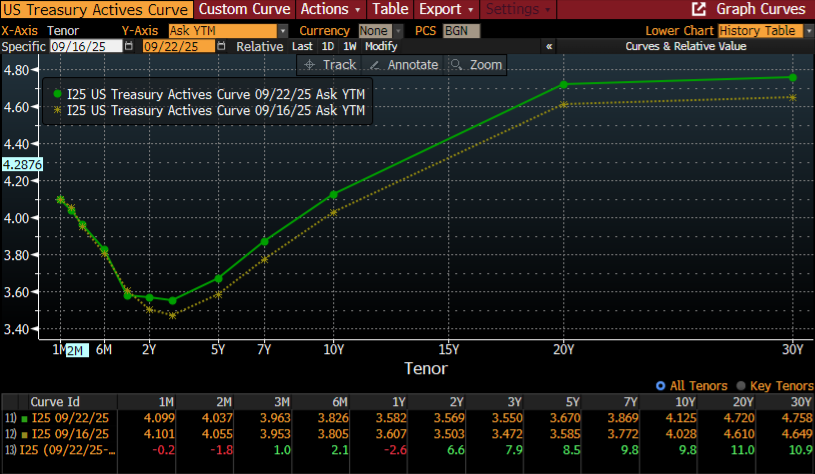
In addition, despite the third rate cut by the Federal Reserve at the most recent FOMC meeting of their benchmark Fed Funds Rate (-1.0% since the easing began), interest rates on longer dated maturities have risen quite significantly, as reflected below.

Rising US rates, stronger growth, and greater inflation may just be the formula for a significant contraction in equity valuations, especially given the current level. Be proactive. Reduce risk. Secure the promised benefits. Under no circumstance should you just let your “winnings” ride.