DC Participants: “Just Say No”

By: Russ Kamp, CEO, Ryan ALM, Inc.

Most everyone who lived through the ’80s will remember the slogan “Just Say No”. The slogan was created and championed by Nancy Reagan during her husband’s presidency. As you’ll recall, the slogan was part of the U.S.-led war on drugs.

I’d like to reuse the slogan of JUST SAY NO as it relates to using alternatives, especially private equity and credit in defined contribution (DC) plans. DC plans are proving to be a failed model for the vast majority of participants given the anemic median balances, as asking untrained individuals to fund, manage, and then disburse a “retirement” benefit with little to no disposable income, investment acumen, or a crystal ball to help with longevity is just silly policy. Trying to push alternatives onto these folks is maddening! They don’t need more offerings providing complicated structures, little transparency, high fees, and poor liquidity.

Importantly, what happened to being a “qualified or accredited” investor? As you may recall, private investments are restricted in most cases to individuals who meet certain financial thresholds that have been established by regulatory authorities. These considerations included minimum income levels (>$200k for some period of time and sustainable), net worth considerations at >$1 million not including your primary residence, and finally, investment knowledge, in which individuals need to demonstrate sufficient knowledge and experience in financial and business matters to evaluate the risks and merits of a prospective investment. Do you honestly think that the average 401(k) participant qualifies under any of these considerations?

The alternative suite of product offerings is proving to be challenging for many institutional investors/boards, often requiring the retention of a specialist consultant to support the plan’s generalist advisor. Given that reality, does it really make sense that an untrained individual will truly understand the potential risk and reward characteristics? Furthermore, these investments are NOT the magic elixir that they are made out to be. Performance results range far and wide and liquidity (capital distributions) is proving illusive. Do providers of these products really believe that more assets are needed at this time given how difficult it is to invest the current dry powder?

I put a similar comment to this post on LinkedIn.com earlier today. Somebody commented that a simple NO without exploration perhaps would violate my fiduciary responsibility. My answer: Someone needs to be the grown up in the room trying to keep our industry’s greedy hands off DC plans. I believe that I am acting very much in a fiduciary capacity.

I could apply the “Just Say No” slogan to so many practices within our pension industry, but for now I’ll restrict it to this one area of concern. This one rant!

ARPA Update as of March 28, 2025

By: Russ Kamp, CEO, Ryan ALM, Inc.

Welcome to the last update of March. If you are a fan of both Men’s and Women’s college basketball, there wasn’t as much “madness” as usual during the respective tournaments, as all #1 seeds made the men’s Final Four, while only teams seeded either #1 or #2 made the woman’s Final Four. However, these teams should make for a very exciting and competitive games as they conclude. I’m still waiting for Fordham to get there one day.

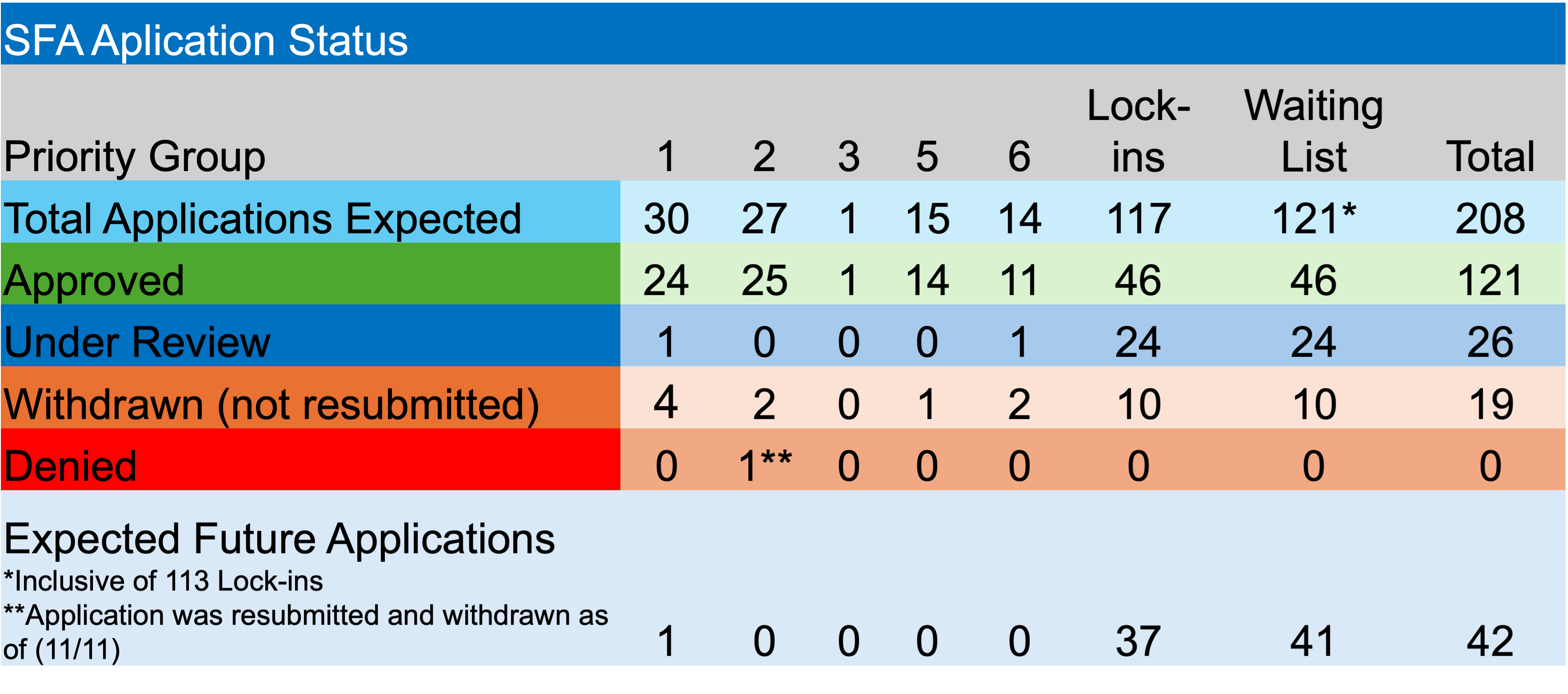
Now onto the task at hand. Regarding ARPA and the PBGC’s implementation of this critical legislation, last week was fairly busy. Three non-priority group funds, including United Food and Commercial Workers Unions and Participating Employers Pension Plan, Roofers Local 88 Pension Plan, and Chicago Truck Drivers, Helpers and Warehouse Workers Union (Independent) Pension Fund, filed initial applications seeking a total of $241.7 million in Special Financial Assistance (SFA) that will support the promised benefits for 14,769 workers. There are 22 funds that currently have an application before the PBGC.

In addition to the new fillings, Oregon Processors Seasonal Employees Pension Plan, received approval of its revised application. They will receive $19.9 million in SFA and interest to help cover the promised pensions for 7,279 members. There were no applications denied during the previous week, but there were a couple of initial applications from non-priority group members withdrawn. Distributors Association Warehousemen’s Pension Trust and Alaska Teamster – Employer Pension Plan were seeking $206.6 million in SFA for nearly 12,200 participants.

In other ARPA news, the PBGC recouped  $994,701.30 or 1.55% in excess SFA paid by The Newspaper Guild International Pension Plan. The PBGC has now recouped $202.2 million in excess SFA from grants totaling $47.5 billion or 0.42% of the proceeds. These funds, including another 4 that didn’t receive any excess proceeds, were among the roughly 60 that received awards before they were given access to the Social Security’s Master Death File.

Lastly, there was one more multiemployer fund added to the waitlist. The Plasterers Local 79 Pension Plan becomes the 117th plan to be placed on the waitlist. Fortunately, the PBGC has begun the process on all but 45 of those.

What’s Better For A Pension Plan?

By: Russ Kamp, CEO, Ryan ALM, Inc.

I’m pleased to share with you the latest thought piece from Ron Ryan, Chairman, Ryan ALM, Inc. Ron shares his wisdom regarding what is the better outcome for a pension plan. Is it a 20% asset growth or a 20% reduction in the cost of liabilities? As you’ll see, he (and I) firmly believe that a 20% cost reduction is the more preferred outcome given the near certainty that the cost savings will be realized, as opposed to the very uncertain outcomes around asset performance.

Plan sponsors focused on the return on asset (ROA) assumption as the primary objective in managing a DB pension continually ride the performance rollercoaster leading to excessive volatility in the funded status and contribution expenses. That makes the process of managing these critical entities and their outcomes so uncertain. Defeasing a portion of the liabilities with the purpose of securing the promised benefits is a sleep-well-at-night strategy that should be adopted by every plan sponsor. As Ron points out, there are many benefits to this approach with enhanced liquidity being just one.

The current U.S. interest rate environment is providing plan sponsors with opportunities to secure the benefits that they haven’t had since the Great Financial Crisis. Don’t let this environment come and go without locking in some cost savings and certainty.

An Element of Certainty Can Be Achieved

By: Russ Kamp, CEO, Ryan ALM, Inc.

I’ve spent the last few days attending my first GAPPT conference in Braselton, GA. The conference has been terrific as the venue is beautiful, the attendees/trustees delightful, and the speakers/topics topnotch. Senior, highly experienced members of our pension community have been sharing their insights on a variety of subjects. For those addressing the current state of our capital markets and pension asset allocation, the common theme has been uncertainty. Uncertainty as to the direction of equity markets, inflation, and interest rates. Furthermore, given that uncertainty, it should not be surprising that when asked about the direction of asset allocation trends going forward that the speaker would again claim that they don’t know. Of course not.

Regular readers of this blog know that I’ve addressed uncertainty in several blog posts. As human beings we despise uncertainty, yet the approach to pension management within the public sector has been to embrace uncertainty through a traditional asset allocation focused on a return on asset (ROA) target. We learned today that the ROA has fallen for the average public pension from 8% prior to the great financial crisis (GFC) to the current 6.9% today. Given the outsized returns provided by the public equity markets in recent years, funded ratios should have improved, but ironically, they are roughly at the same level they were at prior to the GFC. Yes, the lower discount rate increases the value of plan liabilities, which impacts the funded status, but it also increases contributions that should have offset some of that impact.

Instead of just accepting the fact that markets are uncertain, plan sponsors and their advisors should be seeking strategies to minimize that uncertainty, at least for a portion of the asset base. I know of only a couple of ways to bring certainty to the management of pension assets. One is through a pension risk transfer that shifts the liability from the plan sponsor to an insurance company. Given that public pension plans believe that they are perpetual, there is little appetite to terminate the DB plan. Furthermore, with funded ratios at roughly 75%, the cost to fully fund and then offload the liability would be prohibitive.

We, at Ryan ALM, want to see pensions protected and preserved. We don’t want our public workforce to be forced into managing their own retirements through a defined contribution offering. These vehicles have not worked for a significant majority of the private workforce, as asking untrained individuals to fund, manage, and then disburse a “benefit” with little to no disposable income, investment acumen, or a crystal ball to help with distributions is just poor policy.

So, what can sponsors do? They can adopt a cash flow matching (CFM) strategy that will defease (SECURE) pension liabilities by matching asset cash flows of interest and principal from bonds with the liability cash flows of benefits and expenses. This process is done chronologically from the first month of the assignment as far into the future as the allocation to the strategy will go. In the process of securing these promises, liquidity is enhanced allowing for the balance of the assets (alpha assets) to now grow unencumbered. As we all know, a long investing horizon enhances the probability of success for those alpha assets to achieve the expected outcome.

Isn’t it time to engage in a strategy that will provide the sponsors and their advisors with a better night’s sleep? Wouldn’t it be great if attendees at pension-related conferences learned that there is a strategy that can secure the promises given to plan participants? Given the elevated interest rate environment, CFM should become the core strategy within pension asset allocations. The allocation to CFM should be determined by multiple factors including the current funded status and the plan’s ability to contribute. We witnessed a failure on the part of sponsors back in 1999 to secure the promises when funded ratios were significantly > 100%. We aren’t at that level today, but an element of risk can be reduced and it should be. Let’s get these plans off the asset allocation rollercoaster and volatile funded status.

ARPA Update as of March 21, 2025

By: Russ Kamp, CEO, Ryan ALM, Inc.

Welcome to the first update since Spring sprang last week. Given that snow was in the forecast for the Northeast, we have a way to go before it feels like baseball season in NJ.

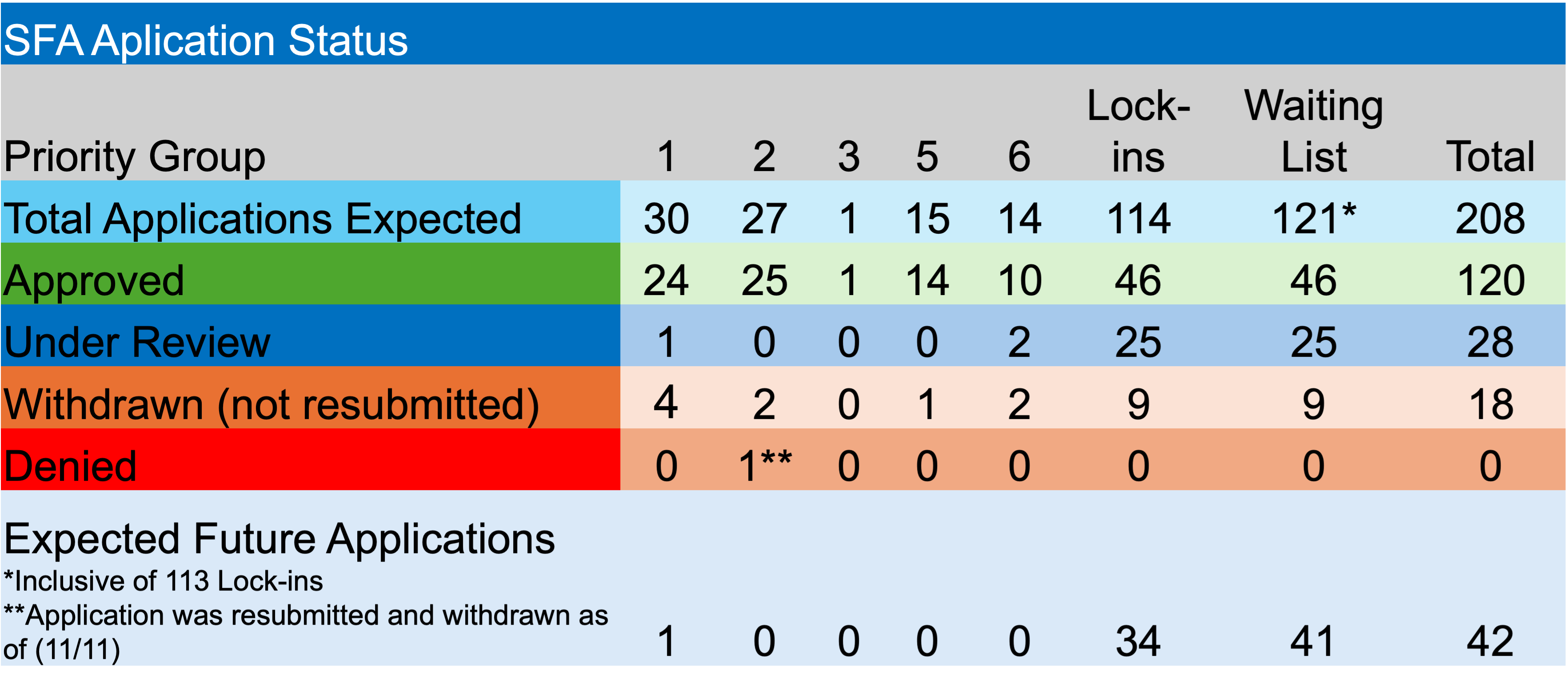
Regarding the implementation of ARPA, the PBGC was fairly busy last week. It has been a while since we saw a Priority Group 1 member file an application. As of last week, there were 6 Group 1 members that had not gotten approval for SFA. The Union de Tronquistas de Puerto Rico Local 901 Pension Plan, from San Juan, PR, submitted a revised application seeking $37.5 million for its 3,397 members. The PBGC will have until July 18, 2025, to render a decision or the plan automatically receives the grant.

In other ARPA news, Alaska Plumbing and Pipefitting Industry Pension Plan, a non-Priority Group member, received approval for their revised SFA application. They will receive $109.3 million for 1,722 plan participants. This is the 114 multiemployer plan to receive an SFA award. Grants now total $71.3 billion that support 1.54 million American workers.

Lastly, there were no applications denied or excess SFA repaid, but there were two applications withdrawn. Local 888 Pension Fund and Laborers’ Local No. 91 Pension Plan each withdrew their initial application. In total, these plans were seeking $177.9 million for just under 4,400 members.

There remains significant work ahead for the PBGC that must review and approve nearly 90 applications. It took the PBGC more than 3 1/2 years to approve the first 114. If I remember correctly, this legislation wraps up at the end of 2026. Let’s hope that the critical impediments that created fits and starts are now behind them and it is full steam ahead.

FOMC and Powell Deliver Worrying Message

By: Russ Kamp, CEO, Ryan ALM, Inc.

I produced a post recently titled, “Parallels to the 1970s?” in which I discussed the challenging economic environment that existed during the 1970s as a result of two oil shocks and some sketchy decision making on the part of the US Federal Reserve. The decade brought us a new economic condition called stagflation, which was a term coined in 1965 by British politician Lain Macleod, but not widely used or recognized until the first oil embargo in 1973. Stagflation is created when slow economic growth and inflation are evident at the same time.

According to the graph above, the FOMC is beginning to worry about stagflation reappearing in our current economy, as they reduced the expectations for GDP growth (the Atlanta Fed’s GDPNow model has Q1’25 growth at -1.8%), while simultaneously forecasting the likelihood of rising inflation. Not good. If you think that the FOMC is being overly cautious, look at the recent inflation forecasts from several other entities. Seems like a pattern to me.

Yet, market participants absorbed the Powell update as being quite positive for both stocks and bonds, as markets rallied soon after the announcement that the FOMC had held rates steady. Why? There is great uncertainty as to the magnitude and impact of tariffs on US trade and economic growth. If inflation does move as forecasted, why would you want to own an active bond strategy? If growth is moderating, and in some cases forecasted to collapse, why would you want to own stocks? Aren’t earnings going to be hurt in an environment of weaker economic activity? Given current valuations, despite the recent pullback, caution should be the name of the game. But, it seems like risk on.

Given the uncertainty, I would want to engage in a strategy, like cash flow matching (CFM), that brought an element of certainty to this very confusing environment. CFM will fully fund the liability cash flows (benefits and expenses) with certainty providing timely and proper liquidity to meet my near-term obligations, so that I was never in a position where I had to force liquidity where natural liquidity wasn’t available. Protecting the funded ratio of my pension plan would be a paramount objective, especially given how far most plans have come to achieve an improved funding status.

I’ve written on many occasions that the nearly four decades decline in rates was the rocket fuel that drove risk assets to incredible heights. It covered up a lot of sins in how pensions operated. If a decline in rates is the only thing that is going to prop up these markets, I doubt that you’ll be pleased in the near-term. Bifurcate your assets into two buckets – liquidity and growth – and buy time for your pension plan to wade through what might be a very challenging market environment. The FOMC was right to hold rates steady. Who knows what their next move will be, but in the meantime don’t bet the ranch that inflation will be corralled anytime soon.

That Door’s Closed. What’s behind Door #2?

By: Russ Kamp, CEO, Ryan ALM, Inc.

I’ve mentioned often through posts on this blog that we as an industry tend to overwhelm good ideas by allocating ridiculous sums of money in the pursuit of the next great idea. Sure, the idea was terrific several years ago, but today…? We are currently witnessing the negative impact of such an occurrence in private equity. According to many recent reports, the ability to generate liquidity from PE funds is proving to be as challenging as it has ever been. There are only two ways to liquidate holdings in a private fund: 1) a private transaction with a company or another PE fund, and 2) an initial public offering (IPO).

It appears that neither option is readily available to the private equity advisor at this time. Public markets seem to have lost their luster, as there are more than 1,000 fewer companies today than just 10-years ago. Current valuations are also acting as an impediment to going public with portfolio companies. Couple this with the fact that the lack of transactions is limiting the liquidity available to engage in private transactions among PE firms.

Given this situation, one would think that perhaps PE firms and their investors would reduce the demand for product and allow for the natural digestion of the “excess” capital. But no, that does not seem to be the case. According to an article by Claire Ruckin (Bloomberg), private equity firms are “turning to cash-rich credit investors for money to pay dividends to themselves and their backers.” Furthermore, a few are “getting back as much as they first invested, if not more, in effect leaving them with little or no equity in some of their biggest companies.” So much for being equity funds!

According to Claire’s article, more than 20 businesses in the US and Europe have borrowed to make payouts to their owners, according to Bloomberg-compiled data. Ironically, these “dividend recap” deals are a boon to lenders (private creditors) who have lots of cash to deploy. Could this be indicative of another product area overwhelmed by pension cash flows? Private equity firms are happy to take those resources off the creditors hands to return capital to their investors, but is the stacking of additional debt on these companies a good strategy? What happens if the current administrations policies don’t result in growth and worse, lead us into recession? Will these deals prove to be a house of cards?

As we’ve mentioned just shy of 1 million times now, a pension plan’s primary objective should be to SECURE the promised benefits at a reasonable cost and with prudent risk. Do you think that allowing private equity firms, which are already expense investment vehicles, to stack additional debt on top of their equity investments is either a reasonable cost or fiduciarily prudent? Come on! What are we trying to do here?

Defined benefit plans are critically important for the American worker. Continuing to place bets on the success of a PE firm to identify “attractive” equity investments in an environment as challenging as this one and then allowing them to “double down” by adding layers of debt just to pretend that capital is being returned to the investor is just wrong. Let’s get back to pension basics when we used the plan’s specific liabilities to drive asset allocation decisions that centered around securing the promised benefits. You want to gamble – go to Atlantic City. DB pensions plans aren’t the place.

ARPA Update as of March 14, 2025

By: Russ Kamp, CEO, Ryan ALM, Inc.

Happy St. Patrick’s Day! I’m proud to be half Irish (Grandmother’s name is Margaret Mary O’Brien). Today we honor St. Patrick, the patron Saint of Ireland. There may be a few among us who may also honor Arthur Guinness today, the inventor of Guinness beer, which he founded at St. James’s Gate in 1759. Enjoy your day!

Regarding the PBGC’s implementation of the ARPA legislation, last week was a relatively quiet week, as the eFiling portal remains temporarily closed. As a result, no new applications were submitted seeking Special Financial Assistance (SFA). Fortunately, there were no applications denied or withdrawn and no plans repaid excess SFA due to census issues. There were also no additions to the waiting list.

However, there were three non-priority group funds receiving approval from the PBGC for SFA. These included, U.F.C.W. District Union Local Two and Employers Pension Fund, Local 1783 I.B.E.W. Pension Plan, and the Cement Masons Local Union No. 567 Pension Plan. The UFCW and IBEW plans had revised applications approved, while the Masons cemented approval with its initial submission. In total, these funds will receive $183.9 million for 6,498 plan participants.

The 24 plans currently under review are seeking $2.9 billion in SFA for more than 335k plan participants. That’s a lot of American workers hoping to get the pension that was promised. Also, the 113 plans that have received approval to date have garnered $71.2 billion in SFA that supports 1.54 million pensioners. Great job!

Today’s quiz: Why is the shamrock synonymous with St. Patrick’s Day?

Answer: It represents the Holy Trinity.

Real GDP Exceeding Real Potential GDP

By: Russ Kamp, CEO, Ryan ALM, Inc.

I was introduced to the St. Louis Fed’s amazing data base – FRED – many years ago by a former Invesco colleague. What is FRED? According to the St. Louis Fed’s website, “FRED is short for Federal Reserve Economic Data, and FRED is an online database consisting of hundreds of thousands of economic data time series (presently >825k) from scores of national, international, public, and private sources. FRED, created and maintained by the Research Department at the Federal Reserve Bank of St. Louis, goes far beyond simply providing data: It combines data with a powerful mix of tools that help the user understand, interact with, display, and disseminate the data.”

FRED is an amazing tool, but the purpose of this blog today is not to laud FRED, but to highlight two data series that I have followed for several years – Real GDP and Real Potential GDP. Real GDP is self-explanatory, but what is Real Potential GDP? “Real potential GDP is the CBO’s estimate of the output the economy would produce with a high rate of use of its capital and labor resources. The data is adjusted to remove the effects of inflation.” The data series starts in Q1’49 and currently runs to Q4’2034, which forecasts Real GDP to be $27.8 trillion at that time. Real GDP is currently (Q4’24) at $23.5 trillion.

Currently, Real GDP is exceeding what the CBO believes is the Real Potential GDP for our economy by a record amount of $616 billion in $ terms or about 2.5%. If you believe that the CBO’s estimate of potential GDP is close to reality, then it shouldn’t be surprising that inflation remains an issue, despite the marginal improvement disclosed earlier this week (core CPI at 3.1%). As my former colleague and mentor, Charles DuBois has said, “if government spending (or private spending, for that matter) exceeds the economy’s real resources available to absorb that spending, then inflation will likely result.” That’s where we are today, folks.

The growing and fairly consistent fiscal deficit continues to provide stimulus to the private sector (all spending = all income) creating demand for goods and services that exceeds the natural capacity of our economy as measured by the CBO despite the Fed’s aggressive action to temper some of that demand through elevated interest rates, which began in March 2022. While this relationship exists, it makes sense for the Fed to pause its easing of rates, which they seem to have at this time, but we’ll get more insight when they meet next week.

Also reflected in the graph above, previous peaks in Real GDP exceeding the CBO’s Real Potential GDP (’73, ’78, ’89, ’99, ’07) have been followed by economic and market disruptions, some quite significant. What does that portend for today’s market given the current levels?

Lessons Learned?

By: Russ Kamp, CEO, Ryan ALM, Inc.

My wife and I are rewatching The West Wing, and we are often amazed (disappointed) by how many of the social issues discussed 20 years ago when the show first aired that are still being debated today. It really just seems like we go around in circles. Well, unfortunately, the same can be said about pensions and supposed pension reforms. We need to reflect on what lessons were learned following the Great Financial Crisis of 2007-2009, when pension America saw its funded status plummet and contribution expense dramatically escalate. Have we made positive strides?

Unfortunately, with regard to the private sector, we continued to witness an incredible exodus from defined benefit plans and the continued greater reliance on defined contribution plans, which is proving to be a failed model. That activity appears to have benefited corporate America, but how did that action work for plan participants, who are now forced to fund, manage, and then disburse a “retirement” benefit through their own actions, which is asking a lot from untrained individuals, who in many cases don’t have the discretionary income to fund these programs in the first place.

With regard to public pension systems, we saw a lot of “action”. There were steps to reduce the return on asset assumption (ROA) for many systems – fine. But, that forced contributions to rise rapidly, creating a greater burden on state and municipal budgets that resulted in the siphoning off of precious financial resources needed to fund other social issues. In addition, there was great activity in creating additional benefit “tiers” (tears?), in which newer plan participants, and some existing members, were asked to fund more of their benefit through new or greater employee contributions, longer tenures before retirement, and more modest benefits to be paid out at retirement. Again, I would argue are not pension lessons learned, but are in fact benefit cuts for plan participants.

Fortunately, for multiemployer plans, ARPA pension legislation has gone a long way to securing the funded status and benefits for 110 plans that were once labeled as Critical or worse, Critical and Declining. There are another 90 pension plans or so to go through the application process in the hopes of securing special financial assistance. But have we seen true pension reform within these funds and the balance of plans that had not fallen into critical status?

It seems to me that most of the “lessons learned” have nothing to do with how DB pension plans are managed, but rather asks that plan participants bear the consequences of a failed pension model. A model that has focused on the ROA as if it were the Holy Grail. Pension plans should have been focused on the promise (benefit) that was made to their participants, and not on how much return they could generate. The focusing on a return target has certainly created a lot more uncertainty and volatility. As we’ve been reporting, equity and equity-like exposure within multiemployer and public pension systems was greater coming into 2025 then the levels that they were in 2007. What lesson was learned?

Pension America is once again suffering under the weight of declining asset values and falling interest rates. When will we truly learn that continuing to manage DB plans with a focus on return is NOT correct? The primary objective needs to be the securing of the promised benefits at a reasonable cost and with prudent risk. Shifting wads of money into private equity or private credit and thinking that you’ve diversified away equity exposure is just silly. I don’t know what the new administration’s policies will do for growth, inflation, interest rates, etc. I do know that they are currently creating a lot of angst among the investment community. Bring some certainty to the management of pensions through a focus on the promise is superior to continuing to ride the rollercoaster of performance.