FOMC and Powell Deliver Worrying Message

By: Russ Kamp, CEO, Ryan ALM, Inc.

I produced a post recently titled, “Parallels to the 1970s?” in which I discussed the challenging economic environment that existed during the 1970s as a result of two oil shocks and some sketchy decision making on the part of the US Federal Reserve. The decade brought us a new economic condition called stagflation, which was a term coined in 1965 by British politician Lain Macleod, but not widely used or recognized until the first oil embargo in 1973. Stagflation is created when slow economic growth and inflation are evident at the same time.

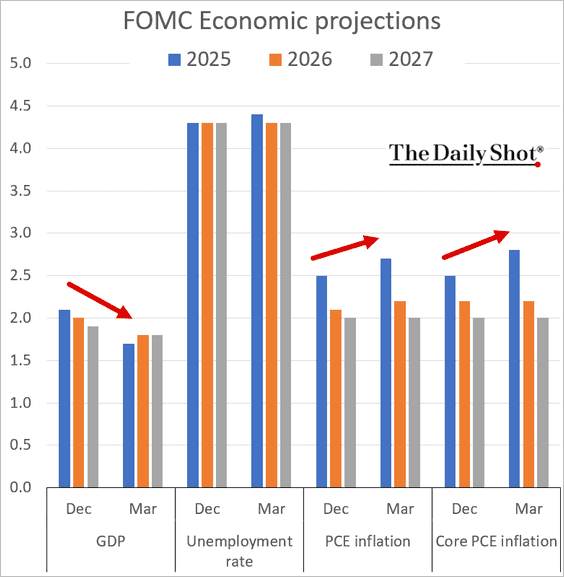
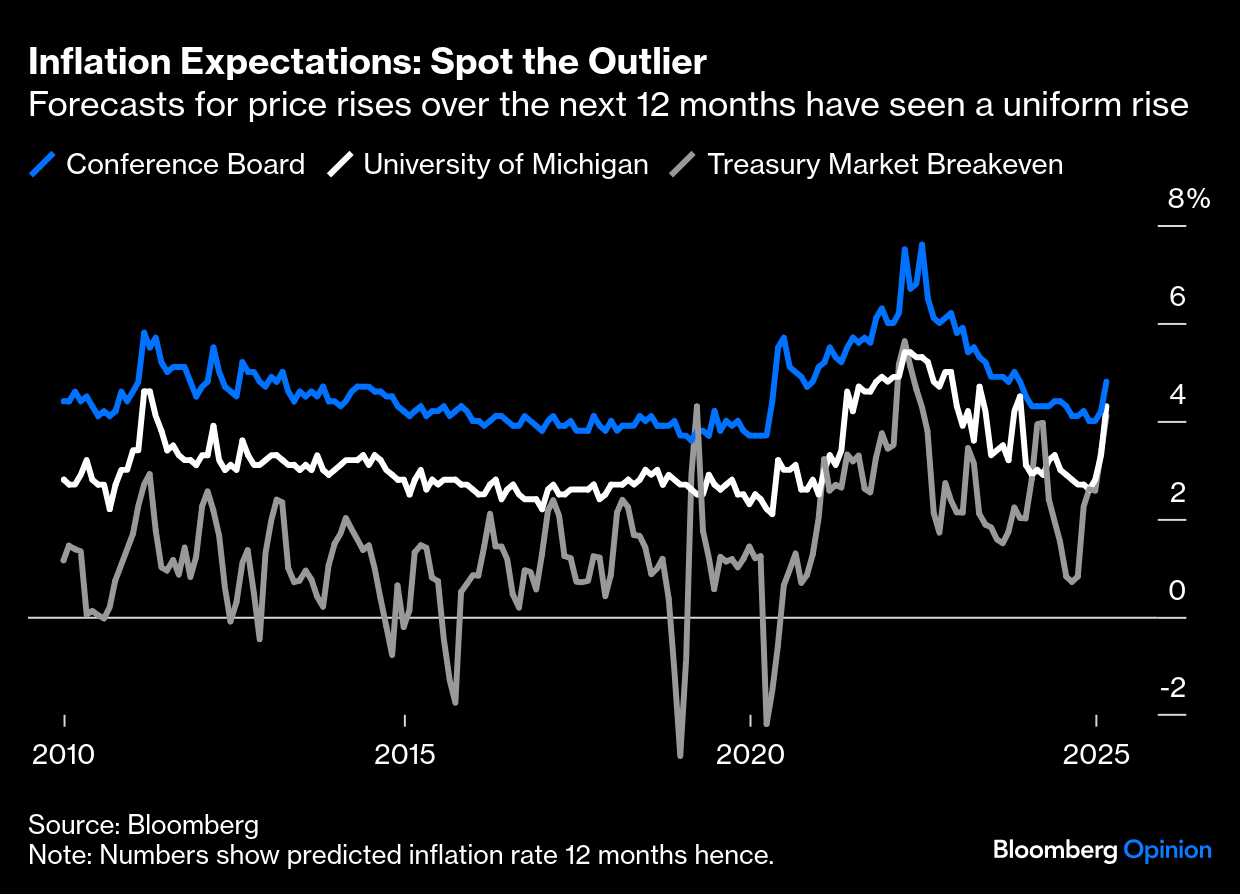
According to the graph above, the FOMC is beginning to worry about stagflation reappearing in our current economy, as they reduced the expectations for GDP growth (the Atlanta Fed’s GDPNow model has Q1’25 growth at -1.8%), while simultaneously forecasting the likelihood of rising inflation. Not good. If you think that the FOMC is being overly cautious, look at the recent inflation forecasts from several other entities. Seems like a pattern to me.

Yet, market participants absorbed the Powell update as being quite positive for both stocks and bonds, as markets rallied soon after the announcement that the FOMC had held rates steady. Why? There is great uncertainty as to the magnitude and impact of tariffs on US trade and economic growth. If inflation does move as forecasted, why would you want to own an active bond strategy? If growth is moderating, and in some cases forecasted to collapse, why would you want to own stocks? Aren’t earnings going to be hurt in an environment of weaker economic activity? Given current valuations, despite the recent pullback, caution should be the name of the game. But, it seems like risk on.

Given the uncertainty, I would want to engage in a strategy, like cash flow matching (CFM), that brought an element of certainty to this very confusing environment. CFM will fully fund the liability cash flows (benefits and expenses) with certainty providing timely and proper liquidity to meet my near-term obligations, so that I was never in a position where I had to force liquidity where natural liquidity wasn’t available. Protecting the funded ratio of my pension plan would be a paramount objective, especially given how far most plans have come to achieve an improved funding status.

I’ve written on many occasions that the nearly four decades decline in rates was the rocket fuel that drove risk assets to incredible heights. It covered up a lot of sins in how pensions operated. If a decline in rates is the only thing that is going to prop up these markets, I doubt that you’ll be pleased in the near-term. Bifurcate your assets into two buckets – liquidity and growth – and buy time for your pension plan to wade through what might be a very challenging market environment. The FOMC was right to hold rates steady. Who knows what their next move will be, but in the meantime don’t bet the ranch that inflation will be corralled anytime soon.

Real GDP Exceeding Real Potential GDP

By: Russ Kamp, CEO, Ryan ALM, Inc.

I was introduced to the St. Louis Fed’s amazing data base – FRED – many years ago by a former Invesco colleague. What is FRED? According to the St. Louis Fed’s website, “FRED is short for Federal Reserve Economic Data, and FRED is an online database consisting of hundreds of thousands of economic data time series (presently >825k) from scores of national, international, public, and private sources. FRED, created and maintained by the Research Department at the Federal Reserve Bank of St. Louis, goes far beyond simply providing data: It combines data with a powerful mix of tools that help the user understand, interact with, display, and disseminate the data.”

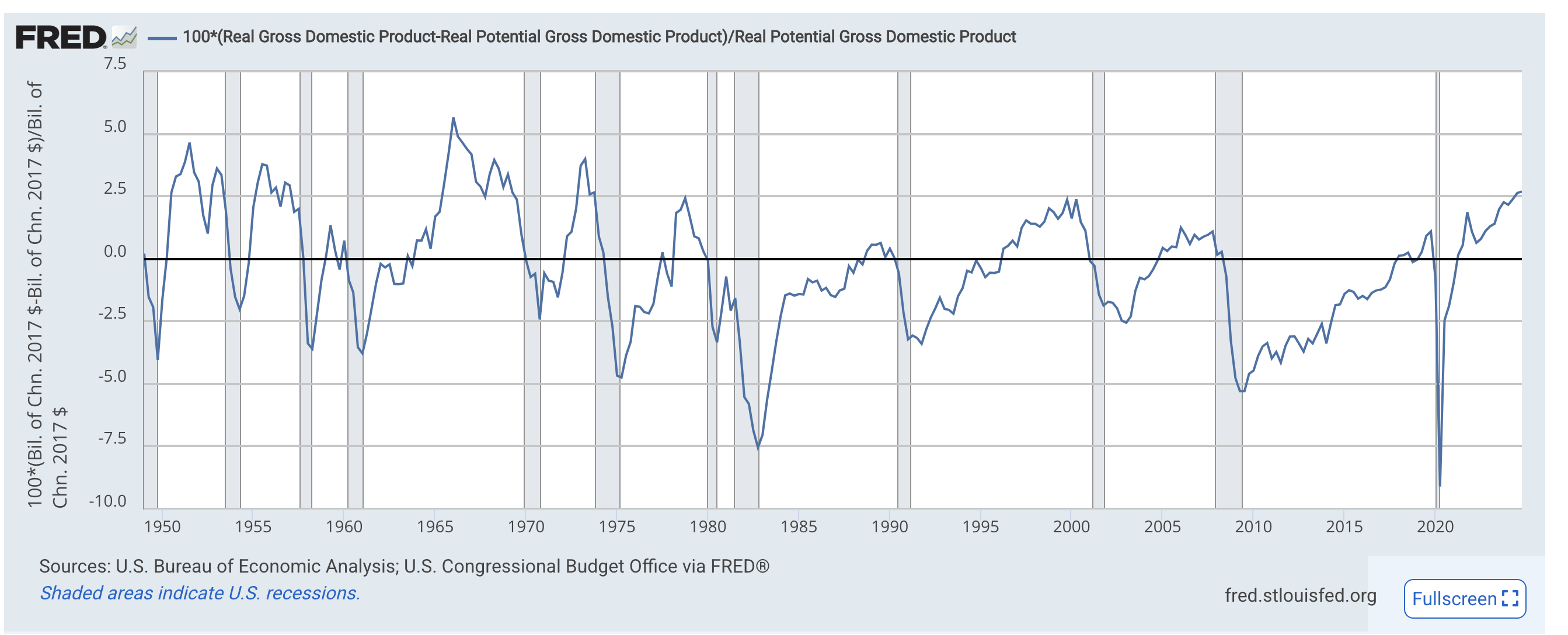
FRED is an amazing tool, but the purpose of this blog today is not to laud FRED, but to highlight two data series that I have followed for several years – Real GDP and Real Potential GDP. Real GDP is self-explanatory, but what is Real Potential GDP? “Real potential GDP is the CBO’s estimate of the output the economy would produce with a high rate of use of its capital and labor resources. The data is adjusted to remove the effects of inflation.” The data series starts in Q1’49 and currently runs to Q4’2034, which forecasts Real GDP to be $27.8 trillion at that time. Real GDP is currently (Q4’24) at $23.5 trillion.

Currently, Real GDP is exceeding what the CBO believes is the Real Potential GDP for our economy by a record amount of $616 billion in $ terms or about 2.5%. If you believe that the CBO’s estimate of potential GDP is close to reality, then it shouldn’t be surprising that inflation remains an issue, despite the marginal improvement disclosed earlier this week (core CPI at 3.1%). As my former colleague and mentor, Charles DuBois has said, “if government spending (or private spending, for that matter) exceeds the economy’s real resources available to absorb that spending, then inflation will likely result.” That’s where we are today, folks.

The growing and fairly consistent fiscal deficit continues to provide stimulus to the private sector (all spending = all income) creating demand for goods and services that exceeds the natural capacity of our economy as measured by the CBO despite the Fed’s aggressive action to temper some of that demand through elevated interest rates, which began in March 2022. While this relationship exists, it makes sense for the Fed to pause its easing of rates, which they seem to have at this time, but we’ll get more insight when they meet next week.

Also reflected in the graph above, previous peaks in Real GDP exceeding the CBO’s Real Potential GDP (’73, ’78, ’89, ’99, ’07) have been followed by economic and market disruptions, some quite significant. What does that portend for today’s market given the current levels?

Parallels to the 1970s?

By: Russ Kamp, CEO, Ryan ALM, Inc.

My recollection of the 1970s has more to do with playing high school sports, graduating from PPHS in 1977, and then going off to Fordham where I would meet my wife in an economics class in 1979. I wasn’t really focused on the economy throughout much of the decade. You see, college was reasonably affordable, and gas and tolls (GWB) were not priced outrageously, so getting back and forth to the Bronx wasn’t crushing for me and my parents.

However, I do recall the two oil embargoes that rocked the economy during the decade. I vividly recall the 1973 oil embargo that was triggered by the Yom Kippur War. I was a newspaper delivery boy for the Hudson Dispatch and was frequently amazed by the long gas lines that would stretch for blocks on both odd and even days, as I drove by on my bike. The Organization of Arab Petroleum Exporting Countries instituted the oil embargo against any country supporting Israel, including the U.S. This led to a dramatic increase in oil prices from about $3/barrel to roughly $12/barrel. This action led to widespread economic disruption, and as you can imagine, significant inflationary pressures.

The 1979 oil crisis was precipitated by the Iranian Revolution which saw the overthrow of the Shah of Iran in February 1979. The Revolution created a significant disruption in oil production in Iran, causing global oil supply issues. Similarly, to the 1973 crisis, oil prices surged from about $14/barrel to nearly $40/barrel. Once again, gasoline shortages materialized and inflation rose rather dramatically. This oil impact would lead to a period of economic stagnation that would eventually be defined as “stagflation”.

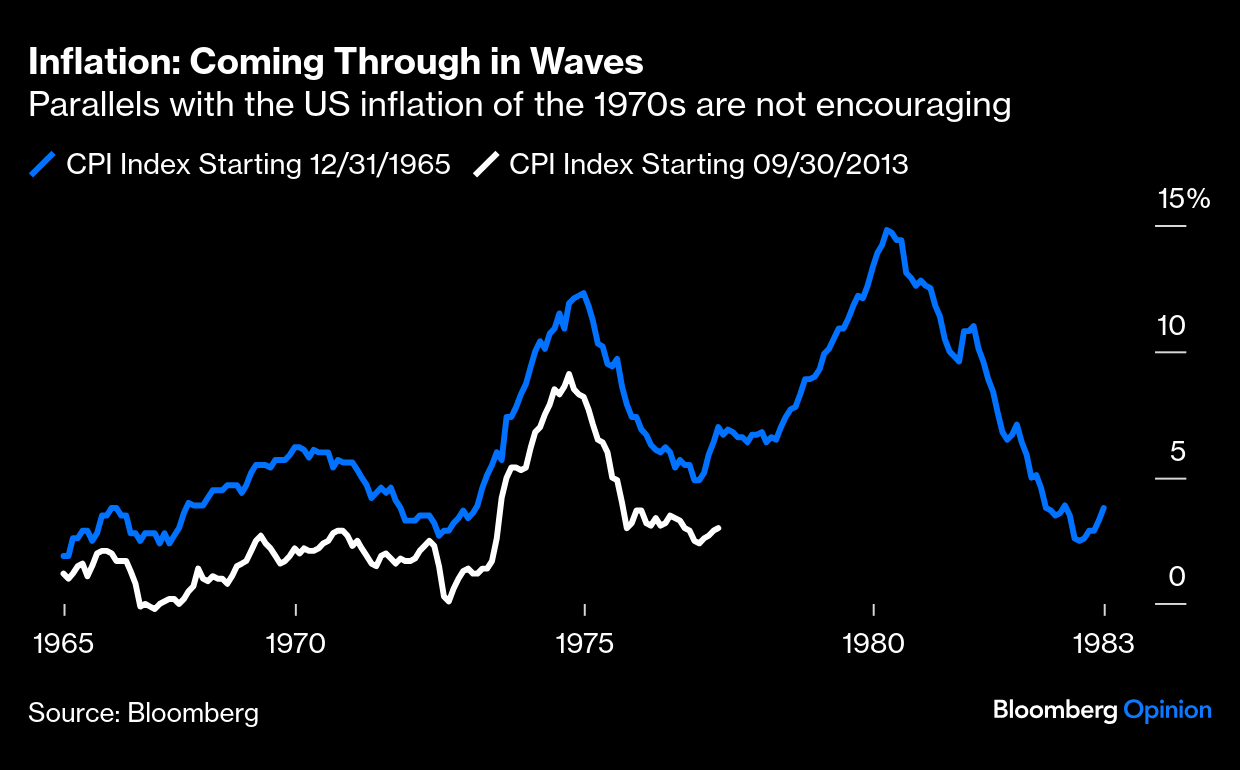
Now, I am NOT saying that we are about to face significant oil embargoes. But I am reminding everyone that history does have a tendency to repeat itself even if the players aren’t exactly the same. The graph below is pretty eye-opening, at least to me.

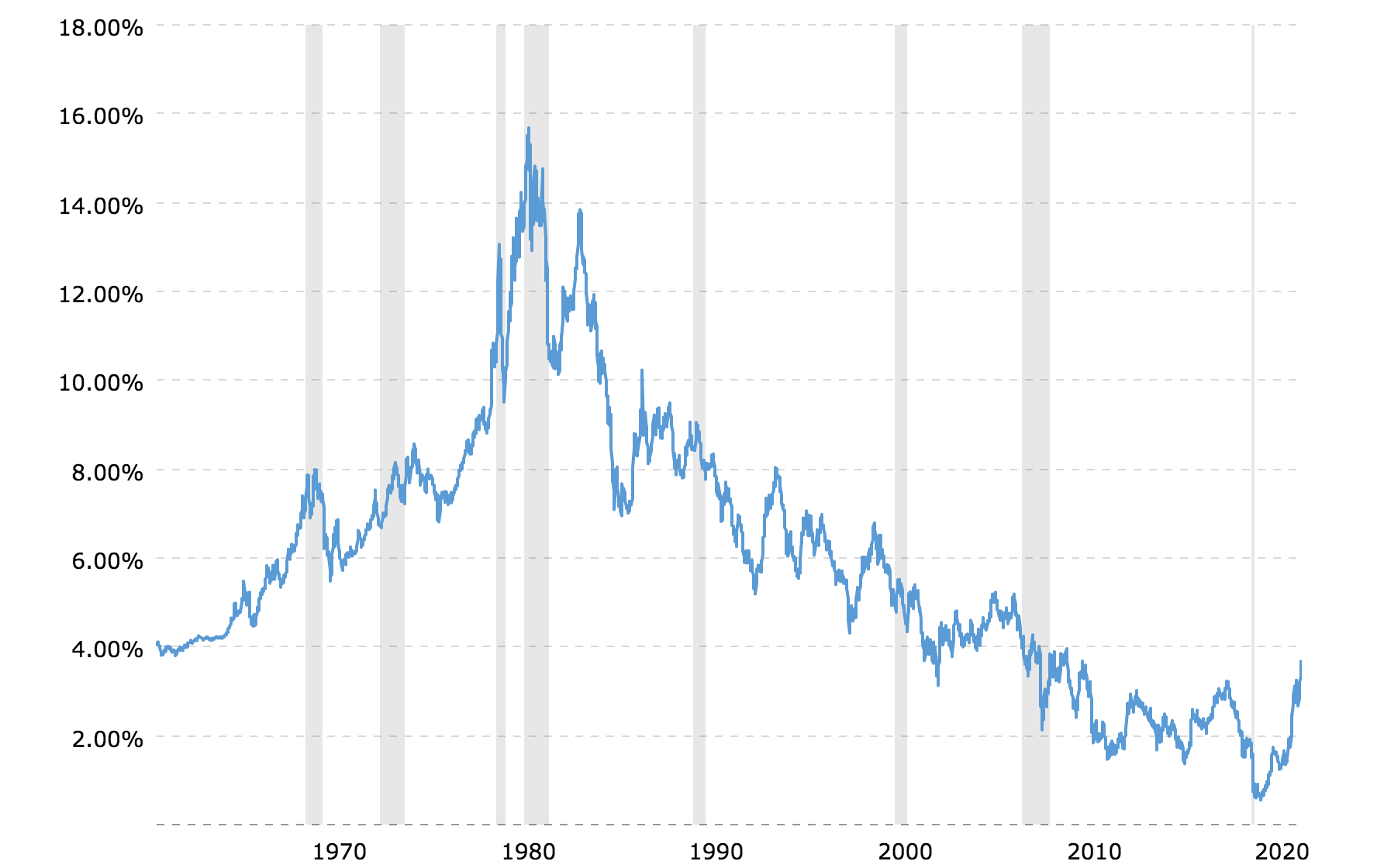
For those of you who can recall the 1970s, you’ll remember that the US Federal Reserve tried to mitigate inflation through aggressive increases in the Fed Funds Rate, which would eventually hit 20% in March 1980. As a result of their action, U.S. Treasury yields rose dramatically, too. For instance, the yield on the US 10-year Treasury note would peak at 15.84% in September 1981. As an FYI, I would enter our industry in October 1981.

Despite the aggressive action by the Fed’s FOMC beginning in March 2022, inflation has not been brought under control. Were they premature in reducing the FFR 3 times and by 1% to end 2024? A case could certainly be made that they were. So, where do we go from here? There certainly appears to be some warning signs that inflation could raise its ugly head once more. We are in the midst of a rebound in food inflation, and not just eggs. I just read this morning that those heating with natural gas will see about a 10% increase in their bills relative to last year – ouch. There are other worrying signs as well without even getting into the potential impact from policy changes brought about by the new administration.

It is quite doubtful that we will witness peaks in inflation and interest rates described above, but who really knows? Given the great uncertainty, and the potentially significant ramifications of a renewed inflationary cycle (2022 was not that long ago), plan sponsors should be working diligently to secure the current funding levels for their plans. Why continue to subject all of the assets to the whims of the markets for which they have no control over? Inflationary concerns rocked both the equity and bond markets in 2022. In fact, the BB Aggregate Index suffered its worst loss (-13%) by more than 4X the previous worst annual return (-2.9% in 1994). Rising rates crush traditional core fixed income strategies, but they are a beautiful benefit when matching asset cash flows (principal and interest) to liability cash flows (benefits and expenses) through CFM.

As a plan sponsor, I’d want to find as much certainty as possible, given the abundant uncertainty of markets each and every day. As Milliman has reported, both private and public pension funded ratios are at levels not seen in years. Don’t blow it now!

Nothing Here! Really?

By: Russ Kamp, CEO, Ryan ALM, Inc.

Yesterday’s financial news delivered an inflation surprise (0.5% vs. 0.3%), at least to me and the bond market, if not to the U.S. equity market. The Federal reserve had recently announced a likely pause in their rate reduction activity given their concerns about the lack of pace in the inflation march back to its 2% target. This came on the heels of “Street” expectations after the first 0.5% cut in the FFR that there were “likely” to be eight (8!) interest rate cuts by the summer of 2025. Oh, well, the two cuts that we’ve witnessed since that first move last September may be all we get for a while. “Ho hum” replied the U.S. stock market.

The discounting of yesterday’s inflation release is pretty astounding. Like you, I’ve read the financial press and the many emails that have addressed the CPI data 52 ways to Sunday. Much of the commentary proclaims this data point as a one-off event. For instance, the impact of egg price increases (13.8% last month alone) is temporary, as bird flu will be contained shortly. Seasonal factors impacting “sticky-priced” products tend to be announced in January. I guess those increases shouldn’t matter since they only impact the consumer in January. As a reminder, Core inflation (minus food and energy) rose from 3.1% to 3.3% last month. That seems fairly significant, but we are told that the other three core readings were down slightly, so no big deal. Again, really? Each of those core measures are >3% or more than 1% greater than the Fed’s target.

Then there are those that say, “what is significant about the Fed’s 2% inflation objective anyway”? It is an arbitrary target. Well, that may be the case, but for the millions of Americans that are marginally getting by, the difference between 2% and 3% inflation is fairly substantial, especially when we come up with all of these measures that exclude food, energy, housing (shelter), etc. Are you kidding?

As mentioned previously, expectations for a massive cut in interest rates due to the perception that inflation was well contained have shifted dramatically. Just look at the graph above (thanks, Bloomberg). Following the Fed’s first FFR cut of 50 bps, inflation expectations plummeted to below 1.5% for the two-year breakeven. Today those same expectations reveal a nearly 3.5% expectation. Rising inflation will certainly keep the Fed in check at this time.

As mentioned earlier in this post, U.S. equities shrugged off the news as if the impact of higher inflation and interest rates have no impact on publicly traded companies. Given current valuations for U.S. stocks, particularly large cap companies, any inflation shock should send a shiver down the spines of the investing community. Should interest rates rise, bonds will surely become a more exciting investment opportunity, especially for pension plans seeking a ROA in the high 6% area. How crazy are equity valuations? Look at the graph below.

The current CAPE reading has only been greater during the late 1990s and we know what happened as we entered 2000. The bursting of the Technology bubble wasn’t just painful for the Information Technology sector. All stocks took a beating. Should U.S. interest rates rise as a result of the current inflationary environment, there is a reasonable (if not good) chance that equities will get spanked. Why live with this uncertainty? It is time to get out of the game of forecasting economic activity. Why place a bet on the direction of rates? Why let your equity “winnings” run? As a reminder, managing a DB pension plan should be all about SECURING the promised benefits at a reasonable cost and with prudent risk. Is maintaining the status quo prudent?

Is Now The Time To Act?

By: Russ Kamp, Managing Director, Ryan ALM, Inc.

Equity market participants were recently reminded of the fact that markets can fall, and unfortunately they usually don’t decline with any kind of notice. The impetus behind the markets’ most recent challenging day was the Fed’s relatively tame forecast for likely interest rate moves in 2025. There is no question in my mind that the nearly 4-decade decline in rates from lofty heights achieved in the early ’80s, when the Fed Funds Rate eclipsed 20%, to the covid-fueled bottom reached in early 2020, when the yield on the 10-year Treasury Note was at 0.5%, made bond returns a lot stronger than anyone’s forecast.

It certainly seemed that the US Federal Reserve provided the security blanket any time there was a wobble in the markets. This action allowed “investors” to keep their collective foot on the gas with little fear. Sure, there were major corrections during that lengthy period, but the Fed was always there to lend a hand and a ton of stimulus that propped up the economy and markets, and ultimately the investment community. As we saw in 2022, the Fed had run out of dry powder and ultimately had to raise US interest rates to stem a vicious inflationary spike. Rates rose rather dramatically, and the result was an equity market, as measured by the S&P 500, that declined 18% for the calendar year. Bonds faired only marginally better as rising rates impacted bond principals creating a collective -12.1% return for the BB Aggregate Index.

As we enter 2025, do we once again have a situation in which the Fed’s ability to reduce rates has been curtailed due to a stronger economy than anticipated? Will the continued strength and massive government stimulus drive inflation and rates higher? According to a blog post from Apollo’c CIO, here are his list of the potential risks and the probabilities:

Risks to global markets in 2025

Interesting that he feels, like we do at Ryan ALM, Inc., that the economy is likely to be stronger than most suspect (#6) leading to higher inflation, rising rates (#7), and a 10-year Treasury Note yield in excess of 5% (#8). That yield is currently at 4.6% (as of 3:06 pm).

For those that might be skeptical, the Atlanta Fed’s GDPNow model is currently forecasting GDP growth for Q4’24 at 3.1% annualized. They have done a wonderful job forecasting quarterly growth rates. Their forecasts have consistently been above the “street’s” and as a result, much more accurate.

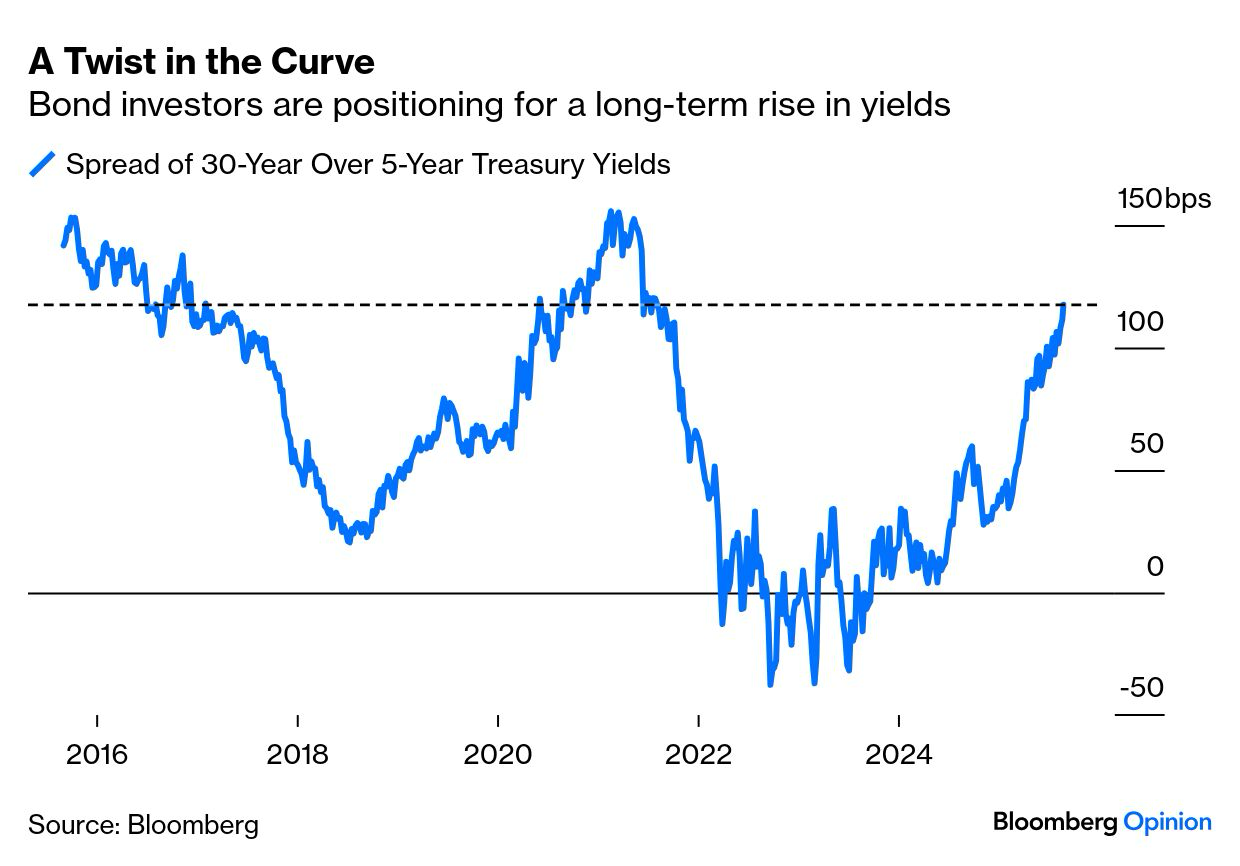
In addition, despite the third rate cut by the Federal Reserve at the most recent FOMC meeting of their benchmark Fed Funds Rate (-1.0% since the easing began), interest rates on longer dated maturities have risen quite significantly, as reflected below.

Rising US rates, stronger growth, and greater inflation may just be the formula for a significant contraction in equity valuations, especially given the current level. Be proactive. Reduce risk. Secure the promised benefits. Under no circumstance should you just let your “winnings” ride.

Not so Fast!

By: Russ Kamp, Managing Director, Ryan ALM, Inc.

You may recall in the 1970s Heinz Ketchup used Carly Simon’s song, “Anticipation” as a jingle for several of its commercials. US bond investors might just want to adopt that song once more as they wait for the anticipated rate cuts from the Federal Reserve’s FOMC. As you may recall, investors pounced early on the perceived likelihood of rate cuts, forecasting multiple cuts and a substantial move down in rates given the expectation of a less than soft landing. As a result, US rates, as measured by the Treasury yields, fell precipitously during a good chunk of the summer, bottoming out on September 16th, which was two days prior to the Fed’s first cut (0.5%).

However, economic and inflationary news has been mixed leading some to believe that the Fed may just take a more cautionary path regarding cuts. Those sentiments were echoed by Federal Reserve Chairman Powell just yesterday, who stated during a speech in Dallas, “The economy is not sending any signals that we need to be in a hurry to lower rates.” Not surprising, bond investors did not look favorably on this pronouncement and quickly drove Treasury yields upward and stocks down. If the prospect of lower rates is the only thing propping up equities at this time, investors of all ilk better be wary.

As the above graph highlights, inflation’s move to the Fed’s 2% target has been halted (temporarily?), as Core CPI has risen by 0.3% in each of the last three months. As I wrote above, the prospect of lower rates has certainly helped to prop up US equities. However, rising rates impacts the relationship of equities and bonds. According to a post by the Daily Shot, “the S&P 500 risk premium (forward earnings yield minus the 10-year Treasury yield) has turned negative for the first time since 2002, indicating frothy valuations in the US stock market.”

As a result of these recent moves in the capital markets, US pension plan sponsors would be well-served to use the elevated bond yields to SECURE the promised benefits through a cash flow matching defeasement strategy. As we’ve discussed on many occasions, not only is the liquidity to meet the promised benefits available when needed, this process buys time for the remaining assets to grow unencumbered, as they are no longer a source of liquidity. It is a win-win!

That’s comforting!

By: Russ Kamp, Managing Director, Ryan ALM, Inc.

The Fed’s meeting notes from the September 17-18 FOMC have recently been released. Here are a few tidbits:

Some officials warned against lowering rates “too late or too little” because this risked harming the labor market.

At the same time, other officials said cutting “too soon or too much” might stall or reverse progress on inflation.

Here’s my favorite:

Officials also don’t seem in agreement over how much downward pressure the current level of the Fed’s benchmark rate was putting on demand.

I have an idea, why don’t we just have each member of the Federal Reserve’s board of governors stick their finger in the air and see which way the economic winds are blowing. It may be just as effective as what we currently seem to be getting.

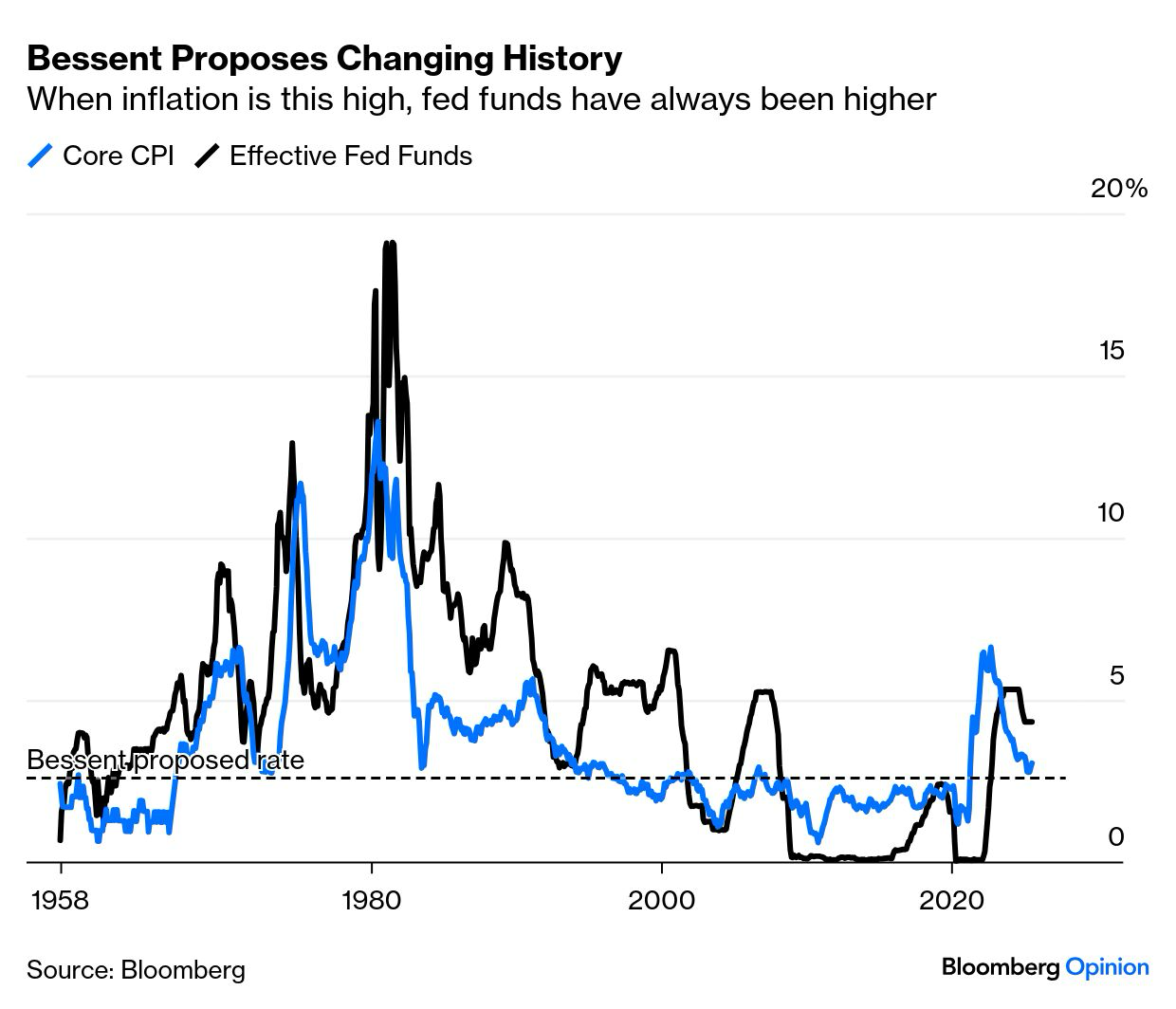
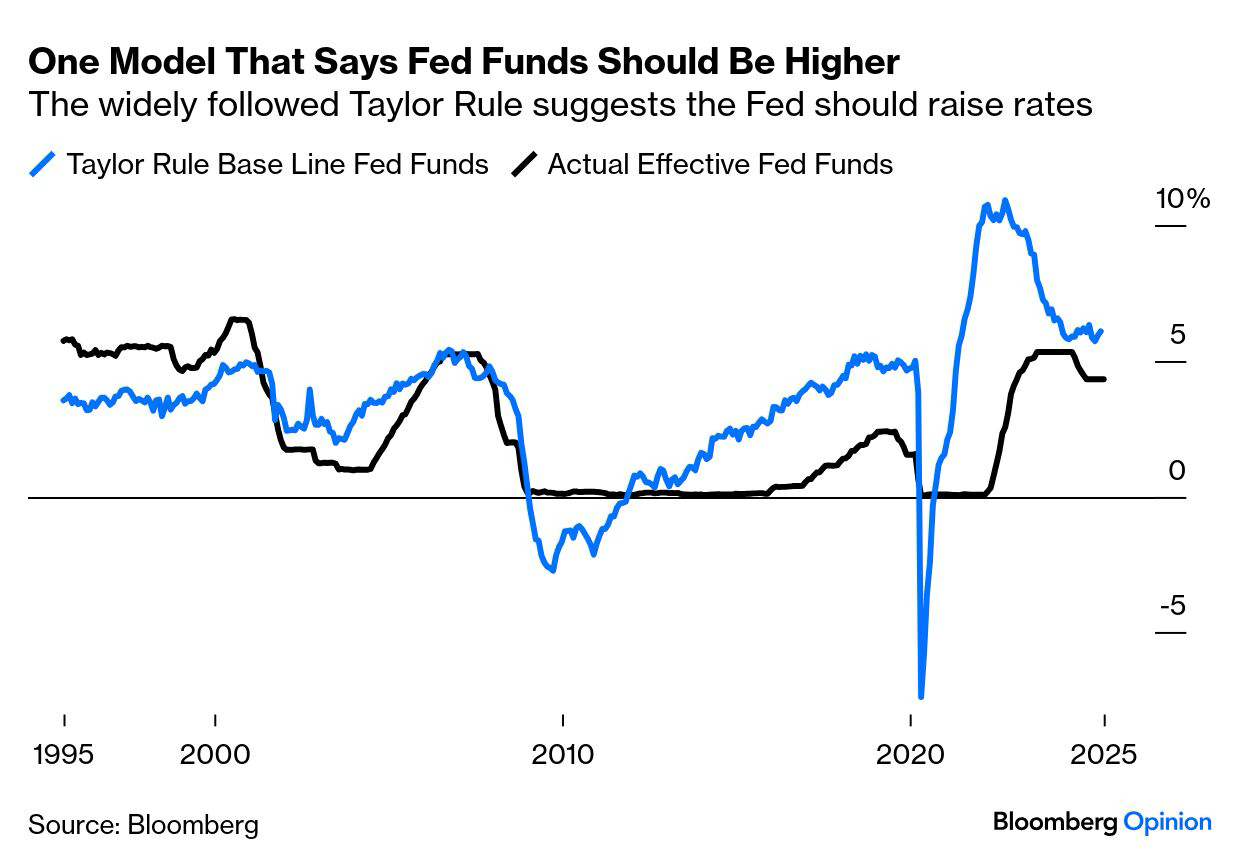
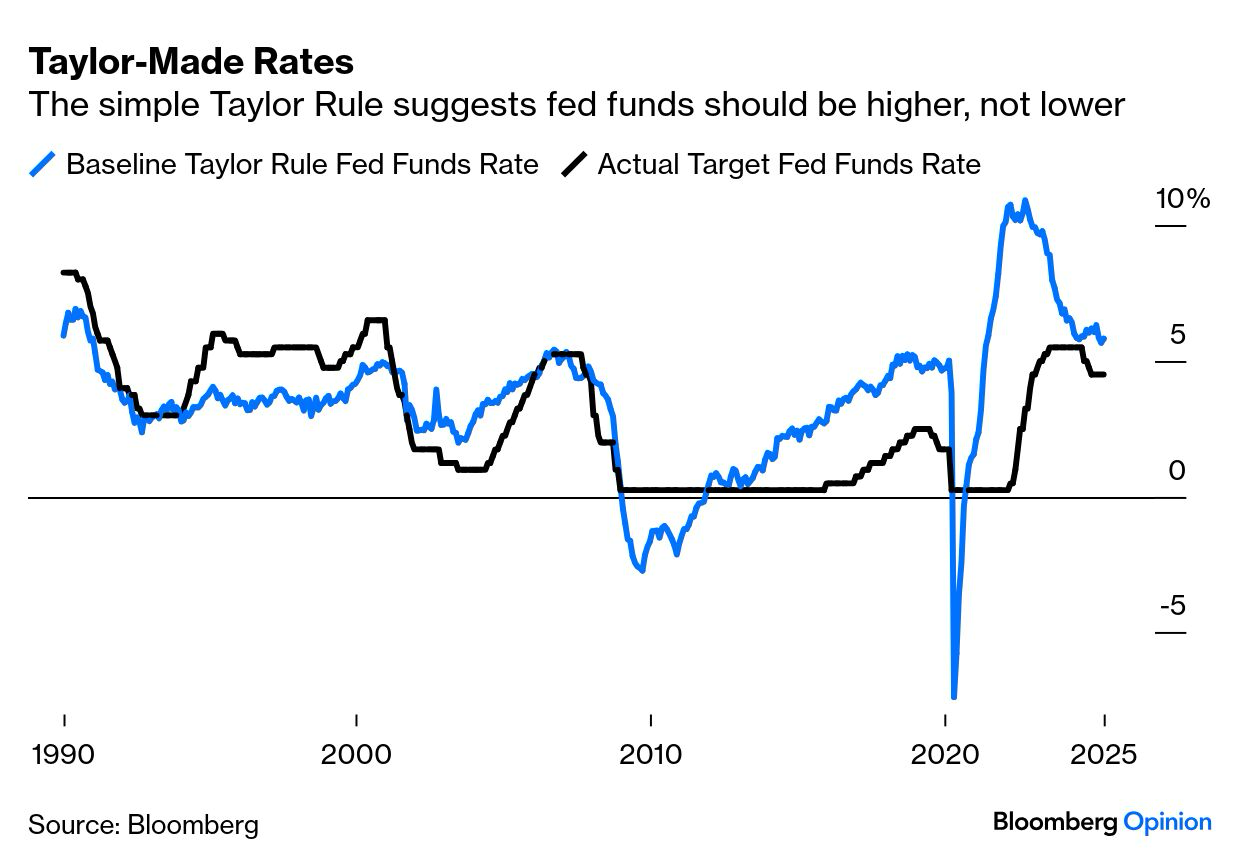
Given that the economy continues to hum along with annual GDP growth of roughly 3% and “full employment” at 4.1%, I’d suggest that having a Fed Funds Rate at 5.25%-5.50% wasn’t too constraining, if constraining at all. We’ve highlighted in this blog on many occasions the fact that US rates had been historically higher for extended periods in which both the economy and markets (equities) performed exceptionally well – see the 1990’s as one example.

Furthermore, as we’ve also highlighted, there is a conflict between current fiscal and monetary policy, as the fiscal 2024 federal deficit came in at $1.8 trillion or about $400 billion greater than the anticipated deficit at the beginning of the year. That $400 billion is significant extra stimulus that leads directly to greater demand for goods and services. How likely is it that the fiscal deficit for 2025 will be any smaller?

I believe that there are many more uncertainties that could lead to higher inflation. The geopolitical risks that reside on multiple fronts seem to have been buried at this time. Any one of those conflicts – Russia/Ukraine, Israel/rest of the Middle East, and China/Taiwan – could produce inflationary pressures, even if it just results in the US increasing the federal budget deficit to support our allies.

If just sticking one’s finger in the air doesn’t help us solve our current confusion, there is always this strategy:

We Suggested That It Might Just Be Overbought

By: Russ Kamp, Managing Director, Ryan ALM, Inc.

Regular readers of this blog might recall that on September 5th we produced a post titled, “Overbought?” that suggested that bond investors had gotten ahead of themselves in anticipation of the Fed’s likely next move in rates. At that time, we highlighted that rates had moved rather dramatically already without any action by the Fed. Since May 31, 2024, US Treasury yields for both 2-year and 3-year maturities had fallen by >0.9% to 9/5. By almost any measure, US rates were not high based on long-term averages or restrictive.

Sure, relative to the historically low rates during Covid, US interest rates appeared inflated, but as I’ve pointed out in previous posts, in the decade of the 1990s, the average 10-year Treasury note yield was 6.52% ranging from a peak of 8.06% at the end of 1990 to a low of 4.65% in 1998. I mention the 1990s because it also produced one of the greatest equity market environments. Given that the current yield for the US 10-year Treasury note was only 3.74% at that point, I suggested that the present environment wasn’t too constraining. In fact, I suggested that the environment was fairly loose.

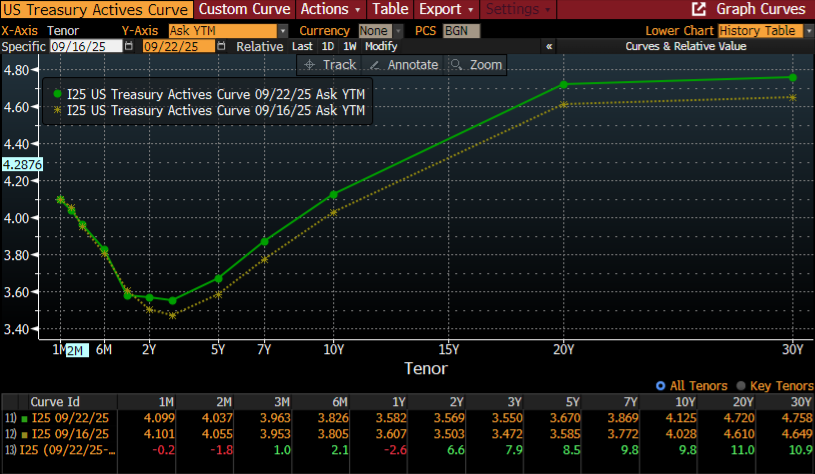
Well, as we all know, the US Federal Reserve slashed the Fed Funds Rate by 0.5% on September 18th (4.75%-5.0%). Did this action lead bond investors to plow additional assets into the market driving rates further down? NO! In fact, since the Fed’s initial rate cut, Treasury yields have risen across the yield curve with the exceptions being ultra-short Treasury bills. Furthermore, the yield curve is positively sloping from 5s to 20s.

Again, managing cash flow matching portfolios means that we don’t have to be in the interest rate guessing game, but we are all students of the markets. It was out thinking in early September that markets had gotten too far ahead of the Fed given that the US economy remained on steady footing, the labor market continued to be resilient, and inflation, at least sticky inflation, remained stubbornly high relative to the Fed’s target of 2%. Nothing has changed since then except that the US labor market seems to be gaining momentum, as jobs growth is at a nearly 6-month high and the unemployment rate has retreated to 4.1%.

There will be more gyrations in the movement of US interest rates. But anyone believing that the Fed and market participants were going to drive rates back to ridiculously low levels should probably reconsider that stance at this time.

The Heavyweight Fight May Be Tilting Toward Fiscal Policy

By: Russ Kamp, Managing Director, Ryan ALM, Inc.

You may recall that on March 22, 2024, I produced a post titled, “Are We Witnessing A Heavyweight Fight?”. The gist of the blog post was the conflict between the Fed’s desire to drive down rates through monetary policy and the Federal government’s ongoing deficit spending. At the time of publication, the OMB was forecasting a $1.6 trillion deficit for fiscal year 2024. As I noted in a post on Linkedin.com this morning, the budget office has revised its forecast that now has 2024’s fiscal deficit at $2.0 trillion.

This additional $400 billion in deficit spending will likely create additional demand for goods and services leading to a continuing struggle for the Fed and the FOMC, as they struggle to contain inflation. I also reported yesterday that rental expenses had risen 5.4% on an annual basis through May 31, 2024. Given the 32% weight of rents on the Consumer Price Index (CPI), I find it hard to believe that the Fed will be successful anytime soon in driving down inflation to their 2% target.

As a result, we believe that US interest rates are likely to remain at elevated levels to where they’ve been for the past couple of decades. These higher levels provide pension plan sponsors the opportunity to use bonds to de-risk their pension plans by securing the promised benefit payments through a defeasement strategy (cash flow matching). Furthermore, higher rates provide an opportunity for savers to finally realize some income from their fixed income investments. So, higher rates aren’t all bad! I would suggest (argue) that rates have yet to achieve a level that is constraining economic activity. Just look at the Atlanta Fed’s GDPNow model and its 3.0% annualized Real GDP forecast for Q2’24. Does that suggest a recessionary environment to you?

For those investors that have only lived through protracted periods of falling rates and/or an accommodative Federal Reserve, this time may be very different. Forecasts of Fed easing considerably throughout 2024 have proven to be quite premature. As I stated this morning, “investors” should seriously consider a different outcome for the remainder of 2024 then they went into this year expecting.

A Little History Lesson is in Order

By: Russ Kamp, Managing Director, Ryan ALM, Inc.

I continue to be surprised by the constant droning that US interest rates are too high and financial conditions are too tight. Compared to what? If the reference point is Covid-19 induced levels then you are probably right, but if the comparison is to almost any other timeframe then those proclaiming that the sky is about to fall should refer to one of the greatest decades for equities in my lifetime – the 1990s. I think most investors would agree that the 1990s provided a nearly unprecedented investing environment. One in which the S&P 500 produced an 18.02% annualized performance.

Was the economic environment of the 1990s so much better than today’s? Heck no, but let’s take a closer look. The average 10-year Treasury note yield was 6.52% ranging from a peak of 8.06% at the end of 1990 to a low of 4.65% in 1998. Given that the current yield for the US 10-year Treasury note is 4.56%, I’d suggest that the present environment isn’t too constraining. Furthermore, let’s look at the employment picture from the ’90s. If US rates aren’t high by 1990 standards, unemployment must have been very low. You’d be wrong if that was your guess. In fact, unemployment in the US ranged from 7.5% at the end of 1992 to a low of 4.2% in 1999. For the decade, we had to deal with an average of 5.75% unemployment. Today, we sit with a 3.9% unemployment rate. That level doesn’t seem too constraining, and initial unemployment claims remain quite modest.

So, current US interest rates and unemployment look attractive versus what we experienced during the ’90s. It must be that economic growth was incredibly robust to support such strong equity markets. Well, again you’d be wrong. Sure economic growth averaged 3.2% during the decade, but the Atlanta Fed’s GDPNow model is forecasting a 3.5% growth rate currently for Q2’24. This comes on the heels of a rather surprising 2023 growth rate. What else could have contributed to the 1990’s successful equity market performance that isn’t evident today? How about fiscal deficits? Perhaps the US annual deficit during the ’90s contributed significant stimulus which would have led to enhanced demand for goods and services?

I don’t think that was the case either, as the cumulative US fiscal deficit of $1.336 trillion during the 1990s, including surpluses in 1998 and 1999, is roughly $400 billion less than that which occurred in fiscal 2023 and what is predicted for 2024. Oh, my. The largest fiscal deficit during the 1990s was only $290 billion. That’s equivalent to about 2 months-worth today.

I’m confused, the 1990s produced an incredible equity market despite higher rates, higher unemployment, lower GDP growth, and little to no fiscal stimulus provided by deficit spending, yet today’s environment is constraining? Come, on. Inflation remains sticky. The American worker is enjoying (finally) some real wage growth and is gainfully employed. Rates are not too high by almost any reasonable comparison. US GDP growth is forecasted to be >3%. Where is the recession? Fiscal stimulus continues to be in direct conflict with the Fed’s monetary policy. Something that those investing during the 1990s didn’t need to worry about. Taken all together, is 2024’s environment something to be concerned about, especially relative to what transpired in the 1990s? Should the Fed be looking to reduce rates? I’ll be quite surprised if they come to that conclusion anytime soon.