What Was The Purpose?

By: Russ Kamp, CEO, Ryan ALM, Inc.

I was introduced to the brilliance of Warren Mosler through my friend and former colleague, Chuck DuBois. It was Chuck who encouraged me to read Mosler’s book, “The 7 Deadly Innocent Frauds of Economic Policy”. I would highly recommend that you take a few hours to dive into what Mosler presents. As I mentioned, I think that his insights are brilliant.

The 7 frauds, innocent or not, cover a variety of subjects including trade, the federal deficit, Social Security, government spending, taxes, etc. Regarding trade and specifically the “deficit”, Mosler would tell you that a trade deficit inures to the benefit of the United States. The general perception is that a trade deficit takes away jobs and reduces output, but Mosler will tell you that imports are “real benefits and exports are real costs”.

Unlike what I was taught as a young Catholic that it is better to give than to receive, Mosler would tell you that in Economics, it is much better to receive than to give. According to Mosler, the “real wealth of a nation is all it produces and keeps for itself, plus all it imports, minus what it exports”. So, with that logic, running a trade deficit enhances the real wealth of the U.S.

Earlier this year, the Atlanta Fed was forecasting GDP annual growth in Q1’25 of 3.9%, today that forecast has plummeted to -2.4%. We had been enjoying near full employment, moderating yields, and inflation. So, what was the purpose of starting a trade war other than the fact that one of Mosler’s innocent frauds was fully embraced by this administration that clearly did not understand the potential ramifications. They should have understood that a tariff is a tax that would add cost to every item imported. Did they not understand that inflation would take a hit? In fact, a recent survey has consumers expecting a 6.7% price jump in goods and services during the next 12-months. This represents the highest level since 1981. Furthermore, Treasury yields, after initially falling in response to a flight to safety, have marched significantly higher.

Again, I ask, what was the purpose? Did they think that jobs would flow back to the U.S.? Sorry, but the folks who suffered job losses as a result of a shift in manufacturing aren’t getting those jobs back. Given the current employment picture, many have been employed in other industries. So, given our full-employment, where would we even get the workers to fill those jobs? Again, we continue to benefit from the trade “imbalance”, as we shipped inflation overseas for decades. Do we now want to import inflation?

It is through fiscal policy (tax cuts and government spending) that we can always sustain our workforce and domestic output. Our spending is not constrained by other countries sending us their goods. In fact, our quality of life is enhanced through this activity.

It is truly unfortunate that the tremendous uncertainty surrounding tariff policy is still impacting markets today. Trillions of $s in wealth have been eroded and long-standing trading alliances broken or severely damaged. All because an “innocent” fraud was allowed to drive a reckless policy initiative. I implore you to stay away from Social Security and Medicare, whose costs can always be met since U.S. federal spending is not constrained by taxes and borrowing. How would you tell the tens of millions of Americans that rely on them to survive that another innocent fraud was allowed to drive economic policy?

Milliman – Corporate Pension Funding Falls in March

By: Russ Kamp, CEO, Ryan ALM, Inc.

Milliman has just released its monthly Milliman 100 Pension Funding Index (PFI), which analyzes the 100 largest U.S. corporate pension plans. Weak investment returns, estimated at -1.4%, drove the PFI asset level down by $25 billion during March. Current assets for the top 100 plans are now $1.3 trillion. The fall in assets was only partially offset by the rise in the discount rate (13 bps) during the month. As a result, the surplus fell by $7 billion to $51 billion as of March 31, 2025.

The discount rate ended the month at 5.49%, which reduced plan liabilities by $18 billion, to $1.25 trillion by the end of March. As a result of assets falling by more than liabilities, the PFI funded ratio dropped from 104.6% at the end of February to 104.1% at the end of March. For the quarter, discount rates fell 10 basis points and the Milliman 100 plans lost $8 billion in funded status.   

“While the slight rise in discount rates in March led to a monthly decline in plan liabilities, plan assets fell even further due to poor market performance, which caused the funded status to fall below the 104.8% level seen at the beginning of 2025,” said Zorast Wadia, author of the PFI. Given market action during the first 10 days of April, it will be interesting to see if the impact from rising rates can offset the dramatic fall in asset values. Inflation fears fueled by tariffs could lead to rising bond yields, which will help mitigate some of the risk to equities given the possibility of declining earnings. As Zorast mentioned in the Milliman release, “plan sponsors will want to consider asset-liability matching strategies to preserve their balance sheet gains from last year”, especially given that 30-year corporates are once again yielding close to 6%.

FOMC and Powell Deliver Worrying Message

By: Russ Kamp, CEO, Ryan ALM, Inc.

I produced a post recently titled, “Parallels to the 1970s?” in which I discussed the challenging economic environment that existed during the 1970s as a result of two oil shocks and some sketchy decision making on the part of the US Federal Reserve. The decade brought us a new economic condition called stagflation, which was a term coined in 1965 by British politician Lain Macleod, but not widely used or recognized until the first oil embargo in 1973. Stagflation is created when slow economic growth and inflation are evident at the same time.

According to the graph above, the FOMC is beginning to worry about stagflation reappearing in our current economy, as they reduced the expectations for GDP growth (the Atlanta Fed’s GDPNow model has Q1’25 growth at -1.8%), while simultaneously forecasting the likelihood of rising inflation. Not good. If you think that the FOMC is being overly cautious, look at the recent inflation forecasts from several other entities. Seems like a pattern to me.

Yet, market participants absorbed the Powell update as being quite positive for both stocks and bonds, as markets rallied soon after the announcement that the FOMC had held rates steady. Why? There is great uncertainty as to the magnitude and impact of tariffs on US trade and economic growth. If inflation does move as forecasted, why would you want to own an active bond strategy? If growth is moderating, and in some cases forecasted to collapse, why would you want to own stocks? Aren’t earnings going to be hurt in an environment of weaker economic activity? Given current valuations, despite the recent pullback, caution should be the name of the game. But, it seems like risk on.

Given the uncertainty, I would want to engage in a strategy, like cash flow matching (CFM), that brought an element of certainty to this very confusing environment. CFM will fully fund the liability cash flows (benefits and expenses) with certainty providing timely and proper liquidity to meet my near-term obligations, so that I was never in a position where I had to force liquidity where natural liquidity wasn’t available. Protecting the funded ratio of my pension plan would be a paramount objective, especially given how far most plans have come to achieve an improved funding status.

I’ve written on many occasions that the nearly four decades decline in rates was the rocket fuel that drove risk assets to incredible heights. It covered up a lot of sins in how pensions operated. If a decline in rates is the only thing that is going to prop up these markets, I doubt that you’ll be pleased in the near-term. Bifurcate your assets into two buckets – liquidity and growth – and buy time for your pension plan to wade through what might be a very challenging market environment. The FOMC was right to hold rates steady. Who knows what their next move will be, but in the meantime don’t bet the ranch that inflation will be corralled anytime soon.

Reminder: Pension Liabilities are Bond-like

By: Russ Kamp, CEO, Ryan ALM, Inc.

Milliman has released the results for their corporate pension index. The Milliman 100 Pension Funding Index (PFI), which tracks the 100 largest U.S. corporate pension plans showed deterioration in the funded ratio dropping from 106.0% to the 104.8% as of month-end. This was the first decline following four consecutive months of improvement. It was the fall in the discount rate from 5.60% to 5.36% during the month that lead to growth in the combined liabilities for the index constituents. As a reminder, pension liabilities (benefit payments) are just like bonds in terms of their interest rate sensitivity. As yields fall, the present value of those future promises escalate.

Milliman reported an asset gain of $18 billion during the month, but that wasn’t nearly enough to offset the growth in liabilities creating a $13 billion decline in funded status. “Gains in fixed income investments helped shore up the Milliman 100 pension assets, but were not strong enough to counter the sharp discount rate decline,” said Zorast Wadia, author of the PFI. Given the uncertain economic and capital markets environments, it is prudent to engage at this time in a strategy to effectively match asset and liability cash flows to reduce the volatility in the funded ratio. Great strides have been made by America’s private pensions. Allowing the assets and liabilities to move independently could result in significant volatility of the funded status leading to greater contribution expenses.

You can view the complete pension funding report here.

Markets Hate Uncertainty

By: Russ Kamp, CEO, Ryan ALM, Inc.

I’ve published many posts on the impact of uncertainty on the well-being of individuals and our capital markets. In neither case are the outcomes positive.

What we are witnessing in the last several trading days is the direct result of policy flip-flopping that is creating abundant uncertainty. As a result, the business environment is deteriorating. One can argue the merits of tariffs, but it is the flip-flopping of these policy decisions that is wreaking havoc. How can a business react to these policies when they change daily, if not hourly.

The impact so far has been to create an environment in which both investment and employment have suffered. Economic uncertainty is currently at record levels only witness during the pandemic. Rarely have we witnessed an environment in which capital expenditures are falling while prices are increasing, but that is exactly what we have today. Regrettably, we are now witnessing expectations for rising input prices, which track consumer goods inflation. It has been more than four decades since we were impacted by stagflation, but we are on the cusp of a repeat last seen in the ’70s. How comfortable are you?

We just got a glimpse of how bad things might become for our economy when the Atlanta Fed published a series of updates driving GDP growth expectations down from a high of +3.9% earlier in the quarter to the current -2.4% published today. The key drivers of this recalibration were trade and consumer spending. The uncertainty isn’t just impacting the economy. As mentioned above, our capital markets don’t like uncertainty either.

I had the opportunity to speak on a panel last week at Opal/LATEC discussing Risk On or Risk Off. At that point I concluded that little had been done to reduce risk within public pension plans, as traditional asset allocation frameworks had not been adjusted in any meaningful way. It isn’t too late to start the process today. Action should be taken to reconfigure the plan’s asset allocation into two buckets – liquidity and growth. The liquidity bucket will provide the necessary cash flow in the near future, while buying time for the growth assets to wade through these troubled waters. Doing nothing subjects the entire asset base to the whims of the markets, and we know how that can turn out.

Parallels to the 1970s?

By: Russ Kamp, CEO, Ryan ALM, Inc.

My recollection of the 1970s has more to do with playing high school sports, graduating from PPHS in 1977, and then going off to Fordham where I would meet my wife in an economics class in 1979. I wasn’t really focused on the economy throughout much of the decade. You see, college was reasonably affordable, and gas and tolls (GWB) were not priced outrageously, so getting back and forth to the Bronx wasn’t crushing for me and my parents.

However, I do recall the two oil embargoes that rocked the economy during the decade. I vividly recall the 1973 oil embargo that was triggered by the Yom Kippur War. I was a newspaper delivery boy for the Hudson Dispatch and was frequently amazed by the long gas lines that would stretch for blocks on both odd and even days, as I drove by on my bike. The Organization of Arab Petroleum Exporting Countries instituted the oil embargo against any country supporting Israel, including the U.S. This led to a dramatic increase in oil prices from about $3/barrel to roughly $12/barrel. This action led to widespread economic disruption, and as you can imagine, significant inflationary pressures.

The 1979 oil crisis was precipitated by the Iranian Revolution which saw the overthrow of the Shah of Iran in February 1979. The Revolution created a significant disruption in oil production in Iran, causing global oil supply issues. Similarly, to the 1973 crisis, oil prices surged from about $14/barrel to nearly $40/barrel. Once again, gasoline shortages materialized and inflation rose rather dramatically. This oil impact would lead to a period of economic stagnation that would eventually be defined as “stagflation”.

Now, I am NOT saying that we are about to face significant oil embargoes. But I am reminding everyone that history does have a tendency to repeat itself even if the players aren’t exactly the same. The graph below is pretty eye-opening, at least to me.

For those of you who can recall the 1970s, you’ll remember that the US Federal Reserve tried to mitigate inflation through aggressive increases in the Fed Funds Rate, which would eventually hit 20% in March 1980. As a result of their action, U.S. Treasury yields rose dramatically, too. For instance, the yield on the US 10-year Treasury note would peak at 15.84% in September 1981. As an FYI, I would enter our industry in October 1981.

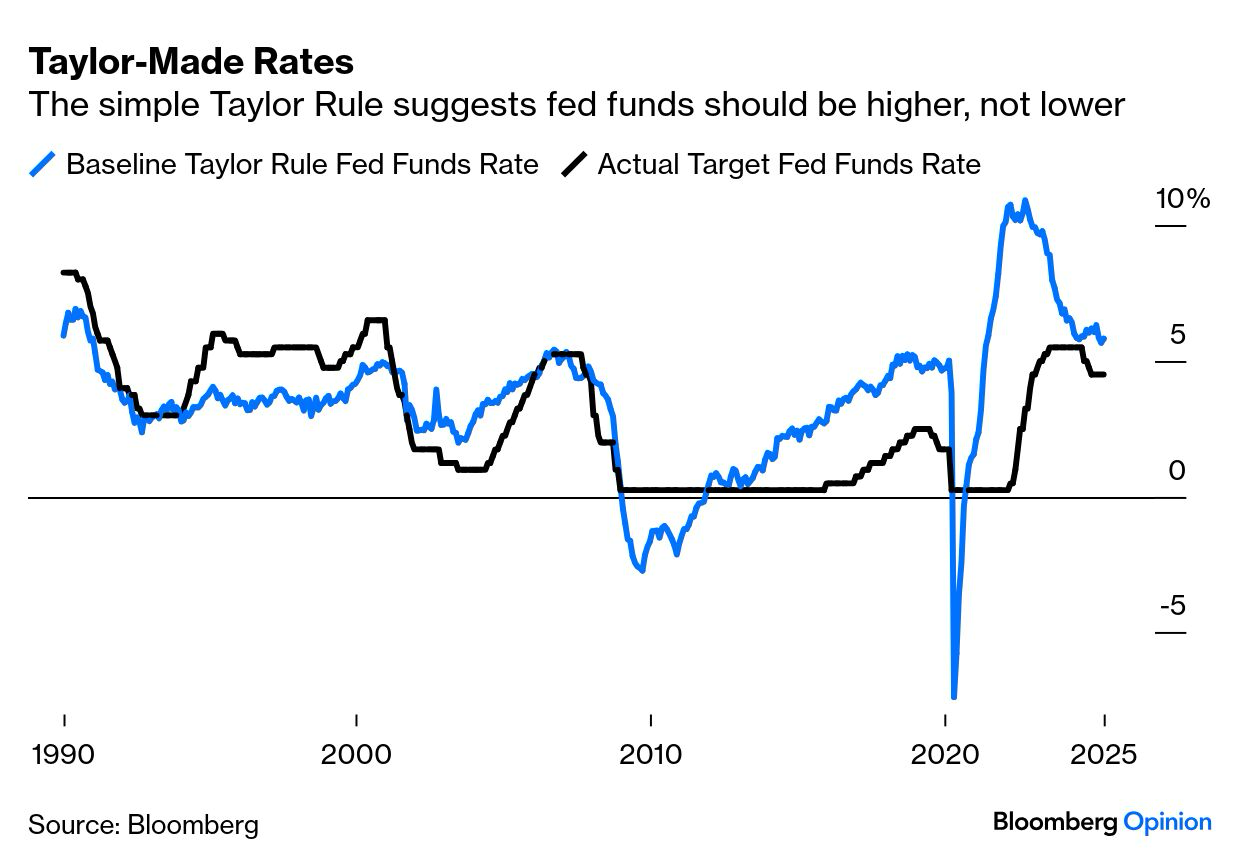
Despite the aggressive action by the Fed’s FOMC beginning in March 2022, inflation has not been brought under control. Were they premature in reducing the FFR 3 times and by 1% to end 2024? A case could certainly be made that they were. So, where do we go from here? There certainly appears to be some warning signs that inflation could raise its ugly head once more. We are in the midst of a rebound in food inflation, and not just eggs. I just read this morning that those heating with natural gas will see about a 10% increase in their bills relative to last year – ouch. There are other worrying signs as well without even getting into the potential impact from policy changes brought about by the new administration.

It is quite doubtful that we will witness peaks in inflation and interest rates described above, but who really knows? Given the great uncertainty, and the potentially significant ramifications of a renewed inflationary cycle (2022 was not that long ago), plan sponsors should be working diligently to secure the current funding levels for their plans. Why continue to subject all of the assets to the whims of the markets for which they have no control over? Inflationary concerns rocked both the equity and bond markets in 2022. In fact, the BB Aggregate Index suffered its worst loss (-13%) by more than 4X the previous worst annual return (-2.9% in 1994). Rising rates crush traditional core fixed income strategies, but they are a beautiful benefit when matching asset cash flows (principal and interest) to liability cash flows (benefits and expenses) through CFM.

As a plan sponsor, I’d want to find as much certainty as possible, given the abundant uncertainty of markets each and every day. As Milliman has reported, both private and public pension funded ratios are at levels not seen in years. Don’t blow it now!

Nothing Here! Really?

By: Russ Kamp, CEO, Ryan ALM, Inc.

Yesterday’s financial news delivered an inflation surprise (0.5% vs. 0.3%), at least to me and the bond market, if not to the U.S. equity market. The Federal reserve had recently announced a likely pause in their rate reduction activity given their concerns about the lack of pace in the inflation march back to its 2% target. This came on the heels of “Street” expectations after the first 0.5% cut in the FFR that there were “likely” to be eight (8!) interest rate cuts by the summer of 2025. Oh, well, the two cuts that we’ve witnessed since that first move last September may be all we get for a while. “Ho hum” replied the U.S. stock market.

The discounting of yesterday’s inflation release is pretty astounding. Like you, I’ve read the financial press and the many emails that have addressed the CPI data 52 ways to Sunday. Much of the commentary proclaims this data point as a one-off event. For instance, the impact of egg price increases (13.8% last month alone) is temporary, as bird flu will be contained shortly. Seasonal factors impacting “sticky-priced” products tend to be announced in January. I guess those increases shouldn’t matter since they only impact the consumer in January. As a reminder, Core inflation (minus food and energy) rose from 3.1% to 3.3% last month. That seems fairly significant, but we are told that the other three core readings were down slightly, so no big deal. Again, really? Each of those core measures are >3% or more than 1% greater than the Fed’s target.

Then there are those that say, “what is significant about the Fed’s 2% inflation objective anyway”? It is an arbitrary target. Well, that may be the case, but for the millions of Americans that are marginally getting by, the difference between 2% and 3% inflation is fairly substantial, especially when we come up with all of these measures that exclude food, energy, housing (shelter), etc. Are you kidding?

As mentioned previously, expectations for a massive cut in interest rates due to the perception that inflation was well contained have shifted dramatically. Just look at the graph above (thanks, Bloomberg). Following the Fed’s first FFR cut of 50 bps, inflation expectations plummeted to below 1.5% for the two-year breakeven. Today those same expectations reveal a nearly 3.5% expectation. Rising inflation will certainly keep the Fed in check at this time.

As mentioned earlier in this post, U.S. equities shrugged off the news as if the impact of higher inflation and interest rates have no impact on publicly traded companies. Given current valuations for U.S. stocks, particularly large cap companies, any inflation shock should send a shiver down the spines of the investing community. Should interest rates rise, bonds will surely become a more exciting investment opportunity, especially for pension plans seeking a ROA in the high 6% area. How crazy are equity valuations? Look at the graph below.

The current CAPE reading has only been greater during the late 1990s and we know what happened as we entered 2000. The bursting of the Technology bubble wasn’t just painful for the Information Technology sector. All stocks took a beating. Should U.S. interest rates rise as a result of the current inflationary environment, there is a reasonable (if not good) chance that equities will get spanked. Why live with this uncertainty? It is time to get out of the game of forecasting economic activity. Why place a bet on the direction of rates? Why let your equity “winnings” run? As a reminder, managing a DB pension plan should be all about SECURING the promised benefits at a reasonable cost and with prudent risk. Is maintaining the status quo prudent?

Is Now The Time To Act?

By: Russ Kamp, Managing Director, Ryan ALM, Inc.

Equity market participants were recently reminded of the fact that markets can fall, and unfortunately they usually don’t decline with any kind of notice. The impetus behind the markets’ most recent challenging day was the Fed’s relatively tame forecast for likely interest rate moves in 2025. There is no question in my mind that the nearly 4-decade decline in rates from lofty heights achieved in the early ’80s, when the Fed Funds Rate eclipsed 20%, to the covid-fueled bottom reached in early 2020, when the yield on the 10-year Treasury Note was at 0.5%, made bond returns a lot stronger than anyone’s forecast.

It certainly seemed that the US Federal Reserve provided the security blanket any time there was a wobble in the markets. This action allowed “investors” to keep their collective foot on the gas with little fear. Sure, there were major corrections during that lengthy period, but the Fed was always there to lend a hand and a ton of stimulus that propped up the economy and markets, and ultimately the investment community. As we saw in 2022, the Fed had run out of dry powder and ultimately had to raise US interest rates to stem a vicious inflationary spike. Rates rose rather dramatically, and the result was an equity market, as measured by the S&P 500, that declined 18% for the calendar year. Bonds faired only marginally better as rising rates impacted bond principals creating a collective -12.1% return for the BB Aggregate Index.

As we enter 2025, do we once again have a situation in which the Fed’s ability to reduce rates has been curtailed due to a stronger economy than anticipated? Will the continued strength and massive government stimulus drive inflation and rates higher? According to a blog post from Apollo’c CIO, here are his list of the potential risks and the probabilities:

Risks to global markets in 2025

Interesting that he feels, like we do at Ryan ALM, Inc., that the economy is likely to be stronger than most suspect (#6) leading to higher inflation, rising rates (#7), and a 10-year Treasury Note yield in excess of 5% (#8). That yield is currently at 4.6% (as of 3:06 pm).

For those that might be skeptical, the Atlanta Fed’s GDPNow model is currently forecasting GDP growth for Q4’24 at 3.1% annualized. They have done a wonderful job forecasting quarterly growth rates. Their forecasts have consistently been above the “street’s” and as a result, much more accurate.

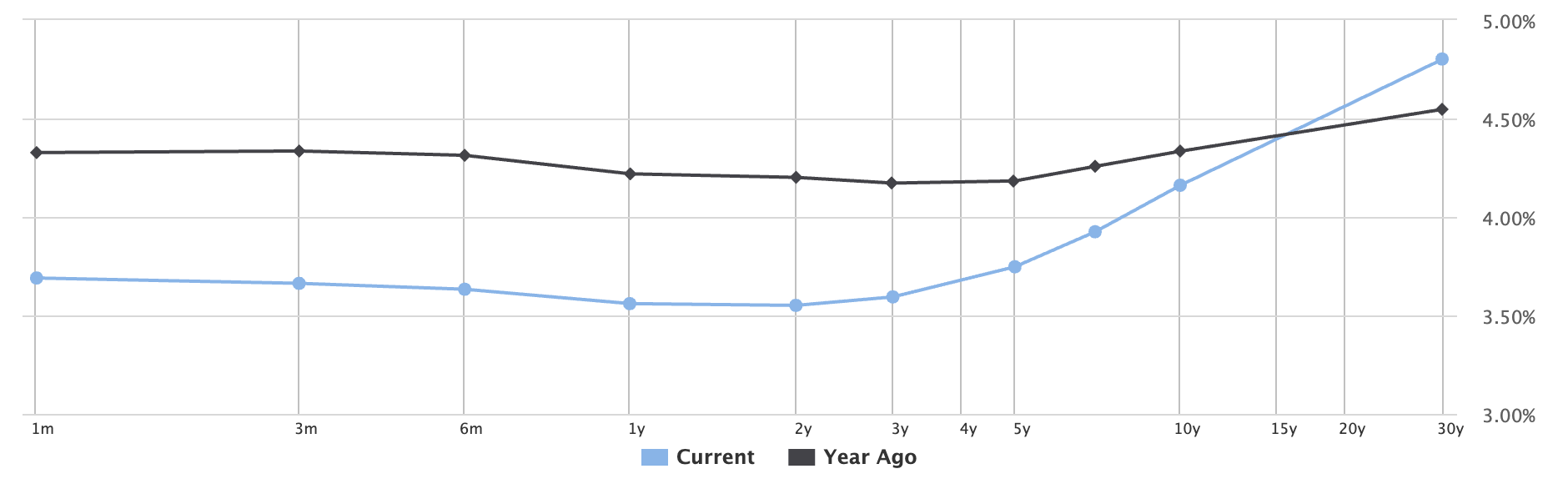
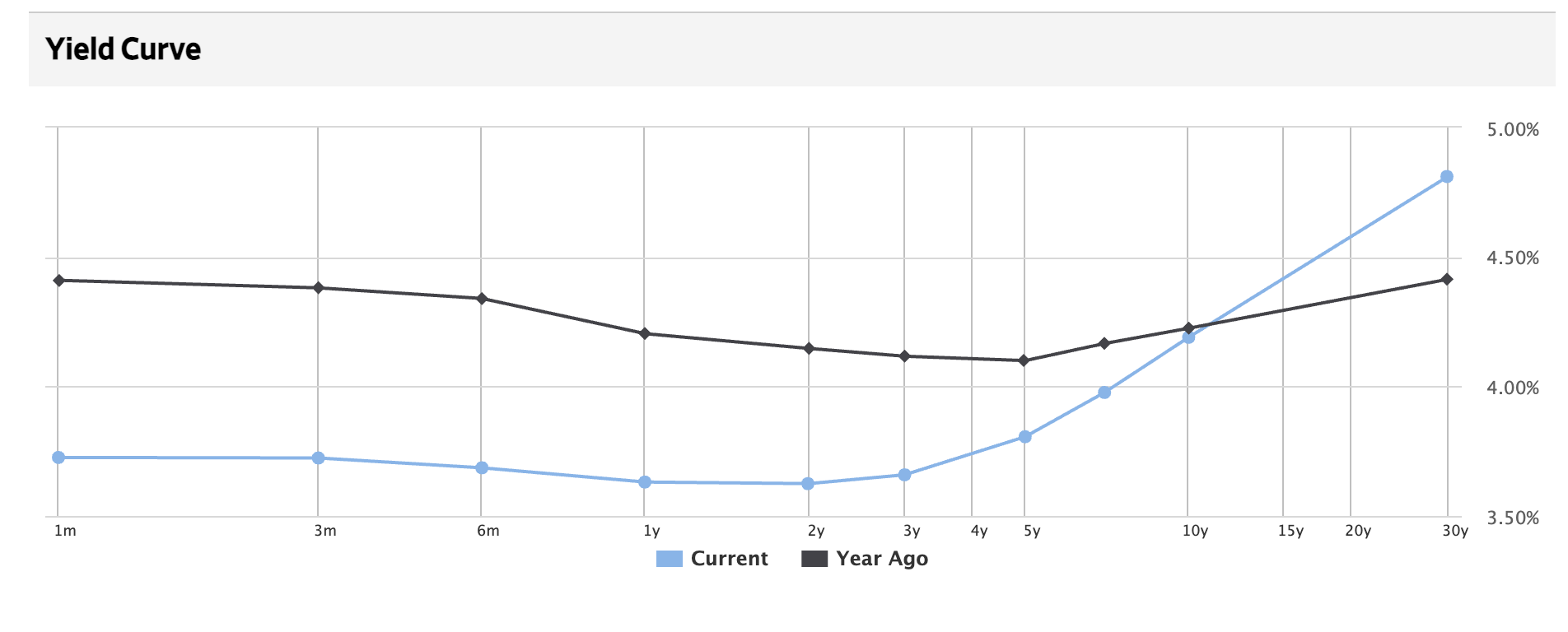
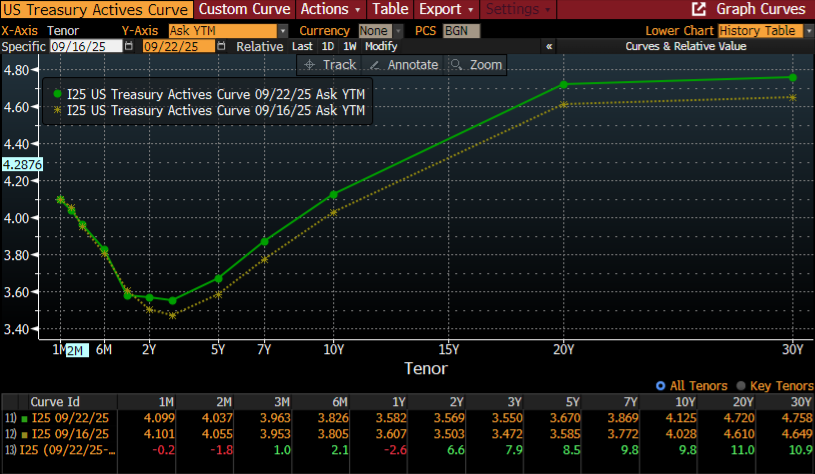
In addition, despite the third rate cut by the Federal Reserve at the most recent FOMC meeting of their benchmark Fed Funds Rate (-1.0% since the easing began), interest rates on longer dated maturities have risen quite significantly, as reflected below.

Rising US rates, stronger growth, and greater inflation may just be the formula for a significant contraction in equity valuations, especially given the current level. Be proactive. Reduce risk. Secure the promised benefits. Under no circumstance should you just let your “winnings” ride.

One of Only Two – Time For Change

By: Russ Kamp, Managing Director, Ryan ALM, Inc.

The United States of America and Denmark share several commonalities. Both countries have democratic political systems. Each country enjoys a high standard of living. Both have a commitment to human rights and environmental concerns, with Denmark being a leader in renewable energy and sustainability, while the U.S. is witnessing a growing movement on those fronts. Both countries value education, enjoying high literacy rates. There is also a shared military alliance through NATO. What you might not realize is that the U.S. and Denmark are the ONLY countries that have a self-imposed statutory debt limit. Sure, there are other countries, such as Switzerland, that have mandatory balanced budget provisions which effectively limit the amount of debt , but they aren’t specified debt limits.

The U.S. first instituted a statutory debt limit with the Second Liberty Bond Act of 1917, setting the aggregate amount of debt that could be accumulated through individual categories like bonds and bills. The purpose in creating this legislation was to finance the country’s involvement in World War 1. The legislation allowed the U.S. to raise $9.5 billion in bonds that would be issued by the U.S. government. These bonds were marketed to the general population and to institutional investors to gain their support for the war. Was there a First Liberty Bond Act? Yes, that act had been passed earlier in 1917 allowing the government to issue $2 billion in bonds in order to support the war.

Importantly, and why we are where we are today with regard to the current deficit, the Second Liberty Bond Act program continued after the war. It set a precedent for public financing of government initiatives through bond sales. Although the debt limit was established in 1917 which allowed the Treasury to issue bonds without specific Congressional approval, the “limit” has been raised more than 100 times since then and roughly 78 times since 1960 alone. As a result, the US debt has risen from around $250 billion during World War II, to about $2.1 trillion during the Reagan years, to $5.6 trillion at the conclusion of the 1990s, and to today’s $36 trillion. So, why do we have a debt limit when it has been elevated so many times previously and to a magnitude certainly not contemplated in 1917?

The political brinkmanship associated with the debt limit debate rarely serves a purpose, often unnecessarily frightening Americans and our capital market participants. As we brace for another “discussion”, is maintaining a debt “limit” at all necessary? NO! Today’s federal deficit is in no way constraining to future generations. I’ve referenced Warren Mosler and his book, “The 7 Deadly Innocent Frauds of Economic Policy” on many occasions. He covers the topic of our government debt and whether we are leaving our debt-burden to our children, grandkids, etc. Mosler states, “the idea of our children being somehow necessarily deprived of real goods and services in the future because of what’s called the national debt is nothing less than ridiculous.”

As Mosler explains, that the financing of deficit spending is of “no consequence”. He further explains that when the “government spends, it just changes numbers up in our bank accounts.” The government doesn’t borrow money, it moves funds from checking accounts at the Fed to savings accounts (Treasury securities) at the Fed. The good news, is that the entire federal deficit ($36 trillion or so) is nothing more than the economy’s total holdings of savings accounts at the Federal Reserve. The private sector now has an asset equivalent to the deficit. How wonderful! Can you imagine if we didn’t have the ability to deficit spend. Think of all the stimulus that would have been removed from our economy that supported jobs, wages, and demand for goods and services.

The major issue with our ability to deficit spend has nothing to do with financing it, but everything to do with providing too much stimulus that creates demand for goods and services that exceeds our economy’s ability to meet such demand. So, I ask again, does having a debt limit (ceiling) make sense? No, unless you enjoy all the grandiose speeches from the halls of Congress based on little knowledge of how our monetary system truly works. Finally, I’d like to give a special nod to Charles DuBois, my former colleague at Invesco, who spent hours educating me on this subject. Thanks, Chuck!

Not so Fast!

By: Russ Kamp, Managing Director, Ryan ALM, Inc.

You may recall in the 1970s Heinz Ketchup used Carly Simon’s song, “Anticipation” as a jingle for several of its commercials. US bond investors might just want to adopt that song once more as they wait for the anticipated rate cuts from the Federal Reserve’s FOMC. As you may recall, investors pounced early on the perceived likelihood of rate cuts, forecasting multiple cuts and a substantial move down in rates given the expectation of a less than soft landing. As a result, US rates, as measured by the Treasury yields, fell precipitously during a good chunk of the summer, bottoming out on September 16th, which was two days prior to the Fed’s first cut (0.5%).

However, economic and inflationary news has been mixed leading some to believe that the Fed may just take a more cautionary path regarding cuts. Those sentiments were echoed by Federal Reserve Chairman Powell just yesterday, who stated during a speech in Dallas, “The economy is not sending any signals that we need to be in a hurry to lower rates.” Not surprising, bond investors did not look favorably on this pronouncement and quickly drove Treasury yields upward and stocks down. If the prospect of lower rates is the only thing propping up equities at this time, investors of all ilk better be wary.

As the above graph highlights, inflation’s move to the Fed’s 2% target has been halted (temporarily?), as Core CPI has risen by 0.3% in each of the last three months. As I wrote above, the prospect of lower rates has certainly helped to prop up US equities. However, rising rates impacts the relationship of equities and bonds. According to a post by the Daily Shot, “the S&P 500 risk premium (forward earnings yield minus the 10-year Treasury yield) has turned negative for the first time since 2002, indicating frothy valuations in the US stock market.”

As a result of these recent moves in the capital markets, US pension plan sponsors would be well-served to use the elevated bond yields to SECURE the promised benefits through a cash flow matching defeasement strategy. As we’ve discussed on many occasions, not only is the liquidity to meet the promised benefits available when needed, this process buys time for the remaining assets to grow unencumbered, as they are no longer a source of liquidity. It is a win-win!