Get Real!

By: Ronald J. Ryan, CFA, Chairman, Ryan ALM, Inc.

The CPI was released today, and it showed annual inflation at 2.7%, which is much better than the 3.1% estimated. Markets have rejoiced so far with stocks and bonds UP in price and DOWN in yield. But isn’t it real rates (nominal rate – CPI) that are more critical for investors than nominal rates. According to the 70-year study by famed economist Ed Yardeni and the 40-year study by the Fed of St. Louis (FRED)… real rates have averaged 2.0% historically (see graphs). If we add a 2.00% inflation premium to today’s rates, the 10-year Treasury should be yielding about 4.70% instead of 4.17%. Maybe the market is discounting future inflation expectations but until a lower inflation trend line is firmly established, it seems like interest rates should be at least 50 basis points higher.

-56.1% – Really?

By: Russ Kamp, CEO, Ryan ALM, Inc.

I truly relish getting feedback related to my blog posts. I wasn’t surprised that there was more activity, and a little skepticism, related to my recent post that discussed the output from a current project. You may recall the post titled, “Bond Math and A Steepening Yield Curve – Perfect Together”, in which I shared that one particular Cash Flow Matching (CFM) implementation resulted in a potential -56.1% reduction in the cost of the future promised pension benefits. A few folks questioned the math, while another made the comment that the “savings” or cost reduction was nothing more than the time value of money. But isn’t that the reason to have pension assets in the first place so you are not funding liabilities at 100 cents on the dollar (pay-as-you-go).

Well, here’s the thing, the use of bonds, the only asset class with a known cash flow (future value at maturity and contractual semi-annual interest payments), brings to the management of pensions an element of certainty not found elsewhere. Yes, it is conceivable that one could cobble together a group of investment strategies that might subsequently achieve a targeted return that would help pay those obligations, but the cash flow volatility associated with this approach may also lead to underperformance and higher contribution expenses in the process.

With CFM, the savings (cost reduction) gets locked in on day one of the assignment. Give us a 5-year, 10-year, or longer assignment to secure the benefits, and we’ll be able to give you the likely return for that entire period. Furthermore, CFM provides liquidity without forced selling or the sweep of dividends, interest, and capital distributions that should be reinvested in those higher returning strategies. In the process, the investing horizon for the plan’s assets is extended enhancing the probability that they will achieve the desired outcome.

In the example used in the previous Blog post, the -56.1% cost reduction was achieved with only 40% of the plan’s assets. By using a vertical slice approach, in which we secure a portion of the monthly obligations, we were able to extend the coverage period from 11-years to 30-years. That extension allowed us to use longer maturity bonds at substantially higher yields, which took advantage of bond math that proclaims that the longer the maturity and the higher the yield, the lower the cost. It’s true!

In today’s interest rate environment in which the average BBB corporate bond is trading at a yield close to 6%, a pension plan can capture roughly 89% of the target return (6.75% average ROA) with little to no volatility. How wonderful! Given that humans hate uncertainty, why don’t plan sponsors adopt the use of CFM to bring some certainty to their pension systems? Why do they choose to continue to ride the rollercoaster of returns provided by markets leading to increased contributions following down markets?

So, if you are still skeptical regarding our ability to provide significant cost reductions specific to your set of liabilities, allow us to provide you with a free analysis highlighting how CFM can support your pension plan and the plan’s participants. There may not be such a thing as a free lunch, but we can provide you with a sleep-well-at-night strategy.

ARPA Update as of December 12, 2025

By: Russ Kamp, CEO, Ryan ALM, Inc.

Unlike the Northeast, access to the PBGC’s e-Filing portal is thawing. According to the PBGC’s website, “the e-Filing Portal is open only to plans at the top of the waiting list that have been notified by PBGC that they may submit their applications. Applications from any other plans will not be accepted at this time.” Despite the dozens of multiemployer plans that remain on the waitlist, the floodgates have certainly not opened.

In fact, only two plans were permitted to submit applications last week. UFCW – Northern California Employers Joint Pension Plan, a Priority Group 6 member, submitted a revised application seeking >$2.3 billion for nearly 140k members, while UFCW, Local 23 and Giant Eagle Pension Plan, a non-priority group member, filed an initial application hoping to garner $40 million in SFA for 7,100 plan participants.

In other news, Dairy Industry-Union Pension Plan for Philadelphia and Vicinity, Warehouse Employees Union Local No. 730 Pension Trust Fund, and Cleveland Bakers and Teamsters Pension Plan received approval for SFA grants. Collectively they will receive $303.4 million (including interest and loan repayments) for 13,533 plan participants. There have now been 150 plans approved for SFA totaling just over $75 billion in grants.

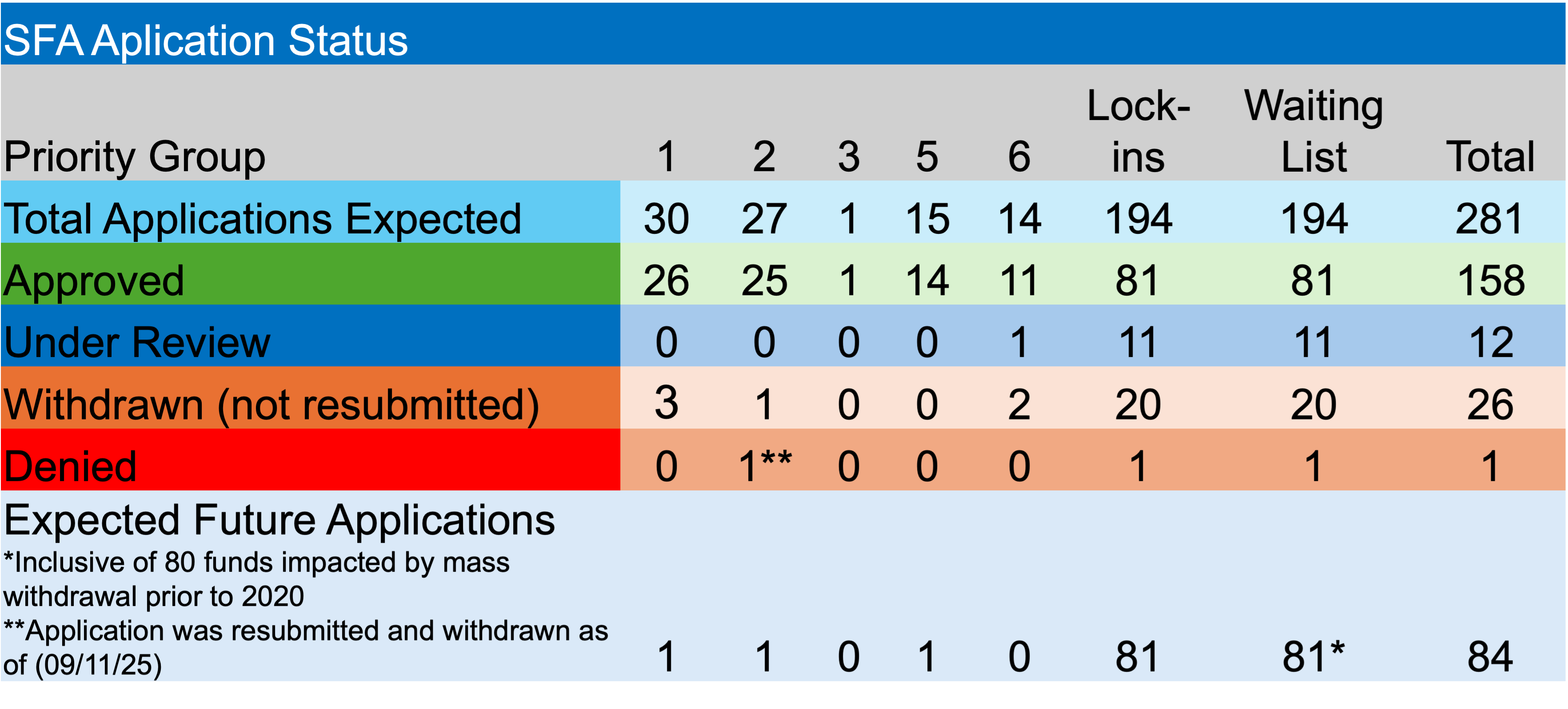
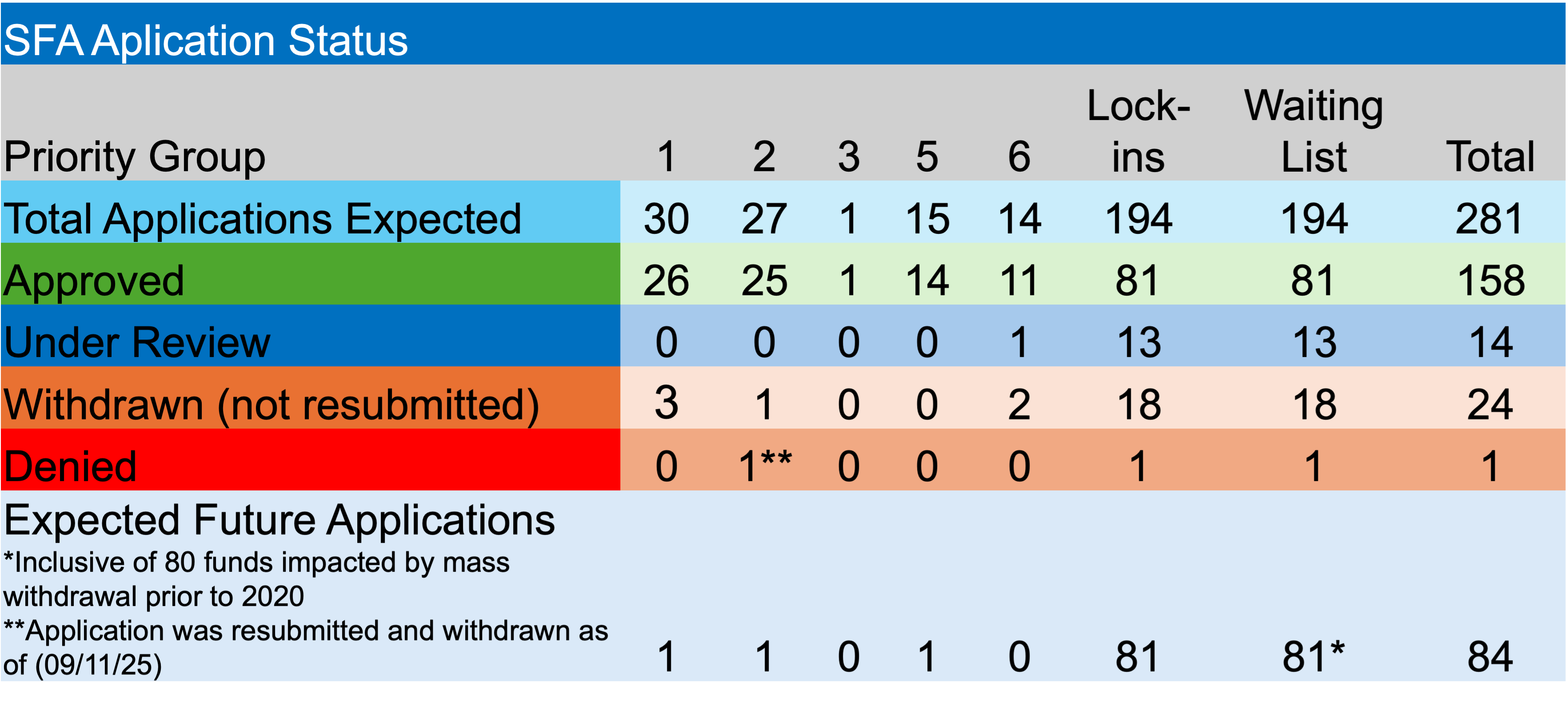
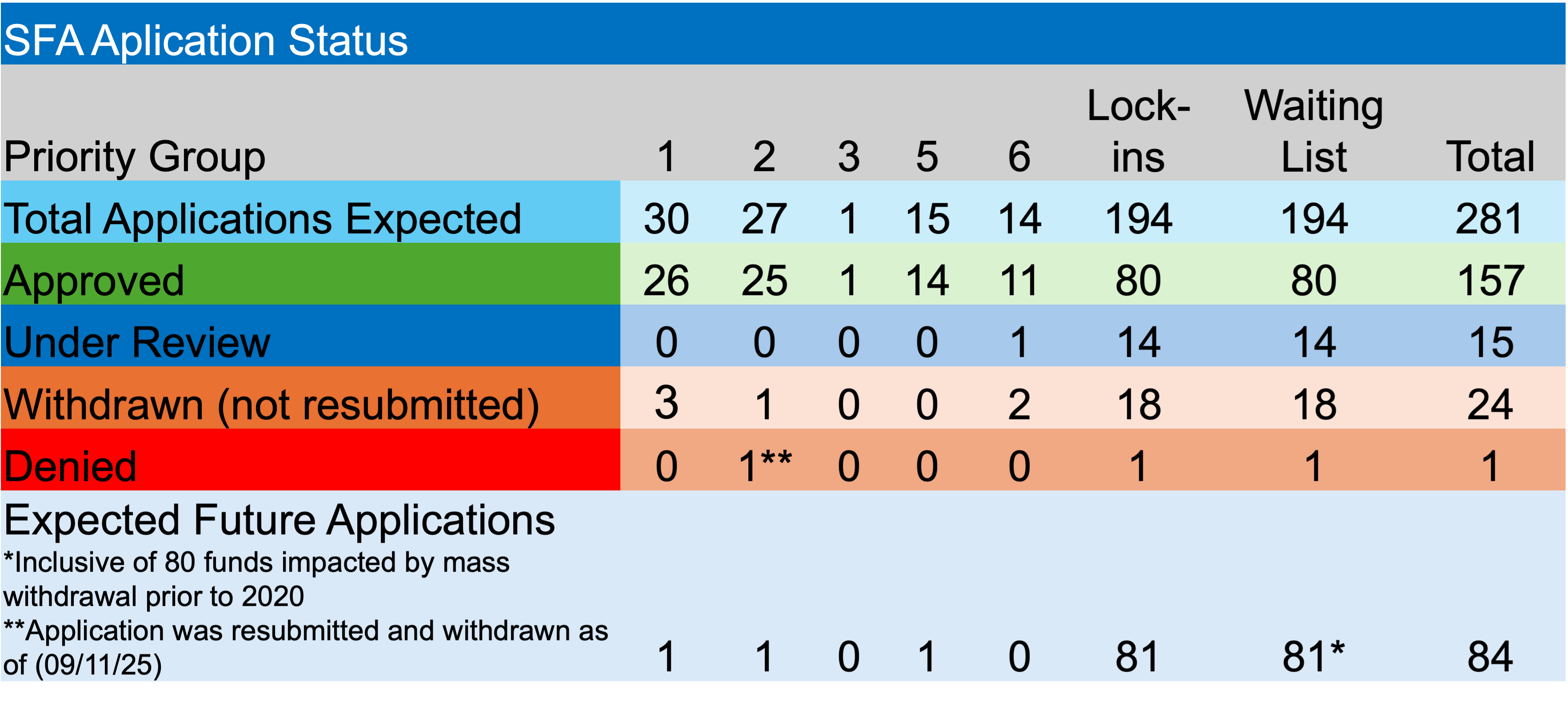
Fortunately, there were no plans asked to repay a portion of the SFA due to census errors, no plans denied a filing, and no withdrawals of previously submitted applications. There were two more funds added to the waitlist and nine that locked in their valuation dates, including the two most recent additions to the waitlist. There remain 85 applications that have yet to be submitted to the PBGC.

Recent Federal Reserve interest rate action has rates on the long-end of the yield curve ratcheting higher. The 30-year Treasury Bond’s yield is at 4.83% (12:-5 pm). Comparable 30-year IG corporates are trading at yields close to 6% at this time. It remains an excellent time to secure the promised benefits through a CFM strategy.

Bond Math and A Steepening Yield Curve – Perfect Together!

By: Russ Kamp, CEO, Ryan ALM, Inc.

We are in the midst of a project for a DB pension plan in which we were asked to model a series of liability cash flows (benefits and expenses) using cash flow matching (CFM) to defease and secure those liabilities. The plan sponsor is looking to allocate 40% of the plan’s assets initially to begin to de-risk the fund.

We first approached the assignment by looking to defease 100% of the liabilities as far into the future as that 40% allocation would cover those benefits and expenses. As it turns out, we can defease the next 11-years of projected B&E beginning 1/1/26 and carrying through to 10/31/37. As we’ve written many times in this blog and in other Ryan ALM research (ryanalm.com), we expect to reduce the cost of future liabilities by about 2% per year in this interest rate environment. Well, as it turns out, we can reduce that future cost today by 23.96% today.

Importantly, not only is the liquidity enhanced through this process and the future expenses covered for the next 11-years, we’ve now extended the investing horizon for the remaining assets (alpha assets) that can now just grow unencumbered without needing to tap them for liquidity purposes – a wonderful win/win!

As impressive as that analysis proved to be, we know that bond math is very straightforward: the longer the maturity and the higher the yield, the greater the potential cost savings. Couple this reality with the fact that the U.S. Treasury yield curve has steepened during the last year, and you have the formula for far greater savings/cost reduction. In fact, the spread between 2-year Treasury notes and 30-year bonds has gone from 0.35% to 1.35% today. That extra yield is the gift that keeps on giving.

So, how does one use only 40% of the plan’s assets to take advantage of both bond math and the steepening yield curve when you’ve already told everyone that a full implementation CFM only covers the next 11-years? You do a vertical slice! A what? A vertical slice of the liabilities in which you use 40% of the assets to cover all of the future liabilities. No, you are not providing all of the liquidity necessary to meet monthly benefits and expenses, but you are providing good coverage while extending the defeasement out 30-years. Incredibly, by using this approach, we are able to reduce the future cost of those benefits not by an impressive 24%, but by an amazing 56.1%. In fact, we are reducing the future cost of those pension promises by a greater sum than the amount of assets used in the strategy.

Importantly, this savings or cost reduction is locked-in on day one. Yes, the day that the portfolio is built, that cost savings is created provided that we don’t experience a default. As an FYI, investment-grade corporate bonds have defaulted at a rate of 0.18% or about 2/1,000 bonds for the last 40-years according to S&P.

Can you imagine being able to reduce the cost of your future obligations by that magnitude and with more certainty than through any other strategy currently in your pension plan? What a great gift it is to yourself (sleep-well-at-night) and those plan participants for whom you are responsible. Want to see what a CFM strategy implemented by Ryan ALM can do for you? Just provide us with some basic info (call me at 201/675-8797 to find out what we need) and we’ll provide you with a free analysis. No gimmicks!

Something Has Got to Give

By: Russ Kamp, CEO, Ryan ALM, Inc.

Not surprisingly, the U.S. Federal Reserve’s FOMC lowered rates another 25 bps today. The new target is 3.75%-4.0%, down from 4.5%-4.75% during the last 3 meetings. Currently, the 10-year Treasury yield (4.145% at 3:21 pm EST) is only marginally greater than the median CPI (Latest reading from the Cleveland Fed is 3.5% annually).

Ryan ALM, Inc.’s Head Trader, Steve DeVito put together the following comparison.

Steve is comparing the 10-year Treasury note yield (blue) versus the Median CPI (red) since January 2016. The green line is the “real” yield (10-year Treasury – the median CPI). For this period of time, there has been very little real yield, as U.S. rates were driven to historic lows before inflation spiked due to Covid-19 factors. However, historically (1962-2025), the real yield has average 2%. With rates down and inflation remaining stubbornly steady to increasing slightly, the real yield that investors are willing to take is, and has been, quite modest (0.17% since 2008). Why? Were the historically low rates in reaction to covid-19 an anomaly, or has something changed from an investor standpoint? Given today’s fundamentals, one might assume that investors are anticipating a sudden reversal in inflation, but is that a smart bet?

The WSJ produced the graph in today’s edition highlighting the change in the U.S. Treasury yield curve during the last year. As one can clearly see, the yield curve has gotten much steeper with the 30-year Treasury bond yield 0.4% above last year’s level (at 4.81%). That steepness would indicate to me that there is more risk longer term from inflation potentially rising.

So, it seems as if something has to give. If inflation remains at these levels, the yield on the 10-year Treasury note should be about 1.25% greater than today. If in fact, yields were to rise to that level, active core fixed income managers would see significant principal losses. However, cash flow matching managers and their clients would see the potential for greater cost reduction in the defeasing of pension liabilities, especially for longer-term programs. Bond math is very straight forward. The longer the maturity and the higher the yield, the greater the cost savings.

Managing a pension plan should be all about cash flows. That is asset cash flows versus liability cash flows of benefits and expenses. Higher yields reduce the future value of those promises. Remember, a CFM strategy is unique in that it brings an element of certainty (barring a default) to the management of pensions which live in a world of great uncertainty. Aren’t you ready for a sleep-well-at-night strategy?

Time to Get Serious!

By: Russ Kamp, CEO, Ryan ALM, Inc.

This blog focuses most often on issues related to defined benefit pension plans or other retirement-related programs/issues. However, sometimes an issue (in this case “affordability”) captures my attention leading me to respond. As you may recall, last week the WSJ asked the question: Can “Trump Accounts” for babies change the economics of having a family? I posted a note on LinkedIn.com that seemed to get the attention of many of my connections and others, as well.

My response to that question posed by the WSJ was “are you kidding me?” A one-time $1,000 deposit into a child’s account is not even a rounding error in the annual cost of raising a child. Current estimates have the cost of raising a child at >$27k/year for a two-working-adult household and >$300k by the time that child reaches 18, excluding college!

Why would anyone think that a $1,000 contribution to a small subset of children (those born between 2025 and 2028) is going to make a difference in the affordability of having children today? How is this band-aid going to tackle the economic hardship on middle and lower wage earners? Affordability has deteriorated for most Americans because essential costs—especially housing, healthcare, education, and child care—have grown much faster than typical wages, while interest rates and structural constraints (like housing supply) magnify the squeeze on household budgets. This creates a situation in which a larger share of income is needed to absorb basic living expenses, reducing room for saving (emergency fund, retirement, education, etc.), mobility, and discretionary spending (how dare you dream of a vacation) for the majority of households.

We often read about the impact of escalating housing costs (ownership or rent), but healthcare and higher education have seen some of the most significant long‑run price increases, becoming major affordability stressors for a significant majority of American families. Studies of cost‑of‑living trends highlight that health insurance premiums, out‑of‑pocket medical costs, and public college tuition have grown multiple times faster than general inflation and median earnings, increasing debt loads and the potential for financial risk and hardship.

Other necessities—such as food, transportation (try buying a new car), and utilities—have also risen substantially over the past two decades, with food and other goods and services experiencing cumulative price increases of roughly 85% or more since 2000. While some of this price movement reflects broad inflation issues, the problem for households is that real wage growth has not kept pace, so a larger share of one’s take-home pay goes to basics.

Recent high inflation (2021–2023) raised the prices of everyday items and housing costs faster than nominal wages for many workers, compressing real disposable income. In response, the Federal Reserve raised interest rates sharply, which helped moderate inflation but also increased borrowing costs for mortgages, car loans, and credit card balances.

Given that many households rely on debt to manage education, vehicles, or unexpected expenses, higher interest rates translate into heavier monthly payments and less capacity to save or invest. For younger households and those without assets, this dynamic can delay milestones like homeownership or starting a family, reinforcing a sense that the “American Dream” is receding, if not collapsing!

Less capacity to save for retirement (DC plans) and education (529 plans) is reflected in the median balances for each. I’ve railed about the failure of the defined contribution model being the primary “retirement” vehicle in many blog posts. Asking untrained individuals to fund, manage, and then disburse a benefit with limited, if no, disposable income, a lack of investment acumen, and no crystal ball to help with longevity issues is just poor policy.

Can we stop with the gimmicks, such as these child accounts, and finally get serious about the lack of affordability in this country for a significant majority of Americans! Rising inequality amplifies affordability problems because gains are concentrated among higher‑income and wealthier households while most others face flat real incomes and volatile expenses. “The Ludwig Institute’s analysis, for example, concludes that a minimal but “dignified” standard of living is now out of reach for the bottom 60 percent of households, even around $100,000 in income in some regions, due to the cumulative effect of costs.” (Truthout)

No economy can function long-term when a small sliver of the population earns most of the income, while also benefiting from lower capital gains treatment and reduced corporate taxes. Recent reports suggest that 47% of income is absorbed by the top 10% of wage earners. Other reports suggest that >60% of Americans couldn’t meet a $400 emergency related to a car repair or medical expense without taking on debt. This situation can’t continue unabated.

​As the father of five and the grandfather to 11, I see these economic burdens play out everyday! It is time to get serious!

And The Beat Goes On!

By: Russ Kamp, CEO, Ryan ALM, Inc.

Once again, Milliman has released its monthly Milliman 100 Pension Funding Index (PFI), which analyzes the 100 largest U.S. corporate pension plans.

During November, the PFI funded ratio rose from 107.0% at the end of October to 107.1% as of November 30, 2025. According to Zorast Wadia, the PFI’s author, discount rates edged higher (by 1 basis-point) to 5.34% in November. This minimal increase was still good enough to reduce liabilities by $3 billion. This slight reduction in pension liabilities combined with minimal asset growth of 0.44% led to the improvement in the funded ratio for the PFI index. As of November 30, the PFI plan assets declined to $1.325 trillion while projected benefit obligations dropped to $1.237 trillion.

Despite modest market returns, “the corporate pension funding rally continued in November with an eighth straight month of gains,” said Zorast. “Although funded levels have not been this high since before the dot-com crisis, all eyes are on the end of December, when most corporate plans will reveal the discount rate and asset values in effect for year-end disclosures and next year’s pension expense.” We can’t wait to see what the next report brings!

It will be interesting to see what transpired for public pension plans during the month given the different accounting rules for FASB vs. GASB. The slight increase in the FASB discount rate which led to a decline in pension liabilities will not be reflected in the public fund analysis who use GASB discount rates based on the ROA. Will the collective return for the PPFI be similar to that experienced by corporate plans, and if so, will it be enough to lead to an improved funded ratio? Below is the link to the complete report.

View this month’s complete Pension Funding Index.

ARPA Update as of December 5, 2025

By: Russ Kamp, CEO, Ryan ALM, Inc.

Welcome to the first review of December 2025. We aren’t quite at the beginning of winter, but you could sure fool me, as New Jersey is gripped by cold front and we saw our first modest snowfall just in time for me to start decorating my house for Christmas. I hope that you had a wonderful weekend.

With regard to ARPA and the PBGC’s implementation of this critical legislation, there was a little reported activity last week, but certainly not enough to make a dent in the current waitlist. Unfortunately, the PBGC’s e-Filing portal remains temporarily closed. Despite that fact, pension plans continue to be added to the waitlist. USW District 10, Local 286 Pension Plan is the latest fund, making it the 186th non-priority group plan added since the start of the program. By my estimate, there are still 83 pension funds sitting on the waitlist hoping to get a chance to submit an application for SFA grant $.

In other APRA news, two pension funds received approval to receive the SFA. Teamsters Local 210 Affiliated Pension Plan and Local Union 1710 I.B.E.W. Pension Trust Fund, both non-priority plans, will receive a total of $149.2 million in SFA for just over 9,500 participants. As mentioned above, the PBGC’s e-Filing portal remains temporarily closed, so there were no additional applications received during the week. There are currently 24 applications in front of PBGC staff.

In addition, there were no plans asked to rebate a portion of their SFA grant due to census errors, and there haven’t been since mid-September. Fortunately, no plans were denied the ability to submit an application due to the lack of eligibility and no applications were withdrawn. However, there were six plans that locked-in a valuation date, as each chose 9/30/25 as the plan’s measurement date. There are still 14 plans on the waitlist that haven’t chosen to lock-in a valuation date.

With the two approvals from last week, there are now 147 plans that have or will soon receive Special Financial Assistance totaling $74.7 billion supporting the earned pensions for 1.85 million American workers and retirees. Outstanding! That is a lot of economic stimulus that helps more than just the recipient of the retirement benefit, but also the communities in which they reside.

Do the Analysis! Remove the Guess Work.

By: Russ Kamp, CEO, Ryan ALM, Inc.

I am truly blessed working for an organization such as Ryan ALM, Inc. I am awed by the folks that I get to work with and the product/strategy that I get to represent. As a reminder, we’ve created a cash flow matching (CFM) strategy that brings an element of certainty to the management of pensions that should be welcomed by pension plan sponsors and their advisors far and wide. What other strategy can inform you on the day that the portfolio is constructed what the performance of that strategy will be for the full-term of the assignment (barring any defaults within investment grade bonds)? Name another strategy that can lay out the liquidity with certainty for each month (chronologically) of that assignment.

Given that liquidity is becoming a challenge as pension plans (mostly public) adopt a more aggressive asset allocation favoring alternative investments, using a CFM strategy that provides ALL the liquidity to meet ongoing benefits and expenses should be a decision that is easily embraced. Yet, our conversations with key decision makers often stall as other parties get involved in the “review”. To this day, I’m not sure what is involved in most of those conversations.

Are they attempting to determine that a traditional core fixed income strategy benchmarked to a generic index such as the BB Aggregate is capable of producing the same outcome? If so, let me tell you that they can’t and it won’t. Any fixed income product that is not managed against your plan’s specific liabilities will not provide the same benefits as CFM. It will be a highly interest rate sensitive product and performance will be driven by changes in interest rates. Do you know where U.S. rates are headed? Furthermore, the liquidity provided by a “core” fixed income strategy is not likely to be sufficient resulting in other investment products needing to be swept of their liquidity (dividends and capital distributions), reducing the potential returns from those strategies.  Such a cash sweep will reduce the ROA of these non-bond investments. Guinness Global’s study of S&P data for the last 85 years has shown that dividends and reinvestment of dividends account for 50% or more of the S&P returns for rolling 10- and 20-year periods dating back to 1940.

Are they trying to determine if the return produced by the CFM mandate will be sufficient to meet the return on asset assumption (ROA)? Could be, but all they need to realize is that the CFM portfolio’s yield will likely be much higher than the YTM of a core fixed income strategy given CFM’s 100% exposure to corporate bonds versus a heavy allocation to lower yielding Treasuries and agencies in an Agg-type portfolio. In this case, the use of a CFM strategy to replace a core fixed income mandate doesn’t impact the overall asset allocation and it certainly doesn’t reduce the fund’s ability to meet the long-term return of the program.

Instead of trying to incorporate all these unknown variables/inputs into the decision, just have Ryan ALM do the analysis. We love to work on projects that help the plan sponsor and their advisors come to sound decisions based on facts. There is no guess work. Importantly, we will construct for FREE multiple CFM portfolios, if necessary, to help frame the decision. Each plan’s liabilities are unique and as such, each CFM portfolio must be built to meet that plan’s unique liability cash flows.

All that is required for us to complete our analysis are the projected liability cash flows of benefits and expenses (contributions, too) as far into the future as possible. The further into the future, the greater the insights that we will create for you. We can use the current allocation to fixed income as the AUM for the analysis or you can choose a different allocation. We will use 100% IG corporates or you can ask us to use either 100% Treasuries/STRIPS or some combination of Treasuries and corporate bonds. We can defease 100% of the plan’s liabilities for a period of time, such as the next 10-years or do a vertical slice of a % of the liabilities, such as 50%, which will allow the CFM program to extend coverage further into the future and benefit from using longer maturity bonds with greater YTMs. Isn’t that exciting!

So, I ask again, why noodle over a bunch of unknowns, when you could have Ryan ALM provide you with a nearly precise evaluation of the benefits of CFM for your pension plan? When you hire other managers in a variety of asset classes, do they provide you with a portfolio up front? One that can give you the return that will be generated over a specific timeframe? No? Not surprised. Oh, and BTW, we provide our investment management services at a significantly lower fee than traditional core fixed income managers and we cap our annual fee once a certain AUM is reached. Stop the guess work. Have us do the work for you. It will make for a much better conversation when considering using CFM. Call me at 201/675-8797 or email me at rkamp@ryanalm.com for your free analysis. I look forward to speaking with you!

ARPA Updated as of November 28, 2025

By: Russ Kamp, CEO, Ryan ALM, Inc.

We hope that you enjoyed a fabulous Thanksgiving holiday with your family and friends. This update is the last one for November. Wow, that month went by quickly.

Regarding the ARPA legislation, have we entered the last month for new applications to be received by the PBGC? As I’ve mentioned multiple times, the ARPA pension legislation specifically states that initial applications must be submitted to the PBGC by 12/31/25. Revised applications can be submitted through 12/31/26. If this is the case, we have roughly 83 applications yet to be submitted. Compounding this issue is the fact that the PBGC’s e-Filing portal is temporarily closed.

The PBGC’s recorded activity was light last week which shouldn’t surprise anyone given the holiday last week. There were no applications received, denied, or withdrawn. Furthermore, there were no recipients of Special Financial Assistance (SFA) requested to rebate a portion of the grant payment due to census issues. Thankfully, it has been more than two months since we last had a plan pay back a small percentage of the proceeds.

There was some good news, as Exhibition Employees Local 829 Pension Fund, a non-priority group member, received approval of its initial application. The fund will receive $14.2 million in SFA for the 242 plan participants. This pension plan became the 70th non-priority plan to receive SFA and the 145th overall. To-date, $72.8 billion in SFA grants have been awarded!

Despite the near unanimity by market participants that U.S. Treasury yields will fall as the Fed’s FOMC prepares another Fed Funds Rate cut, interest rates are rising today. The current level of Treasury yields and bonds that price off that curve are still providing SFA recipients with attractive rates in which to secure the promised benefits through a cash flow matching (CFM) strategy. Don’t subject the SFA to the whims of the markets, especially given so much uncertainty and currently high valuations.