Milliman: Another good month for pension funding

By: Russ Kamp, CEO, Ryan ALM, Inc.

Whether one is referring to public pensions or private DB plans, September was a continuation of the positive momentum experienced for most of 2025. Milliman has reported on both the Milliman 100 Pension Funding Index (PFI), which analyzes the 100 largest U.S. corporate pension plans and its Public Pension Funding Index (PPFI), which analyzes data from the nation’s 100 largest public defined benefit plans.

Milliman estimates that public pension funds saw aggregate returns of 1.7%, while corporate plans produced an average return for the month of 2.5%. As a result of these gains (sixth consecutive gain), public pension funded ratios stand at 85.4% up from 84.2% at the end of August. Corporate plans are now showing an aggregate funded ratio of 106.5%, marking the highest level since just before the Great Financial Crisis (GFC).

Public pension fund assets are now $5.66 trillion versus liabilities of $6.63 trillion, while corporate plans added $26 billion to their collective net assets increasing the funded status surplus to $80 billion. For corporate plans, the strong 2.5% estimated return was more than enough to overcome the decline in the discount rate to 5.36%, a pattern that has persisted for much of 2025.

“Robust returns helped corporate pension funding levels improve for the sixth straight month in September,” said Zorast Wadia, author of the Milliman PFI. “With more declines in discount rates likely ahead, funded ratios may lose ground unless plan assets move in lockstep with liabilities.”

“Thanks to continued strong investment performance, public pension funding levels continued to improve in September, and unfunded liabilities are now below the critical $1 trillion threshold for the first time since 2021,” said Becky Sielman, co-author of the Milliman PPFI. “Now, 45 of the 100 PPFI plans are more than 90% funded while only 11 are less than 60% funded, underscoring the continued health of public pensions.”

Discount rates have so far fallen in October. It will be interesting to see if returns can once again prop up funded status for corporate America. It will also be interesting to see how the different accounting standards (GASB vs. FASB) impact October’s results. A small gain for corporate plans may not be enough to overcome the potential growth in liabilities, as interest rates decline, but that small return may look just fine for public pension plans, that don’t mark liabilities to market only assets.

View this Month’s complete Pension Funding Index.

View the Milliman 100 Public Pension Funding Index.

Milliman: Corporate Pension Funding Up

By: Russ Kamp, CEO, Ryan ALM, Inc.

Milliman released its monthly Milliman 100 Pension Funding Index (PFI), which analyzes the 100 largest U.S. corporate pension plans, and they are reporting that the collective funded ratio has risen to 105.1% as of June 30th from 104.9% at the end of May. The driving force behind the improved funding was the powerful 2.6% asset return for the index’s members, which more than offset the growth in pension liabilities as the discount rate fell by 19 bps.

As a result of the significant appreciation during the month, the Milliman PFI plan assets rose by $27 billion to $1.281 trillion during the month from $1.254 trillion at the end of May. The discount rate fell to 5.52% in June, from 5.71% in May and it is now down slights from 5.59% at the beginning of the year. 

“The second quarter of 2025 was a win-win for pensions from both sides of the balance sheet, as market gains of 3.42% drove up plan assets while modest discount rate increases of 2 basis points reduced plan liabilities and resulted in the highest funded ratio since October 2022,” said Zorast Wadia, author of the PFI.

Zorast further stated that “if discount rates decline in the second half of the year, plan sponsors will need to be ever more focused on preserving funded status gains and employing prudent asset-liability management.” We couldn’t agree more. We, at Ryan ALM, believe that the primary goal in managing a DB pension plan is to secure the promised benefits at a reasonable cost and with prudent risk. It is NOT a return objective. Having achieved this level of funding allows plan sponsors and their advisors to significantly de-risk their plans through Cash Flow Matching (CFM), which is a superior duration strategy, as each month of the assignment is duration matched.

Improved Corporate Pension Funding – Milliman

By: Russ Kamp, CEO, Ryan ALM, Inc.

Milliman released the results of its 2025 Corporate Pension Funding Study(PFS). The study analyzes pension data for the 100 U.S. public companies with the largest defined benefit (DB) pension plans. Unlike the monthly updates provided by Milliman, this study covers the 2024 fiscal years (FY) for each plan. Milliman has now produced this review for 25 consecutive years.

Here are Milliman’s Key findings from the 2025 annual study, including:

  • The PFS funded percentage increased from 98.5% at the end of FY2023 to 101.1% in FY2024, with the funded status climbing from a $19.9 billion deficit to a $13.8 billion surplus.
  • This is the first surplus for the Milliman 100 companies since 2007.
  • As of FY2024, over half (53) of the plans in the study were funded at 100% or greater; only one plan in the study is funded below 80%. RDK note: This is a significant difference from what we witness in public pension funding studies.
  • Rising U.S. interest rates aren’t all bad, as the funding improvement was driven largely by the 42-basis point increase in the PFS discount rate (from 5.01% to 5.43%)
  • Higher discount rates lowered the projected benefit obligations (PBO) of these plans from $1.34 trillion to $1.24 trillion.
  • While the average return on investments was 3.6% – lower than these plans’ average long-term assumption of 6.5% – the underperformance of assets did not outstrip the PBO improvement. Only 19 of the Milliman 100 companies exceeded their expected returns. 
  • According to Milliman, equities outperformed fixed-income investments for the sixth year in a row. Over the last five years, plans with consistently high allocations to fixed income have underperformed other plans but experienced lower funded ratio volatility. Since 2005, pension plan asset allocations have swung more heavily toward fixed income, away from equity allocations.

“Looking ahead, the economic volatility we’ve seen in 2025 plus the potential for declining interest rates likely means corporate plan sponsors will continue with de-risking strategies – whether that’s through an investment glide-path strategy, lump-sum window, or pension risk transfer,” said Zorast Wadia, co-author of the PFS. “But with about $45 billion of surplus in frozen Milliman 100 plans, there’s also the potential for balance sheet and cash savings by incorporating new defined benefit plan designs.” One can only hope, Zorast.

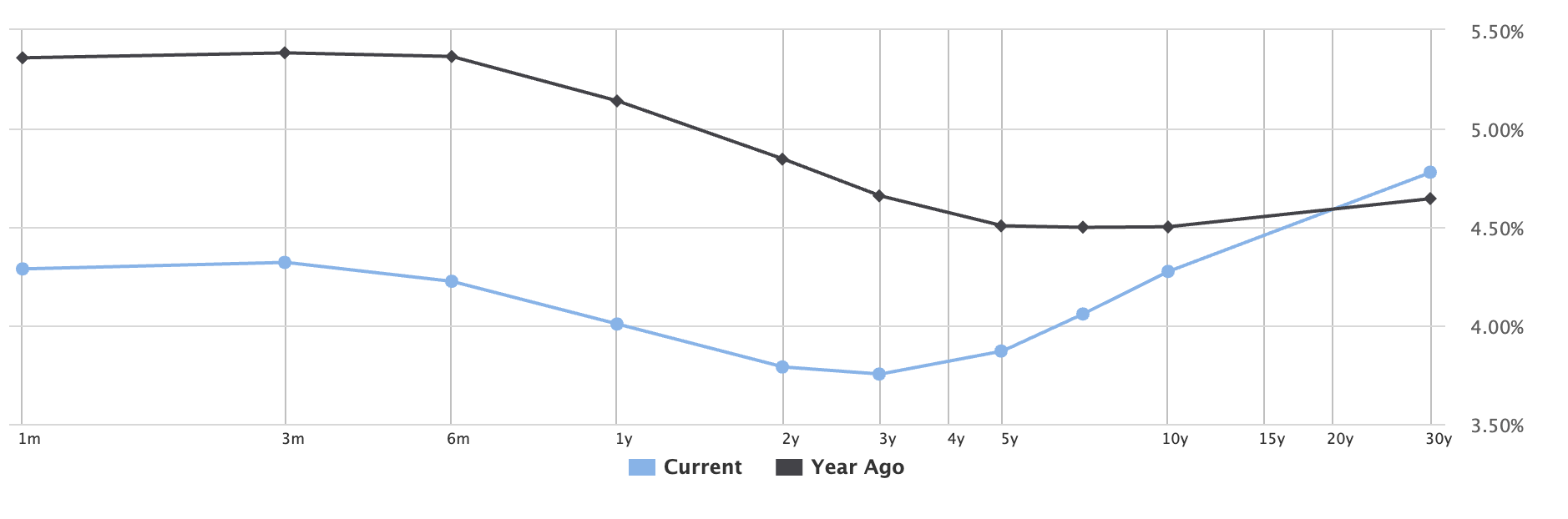
Final thought: Given the unique shape of today’s Treasury yield curve, duration strategies may be challenged to reduce interest rate risk through an average duration or a few key rates. As a reminder, Cash Flow Matching (CFM) duration matches every month of the assignment. Use CFM for the next 10-years, you have 120 bespoke duration matches.

Milliman – Corporate Pension Funding Falls in March

By: Russ Kamp, CEO, Ryan ALM, Inc.

Milliman has just released its monthly Milliman 100 Pension Funding Index (PFI), which analyzes the 100 largest U.S. corporate pension plans. Weak investment returns, estimated at -1.4%, drove the PFI asset level down by $25 billion during March. Current assets for the top 100 plans are now $1.3 trillion. The fall in assets was only partially offset by the rise in the discount rate (13 bps) during the month. As a result, the surplus fell by $7 billion to $51 billion as of March 31, 2025.

The discount rate ended the month at 5.49%, which reduced plan liabilities by $18 billion, to $1.25 trillion by the end of March. As a result of assets falling by more than liabilities, the PFI funded ratio dropped from 104.6% at the end of February to 104.1% at the end of March. For the quarter, discount rates fell 10 basis points and the Milliman 100 plans lost $8 billion in funded status.   

“While the slight rise in discount rates in March led to a monthly decline in plan liabilities, plan assets fell even further due to poor market performance, which caused the funded status to fall below the 104.8% level seen at the beginning of 2025,” said Zorast Wadia, author of the PFI. Given market action during the first 10 days of April, it will be interesting to see if the impact from rising rates can offset the dramatic fall in asset values. Inflation fears fueled by tariffs could lead to rising bond yields, which will help mitigate some of the risk to equities given the possibility of declining earnings. As Zorast mentioned in the Milliman release, “plan sponsors will want to consider asset-liability matching strategies to preserve their balance sheet gains from last year”, especially given that 30-year corporates are once again yielding close to 6%.

ARPA Update as of February 21, 2025

By: Russ Kamp, CEO, Ryan ALM, Inc.

Welcome to the last week in February. Spring can’t arrive soon enough in New Jersey!

Last week the Milliman organization published its annual review of the state of multiemployer pension plans. The news was quite positive, but in digger deeper, it became apparent that the payment of the Special Financial assistance (SFA) was the primary reason for the improved funding ratios. Given how critically important the SFA is to the ongoing success of many of these plans, let’s look at what transpired during the previous week.

According to the PBGC’s weekly spreadsheet, there were no new applications filed as the eFiling portal remains temporarily closed. In addition, no applications were approved or denied, but there was one application withdrawn, as non-priority plan Aluminum, Brick & Glass Workers International Union, AFL-CIO, CLC, Eastern District Council No. 12 Pension Plan (the plan’s name is longer than the fund’s size is large) pulled its application seeking $10.6 million for 580 participants.

There was some additional activity though, as five plans were asked to repay a portion of the previously agreed SFA due to census errors. In total, these plans repaid $16.3 million representing just 1.06% of the grants received. To date, $180.8 million has been reclaimed from grants totaling $43.6 billion or 0.41%.

In other news, we had Bricklayers & Allied Craftworkers Local No. 3 NY Niagara Falls-Buffalo Chapter Pension Plan, added to the waitlist (#116). This is the first addition to the list since July 2024. This plan did not elect to lock-in the interest rate for discount rate purposes, joining a couple other plans that have kept their options open.

We should witness dramatic improvement in the Milliman funded ratio study next year, as about 7% (85 funds) were funded at <60% in 2024. There are currently 94 plans seeking SFA support. If granted, they should all see meaningful improvement in the funded status of their plans. As a result, we could have a situation in which the multiemployer universe becomes fully funded. How incredible. Now, let’s not do something silly from an investment standpoint that would jeopardize this improved funding.

Milliman’s Multiemployer Study Released

By: Russ Kamp, CEO, Ryan ALM, Inc.

Milliman released the 2024 year-end results of its Multiemployer Pension Funding Study (MPFS). The MPFS analyzes the funded status of ALL U.S. multiemployer DB pension plans. As of December 31, 2024, Milliman estimated multiemployer plans have an aggregate funded ratio of 97%, up from 89% as of December 31, 2023. Impressive!

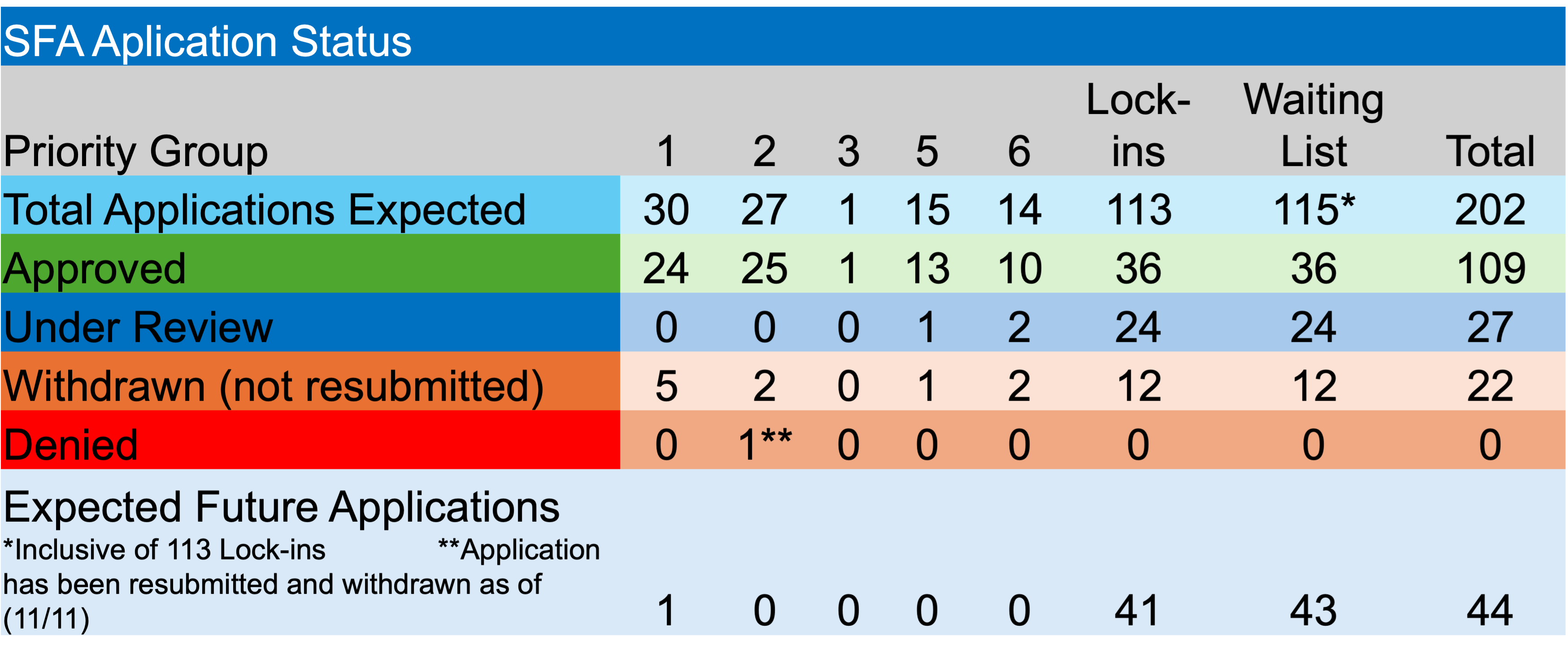
Milliman determined that the improved funded status was largely due to investment gains, but they also highlighted the critical contribution from the special financial assistance (SFA) granted under the ARPA. Milliman highlighted that as of year-end 2024, 102 plans have received nearly $70 billion in SFA funding, including $16 billion paid during 2024. Incredibly, without the support of SFA grants, the MPFS plans’ aggregate funded percentage at year-end 2024 would be approximately 89% or the same as the end of December 2023. As my chart below highlights, as of today, 109 plans have now received $71 billion in SFA grants.

Chart provided by Ryan ALM, Inc.

According to Milliman, “53% (627 of 1,193 plans) are 100% funded or more, and 84% (1,005) are 80% funded or better.” They also highlighted the more challenged members of this cohort, stating that “7% of plans (85) are below 60% funded and may be headed toward insolvency. Many are likely eligible and expected to apply for SFA in 2025.” As the chart above highlights, there still 93 plans going through the process of submitting applications with the PBGC to receive SFA support.

ARPA’s pension reform legislation has clearly been a godsend to many struggling multiemployer plans (roughly 10% of ME plans to date). That said, a review of the universe of all multiemployer plans points to terrific stewardship of the retirement assets on the part of a significant percentage of plans. My one concern is that the use of the return on Asset (ROA) assumption by most of these plans as the discount rate for plan liabilities is overstating the true funded status relative to a discount rate of a blended AA corporate rate used by the private sector. Milliman’s other DB pension plan studies have public sector plans at an 81.2% funded ratio and private plans at 105.8%.

Corporate Pension Funding Improves Once Again – Milliman

By: Russ Kamp, CEO, Ryan ALM, Inc.

Milliman has provided its monthly update on the health of corporate America’s largest 100 pension plans with the release of the Milliman 100 Pension Funding Index (PFI). The good news continues, as the funded ratio for the PFI plans advanced last month from December’s 104.8% to 105.8% as of January 31, 2025. The improved funded ratio reflected both asset growth of $9 billion as a result of a 1.19% return for the index, while a minimal increase of 1 basis point in the discount rate (now 5.6%) reduced plan liabilities to $1.237 trillion. According to the Zorast Wadia, author of the Milliman PFI, the improved funded ratio marks a 27-month high.

Zorast went on to say, “With Fed rate cuts still a possibility this year, prudent asset-liability management remains a key directive for plan sponsors to preserve the funded status gains achieved thus far.” We don’t make interest rate forecasts at Ryan ALM, but we wholeheartedly agree with Zorast regarding the prudence of preserving the impressive funding gains realized during the last couple of years. Given the stretched equity valuations, taking risk of the table and securing the promised benefits through a cash flow matching strategy makes great sense.

Corporate Funding Improved Significantly in 2024!

By: Russ Kamp, CEO, Ryan ALM, Inc.

Milliman is out with the year-end report on corporate pension funding and it tells a beautiful story. The Milliman 100 Pension Funding Index (PFI), is reporting an average 105% funded ratio at the end of 2024 compared to 99.5% at the end of 2023. But wait, assets for the top 100 plans only grew by 4.2%, which must have been below the stated ROA. Furthermore, total assets declined by $26 billion after accounting for benefits and expenses. How is that possible? Oh, I get it, the growth in liabilities matters.

Milliman is reporting that the discount rate used to value corporate pension liabilities increased 59 bps during the year from 5.0% at 12/31/23 to 5.59% as of year-end 2024. That significant move up in rates drove the present value of those pesky liabilities down by -$94 billion creating a $68 billion improvement in the asset/liability relationship and a significantly improved funded ratio! Congrats corporate America and the participants that you serve!

I was recently asked by an industry reporter if the “underperformance” of corporate plans versus other sponsoring groups – public and multiemployer – should be a concern. I, of course said NO, that managing a DB plan is all about the relationship of assets to liabilities. Both could have negative or positive growth rates, but if asset growth exceeds liability growth the plan wins! It is really a simple concept.

Now, I would suggest that corporate America get even more conservative at this time, as we live in an environment of stretched valuations, stubborn inflation, the prospect of higher rates, etc. Congrats on your collective victory. Secure those promises through a cash flow matching (CFM) strategy that will not only provide you with the security that the benefits are protected, but the enhanced liquidity and lengthened investing horizon for any residual growth assets will also be realized.

As always, thanks to Zorast Wadia and the Milliman organization for taking the time to produce this important analysis. Without good data, it is difficult to know how to play the game – assets versus liabilities is the name of the pension game!

Corporate Pension Funding Improves, Again: Milliman

By: Russ Kamp, Managing Director, Ryan ALM, Inc.

The Milliman 100 Pension Funding Index (PFI) has once again been produced (View the complete Pension Funding Index). The index, which includes the largest 100 U.S. corporate pension plans, reveals a positive change in the funded ratio for November 2024. Asset growth of 1.88% lifted the combined assets of these 100 plans by $18 billion, which was more than enough to overcome growth in the present value of the future benefit payments ($13 billion). The funded ratio improved to 103.5% from October’s 103.2%.

The discount rate for valuing pension liabilities now stands at 5.21% as of November 30, 2024. The current rate represents a 10 basis point decline from the end of October. “November saw the second consecutive month of improvement in the PFI funded ratio, with the 1.88% investment gain more than offsetting the rise in plan liabilities caused by falling discount rates,” said Zorast Wadia, author of the PFI.

Given the incredible performance of risk assets during the last two years, valuations appear very stretched. Many corporate plans have reduced risk through ALM strategies, including cash flow matching (CFM). It may be time to reduce asset allocation risk to a greater extent, especially for those plans that continue to manage the pension’s assets in a more traditional approach.

Milliman: Public Pension Funded Ratio at 82.8%

By: Russ Kamp, Managing Director, Ryan ALM, Inc.

Milliman recently released results for its Public Pension Funding Index (PPFI), which covers the nation’s 100 largest public defined benefit plans.

Positive equity market performance in September increased the Milliman 100 PPFI funded ratio from 82.0% at the end of August to 82.8% as of September 30, representing the highest level since March 31, 2022, prior to the Fed’s aggressive rate increases. The previous high-water mark stood at 82.7%. The improved funding for Milliman’s PPFI plans was driven by an estimated 1.4% aggregate return for September 2024 (9.4% for the YTD period). Total fund performance for these 100 public plans ranged from an estimated 0.7% to 2.1% for the month. As a result of the relatively strong performance, PPFI plans gained approximately $72 billion in MV during the latest month. The asset growth was offset by negative cash flow amounting to about $10 billion. It is estimated that the current asset shortfall relative to accrued liabilities is about $1.138 trillion as of September 30. 

In addition, it was reported that an additional 5 of the PPFI members had achieved a 90% or better funded status (34 plans have now eclipsed this level), while regrettably, 14 of the constituents remain at <60%. Given that changing US interest rates do not impact the calculation for pension liabilities under GASB accounting, which uses the ROA as the liability discount rate, the improvement in the collective funded status may be overstated, as US rates continued to decline throughout the third quarter following an upward trajectory to start the calendar year.