Bond Math and A Steepening Yield Curve – Perfect Together!

By: Russ Kamp, CEO, Ryan ALM, Inc.

We are in the midst of a project for a DB pension plan in which we were asked to model a series of liability cash flows (benefits and expenses) using cash flow matching (CFM) to defease and secure those liabilities. The plan sponsor is looking to allocate 40% of the plan’s assets initially to begin to de-risk the fund.

We first approached the assignment by looking to defease 100% of the liabilities as far into the future as that 40% allocation would cover those benefits and expenses. As it turns out, we can defease the next 11-years of projected B&E beginning 1/1/26 and carrying through to 10/31/37. As we’ve written many times in this blog and in other Ryan ALM research (ryanalm.com), we expect to reduce the cost of future liabilities by about 2% per year in this interest rate environment. Well, as it turns out, we can reduce that future cost today by 23.96% today.

Importantly, not only is the liquidity enhanced through this process and the future expenses covered for the next 11-years, we’ve now extended the investing horizon for the remaining assets (alpha assets) that can now just grow unencumbered without needing to tap them for liquidity purposes – a wonderful win/win!

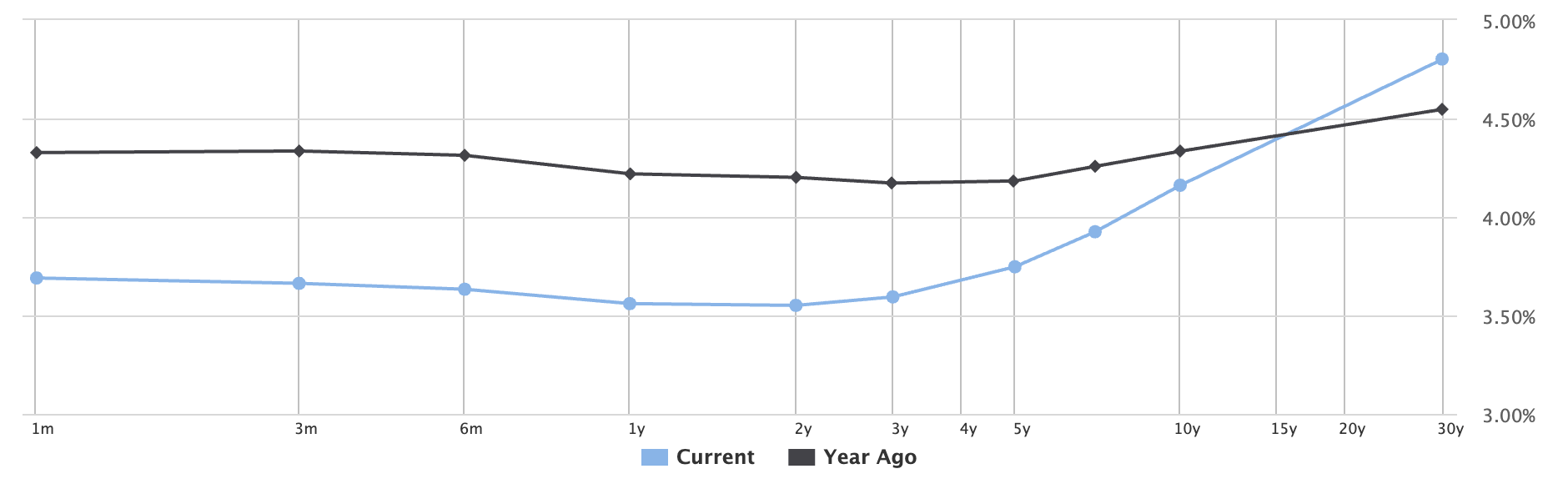
As impressive as that analysis proved to be, we know that bond math is very straightforward: the longer the maturity and the higher the yield, the greater the potential cost savings. Couple this reality with the fact that the U.S. Treasury yield curve has steepened during the last year, and you have the formula for far greater savings/cost reduction. In fact, the spread between 2-year Treasury notes and 30-year bonds has gone from 0.35% to 1.35% today. That extra yield is the gift that keeps on giving.

So, how does one use only 40% of the plan’s assets to take advantage of both bond math and the steepening yield curve when you’ve already told everyone that a full implementation CFM only covers the next 11-years? You do a vertical slice! A what? A vertical slice of the liabilities in which you use 40% of the assets to cover all of the future liabilities. No, you are not providing all of the liquidity necessary to meet monthly benefits and expenses, but you are providing good coverage while extending the defeasement out 30-years. Incredibly, by using this approach, we are able to reduce the future cost of those benefits not by an impressive 24%, but by an amazing 56.1%. In fact, we are reducing the future cost of those pension promises by a greater sum than the amount of assets used in the strategy.

Importantly, this savings or cost reduction is locked-in on day one. Yes, the day that the portfolio is built, that cost savings is created provided that we don’t experience a default. As an FYI, investment-grade corporate bonds have defaulted at a rate of 0.18% or about 2/1,000 bonds for the last 40-years according to S&P.

Can you imagine being able to reduce the cost of your future obligations by that magnitude and with more certainty than through any other strategy currently in your pension plan? What a great gift it is to yourself (sleep-well-at-night) and those plan participants for whom you are responsible. Want to see what a CFM strategy implemented by Ryan ALM can do for you? Just provide us with some basic info (call me at 201/675-8797 to find out what we need) and we’ll provide you with a free analysis. No gimmicks!

Something Has Got to Give

By: Russ Kamp, CEO, Ryan ALM, Inc.

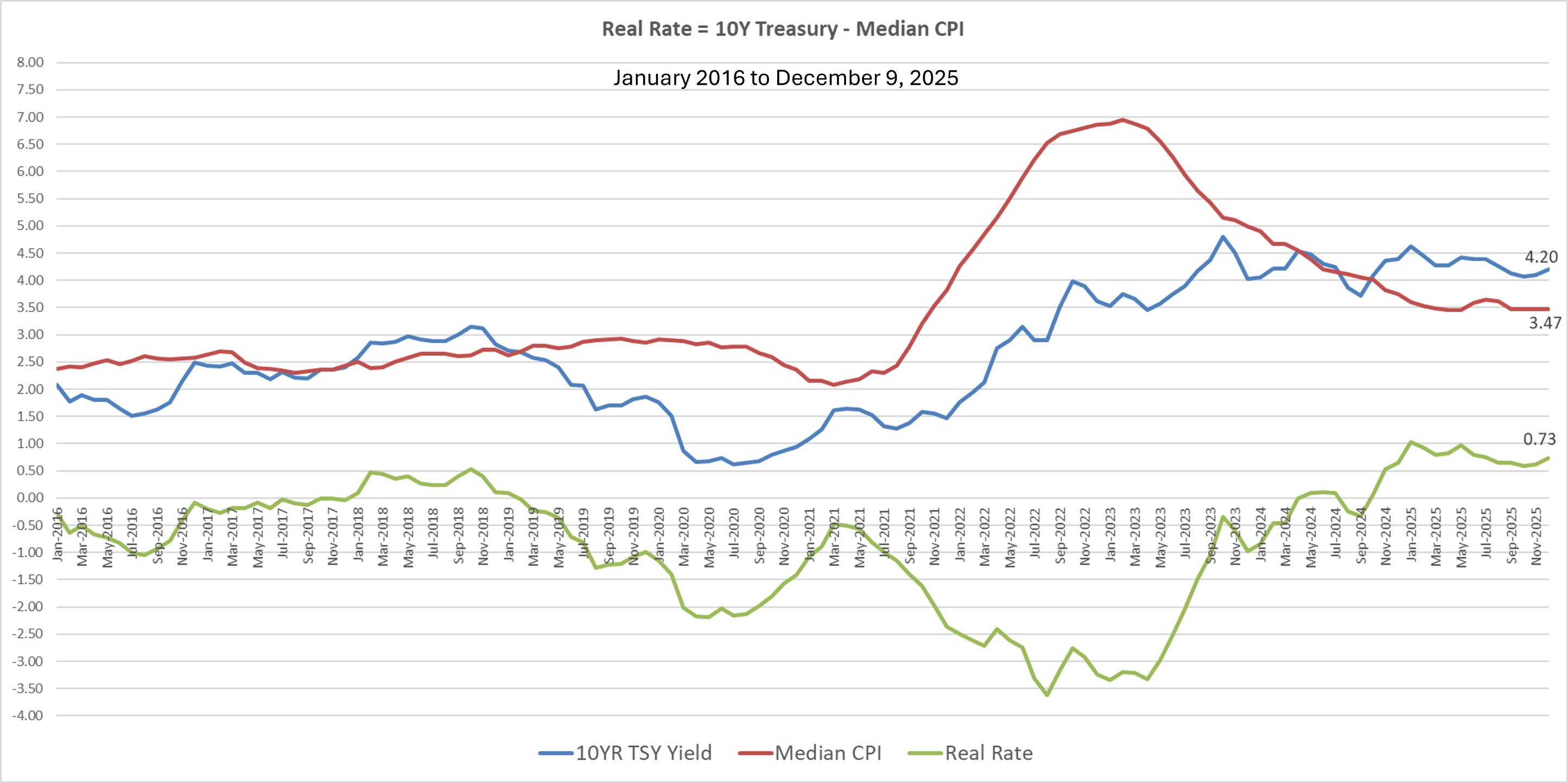
Not surprisingly, the U.S. Federal Reserve’s FOMC lowered rates another 25 bps today. The new target is 3.75%-4.0%, down from 4.5%-4.75% during the last 3 meetings. Currently, the 10-year Treasury yield (4.145% at 3:21 pm EST) is only marginally greater than the median CPI (Latest reading from the Cleveland Fed is 3.5% annually).

Ryan ALM, Inc.’s Head Trader, Steve DeVito put together the following comparison.

Steve is comparing the 10-year Treasury note yield (blue) versus the Median CPI (red) since January 2016. The green line is the “real” yield (10-year Treasury – the median CPI). For this period of time, there has been very little real yield, as U.S. rates were driven to historic lows before inflation spiked due to Covid-19 factors. However, historically (1962-2025), the real yield has average 2%. With rates down and inflation remaining stubbornly steady to increasing slightly, the real yield that investors are willing to take is, and has been, quite modest (0.17% since 2008). Why? Were the historically low rates in reaction to covid-19 an anomaly, or has something changed from an investor standpoint? Given today’s fundamentals, one might assume that investors are anticipating a sudden reversal in inflation, but is that a smart bet?

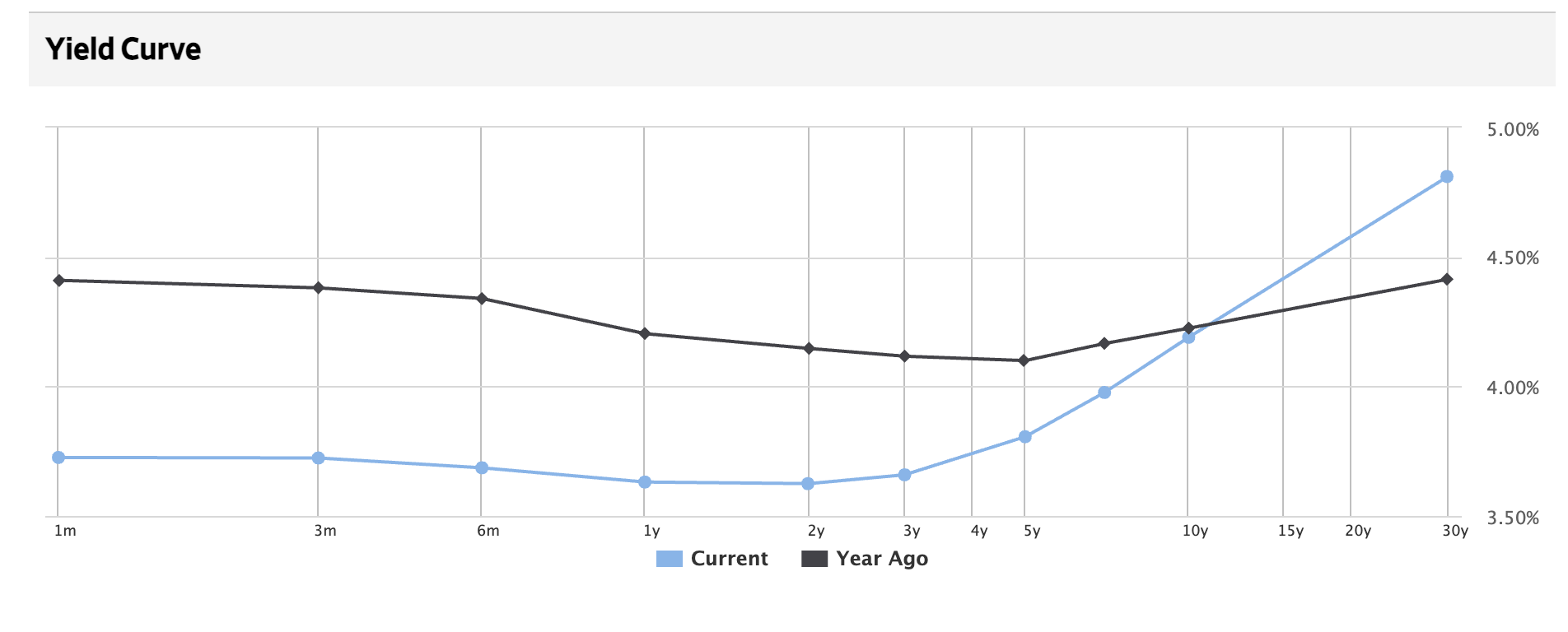
The WSJ produced the graph in today’s edition highlighting the change in the U.S. Treasury yield curve during the last year. As one can clearly see, the yield curve has gotten much steeper with the 30-year Treasury bond yield 0.4% above last year’s level (at 4.81%). That steepness would indicate to me that there is more risk longer term from inflation potentially rising.

So, it seems as if something has to give. If inflation remains at these levels, the yield on the 10-year Treasury note should be about 1.25% greater than today. If in fact, yields were to rise to that level, active core fixed income managers would see significant principal losses. However, cash flow matching managers and their clients would see the potential for greater cost reduction in the defeasing of pension liabilities, especially for longer-term programs. Bond math is very straight forward. The longer the maturity and the higher the yield, the greater the cost savings.

Managing a pension plan should be all about cash flows. That is asset cash flows versus liability cash flows of benefits and expenses. Higher yields reduce the future value of those promises. Remember, a CFM strategy is unique in that it brings an element of certainty (barring a default) to the management of pensions which live in a world of great uncertainty. Aren’t you ready for a sleep-well-at-night strategy?

Time to Get Serious!

By: Russ Kamp, CEO, Ryan ALM, Inc.

This blog focuses most often on issues related to defined benefit pension plans or other retirement-related programs/issues. However, sometimes an issue (in this case “affordability”) captures my attention leading me to respond. As you may recall, last week the WSJ asked the question: Can “Trump Accounts” for babies change the economics of having a family? I posted a note on LinkedIn.com that seemed to get the attention of many of my connections and others, as well.

My response to that question posed by the WSJ was “are you kidding me?” A one-time $1,000 deposit into a child’s account is not even a rounding error in the annual cost of raising a child. Current estimates have the cost of raising a child at >$27k/year for a two-working-adult household and >$300k by the time that child reaches 18, excluding college!

Why would anyone think that a $1,000 contribution to a small subset of children (those born between 2025 and 2028) is going to make a difference in the affordability of having children today? How is this band-aid going to tackle the economic hardship on middle and lower wage earners? Affordability has deteriorated for most Americans because essential costs—especially housing, healthcare, education, and child care—have grown much faster than typical wages, while interest rates and structural constraints (like housing supply) magnify the squeeze on household budgets. This creates a situation in which a larger share of income is needed to absorb basic living expenses, reducing room for saving (emergency fund, retirement, education, etc.), mobility, and discretionary spending (how dare you dream of a vacation) for the majority of households.

We often read about the impact of escalating housing costs (ownership or rent), but healthcare and higher education have seen some of the most significant long‑run price increases, becoming major affordability stressors for a significant majority of American families. Studies of cost‑of‑living trends highlight that health insurance premiums, out‑of‑pocket medical costs, and public college tuition have grown multiple times faster than general inflation and median earnings, increasing debt loads and the potential for financial risk and hardship.

Other necessities—such as food, transportation (try buying a new car), and utilities—have also risen substantially over the past two decades, with food and other goods and services experiencing cumulative price increases of roughly 85% or more since 2000. While some of this price movement reflects broad inflation issues, the problem for households is that real wage growth has not kept pace, so a larger share of one’s take-home pay goes to basics.

Recent high inflation (2021–2023) raised the prices of everyday items and housing costs faster than nominal wages for many workers, compressing real disposable income. In response, the Federal Reserve raised interest rates sharply, which helped moderate inflation but also increased borrowing costs for mortgages, car loans, and credit card balances.

Given that many households rely on debt to manage education, vehicles, or unexpected expenses, higher interest rates translate into heavier monthly payments and less capacity to save or invest. For younger households and those without assets, this dynamic can delay milestones like homeownership or starting a family, reinforcing a sense that the “American Dream” is receding, if not collapsing!

Less capacity to save for retirement (DC plans) and education (529 plans) is reflected in the median balances for each. I’ve railed about the failure of the defined contribution model being the primary “retirement” vehicle in many blog posts. Asking untrained individuals to fund, manage, and then disburse a benefit with limited, if no, disposable income, a lack of investment acumen, and no crystal ball to help with longevity issues is just poor policy.

Can we stop with the gimmicks, such as these child accounts, and finally get serious about the lack of affordability in this country for a significant majority of Americans! Rising inequality amplifies affordability problems because gains are concentrated among higher‑income and wealthier households while most others face flat real incomes and volatile expenses. “The Ludwig Institute’s analysis, for example, concludes that a minimal but “dignified” standard of living is now out of reach for the bottom 60 percent of households, even around $100,000 in income in some regions, due to the cumulative effect of costs.” (Truthout)

No economy can function long-term when a small sliver of the population earns most of the income, while also benefiting from lower capital gains treatment and reduced corporate taxes. Recent reports suggest that 47% of income is absorbed by the top 10% of wage earners. Other reports suggest that >60% of Americans couldn’t meet a $400 emergency related to a car repair or medical expense without taking on debt. This situation can’t continue unabated.

​As the father of five and the grandfather to 11, I see these economic burdens play out everyday! It is time to get serious!

ARPA Update as of October 24, 2025

By: Russ Kamp, CEO, Ryan ALM, Inc.

If it is a Monday, it is ARPA/SFA update day. I’m bringing you this update from Fort Lauderdale, FL, where I’m attending and speaking at the NCPERS Fall conference. It looks like a wonderful agenda for the next few days. Regarding ARPA, how did the PBGC do last week? Let’s explore.

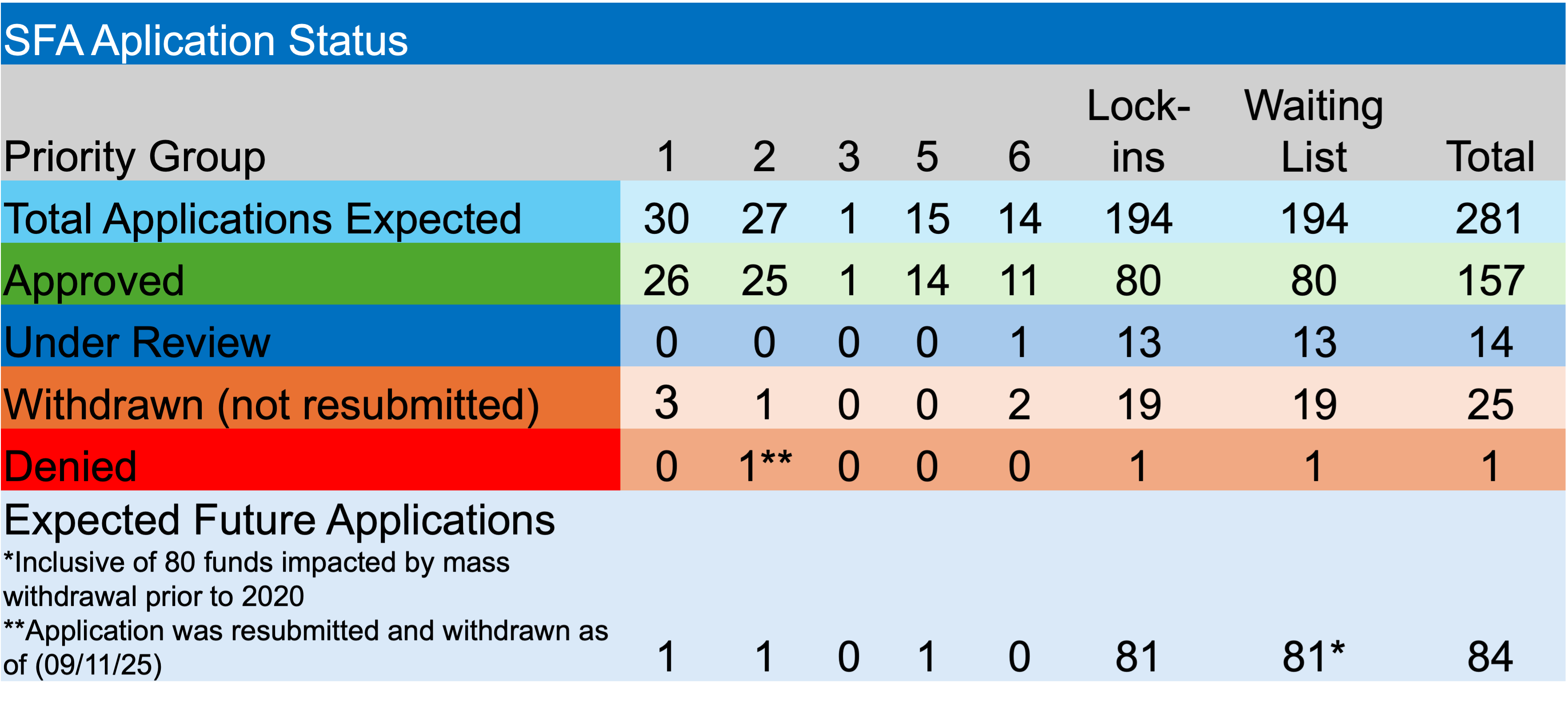
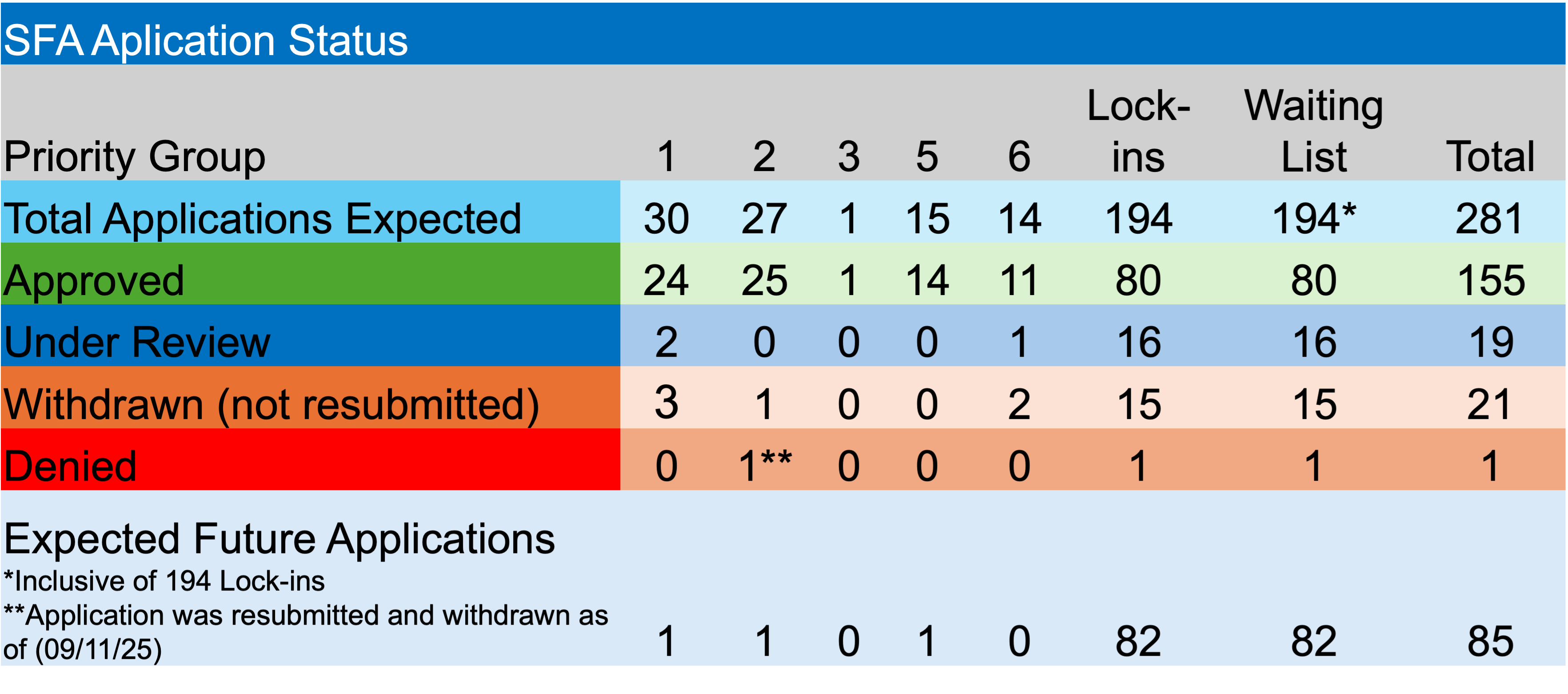
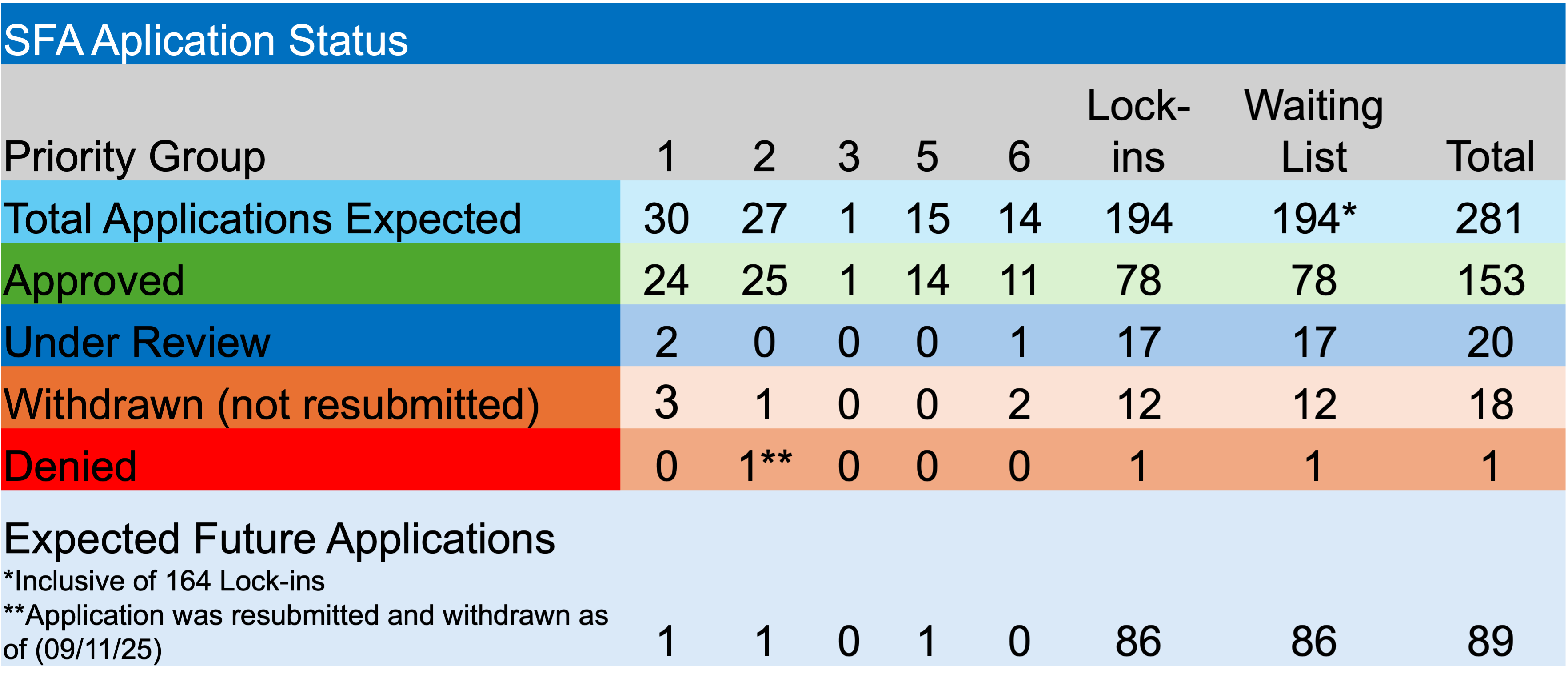
Last week saw limited action with only two applications received, including a revised application from a Priority Group 1 member. As you may recall, this was the first group permitted to submit applications all the way back in July 2021! Only 25 of the 30 members of that cohort have received Special Financial Assistance to date. Richmond, VA based Bricklayers Union Local No. 1 Pension Fund of Virginia, submitted a revised application seeking $12.9 million for its 395 participants, while International Association of Bridge, Structural, Ornamental and Reinforcing Ironworkers Local No. 79 Pension Fund, submitted an initial application hoping to secure $14.6 for 462 members. As an aside, the Ironworkers would be golden if the SFA desired was based on the length of the plan’s name.

In other ARPA news, or lack thereof, there were no applications approved, and fortunately, none denied. There were no pension plans forced to withdraw an application and none asked to repay a portion of the SFA received due to census errors. However, there was one more plan added to the burgeoning waitlist. The Soft Drink Industry Pension Fund is the 178th none-priority group fund to add its name to the list.

The next couple of months should be quite exciting for the PBGC as it works through the abundant list of applications for non-priority group members. U.S. interest rates have pulled back recently reducing some of the potential coverage period through a CFM strategy, but rates are still significantly higher than they were in 2021 when ARPA began to be implemented. Please reach out to us if you’d like to get a free analysis on what is possible once the SFA is received.

Buy on the Rumor…

By: Russ Kamp, CEO, Ryan ALM, Inc.

After 44-years in the investment industry I’ve pretty much heard most of the sayings, including the phrase “buy on the rumor and sell on the news”. I suspect that most of you have probably heard those words uttered, too. However, it isn’t always easy to point out an example. Here is graph that might just do the trick.

There had been significant anticipation that the U.S Federal Reserve would cut the Fed Funds Rate and last week that expectation was finally realized with a 0.25% trimming. However, it appears that for some of the investment community that reduction wasn’t what they were expecting. As the graph above highlights, the green line representing Treasury yields as of this morning, have risen nicely in just the last 6 days for most maturities 3 months and out, with the exception of the 1-year note. In fact, the 10- and 30-year bonds have seen yields rise roughly 10 bps. Now, we’ve seen more significant moves on a daily basis in the last couple of years, but the timing is what has me thinking.

There are still many who believe that this cut is the first of several between now and the end of 2025. However, there is also some trepidation on the part of some in the bond world given the recent rise in inflation after a prolonged period of decline. As a reminder, the Fed does have a dual mandate focused on both employment and inflation, and although the U.S. labor force has shown signs of weakening, is that weakness creating concerns that dwarf the potential negative impact from rising prices? As stated above, there may also have been some that anticipated the Fed surprising the markets by slicing rates by 0.50% instead of the 0.25% announced.

In any case, the interest rate path is not straight and with curves one’s vision can become obstructed. What we might just see is a steepening of the Treasury yield curve with longer dated maturities maintaining current levels, if not rising, while the Fed does their thing with short-term rates. That steepening in the curve is beneficial for cash flow matching assignments that can span 10- or more years, as the longer the maturity and the higher the yield, the greater the cost reduction to defease future liabilities. Please don’t let this attractive yield environment come and go before securing some of the pension promises.

Actuaries of DB Pension Plans Prefer Higher Interest Rates

By: Russ Kamp, CEO, Ryan ALM, Inc.

I produced a post yesterday, titled “U.S. Rates Likely to Fall – Here’s the Good and Bad”. In that blog post I wrote, “I’d recommend that you not celebrate a potential decline in rates if you are a plan sponsor or asset consultant, unless you are personally looking for a loan.” Falling rates have historically benefited plan assets, and not just bonds, but risk assets, too. But lower rates cause the present value (PV) of liabilities to grow. A 50 bp decline in rates would cause the PV of liabilities to grow by 6% assuming a duration of 12-years. NOT GOOD!

Not being a trained actuary, although I spend a great deal of time communicating with them and working with actuarial output, I was hesitant to make that broad assessment. But subsequent research has provided me with the insights to now make that claim. Yes, unlike plan sponsors and asset consultants that are likely counting down the minutes to a rate cut next week, actuaries do indeed prefer higher interest rates.

Actuaries of DB pension plans, all else being equal, generally prefer higher interest rates when it comes to funding calculations and the plan’s financial position.

Impact of Higher Interest Rates

  • Lower Liabilities: When interest rates (used as the discount rate for future benefit payments) increase, the (PV) of the plan’s obligations may sharply decrease depending on the magnitude of the rate change, making the plan look better funded.
  • Lower Required Contributions: Higher discount rates mean lower calculated required annual contributions for plan sponsors and often lead to lower ongoing pension costs, such as PBGC costs per participant.
  • Potential for Surplus: Sustained periods of higher rates can create or increase pension plan surpluses, improving the financial health of the DB plan and providing flexibility for sponsors.

Why This Preference Exists

  • Discount Rate Role: Actuaries discount future benefit payments using an assumed interest rate tied to high-grade bond yields. The higher this rate, the less money is needed on hand today to meet future obligations.
  • Plan Health: Lower required contributions and lower projected liabilities mean sponsors are less likely to face funding shortfalls or regulatory intervention. Plans become much more sustainable and plan participants can sleep better knowing that the plan is financially healthy.
  • Plan Sponsor Perspective: While actuaries may remain neutral in advising on appropriate economic assumptions (appropriate ROA), almost all calculations and required reports look stronger with higher interest rates. What plan sponsor wouldn’t welcome that reality.

Consequences of Lower Interest Rates

  • Increase in Liabilities: Contrary to the impact of higher rates, lower rates drive up the PV of projected payments, potentially causing underfunded positions and/or the need for larger contributions.
  • Challenge for Plan Continuation: Persistently low interest rates have made DB plans less attractive or sustainable and contributed to a trend of plan terminations, freezes, or conversions to defined contribution or hybrid structures. The sustained U.S. interest rate decline, which spanned nearly four decades (1982-2021), crushed pension funding and led to the dramatic reduction in the use of traditional pension plans.

In summary, actuaries valuing DB pension plans almost always prefer higher interest rates because they result in lower reported liabilities, lower costs, and less financial pressure on employers. Given that 100% of the plan’s liabilities are impacted by movements in rates, everyone associated with DB pensions should be hoping that current interest rate levels are maintained, providing plan sponsors with the opportunity to secure the funded ratio/status through de-risking strategies. A DB pension plan is the gold standard of retirement vehicles and maintaining them is critical in combating the current retirement crisis.

I’m Concerned! Are You?

By: Russ Kamp, CEO, Ryan ALM, Inc.

I’ve been concerned about the U.S. retirement industry for many years, with a particular focus on traditional pensions. The demise of DB pensions is a major social and economic issue for a significant majority of American workers, who fear that their golden years will be greatly tarnished without the support of a traditional DB pension plan coupled with their inability to fund a supplemental retirement vehicle, such as a defined contribution plan.

I recently had hope that the rising U.S. interest rate environment would bring about a sea change in the use of DB pensions, but I haven’t seen the tidal wave yet. That said, the higher rate environment did (could still) provide plan sponsors with the ability to take some risk off the table, but outside of private pensions, I’ve witnessed little movement away from a traditional asset allocation framework. You see, the higher rate environment reduces the present value cost of those future benefit payments improving both the funded ratio and funded status of DB pensions, while possibly reducing ongoing contributions. Securing those benefits, even for just 10-years dramatically reduces risk.

But, again, I’ve witnessed too few plans engaging in alternative asset allocation strategies. That’s not the same as engaging in alternative strategies, which unfortunately continues to be all the rage despite the significant flows into these products, which will likely diminish future returns, and the lack of distributions from them, too. An alternative asset allocation strategy that Ryan ALM supports and recommends is the bifurcation of assets into two buckets – liquidity and growth – as opposed to having all of the plan’s assets focused on the return on asset (ROA) assumption.

By dividing the assets into two buckets, one can achieve multiple goals simultaneously. The liquidity bucket, constituting investment grade bonds, will be used to defease the liability cash flows of benefits and expenses, while the growth or alpha assets can grow unencumbered with the goal of being used to defease future liabilities (current active lives). One of the most important investment tenets is time. As mentioned above, defeasing pension liabilities for even 10-years dramatically enhances the probability of the alpha assets achieving the desired outcome.

So why am I concerned? The lack of risk mitigation is of great concern. I’m tired of watching pensions ride the rollercoaster of returns up and down until something breaks, which usually means contributions go up and benefits go down! Given the great uncertainty related to both the economy and the labor force, why would anyone embrace the status quo resulting in many sleepless nights? Do something, and not just for the sake of doing something. Really do something! Embrace the asset allocation framework that we espouse. Migrate your current core bond allocation to a defeased bond allocation known as cash flow matching (CFM) to bring an element of certainty to the management of your plan.

Listen, if rates fall as a result of a deteriorating labor force and economy, the present value of pension liabilities will rise. Given that scenario, it is highly likely that asset prices will fall, too. That is a lethal combination, and not unique given how many times I’ve seen that play out during my 44-year career. Reach out to us if you aren’t sure how to start the process. We’d be pleased to take you through a series of scenarios so that you can determine what is possible. Perhaps you’ll sleep like a baby after we talk.

Are Investors About to Get Their Comeuppance?

By: Russ Kamp, CEO, Ryan ALM, Inc.

As we’ve discussed in this blog on many occasions, the U.S. interest rate decline from 1982 to 2022 fueled risk assets well beyond their fundamentals. During the rate decline, investors became accustomed to the US Federal Reserve stepping in when markets and the economy looked dicey. There seems to be a massive expectation that the “Fed” will once again support those same risk assets by initiating another rally through a rate decline perhaps as soon as September. Is that action justified? I think not!

Recent inflation data, including today’s PPI that came in at 0.9% vs. 0.2% expected, should give pause to the crowd screaming for lower rates. Yes, employment #s published last week were very weak, and they got weaker when Erika McEntarfer, the commissioner of the Bureau of Labor Statistics, was fired after releasing a jobs report that angered President Donald Trump. In addition, we have Secretary of the Treasury, Scott Bessent, demanding rates be cut by as much as 150-175 bps, claiming that all forecasting “models” suggest the same direction for rates. Is that true? Again, I think not.

You may recall that I published a blog post on July 10, 2025 titled “Taylor-Made”, in which I wrote that the Taylor Rule is an economic formula that provides guidance on how central banks, such as the Federal Reserve, should set interest rates in response to changes in inflation and economic output. The rule is designed to help stabilize an economy by systematically adjusting the central bank’s key policy rate based on current economic conditions. It is designed to take the “guess work” out of establishing interest rate policy.

In John Authers (Bloomberg) blog post today, he shared the following chart:

Calling for a roughly 2.6% Fed Funds rate in an environment of 3% or more core and sticky inflation is not prudent, and it is not supported by history. Furthermore, the potential impact from tariffs will only begin to be felt as most went into effect as of August 1, 2025.

Getting back to the Taylor Rule, Authers also provided an updated graph suggesting that the Fed Funds rate should be higher today. In fact, it should be at a level about 100 bps above the current 4.3% and more than 270 bps above the level that Bessent desires.

Investors would be wise to exit the lower interest rate train before it fuels a significant increase in U.S. rates as inflation once again rises. The impact of higher rates will negatively impact all risk assets. Given that a Cash Flow Matching (CFM) strategy eliminates interest rate risk through the defeasement of benefits and expenses that are future values and thus not interest rate sensitive, one could bring an element of certainty to this very uncertain economic environment before investors get their comeuppance! Don’t wait for the greater inflation to appear, as it might just be too late at that point to get off the lower interest rate train before it plummets into a ravine.

Really Only One Significant Influence

By: Russ Kamp, CEO, Ryan ALM, Inc.

Managing fixed income (bonds) can be challenging as there are a plethora of risks that must be evaluated including, but not limited to, credit, liquidity, maturity/duration, yield, prepayment and reinvestment risk, etc. within the investment-grade universe. But the greatest risk – uncertainty – remains interest rate risk. Who really knows the future direction of rates? As the graph below highlights, U.S. interest rates have moved in long-term secular trends with numerous reversals along the way. Does that mean that we are headed for a protracted period of rising rates similar to what was witnessed from 1953 to 1981 or is this a head fake along the path to historically low rates?

When rates are falling, it is very good for bonds as they not only capture the coupon, but they get some capital appreciation, too. However, when rates rise, it is a very different game. Yes, rising interest rates are very good for pension funds from a liability perspective, as the present value (PV) of those future benefit payments (I.e. liabilities) is reduced, but the asset side may be hurt and not only for bonds but other asset classes as well.

No alternative text description for this image

This is the primary reason why bonds should be used for their cash flows of interest and principal and not as a performance generator. The cash flows should be used to meet monthly benefits and expenses chronologically through a cash flow matching strategy (CFM). Unfortunately, Bonds are frequently used for performance and perhaps diversification benefits while compared to a generic index, such as the BB Aggregate index, which doesn’t reflect the unique characteristics of the pension plan’s liabilities.

U.S. interest rates are presently elevated but aren’t high by historic standards. However, the current level of rates does provide the plan sponsor with a wonderful opportunity to take risk from their traditional asset allocation by defeasing a portion of the plan’s liabilities from next month out as far as the allocation will cover. While the bond portfolio is funding monthly obligations, the remaining assets can just grow unencumbered.

Given the uncertainty regarding the current inflationary environment, betting that U.S. rates will fall making a potential “investment” in bonds more lucrative is nothing short of a crapshoot. Investing in a CFM strategy helps to mitigate interest rate risk as future values are not interest rate sensitive.

Taylor-Made?

By: Russ Kamp, CEO, Ryan ALM, Inc.

The Federal Reserve meeting notes have been published, and there seems to be little appetite among the Fed Governors to reduce U.S. interest rates at the next meeting. They continue to believe that the recently inflated tariffs and current trade policy actions could lead to greater inflationary pressures. These notes do not support the current administration’s push to see the Fed Funds Rate dropped significantly – perhaps as much as 3%.

In a very informative Bloomberg post from this morning, John Authers reminded everyone that President Trump selected Jerome Powell over John Taylor, Stanford University, in 2017 to become Chairman of the Federal Reserve. I must admit that I didn’t remember that being the case, while also not recalling that it is John Taylor who is credited with developing the Taylor Rule in 1993. When I think of famous Taylors, John isn’t at the top of my list. I might have believed that it had something to do with Lawrence Taylor’s dominance on the football field where he “ruled” for 13 Hall of Fame seasons and is considered by many the greatest defensive player in NFL history (yes, I am a Giants’ fan).

So, what is the Taylor Rule? The Taylor Rule is an economic formula that provides guidance on how central banks, such as the Federal Reserve, should set interest rates in response to changes in inflation and economic output. The rule is designed to help stabilize an economy by systematically adjusting the central bank’s key policy rate based on current economic conditions. It is designed to take the “guess work” out of establishing interest rate policy.

The Taylor rule suggests that the central bank should raise interest rates when inflation is above its target (currently 2%) or when GDP is growing faster than its estimated potential (overheating). Conversely, it suggests lowering interest rates when inflation is below target or when GDP is below potential (economy is underperforming). Ironically, President Trump’s dissatisfaction with Jerome Powell’s reluctance to reduce rates given significant economic uncertainty, may have been magnified by John Taylor’s model, which would have had rates higher at this time as reflected in the graph below.

As a reminder, Ryan ALM, Inc. does not forecast interest rates as part of our cash flow matching (CFM) strategy. In fact, the use of CFM to defease pension liabilities (benefits and expenses (B&E)) eliminates interest rate risk once the portfolio is built since future values (B&E) aren’t interest rate sensitive. That said, the currently higher rate environment is great for pension plan sponsors who desire to bring an element of certainty to the management of pensions which tend to live in a very uncertain existence. By funding a CFM portfolio, plan sponsors can ensure that proper liquidity is available each month of the assignment, while providing the residual assets time to grow. There are many other benefits, as well.

Since we don’t know where rates are likely to go, we highly recommend engaging a CFM program sooner rather than later before we find that lower interest rates have caused the potential benefits (cost savings) provided by CFM to fall.