U.S. Rates Likely to Fall – Here’s the Good and Bad

By: Russ Kamp, CEO, Ryan ALM, Inc.

Unfortunately, there exists weakness in the U.S. labor force, as a notable deterioration in job creation, initial jobless claims, and job openings is taking place at this time. This weakness will likely lead the Federal Reserve to lower U.S. interest rates at the next FOMC, which takes place next week with an announcement on the 18th. The current consensus is for a 0.25% reduction in the Fed Fund’s Rate to 4.0%-4.25%. There is also a rising expectation that the “cut” could be larger. That might be more hope than reality at this time, given the CPI’s 0.4% posting today.

So, if rates were to be lowered, who benefits and who gets hurt? Well, individuals seeking loans – mortgages, cars, student loans – certainly benefit. But individuals hoping to generate some income from savings and retirement assets get hurt, especially since these rates tend to be shorter maturity instruments. Who else is impacted? Fixed income asset managers will benefit if they are holding coupon bonds, as falling rates drive bond prices upward. However, those holding bonds with adjustable yields won’t benefit as much.

How about DB pension funds? Yes, those pension funds invested in U.S. fixed income will likely see asset appreciation. However, both public and multiemployer plans have dramatically reduced their average exposure to this asset class. According to P&I’s annual survey, multiemployer plans have 18.2% in U.S. domestic fixed income, while public plans have roughly 18.7% of plan assets dedicated to U.S. fixed income. As a point of reference, corporate plans have nearly half of the plan’s assets dedicate to fixed income (45.4%). As rates fall, these plans will see some appreciation providing a boost in their quest to achieve the desired ROA. Great!

However, let us not forget that pension liabilities will be negatively impacted by falling rates, as they are bond-like in nature and the present value of those liabilities will grow. This is what crushed DB pensions during the massive decline in interest rates from 1982 until 2021. A move down in rates will directly benefit less than 50% of the assets, if we are talking about a corporate plan, and <20% of the assets for multiemployer and public funds. However, 100% of the liabilities will be impacted! Doesn’t seem like a good trade-off. As a result, funded ratios will decline and funded status shortfalls will grow, leading to greater contributions.

Given the mismatch identified above, I’d recommend that you not celebrate a potential decline in rates if you are a plan sponsor or asset consultant, unless you are personally looking for a loan. I would also recommend that you align your plan’s asset cash flows (principal and income from bonds) with your liability cash flows (benefits and expenses) while rates remain moderately high. As I’ve stated many times in this blog, Pension America had a great opportunity to de-risk DB pensions in 1999 but failed to act. Please don’t let this opportunity slip by without appropriate action.
Not So Fast

By: Russ Kamp, CEO, Ryan ALM, Inc.

In addition to publishing my thoughts through this blog, I frequently put sound bites out through LinkedIn.com. The following is an example of such a comment: Given Powell’s statement about “balancing dual mandates”, it seems premature to assume that the Fed’s next move on rates is downward. Tariffs have only recently kicked in and their presence could create a very challenging situation for the Fed should inflation continue on its path upward. Market reaction seems overblown. September’s CPI/PPI numbers could be very interesting.

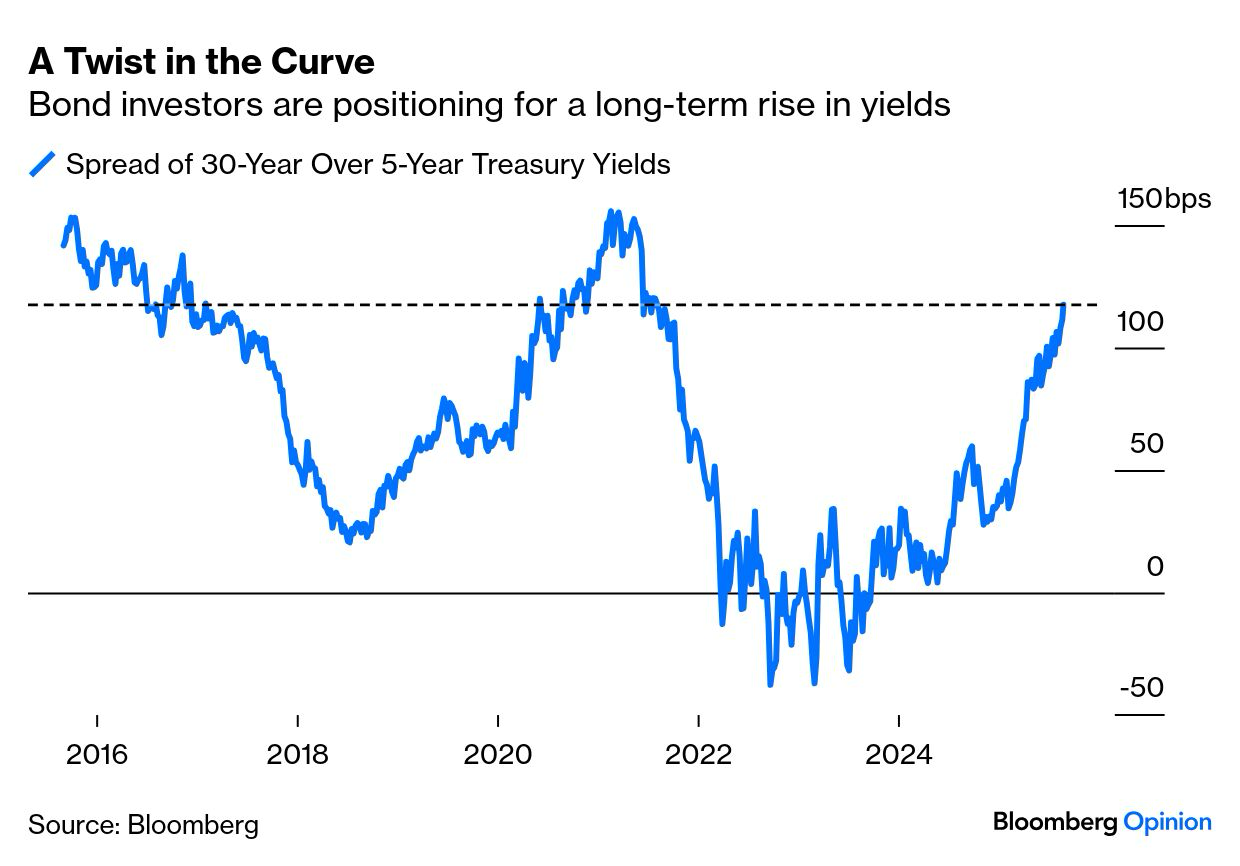
As a follow-up to that comment, here is a graph from Bloomberg highlighting the recent widening in the spread between 5-year and 30-year Treasuries, which is at its widest point in the last 4 years.  This steeping of the yield curve would suggest that inflation is being more heavily anticipated on the long end.

As I mentioned above, the reaction to Powell’s comments from Wyoming last Friday seemed overblown given the rethinking about “dual mandates”. Inflation has recently reversed the downward trajectory and with the impact of tariffs yet to be truly felt, it is doubtful that we’ll see inflation fall to levels that would provide comfort to the U.S. Federal Reserve policy makers. Yes, there may be a small (25 bps) cut in September, but should inflation continue to be a concern the spread in Treasury yields referenced above could continue to widen. President Trump’s goal of jumpstarting the housing market through lower mortgage rates would not likely occur.

From a pension perspective, higher rates reduce the present value of those future promised benefits. They also provide implementers of cash flow matching (CFM) strategies, such as Ryan ALM Advisers, LLC, the opportunity to defease those pension liabilities at a lower cost (greater cost savings). Bond math is very straight forward. The higher the yield and the longer the maturity, the greater the cost savings. Although higher rates might not be good for U.S. equities, especially given their current valuations, the ability to reduce risk at this time through a CFM strategy should be comforting.

Bifurcate your asset allocation into two buckets – liquidity and growth. The liquidity bucket will house the CFM strategy, providing all the necessary liquidity to meet ongoing monthly obligations as far into the future as the allocation will cover. The remaining assets (all non-core bonds) in the growth or alpha portfolio will now have more time to just grow unencumbered, as they are no longer a source of liquidity. Time is a critical investment tenet, and with more time, the probability of meeting the expected return is enhanced.

There is tremendous uncertainty in our markets and economy currently. One can bring an element of certainty to the management of pensions, live with great uncertainty.

Are Investors About to Get Their Comeuppance?

By: Russ Kamp, CEO, Ryan ALM, Inc.

As we’ve discussed in this blog on many occasions, the U.S. interest rate decline from 1982 to 2022 fueled risk assets well beyond their fundamentals. During the rate decline, investors became accustomed to the US Federal Reserve stepping in when markets and the economy looked dicey. There seems to be a massive expectation that the “Fed” will once again support those same risk assets by initiating another rally through a rate decline perhaps as soon as September. Is that action justified? I think not!

Recent inflation data, including today’s PPI that came in at 0.9% vs. 0.2% expected, should give pause to the crowd screaming for lower rates. Yes, employment #s published last week were very weak, and they got weaker when Erika McEntarfer, the commissioner of the Bureau of Labor Statistics, was fired after releasing a jobs report that angered President Donald Trump. In addition, we have Secretary of the Treasury, Scott Bessent, demanding rates be cut by as much as 150-175 bps, claiming that all forecasting “models” suggest the same direction for rates. Is that true? Again, I think not.

You may recall that I published a blog post on July 10, 2025 titled “Taylor-Made”, in which I wrote that the Taylor Rule is an economic formula that provides guidance on how central banks, such as the Federal Reserve, should set interest rates in response to changes in inflation and economic output. The rule is designed to help stabilize an economy by systematically adjusting the central bank’s key policy rate based on current economic conditions. It is designed to take the “guess work” out of establishing interest rate policy.

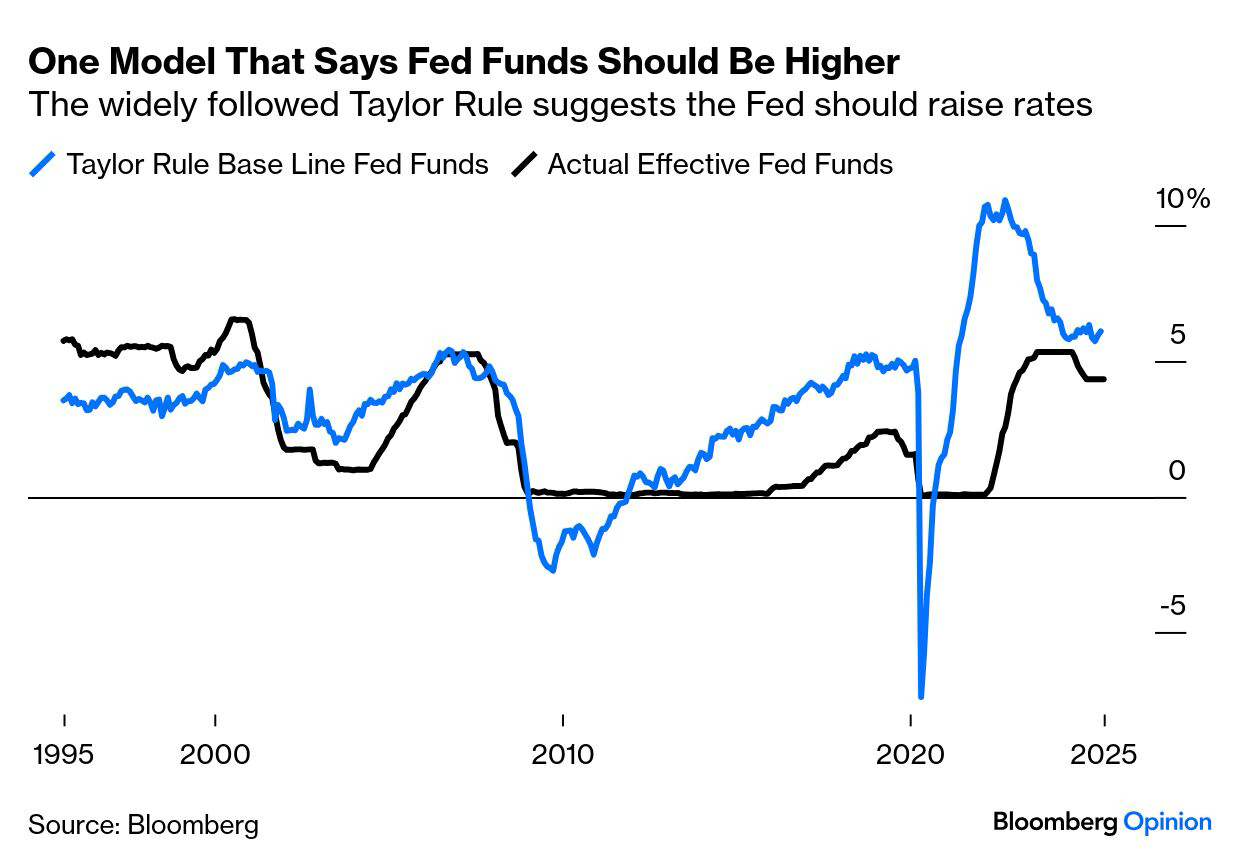
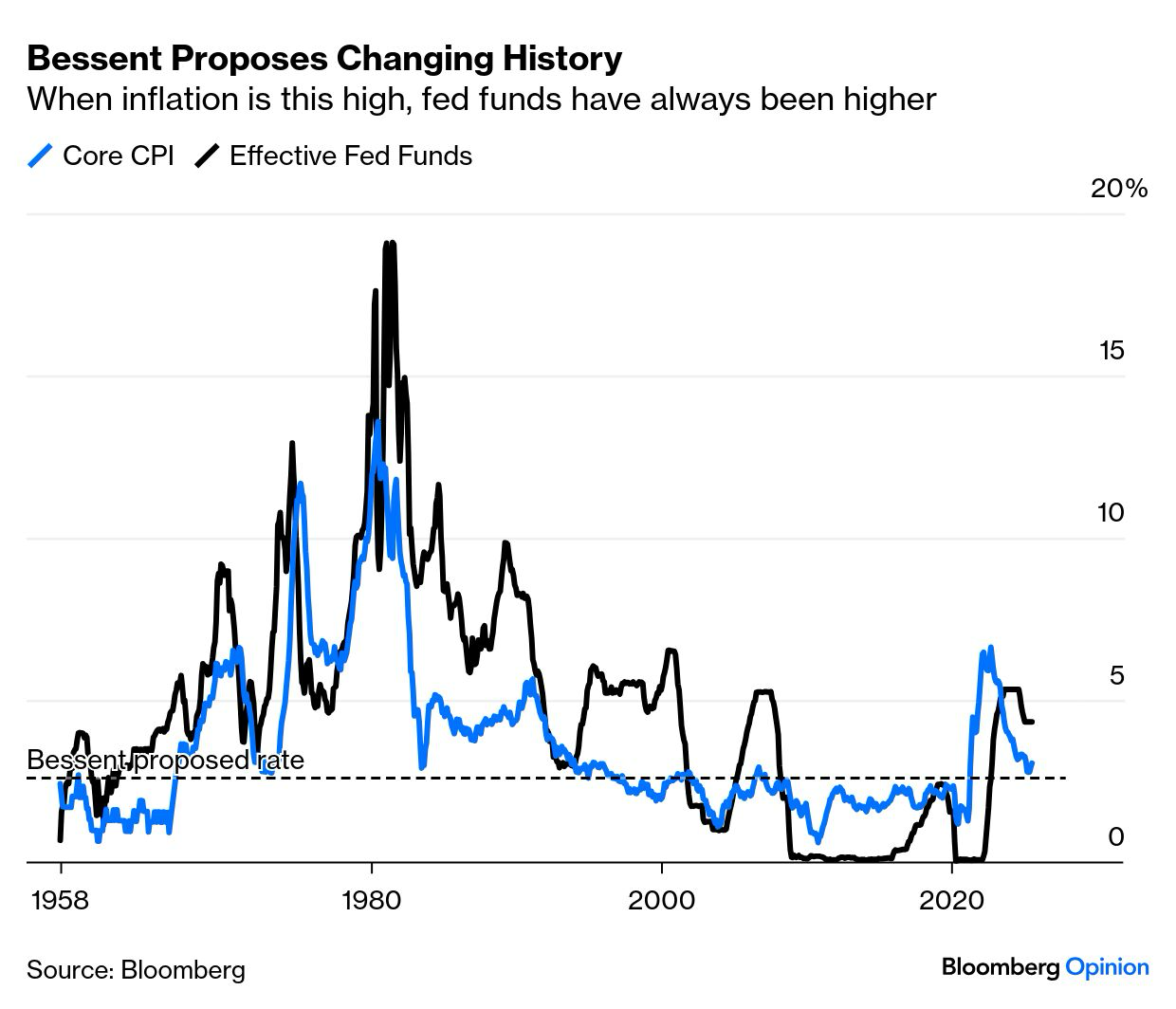
In John Authers (Bloomberg) blog post today, he shared the following chart:

Calling for a roughly 2.6% Fed Funds rate in an environment of 3% or more core and sticky inflation is not prudent, and it is not supported by history. Furthermore, the potential impact from tariffs will only begin to be felt as most went into effect as of August 1, 2025.

Getting back to the Taylor Rule, Authers also provided an updated graph suggesting that the Fed Funds rate should be higher today. In fact, it should be at a level about 100 bps above the current 4.3% and more than 270 bps above the level that Bessent desires.

Investors would be wise to exit the lower interest rate train before it fuels a significant increase in U.S. rates as inflation once again rises. The impact of higher rates will negatively impact all risk assets. Given that a Cash Flow Matching (CFM) strategy eliminates interest rate risk through the defeasement of benefits and expenses that are future values and thus not interest rate sensitive, one could bring an element of certainty to this very uncertain economic environment before investors get their comeuppance! Don’t wait for the greater inflation to appear, as it might just be too late at that point to get off the lower interest rate train before it plummets into a ravine.

Taylor-Made?

By: Russ Kamp, CEO, Ryan ALM, Inc.

The Federal Reserve meeting notes have been published, and there seems to be little appetite among the Fed Governors to reduce U.S. interest rates at the next meeting. They continue to believe that the recently inflated tariffs and current trade policy actions could lead to greater inflationary pressures. These notes do not support the current administration’s push to see the Fed Funds Rate dropped significantly – perhaps as much as 3%.

In a very informative Bloomberg post from this morning, John Authers reminded everyone that President Trump selected Jerome Powell over John Taylor, Stanford University, in 2017 to become Chairman of the Federal Reserve. I must admit that I didn’t remember that being the case, while also not recalling that it is John Taylor who is credited with developing the Taylor Rule in 1993. When I think of famous Taylors, John isn’t at the top of my list. I might have believed that it had something to do with Lawrence Taylor’s dominance on the football field where he “ruled” for 13 Hall of Fame seasons and is considered by many the greatest defensive player in NFL history (yes, I am a Giants’ fan).

So, what is the Taylor Rule? The Taylor Rule is an economic formula that provides guidance on how central banks, such as the Federal Reserve, should set interest rates in response to changes in inflation and economic output. The rule is designed to help stabilize an economy by systematically adjusting the central bank’s key policy rate based on current economic conditions. It is designed to take the “guess work” out of establishing interest rate policy.

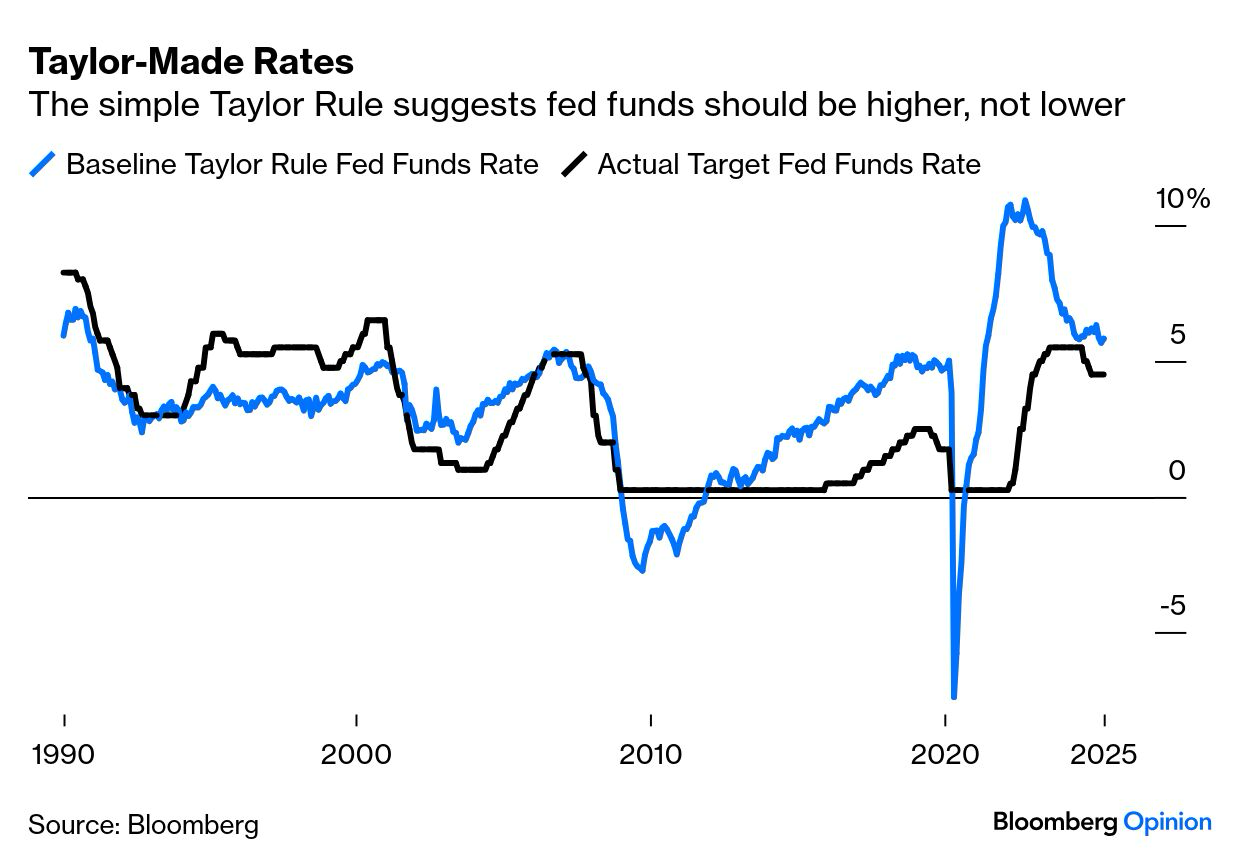
The Taylor rule suggests that the central bank should raise interest rates when inflation is above its target (currently 2%) or when GDP is growing faster than its estimated potential (overheating). Conversely, it suggests lowering interest rates when inflation is below target or when GDP is below potential (economy is underperforming). Ironically, President Trump’s dissatisfaction with Jerome Powell’s reluctance to reduce rates given significant economic uncertainty, may have been magnified by John Taylor’s model, which would have had rates higher at this time as reflected in the graph below.

As a reminder, Ryan ALM, Inc. does not forecast interest rates as part of our cash flow matching (CFM) strategy. In fact, the use of CFM to defease pension liabilities (benefits and expenses (B&E)) eliminates interest rate risk once the portfolio is built since future values (B&E) aren’t interest rate sensitive. That said, the currently higher rate environment is great for pension plan sponsors who desire to bring an element of certainty to the management of pensions which tend to live in a very uncertain existence. By funding a CFM portfolio, plan sponsors can ensure that proper liquidity is available each month of the assignment, while providing the residual assets time to grow. There are many other benefits, as well.

Since we don’t know where rates are likely to go, we highly recommend engaging a CFM program sooner rather than later before we find that lower interest rates have caused the potential benefits (cost savings) provided by CFM to fall.

Nothing Here! Really?

By: Russ Kamp, CEO, Ryan ALM, Inc.

Yesterday’s financial news delivered an inflation surprise (0.5% vs. 0.3%), at least to me and the bond market, if not to the U.S. equity market. The Federal reserve had recently announced a likely pause in their rate reduction activity given their concerns about the lack of pace in the inflation march back to its 2% target. This came on the heels of “Street” expectations after the first 0.5% cut in the FFR that there were “likely” to be eight (8!) interest rate cuts by the summer of 2025. Oh, well, the two cuts that we’ve witnessed since that first move last September may be all we get for a while. “Ho hum” replied the U.S. stock market.

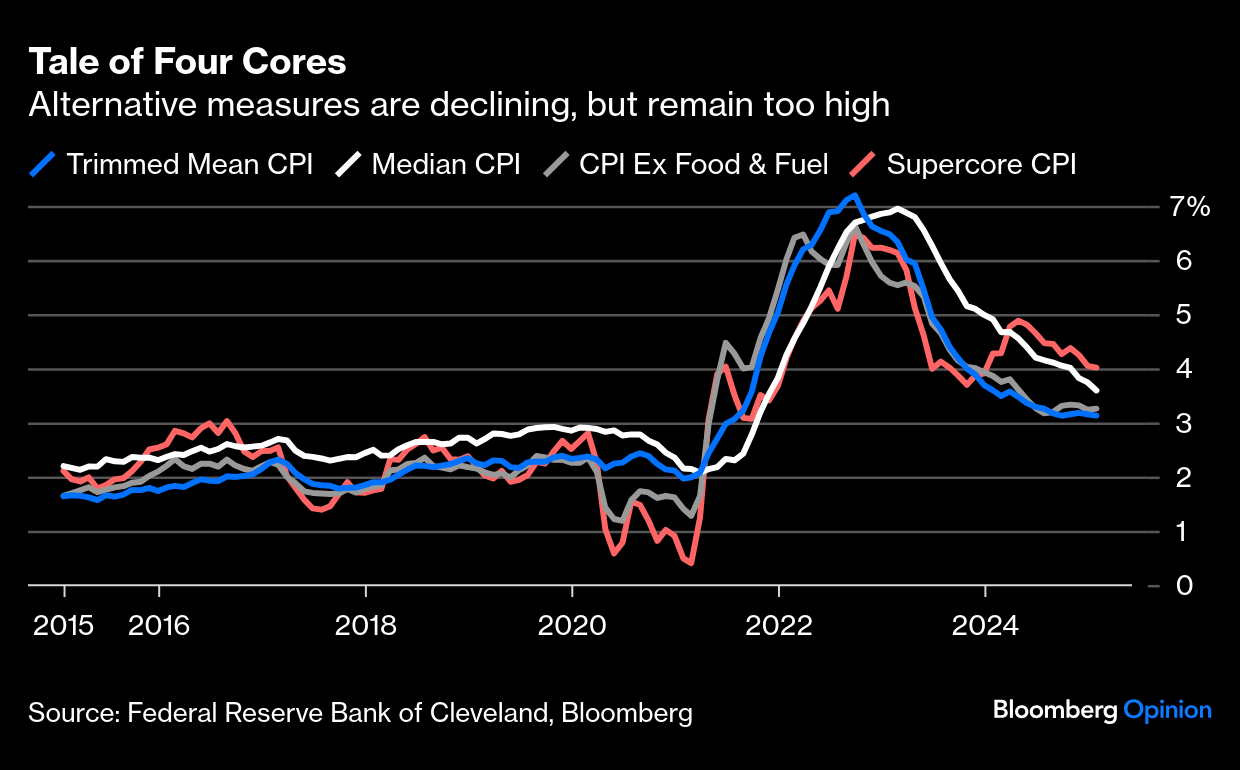
The discounting of yesterday’s inflation release is pretty astounding. Like you, I’ve read the financial press and the many emails that have addressed the CPI data 52 ways to Sunday. Much of the commentary proclaims this data point as a one-off event. For instance, the impact of egg price increases (13.8% last month alone) is temporary, as bird flu will be contained shortly. Seasonal factors impacting “sticky-priced” products tend to be announced in January. I guess those increases shouldn’t matter since they only impact the consumer in January. As a reminder, Core inflation (minus food and energy) rose from 3.1% to 3.3% last month. That seems fairly significant, but we are told that the other three core readings were down slightly, so no big deal. Again, really? Each of those core measures are >3% or more than 1% greater than the Fed’s target.

Then there are those that say, “what is significant about the Fed’s 2% inflation objective anyway”? It is an arbitrary target. Well, that may be the case, but for the millions of Americans that are marginally getting by, the difference between 2% and 3% inflation is fairly substantial, especially when we come up with all of these measures that exclude food, energy, housing (shelter), etc. Are you kidding?

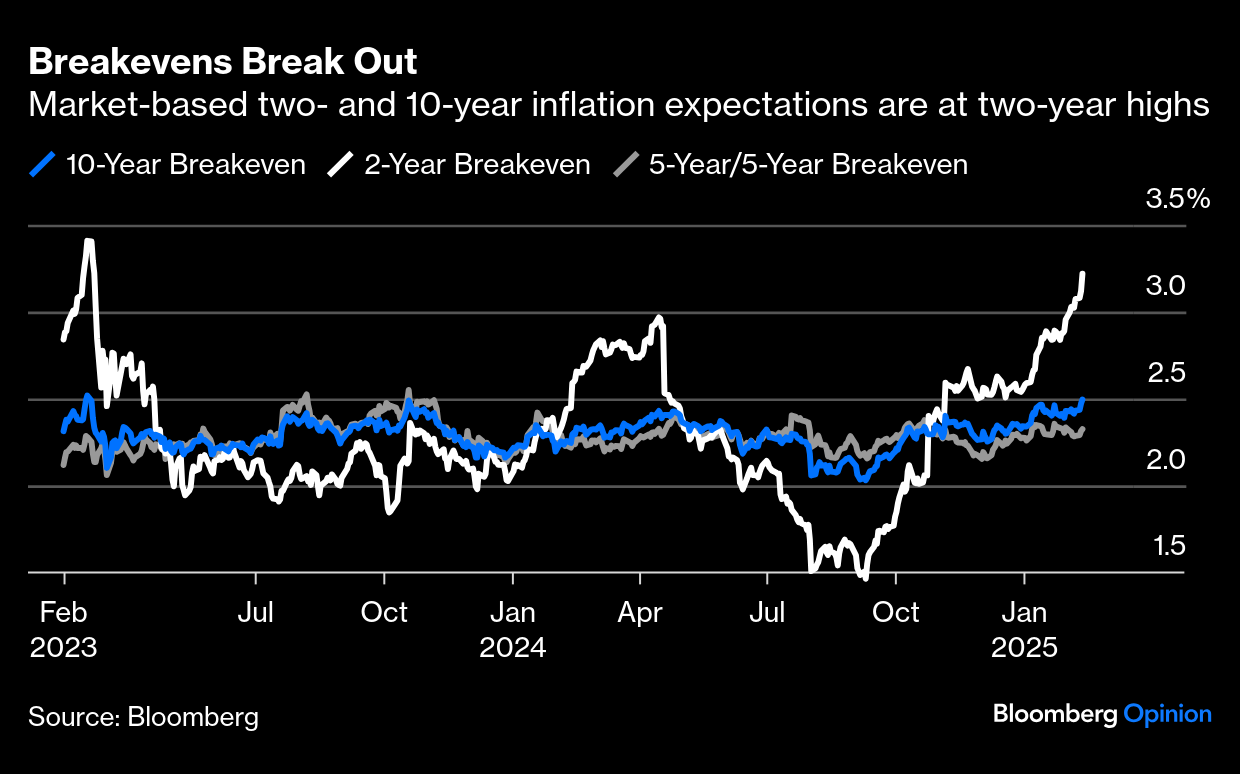
As mentioned previously, expectations for a massive cut in interest rates due to the perception that inflation was well contained have shifted dramatically. Just look at the graph above (thanks, Bloomberg). Following the Fed’s first FFR cut of 50 bps, inflation expectations plummeted to below 1.5% for the two-year breakeven. Today those same expectations reveal a nearly 3.5% expectation. Rising inflation will certainly keep the Fed in check at this time.

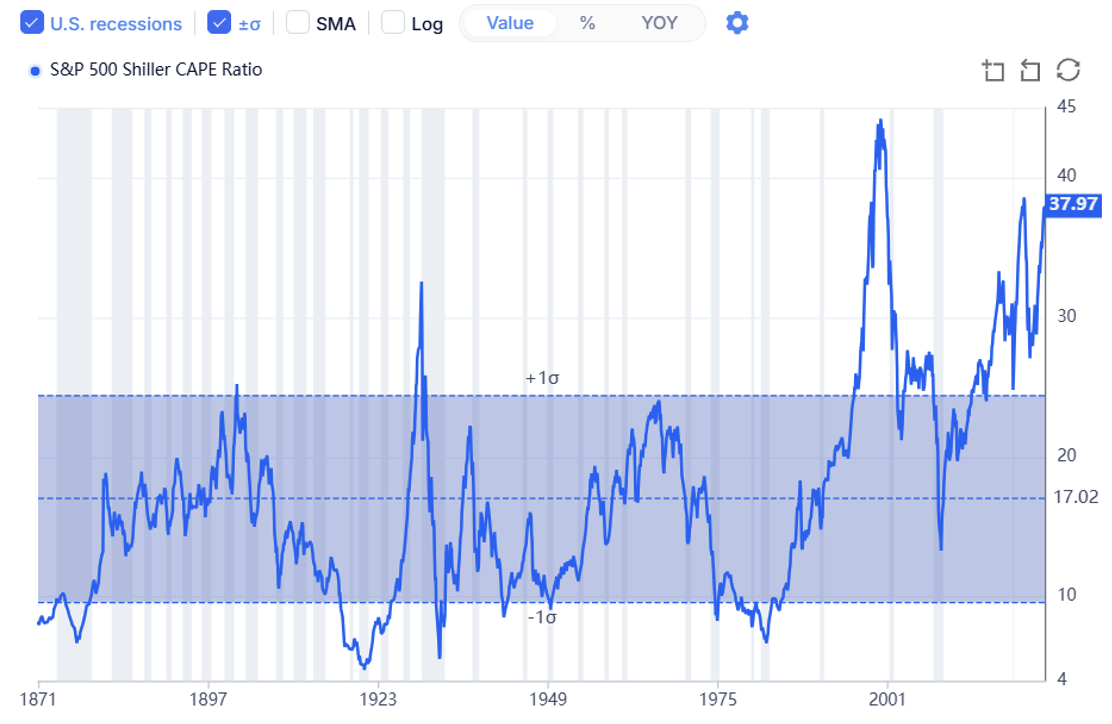
As mentioned earlier in this post, U.S. equities shrugged off the news as if the impact of higher inflation and interest rates have no impact on publicly traded companies. Given current valuations for U.S. stocks, particularly large cap companies, any inflation shock should send a shiver down the spines of the investing community. Should interest rates rise, bonds will surely become a more exciting investment opportunity, especially for pension plans seeking a ROA in the high 6% area. How crazy are equity valuations? Look at the graph below.

The current CAPE reading has only been greater during the late 1990s and we know what happened as we entered 2000. The bursting of the Technology bubble wasn’t just painful for the Information Technology sector. All stocks took a beating. Should U.S. interest rates rise as a result of the current inflationary environment, there is a reasonable (if not good) chance that equities will get spanked. Why live with this uncertainty? It is time to get out of the game of forecasting economic activity. Why place a bet on the direction of rates? Why let your equity “winnings” run? As a reminder, managing a DB pension plan should be all about SECURING the promised benefits at a reasonable cost and with prudent risk. Is maintaining the status quo prudent?

Is Now The Time To Act?

By: Russ Kamp, Managing Director, Ryan ALM, Inc.

Equity market participants were recently reminded of the fact that markets can fall, and unfortunately they usually don’t decline with any kind of notice. The impetus behind the markets’ most recent challenging day was the Fed’s relatively tame forecast for likely interest rate moves in 2025. There is no question in my mind that the nearly 4-decade decline in rates from lofty heights achieved in the early ’80s, when the Fed Funds Rate eclipsed 20%, to the covid-fueled bottom reached in early 2020, when the yield on the 10-year Treasury Note was at 0.5%, made bond returns a lot stronger than anyone’s forecast.

It certainly seemed that the US Federal Reserve provided the security blanket any time there was a wobble in the markets. This action allowed “investors” to keep their collective foot on the gas with little fear. Sure, there were major corrections during that lengthy period, but the Fed was always there to lend a hand and a ton of stimulus that propped up the economy and markets, and ultimately the investment community. As we saw in 2022, the Fed had run out of dry powder and ultimately had to raise US interest rates to stem a vicious inflationary spike. Rates rose rather dramatically, and the result was an equity market, as measured by the S&P 500, that declined 18% for the calendar year. Bonds faired only marginally better as rising rates impacted bond principals creating a collective -12.1% return for the BB Aggregate Index.

As we enter 2025, do we once again have a situation in which the Fed’s ability to reduce rates has been curtailed due to a stronger economy than anticipated? Will the continued strength and massive government stimulus drive inflation and rates higher? According to a blog post from Apollo’c CIO, here are his list of the potential risks and the probabilities:

Risks to global markets in 2025

Interesting that he feels, like we do at Ryan ALM, Inc., that the economy is likely to be stronger than most suspect (#6) leading to higher inflation, rising rates (#7), and a 10-year Treasury Note yield in excess of 5% (#8). That yield is currently at 4.6% (as of 3:06 pm).

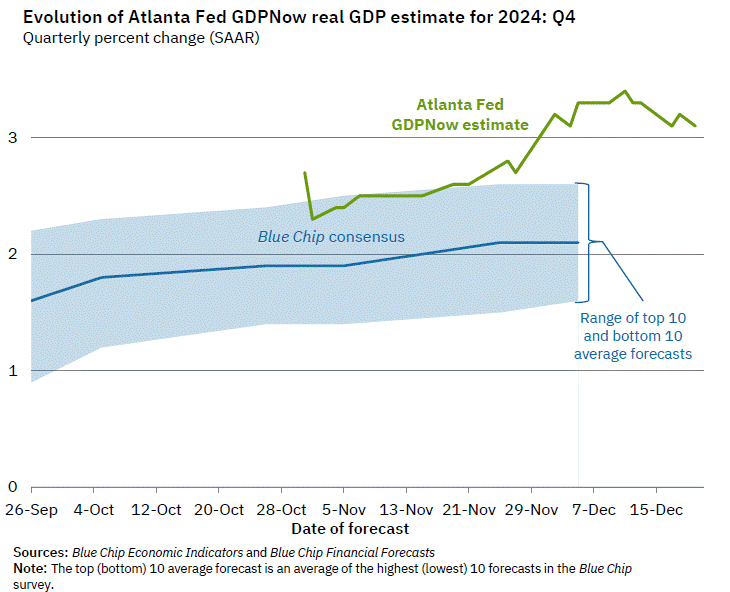
For those that might be skeptical, the Atlanta Fed’s GDPNow model is currently forecasting GDP growth for Q4’24 at 3.1% annualized. They have done a wonderful job forecasting quarterly growth rates. Their forecasts have consistently been above the “street’s” and as a result, much more accurate.

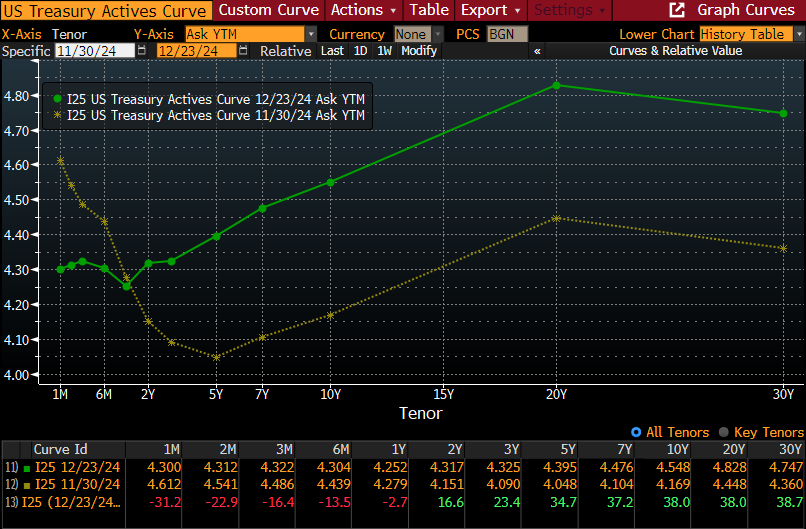
In addition, despite the third rate cut by the Federal Reserve at the most recent FOMC meeting of their benchmark Fed Funds Rate (-1.0% since the easing began), interest rates on longer dated maturities have risen quite significantly, as reflected below.

Rising US rates, stronger growth, and greater inflation may just be the formula for a significant contraction in equity valuations, especially given the current level. Be proactive. Reduce risk. Secure the promised benefits. Under no circumstance should you just let your “winnings” ride.

We Suggested That It Might Just Be Overbought

By: Russ Kamp, Managing Director, Ryan ALM, Inc.

Regular readers of this blog might recall that on September 5th we produced a post titled, “Overbought?” that suggested that bond investors had gotten ahead of themselves in anticipation of the Fed’s likely next move in rates. At that time, we highlighted that rates had moved rather dramatically already without any action by the Fed. Since May 31, 2024, US Treasury yields for both 2-year and 3-year maturities had fallen by >0.9% to 9/5. By almost any measure, US rates were not high based on long-term averages or restrictive.

Sure, relative to the historically low rates during Covid, US interest rates appeared inflated, but as I’ve pointed out in previous posts, in the decade of the 1990s, the average 10-year Treasury note yield was 6.52% ranging from a peak of 8.06% at the end of 1990 to a low of 4.65% in 1998. I mention the 1990s because it also produced one of the greatest equity market environments. Given that the current yield for the US 10-year Treasury note was only 3.74% at that point, I suggested that the present environment wasn’t too constraining. In fact, I suggested that the environment was fairly loose.

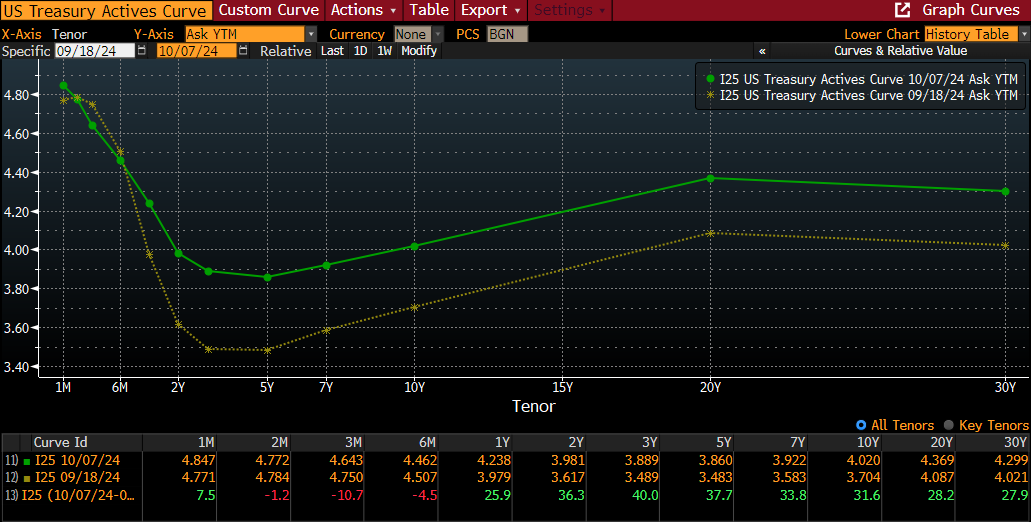
Well, as we all know, the US Federal Reserve slashed the Fed Funds Rate by 0.5% on September 18th (4.75%-5.0%). Did this action lead bond investors to plow additional assets into the market driving rates further down? NO! In fact, since the Fed’s initial rate cut, Treasury yields have risen across the yield curve with the exceptions being ultra-short Treasury bills. Furthermore, the yield curve is positively sloping from 5s to 20s.

Again, managing cash flow matching portfolios means that we don’t have to be in the interest rate guessing game, but we are all students of the markets. It was out thinking in early September that markets had gotten too far ahead of the Fed given that the US economy remained on steady footing, the labor market continued to be resilient, and inflation, at least sticky inflation, remained stubbornly high relative to the Fed’s target of 2%. Nothing has changed since then except that the US labor market seems to be gaining momentum, as jobs growth is at a nearly 6-month high and the unemployment rate has retreated to 4.1%.

There will be more gyrations in the movement of US interest rates. But anyone believing that the Fed and market participants were going to drive rates back to ridiculously low levels should probably reconsider that stance at this time.

The Heavyweight Fight May Be Tilting Toward Fiscal Policy

By: Russ Kamp, Managing Director, Ryan ALM, Inc.

You may recall that on March 22, 2024, I produced a post titled, “Are We Witnessing A Heavyweight Fight?”. The gist of the blog post was the conflict between the Fed’s desire to drive down rates through monetary policy and the Federal government’s ongoing deficit spending. At the time of publication, the OMB was forecasting a $1.6 trillion deficit for fiscal year 2024. As I noted in a post on Linkedin.com this morning, the budget office has revised its forecast that now has 2024’s fiscal deficit at $2.0 trillion.

This additional $400 billion in deficit spending will likely create additional demand for goods and services leading to a continuing struggle for the Fed and the FOMC, as they struggle to contain inflation. I also reported yesterday that rental expenses had risen 5.4% on an annual basis through May 31, 2024. Given the 32% weight of rents on the Consumer Price Index (CPI), I find it hard to believe that the Fed will be successful anytime soon in driving down inflation to their 2% target.

As a result, we believe that US interest rates are likely to remain at elevated levels to where they’ve been for the past couple of decades. These higher levels provide pension plan sponsors the opportunity to use bonds to de-risk their pension plans by securing the promised benefit payments through a defeasement strategy (cash flow matching). Furthermore, higher rates provide an opportunity for savers to finally realize some income from their fixed income investments. So, higher rates aren’t all bad! I would suggest (argue) that rates have yet to achieve a level that is constraining economic activity. Just look at the Atlanta Fed’s GDPNow model and its 3.0% annualized Real GDP forecast for Q2’24. Does that suggest a recessionary environment to you?

For those investors that have only lived through protracted periods of falling rates and/or an accommodative Federal Reserve, this time may be very different. Forecasts of Fed easing considerably throughout 2024 have proven to be quite premature. As I stated this morning, “investors” should seriously consider a different outcome for the remainder of 2024 then they went into this year expecting.

What A Ride!

By: Russ Kamp, Managing Director, Ryan ALM, Inc.

In 1971, Bread produced the song If. The song starts off with David Gates singing the lyrics, “if a picture paints a thousand words”. Looking at the graph below, I think that Bread and David could have used a number far greater than 1,000 to describe the impact that this picture might produce.

It never ceases to amaze me how momentum builds for an idea driving perceptions to depths or altitudes not supported by the underlying fundamentals. We see it so often in our markets whether discussing bonds, equities, or alternatives. In the case above, the “Street” became convinced that the US Federal Reserve was going to have to drive US interest rates down as our economy was about to collapse. A “please do something” cry could almost be heard from market participants who thrived on nearly four decades of Fed support. They were so accustomed to the Fed stepping in anytime that there was a wobble in the markets that it became part of the investment strategy.

It got so silly, that fixed income managers drove rates down substantially from the end of October to the end of 2023. In the process, they created an environment that was once again very “easy” and supportive of economic growth. But, that wasn’t the end of the story. I can recall a near unanimous expectation that there was going to be anywhere from 4-6 cuts in the Fed Funds Rate and perhaps more during 2024. We had analysts predicting 250 – 300 bps of rate cuts. Was the world ending?

I’ve produced more than 40 blog posts since March of 2022 that used the phrase “higher for longer” in describing an economic and inflationary environment that I felt was to robust for the Fed to reduce rates. Of course, there were many more posts in which I questioned the wisdom of the deflationary and lower rates crowd where I didn’t precisely utter those three words. Well, fortunately for pension America and the American worker, the US economy has held up in far greater fashion than predicted. The labor market remains fairly robust keeping Americans working and spending.

While inflation remains sticky and elevated, US rates have remained at decade highs providing defined benefit sponsors the opportunity to take substantial risk from the plan’s asset allocation framework through asset/liability strategies (read Cash Flow Matching) that secure the promises at substantially lower cost. As the chart above highlights, expectations for rate cuts have fallen from 4-6 or more to fewer than 2 at this point, as only a -31 bps decline is currently priced in. We’ve seen quite a repricing in 2024, and I suspect that we might need to see more, as “higher for longer” seems to be the approach being taken by the Fed.

While this is the case, plan sponsors would be wise to secure as many years of promised benefits as possible. Plan sponsors and their advisors let 2000 come and go without securing the benefits only to see two major market declines sabotage the opportunity and your plan’s funded status. Riding the asset allocation rollercoaster hasn’t worked. Is the car that you are riding in nearing the peak at this time?

What’s The Hurry?

By: Russ Kamp, Managing Director, Ryan ALM, Inc.

“Fed To Cut Rates in September, Say Nearly Two-thirds of Economists.”

This pronouncement was in large bold font on an email that I received this morning from the Wealth Advisor. Should I be skeptical? You bet!!

As you may recall, there was near unanimity among “economists” late last year that the US Federal Reserve would begin reducing rates RAPIDLY as the calendar flipped to 2024. In fact, consensus was fairly strong that there were going to be 4-6 cuts of between 1.0%-1.5%. There was even a leading bank that saw the need to reduce rates by 2.5% – oh, my. What happened? At this time I’m particularly interested in the 1/3 of economists that were predicting huge cuts at the end of 2023 that aren’t buying a September cut at this time. Those are the ones that I want to hear from.

What has changed from late last year when the labor market was strong, inflation was sticky, economic growth was stronger than expected, the stock market was raging ahead, and fiscal policy was in direct conflict with the Fed’s monetary objectives? Nothing has changed!

What is the urgency to cut rates? The Atlanta Fed’s GDPNow model is predicting a 4.2% annualized growth rate for Q2’24 (latest update as of May 8th). Does a growth rate of that magnitude warrant a rate cut? Heck no! Yes, there is the issue that most of today’s investors don’t remember the 1970s, if they were even born, but I do. Fed missteps lead directly to incredibly high inflation and US interest rates. Today’s rate environment is nothing compared to that era. Why risk a repeat? Stagflation became a reality. Is that something that you want to witness again?

Seniors and those living on a fixed income can finally earn some interest on their investments without having to dive into strategies that they don’t understand just to earn a little more interest. Pension plans can finally use fixed income to secure some or all of their promises to plan participants by matching bond cash flows of interest and principal with pension liabilities (benefits and expenses). Endowments and foundations can invest more cautiously knowing that they can earn a return from less risky assets that will help them achieve a return commensurate with their spending policy. This is all good stuff! Use this environment to take some of your assets off the asset allocation rollercoaster before our capital markets reach the apex of their journey. The next downward trajectory could be a doozy!