Terrific Issue Brief from the American Academy of Actuaries

By: Russ Kamp, CEO, Ryan ALM, Inc.

An acquaintance of mine shared an issue brief that was produced by the American Academy of Actuaries last April. They Academy describe their organization and role, as follows. “The American Academy of Actuaries is a 20,000-member professional association whose mission is to serve the public and the U.S. actuarial profession. For more than 50 years, the Academy has assisted public policymakers on all levels by providing leadership, objective expertise, and actuarial advice on risk and financial security issues. The Academy also sets qualification, practice, and professionalism standards for actuaries in the United States.”

The brief addressed surplus management for public pension systems. What does it mean and what should be done when a plan is in “surplus”. It is important to understand that a surplus calculation (plan assets – plan liabilities) is a single point in time. Our capital markets (assets) and U.S. interest rates (discounting of liabilities) are constantly changing. A plan that is deemed to be in surplus today could easily fall below 100% the very next day.

The go go decade of the 1990s witnessed public pension’s producing fairly consistent double-digit returns. Instead of locking in these gains through sound surplus management, benefits were often enhanced, contributions trimmed, or both. As a result, once the decade of the ’00s hit and we suffered through two major recessions, the enhancements to the benefits which were contractually protected and the lowered contributions proved tough to reverse.

According to Milliman, they estimate the average public funded ratio at 81.2% (top 100 plans) as of November 30, 2024. This is up substantially from September 30, 2022 when the average funded ratio was roughly 69.8%. But it highlights how much work is still needed to be done. I agree that it is wise to have a surplus management plan should these critically important funds once again achieve a “surplus”. I would hope that the plan is centered on de-risking their traditional asset allocations by using more bonds in a cash flow matching (CFM) strategy to reduce the big swings in funding. Furthermore, it is critically important to secure what has already been promised than to weaken the funded status by enhancing benefits or cutting contributions prematurely.

I’d recommend to everyone involved in pension management that they spend a little time with this report. The demise of DB pension plans in the private sector has created a very uncertain retirement for many of our private sector workforce. Let’s not engage in practices that lead to the collapse of public sector DB plans.

Interesting Insights From Ortec Finance

By: Russ Kamp, CEO, Ryan ALM, Inc.

PensionAge’s, Paige Perrin, has produced an article that referenced recent research from Ortec Finance. The research, which surveyed senior pension fund executives in the UK, US, the Netherlands, Canada, and the Nordics, found that 77% believe that risk will be elevated, either dramatically or slightly, in 2025. That’s quite the stat. It also follows on reporting from P&I that referenced heightened uncertainty by U.S. plan sponsors. As regular readers of this blog know, I’ve been suggesting to (pleading with) sponsors that they don’t need to live with uncertainty, which is truly uncomfortable.

Among several risks cited were interest rates, inflation, and market volatility. I can’t say that I blame them for their concerns. Who among us are able to adequately forecast rates and inflation? Seems like most fixed income professionals and bond market participants have been forecasting an aggressive move down in rates. Some of these prognosticators were forecasting as many as 7 rate reductions in 2024 and several others in 2025. We didn’t get 2024’s tally. Who knows about 2025 given that inflation has remained fairly sticky.

There is an easy fix for those of you who are concerned about interest rates and inflation. Adopt a cash flow matching (CFM) strategy that will carefully match asset cash flows of interest and principal with liability cash flows (benefits and expenses). Because benefit payments are future values (FVs), they are not interest rate sensitive. Problem solved! Furthermore, the use of CFM extends the investing horizon for the remainder of the fund’s growth assets, so they now have the appropriate time to grow to meet future liabilities.

One other startling stat caught my attention, as “77 per cent of senior pension fund executives believe the increasing number of retirees relative to the number of new hires in defined benefit (DB) plans pose a “significant” or “slight” risk to the DB pensions industry.” That concern is misplaced. I just wrote a post earlier this week on that subject. DB Pension plans are not Ponzi Schemes. They don’t need more depositors than those receiving payments. It is truly frightening that a significant percentage of our senior plan sponsors don’t understand how these plans are actuarial determined and subsequently funded.

Lastly, I nearly jumped out of my chair with excitement when I read the following quotes from Marnix Engels, Ortec Finance’s managing director for global pension risk, who stated the following:

“We believe assessing the risks of both (the bolding is my emphasis) assets and liabilities in combination is crucial to get the full picture on the health of a pension fund,” he said.

“If the impacts of risk drivers are only understood for one side of the funding health equation, then it is possible to misrepresent the overall effect.”

“If a fund is not assessing both assets and liabilities, then it is difficult to conclude the overall impact of interest rate hikes on the plan’s funding ratio.”

YES!!

DB Pensions Are NOT Ponzi Schemes!

By: Russ Kamp, CEO, Ryan ALM, Inc.

I recently stumbled onto an article that was highlighting the impending pension crisis (disaster) that is unfolding in Florida. The author’s primary reason for concern is the fact that there are now more beneficiaries collecting (659,333) than workers paying in (459,428). Briefly mentioned was the fact that the pension system currently has a funded ratio of 83.7% up from 82.4% last year. The fact that there are more recipients than those paying into the system is irrelevant. DB pension systems are not Ponzi Schemes, which in nothing more than a fraudulent vehicle that relies on a continuous influx of new “investors” (substitute plan participants) to pay the existing members of the pool.

A DB pension’s promises (benefit payments) are calculated by actuaries who have an incredibly challenging job of forecasting each individual’s career path (tenure), salary growth, longevity, etc. They do a great job, but they’ll be the first to tell you that they don’t get the individual participant calculations correct, but they do an amazing job of getting the total universe of payments nearly spot on. An acquaintance of mine, who happens to be an excellent actuary shared the following, “pension plans are funded over an active member’s career so that there will be sufficient funds to pay retirement benefits for life.  The funding rules in Florida require contributions to get the plan 100% funded over time.”

Granted, there are states that have not made the annual required contribution, in some cases for decades, and those plans are suffering (poorly funded) as a result. That isn’t the actuary’s issue, but they are left to try to make up the difference by forecasting the need for greater contributions and more significant returns. The payment of contributions comes with little uncertainty, while the reliance on greater investment performance comes with a huge amount of uncertainty over short time frames. I wouldn’t want my pension fund or livelihood (Executive Director, CIO, etc.) dependent on the capital markets.

I frequently hear the concern expressed about negative cash flow plans (i.e. contributions do not fully fund benefits). Why? If pension systems are truly designed based on each participant’s forecasted benefit, mature plans are bound to eventually fall into negative cash flow situations. These plans are designed to pay the last plan participant the last $1 of assets. These pension systems aren’t designed to be an inheritance for some small collection of beneficiaries who make it to the finish line. Importantly, there should be different investment strategies used for plans that are collecting more than they are paying out versus those in negative cash flow situation.

DB pensions are critically important retirement vehicles that need to be protected and preserved. Fabricating a crisis based on an incorrect observation is not helpful. If plan sponsors contribute the necessary amount each year and manage the assets prudently, these pension systems should be perpetual. Neglect the basics and all bets are off!

Hey, Pension Community – We Have Liftoff!

By: Russ Kamp, CEO, Ryan ALM, Inc.

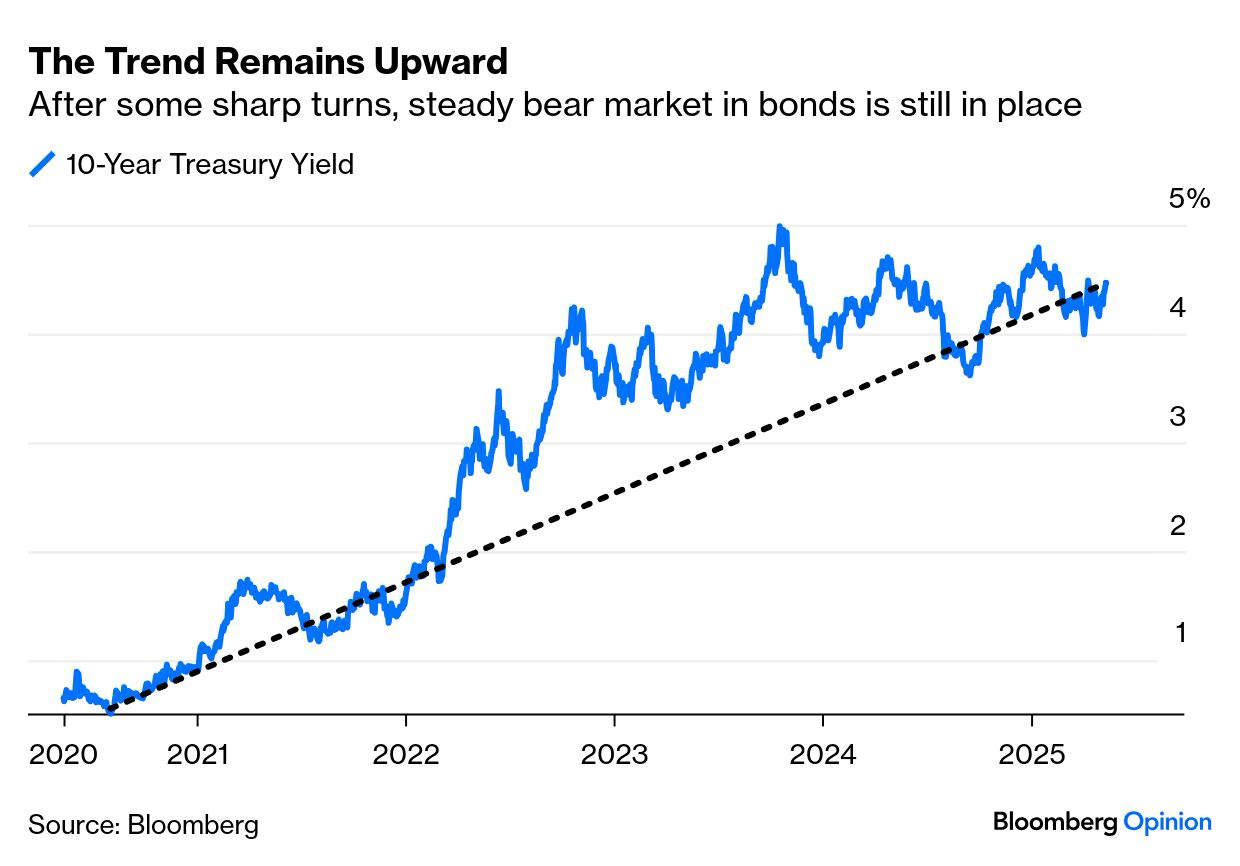
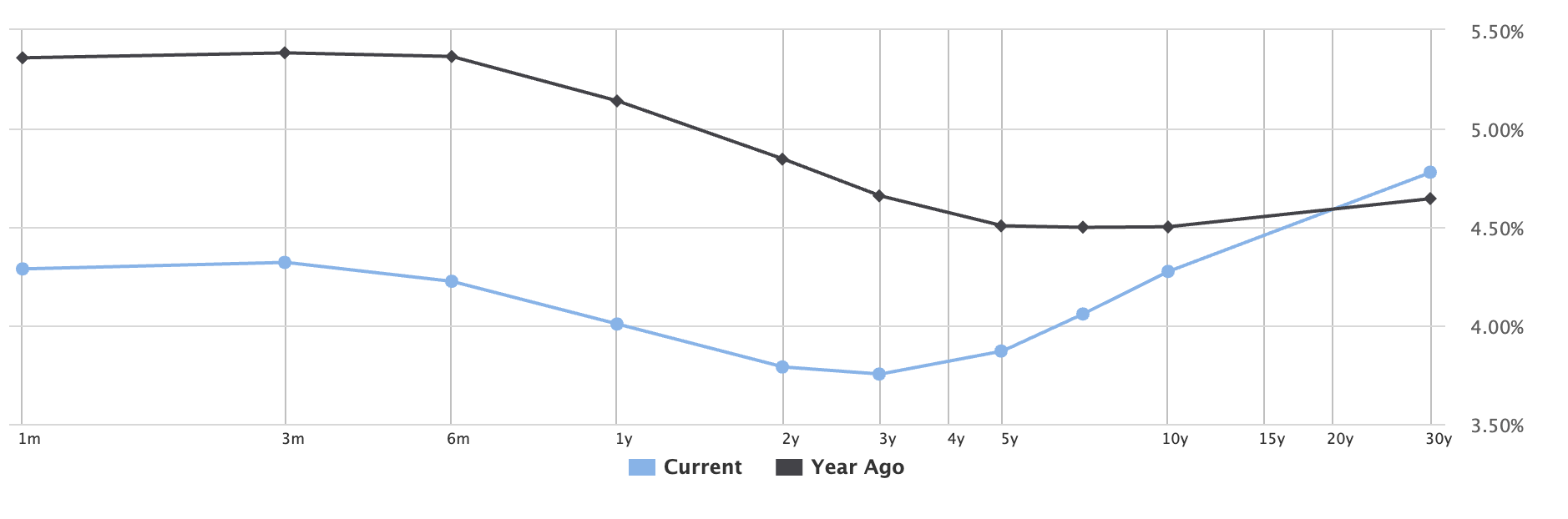
Not since October of 2023 have we seen long-dated Treasury yields at these levels. Currently, the 30-year Treasury bond yield is 5% (12:47 pm EST) and the 10-year Treasury Note’s yield has eclipsed 4.8%. Despite tight credit spreads, long-dated (25+ years) IG corporate bond yields are above 6% today (chart in the lower right corner).

Securing pension liabilities, whether your DB plan is private, public, or a multiemployer plan, should be the primary objective. All the better if that securing (defeasement strategy) can be accomplished at a reasonable cost and with prudent risk. The good news: the current rate environment is providing plan sponsors with a wonderful opportunity to accomplish all of those goals, whether you engage in a cash flow matching (CFM) for a relatively short period (5-years), intermediate, (10ish-years) or longer-term (15- or more years) your portfolio of IG corporate bonds will produce a YTM of > 5.5%. This represents a significant percentage of the target ROA.

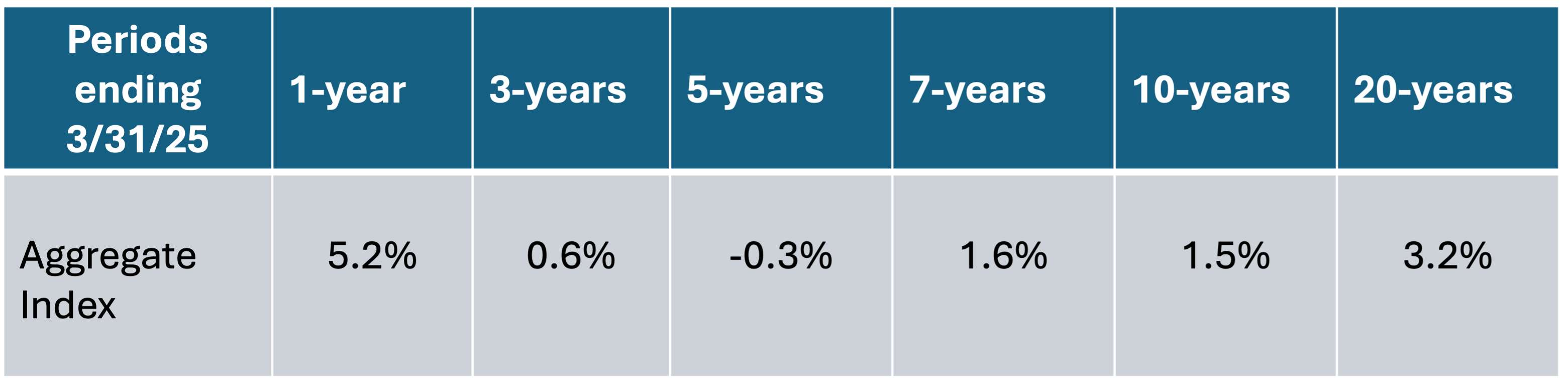
Furthermore, as we’ve explained, pension liabilities are future values (FVs), and FVs are not interest rate sensitive. Your portfolio will lock in the cost savings on day one, and barring any defaults (about 2/1,000 in IG bonds), the YTM is what your portfolio will earn throughout the relationship. That is exciting given the fact that traditional fixed income core mandates bleed performance during rising rate regimes. In fact, the IG index is already off 1.2% YTD (<10 trading days).

Who knows when the high equity valuations will finally lead to a repricing. Furthermore, who knows if US inflation will continue to be sticky, the Fed will raise or lower rates, geopolitical risks will escalate, and on and on. With CFM one doesn’t need a crystal ball. You can SECURE the promised benefits for a portion of your portfolio and in the process you’d be stabilizing the funded status and contribution expenses associated with those assets. Don’t let this incredibly attractive rate environment come and go without doing anything. We saw inertia keep plans from issuing POBs when rates were historically low. It is time to act.

5.6% 10-year forecast for US All-Cap

By: Russ Kamp, Managing Director, Ryan ALM, Inc.

Fiducient Advisors has published its 2025 Outlook. Given the strong performance in US equity markets, future returns have been adjusted downward – rightfully so. Here are some of the highlights:

Full valuations, concentrated U.S. large-cap indexes and the risk of reigniting inflation are shaping the key themes we believe will drive markets and portfolio positioning in 2025.

-Recent market successes have pushed our 2025 10-year forecasts lower across most major asset classes. Long-term return premium for equities over fixed income is now at its narrowest since 2007, sparking important conversations about portfolio posture and risk allocation.

Rising reinflation risk leads us to increase our allocation to more flexible fixed income strategies (dynamic bonds) and TIPS while eliminating our global bond allocation.

US stock market performance has been heavily influenced by the “Magnificent Seven”, creating concentration risk not seen in decades, if ever. The outperformance of US markets vis-a-vis international markets is unprecedented. As stated above, valuations are stretched. Most metrics used to measure “value” in our markets are at extreme levels, if not historical. How much more can one squeeze from this market? As a result, Fiducient is forecasting that US All-Cap (Russell 3000?) will appreciate an annualized 5.6% for the next 10-years.

Nearly as weak are the forecasts for private equity, which Fiducient believes will produce only an annualized 8.6% return through the next 10-years. What happened to the significant “premium” that investing privately would provide? Are the massive flows into these products finally catching up with this asset class? Sure seems like it.

With regard to the comment about fixed income, I’m not sure that I know what “flexible fixed income strategies” are and the reference to dynamic escapes me, too. I do know that bonds benefit from lower interest rates and get harmed when rates rise. We have been very consistent in our messaging that we don’t forecast interest rates as a firm, but we have also written extensively that the inflation fight was far from over and that US growth was more likely to surprise on the upside than reflect a recessionary environment. Today, the third and final installment of the Q3’24 GDP forecast was revised up to 3.1% annual growth. The Q4’24 estimate produced by the Atlanta Fed through its GDPNow model is forecasting 3.2% annual growth. What recession?

Given that US growth is likely to be stronger, employment and wage growth still robust, and sticky inflation just that, bonds SHOULDN’T be used as a performance instrument. Bonds should be used for their cash flows of interest and principal. BTW, one can buy an Athene Holding Ltd (ATH) bond maturing 1/15/34 with a YTW of 5.62% today. Why invest in US All-Caps with a projected 5.6% return with all of that annual standard deviation when you can buy a bond, barring a default and held to maturity, will absolutely provide you with a 5.62% return? This is the beauty in bonds! Those contractual cash flows can be used, and have been for decades, to defease liabilities (pension benefits, grants, etc.) and to SECURE the promises made to your participants.

It is time to rethink the approach to pension management and asset allocation. Use a cash flow matching strategy to secure your benefits for the next 10-years that buys time for the growth assets to GROW, as they are no longer a source of liquidity. Equity markets may not provide the same level of appreciation as they have during the last decade (+13.4% annualized for the S&P 500 for 10-years through 11/30/24), but a defeased bond portfolio will certainly provide you with the necessary liquidity, an extended investing horizon, and the security (peace of mind) of knowing that your benefits will be paid as promised and when due! Who needs “flexible and dynamic” bonds when you have the security of a defeased cash flow matching strategy?

ARPA Update as of December 13, 2024

By: Russ Kamp, Managing Director, Ryan ALM, Inc.

Welcome to the last full week before the Christmas season kicks off. Most investors will be sorry to see 2024 come and go. For the PBGC, 2024 has been a year of great accomplishments, with the approval of Special Financial Assistance (SFA) for 35 multiemployer plans covering 458,171 participants with SFA grants totaling $16.2 billion – wow!

The last week was a continuation of the PBGC’s activity with seven more funds submitting applications seeking $638.2 million for nearly 27k members. The applications included five new submissions and 2 revised applications. The applicants included the Dairy Industry-Union Pension Plan for Philadelphia and Vicinity, Bricklayers Pension Fund of West Virginia, United Wire, Metal and Machine Pension Plan, Distributors Association Warehousemen’s Pension Trust, Local 945 I.B. of T. Pension Plan, Alaska Teamster – Employer Pension Plan, and the Local 888 Pension Fund. Grant requests ranged from United Wire’s $228.5 million to the Bricklayers $1.96 million for their 170 participants.

In addition to the new submissions, there was one approval. Teamsters Local 11 Pension Plan will receive $29.3 million for the 2,012 members of its plan. This North Haledon, NJ fund submitted a revised application on August 29, 2024. In other ARPA news, there were no applications denied or withdrawn during the previous 7 days. In addition, there were no new plans added to the waitlist or forced to repay a portion of the SFA due to census errors.

US Treasury interest rates backed up fairly significantly last week as inflation data came in a little higher than recent trends giving bonds investors reason to challenge the narrative that the Fed would continue pushing down the Fed Funds rate. The higher rates are providing plan sponsors with greater cost savings on future benefits through cash flow matching strategies.

ARPA Update as of December 6, 2024

By: Russ Kamp, Managing Director, Ryan ALM, Inc.

You have to be excited as a Mets fan given yesterday’s news that Juan Soto will be joining the organization on a massive contract. The $765 million is a staggering figure. Let’s see what happens to ticket prices and TV streaming services from a cost standpoint.

Since ARPA was passed in 2021 and signed into law in March of that year, there have been folks upset that the government is using “tax revenue” to rescue pensions for multiemployer plans. Well, in the latest update provided by the PBGC, we note that the Pressroom Unions’ Pension Plan, a non-priority group member, will receive $63.7 million to protect and preserve the promised pensions for 1,344 plan participants. That seems very reasonable since this grant will likely cover these benefit payments for roughly the same time frame that Soto will be a Met (15 years), at only $12.7 million more than just one year of Soto’s contract.

In other ARPA news, the e-filing portal is listed as “limited”, which according to the PBGC means that “the e-Filing Portal is open only to plans at the top of the waiting list that have been notified by PBGC that they may submit their applications. Applications from any other plans will not be accepted at this time.” PA Local 47 Bricklayers and Allied Craftsmen Pension Plan was the only plan to file an application (revised) last week. They are seeking $8.3 million in SFA for 296 members in the fund.

In other news, three funds, including Toledo Roofers Local No. 134 Pension Plan, Freight Drivers and Helpers Local Union No. 557 Pension Plan, and PACE Industry Union-Management Pension Plan, were asked to repay a total of $7 million in excess SFA due to census issues. The rebate represented 0.45% of the $1.6 billion received in SFA grants. Happy to report that there were no applications denied or withdrawn during the prior 7-day period.

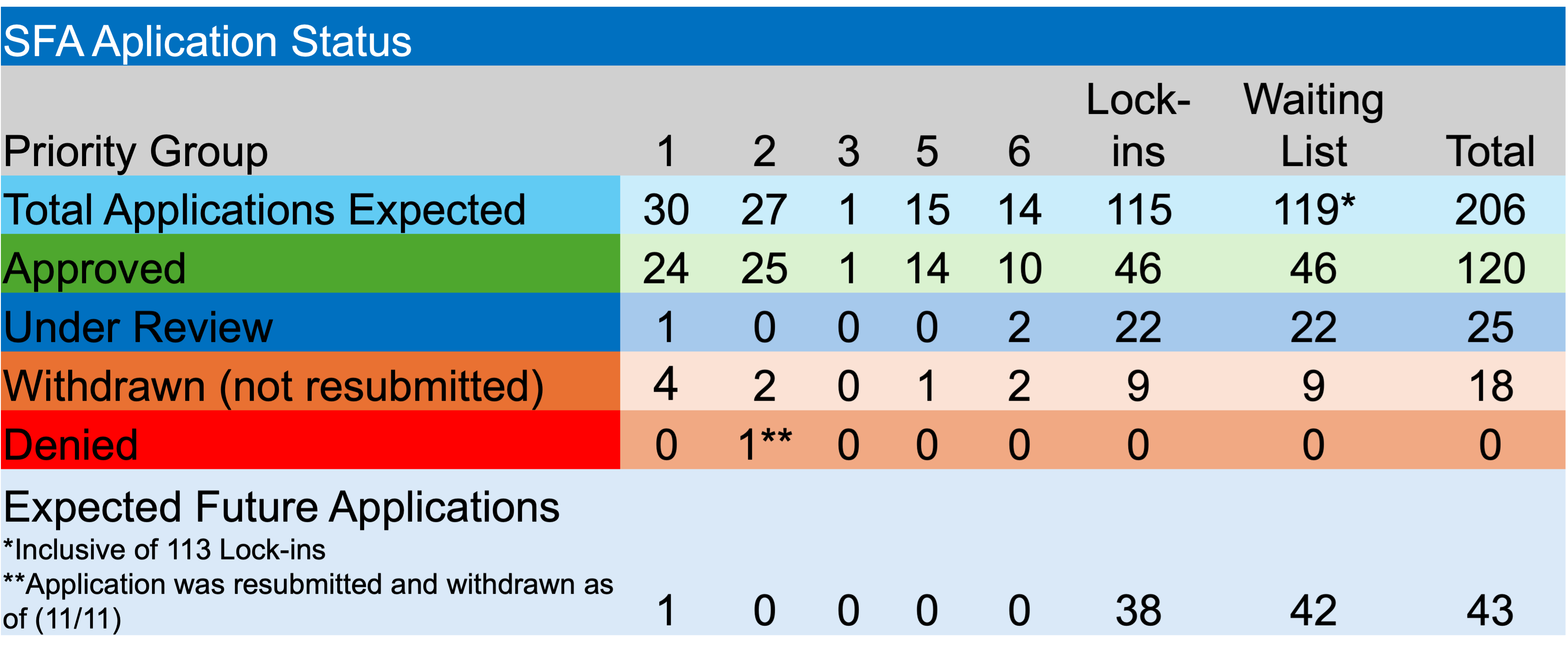
As the chart above highlights, there are still 57 plans that have yet to file an application seeking SFA support. Estimates range from another $10 – $20 billion being allocated to the remaining entities.

“Peace of Mind” – How Beneficial Would That Be?

By: Russ Kamp, Managing Director, Ryan ALM, Inc.

As a member of the investment community do you often feel stressed, worried, insecure, uneasy, or are you just simply too busy to be at peace? In the chaotic world of pension management, finding peace of mind can sometimes be hard, if not impossible. How much would it mean to you if you could identify an investment strategy that provides you with just that state of being?

At Ryan ALM, Inc. our mission is to protect and preserve DB pension plans through a cash flow matching (CFM) strategy that ensures, barring any defaults, that the liabilities (benefits and expenses) that YOU choose to cover are absolutely secured chronologically. You’ll have the liquidity to meet those obligations in the amounts and at the time that they are to be used. There is no longer the worry and frustration about finding the necessary “cash” to meet those promises. CFM provides you with that liquidity and certainty of cash flows.

Furthermore, you are buying time for the growth (alpha or non-bond) assets to now grow unencumbered, as they are no longer a source of liquidity. You don’t have to worry about drawdowns, as the CFM portfolio creates a bridge over the challenging markets with no fear of locking in losses due to cash flow needs. Don’t you just feel yourself nodding off with the knowledge that there is a way to get a better night’s sleep?

How much would you “spend” to achieve such peace of mind? Most pension systems cobble together disparate asset classes and products, many which come with hefty price tags, in the HOPE of achieving the desired outcome. With CFM, YOU choose the coverage period to be defeased, which could be as short as 3-5 years or as long as it takes to cover the last liability. The longer the time horizon the greater the potential cost reduction. As an FYI, most of our clients have chosen a coverage period of roughly 10-years. Knowing that you have SECURED your plan’s obligations for the next 10-years, and locked in the cost reduction, which can be substantial (2% per year = 20% for 1-10 years), on the very first day in which the portfolio is constructed, has to be just an incredible feeling compared to living in an environment in which traditional pension asset allocations can have significant annual volatility and no certainty of providing either the desired return or cash flow when needed.

Remember, the amount of peace of mind is driven by your decisions. If you desire abundant restful nights, use CFM for longer timeframes. If you believe that you only need “peace of mind” in the near-term, engage a CFM strategy for a shorter 3-5 years. In any case, I guarantee that the pension plan’s exposure to CFM won’t be the reason why you are restless when you put your head on the pillow. Oh, and by the way, we offer the CFM strategy at fee rates that are substantially below traditional fixed income strategies, let alone, non-bond capabilities. Call us. We want to be your sleep doctor!

Another Inconsistency

By: Russ Kamp, Managing Director, Ryan ALM, Inc.

The US pension industry is so critically important for the financial future of so many American workers. The defined benefit coverage is clearly not what it once was when more than 40% of workers were covered by traditional pension. There were a number of factors that led to the significantly reduced role of DB plans as the primary retirement vehicle. At Ryan ALM we often point out inconsistencies and head-scratching activities that have contributed to this troubling trend. One of the principal issues has been the conflict in accounting rules between GASB (public plans) and FASB (private plans). We frequently highlight these inconsistencies in our quarterly Pension Monitor updates.

The most striking difference between these two organizations is in the accounting for pension liabilities. Private plans use a AA corporate yield curve to value future liabilities, while public plans use the return on asset assumption (ROA) as if assets and liabilities move in lockstep (same growth rate) with one another. As a reminder, liabilities are bond-like in nature and their present values move with interest rates. I mention this relationship once more given market action during October.

Milliman has once again produced the results for the Milliman 100 Pension Funding Index (PFI), which analyzes the 100 largest US corporate pension plans (thank goodness that there are still 100 to be found). During the month of October, investment returns produced a -2.53% result. Given similar asset allocations, it is likely that investment results will prove to be negative for public plans, too. We’ll get that update later in the month from Milliman, also. Despite the negative performance result for the PFI members, their collective Funded Ratio improved from 102.5% at the end of September to 103.4% by the end of October.

The improved funding had everything to do with the change in the value of the PFI’s collective liabilities, as US rates rose significantly creating a -0.35%  liability growth rate and a discount rate now at 5.31%. This was the first increase in the discount rate in six months according to Zorast Wadia, author of the PFI. The upward move in the discount rate created a -$51 billion reduction in the projected benefit obligation of the PFI members. That was more than enough to overcome the -$41 billion reduction in assets.

What do you think will happen in public fund land? Well, given weak markets, asset levels for Milliman’s public fund index will likely fall. Given that the discount rate for public pension systems is the ROA, there will be no change in the present value of public pension plans’ future benefit obligations (silly). As a result, instead of witnessing an improvement in the collective funded status of public pensions, we will witness a deterioration. The inconsistency is startling!

Have You Ever Wondered?

By: Russ Kamp, Managing Director, Ryan ALM, Inc.

Ever wonder why future pension contributions aren’t part of the funded ratio calculation, yet future benefit payments are? Ironically, under GASB 67/68, which requires an Asset Exhaustion Test (AET), which is a test of a pension plan’s solvency, future contributions are an instrumental part of the equation. Why the disconnect? 

Also, the fact that future contributions, which in many cases are mandated by legislation or through negotiations, are not in the funded ratio means that the average funded ratio is likely understated. Furthermore, given the fact that the funded ratio is likely understated, the asset allocation, which should reflect the funded status, is likely too aggressive placing the plan’s assets on a more uncertain path leading to bigger swings in the funded ratio/status of the plan as the capital markets do what they do.

As part of the Ryan ALM turnkey LDI solution, we provide an AET, which often highlights the fact that the annual target return on asset assumption (ROA) is too high. A more conservative ROA would likely lead to a much more conservative asset allocation resulting in far smaller swings and volatility associated with annual contributions and the plan’s funded status. As you will soon read, contributions are an important part of the AET for public pensions. When performing the test, you need to account for future contributions from both employees and employers. These contributions, along with investment returns, help to sustain the pension plan’s assets relative to liabilities over time.

Here’s a quick summary of how contributions fit into the asset exhaustion test:

  1. Current Assets: Start with the current market value of the plan’s assets.
  2. Benefit Payments: Forecast the actuarial projections for future benefit payments
  3. Administrative Expenses: Add in the actuarial projections for administrative expenses
  4. Future Contributions: Subtract the actuarial projections for future contributions from employees and employers to get a net liability cash flow.
  5. Investment Returns: Grow the current market value of plan’s assets at the expected investment return on the plan’s assets (ROA) plus a matrix of lower ROAs to create an annual asset cash flow
  6. Year-by-Year Projection: Perform a year-by-year projection to see if the asset cash flows will fully fund the net liability cash flows. Choose the lowest ROA that will fully fund net liability cash flows as the new target ROA for asset allocation

By including contributions in the test, you get a more accurate picture of the plan’s long-term sustainability. So, I ask again, why aren’t future contributions included in the Funded Ratio calculation? Isn’t it amazing how one factor (not including those contributions) can lead to so many issues? With less volatility in funded status and contributions, DB plans would likely have many more supporters among sponsors and the general public (aka taxpayer) . It is clearly time to rethink this issue.