ARPA Update as of December 27, 2024

By: Russ Kamp, Managing Director, Ryan ALM, Inc.

We, at Ryan ALM, Inc., wish for you a happy, healthy, and prosperous New Year in 2025. May the markets continue to treat you well. However, nothing grows to the heavens, so it may be wise to alter one’s asset allocation and reduce risk as the year begins given inflated valuations, particularly for large cap US equities.

Regarding ARPA and the PBGC’s on-going effort implementing this critical legislation, there was a pause in activity during the last week. Good for them, as 2024 has been an incredibly busy and successful year. Regarding last week, the PBGC’s eFiling portal remains temporarily closed, so there were no new applications filed. There also weren’t any applications denied, withdrawn, or approved. Finally, there were no repayments made by funds that had received excess SFA.

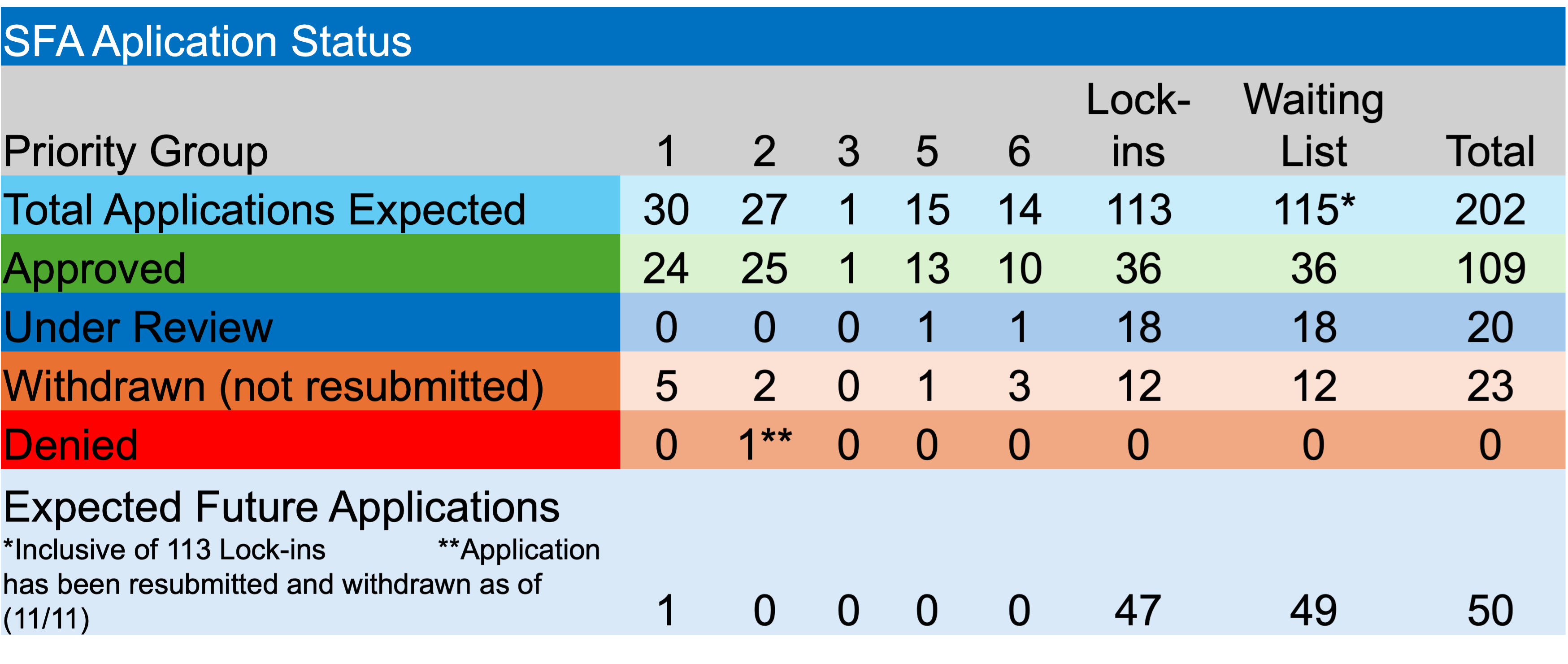
To recap 2024, the PBGC approved 36 applications, awarding more than $16.2 billion in SFA grants that went to support the promised benefits for 458,446 plan participants. WOW! As the chart below highlights, only 15 of the 87 Priority Group members have yet to have the applications for SFA approved. Three of those applications are currently under review. Of the 115 funds seeking support that weren’t initially identified as a Priority Group member, 64 pension plans have participated to some extent in this program with 33 of those applications approved.

US Treasury note and bond yields (longer maturities) have risen sharply in the last few months. They are at levels not witnessed since early this year. As a result, they are providing plan sponsors with a wonderful opportunity to reduce risk without giving up potentially higher returns. We’d be happy to provide a free analysis on what could be achieved within your plan. Don’t hesitate to reach out to us.

Again, Happy New Year!

5.6% 10-year forecast for US All-Cap

By: Russ Kamp, Managing Director, Ryan ALM, Inc.

Fiducient Advisors has published its 2025 Outlook. Given the strong performance in US equity markets, future returns have been adjusted downward – rightfully so. Here are some of the highlights:

Full valuations, concentrated U.S. large-cap indexes and the risk of reigniting inflation are shaping the key themes we believe will drive markets and portfolio positioning in 2025.

-Recent market successes have pushed our 2025 10-year forecasts lower across most major asset classes. Long-term return premium for equities over fixed income is now at its narrowest since 2007, sparking important conversations about portfolio posture and risk allocation.

Rising reinflation risk leads us to increase our allocation to more flexible fixed income strategies (dynamic bonds) and TIPS while eliminating our global bond allocation.

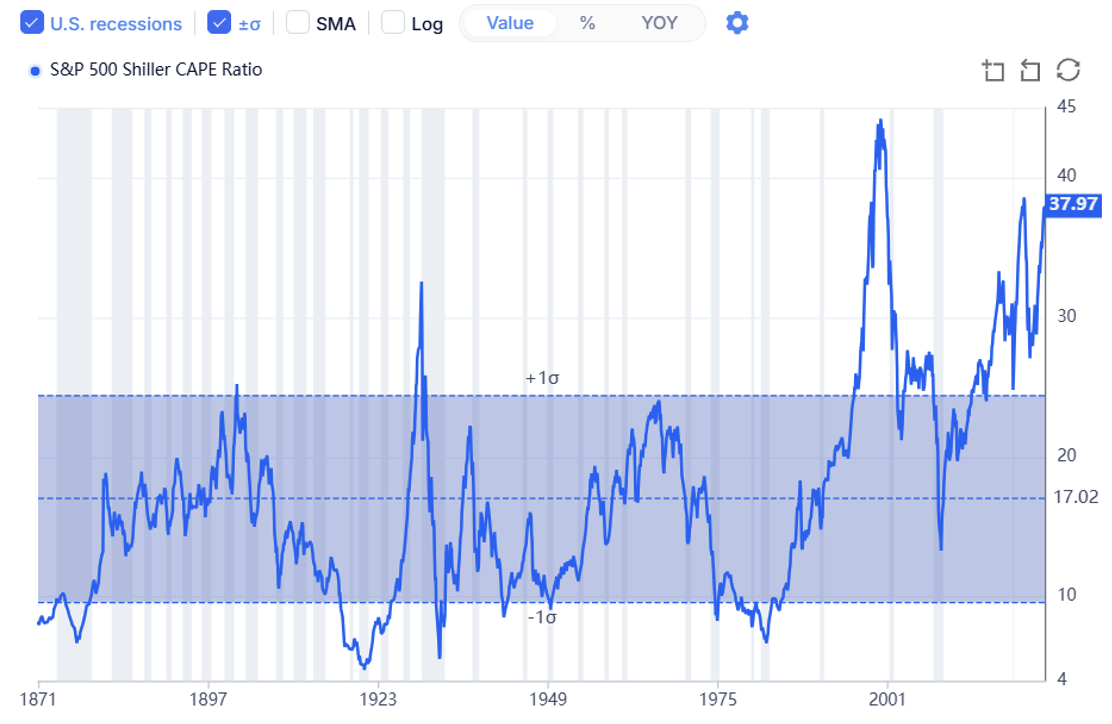
US stock market performance has been heavily influenced by the “Magnificent Seven”, creating concentration risk not seen in decades, if ever. The outperformance of US markets vis-a-vis international markets is unprecedented. As stated above, valuations are stretched. Most metrics used to measure “value” in our markets are at extreme levels, if not historical. How much more can one squeeze from this market? As a result, Fiducient is forecasting that US All-Cap (Russell 3000?) will appreciate an annualized 5.6% for the next 10-years.

Nearly as weak are the forecasts for private equity, which Fiducient believes will produce only an annualized 8.6% return through the next 10-years. What happened to the significant “premium” that investing privately would provide? Are the massive flows into these products finally catching up with this asset class? Sure seems like it.

With regard to the comment about fixed income, I’m not sure that I know what “flexible fixed income strategies” are and the reference to dynamic escapes me, too. I do know that bonds benefit from lower interest rates and get harmed when rates rise. We have been very consistent in our messaging that we don’t forecast interest rates as a firm, but we have also written extensively that the inflation fight was far from over and that US growth was more likely to surprise on the upside than reflect a recessionary environment. Today, the third and final installment of the Q3’24 GDP forecast was revised up to 3.1% annual growth. The Q4’24 estimate produced by the Atlanta Fed through its GDPNow model is forecasting 3.2% annual growth. What recession?

Given that US growth is likely to be stronger, employment and wage growth still robust, and sticky inflation just that, bonds SHOULDN’T be used as a performance instrument. Bonds should be used for their cash flows of interest and principal. BTW, one can buy an Athene Holding Ltd (ATH) bond maturing 1/15/34 with a YTW of 5.62% today. Why invest in US All-Caps with a projected 5.6% return with all of that annual standard deviation when you can buy a bond, barring a default and held to maturity, will absolutely provide you with a 5.62% return? This is the beauty in bonds! Those contractual cash flows can be used, and have been for decades, to defease liabilities (pension benefits, grants, etc.) and to SECURE the promises made to your participants.

It is time to rethink the approach to pension management and asset allocation. Use a cash flow matching strategy to secure your benefits for the next 10-years that buys time for the growth assets to GROW, as they are no longer a source of liquidity. Equity markets may not provide the same level of appreciation as they have during the last decade (+13.4% annualized for the S&P 500 for 10-years through 11/30/24), but a defeased bond portfolio will certainly provide you with the necessary liquidity, an extended investing horizon, and the security (peace of mind) of knowing that your benefits will be paid as promised and when due! Who needs “flexible and dynamic” bonds when you have the security of a defeased cash flow matching strategy?

P&I: Asset Owner CIOs See Uncertainty in 2025

By: Russ Kamp, Managing Director, Ryan ALM, Inc.

P&I is out with a story today about asset owner CIOs “forecasting” uncertainty for 2025. The capital markets are always uncertain. It only takes a “surprise” to disrupt even the most obvious trend. Given a new regime in Washington, stubborn inflation, geopolitical risks throughout the globe, and equity valuations that are stretched (that’s putting it mildly), CIOs have reason to be uncertain, especially over a short timeframe, such as a calendar year or two.

The lack of certainty can be destabilizing to individuals and investment strategies. I covered the psychology of uncertainty in a post earlier this year. Here were a few highlights:

  • When facing ongoing uncertainty, our bodies stay at a high level of physiological arousal, exerting considerable wear and tear.
  • Uncertainty exerts a strong pull on our thoughts and inhibits our ability to act, leaving us in a suspended waiting game.
  • We can manage uncertainty by figuring out what we can control, distracting ourselves from negative thoughts, and reaching out to others.

The last point is particularly important. We can manage “uncertainty” by figuring out what we can control. As a plan sponsor, we can utilize an investment strategy (cash flow matching or CFM) that creates certainty for the portion of the portfolio that uses CFM. In the following post, I question the significant use of equity and equity-like product in public pension systems that are accompanied by tremendous annual volatility. Again, this produces great uncertainty.

Adopting the use of greater fixed income exposure also doesn’t ensure less uncertainty, as changes in US interest rates can play havoc on fixed income strategies. ONLY with a CFM strategy do you bring certainty of cash flows (absent any defaults) to the management of pension plans. Traditional fixed income strategies benefited from a nearly 4-decade move down in rates, but there is currently great uncertainty as to the future direction of inflation and as a result, rates. With CFM one knows what the performance will look like a decade from now. With a fixed income strategy focused on a generic index, such as the BB Aggregate, one has no idea how that portfolio will perform 10 or more years from now.

Lastly, there is no reason to live with the uncertainty that many CIOs currently foresee. I wrote a piece just recently on achieving “peace of mind“. Uncertainty won’t help you in your quest for a good night’s sleep, but achieving peace of mind is very much achievable once you adopt a CFM strategy and secure the promised benefits (or grants) for some period of time. Call us. We want to remove as much uncertainty from your professional life as possible.

Kamp Named CEO of Ryan ALM, Inc.

By: Ronald J. Ryan, CFA, CEO, Ryan ALM, Inc.

Press Release

________________________________________________________________________________

Russ Kamp Named CEO of Ryan ALM, Inc.

Effective 1/01/25 Russ Kamp will be the new CEO of Ryan ALM, Inc.

Ronald J. Ryan, CFA will become the Chairman and CFO. Ron announces “Ryan ALM has prospered in a rather difficult environment for fixed income asset managers in the last 20 years. As founder and CEO, it is time to pass the torch to someone who has the vision and talent to take us forward. Russ has demonstrated a professionalism and integrity that is most respected by his peers. His attention to client needs is unsurpassed. His resume is proof of his abilities and success. It is an honor to work with Russ. I will remain as head of research and a member of our asset management team. I look forward to the best years ahead for Ryan ALM working with Russ and our highly experienced team.”

Steve deVito, head of trading, will also become the Chief Compliance Officer of Ryan ALM. Steve has nearly 40 years of fixed income experience and serves as an important member of the asset management team.

Martha Monteagudo, head of product development, will continue in her position. She started with Ryan ALM in 2004 and is a valuable member of the asset management team.

As our name implies, Ryan ALM is an Asset Liability Manager (ALM) specializing in cash flow matching. We strongly believe that cash flow matching is the best fit for any liability objective. Our cash flow matching product (Liability Beta Portfolio™) can reduce funding costs by about 2% per year (about 20% on 1-10-year liabilities). Our turnkey system is unique in the industry including:

  1.  Custom Liability Index (CLI)
  2. ASC 715 Discount Rates
  3. Liability Beta Portfolio™ (LBP)
  4. Modified Asset Exhaustion Test (AET)

The Ryan ALM asset management team has over 160 years of experience making us one of the most experienced teams in the fixed income industry. For more information, please go to our web site at www.RyanALM.com.

ARPA Update as of December 6, 2024

By: Russ Kamp, Managing Director, Ryan ALM, Inc.

You have to be excited as a Mets fan given yesterday’s news that Juan Soto will be joining the organization on a massive contract. The $765 million is a staggering figure. Let’s see what happens to ticket prices and TV streaming services from a cost standpoint.

Since ARPA was passed in 2021 and signed into law in March of that year, there have been folks upset that the government is using “tax revenue” to rescue pensions for multiemployer plans. Well, in the latest update provided by the PBGC, we note that the Pressroom Unions’ Pension Plan, a non-priority group member, will receive $63.7 million to protect and preserve the promised pensions for 1,344 plan participants. That seems very reasonable since this grant will likely cover these benefit payments for roughly the same time frame that Soto will be a Met (15 years), at only $12.7 million more than just one year of Soto’s contract.

In other ARPA news, the e-filing portal is listed as “limited”, which according to the PBGC means that “the e-Filing Portal is open only to plans at the top of the waiting list that have been notified by PBGC that they may submit their applications. Applications from any other plans will not be accepted at this time.” PA Local 47 Bricklayers and Allied Craftsmen Pension Plan was the only plan to file an application (revised) last week. They are seeking $8.3 million in SFA for 296 members in the fund.

In other news, three funds, including Toledo Roofers Local No. 134 Pension Plan, Freight Drivers and Helpers Local Union No. 557 Pension Plan, and PACE Industry Union-Management Pension Plan, were asked to repay a total of $7 million in excess SFA due to census issues. The rebate represented 0.45% of the $1.6 billion received in SFA grants. Happy to report that there were no applications denied or withdrawn during the prior 7-day period.

As the chart above highlights, there are still 57 plans that have yet to file an application seeking SFA support. Estimates range from another $10 – $20 billion being allocated to the remaining entities.

“Peace of Mind” – How Beneficial Would That Be?

By: Russ Kamp, Managing Director, Ryan ALM, Inc.

As a member of the investment community do you often feel stressed, worried, insecure, uneasy, or are you just simply too busy to be at peace? In the chaotic world of pension management, finding peace of mind can sometimes be hard, if not impossible. How much would it mean to you if you could identify an investment strategy that provides you with just that state of being?

At Ryan ALM, Inc. our mission is to protect and preserve DB pension plans through a cash flow matching (CFM) strategy that ensures, barring any defaults, that the liabilities (benefits and expenses) that YOU choose to cover are absolutely secured chronologically. You’ll have the liquidity to meet those obligations in the amounts and at the time that they are to be used. There is no longer the worry and frustration about finding the necessary “cash” to meet those promises. CFM provides you with that liquidity and certainty of cash flows.

Furthermore, you are buying time for the growth (alpha or non-bond) assets to now grow unencumbered, as they are no longer a source of liquidity. You don’t have to worry about drawdowns, as the CFM portfolio creates a bridge over the challenging markets with no fear of locking in losses due to cash flow needs. Don’t you just feel yourself nodding off with the knowledge that there is a way to get a better night’s sleep?

How much would you “spend” to achieve such peace of mind? Most pension systems cobble together disparate asset classes and products, many which come with hefty price tags, in the HOPE of achieving the desired outcome. With CFM, YOU choose the coverage period to be defeased, which could be as short as 3-5 years or as long as it takes to cover the last liability. The longer the time horizon the greater the potential cost reduction. As an FYI, most of our clients have chosen a coverage period of roughly 10-years. Knowing that you have SECURED your plan’s obligations for the next 10-years, and locked in the cost reduction, which can be substantial (2% per year = 20% for 1-10 years), on the very first day in which the portfolio is constructed, has to be just an incredible feeling compared to living in an environment in which traditional pension asset allocations can have significant annual volatility and no certainty of providing either the desired return or cash flow when needed.

Remember, the amount of peace of mind is driven by your decisions. If you desire abundant restful nights, use CFM for longer timeframes. If you believe that you only need “peace of mind” in the near-term, engage a CFM strategy for a shorter 3-5 years. In any case, I guarantee that the pension plan’s exposure to CFM won’t be the reason why you are restless when you put your head on the pillow. Oh, and by the way, we offer the CFM strategy at fee rates that are substantially below traditional fixed income strategies, let alone, non-bond capabilities. Call us. We want to be your sleep doctor!

It Doesn’t Have to be This Way

By: Russ Kamp, Managing Director, Ryan ALM, Inc.

The Financial Times (FT) recently published an article highlighting the struggles of Ivy League schools trying to manage liquidity in the face of an extended downturn in the performance of private markets. Collectively, this august group of institutions continues to underperform the average return for higher education endowments of 10.3% for fiscal year 2024, with only 6 of 8 universities outperforming. This follows an even more challenging fiscal 2023 in which all 8 universities failed to top that year’s 6.8% average return. This difficult period in which distributions have dried up considerably, is forcing some, including Princeton, to issue bonds in order to support the operations of the schools. Haven’t we seen this story play out before?

Despite the troubles, there seems to be this reluctance to alter a strategy first adopted nearly four decades ago when Yale began to invest heavily in these strategies. In the article, Roger Vincent, former head of private equity at Cornell University said, “Everybody still believes in having as big an allocation to private equity as possible.” Really? Why? No asset class will always outperform. The problem with private equity at this time is the fact that too much money has chased to few quality deals driving up the costs of acquisition and lowering future returns. In the process, managers have become reluctant to reduce valuations in order to sell these portfolio companies which has crushed liquidity.

As I’ve written on many occasions, assets shouldn’t be lumped into one bucket focused on return either to meet benefit payments, or in this case, a spending policy. There should be two buckets – liquidity and growth. If the Ivies had structured their portfolios with this design in mind, they would have had sufficient liquidity when needed and issuing bonds wouldn’t have been necessary. Endowments and foundations would be well-served to adopt this structure. Liquidity can be managed through a cash flow matching (CFM) process, which will ensure (barring any defaults) that the cash will be on hand monthly, quarterly, and/or annually depending on the needs of the organization.

I’ve witnessed too many times throughout my 40+ year career investment ideas that got overwhelmed by cash flows. We’ve had booms and busts in real estate, equities (Dot Com era), quantitatively managed equities, gold/commodities, emerging markets, Japan, hedge funds, and on and on and… Why would “investors” believe that private equity would be immune to such action? Again, if an investment is deemed to be all weather, money will naturally flow to that “opportunity” thus reducing future prospects. One way to minimize the short-term impact of these cycles is to build in a liquidity strategy that bridges these troubled times.

ARPA Update as of November 15, 2024

By: Russ Kamp, Managing Director, Ryan ALM, Inc.

I can’t believe that Thanksgiving is next week. It appears that the PBGC was motivated to get some things done in anticipation of that holiday, as we witnessed more activity last week than we’ve been seeing in the most recent past.

There were four applications filed last week, including the following pension plans: Roofers and Slaters Local No. 248 Pension Plan, Pension Plan of the Asbestos Workers Philadelphia Pension Fund, Local 1783 I.B.E.W. Pension Plan, and Cement Masons Local Union No. 567 Pension Plan. These plans are not seeking significant sums as far as the SFA goes, as in total they are seeking $92.6 million for 2,637 participants. The IBEW plan out of Armonk, NY submitted a revised application. The other three were the initial filings for these plans.

Pleased to report that Local 360 Labor-Management Pension Plan received approval for its revised application. This fund will receive $30.4 million for the 6,117 members of the plan. This fund initially filed an SFA application in early 2023 only to withdraw it in July 2023. Good for them that they were finally successful in receiving the grant.

Local 810 Affiliated Pension Plan wasn’t as fortunate as Local 360, as they withdrew the initial application that had been seeking $104.1 million for 1,437 members of the plan. In addition to the four new filings, the one withdrawal, and the one approved application, the PBGC also was involved in negotiating two repayment of excess SFA due to census errors. Iron Workers Local 17 Pension Fund
Bricklayers and Allied Craftsmen Local 7 Pension Plan returned $260,471.70 representing only 19 bps of the SFA grants awarded. To date, 25 funds have returned a total of $149.9 million representing 0.38% of the awarded grants.

Recessionary expectations have waned in the last couple of months and flows into bonds, which had been strong for most of the year have recently turned negative. As a result, US interest rates have backed up. It is a great time to secure the promised benefits (and expenses) through cash flow matching strategies. A rising rate environment will be quite bearish for traditional fixed income shops. We’ll be happy to provide you and your fund with a free analysis of what can be achieved through a defeasement strategy.

Not so Fast!

By: Russ Kamp, Managing Director, Ryan ALM, Inc.

You may recall in the 1970s Heinz Ketchup used Carly Simon’s song, “Anticipation” as a jingle for several of its commercials. US bond investors might just want to adopt that song once more as they wait for the anticipated rate cuts from the Federal Reserve’s FOMC. As you may recall, investors pounced early on the perceived likelihood of rate cuts, forecasting multiple cuts and a substantial move down in rates given the expectation of a less than soft landing. As a result, US rates, as measured by the Treasury yields, fell precipitously during a good chunk of the summer, bottoming out on September 16th, which was two days prior to the Fed’s first cut (0.5%).

However, economic and inflationary news has been mixed leading some to believe that the Fed may just take a more cautionary path regarding cuts. Those sentiments were echoed by Federal Reserve Chairman Powell just yesterday, who stated during a speech in Dallas, “The economy is not sending any signals that we need to be in a hurry to lower rates.” Not surprising, bond investors did not look favorably on this pronouncement and quickly drove Treasury yields upward and stocks down. If the prospect of lower rates is the only thing propping up equities at this time, investors of all ilk better be wary.

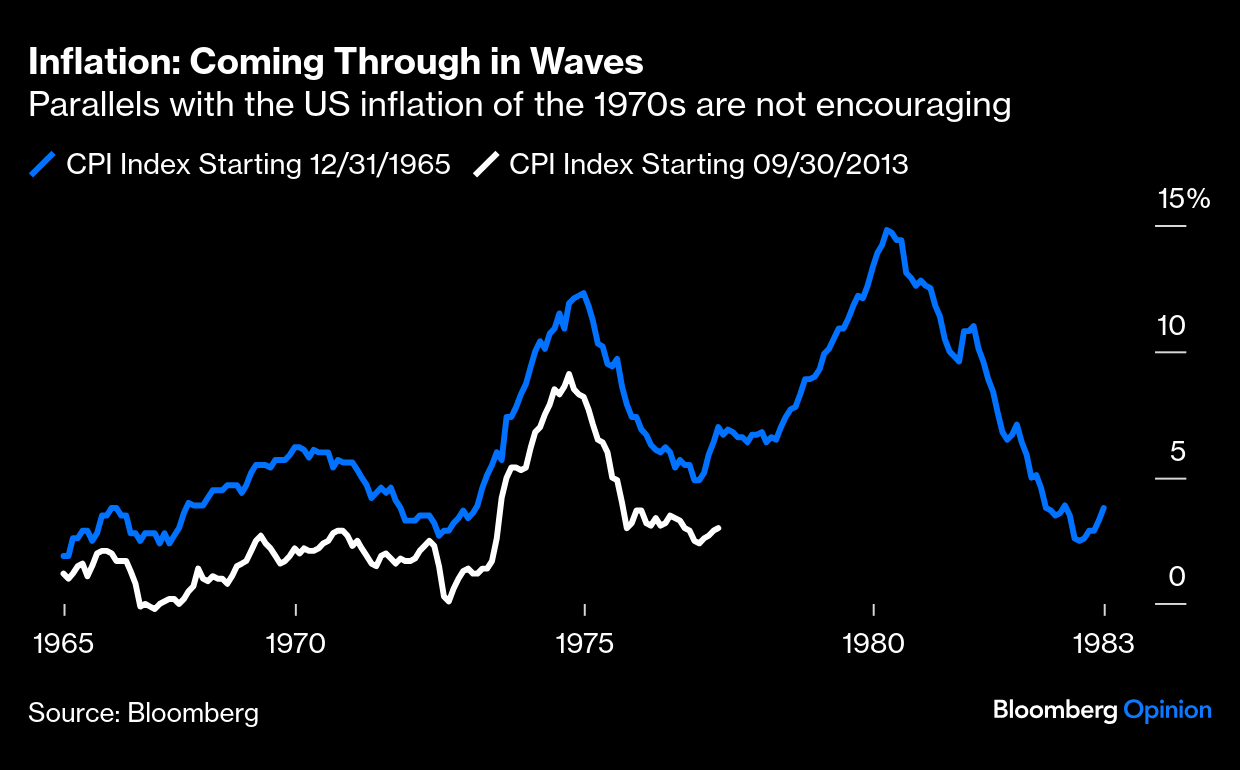
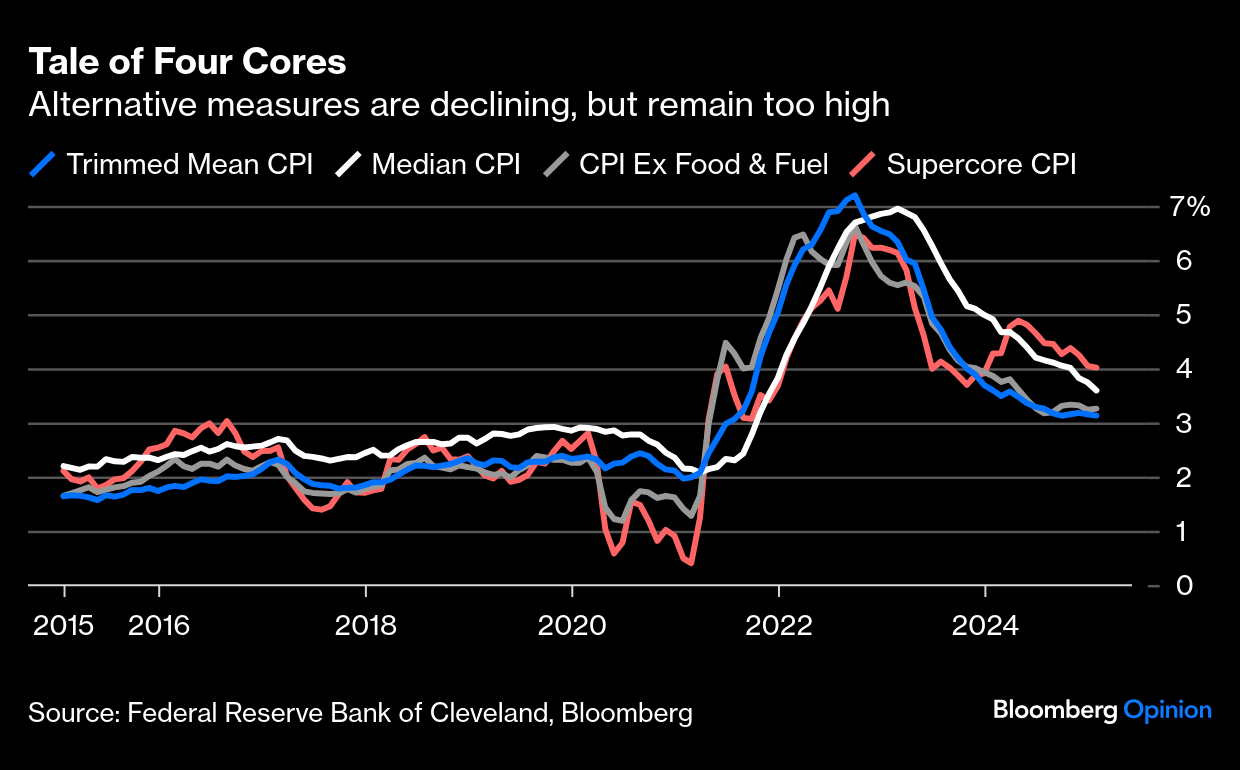
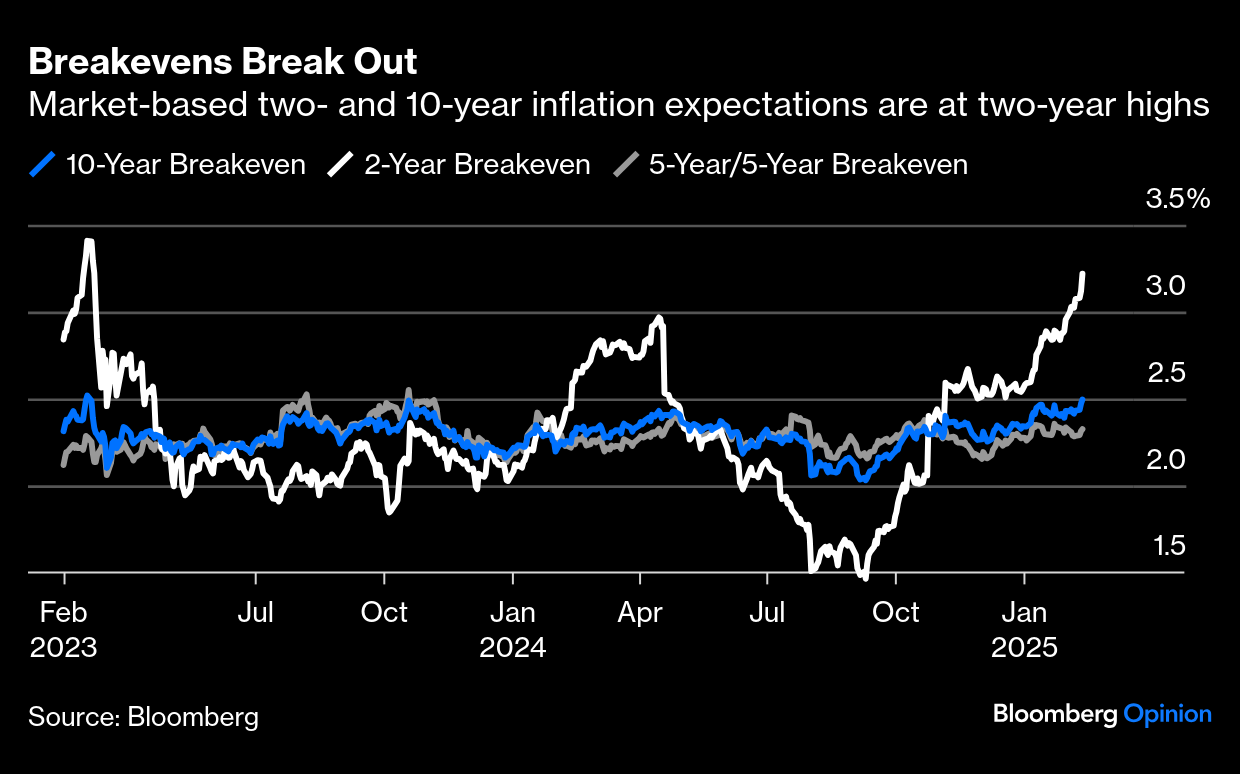
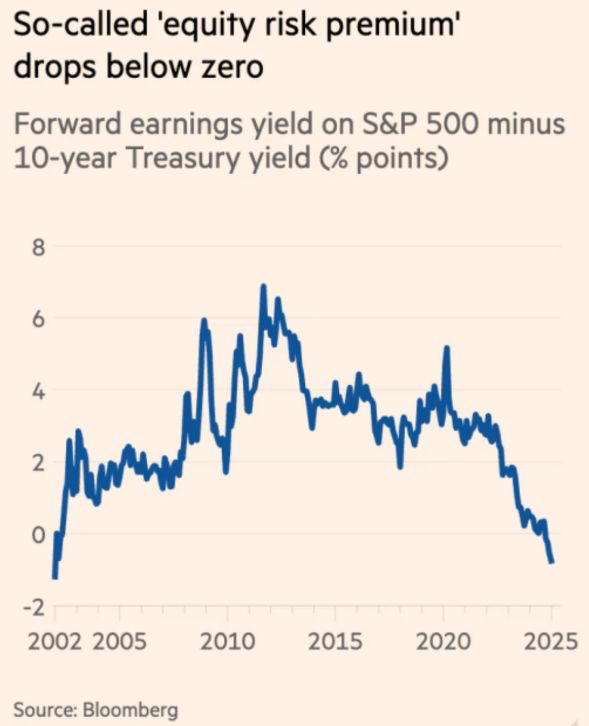
As the above graph highlights, inflation’s move to the Fed’s 2% target has been halted (temporarily?), as Core CPI has risen by 0.3% in each of the last three months. As I wrote above, the prospect of lower rates has certainly helped to prop up US equities. However, rising rates impacts the relationship of equities and bonds. According to a post by the Daily Shot, “the S&P 500 risk premium (forward earnings yield minus the 10-year Treasury yield) has turned negative for the first time since 2002, indicating frothy valuations in the US stock market.”

As a result of these recent moves in the capital markets, US pension plan sponsors would be well-served to use the elevated bond yields to SECURE the promised benefits through a cash flow matching defeasement strategy. As we’ve discussed on many occasions, not only is the liquidity to meet the promised benefits available when needed, this process buys time for the remaining assets to grow unencumbered, as they are no longer a source of liquidity. It is a win-win!

ARPA Update as of November 8, 2024

By: Russ Kamp, Managing Director, Ryan ALM, Inc.

The PBGC continues to implement the ARPA legislation, although last week revealed less apparent activity according to its weekly update. The legislation which was approved in March 2021 and implemented beginning in July of that year, has now been active for about 3 1/3 years. I remain impressed with the PBGC’s effort to-date, as 98 pension plans have received Special Financial Assistance grants and interest totaling more than $69.4 billion. Wow!

Regarding last week’s activity, there was one fund invited to submit an initial application. The Aluminum, Brick & Glass Workers International Union, AFL-CIO, CLC, Eastern District Council No. 12 Pension Plan, is seeking $10.6 million in SFA for 580 plan participants. The PBGC has until March 6, 2025 (I can’t believe that is only 120 days away!) to act on the application.

In other news, Local 734 Pension Plan, an IBT fund out of Chicago, withdrew its initial application seeking $109 million for its 3,453 members. That application had been submitted on July 15, 2024 and it was nearing the PBGC’s 120-day deadline.

There were no applications denied, no excess funds repaid, no applications approved, and no plans added to the waitlist, which continues to list 62 funds yet to file an initial application. Finally, US Treasury interest rates continue to rise across the yield curve providing plan sponsors with the wonderful opportunity to reduce the cost of securing the promised benefits through the SFA grants, while the legacy assets and future contributions benefit from an extended investing horizon.