More on Why Bonds Are Not Performance Drivers

By: Russ Kamp, CEO, Ryan ALM, Inc.

As you’ve heard us say and write many times, U.S. investment-grade bonds are not performance drivers. Bond should be used for their cash flows, as they are the only asset class with a known terminal value and contractual interest payments. Those attributes should be used to SECURE the promised benefits (and expenses) each month chronologically, as far into the future as an allocation to cash flow matching can go.

In case you missed some of the previous posts that highlighted our concerns about bonds as a return generator, here are three posts among many:

Then there is today’s comment from a Glen Eagle Trading email:

The 2020s are experiencing the worst real (inflation-adjusted) returns for U.S. government bonds across all maturities on record, with 5-year, 10-year, and 20-year treasuries showing real returns of -3.5%, -5.1%, and -8.3% respectively. OUCH!

Those types of returns were not seen during the nearly four decades decline in U.S. interest rates, but the rising rate environment that we are currently experiencing is certainly playing havoc with total returns for bonds. As we’ve mentioned in the post titled, “Really Only One Significant Influence”, interest rate regimes tend to be long secular trends. Will that pattern persist? Your guess is as good as mine. Given the uncertainty, please use the higher yields present today to secure your promised benefits and bring an element of certainty to the management of your fund.

AI Needs An Education Regarding ALM/CFM!

By: Russ Kamp, CEO, Ryan ALM, Inc.

I asked an AI tool that I use the following: Asset/Liability Management (ALM) is an effective tool for pensions. What strategies are currently being deployed?

As usual, the response was nearly instantaneous, but was it correct? Here is what I got:

Overview

“Asset/liability management (ALM) remains central to pension fund sustainability, aiming to balance expected pension liabilities with optimal asset growth. In 2025, pension funds deploy a range of strategies to ensure their ability to meet long-term obligations while managing risk efficiently.” No argument there. However, here is a list of the strategies. This is where I have an issue.

Key ALM Strategies Currently in Use

1. Liability-Driven Investing (LDI)

  • Matching Asset Duration to Liabilities: Many corporate pension plans invest in high-quality bonds with durations closely matching those of plan liabilities to mitigate interest rate risk. This ensures that both assets and liabilities react similarly to interest rate changes, stabilizing the funded status from year to year.
  • Glidepath Strategies: Plans gradually shift the asset mix towards more fixed-income securities as funded status improves or as the plan matures, further reducing risk and aligning assets with near-term liabilities.

2. Dynamic Asset Allocation

  • Strategic Shifts in Asset Mix: Pension funds adjust allocations based on changing liabilities, market conditions, and funding status. For instance, U.S. public pension plans have recently shifted asset allocations to maintain return expectations and recover from volatility.
  • Scenario-Based Modeling: Funds use forward-looking models to stress-test outcomes under varying economic scenarios, reviewing assumptions about returns, inflation, and participant demographics.

3. Risk Transfer Solutions

  • Pension Risk Transfer (PRT): Many sponsors employ annuity purchases and lump-sum windows to reduce long-term liability, transferring obligations to insurers. In 2024, settlement payouts (such as annuity buyouts) remained a significant tool for risk management among major pension plans.

4. Liability Modeling Innovations

  • Member-Level Simulation: Advanced models project individual participant cash flows, account for currency exposure, and enable granular liability projections. Such approaches allow more precise matching of assets to future obligations, improving ALM decision-making.
  • Regular Reviews and Assumption Updates: ALM programs, such as those at CalPERS, involve systematic reviews of demographic and financial assumptions (e.g., life expectancy, inflation), with revisions made every four years to incorporate emerging trends.

5. Use of Custom Benchmarks

  • Liability-Mimicking Portfolios: Funds create tailored portfolios (“benchmark” portfolios) that track the liability profile as closely as possible, often blending nominal bonds, inflation-linked bonds, and equities according to the plan’s specifics (such as maturity and inflation sensitivity).

That’s it? Where is Cash Flow Matching (CFM)? In each of these scenarios, liquidity needed to fund benefits and expenses is missing. Duration strategies minimize interest rate risk, but don’t produce timely liquidity to fully fund B+E. Furthermore, duration strategies that use an “average” duration or a few key rates don’t duration match as well as CFM that duration matches EVERY month of the assignment.

In the second set of products – dynamic asset allocation – what is being secured? Forecasts related to future economic scenarios come with a lot of volatility. If anyone had a crystal ball to accomplish this objective with precision, they’d be minting $ billions!

A PRT or risk transfer solution is fine if you don’t want to sustain the plan for future workers, but it can be very expensive to implement depending on the insurance premium, current market conditions (interest rates), and the plan’s funded status

In the liability modeling category, I guess the first example might be a tip of the hat to cash flow matching, but there is no description of how one actually matches assets to those “granular” liability projections. As for part two, updating projections every four years seems like a LONG TIME. In a Ryan ALM CFM portfolio, we use a dynamic process that reconfigures the portfolio every time the actuary updates their liability projections, which are usually annually.

Lastly, the use of Custom benchmarks as described once again uses instruments that have significant volatility associated with them, especially the reference to equities. What is the price of Amazon going to be in 10-years? Given the fact that no one knows, how do you secure cash flow needs? You can’t! Moreover, inflation-linked bonds are not appropriate since the actuary includes an inflation assumption in their projections which is usually different than the CPI.  

Cash Flow Matching is the only ALM strategy that absolutely SECURES the promised benefits and expenses chronologically from the first month as far out as the allocation will go. It accomplishes this objective through maturing principal and interest income. No forced selling to meet those promises. Furthermore, CFM buys time for the residual assets to grow unencumbered. This is particularly important at this time given the plethora of assets that have been migrated to alternative and definitely less liquid instruments.

As mentioned earlier, CFM is a dynamic process that adapts to changes in the pension plan’s funded status. As the Funded ratio improves, allocate more assets from the growth bucket to the CFM portfolio. In the process, the funded status becomes less volatility and contribution expenses are more manageable.

I’m not sure why CFM isn’t the #1 strategy highlighted by this AI tool given its long and successful history in SECURING the benefits and expenses (B&E). Once known as dedication, CFM is the ONLY strategy that truly matches and fully funds asset cash flows (bonds) with liability cash flows (B&E). Again, it is the ONLY strategy that provides the necessary liquidity without having to sell assets to meet ongoing obligations. It doesn’t use instruments that are highly volatile to accomplish the objective. Given that investment-grade defaults are an extremely rare occurrence (2/1,000 bonds), CFM is the closest thing to a sure bet that you can find in our industry with proven performance since the 1970s.

So, if you are using an AI tool to provide you with some perspective on ALM strategies, know that CFM may not be highlighted, but it is by far the most important risk reducing tool in your ALM toolbox.

Really Only One Significant Influence

By: Russ Kamp, CEO, Ryan ALM, Inc.

Managing fixed income (bonds) can be challenging as there are a plethora of risks that must be evaluated including, but not limited to, credit, liquidity, maturity/duration, yield, prepayment and reinvestment risk, etc. within the investment-grade universe. But the greatest risk – uncertainty – remains interest rate risk. Who really knows the future direction of rates? As the graph below highlights, U.S. interest rates have moved in long-term secular trends with numerous reversals along the way. Does that mean that we are headed for a protracted period of rising rates similar to what was witnessed from 1953 to 1981 or is this a head fake along the path to historically low rates?

When rates are falling, it is very good for bonds as they not only capture the coupon, but they get some capital appreciation, too. However, when rates rise, it is a very different game. Yes, rising interest rates are very good for pension funds from a liability perspective, as the present value (PV) of those future benefit payments (I.e. liabilities) is reduced, but the asset side may be hurt and not only for bonds but other asset classes as well.

No alternative text description for this image

This is the primary reason why bonds should be used for their cash flows of interest and principal and not as a performance generator. The cash flows should be used to meet monthly benefits and expenses chronologically through a cash flow matching strategy (CFM). Unfortunately, Bonds are frequently used for performance and perhaps diversification benefits while compared to a generic index, such as the BB Aggregate index, which doesn’t reflect the unique characteristics of the pension plan’s liabilities.

U.S. interest rates are presently elevated but aren’t high by historic standards. However, the current level of rates does provide the plan sponsor with a wonderful opportunity to take risk from their traditional asset allocation by defeasing a portion of the plan’s liabilities from next month out as far as the allocation will cover. While the bond portfolio is funding monthly obligations, the remaining assets can just grow unencumbered.

Given the uncertainty regarding the current inflationary environment, betting that U.S. rates will fall making a potential “investment” in bonds more lucrative is nothing short of a crapshoot. Investing in a CFM strategy helps to mitigate interest rate risk as future values are not interest rate sensitive.

ARPA Update as of July 11, 2025

By: Russ Kamp, CEO, Ryan ALM, Inc.

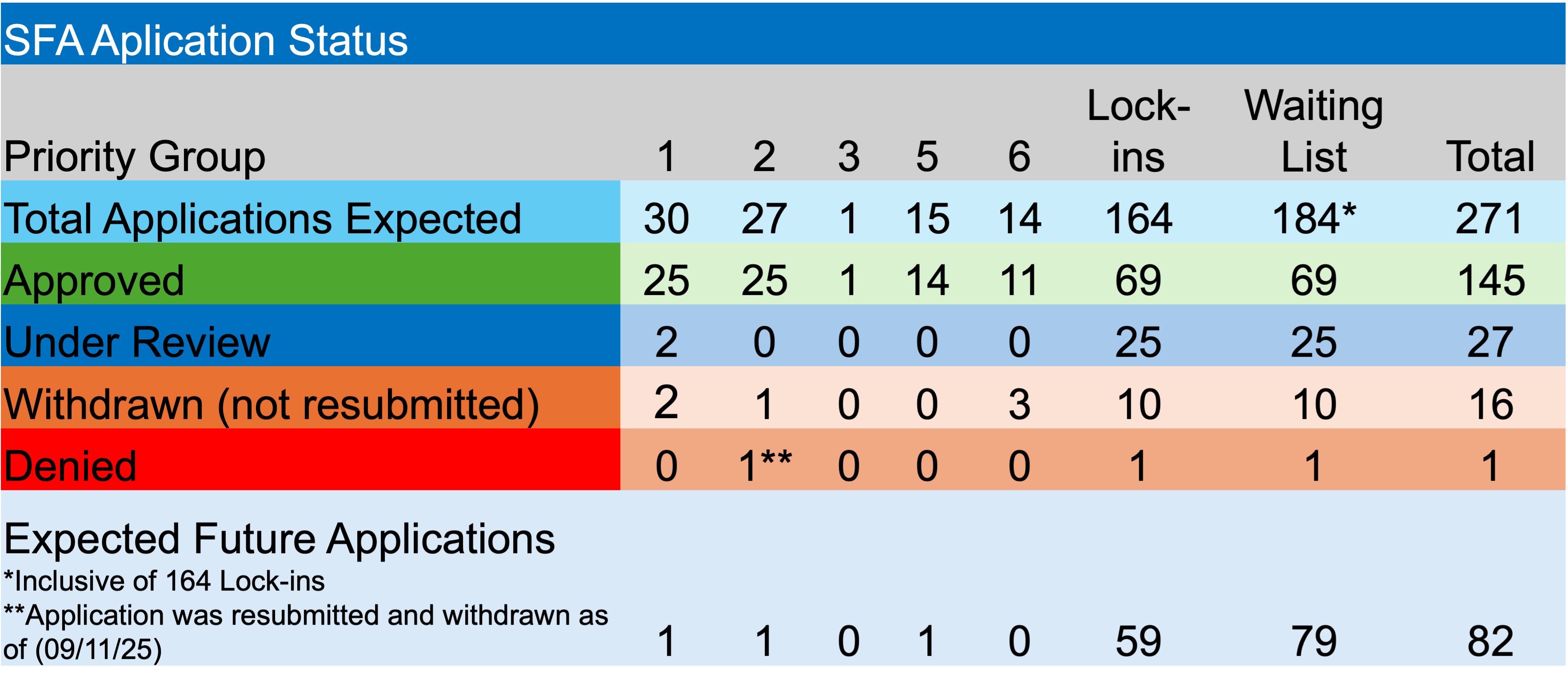
Welcome to the All-Star break for Major League baseball. I hope that your team has had a good first half. I think that the PBGC has had a terrific “first half”, approving the SFA applications for 20 multiemployer plans that will help secure the promised benefits for >326k American workers. Excellent!

Regarding last week’s activity, Alaska Teamster – Employer Pension Plan, submitted a revised application with an expedited review designation. This non-Priority Group member is seeking $154.1 million for the 8,838 participants, after having twice withdrawn previous applications in late 2024 and March of 2025.

In other ARPA news, there were no applications approved or denied last week nor were there any pension plans asked to repay a portion of the SFA previously received. There were two plans, Roofers Local 88 Pension Plan (initial application) and Alaska Teamster – Employer Pension Plan (revised) that withdrew applications. In total, these entities are seeking $168.3 million in SFA for their 9,322 members.

Following significant activity by plans seeking to be added to the waitlist of non-Priority Group funds, there was only one plan added last week. The Cleveland Soft Drink Workers Pension Plan is now the 156th non-priority plan to have found its way onto the list. In addition, nine plans made the decision to “lock-in” their measurement date with each fund using April 30, 2025. There are still 16 plans on the waitlist that have yet to lock in their measurement period.

Taylor-Made?

By: Russ Kamp, CEO, Ryan ALM, Inc.

The Federal Reserve meeting notes have been published, and there seems to be little appetite among the Fed Governors to reduce U.S. interest rates at the next meeting. They continue to believe that the recently inflated tariffs and current trade policy actions could lead to greater inflationary pressures. These notes do not support the current administration’s push to see the Fed Funds Rate dropped significantly – perhaps as much as 3%.

In a very informative Bloomberg post from this morning, John Authers reminded everyone that President Trump selected Jerome Powell over John Taylor, Stanford University, in 2017 to become Chairman of the Federal Reserve. I must admit that I didn’t remember that being the case, while also not recalling that it is John Taylor who is credited with developing the Taylor Rule in 1993. When I think of famous Taylors, John isn’t at the top of my list. I might have believed that it had something to do with Lawrence Taylor’s dominance on the football field where he “ruled” for 13 Hall of Fame seasons and is considered by many the greatest defensive player in NFL history (yes, I am a Giants’ fan).

So, what is the Taylor Rule? The Taylor Rule is an economic formula that provides guidance on how central banks, such as the Federal Reserve, should set interest rates in response to changes in inflation and economic output. The rule is designed to help stabilize an economy by systematically adjusting the central bank’s key policy rate based on current economic conditions. It is designed to take the “guess work” out of establishing interest rate policy.

The Taylor rule suggests that the central bank should raise interest rates when inflation is above its target (currently 2%) or when GDP is growing faster than its estimated potential (overheating). Conversely, it suggests lowering interest rates when inflation is below target or when GDP is below potential (economy is underperforming). Ironically, President Trump’s dissatisfaction with Jerome Powell’s reluctance to reduce rates given significant economic uncertainty, may have been magnified by John Taylor’s model, which would have had rates higher at this time as reflected in the graph below.

As a reminder, Ryan ALM, Inc. does not forecast interest rates as part of our cash flow matching (CFM) strategy. In fact, the use of CFM to defease pension liabilities (benefits and expenses (B&E)) eliminates interest rate risk once the portfolio is built since future values (B&E) aren’t interest rate sensitive. That said, the currently higher rate environment is great for pension plan sponsors who desire to bring an element of certainty to the management of pensions which tend to live in a very uncertain existence. By funding a CFM portfolio, plan sponsors can ensure that proper liquidity is available each month of the assignment, while providing the residual assets time to grow. There are many other benefits, as well.

Since we don’t know where rates are likely to go, we highly recommend engaging a CFM program sooner rather than later before we find that lower interest rates have caused the potential benefits (cost savings) provided by CFM to fall.

Problem/Solution: Asset Allocation

By: Ronald J. Ryan, CFA, Chairman, Ryan ALM, Inc.

In this post, Ron continues with his series on identifying solutions to various pension-related problems. This one addresses the issue of asset allocation being driven exclusively from an asset perspective.

Most, if not all asset allocation models are focused on achieving a total return target or hurdle rate… commonly called the ROA (return on assets). This ROA target return is derived from a weighting of the forecasted index benchmark returns for each asset class except for bonds which uses the yield of the index benchmark. These forecasts are generally based on some historical average (i.e. last 20 years or longer) with slight adjustments based on recent observations. As a result, it is common that most pensions have the same or similar ROA. 

This ROA exercise ignores the funded status. It is certainly obvious that a 60% funded plan should have a much higher ROA than a 90% plan. But the balancing item is contributions. If the 60% funded plan would pay more in contributions than the 90% plan (% wise) then it can have a lower ROA. I guess the question is what comes first. And the answer is the ROA with contributions as a byproduct of that ROA target. The actuarial math is whatever the assets don’t fund… contributions will fund.

If the true objective of a pension is to secure and fully fund benefits and expenses (B+E) in a cost-efficient manner with prudent risk, then you would think that liabilities (B+E) would be the focus of asset allocation. NO, liabilities are usually missing in the asset allocation process. Pensions are supposed to be an asset/liability management (ALM) process not a total return process. Ryan ALM recommends the following asset allocation process:

Calculate the cost to fully fund (defease) the B+E of retired lives for the next 10 years chronologically using a cash flow matching (CFM) process with investment grade bonds. CFM will secure and fully fund the retired lives liabilities for the next 10 years. Then calculate the ROA needed to fully fund the residual B+E with the current level of contributions. This is calculated through an asset exhaustion test (AET) which is a GASB requirement as a test of solvency. The difference is GASB requires it on the current estimated ROA before you do this ALM process. Ryan ALM can create this calculated ROA through our AET model. If the calculated ROA is too high, then either you reduce the allocation to the CFM or increase contributions or a little bit of both. If the calculated ROA is low, then increasing the allocation to CFM is appropriate. Running AET iterations can produce the desired or most comfortable asset allocation answer.  

Cash flow matching (CFM) will provide the liquidity and certainty needed to fully fund B+E in a cost-efficient manner with prudent risk. The Ryan ALM model (Liability Beta Portfolio™ or LBP) will reduce funding costs by about 2% per year or roughly 20% for 1-10 years of liabilities. We will use corporate bonds skewed to A/BBB+ issues. According to S&P, investment grade defaults have averaged 0.18% of the IG universe annual for the past 40-years. Fortunately, Ryan ALM has never experienced a bond default in its 21-year history (knock wood).

Assets are a team of liquidity assets (bonds) and growth assets (stocks, etc.) to beat the liability opponent. They should work together in asset allocation to achieve the true pension objective.

For more info on cash flow matching, please contact Russ Kamp, CEO at  rkamp@ryanalm.com

Milliman: Corporate Pension Funding Up

By: Russ Kamp, CEO, Ryan ALM, Inc.

Milliman released its monthly Milliman 100 Pension Funding Index (PFI), which analyzes the 100 largest U.S. corporate pension plans, and they are reporting that the collective funded ratio has risen to 105.1% as of June 30th from 104.9% at the end of May. The driving force behind the improved funding was the powerful 2.6% asset return for the index’s members, which more than offset the growth in pension liabilities as the discount rate fell by 19 bps.

As a result of the significant appreciation during the month, the Milliman PFI plan assets rose by $27 billion to $1.281 trillion during the month from $1.254 trillion at the end of May. The discount rate fell to 5.52% in June, from 5.71% in May and it is now down slights from 5.59% at the beginning of the year. 

“The second quarter of 2025 was a win-win for pensions from both sides of the balance sheet, as market gains of 3.42% drove up plan assets while modest discount rate increases of 2 basis points reduced plan liabilities and resulted in the highest funded ratio since October 2022,” said Zorast Wadia, author of the PFI.

Zorast further stated that “if discount rates decline in the second half of the year, plan sponsors will need to be ever more focused on preserving funded status gains and employing prudent asset-liability management.” We couldn’t agree more. We, at Ryan ALM, believe that the primary goal in managing a DB pension plan is to secure the promised benefits at a reasonable cost and with prudent risk. It is NOT a return objective. Having achieved this level of funding allows plan sponsors and their advisors to significantly de-risk their plans through Cash Flow Matching (CFM), which is a superior duration strategy, as each month of the assignment is duration matched.

Ryan ALM, Inc’s 1H’25 Newsletter

By: Russ Kamp, CEO, Ryan ALM, Inc.

We are pleased to share with you the Ryan ALM, Inc. 1H’25 Newsletter. As always, we hope that you find our ALM insights useful. We encourage you to reach out to us with any of your questions or observations. Despite the rollercoaster nature of 2025’s first half, pension America is enjoying a strong YTD. Although we aren’t in the game of forecasting U.S. interest rates, there is a fairly good chance that rates will maintain current levels or even elevate from here, as multiple forces are working to once again lead to higher inflation. Rising rates are great for the liability side of pensions. Perhaps not as positive for assets.

ARPA Update as of July 3, 2025

By: Russ Kamp, CEO, Ryan ALM, Inc.

Welcome to the Summer doldrums. The PBGC’s ARPA activity appears to have been impacted by the holiday-shortened week. We hope that you and your family had a terrific Fourth of July weekend.

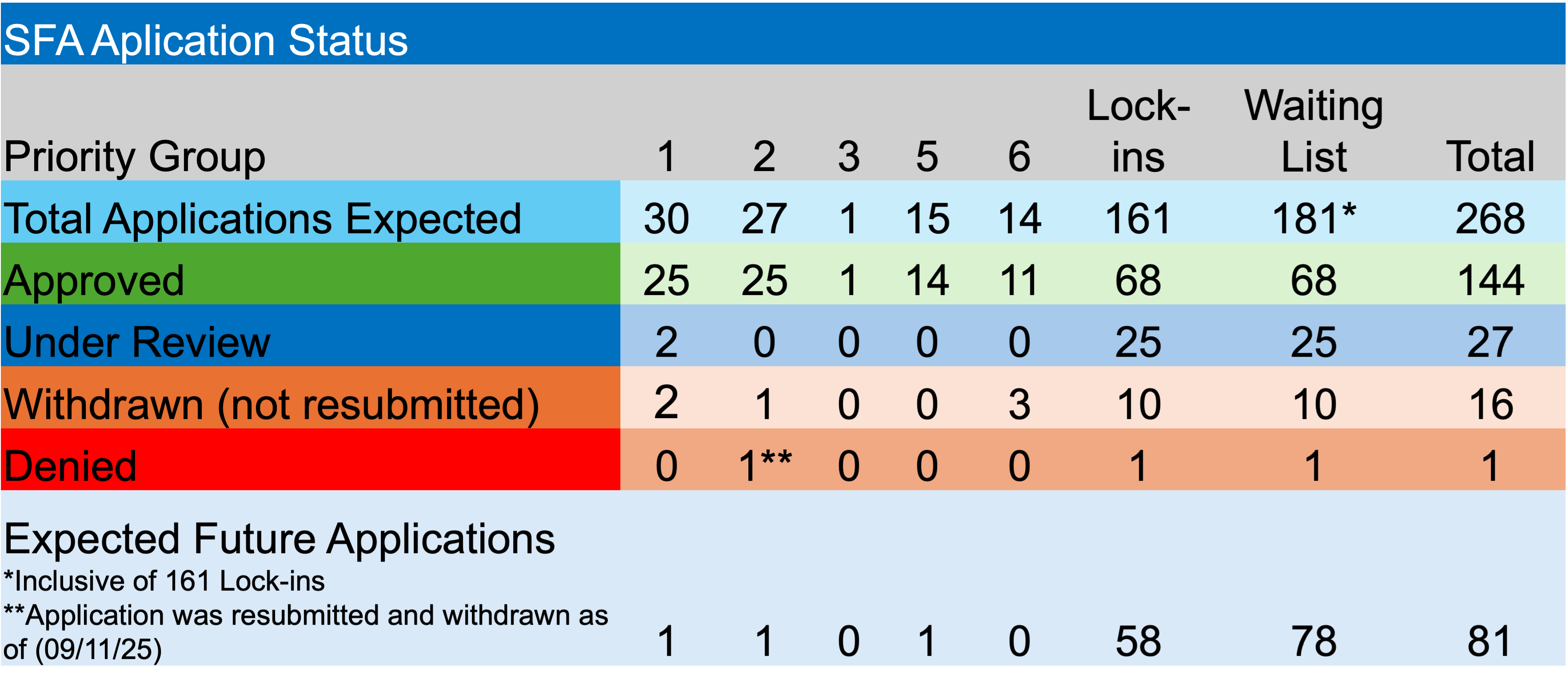
There isn’t a whole lot to discuss about last week. There were no applications received as the PBGC’s e-Filing portal remains temporarily closed. No applications were approved or denied, and there were no pension funds looking to be added to a very crowded waiting list.

However, there was one fund, Trucking Employees of North Jersey Welfare Fund, Inc. Pension Plan, that repaid a portion of the Special Financial Assistance (SFA) received earlier. The $7.7 million repayment represents 0.99% of the $774.3 million grant. The Truckers’ fund is the 55th fund to repay a portion of the SFA grant. There are four funds that had no census errors. It was estimated that roughly 60 pension funds had been granted SFA prior to the PBGC’s use of the Social Security Master Death file. In total, $229.4 million has been recouped from $50.9 billion in grants (0.45%).

In other ARPA news, eight funds currently on the waitlist have elected their measurement lock-in date. As a reminder, the measurement date refers to the date on which a plan submits a lock-in application to PBGC. This date is crucial because it sets and permanently establishes the plan’s SFA measurement date and base data for its eventual SFA application, regardless of when the full application is later submitted. Specifically, the lock-in application fixes: 1) the non-SFA and SFA interest rates, 2) the SFA measurement date, and 3) participant census data. Five of the funds chose March 31, 2025, while the other three selected April 30, 2025, as the measurement date for their pension plans.

According to the ARPA legislation, the PBGC is prohibited from accepting initial applications after December 31, 2025. They may receive and review revised applications until December 31, 2026. They currently have about 70 plans on the waitlist, in addition to the 46 that are under review or have been withdrawn. It will take a tremendous effort to process these initial applications prior to the legislation’s deadline.

Don’t Engage in a Cash Sweep – Dividends Matter!

By: Russ Kamp, CEO, Ryan ALM, Inc.

We’ve already shared with you the importance of dividends to the long-term return of the S&P 500 by referencing studies conducted by Guinness Global Investors.

According to the Guinness study, which was last updated as of April 2020, the contribution to return of the S&P 500 from dividends and dividends reinvested for 10-year periods since 1940 was a robust 47% down insignificantly from 48% a decade ago. Extending the measurement period to 20 years from 1940 forward highlights an incredible 57% contribution to the total return of the S&P 500 from dividends. Importantly, this study is on the entirety of the S&P 500, not just those companies that pay dividends. If the universe only included dividend payers, this analysis would reveal strikingly greater contributions since roughly 100 S&P 500 companies are not currently paying a dividend.

As if this study isn’t enough to convince you of the importance of dividends to the long-term return of stocks, Glen Eagle Trading put out an email today that referenced a recent Wall Street Journal article, titled “Why Investors Are Right to Love Dividends”. The article highlighted the fact that recent studies show S&P 500 dividend-paying stocks returned 9.2% annually over the past 50 years, which is more than double the 4.3% return of non-dividend payers, with lower volatility. Then there is this study by Ned Davis which broke down the contribution of dividends for the 47-years ending December 21, 2019.

Once again, it becomes abundantly clear why investing in companies paying dividends is a terrific long-term strategy. It also begs the question, why do many plan sponsors and their advisors regularly “sweep” income from their equity managers to meet ongoing benefits and expenses? In doing so, instead of structuring the pension plan to have a liquidity bucket to meet those obligations, this activity diminishes the potential long-term contribution to equities from dividends. As longer-term returns are reduced, greater contributions are needed to make up the shortfall compounding the problem.

Please don’t sweep interest and dividend income or capital distributions for that matter, establish an asset allocation that has a dedicated liquidity bucket that uses cash flow matching to secure and fund ongoing benefits and expenses. The remainder of the assets not deployed in the liquidity bucket go into a growth bucket that benefits from the passage of time.