Not so Fast!

By: Russ Kamp, Managing Director, Ryan ALM, Inc.

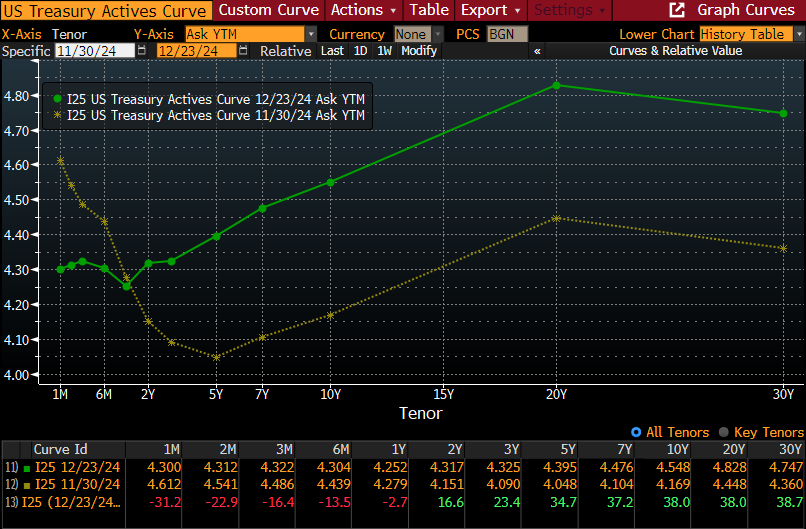
You may recall in the 1970s Heinz Ketchup used Carly Simon’s song, “Anticipation” as a jingle for several of its commercials. US bond investors might just want to adopt that song once more as they wait for the anticipated rate cuts from the Federal Reserve’s FOMC. As you may recall, investors pounced early on the perceived likelihood of rate cuts, forecasting multiple cuts and a substantial move down in rates given the expectation of a less than soft landing. As a result, US rates, as measured by the Treasury yields, fell precipitously during a good chunk of the summer, bottoming out on September 16th, which was two days prior to the Fed’s first cut (0.5%).

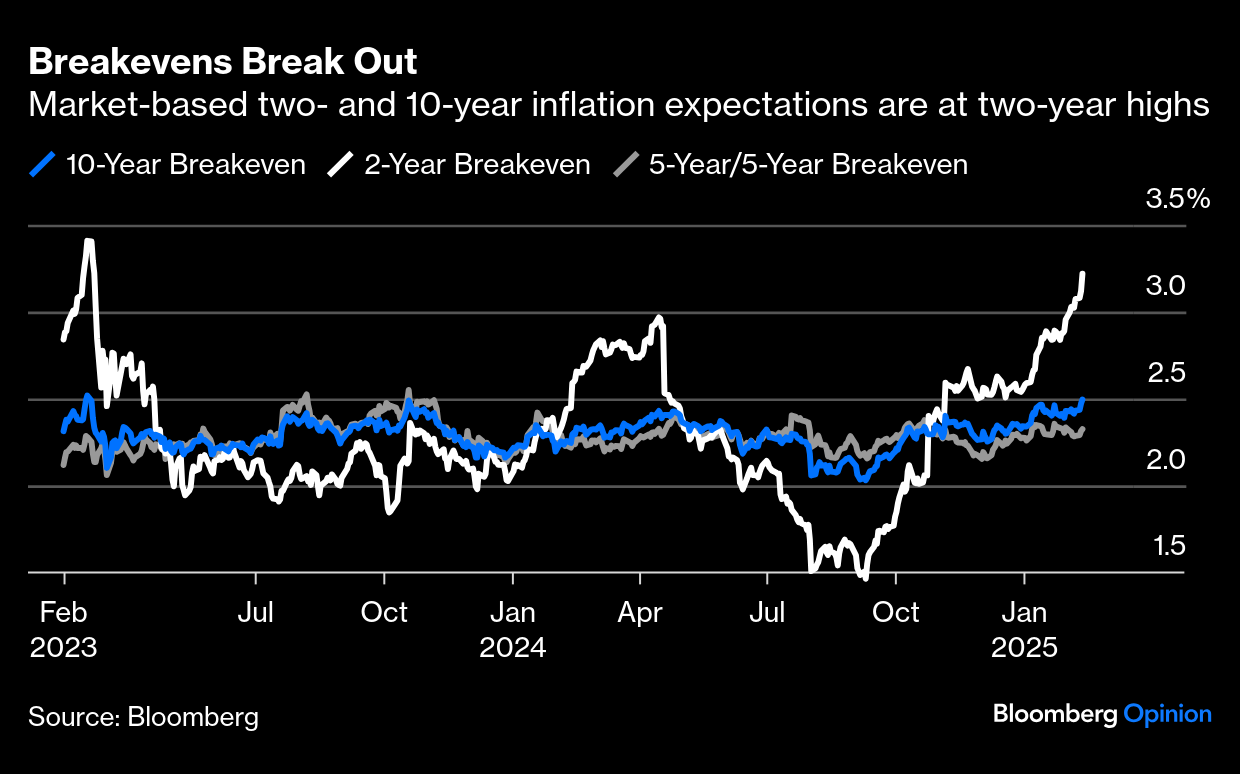
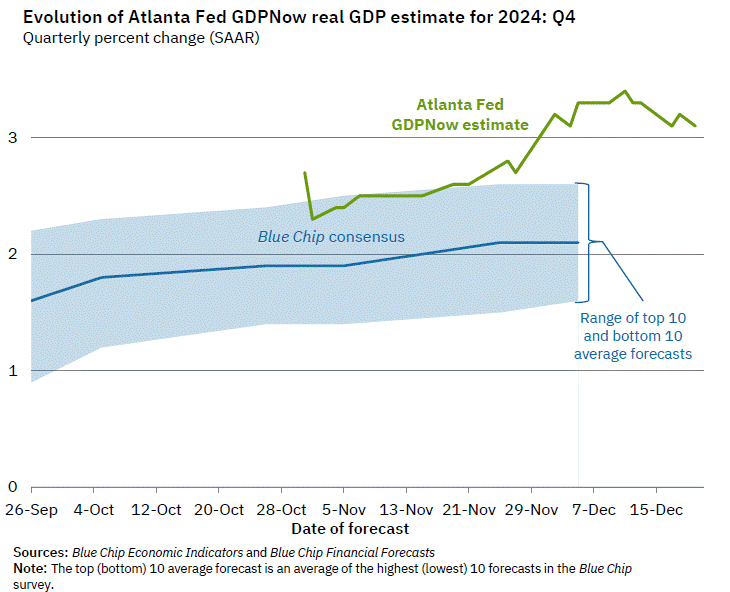
However, economic and inflationary news has been mixed leading some to believe that the Fed may just take a more cautionary path regarding cuts. Those sentiments were echoed by Federal Reserve Chairman Powell just yesterday, who stated during a speech in Dallas, “The economy is not sending any signals that we need to be in a hurry to lower rates.” Not surprising, bond investors did not look favorably on this pronouncement and quickly drove Treasury yields upward and stocks down. If the prospect of lower rates is the only thing propping up equities at this time, investors of all ilk better be wary.

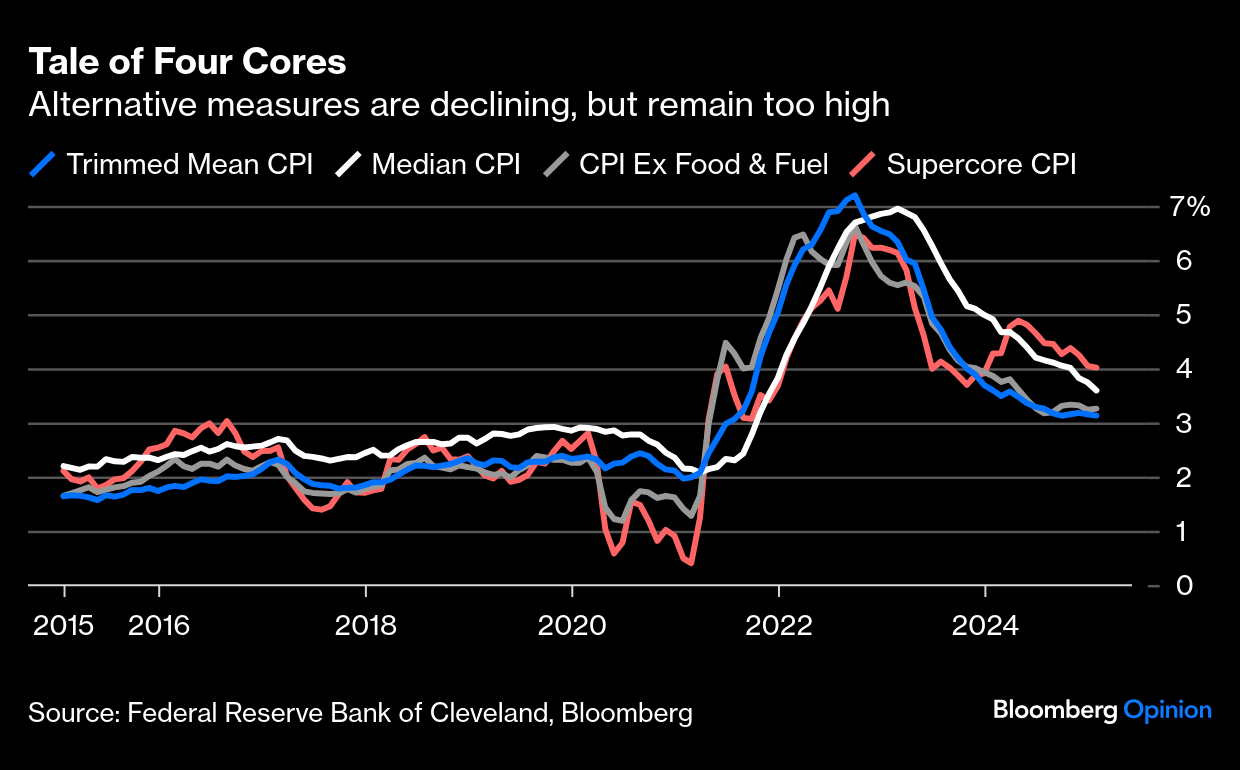
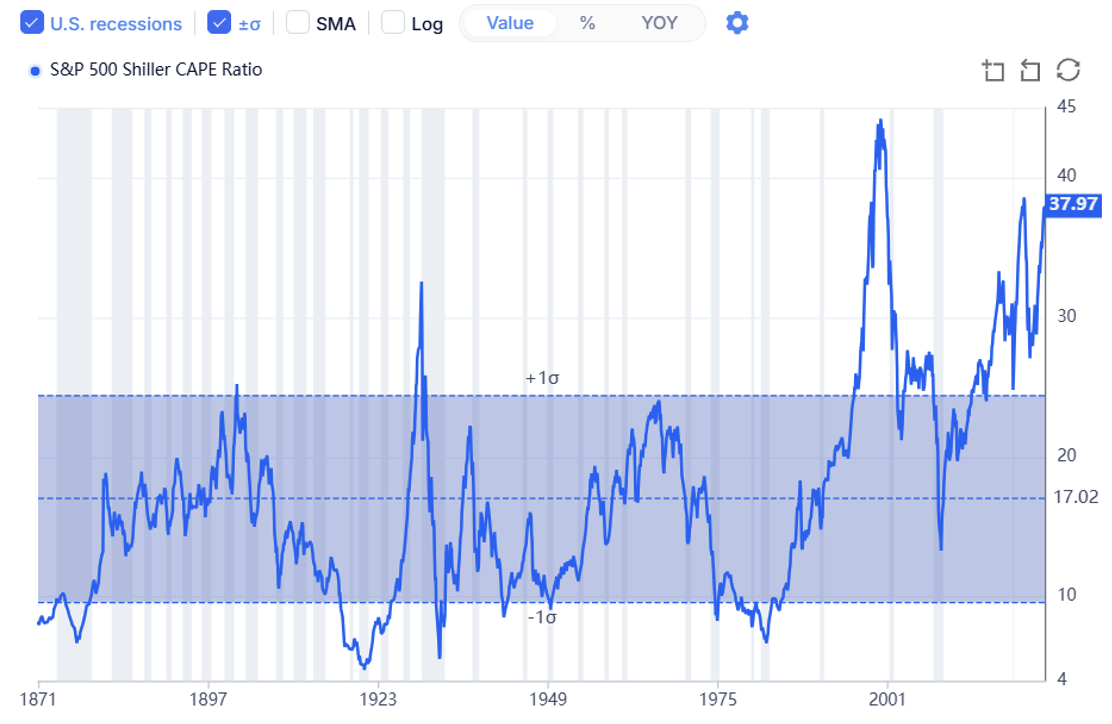
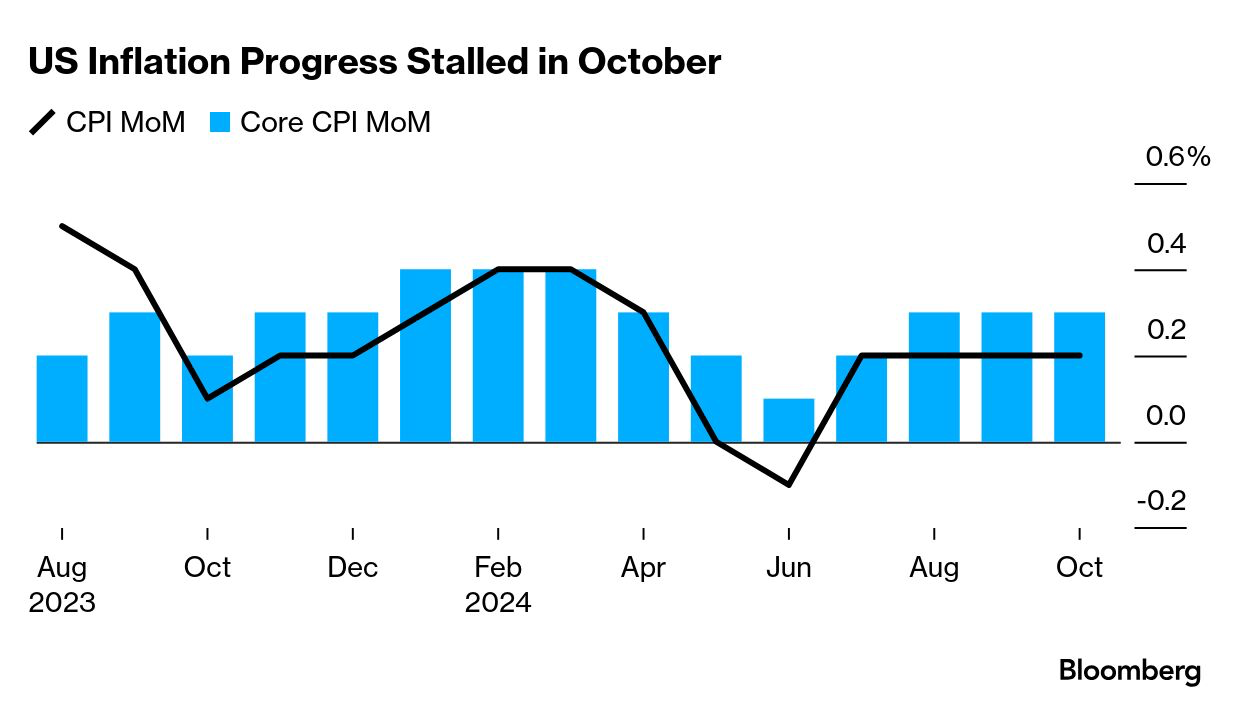
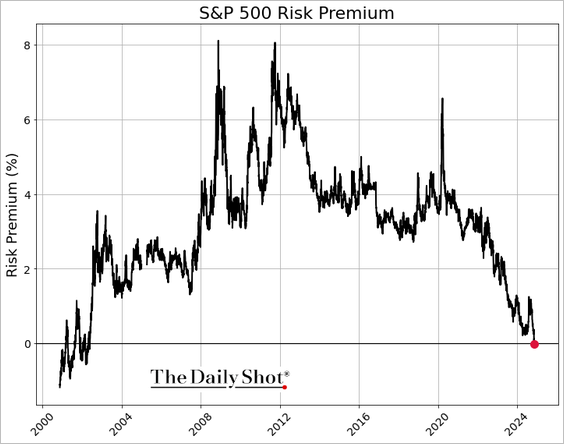
As the above graph highlights, inflation’s move to the Fed’s 2% target has been halted (temporarily?), as Core CPI has risen by 0.3% in each of the last three months. As I wrote above, the prospect of lower rates has certainly helped to prop up US equities. However, rising rates impacts the relationship of equities and bonds. According to a post by the Daily Shot, “the S&P 500 risk premium (forward earnings yield minus the 10-year Treasury yield) has turned negative for the first time since 2002, indicating frothy valuations in the US stock market.”

As a result of these recent moves in the capital markets, US pension plan sponsors would be well-served to use the elevated bond yields to SECURE the promised benefits through a cash flow matching defeasement strategy. As we’ve discussed on many occasions, not only is the liquidity to meet the promised benefits available when needed, this process buys time for the remaining assets to grow unencumbered, as they are no longer a source of liquidity. It is a win-win!

ARPA Update as of November 8, 2024

By: Russ Kamp, Managing Director, Ryan ALM, Inc.

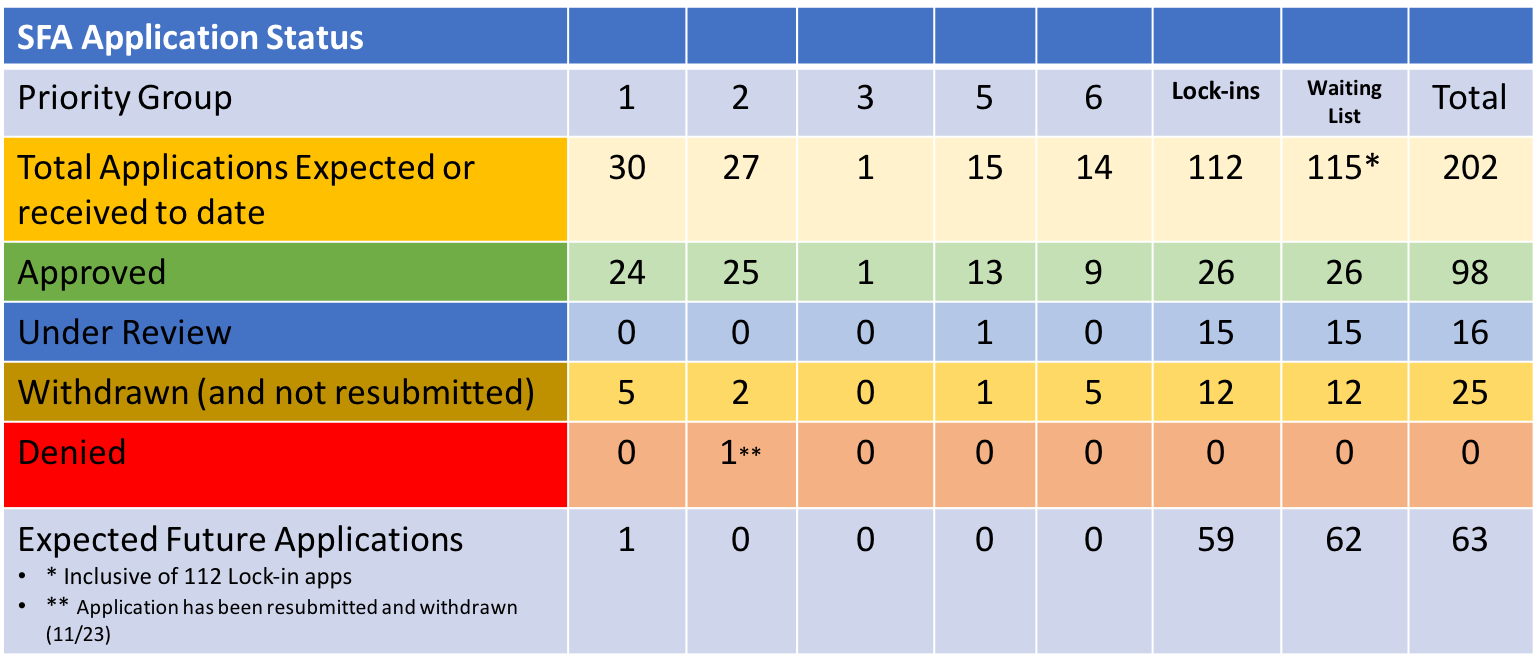
The PBGC continues to implement the ARPA legislation, although last week revealed less apparent activity according to its weekly update. The legislation which was approved in March 2021 and implemented beginning in July of that year, has now been active for about 3 1/3 years. I remain impressed with the PBGC’s effort to-date, as 98 pension plans have received Special Financial Assistance grants and interest totaling more than $69.4 billion. Wow!

Regarding last week’s activity, there was one fund invited to submit an initial application. The Aluminum, Brick & Glass Workers International Union, AFL-CIO, CLC, Eastern District Council No. 12 Pension Plan, is seeking $10.6 million in SFA for 580 plan participants. The PBGC has until March 6, 2025 (I can’t believe that is only 120 days away!) to act on the application.

In other news, Local 734 Pension Plan, an IBT fund out of Chicago, withdrew its initial application seeking $109 million for its 3,453 members. That application had been submitted on July 15, 2024 and it was nearing the PBGC’s 120-day deadline.

There were no applications denied, no excess funds repaid, no applications approved, and no plans added to the waitlist, which continues to list 62 funds yet to file an initial application. Finally, US Treasury interest rates continue to rise across the yield curve providing plan sponsors with the wonderful opportunity to reduce the cost of securing the promised benefits through the SFA grants, while the legacy assets and future contributions benefit from an extended investing horizon.

ARPA Update as of October 18, 2024

By: Russ Kamp, Managing Director, Ryan ALM, Inc.

Major League baseball finally has the last two competitors for this year’s World Series. As a Mets’ fan, I would have appreciated a different outcome, but it was a surprisingly good season for the team from Flushing! Good luck to the Yankees and Dodgers.

With regard to ARPA and the PBGC’s effort to implement this important pension legislation, last week provided just a couple of updates for us to digest. There were no new applications submitted, approved or denied. The PBGC’s eFiling Portal remains temporarily closed at this time. There were also no new systems seeking to be added to the waitlist at this time.

There was one application withdrawn. PA Local 47 Bricklayers and Allied Craftsmen Pension Plan, a non-priority group plan, withdrew its initial application last week that was seeking $8.3 million for the 296 participants in the plan.

The last bit of activity to discuss relates to the repayment of excess SFA as a result of census corrections. Teamsters Local Union No. 52 Pension Fund became the 22nd plan to repay a portion of their SFA received. In the case of Local No. 52, they repaid $1.1 million, which represented 1.15% of their grant. The largest repayment to date has been the $126 million repaid by Central States (0.35% of grant). In terms of percentages, the Milk Industry Office Employees Pension Trust Fund returned 2.36% of their grant marking the high watermark, while Local Union No. 466 Painters, Decorators and Paperhangers Pension Plan, was asked to return only 0.11% of their reward.

Finally, US interest rates have risen significantly since the Fed’s first rate cut on September 18th, as highlighted in the graph below. The higher rates reduce the present value of those future benefit payments and helps to stretch the coverage period provided by the SFA.

That’s comforting!

By: Russ Kamp, Managing Director, Ryan ALM, Inc.

The Fed’s meeting notes from the September 17-18 FOMC have recently been released. Here are a few tidbits:

Some officials warned against lowering rates “too late or too little” because this risked harming the labor market.

At the same time, other officials said cutting “too soon or too much” might stall or reverse progress on inflation.

Here’s my favorite:

Officials also don’t seem in agreement over how much downward pressure the current level of the Fed’s benchmark rate was putting on demand.

I have an idea, why don’t we just have each member of the Federal Reserve’s board of governors stick their finger in the air and see which way the economic winds are blowing. It may be just as effective as what we currently seem to be getting.

Given that the economy continues to hum along with annual GDP growth of roughly 3% and “full employment” at 4.1%, I’d suggest that having a Fed Funds Rate at 5.25%-5.50% wasn’t too constraining, if constraining at all. We’ve highlighted in this blog on many occasions the fact that US rates had been historically higher for extended periods in which both the economy and markets (equities) performed exceptionally well – see the 1990’s as one example.

Furthermore, as we’ve also highlighted, there is a conflict between current fiscal and monetary policy, as the fiscal 2024 federal deficit came in at $1.8 trillion or about $400 billion greater than the anticipated deficit at the beginning of the year. That $400 billion is significant extra stimulus that leads directly to greater demand for goods and services. How likely is it that the fiscal deficit for 2025 will be any smaller?

I believe that there are many more uncertainties that could lead to higher inflation. The geopolitical risks that reside on multiple fronts seem to have been buried at this time. Any one of those conflicts – Russia/Ukraine, Israel/rest of the Middle East, and China/Taiwan – could produce inflationary pressures, even if it just results in the US increasing the federal budget deficit to support our allies.

If just sticking one’s finger in the air doesn’t help us solve our current confusion, there is always this strategy:

We Suggested That It Might Just Be Overbought

By: Russ Kamp, Managing Director, Ryan ALM, Inc.

Regular readers of this blog might recall that on September 5th we produced a post titled, “Overbought?” that suggested that bond investors had gotten ahead of themselves in anticipation of the Fed’s likely next move in rates. At that time, we highlighted that rates had moved rather dramatically already without any action by the Fed. Since May 31, 2024, US Treasury yields for both 2-year and 3-year maturities had fallen by >0.9% to 9/5. By almost any measure, US rates were not high based on long-term averages or restrictive.

Sure, relative to the historically low rates during Covid, US interest rates appeared inflated, but as I’ve pointed out in previous posts, in the decade of the 1990s, the average 10-year Treasury note yield was 6.52% ranging from a peak of 8.06% at the end of 1990 to a low of 4.65% in 1998. I mention the 1990s because it also produced one of the greatest equity market environments. Given that the current yield for the US 10-year Treasury note was only 3.74% at that point, I suggested that the present environment wasn’t too constraining. In fact, I suggested that the environment was fairly loose.

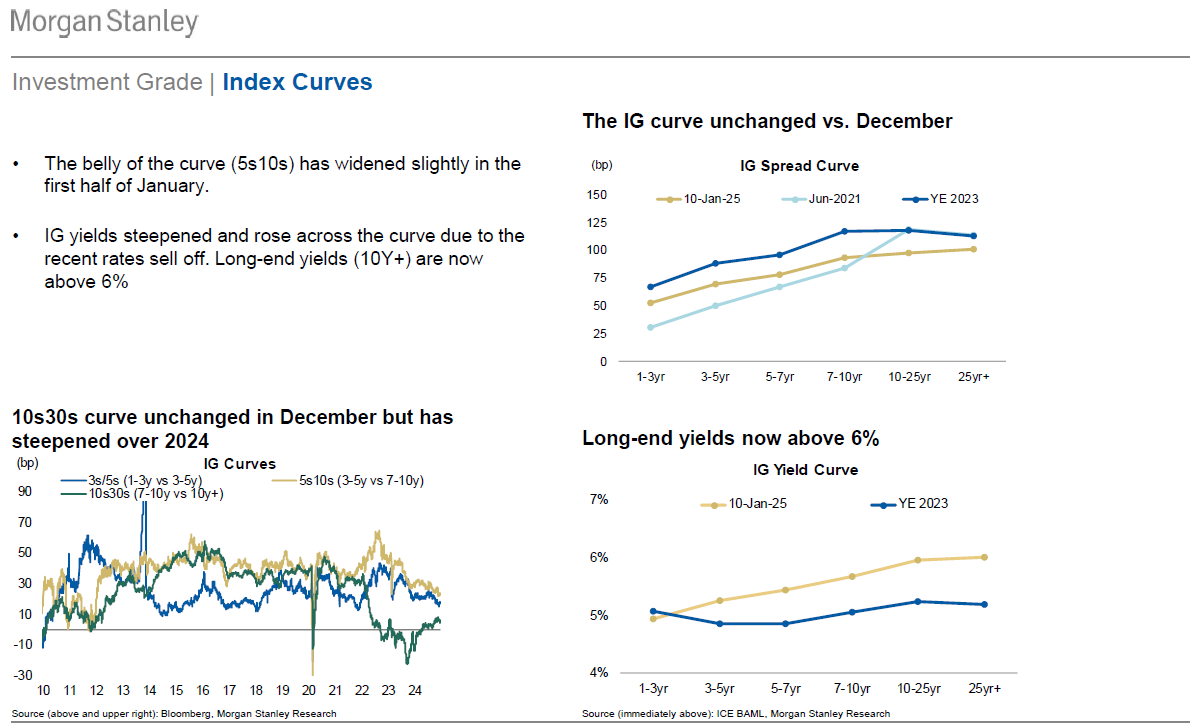
Well, as we all know, the US Federal Reserve slashed the Fed Funds Rate by 0.5% on September 18th (4.75%-5.0%). Did this action lead bond investors to plow additional assets into the market driving rates further down? NO! In fact, since the Fed’s initial rate cut, Treasury yields have risen across the yield curve with the exceptions being ultra-short Treasury bills. Furthermore, the yield curve is positively sloping from 5s to 20s.

Again, managing cash flow matching portfolios means that we don’t have to be in the interest rate guessing game, but we are all students of the markets. It was out thinking in early September that markets had gotten too far ahead of the Fed given that the US economy remained on steady footing, the labor market continued to be resilient, and inflation, at least sticky inflation, remained stubbornly high relative to the Fed’s target of 2%. Nothing has changed since then except that the US labor market seems to be gaining momentum, as jobs growth is at a nearly 6-month high and the unemployment rate has retreated to 4.1%.

There will be more gyrations in the movement of US interest rates. But anyone believing that the Fed and market participants were going to drive rates back to ridiculously low levels should probably reconsider that stance at this time.

What A Ride!

By: Russ Kamp, Managing Director, Ryan ALM, Inc.

In 1971, Bread produced the song If. The song starts off with David Gates singing the lyrics, “if a picture paints a thousand words”. Looking at the graph below, I think that Bread and David could have used a number far greater than 1,000 to describe the impact that this picture might produce.

It never ceases to amaze me how momentum builds for an idea driving perceptions to depths or altitudes not supported by the underlying fundamentals. We see it so often in our markets whether discussing bonds, equities, or alternatives. In the case above, the “Street” became convinced that the US Federal Reserve was going to have to drive US interest rates down as our economy was about to collapse. A “please do something” cry could almost be heard from market participants who thrived on nearly four decades of Fed support. They were so accustomed to the Fed stepping in anytime that there was a wobble in the markets that it became part of the investment strategy.

It got so silly, that fixed income managers drove rates down substantially from the end of October to the end of 2023. In the process, they created an environment that was once again very “easy” and supportive of economic growth. But, that wasn’t the end of the story. I can recall a near unanimous expectation that there was going to be anywhere from 4-6 cuts in the Fed Funds Rate and perhaps more during 2024. We had analysts predicting 250 – 300 bps of rate cuts. Was the world ending?

I’ve produced more than 40 blog posts since March of 2022 that used the phrase “higher for longer” in describing an economic and inflationary environment that I felt was to robust for the Fed to reduce rates. Of course, there were many more posts in which I questioned the wisdom of the deflationary and lower rates crowd where I didn’t precisely utter those three words. Well, fortunately for pension America and the American worker, the US economy has held up in far greater fashion than predicted. The labor market remains fairly robust keeping Americans working and spending.

While inflation remains sticky and elevated, US rates have remained at decade highs providing defined benefit sponsors the opportunity to take substantial risk from the plan’s asset allocation framework through asset/liability strategies (read Cash Flow Matching) that secure the promises at substantially lower cost. As the chart above highlights, expectations for rate cuts have fallen from 4-6 or more to fewer than 2 at this point, as only a -31 bps decline is currently priced in. We’ve seen quite a repricing in 2024, and I suspect that we might need to see more, as “higher for longer” seems to be the approach being taken by the Fed.

While this is the case, plan sponsors would be wise to secure as many years of promised benefits as possible. Plan sponsors and their advisors let 2000 come and go without securing the benefits only to see two major market declines sabotage the opportunity and your plan’s funded status. Riding the asset allocation rollercoaster hasn’t worked. Is the car that you are riding in nearing the peak at this time?

What’s The Hurry?

By: Russ Kamp, Managing Director, Ryan ALM, Inc.

“Fed To Cut Rates in September, Say Nearly Two-thirds of Economists.”

This pronouncement was in large bold font on an email that I received this morning from the Wealth Advisor. Should I be skeptical? You bet!!

As you may recall, there was near unanimity among “economists” late last year that the US Federal Reserve would begin reducing rates RAPIDLY as the calendar flipped to 2024. In fact, consensus was fairly strong that there were going to be 4-6 cuts of between 1.0%-1.5%. There was even a leading bank that saw the need to reduce rates by 2.5% – oh, my. What happened? At this time I’m particularly interested in the 1/3 of economists that were predicting huge cuts at the end of 2023 that aren’t buying a September cut at this time. Those are the ones that I want to hear from.

What has changed from late last year when the labor market was strong, inflation was sticky, economic growth was stronger than expected, the stock market was raging ahead, and fiscal policy was in direct conflict with the Fed’s monetary objectives? Nothing has changed!

What is the urgency to cut rates? The Atlanta Fed’s GDPNow model is predicting a 4.2% annualized growth rate for Q2’24 (latest update as of May 8th). Does a growth rate of that magnitude warrant a rate cut? Heck no! Yes, there is the issue that most of today’s investors don’t remember the 1970s, if they were even born, but I do. Fed missteps lead directly to incredibly high inflation and US interest rates. Today’s rate environment is nothing compared to that era. Why risk a repeat? Stagflation became a reality. Is that something that you want to witness again?

Seniors and those living on a fixed income can finally earn some interest on their investments without having to dive into strategies that they don’t understand just to earn a little more interest. Pension plans can finally use fixed income to secure some or all of their promises to plan participants by matching bond cash flows of interest and principal with pension liabilities (benefits and expenses). Endowments and foundations can invest more cautiously knowing that they can earn a return from less risky assets that will help them achieve a return commensurate with their spending policy. This is all good stuff! Use this environment to take some of your assets off the asset allocation rollercoaster before our capital markets reach the apex of their journey. The next downward trajectory could be a doozy!

He Said What?

By: Russ Kamp, Managing Director, Ryan ALM, Inc.

I’d like to thank Bill Gross for his honest assessment that he just provided on the likely failure of “Total Return” bond products going forward. Here are his thoughts that were summarized in a Bloomberg Business email:

Bill Gross says his “total return” strategy—the one that revolutionized the bond market— “is dead”! Instead of just picking up steady interest payments like his peers did at the time, the co-founder of Pacific Investment Management created the firm’s Total Return Fund in 1987 to take active positions in duration, credit risk and volatility. The idea is that, more than just clipping coupons, bond investors can also benefit from capital appreciation as bond prices rise and yields fall. But in an outlook published Thursday, Gross noted what’s different now is that yields are much lower than when he first coined the concept, leaving investors with less room for price appreciation. 

We’ve been stressing this point for a long time now. Bonds should be used for the certainty of cash flows that they produce of interest and principal. Those cash flows are known and can be modeled with certainty (barring no defaults) to meet the liability cash flows of a pension plan (benefits) or foundation (grants). As Gross rightly points out, given the current level of US interest rates and inflation, just how much appreciation can be achieved, if an investor is on the correct side of a duration bet.

Capital market participants benefited tremendously during the nearly four decades decline in rates from 1981 to 2021. That move down in rates was certainly great for “total return” bond programs, but it also acted as rocket fuel for risk assets. What most market participants have either forgotten or don’t know is the fact that US interest rates trended higher for 28 years prior to the peak achieved in 1981. They are used to the Fed stepping into the fray every time there was a wiggle or wobble in the markets. Well, those days might be behind us.

Yes, US employment came in light this morning with 175k jobs being created in April when the forecast was for 240k, but that is one data point. We certainly witnessed an aggressive move down in rates during 2023’s fourth quarter only to see most of that move reversed to start 2024. Was your bond program able to get both directions correct or did your portfolio get whipsawed? Wouldn’t it be more comforting to know that you can install a cash flow matching portfolio that will SECURE the promises that have been made to the plan participants without having to guess the direction of rates? Even if one were to guess correctly, just how far will rates fall given that inflation remains sticky? Are you likely to see negative real yields?

The US economy remains robust. Fiscal policy remains easy with excessive Government spending and in direct competition with monetary policy. The labor market continues to be strong, as is wage growth. The stock market’s performance continues to support the economy. Given these realities, why should US rates plummet, which is what it would take to create an investing horizon that would be supportive of “total return” fixed income products.

CFM: Buy Time and Reduce Risk

By: Russ Kamp, Managing Director, Ryan ALM, Inc.

A traditional DB plan’s asset allocation comes with a lot of annual volatility (see the graph below). That volatility gets reduced as one extends the investing horizon, but it is still quite uncertain until you extend sufficiently, such as 10 or more years. However, as plan sponsors and investment managers, we have been living in a quarter-to-quarter measurement cycle for decades. In that environment, a 1 standard deviation (1 SD) measurement for a 1-year time frame (Ryan ALM asset allocation model since 1999) is +/- 10.5%. In the example below, 68% of the observations (1 SD) will fall between 16.5% and -4.5%. A 2 SD measurement would have the range for 95% of the observations between 27% and -15%. That gap, or should I say canyon, is a 1-year observation. Extend the measurement period to 5-years and the range of results is still wide but less so at +/- 9.8% for 2 SDs. It isn’t until you get beyond 10 years that the volatility associated with a fairly traditional asset allocation gets to a reasonable level.

Is there a way to bring more certainty to the asset allocation process that would allow for longer observation periods and less volatility? Absolutely! A plan sponsor and their advisors can adopt a bifurcated asset allocation in which a liquidity bucket is created that will fund and match the plan’s liability cash flows of benefits and expenses chronologically from the next month as far out as the allocation will cover (10+ years) allowing for the remainder of the alpha assets (all non-bond assets) to now grow unencumbered. The task for those assets is to meet future liabilities.

As the graph below highlights, a carefully constructed cash flow matching (CFM) portfolio can help plan sponsors wade through the volatility associated with shorter timeframes. The CFM portfolio will consist of investment grade bonds whose cash flows of interest and principal will be matched to the liability cash flows. This process now ensures (absent defaults) that the necessary liquidity is available when needed as those future promises have been SECURED. The remaining assets can now be managed as aggressively as the plan’s funded status dictates.

With this process, short-term market dislocations will no longer impact the plan’s ability to meet its obligations. There will be no forced selling to meet benefit payments. The alpha assets can now grow without fear of being sold at an unreasonable level. The CFM program takes care of your needs while establishing a buffer (longer investing horizon) from market corrections that happen on a fairly regular basis. This structure should also lead to less volatility related to contributions and the plan’s funded status.

Given the elevated US interest rate environment, now is the time to engage in this process. CFM will provide a level of certainty that doesn’t exist in a traditional asset allocation. This is a “sleep well at night” strategy that should become the core holding for DB pensions. As I mentioned in an earlier blog post today, bonds should only be used for the cash flows they produce. They should not be used as total return-seeking instruments. Leave that task to the alpha assets that will benefit from a longer investing period.

Healthier Than Ever? Nah!

By: Russ Kamp, Managing Director, Ryan ALM, Inc.

P&I produced an article yesterday titled, “Corporate Pension Funds Are Fully Funded, Healthier Than Ever. Now What?” According to Milliman, corporate pension plans are averaging roughly a funded ratio of 106%. This represents a healthy funded status, but it is by no means the healthiest ever. One may recall that corporate plans were funded in excess of 120% as recently as 2000. In what might be more shocking news, public pension plans were too when using a market discount rate (ASC 715 discount rate). Today, those public pension plans have a funded status of roughly 80% according to Milliman’s latest public fund report.

The question, “Now what”? is absolutely the right question to be asking. Many corporate plans have already begun de-risking, as the average exposure to fixed income is >45% according to P&I’s asset allocation survey through November 2023. Unfortunately, public pension systems still sit with only about 18% exposure to US fixed income, preferring a “let it ride” mentality as equities and alternatives account for more than 75% of the average plan’s asset allocation. Is this the right move? No. The move into alternatives has dried up liquidity, increased fees, and reduced transparency. Furthermore, just because a public plan believes that its sponsor is perpetual, does that make the system sustainable? You may want to be reminded about Jacksonville Police and Fire. There are other examples, too.

Whether the pension plan is corporate, multiemployer, or public, the asset allocation should reflect the funded status. There is no reason that a 60% funded plan should have the same asset allocation as one that is 90% or better funded. All plans should have both liquidity and growth buckets. The liquidity bucket will be a bond allocation (investment grade corporates in our case) that matches asset cash flows to liability cash flows of benefits and expenses. That bucket will provide all of the necessary liquidity as far into the future as the pension system can afford. The remaining assets will be focused on outperforming future liability growth. These assets will be non-bonds that now have the benefit of an extended investing horizon to grow unencumbered. Forcing liquidity in environments in which natural liquidity has been compromised only serves to exacerbate the downward spiral.

Pension America has the opportunity to stabilize the funded status and contribution expenses. They also have the chance to SECURE a portion of the promises. How comforting! We saw this movie a little more than 20 years ago. Are we going to treat this opportunity as a Ground Hog Day event and do nothing or are we going to be thoughtful in taking appropriate measures to reduce risk before the markets bludgeon the funded status? The time to act is now. Not after the fact.