P&I: Asset Owner CIOs See Uncertainty in 2025

By: Russ Kamp, Managing Director, Ryan ALM, Inc.

P&I is out with a story today about asset owner CIOs “forecasting” uncertainty for 2025. The capital markets are always uncertain. It only takes a “surprise” to disrupt even the most obvious trend. Given a new regime in Washington, stubborn inflation, geopolitical risks throughout the globe, and equity valuations that are stretched (that’s putting it mildly), CIOs have reason to be uncertain, especially over a short timeframe, such as a calendar year or two.

The lack of certainty can be destabilizing to individuals and investment strategies. I covered the psychology of uncertainty in a post earlier this year. Here were a few highlights:

  • When facing ongoing uncertainty, our bodies stay at a high level of physiological arousal, exerting considerable wear and tear.
  • Uncertainty exerts a strong pull on our thoughts and inhibits our ability to act, leaving us in a suspended waiting game.
  • We can manage uncertainty by figuring out what we can control, distracting ourselves from negative thoughts, and reaching out to others.

The last point is particularly important. We can manage “uncertainty” by figuring out what we can control. As a plan sponsor, we can utilize an investment strategy (cash flow matching or CFM) that creates certainty for the portion of the portfolio that uses CFM. In the following post, I question the significant use of equity and equity-like product in public pension systems that are accompanied by tremendous annual volatility. Again, this produces great uncertainty.

Adopting the use of greater fixed income exposure also doesn’t ensure less uncertainty, as changes in US interest rates can play havoc on fixed income strategies. ONLY with a CFM strategy do you bring certainty of cash flows (absent any defaults) to the management of pension plans. Traditional fixed income strategies benefited from a nearly 4-decade move down in rates, but there is currently great uncertainty as to the future direction of inflation and as a result, rates. With CFM one knows what the performance will look like a decade from now. With a fixed income strategy focused on a generic index, such as the BB Aggregate, one has no idea how that portfolio will perform 10 or more years from now.

Lastly, there is no reason to live with the uncertainty that many CIOs currently foresee. I wrote a piece just recently on achieving “peace of mind“. Uncertainty won’t help you in your quest for a good night’s sleep, but achieving peace of mind is very much achievable once you adopt a CFM strategy and secure the promised benefits (or grants) for some period of time. Call us. We want to remove as much uncertainty from your professional life as possible.

It Doesn’t Have to be This Way

By: Russ Kamp, Managing Director, Ryan ALM, Inc.

The Financial Times (FT) recently published an article highlighting the struggles of Ivy League schools trying to manage liquidity in the face of an extended downturn in the performance of private markets. Collectively, this august group of institutions continues to underperform the average return for higher education endowments of 10.3% for fiscal year 2024, with only 6 of 8 universities outperforming. This follows an even more challenging fiscal 2023 in which all 8 universities failed to top that year’s 6.8% average return. This difficult period in which distributions have dried up considerably, is forcing some, including Princeton, to issue bonds in order to support the operations of the schools. Haven’t we seen this story play out before?

Despite the troubles, there seems to be this reluctance to alter a strategy first adopted nearly four decades ago when Yale began to invest heavily in these strategies. In the article, Roger Vincent, former head of private equity at Cornell University said, “Everybody still believes in having as big an allocation to private equity as possible.” Really? Why? No asset class will always outperform. The problem with private equity at this time is the fact that too much money has chased to few quality deals driving up the costs of acquisition and lowering future returns. In the process, managers have become reluctant to reduce valuations in order to sell these portfolio companies which has crushed liquidity.

As I’ve written on many occasions, assets shouldn’t be lumped into one bucket focused on return either to meet benefit payments, or in this case, a spending policy. There should be two buckets – liquidity and growth. If the Ivies had structured their portfolios with this design in mind, they would have had sufficient liquidity when needed and issuing bonds wouldn’t have been necessary. Endowments and foundations would be well-served to adopt this structure. Liquidity can be managed through a cash flow matching (CFM) process, which will ensure (barring any defaults) that the cash will be on hand monthly, quarterly, and/or annually depending on the needs of the organization.

I’ve witnessed too many times throughout my 40+ year career investment ideas that got overwhelmed by cash flows. We’ve had booms and busts in real estate, equities (Dot Com era), quantitatively managed equities, gold/commodities, emerging markets, Japan, hedge funds, and on and on and… Why would “investors” believe that private equity would be immune to such action? Again, if an investment is deemed to be all weather, money will naturally flow to that “opportunity” thus reducing future prospects. One way to minimize the short-term impact of these cycles is to build in a liquidity strategy that bridges these troubled times.

Pension ROA – Trick or Treat?

By: Ronald J. Ryan, CFA, CEO, Ryan ALM, Inc.

Ron brings to you today a Halloween Special titled, Pension ROA – Trick or Treat? In this research piece, Ron explores how the return on asset assumption (ROA) is calculated and some of the misconceptions associated with targeting this return as the primary objective of pension management. One of those misunderstandings has to do with the expectation for each asset class used in the plan. An asset class, such as fixed income, is only asked to earn the ROA assigned to It by using their index benchmark as the target return proxy. They are NOT required to earn the total pension fund ROA assumption (@ 6.75% to 7% today). This is an important fact to remember in asset allocation.

As always, we encourage your comments and questions. Please don’t hesitate to reach out to us. Have a wonderful Halloween with your family and friends.

3% Return for the Decade? It Isn’t Far-fetched!

By: Russ Kamp, Managing Director, Ryan ALM, Inc.

This blog is a follow up to a post that I published last week. In that post I cited a recent analysis by Goldman Sach’s forecasting a 3% 10-year return. I concluded the blog with the following: “I wouldn’t worry about the 5% fixed income yield-to-worst (YTW) securing my pension liabilities. Instead, I’d worry about all the “growth” assets not used to secure the promises, as they will likely be struggling to even match the YTW on a CFM corporate bond portfolio.”

How likely is it that Goldman and other financial institutions are “right” in forecasting such a meager return for the next decade? I’m sure that plan sponsors and their advisors are pondering the same question. Well, here is more insight into how one forecasts long-term equity returns (not necessarily Goldman’s forecasting technique) and how one might arrive at such a low equity return (S&P 500 as the proxy) that, if realized, would likely crush pension funding.

Inputs necessary to forecast the future return for the S&P 500 are the current S&P EPS ($255), future expected EPS growth (5.5%) and an assumed P/E multiple in 10 years. Finally, add in the dividend yield (1.3%) and you have your expected annualized return.

Charles DuBois, my former Invesco research colleague, provided me with his thoughts on the following inputs. He believes that nominal earnings growth will be roughly 5.5% during the next decade, reflecting 4% nominal GDP growth coupled with a small boost from increasing federal deficits as a share of GDP and a boost for net share buybacks (1.5% in total). 

Right now, earnings per share for the S&P 500 are forecasted to be about $255 in 2024. If earnings grow by the 5.5%/per annum described above, in 10 years earnings for the S&P 500 will be $428 per share.

The S&P is currently trading at 5,834, which is 22.9X (high by any measure) the current EPS. Let’s assume a more normal, but still historically high, multiple of 18X in 10 years. That gets you to an S&P 500 level of 7,704 or a 2.8% annual rate of gain over the next 10 years.  Add in a 1.3% dividend yield gets you to 4.1%. Not Goldman’s 3%, but close. It is still much lower than the long-term average for the market or the average ROA for most public and multiemployer pension plans.

If one were to assume a 15X P/E multiple in 10 years, the return to the S&P 500 is 0.64%/annum and the “total” return is slightly less than 2.0%. UGLY! Obviously, the end of the 10-year period multiple is the key to the return calculation. But all in all, the low returns that most investment firms (including Goldman) are forecasting seem to be in the right neighborhood given these expectations.

Given the potential challenges for Pension America to achieve the desired return (ROA objective) outcome, a cash flow matching (CFM) strategy will help a pension plan bridge this potentially difficult period. Importantly, by having the necessary liquidity to meet monthly benefits and expenses, assets won’t have to be sold to meet those obligations thus eliminating the potential to lock in losses. Lastly, the roughly 5% yield-to-worse (YTW) on the CFM portfolio looks to be superior to future equity returns – a win/win!

It just might be time to rethink your plan’s asset allocation. Don’t place all of your assets into one return bucket. Explore the many benefits of dividing pension assets into liquidity and growth buckets. Want more info? Ryan ALM, Inc. has a ton of research on this idea. Please go to RyanALM.com/research.

Milliman: Corporate Pension Funding Weakens in September

By: Russ Kamp, Managing Director, Ryan ALM, Inc.

Milliman has released the latest results for the Milliman 100 Pension Funding Index (PFI). This index reviews the funding status each month of the top 100 U.S. corporate pension plans. The report indicated that the funded ratio declined to 102.4% at month-end from 102.6% at the end of August. Plan assets increased as a result of a 1.74% investment gain, but the discount rate declined by 0.14% to 4.96%. As a result, the growth in liabilities eclipsed asset growth leading to a $12 billion loss in funded surplus.

Assets for these combined plans now total $1.36 trillion as of September 30, while the projected benefit obligation is now $1.33 trillion giving these 100 corporate plans a $29 billion surplus. According to Zorast Wadia, author of the PFI, the current discount rate at 4.96% marks the first time since April 2023 that the rate hasn’t been >5.0%. However, so far in October we’ve witnessed a fairly significant move up in rates. If this trend continues, we could see the funded ratio for this index once again rising if the increase in rates doesn’t negatively impact the asset side of the pension equation.

We Suggested That It Might Just Be Overbought

By: Russ Kamp, Managing Director, Ryan ALM, Inc.

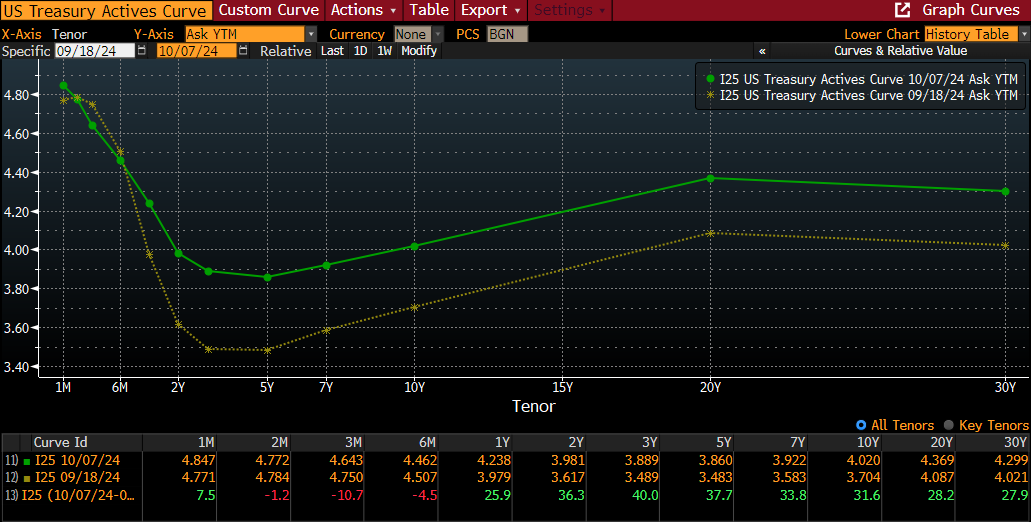
Regular readers of this blog might recall that on September 5th we produced a post titled, “Overbought?” that suggested that bond investors had gotten ahead of themselves in anticipation of the Fed’s likely next move in rates. At that time, we highlighted that rates had moved rather dramatically already without any action by the Fed. Since May 31, 2024, US Treasury yields for both 2-year and 3-year maturities had fallen by >0.9% to 9/5. By almost any measure, US rates were not high based on long-term averages or restrictive.

Sure, relative to the historically low rates during Covid, US interest rates appeared inflated, but as I’ve pointed out in previous posts, in the decade of the 1990s, the average 10-year Treasury note yield was 6.52% ranging from a peak of 8.06% at the end of 1990 to a low of 4.65% in 1998. I mention the 1990s because it also produced one of the greatest equity market environments. Given that the current yield for the US 10-year Treasury note was only 3.74% at that point, I suggested that the present environment wasn’t too constraining. In fact, I suggested that the environment was fairly loose.

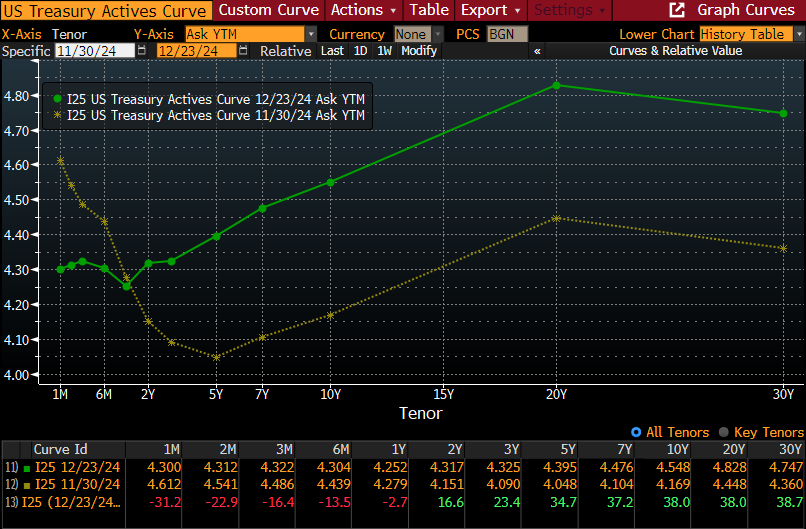
Well, as we all know, the US Federal Reserve slashed the Fed Funds Rate by 0.5% on September 18th (4.75%-5.0%). Did this action lead bond investors to plow additional assets into the market driving rates further down? NO! In fact, since the Fed’s initial rate cut, Treasury yields have risen across the yield curve with the exceptions being ultra-short Treasury bills. Furthermore, the yield curve is positively sloping from 5s to 20s.

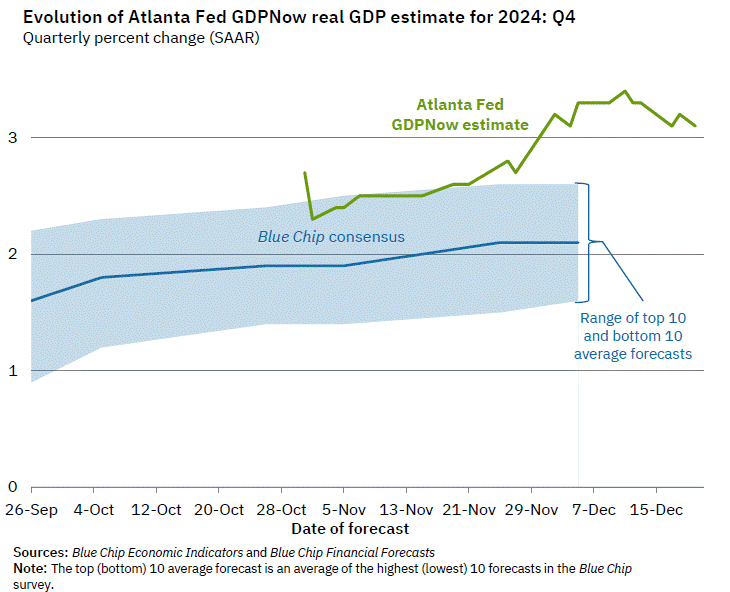
Again, managing cash flow matching portfolios means that we don’t have to be in the interest rate guessing game, but we are all students of the markets. It was out thinking in early September that markets had gotten too far ahead of the Fed given that the US economy remained on steady footing, the labor market continued to be resilient, and inflation, at least sticky inflation, remained stubbornly high relative to the Fed’s target of 2%. Nothing has changed since then except that the US labor market seems to be gaining momentum, as jobs growth is at a nearly 6-month high and the unemployment rate has retreated to 4.1%.

There will be more gyrations in the movement of US interest rates. But anyone believing that the Fed and market participants were going to drive rates back to ridiculously low levels should probably reconsider that stance at this time.

ARPA Update as of October 4, 2024

By: Russ Kamp, Managing Director, Ryan ALM, Inc.

Welcome to October. It is always a beautiful time of year in New Jersey.

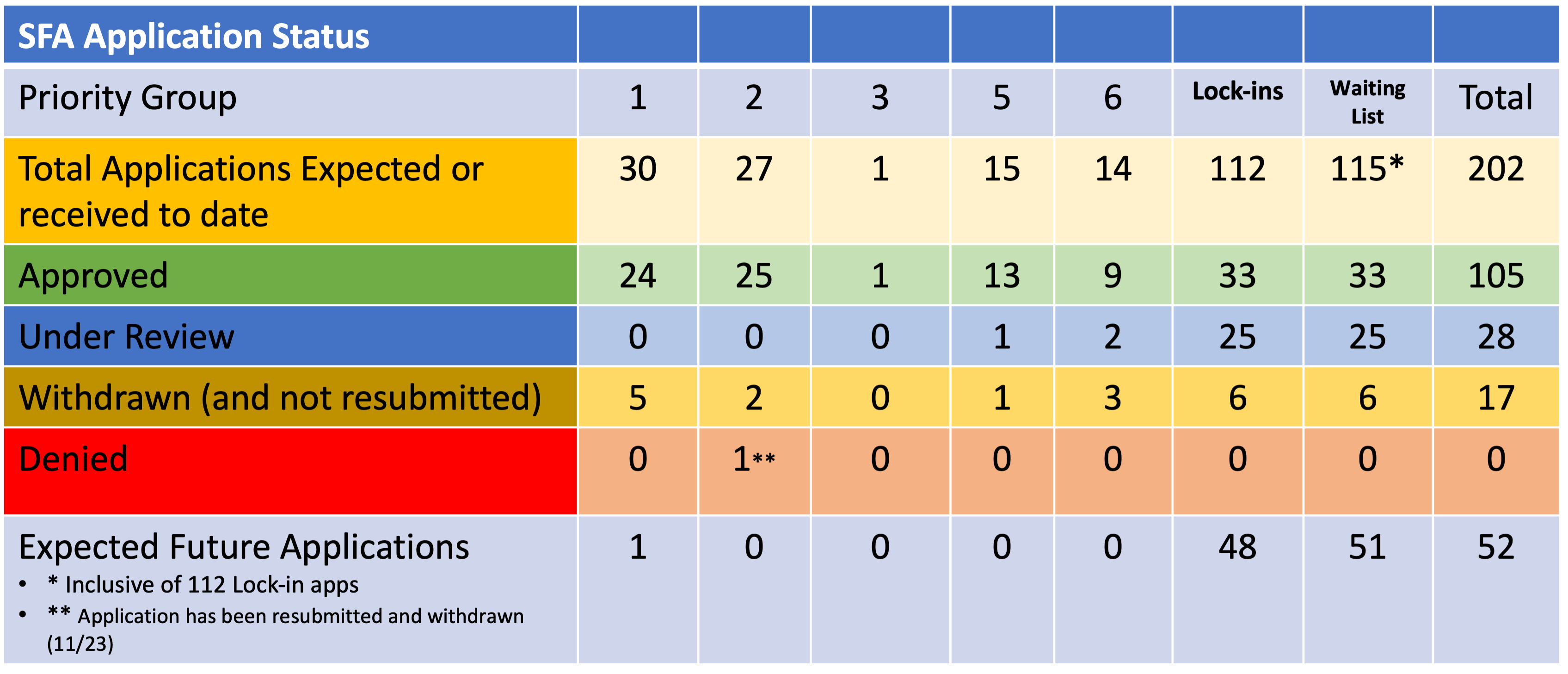
With regard to the PBGC’s implementation of the ARPA legislation, there was some activity last week. After a short pause in accepting applications, the PBGC accepted two initial applications from two non-Priority Group members. Cement Masons Local No. 524 Pension Plan and the Roofers Local No. 75 Pension Plan, both Ohio-based, filed applications seeking $11.3 million combined in SFA for 486 plan participants. As a reminder, the PBGC has 120 days to act on those applications.

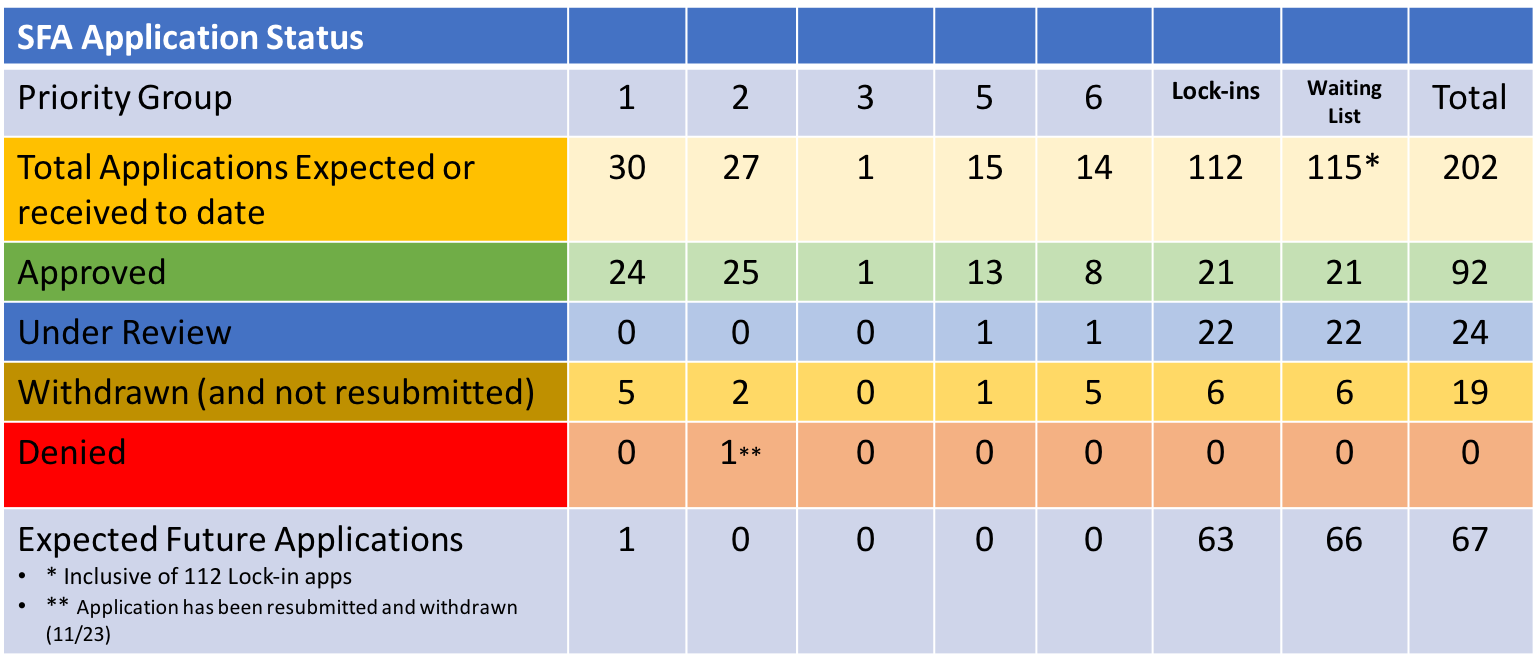
In addition to the 2 new applications, the PBGC recouped another $1.2 million in SFA overpayments due to census errors. This brings the repayment to of excess SFA to $144.1 million for 19 plans. The recovery of SFA amounts to 0.37% of the grant monies awarded. In other news, there were no applications approved, denied or withdrawn during the last week. There also were no funds seeking to be added to the waitlist.

As the chart above highlights, there are 110 funds yet to have applications approved. US Treasury yields are once again on the rise after a dramatic retreat as bond investors plowed into bonds anticipating very aggressive rate cuts by the Federal Reserve. Higher rates reduce the PV cost of those FV payments of benefits and expenses. A defeasement strategy significantly reduces interest rate risk as FVs are not interest sensitive. As we’ve discussed on many occasions, using a cash flow matching strategy to meet those benefits and expenses reduces the uncertainty associated with a traditional benchmark relative fixed income product. We are happy to discuss this subject in far greater detail.

What Will Their Performance Be In About 11 years?

By: Russ Kamp, Managing Director, Ryan ALM, Inc.

How comforting would it be for both plan sponsors and their advisors to know how a particular strategy is going to perform over some defined period of time? I would think that having that knowledge would be quite comforting, at least as a “core” holding. Do you think that a core fixed income manager running a relative return strategy versus the Bloomberg Barclays Aggregate Index could tell you how that portfolio will perform in the next 10 1/2 years? No. Ryan ALM can with a very high degree of certainty. How’s that? Well, cash flow matching (CFM) of asset cash flows to liability cash flows locks in that relationship on the day that the portfolio is constructed. Ryan ALM views risk as the uncertainty of achieving the objective. If the true pension objective is to fund benefits and expenses in a cost-efficient manner with prudent risk, then our CFM model will be the lowest risk portfolio.

We were awarded a CFM assignment earlier this year. Our task was/is to defease the future grant payments for this foundation. On the day the portfolio was built, we were able to defease $165.1 million in FV grant payments for only $118.8 million, locking in savings (difference between FV and PV of the liability cash flows) of $46.3 million equal to 28.0% of those future grant payments. That’s fairly substantial. The YTM on that day was 5.19% and the duration was 5.92 years.

Earlier this week, we provided an update for the client through our monthly reporting. The current Liability Beta Portfolio (the name that we’ve given to our CFM optimization process) has the same FV of grant payments. On a market value basis, the portfolio is now worth $129 million, and the PV of those future grant payments is $126 million. But despite the change in market value due to falling interest rates, the cost savings are still -$46.3 million. The YTM has fallen to 4.31%, but that doesn’t change the initial relationship of asset cash flows to liability cash flows. That is the beauty of CFM.

Now, let me ask you, do you think that a core fixed income manager running a relative return portfolio can lay claim to the same facts? Absolutely, not! They may have benefitted in the most recent short run due to falling interest rates, but that would clearly depend on multiple decisions/factors, including the duration of the portfolio, changes in credit spreads, the shape of the yield curve, the allocation among corporates, Treasuries, agencies, and other bonds, etc. Let’s not discount the direction of future interest rate movements and the impact those changes may have on a bond strategy. In reality, the core fixed income manager has no idea how that portfolio will perform between now and March 31, 2035.

Furthermore, will they provide the necessary liquidity to meet those grant payments or benefits and expenses, if it were a DB pension? Not likely. With a yield to maturity of 4.31% and a market value of assets of $129.3 million, they will produce income of roughly $5.57 million/year. The first year’s grant payments are forecast to be $9.7 million. Our portfolio is designed to meet every $ of that grant payment. The relative return manager will be forced to liquidate a portion of their portfolio in order to meet all of the payments. What if rates have risen at that point. Forcing liquidity in that environment will result in locking in a loss. That’s not comforting.

CFM portfolios provide the client with the certainty of cash flows when they are needed. There is no forced selling, unlike the relative return manager that might be forced to sell in a market that isn’t conducive to trading. Furthermore, a CFM mandate locks in the cost savings on day 1. The assets not used to meet those FV payments, can now be managed more aggressively since they benefit from more time and aren’t going to be used to meet liability cash flows.

Asset allocation strategies should be adapted from a single basket approach to one that uses two baskets – liquidity and growth. The liquidity bucket will house a defeased bond portfolio to meet all the cash flow requirements and the remainder of the assets will migrate into the growth bucket where they can now grow unencumbered. You’ll know on day 1 how the CFM portfolio is going to perform. Now all you have to worry about are those growth assets, but you’ll have plenty of time to deal with any challenges presented.

Defined Benefit Pension Plan: “Absolute Truths”

By: Russ Kamp, Managing Director, Ryan ALM, Inc.

The four senior team members at Ryan ALM, Inc. have collectively more than 160 years of pension/investment experience. We’ve lived through an incredible array of markets during our tenures. We have also witnessed many attempts on the part of Pension America to try various strategies (schemes) to meet the promises that have been made to the pension plan participants. Regrettably, defined benefit (DB) pension plans continue to be tossed aside by corporate America in favor of defined contribution (DC) plans. Both public and multiemployer plan sponsors would be wise to adopt a strategy that seeks more certainty in order to protect and preserve these critically important retirement vehicles before they are subject to a similar fate.

We’ve compiled a list of DB pension “Absolute Truths” that we believe return the management of pension plans back to its roots when “SECURING the promised benefits at a reasonable cost and with prudent risk” was the primary objective. The dramatic move away from the securing of benefits to today’s arms race focus on the return on asset assumption (ROA) has eliminated any notion of certainty in favor of far greater variability in likely outcomes.

Here are the Ryan ALM DB Truths:

  • Defined Benefit (DB) plans are the best retirement vehicles!
  • They exist to fulfill a financial promise that has been made to the plan participant upon retirement.
  • The primary objective in managing a DB plan is to SECURE the promised benefits at a reasonable cost and with prudent risk.
  • The promised benefit payments are liabilities of the pension plan sponsor.
  • Liabilities need to be measured, monitored, and managed more than just once per year.
  • Liabilities are future value (FV) obligations – a $1,000 monthly benefit is $1,000 no matter what interest rates do. As a result, they are not interest rate sensitive.
  • Plan assets (stocks, bonds, real estate, etc.) are Present Value (PV) or market value (MV) calculations. We do not know the FV of assets except for bonds cash flows (interest and principal at maturity)
  • In order to measure and monitor the funded status, liabilities need to be converted from FV to PV – a Custom Liability Index (CLI) is absolutely needed.
  • A discount rate is used to create a PV for liabilities – ROA (publics), ASC 715 (corps), STRIPS, etc.
  • Liabilities are bond-like in nature. The PV of future liabilities rises and falls with changes in the discount rate (interest rates).
  • The nearly 40-year decline in US interest rates beginning in 1982 crushed pension funding, as the growth rate for future liabilities far exceeded the growth rate of the PV of assets.
  • The allocation of plan assets should be separated into two buckets – Liquidity (beta) and Growth (alpha).
  • The liquidity assets should consist of a bond portfolio that matches (defeases) asset cash flows with the plan’s liability cash flows (benefits and expenses (B&E)).
  • This task is best accomplished through a Cash Flow Matching (CFM) investment process.
  • The liquidity assets should be used to meet B&E chronologically buying time for the alpha assets to grow unencumbered in their quest to meet future liabilities.
  • The Growth assets will consist of all non-bonds, which can now grow unencumbered, as they are no longer a source of liquidity. Growth assets will fund future liabilities.
  • The Return on asset (ROA) assumption should be a calculated # derived through an Asset Exhaustion Test (AET)
  • The pension plan’s asset allocation should be responsive to the plan’s funded status and not the ROA.
  • As the funded status improves, port alpha (profits) from the Growth portfolio into the Liquidity bucket (de-risk) extending the cash flow matching assignment and securing more promises.
  • This de-risking ensures that plans don’t continue to ride the asset allocation rollercoaster leading to volatile contribution costs.
  • DB plans are a great recruiting and retention tool for managing a sponsor’s labor force.
  • DB plans need to be protected and preserved, as asking untrained individuals to fund, manage, and then disburse a “benefit” through a Defined Contribution plan is poor policy.
  • Unfortunately, doing the same thing over and over and… is not working. A return to pension basics is critical.

You’ve made a promise: measure it – monitor it – manage it – and SECURE it…   

Get off the pension funding rollercoaster – sleep well!

Must We Continue to Just Shift Deck Chairs on the Titanic?

By: Russ Kamp, Managing Director, Ryan ALM, Inc.

You may not have been following Ryan ALM’s blog through the many years that I have been producing posts in which I’ve touched on this subject. We at Ryan ALM continue to question the logic of focusing on the return on asset assumption (ROA) as the pension plan’s primary objective.  We especially challenge the notion that shifting a couple of percent from one asset class to another produces meaningful results for the pension system’s asset allocation and long-term funding success.

Day after day, I read, as I’m sure that you do, articles, blogs, emails, etc. highlighting a new product or twist to an existing one that will just “rock your world” and assist you on the road to achieving the return on asset (ROA) assumption. It doesn’t matter whether your plan is a public fund, multiemployer pension, or a private plan, the continued focus on the ROA as the primary objective for both plan sponsors and their asset consultants is leading everyone down the wrong path. You see, most of the retirement community has been sold a bag of rotten goods claiming that a plan needs to generate the ROA, or it will not meet its funding goals. I say, “Hogwash”! I’d actually like to say something else, but you get my drift.

So, when valuations for most asset classes seem to be stretched, as they do today, where does a pension plan go to allocate their plan’s assets? Well, this “issue” has plan sponsors once again scratching their collective heads and doing the Curly shuffle.  You see, they have once again through the presumed support of their consultants, begun to approach asset allocation as nothing more than rearranging the deck chairs on the Titanic.

Despite tremendous gains from both equity and fixed income bull markets, these plans are willing to “let it ride” instead of altering their approach to possibly reduce risk, stabilize the funded status, and moderate contribution expense. Can you believe that one of the country’s largest public plans has recently decided (I’m sure that it took a long time, too) to roll back fixed income exposure by 2% and equity exposure by 1% from 55% to 54%?  Are you kidding me? Is that truly meaningful or heroic?

Please note that generating a return commensurate with the ROA is not going to guarantee success. Furthermore, since most public pension plans are currently underfunded on an actuarial basis (let alone one based on market values) meeting this ROA objective will only further exacerbate the UAAL, as the funded status continues to slip. You see, if your plan is 80% funded, and that is the “average” funded ratio based on Milliman’s latest work, you need to outperform your plan’s 7% ROA objective by 1.75% in order to maintain the current funded status. Here’s a simple example as a proof statement:

Assets = $80   Liabilities = $100   ROA = 7.00%   Asset growth = $5.60   Liability growth = $7.00

In order for asset growth = $7.00, assets would need a 8.75% ROA

Given that reality, these plans don’t need the status quo approach that has been tried for decades. Real pension reform must be implemented before these plans are no longer sustainable, despite the claim that they are perpetual.  As an industry, we have an obligation to ensure the promised benefits are there when needed. Doing the same old, same old places our ability to meet this responsibility in jeopardy. If valuations are truly stretched, don’t leave your allocations basically stagnant. Take the opportunity to try something truly unique.

It is time to approach asset allocation with a renewed focus. Instead of having all of your plan’s assets tied to achieving the ROA, divide them into two buckets – liquidity and growth. The liquidity bucket will utilize a cash flow matching (CFM) strategy to ensure that monthly payments of benefits and expenses (B+E) are available, as needed, chronologically. The asset cash flows from the CFM strategy will be carefully matched against the liability cash flows of B+E providing the necessary liquidity. This provides the growth bucket (all non-bond assets) with an extended investing horizon, and we all know how important a long time horizon is for investing. Importantly, the growth assets will be used down the road to meet future pension liabilities and not in the short-term to meet liquidity needs. The practice of a cash sweep to meet ongoing liquidity has negatively impacted long-term returns for many pension systems.  Let bonds fund B+E so the growth assets can grow unencumbered.

Focusing on products and minor asset class shifts will waste a lot of your time and not produce the results that our pension plans need. Ensuring the appropriate funding to meet the promises given to the plan participant takes real reform. It starts with eliminating the single focus on the ROA. Pension plan liabilities need to be invited to the asset allocation dance, since paying a benefit is the only reason that the fund exists in the first place.