Problem – Solution: Liquidity

By: Russ Kamp, CEO, Ryan ALM, Inc.

Plan Sponsors of defined benefit pension plans don’t have an easy job! The current focus on return/performance and the proliferation of new, and in some cases, complicated and opaque products, make navigating today’s market environment as challenging as it has ever been.

At Ryan ALM, Inc. we want to be our clients’ and prospects’ first call for anything related to de-risking/defeasing pension liabilities. Ryan ALM is a specialty firm focused exclusively on Asset/Liability Management (ALM) and how best to SECURE the pension promise. For those of you who know Ron Ryan and the team, you know that this have been his/our focus for 50+ years. I think that it is safe to say that we’ve learned a thing or two about managing pension liabilities along the way. Have a problem? We may just have the solution. For instance:

Problem – Plan sponsors need liquidity to meet monthly benefits and expense. How is this best achieved since many plan sponsors today cobble together monthly liquidity by taking dividends, interest, and capital distributions from their roster of investment advisors or worse, sell securities to meet the liquidity needs?

Solution – Create an asset allocation framework that has a dedicated liquidity bucket. Instead of having all of the plan’s assets focused on the return on asset (ROA) assumption, bifurcate the assets into two buckets – liquidity and growth. The liquidity bucket will consist of investment grade bonds whose cash flows of interest and principal will be matched against the liability cash flows of benefits and expenses through a sophisticated cost-optimization model. Liquidity will be available from the first month of the assignment as far out as the allocation to this bucket will secure – could be 5-years, 10-years, or longer. In reality, the allocation should be driven by the plan’s funded status. The better the funding, the more one can safely allocate to this strategy. Every plan needs liquidity, so even poorly funded plans should take this approach of having a dedicated liquidity bucket to meet monthly cash flows.

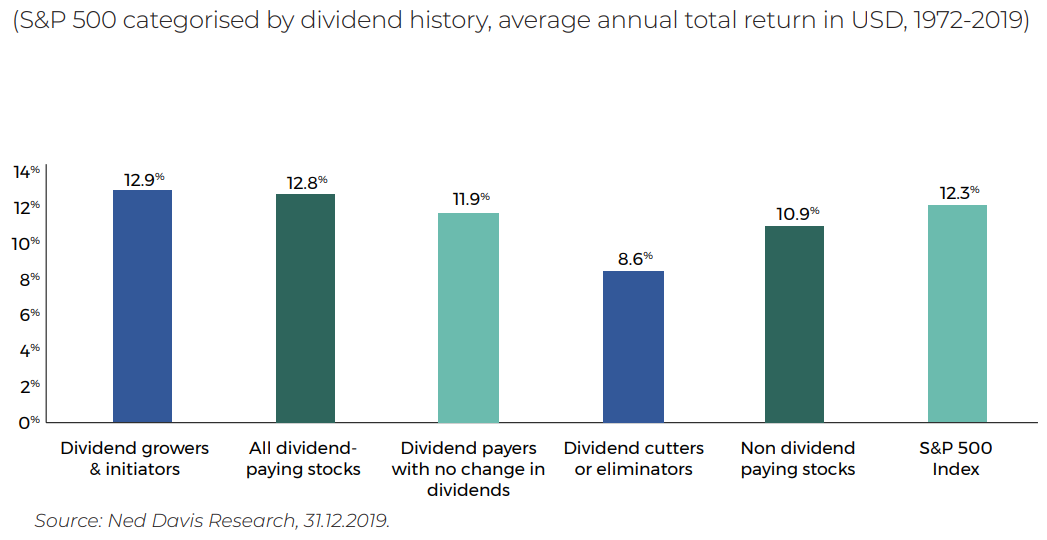
By adopting this framework, a plan sponsor no longer must worry where the liquidity is going to come from, especially for those plans that are in a negative cash flow situation. Also, removing dividend income from your equity managers has a long-term negative effect on the performance of your equity assets. Finally, during periods of market dislocation, a dedicated liquidity bucket will eliminate the need to transact in less than favorable markets further preserving assets.

We’re often asked what percentage of the plan’s assets should be dedicated to the liquidity bucket. As mentioned before, funded status plays an important role, but so does the sponsors ability to contribute, the current asset allocation, and the risk profile of the sponsor. We normally suggest converting the current core fixed income allocation, with all of the interest rate risk, to a cash flow matching (CFM) portfolio that will be used to fund liquidity as needed.

We’ll be producing a Problem – Solution blog on a variety of DB plan topics. Keep an eye out for the next one in the series. Also, if you have a problem, don’t hesitate to reach out to us. We might just have an answer. Don’t delay.

Bonds Are NOT Performance Instruments

By: Russ Kamp, CEO, Ryan ALM, Inc.

As we wrote a year ago this past April, it is time to Bag the Agg. For public pension plan sponsors and their advisors who are so focused on achieving the return on asset (ROA) assumption, any exposure to a core fixed income strategy benchmarked to the Aggregate index would have been a major drag on the performance since the decades long decline in rates stopped (2020) and rates began to rise aggressively in early 2022. The table below shows the total return of the Bloomberg Aggregate for several rolling periods with returns well below the ROA target return (roughly 7%).

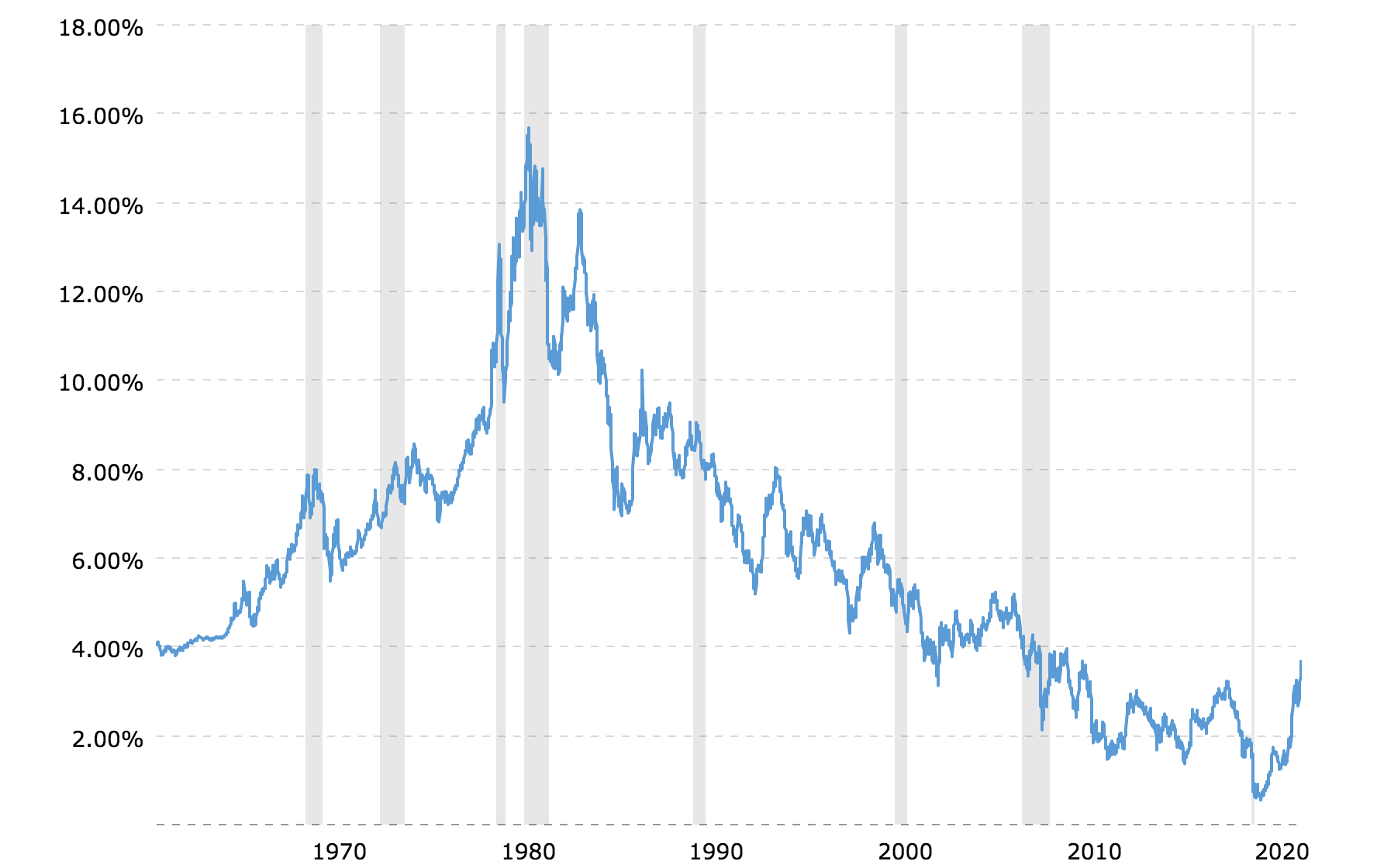
For core fixed income strategies, the YTW should be the expected return plus or minus the impact from changes in interest rates. Again, for nearly 4 decades beginning in 1981, U.S. interest rates declined providing a significant tailwind for both bonds and risk assets. What most folks might not know, from 1953 to 1981 U.S. interest rates rose. Could we be at the beginning of another secular trend of rising rates (see below)? If so, what does it mean for pension plans?

Rising rates may negatively impact the price of bonds, but importantly they reduce the present value (PV) of future benefit payments. They also provide pension funds and their advisors with the option to de-risk the plan through a cash flow matching (CFM) strategy as the absolute level of rates moves closer to the annual ROA. Active fixed income management is challenging. Who really knows where rates are going? But we know with certainty the cash flows that bonds produce (interest income and principal at maturity). Those bond cash flows can be used to match and fully fund liability cash flows (benefits and expenses). A decline in the value of a bond will be offset by the decline in the PV of the plan’s liabilities. So, a 5-year return of -0.3%, which looks horrible if bonds are viewed as performance instruments may match the growth rate of liabilities it is funding. Using bonds for their cash flows, brings certainty and liquidity to the portion of the plan that has been defeased.

Are you confident that your active fixed income will produce the YTW or better? Are you sure that U.S. interest rates are going to fall from these levels? Why bet on something that you can’t control? Convert your active core bond program into a CFM portfolio that will ensure that your plan’s liabilities and assets move in lockstep no matter which direction rates take. Moreover, CFM will provide all the liquidity needed to fund benefits and expenses thereby eliminating the need to do a cash sweep. Assume risk with your growth assets that will now have a longer investing horizon because you’ve just bought plenty of time for them to grow unencumbered.

Enhancing the Probability of Achieving the ROA

By: Russ Kamp, CEO, Ryan ALM, Inc.

We are often confronted by plan sponsors and their advisors with the objection of using cash flow matching (CFM) because the “expected return” is lower than the plan’s return on asset assumption (ROA). Given that objection, we often point out that each asset class has its own expected return. The ROA target is developed by weighting each asset class’s exposure by the forecasted return. In the case of the bond allocation, the YTW is used as the target return.

If the plan sponsor has an allocation to “core” fixed income, there is a fairly great probability that our CFM portfolio, which we call the Liability Beta Portfolio (LBP), will outyield the core fixed income allocation thus enhancing the probability of achieving the ROA. This is accomplished through our heavy concentration in A/BBB+ investment grade corporate bonds that will outyield comparable maturity Treasuries and Agencies, which are a big and growing percentage of the Aggregate Index. In most cases, the yield advantage will be 50-100 bps depending on the maturities.

Ron Ryan, Ryan ALM’s Chairman, has produced a very thoughtful research piece on this subject. He also discusses the negative impact on a plan’s ability to achieve the ROA through the practice of sweeping dividend income, interest income, and capital distributions from the plan’s investment programs. Those distributions are better used when reinvested in the investment strategies from which they were derived, as they get reinvested at higher expected growth rates. The CFM program should be the only source to fund net benefits and expenses, as there is no forced selling when benefits and expenses are due.

There is no viable excuse to not use CFM. The benefits from this strategy are plentiful, especially the securing of the promised benefits which is the primary objective for any pension plan. We encourage you to visit RyanALM.com to read the plentiful research on this subject and other aspects of cash flow matching.

Opportunity Cost Goes Both Ways

By: Russ Kamp, CEO, Ryan ALM, Inc.

I had an interesting conversation at the IFEBP Investment forum. It wasn’t the first time that this topic has been raised and I am willing to state that it won’t be the last. I was discussing the benefits of cash flow matching (CFM) with a trustee who raised concern about locking in the asset / liability match, suggesting that by defeasing a period longer than 3-5-years may lead to “regret” if there had been an opportunity to generate a greater return from those assets used to defease a portion of the liabilities.

Anytime an asset allocation decision is taken, there is always the possibility that some combination of asset classes and products would have produced a greater return in the short-term. However, opportunity cost can easily be opportunity lost. When one engages in a CFM strategy, one does so because they understand that the primary objective in managing a DB pension is to SECURE the promised benefits at a reasonable cost and with prudent risk. Managing a pension fund is not a return game despite the prevailing orthodoxy in our industry.

Why would one not want to secure a portion of the asset base providing the necessary liquidity to meet benefits and expenses? It is so comforting, or it should be, not to have to worry about raising liquidity in challenging markets. At the same time, the CFM strategy is buying time for the alpha (risk) assets to grow unencumbered. We normally suggest that a 10-year CFM be implemented, but that decision is predicated on a number of factors specific to that plan. We can, and have, engaged in assignments shorter than 10-years, and CFM provides the same benefits, even if the cost savings may be less than that provided by a longer assignment.

Furthermore, there is always the question of maintaining the maturity of the assignment (5-, 7-, 10- or more years) once the program is up and running. Plan sponsors must decide if the assignment should be allowed to run out after the initial allocation, be maintained at the same maturity, or extended given improved funding. If markets don’t behave there is no obligation to extend the program. If markets get crushed and the sponsor feels that liquidating the CFM portfolio assets could be used to buy “low” that is available given the liquidity profile of investment grade bonds. We don’t understand why one would want to do that since the matching of assets and liabilities creates certainty, which is missing in traditional pension management.

DB pension plans are critical to the long-term financial security of the participants. Securing the promised benefits reduces the possibility that adverse outcomes don’t result in the fund having to take dramatic action such as additional tiers or worse, the freezing of the plan. CFM stabilizes both the funded status for that portion of the fund and contributions. I would think that getting as much into CFM and reducing the uncertainty of managing the plan given our volatile markets should be an unquestionable goal.

WHY?

By: Russ Kamp, CEO, Ryan ALM, Inc.

Why do we have two different accounting standards in the U.S. for valuing pension liabilities?

Why does it make sense to value liabilities at a rate (ROA) that can’t be used to defease pension liabilities in this interest rate environment?

Why do we continue to create an asset allocation framework that only guarantees volatility and not success?

Why do we think that the pension objective is a return objective (ROA) when it is the liabilities that need to be funded and secured?

Why haven’t we realized that plowing tons of plan assets into an asset class/strategy will negatively impact future returns?

Why are we willing to pay ridiculous sums of money in asset management fees with no guaranteed outcome?

Why is liquidity to meet benefits an afterthought until it becomes a major issue?

Why does it make sense that two plans with wildly different funded ratios have the same ROA?

Why are plan sponsors willing to live with interest rate risk in the core bond allocations?

Why do we think that placing <5% in any asset class is going to make a difference on the long-term success of that plan?

Why do we think that moving small percentages of assets among a variety of strategies is meaningful?

Why do we think that having a funded ratio of 80% is a successful outcome?

Why are we incapable of rethinking the management of pensions with the goal to bring an element of certainty to the process, especially given how humans hate uncertainty?

WHY, WHY, WHY?

If you are as confused as I am with our current approach to DB pension management, try cash flow matching (CFM) a portion of your plan. With CFM you’ll get a product that SECURES the promised benefits at low cost and with prudent risk. You will have a carefully constructed liquidity bucket to meet benefits and expenses when needed – no forced selling in challenging market environments. Importantly, your investing horizon will be extended for the growth (alpha) assets that haven’t been used to defease liabilities. We know that by buying time one dramatically improves the probability of a successful outcome. Furthermore, your pension plan’s funded status will be stabilized for that portion of the assets that uses CFM. This is a dynamic asset allocation process that should respond to improvement in the plan’s funded status. Lastly, you will be happy to sit back and watch the mayhem in markets unfold knowing that you don’t have to do anything except sleep very well at night.

The Intrinsic Value of Bonds

Ronald J. Ryan, CFA, Chairman

The true value of bonds is the certainty of their cash flows (interest + principal payments). I don’t believe there is another asset class with such attributes. This is why bonds have traditionally been the asset choice for LDI strategies in general and, defeasement specifically. Given that the true objective of a pension is to secure benefits in a cost-efficient manner with prudent risk then cash flow matching with bonds is a best fit. In the 1970s and 1980s cash flow matching was called Dedication and was the main pension strategy at that time.

Today we live in a volatile and uncertain financial world. Volatility of a pension’s funded status is not a good thing and leads to volatility in contribution costs which are calculated annually based on the present value of assets versus the present value of liabilities. Since 2000 contribution costs have spiked and for many pension plans are 5 to 10x higher than 1999. One would think that a prudent plan sponsor would install a strategy to derisk their pension and reduce or even eliminate this volatility. Cash flow matching (CFM) is the answer. CFM fully funds and matches the monthly liability cash flows (future values) thereby eliminating the present value volatility that plaques most pensions.

As our name implies, Ryan ALM is an Asset Liability Manager specializing in CFM. As the founder of Ryan ALM, my experience with CFM goes back to the 1970s when I was the Director of Fixed Income research at Lehman Bros. Our current CFM model (Liability Beta Portfolio™ or LBP) is a cost optimization model that will fully fund monthly liability cash flows at the lowest cost to the plan sponsor. Our model will reduce funding costs by about 2% per year (1-10 years of liability cash flows = 20% cost reduction). Moreover, there are several other significant benefits to our LBP:

  • LBP de-risks the plan by cash flow matching benefit payments with certainty
  • LBP provides liquidity to fully fund liabilities so no need for a cash sweep
  • Mitigates interest rate risk since it is funding benefits (future values)
  • LBP reduces asset management costs (Ryan ALM fee = 15 bps)
  • Enhances ROA by out-yielding active bond management 
  • Reduces volatility of the funded ratio + contributions
  • Buys time for Alpha assets to grow unencumbered

  “Where is the knowledge we have lost in information” T.S. Eliot

What Was The Purpose?

By: Russ Kamp, CEO, Ryan ALM, Inc.

I was introduced to the brilliance of Warren Mosler through my friend and former colleague, Chuck DuBois. It was Chuck who encouraged me to read Mosler’s book, “The 7 Deadly Innocent Frauds of Economic Policy”. I would highly recommend that you take a few hours to dive into what Mosler presents. As I mentioned, I think that his insights are brilliant.

The 7 frauds, innocent or not, cover a variety of subjects including trade, the federal deficit, Social Security, government spending, taxes, etc. Regarding trade and specifically the “deficit”, Mosler would tell you that a trade deficit inures to the benefit of the United States. The general perception is that a trade deficit takes away jobs and reduces output, but Mosler will tell you that imports are “real benefits and exports are real costs”.

Unlike what I was taught as a young Catholic that it is better to give than to receive, Mosler would tell you that in Economics, it is much better to receive than to give. According to Mosler, the “real wealth of a nation is all it produces and keeps for itself, plus all it imports, minus what it exports”. So, with that logic, running a trade deficit enhances the real wealth of the U.S.

Earlier this year, the Atlanta Fed was forecasting GDP annual growth in Q1’25 of 3.9%, today that forecast has plummeted to -2.4%. We had been enjoying near full employment, moderating yields, and inflation. So, what was the purpose of starting a trade war other than the fact that one of Mosler’s innocent frauds was fully embraced by this administration that clearly did not understand the potential ramifications. They should have understood that a tariff is a tax that would add cost to every item imported. Did they not understand that inflation would take a hit? In fact, a recent survey has consumers expecting a 6.7% price jump in goods and services during the next 12-months. This represents the highest level since 1981. Furthermore, Treasury yields, after initially falling in response to a flight to safety, have marched significantly higher.

Again, I ask, what was the purpose? Did they think that jobs would flow back to the U.S.? Sorry, but the folks who suffered job losses as a result of a shift in manufacturing aren’t getting those jobs back. Given the current employment picture, many have been employed in other industries. So, given our full-employment, where would we even get the workers to fill those jobs? Again, we continue to benefit from the trade “imbalance”, as we shipped inflation overseas for decades. Do we now want to import inflation?

It is through fiscal policy (tax cuts and government spending) that we can always sustain our workforce and domestic output. Our spending is not constrained by other countries sending us their goods. In fact, our quality of life is enhanced through this activity.

It is truly unfortunate that the tremendous uncertainty surrounding tariff policy is still impacting markets today. Trillions of $s in wealth have been eroded and long-standing trading alliances broken or severely damaged. All because an “innocent” fraud was allowed to drive a reckless policy initiative. I implore you to stay away from Social Security and Medicare, whose costs can always be met since U.S. federal spending is not constrained by taxes and borrowing. How would you tell the tens of millions of Americans that rely on them to survive that another innocent fraud was allowed to drive economic policy?

Milliman – Corporate Pension Funding Falls in March

By: Russ Kamp, CEO, Ryan ALM, Inc.

Milliman has just released its monthly Milliman 100 Pension Funding Index (PFI), which analyzes the 100 largest U.S. corporate pension plans. Weak investment returns, estimated at -1.4%, drove the PFI asset level down by $25 billion during March. Current assets for the top 100 plans are now $1.3 trillion. The fall in assets was only partially offset by the rise in the discount rate (13 bps) during the month. As a result, the surplus fell by $7 billion to $51 billion as of March 31, 2025.

The discount rate ended the month at 5.49%, which reduced plan liabilities by $18 billion, to $1.25 trillion by the end of March. As a result of assets falling by more than liabilities, the PFI funded ratio dropped from 104.6% at the end of February to 104.1% at the end of March. For the quarter, discount rates fell 10 basis points and the Milliman 100 plans lost $8 billion in funded status.   

“While the slight rise in discount rates in March led to a monthly decline in plan liabilities, plan assets fell even further due to poor market performance, which caused the funded status to fall below the 104.8% level seen at the beginning of 2025,” said Zorast Wadia, author of the PFI. Given market action during the first 10 days of April, it will be interesting to see if the impact from rising rates can offset the dramatic fall in asset values. Inflation fears fueled by tariffs could lead to rising bond yields, which will help mitigate some of the risk to equities given the possibility of declining earnings. As Zorast mentioned in the Milliman release, “plan sponsors will want to consider asset-liability matching strategies to preserve their balance sheet gains from last year”, especially given that 30-year corporates are once again yielding close to 6%.

Pension Asset Allocation

By: Russ Kamp, CEO, Ryan ALM, Inc.

David Gates, of Bread fame, penned “If” in 1971. One of the more famous lyrics in the song is “if a picture paints a thousand words”. If the average picture paints 1,000 words, the image below paints about 1 million. I believe that the image of a rollercoaster is the perfect metaphor for traditional asset allocation strategies that have pension funds riding markets up and down and up and down until the plan fails. Failure in my opinion is measured by rising contribution expenses, the adoption of multiple tiers requiring employees to contribute more, work longer, and get less, and worse, the migration of new workers to defined contribution offerings, which are an unmitigated disaster for the average American worker.

As you know, Pension America rode markets up in the ’80s (following a very challenging ’70s) and ’90s, only to have the ’00s drive funded ratios into the ground. The ’10s were very good following the Great Financial Crisis. The ’20s have been a mix of both good (’23 and ’24) and bad markets (’20 and ’22). Who knows where the next 5-years will take us. What I do know is that continuing to ride markets up and down is not working for the average public pension plan. The YTD performance for US equities (S&P 500 -13.2% as of 2:30 pm) coupled with a collapse in the Treasury yield curve is damaging pension funded ratios which had shown nice improvement.

Riding these markets up and down without trying to install a strategy to mitigate that undesirable path is imprudent. Subjecting the assets to the whims of the market in pursuit of some return target is silly. By installing a discipline (CFM) that secures the promised benefits, supplies the necessary liquidity, buys time for the growth assets, while stabilizing the funded status and contribution expenses seems to be a no-brainer. Yet, plan sponsors have been reluctant to change. Why?

What is the basis for the reluctance to adopt a modified asset allocation framework that has assets divided into two buckets – liquidity and growth? Do you enjoy the uncertainty of what markets will provide in terms of return? Do you believe that using CFM for a portion of the asset base reduces one’s responsibility? Do you not believe that the primary objective in managing a pension is to secure the promised benefits at a reasonable cost and with prudent risk? The only reason that the DB plan exists is to meet an obligation that has been promised to the plan participant. Like an insurance company or lottery system, why wouldn’t you want to create an investment program that has very little uncertainty?

An Ugly Day For Pension America

By: Russ Kamp, CEO, Ryan ALM, Inc.

Yes, today’s ugliness in the markets is only one day and how many times have we heard or read that you can’t market time or if you miss just the best performing 25-, 50-, or 100-days in the stock market, your return will resemble that of cash or bonds? Those facts are mostly correct. We may not be able to market time, but we can certainly put in place an asset allocation framework that gets DB pension plans off the rollercoaster of performance. We can construct an asset allocation that provides the necessary liquidity when markets may not be able to naturally. An asset allocation that buys time for the growth asset to wade through troubled markets. A framework that secures the promised benefits and stabilizes both funded ratios and contribution expenses for that portion of the fund that has adopted a new strategy.

Yes, today is only one day, but the impact can be significantly negative. See, it isn’t just the loss that has to be made up, as pension plans are counting on a roughly 7% return (ROA) for the year. Every negative event pushes that target further away. Equity values are getting whacked and today’s market activity is just exacerbating the already weak start to the year. While equity markets are falling, U.S. interest rates are down precipitously. The U.S. 10-year Treasury note’s yield is down just about 0.8% since early in January. As a reminder, the average duration of a DB pension is about 12 years or twice the duration of the Bloomberg Barclays Aggregate Index, which is the benchmark for most core fixed income mandates. So, your bond portfolios may be seeing some appreciation today and since the start of 2025, but those portfolios are not growing nearly as fast as your plan’s liabilities, which have grown by about 10.6% (12 year duration x 0.8% + income of 1.0% = 10.6%). As a result, funded ratios are taking a hit.

I wrote this piece back on March 4th reminding everyone that the uncertainty around tariffs and other factors should inspire a course change, an asset allocation rethink. I suspect that it didn’t. So, one can just assume that markets will come back and the underperformance will not have impacted the pension plan, but that just isn’t true. In many cases, equity market corrections take years to recover from and in the process contribution expenses rise, and in some cases dramatically so.

Adopting a new asset allocation framework doesn’t mean changing the entire portfolio. A restructuring can be as simple as converting your highly interest rate sensitive core bond portfolio into a cash flow matching (CFM) portfolio that secures the promised benefits from next month out as far as the allocation can go. In the process you will have improved the plan’s liquidity, extended the investing horizon for the alpha assets, stabilized the funded status for that segment of your plan, and mitigated interest rate risk, as those benefit payments are future values which aren’t interest rate sensitive. You’ll sleep very well once adopted.