ARPA Update as of August 1, 2025

By: Russ Kamp, CEO, Ryan ALM, Inc.

Talk about jumping out of the frying pan into the fire! I left New Jersey’s wonderful heat and humidity only to find myself in El Paso, TX, where the high temperature is testing the limits of a normal thermometer. Happy to be speaking at the TexPERS conference this week, but perhaps they can do an offsite in Bermuda the next time.

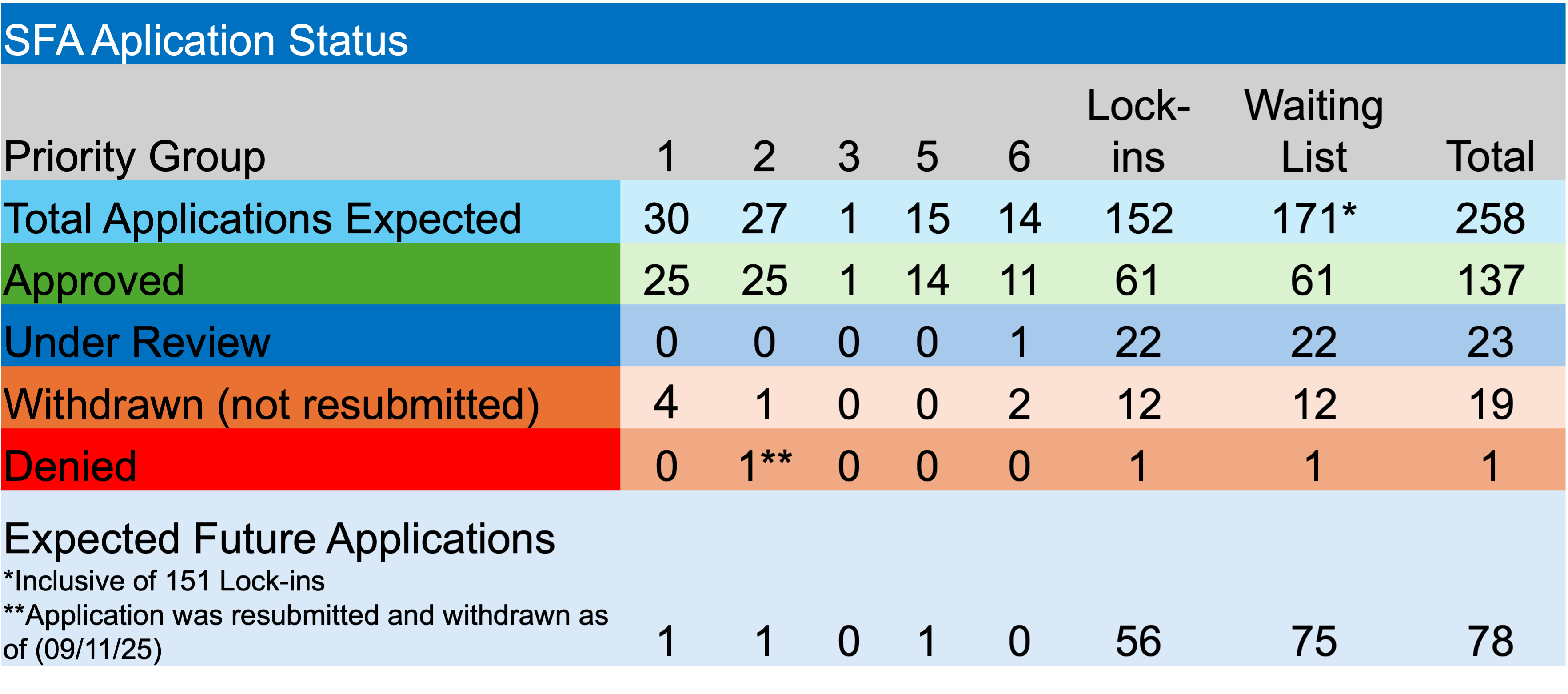
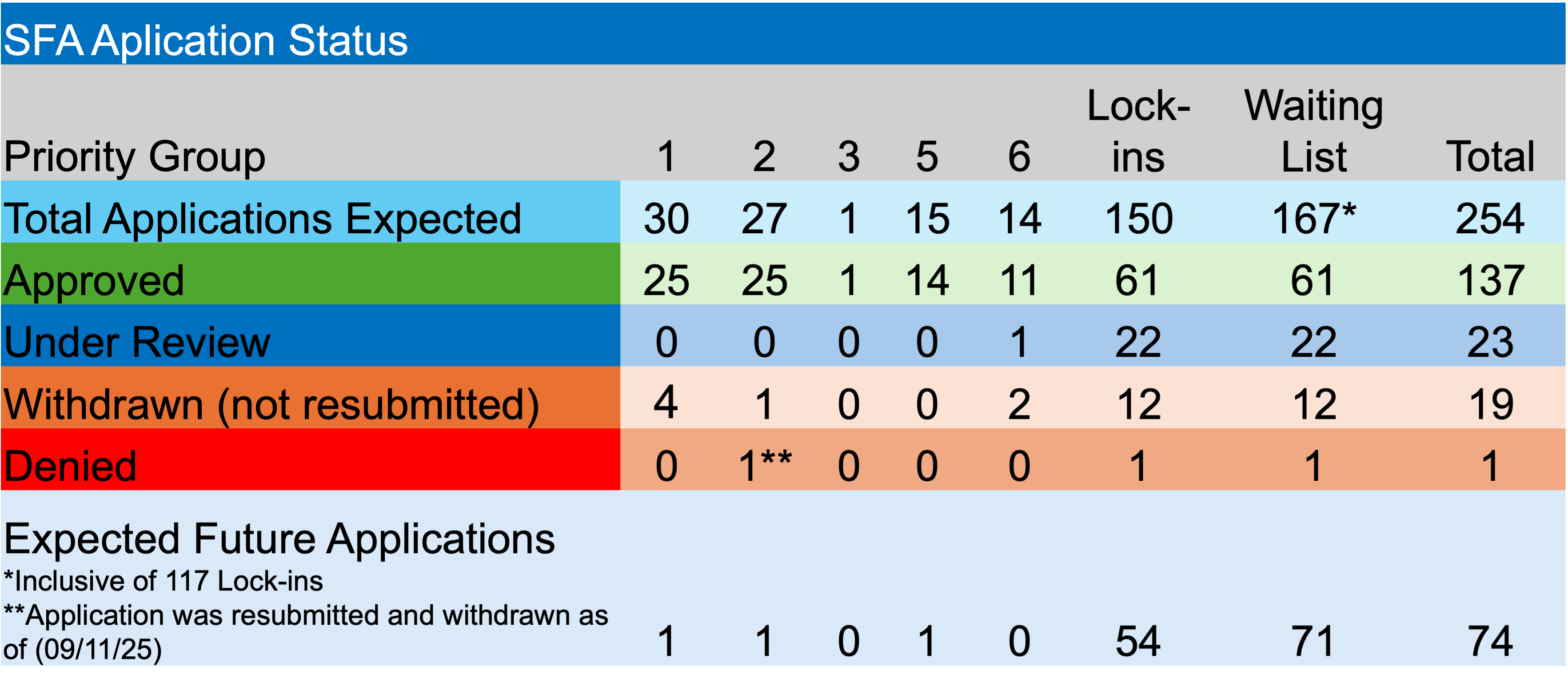
Regarding the ARPA legislation and the PBGC’s implementation of this critical pension program, we continue to see the PBGC ramp up its activity level. This past week witnessed five multiemployer plans submitting applications of which four were initial filings and the fifth was a revised offering. Another plan received approval, while one fund added its name to the waitlist. Finally, two funds have locked-in the measurement dates (valuation purposes).

Now the specifics: The four funds submitting initial applications were Colorado Cement Masons Pension Trust Fund, Iron Workers-Laborers Pension Plan of Cumberland, Maryland, Cumberland, Maryland Teamsters Construction and Miscellaneous Pension Plan, and Exhibition Employees Local 829 Pension Fund that collectively seek $50.8 million in SFA for their 1,260 plan participants. This week’s big fish, UFCW – Northern California Employers Joint Pension Plan, a Priority Group 6 member, is seeking $2.3 billion for its 138.5k members.

The plan receiving approval of its application for SFA is Laborers’ Local No. 130 Pension Fund, which will receive $33.3 million in SFA and interest for its 641 participants. In an interesting twist, Laborers’ Local No. 130 Pension Fund, has added the fund to a growing list of waitlist candidates. If the Laborers name seems to resemble the name of the recipient of the latest SFA grant you wouldn’t be wrong. I was as confused as you are/were until I realized that these entities have different that there are two different EIN #s.

Happy to report that there were no applications withdrawn, none denied, and no SFA recipients were asked to return a portion of the proceeds due to incorrect census information. However, there are still 119 funds going through the process. There is a tremendous amount of work left to be done at this time. This comes on the heels of 131 funds being approved for a total of $73.4 billion in SFA and interest supporting the retirements for 1.77 million American workers/retirees. What an incredible accomplishment!

When Should I Use CFM?

By: Russ Kamp, CEO, Ryan ALM, Inc.

Good morning. I’m currently in Chicago in the midst of several meetings. Yesterday’s meetings were outstanding. As you’d expect, the conversations were centered on DB pension plans and the opportunity to de-risk through a Cash Flow Matching strategy (CFM) in today’s economic environment. The line of questioning that I received from each of my meeting hosts was great. However, there does seem to be a misconception on when and how to use CFM as a de-risking tool. Most believe that you engage CFM for only the front-end of the yield curve, while others think that CFM is only useful when a plan is at or near full funding. Yes, both of those implementations are useful, but that represents a small sampling of when and how to implement CFM. For instance:

As a plan sponsor you need to make sure that you have the liquidity necessary to meet you monthly benefits (and expenses). Do you have a liquidity policy established that clearly defines the source(s) of liquidity or are you scurrying around each month sweeping dividends, interest, and if lucky, capital distributions from your alternative portfolio? Unfortunately, most plan sponsors do not have a formal liquidity policy as part of their Investment Policy Statement (IPS). CFM ensures that the necessary liquidity is available every month of the assignment. There is not forced selling!

Do you currently have a core fixed income allocation? According to a P&I asset allocation survey, public pension plans have an average 18.9% in public fixed income. How are you managing that interest rate risk, which remains the greatest risk for an actively managed fixed income portfolio? As an industry, we enjoyed the benefits of a nearly four decades decline in U.S. interest rates beginning in 1982. However, the prior 28-years witnessed rising rates. Who knows if the current rise in rates is a blip or the start of another extended upward trend? CFM defeases future benefit payments which are not interest rate sensitive. A $2,000 payment next month or 10-years from now is $2,000 whether rates rise or fall. As a result, CFM mitigates interest rate risk.

As you have sought potentially greater returns from a move into alternatives and private investments, not only has the available liquidity dried up, but you need a longer time horizon for those investments to mature and produce the expected outcome. Have you created a bridge within your plan’s asset allocation that will mitigate normal market gyrations? A 10-year CFM allocation will not only provide your plan with the necessary monthly liquidity, but it is essentially a bridge over volatile periods as it is the sole source of liquidity allowing the “alpha” assets to just grow and grow. That 10-year program coincides nicely with many of the lock-ins for alternative strategies.

There has been improvement in the funded status of public pension plans. According to Milliman, as of June 30, 2025, the average funded ratio for the constituents in their top 100 public pension index is now 82.9%, which is the highest level since December 2021. That’s terrific to see. Don’t you want to preserve that level of funding and the contribution expenses that coincide with that level? Riding the rollercoaster of performance can’t be comforting. Given what appears to be excessive valuations within equity markets and great uncertainty as it relates to the economic environment, are you willing to let your current exposures just ride? By allocating to a CFM program, you stabilize a portion of your plan’s funded status and the contributions associated with those Retired Lives Liability. Bringing a level of certainty to a very uncertain process should be a desirable goal for all plan sponsors and their advisors.

If I engage a CFM mandate, don’t I negatively impact my plan’s ability to meet the return objective (ROA) that we have established? NO! The Ryan ALM CFM portfolio will be heavily skewed to investment-grade corporate bonds (most portfolios are 100% corporates) that enjoy a significant premium yield relative to Treasuries and agencies. As mentioned previously, public pension plans already have an exposure to fixed income. That exposure is already included in the ROA calculation. By substituting a higher yielding CFM portfolio for a lower yielding core fixed income program benchmarked to the Aggregate index, you are enhancing the plan’s ability to achieve the ROA while also eliminating interest rate risk. A win-win in my book!

So, given these facts, how much should I allocate to a CFM mandate? The answer is predicated on many factors, including the plan’s current funded status, the ability to contribute, whether or not the plan is in a negative cash flow situation, the Board’s risk appetite, the current ROA, and others. Given that all pension systems’ liabilities are unique, there is no one correct answer. At Ryan ALM, we are happy to provide a detailed analysis on what could be done and at what cost to the plan. We do this analysis for free. When can we do yours?

ARPA Update as of July 25, 2025

By: Russ Kamp, CEO, Ryan ALM, Inc.

Welcome to the last update for July. I don’t know how you feel, but it certainly seems as if Summer 2025 has been a blur. Based on last week’s activity, it doesn’t appear that the excessive heat and humidity has negatively impacted the PBGC’s activity. Good for them.

With regard to the ARPA legislation, the week ending July 25th saw one new application filed, another three approved (yes!), one more repayment of excess SFA funds, and another two multiemployer plans added to the waitlist, which continues to grow despite a deadline for action on the applications that is drawing near.

Distributors Association Warehousemen’s Pension Trust, a non-priority group member, has filed a revised application seeking nearly $30 million in SFA for their 3,358 plan participants. The PBGC has until November 21, 2025, to act on the application.

Pleased to announce that the PBGC has approved the SFA applications for United Food and Commercial Workers Unions and Participating Employers Pension Plan, the Chicago Truck Drivers, Helpers and Warehouse Workers Union (Independent) Pension Fund, and the Bricklayers Pension Fund of Western Pennsylvania. Each of the applications were the initial filings. In total, these funds will receive $303 million in SFA plus interest for the 15.3k participants.

As previously mentioned, Pension Plan of the Printers League – Graphic Communications International Union Local 119B, New York Pension Fund has agreed to return $1.4 million in SFA or 1.34% of the $106.7 million in SFA and interest received.

Finally, Teamsters Local 264 Van Drivers Pension Fund and UFCW Local 2013 Pension Fund have been added to the waitlist, which has ballooned to 160 members of which 76 are still waiting to file an SFA application with the PBGC.

Milliman: Public Pension Funding Rises

By: Russ Kamp, CEO, Ryan ALM, Inc.

Milliman released the latest results of its Public Pension Funding Index (PPFI), which analyzes data from the nation’s 100 largest public defined benefit plans. 

Milliman is reporting that for a second consecutive month above average returns powered asset growth of $115 billion for the constituents of the PPFI for June. The strong asset growth equated to a roughly 2.3% gain during the month, with results for members of the index ranging from 1.5% to 3.6%. As a result, plan assets for the index rose from $5.327 trillion as of May 31 to $5.457 trillion as of June 30.

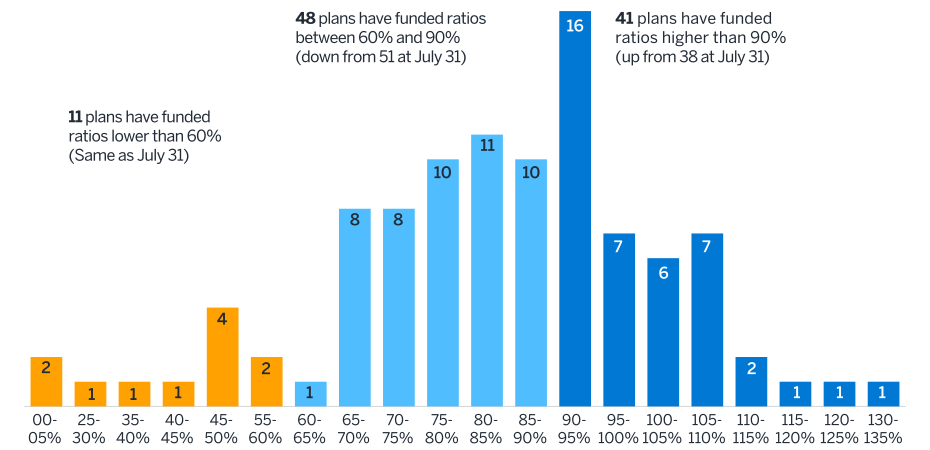
With the substantial growth in assets, the estimated deficit between plan assets and liabilities declined from $1.242 trillion at the end of May to $1.127 trillion at the end of June, resulting in an improved funded ratio for the index of 82.9% as of June 30, from 81.1% as of May 31. This marks the highest level for the aggregate funded ratio since December 31, 2021. Importantly, 37 of the plans are more than 90% funded, which is an improvement of seven funds since the end of May, while 11 plans remain less than 60% funded.

To view the report, click on this link: View the Milliman 100 Public Pension Funding Index.

A few Observations from Newport

By: Russ Kamp, CEO, Ryan ALM, Inc.

As I mentioned in my ARPA update on Monday, I had the pleasure of attending the Opal Public Fund Forum East in beautiful Newport, RI, and neither the conference nor Newport disappointed. I don’t attend every session during the conference, but I do try to attend most. In all honesty, I can’t listen to another private equity discussion.

As always, there were terrific insights shared by the speakers/moderators, but there were also some points being made that are just wrong. With this being my first day back in the office this week, I don’t have the time to get into great detail regarding some of my concerns about what was shared, but I’ll give you the headline and perhaps link a previous blog post that addressed the issue.

First, DB pension plans are not Ponzi Schemes that need more new participants than retirees to keep those systems well-funded and functioning. Actuaries determine benefits and contributions based on each individual’s unique characteristics. If managed appropriately, systems with fewer new members can function just fine. Yes, plans that find themselves in a negative cash flow situation need to rethink the plan’s asset allocation, but they can continue to serve their participants just fine. Remember: a DB pension plan’s goal is to pay the last benefit payment with the last $. It is not designed to provide an inheritance.

Another topic that was mentioned several times was the U.S. deficit and the impending economic doom as a result. The impact of the U.S. deficit is widely misunderstood. I was fortunate to work with a brilliant individual at Invesco – Charles DuBois – who took the time to educate me on the subject. As a result of his teaching, I now understand that the U.S. has a potential demand problem. Not a debt issue. I wrote a blog post on this subject back in 2017. Please take the time to read anything from Bill Mitchell, Warren Mosler, Stephanie Kelton, and other disciples of MMT.

Lastly, the issue of flows into strategies/asset classes seems not to be understood. The only reason we have cycles in our markets is through the movement of assets into and out of various products/strategies. Too much money chasing too few good ideas creates an environment in which those flows can overwhelm future returns. It is the same for individual asset management firms. Many of the larger asset management firms have become sales organizations in lieu of investment management organizations as they long ago eclipsed the natural capacity of their strategies. In the process, they have arbitraged away their insights which may have provided the basis for some value-added in the past. I believe that too much money is chasing many of the alternative/private strategies. In the process, future returns and liquidity will be negatively impacted. We’ve already seen that within private equity. Is private debt next?

Again, always enjoy seeing friends and industry colleagues at this conference. I continue to learn from so many of the presenters even after 44-years in the industry. However, not everything that you hear will be correct. It is up to you to challenge a lot of the “common wisdom” being shared.

ARPA Update as of July 18, 2025

By: Russ Kamp, CEO, Ryan ALM, Inc.

I have the pleasure of drafting this post from beautiful Newport, RI, where I’m attending and speaking at the Opal Public Fund Forum East. The West forum’s location wasn’t too shabby either as it took place in Scottsdale last January! Business travel isn’t as glamorous as those who don’t travel think, but there are some nice perks, too. As they say in real estate: location, location, location!

With regard to ARPA, since you likely didn’t decide to open post this to find Waldo or Russ, the PBGC was fairly busy during the previous week, as there was one new application, one approved application, two new additions to the waitlist and two funds that locked-in their measurement date. Now the details.

I’m pleased to report that the Roofers Local 88 Pension Plan, a Canton OH-based fund, has filed a revised application seeking $9 million for their 484 participants. As usual, the PBGC has 120-days to act on the application or it is automatically approved. In addition, Union de Tronquistas de Puerto Rico Local 901 Pension Plan, a San Juan, PR-based fund, a Priority Group One member will receive $49 million in SFA and interest for the 3,397 members.

In other news, Local 400 Food Terminal Employees Pension Trust Fund and the Textile Processors Service Trades Health Care Professional and Technical Employees International Union Local No. 1 Pension Fund (that name is a mouth full) have both added their funds to the PBGC’s waitlist for the submission of an SFA application. Good luck. There were also two funds from the waitlist, Iron Workers Local 473 Pension Plan and Greenville Plumbers and Pipefitters Pension Fund have locked in their measurement date and both chose April 30, 2025.

Lastly, there were no applications denied or withdrawn, and none of the previous SFA recipients were asked to rebate a portion of their proceeds due to census errors. As reported previously, the PBGC has their work cut out for them, as all of the outstanding applications need to be filed by year-end.

More on Why Bonds Are Not Performance Drivers

By: Russ Kamp, CEO, Ryan ALM, Inc.

As you’ve heard us say and write many times, U.S. investment-grade bonds are not performance drivers. Bond should be used for their cash flows, as they are the only asset class with a known terminal value and contractual interest payments. Those attributes should be used to SECURE the promised benefits (and expenses) each month chronologically, as far into the future as an allocation to cash flow matching can go.

In case you missed some of the previous posts that highlighted our concerns about bonds as a return generator, here are three posts among many:

Then there is today’s comment from a Glen Eagle Trading email:

The 2020s are experiencing the worst real (inflation-adjusted) returns for U.S. government bonds across all maturities on record, with 5-year, 10-year, and 20-year treasuries showing real returns of -3.5%, -5.1%, and -8.3% respectively. OUCH!

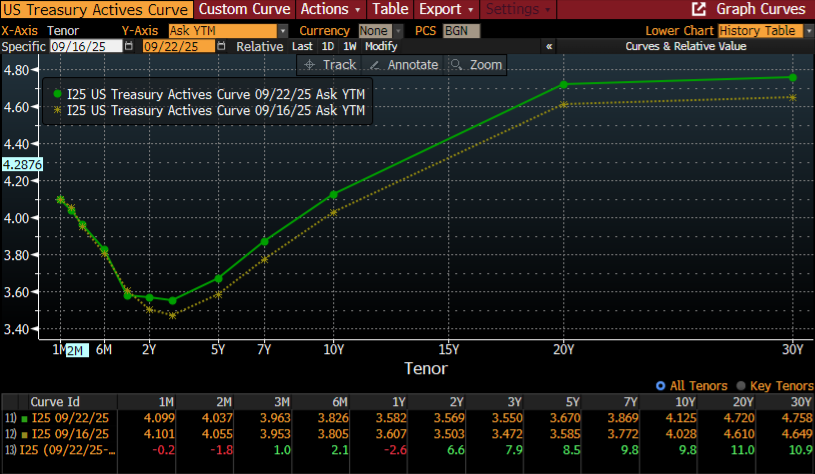
Those types of returns were not seen during the nearly four decades decline in U.S. interest rates, but the rising rate environment that we are currently experiencing is certainly playing havoc with total returns for bonds. As we’ve mentioned in the post titled, “Really Only One Significant Influence”, interest rate regimes tend to be long secular trends. Will that pattern persist? Your guess is as good as mine. Given the uncertainty, please use the higher yields present today to secure your promised benefits and bring an element of certainty to the management of your fund.

AI Needs An Education Regarding ALM/CFM!

By: Russ Kamp, CEO, Ryan ALM, Inc.

I asked an AI tool that I use the following: Asset/Liability Management (ALM) is an effective tool for pensions. What strategies are currently being deployed?

As usual, the response was nearly instantaneous, but was it correct? Here is what I got:

Overview

“Asset/liability management (ALM) remains central to pension fund sustainability, aiming to balance expected pension liabilities with optimal asset growth. In 2025, pension funds deploy a range of strategies to ensure their ability to meet long-term obligations while managing risk efficiently.” No argument there. However, here is a list of the strategies. This is where I have an issue.

Key ALM Strategies Currently in Use

1. Liability-Driven Investing (LDI)

  • Matching Asset Duration to Liabilities: Many corporate pension plans invest in high-quality bonds with durations closely matching those of plan liabilities to mitigate interest rate risk. This ensures that both assets and liabilities react similarly to interest rate changes, stabilizing the funded status from year to year.
  • Glidepath Strategies: Plans gradually shift the asset mix towards more fixed-income securities as funded status improves or as the plan matures, further reducing risk and aligning assets with near-term liabilities.

2. Dynamic Asset Allocation

  • Strategic Shifts in Asset Mix: Pension funds adjust allocations based on changing liabilities, market conditions, and funding status. For instance, U.S. public pension plans have recently shifted asset allocations to maintain return expectations and recover from volatility.
  • Scenario-Based Modeling: Funds use forward-looking models to stress-test outcomes under varying economic scenarios, reviewing assumptions about returns, inflation, and participant demographics.

3. Risk Transfer Solutions

  • Pension Risk Transfer (PRT): Many sponsors employ annuity purchases and lump-sum windows to reduce long-term liability, transferring obligations to insurers. In 2024, settlement payouts (such as annuity buyouts) remained a significant tool for risk management among major pension plans.

4. Liability Modeling Innovations

  • Member-Level Simulation: Advanced models project individual participant cash flows, account for currency exposure, and enable granular liability projections. Such approaches allow more precise matching of assets to future obligations, improving ALM decision-making.
  • Regular Reviews and Assumption Updates: ALM programs, such as those at CalPERS, involve systematic reviews of demographic and financial assumptions (e.g., life expectancy, inflation), with revisions made every four years to incorporate emerging trends.

5. Use of Custom Benchmarks

  • Liability-Mimicking Portfolios: Funds create tailored portfolios (“benchmark” portfolios) that track the liability profile as closely as possible, often blending nominal bonds, inflation-linked bonds, and equities according to the plan’s specifics (such as maturity and inflation sensitivity).

That’s it? Where is Cash Flow Matching (CFM)? In each of these scenarios, liquidity needed to fund benefits and expenses is missing. Duration strategies minimize interest rate risk, but don’t produce timely liquidity to fully fund B+E. Furthermore, duration strategies that use an “average” duration or a few key rates don’t duration match as well as CFM that duration matches EVERY month of the assignment.

In the second set of products – dynamic asset allocation – what is being secured? Forecasts related to future economic scenarios come with a lot of volatility. If anyone had a crystal ball to accomplish this objective with precision, they’d be minting $ billions!

A PRT or risk transfer solution is fine if you don’t want to sustain the plan for future workers, but it can be very expensive to implement depending on the insurance premium, current market conditions (interest rates), and the plan’s funded status

In the liability modeling category, I guess the first example might be a tip of the hat to cash flow matching, but there is no description of how one actually matches assets to those “granular” liability projections. As for part two, updating projections every four years seems like a LONG TIME. In a Ryan ALM CFM portfolio, we use a dynamic process that reconfigures the portfolio every time the actuary updates their liability projections, which are usually annually.

Lastly, the use of Custom benchmarks as described once again uses instruments that have significant volatility associated with them, especially the reference to equities. What is the price of Amazon going to be in 10-years? Given the fact that no one knows, how do you secure cash flow needs? You can’t! Moreover, inflation-linked bonds are not appropriate since the actuary includes an inflation assumption in their projections which is usually different than the CPI.  

Cash Flow Matching is the only ALM strategy that absolutely SECURES the promised benefits and expenses chronologically from the first month as far out as the allocation will go. It accomplishes this objective through maturing principal and interest income. No forced selling to meet those promises. Furthermore, CFM buys time for the residual assets to grow unencumbered. This is particularly important at this time given the plethora of assets that have been migrated to alternative and definitely less liquid instruments.

As mentioned earlier, CFM is a dynamic process that adapts to changes in the pension plan’s funded status. As the Funded ratio improves, allocate more assets from the growth bucket to the CFM portfolio. In the process, the funded status becomes less volatility and contribution expenses are more manageable.

I’m not sure why CFM isn’t the #1 strategy highlighted by this AI tool given its long and successful history in SECURING the benefits and expenses (B&E). Once known as dedication, CFM is the ONLY strategy that truly matches and fully funds asset cash flows (bonds) with liability cash flows (B&E). Again, it is the ONLY strategy that provides the necessary liquidity without having to sell assets to meet ongoing obligations. It doesn’t use instruments that are highly volatile to accomplish the objective. Given that investment-grade defaults are an extremely rare occurrence (2/1,000 bonds), CFM is the closest thing to a sure bet that you can find in our industry with proven performance since the 1970s.

So, if you are using an AI tool to provide you with some perspective on ALM strategies, know that CFM may not be highlighted, but it is by far the most important risk reducing tool in your ALM toolbox.

Really Only One Significant Influence

By: Russ Kamp, CEO, Ryan ALM, Inc.

Managing fixed income (bonds) can be challenging as there are a plethora of risks that must be evaluated including, but not limited to, credit, liquidity, maturity/duration, yield, prepayment and reinvestment risk, etc. within the investment-grade universe. But the greatest risk – uncertainty – remains interest rate risk. Who really knows the future direction of rates? As the graph below highlights, U.S. interest rates have moved in long-term secular trends with numerous reversals along the way. Does that mean that we are headed for a protracted period of rising rates similar to what was witnessed from 1953 to 1981 or is this a head fake along the path to historically low rates?

When rates are falling, it is very good for bonds as they not only capture the coupon, but they get some capital appreciation, too. However, when rates rise, it is a very different game. Yes, rising interest rates are very good for pension funds from a liability perspective, as the present value (PV) of those future benefit payments (I.e. liabilities) is reduced, but the asset side may be hurt and not only for bonds but other asset classes as well.

No alternative text description for this image

This is the primary reason why bonds should be used for their cash flows of interest and principal and not as a performance generator. The cash flows should be used to meet monthly benefits and expenses chronologically through a cash flow matching strategy (CFM). Unfortunately, Bonds are frequently used for performance and perhaps diversification benefits while compared to a generic index, such as the BB Aggregate index, which doesn’t reflect the unique characteristics of the pension plan’s liabilities.

U.S. interest rates are presently elevated but aren’t high by historic standards. However, the current level of rates does provide the plan sponsor with a wonderful opportunity to take risk from their traditional asset allocation by defeasing a portion of the plan’s liabilities from next month out as far as the allocation will cover. While the bond portfolio is funding monthly obligations, the remaining assets can just grow unencumbered.

Given the uncertainty regarding the current inflationary environment, betting that U.S. rates will fall making a potential “investment” in bonds more lucrative is nothing short of a crapshoot. Investing in a CFM strategy helps to mitigate interest rate risk as future values are not interest rate sensitive.

ARPA Update as of July 11, 2025

By: Russ Kamp, CEO, Ryan ALM, Inc.

Welcome to the All-Star break for Major League baseball. I hope that your team has had a good first half. I think that the PBGC has had a terrific “first half”, approving the SFA applications for 20 multiemployer plans that will help secure the promised benefits for >326k American workers. Excellent!

Regarding last week’s activity, Alaska Teamster – Employer Pension Plan, submitted a revised application with an expedited review designation. This non-Priority Group member is seeking $154.1 million for the 8,838 participants, after having twice withdrawn previous applications in late 2024 and March of 2025.

In other ARPA news, there were no applications approved or denied last week nor were there any pension plans asked to repay a portion of the SFA previously received. There were two plans, Roofers Local 88 Pension Plan (initial application) and Alaska Teamster – Employer Pension Plan (revised) that withdrew applications. In total, these entities are seeking $168.3 million in SFA for their 9,322 members.

Following significant activity by plans seeking to be added to the waitlist of non-Priority Group funds, there was only one plan added last week. The Cleveland Soft Drink Workers Pension Plan is now the 156th non-priority plan to have found its way onto the list. In addition, nine plans made the decision to “lock-in” their measurement date with each fund using April 30, 2025. There are still 16 plans on the waitlist that have yet to lock in their measurement period.