ARPA Update as of October 17, 2025

By: Russ Kamp, CEO, Ryan ALM, Inc.

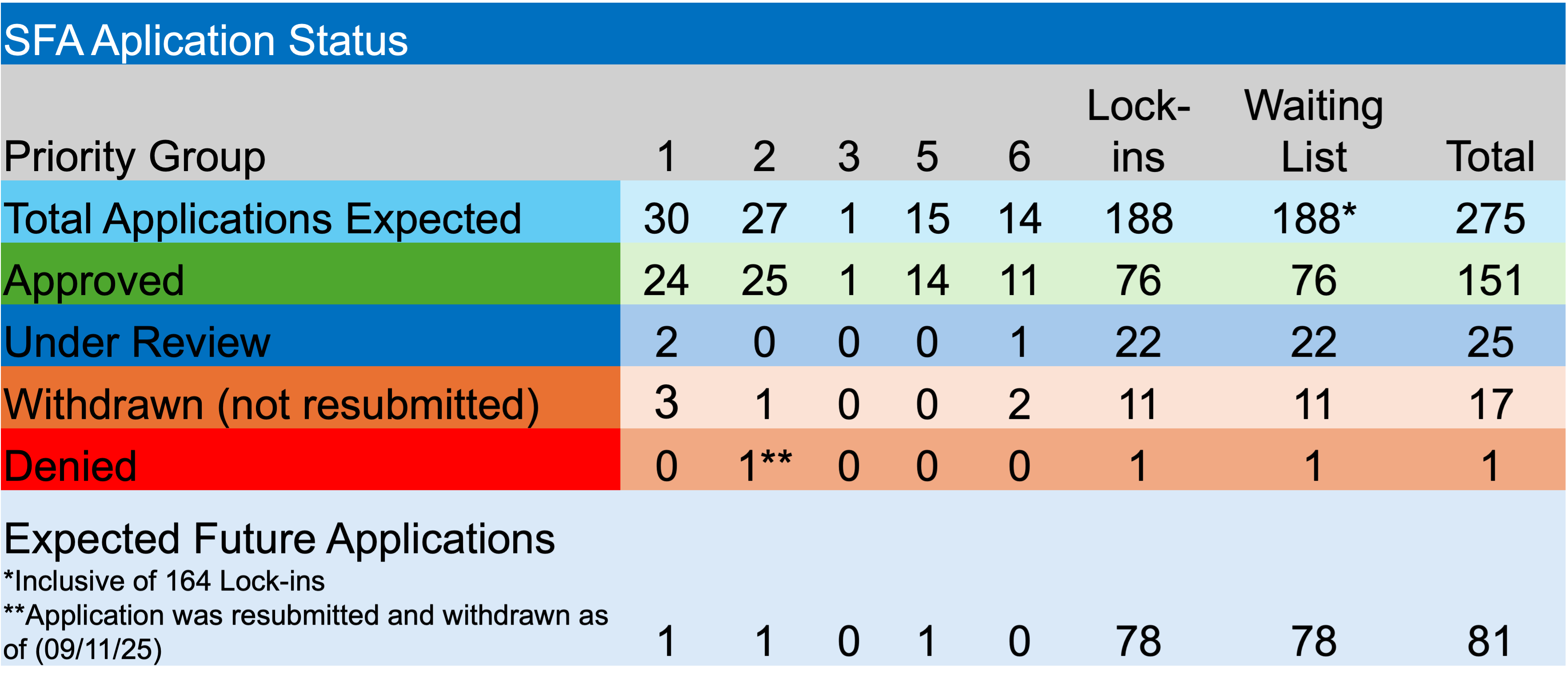
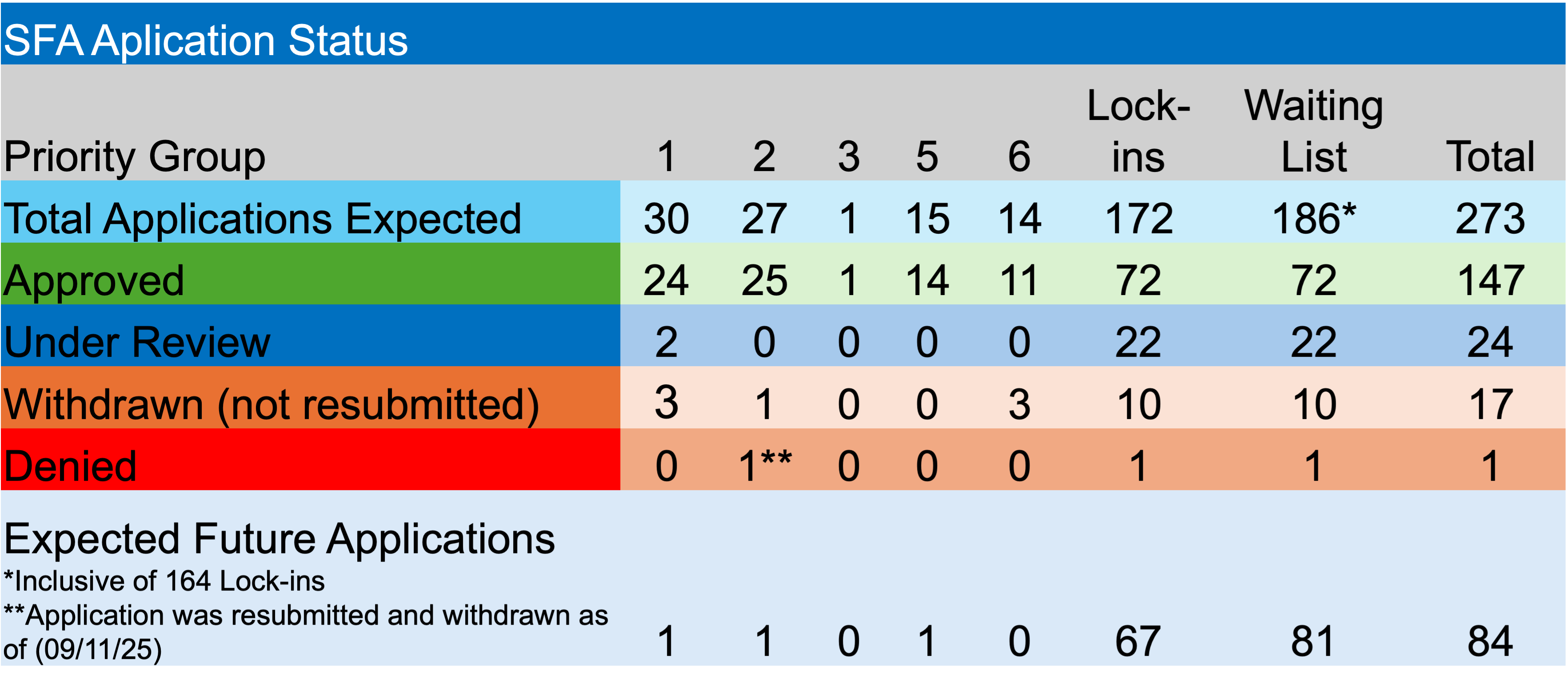
The PBGC is doing its best to get through an imposing list of applicants for Special Financial Assistance (SFA). However, it seems more like one step forward, 1 1/2 steps backward for that organization as they grapple with late arrivals to the waitlist. In the latest week, the PBGC didn’t allow any additional applications to be submitted through the eFiling portal, but they did manage to approve two applications for SFA, while a third withdrew its initial application.

Despite the apparent progress, the PBGC saw four additions to the waitlist, which now numbers 176, of which 72 have yet to see any action taken on their potential submission. I can’t see how the PBGC is going to get through the remaining applications by year-end, when the filing of an initial application needs to be completed based on the language within the ARPA legislation.

Those pension funds receiving approval for the SFA in this latest week included, Local 153 Pension Fund and (initial application) Roofers Local 88 Pension Plan (revised application). Together they will collect $239.7 in SFA and interest for 12,335 plan participants. There have now been 144 pension plans approved to receive SFA for a total of $74.5 billion in grants. Amazing!

Happy to report that there were no applications denied and none of the previous SFA recipients were asked to refund a portion of the grant due to census errors. However, there was one plan that withdrew the initial application. Cumberland, Maryland Teamsters Construction and Miscellaneous Pension Plan, is seeking a SFA grant of $8.7 million for its 101 members.

The four latest (late) additions to the waitlist include, Local 29 R.W.D.S.U. Pension Fund, United Optical Workers Local 408 Pension Fund, Millwrights and Machinery Erectors Local No. 1545 Pension Plan, and Painters and Allied Trades Paint Makers Pension Plan. Only the Millwrights plan locked in its valuation date as of July 31, 2025. They were joined by the New Bedford Fish Lumpers Pension Plan which also chose July 31, 2025, for its valuation date. Do you know what a fish lumper is or does? You’ll have to see next week’s ARPA post for the answer, or you can go to your friendly AI app like I did.

Remember: NO Free Lunch!

By: Russ Kamp, CEO, Ryan ALM, Inc.

In 1938, journalist Walter Morrow, Scripps-Howard newspaper chain, wrote the phrase “there ain’t no such thing as a free lunch”. The pension community would be well-served by remembering what Mr. Morrow produced more than eight decades ago. Morrow’s story is a fable about a king who asks his economists to articulate their economic theory in the fewest words. The last of the king’s economists utters the famous phrase above. There have been subsequent uses of the phrase, including Milton Friedman in his 1975 essay collection, titled “There’s No Such Thing as a Free Lunch”, in which he used it to describe the principle of opportunity cost.

I mention this idea today in the context of private credit and its burgeoning forms. I wrote about capacity concerns in private credit and private equity last year. I continue to believe that as an industry we have a tendency to overwhelm good ideas by not understanding the natural capacity of an asset class in general and a manager’s particular capability more specifically. Every insight that a manager brings to a process has a natural capacity. Many managers, if not most, will eventually overwhelm their own ideas through asset growth. Those ideas can, and should be, measured to assess their continuing viability. It is not unusual that good insights get arbitraged away just through sheer assets being managed in the strategy.

Now, we are beginning to see some cracks in the facade of private credit. We have witnessed a significant bankruptcy in First Brands, a major U.S. auto parts manufacturer. Is this event related to having too much money in an asset class, which is now estimated at >$4 trillion.? I don’t know, but it does highlight the fact that there are more significant risks investing in private deals than through public, investment-grade bond offerings. Again, there is no free lunch. Chasing the higher yields provided by private credit and thinking that there is little risk is silly. By the way, as more money is placed into this asset class to be deployed, future returns are naturally depressed as the borrower now has many more options to help finance their business.

In addition, there is now a blurring of roles between private equity and private credit firms, which are increasingly converging into a more unified private capital ecosystem. This convergence is blurring the historic distinction between equity sponsors and debt providers, with private equity firms funding private credit vehicles. Furthermore, we see “pure” credit managers taking equity stakes in the borrowers. So much for diversification. This blurring of roles is raising concerns about valuations, interconnected exposures, and potential conflicts of interest due to a single manager holding both creditor and ownership stakes in the same issue.

As a reminder, public debt markets are providing plan sponsors with a unique opportunity to de-risk their pension fund’s asset allocation through a cash flow matching (CFM) strategy. The defeasement of pension liabilities through the careful matching of bond cash flows of principal and interest SECURES the promised benefits while extending the investing horizon for the non-bond assets. There is little risk in this process outside of a highly unlikely IG default (2/1,000 bonds per S&P). There is no convergence of strategies, no blurring of responsibilities, no concern about valuations, capacity, etc. CFM remains one of the only, if not the only, strategies that provides an element of certainty in pension management. It isn’t a free lunch (we charge 15 bps for our services to the first breakpoint), but it is as close as one will get!

MV versus FV

By: Russ Kamp, CEO, Ryan ALM, Inc.

There seems to be abundant confusion within certain segments of the pension industry regarding the purpose and accounting (performance) of a Cash Flow Matching (CFM) portfolio on a monthly basis. Traditional monthly reports focus on the present value (PV) of assets in marking those assets to month-end prices. However, when utilizing a CFM strategy, one is hoping to defease (secure) promised benefits which are a future value (FV). As a reminder, FVs are not interest rate sensitive. The movement in monthly prices become irrelevant.

If pension plan A owes a participant $1,000 next month or 10-years from now, that promise is $1,000 whether interest rates are at 2% or 8%. However, when converting that FV benefit into a PV using today’s interest rates, one can “lock in” the relationship between assets and liabilities (benefit payment) no matter which way rates go. To accomplish this objective, a CFM portfolio will match those projected liabilities through an optimization process that matches principal, interest, and any reinvested income from bonds to those monthly promises. The allocation to the CFM strategy will determine the length of the mandate (coverage period).

Given the fact that the FV relationship is secured, providing plan sponsors with the only element of certainty within a pension fund, does it really make any sense to mark those bonds used to defease liabilities to market each month? Absolutely, NOT! The only concern one should have in using a CFM strategy is a bond default, which is extremely rare within the investment grade universe (from AAA to BBB-) of bonds. In fact, according to a recent study by S&P, the rate of defaults within the IG universe is only 0.18% annually for the last 40-years or roughly 2/1,000 bonds.

A CFM portfolio must reflect the actuaries latest forecast for projected benefits (and expenses), which means that perhaps once per year a small adjustment must be made to the portfolio. However, most pension plans receive annual contributions which can and should be used to make those modest adjustments minimizing turnover. As a result, most CFM strategies will purchase bonds at the inception of a mandate and hold those same issues until they mature at par. This low turnover locks in the cost reduction or difference in the PV vs. FV of the liabilities from day 1 of the mandate. There is no other strategy that can provide this level of certainty.

To get away from needing or wanting to mark all the plan’s assets to market each month, segregate the CFM assets from the balance of the plan’s assets. This segregation of assets mirrors our recommendation that a pension plan should bifurcate a plan’s asset allocation into two buckets: liquidity and growth. In this case, the CFM portfolio is the liquidity bucket and the remaining assets are the growth or alpha assets. If done correctly, the CFM portfolio will make all the necessary monthly distributions (benefits and expenses), while the alpha assets can just grow unencumbered. It is a very clean separation of the assets by function.

Yes, bond prices move every minute of every day that markets are open. If your bond allocation is being compared to a generic bond index such as the Aggregate index, then calculating a MV monthly return makes sense given that the market value of those assets changes continuously. But if a CFM strategy can secure the cost reduction to fund FVs on day 1, should a changing MV really bother you? Again, NO. You should be quite pleased that a segment of your portfolio has been secured. As the pension plan’s funded status improves, a further allocation should be made to the CFM mandate securing more of the promised benefits. This is a dynamic and responsive asset allocation approach driven by the funded status and not some arbitrary return on asset (ROA) target.

I encourage you to reach out to me, if you’d appreciate the opportunity to discuss this concept in more detail.

ARPA Update as of October 10, 2025

By: Russ Kamp, CEO, Ryan ALM, Inc.

Welcome to Columbus and Indigenous Peoples’ Day. Bond markets are closed and the equity markets remain open. Columbus Day remains a federal holiday, but with most federal employees already furloughed, it will not be a day to celebrate for many.

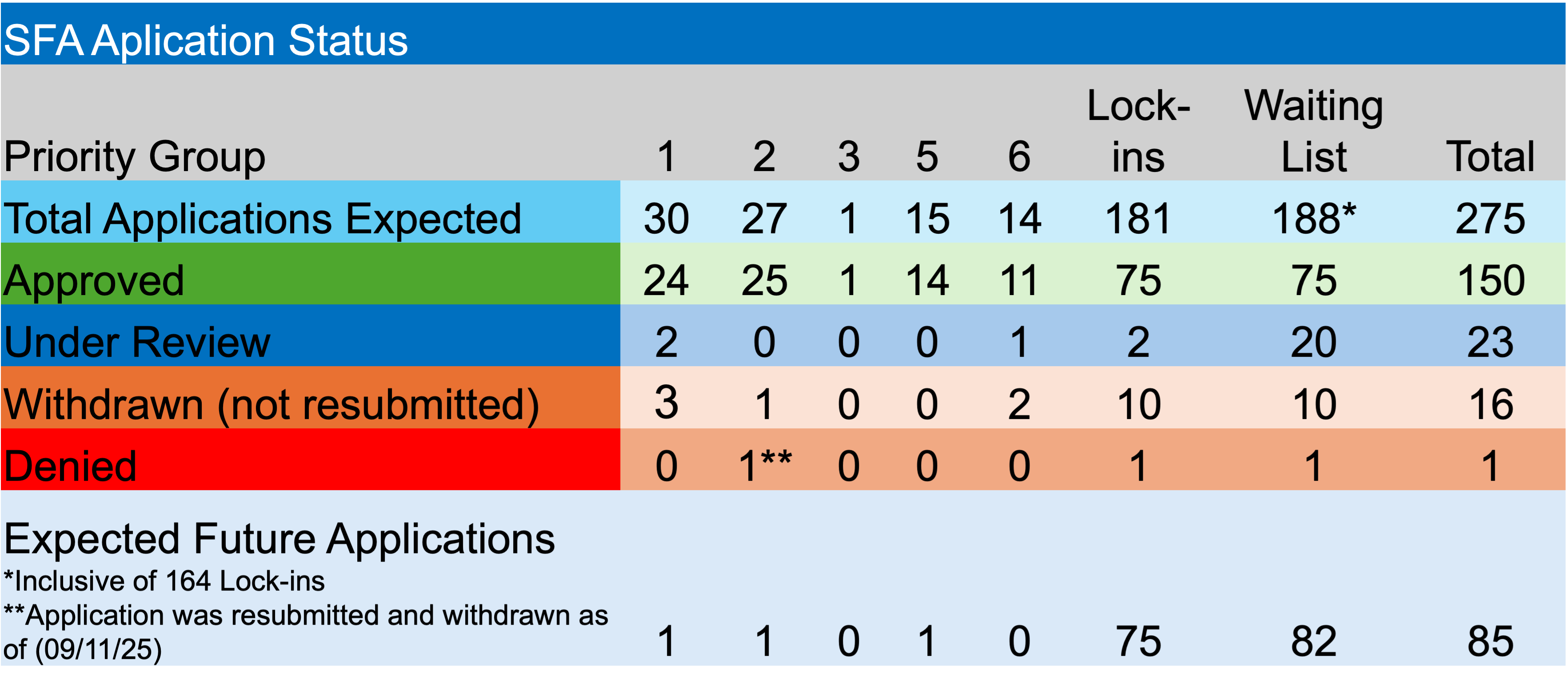
Regarding ARPA and the PBGC’s activity implementing this critical legislation, last week proved a busy one as there were three new applications received, two approved, and one withdrawn. There was also a plan added to the burgeoning waitlist. Happy to report that there were no applications denied or required to rebate a portion of the SFA as a result of census errors.

Now for the details. Ironworkers’ Local 340 Retirement Income Plan, Operative Plasterers & Cement Masons Local No. 109 Pension Plan, and Dairy Employees Union Local #17 Pension Plan, each a non-priority group member, filed their initial applications seeking a combined $60.4 million in SFA for nearly 3k plan participants. The PBGC has 120-days to act on these applications.

Pleased to report that two plans, Local 734 Pension Fund and the Retirement Plan of the Millmen’s Retirement Trust of Washington received approval for their initial applications, and they will receive $89.5 and $7.2 million, respectively for their combined 2,597 members. The PBGC has now awarded $74.3 billion in SFA grants to support the pensions for 1.828 million workers.

In other ARPA news, Pension Plan of the Pension Fund for Hospital and Health Care Employees – Philadelphia and Vicinity has withdrawn its initial application seeking $229.8 million in SFA that would support 11,084 members. Finally, the Buffalo Carpenters Pension Fund has added their name to the waitlist. They immediately secured the valuation date as July 31, 2025. Good luck to them as there are 67 plans currently on the waitlist that have yet to submit an application.

I’ve mentioned on several occasions the approaching deadline to file an initial application seeking SFA approval. I do hope that an extension of the filing deadline is approved. There are a lot of American workers who should be provided the full benefits that they have been promised and could secure through the ARPA legislation. This should be a bi-partisan effort.

Ryan ALM, Inc. 3Q’25 Newsletter

By: Russ Kamp, CEO, Ryan ALM, Inc.

We are pleased to provide the Ryan ALM, Inc. Q3’25 Newsletter that explores both asset and liability performance for the first nine months of 2025. As you will read, asset growth has exceeded liability growth for both public and private pension plans. Funding continues to improve despite the recent fall in U.S. interest rates that increase the present value of pension liabilities.

Please don’t hesitate to reach out to us with any questions that you might have regarding this publication. Also, please call on us if you’d like to explore a cash flow matching (CFM) strategy to learn how you can reduce risk within your current asset allocation. Thank you for your continuing support of Ryan ALM, Inc. and our mission to protect and preserve defined benefit plans.

An Alternative Pension Funding Formula

By: Russ Kamp, CEO, Ryan ALM, Inc.

I’ve spent the last few days attending and speaking at the FPPTA conference in Sawgrass, Florida. As I’ve reported on multiple occasions, I believe that the FPPTA does as good a job as any public fund organization of providing critical education to public fund trustees. A recent change to the educational content for the FPPTA centers on the introduction of the “pension formula” as one of their four educational pillars. In the pension formula of C+I = B+E, C is contributions, I is investment income (plus principal appreciation or depreciation), B is benefits, and E represents expenses.

To fund B+E, the pension fund needs to contribute an annual sum of money (C) not covered by investment returns (I) to fully fund liability cash flows (B+E). That seems fairly straightforward. If C+I = B+E, we have a pension system in harmony. But is a pension fund truly ever in harmony? With market prices changing every second of every trading day, it is not surprising that the forecasted C may not be enough to cover any shortfall in I, since the C is determined at the start of the year. As a result, pension plans are often dealing with both the annual normal cost (accruing benefits each year) and any shortfall that must be made up through an additional contribution amortized over a period of years.

As a reminder, the I carries a lot of volatility (uncertainty) and unfortunately, that volatility can lead to positive and negative outcomes. As a reminder, if a pension fund is seeking a 7% annual return, many pension funds are managing the plan assets with 12%-15% volatility annually. If we use 12% as the volatility, 1 standard deviation or roughly 68% of the annual observations will fall between 7% plus or minus 12% or 19% to -5%. If one wants to frame the potential range of results at 2 standard deviations or 19 out of every 20-years (95% of the observations), the expected range of results becomes 31% to -17%. Wow, one could drive a couple of Freightliner trucks through that gap.

Are you still comfortable with your current asset allocation? Remember, when the I fails to achieve the 7% ARC the C must make up the shortfall. This is what transpired in spades during the ’00s decade when we suffered through two major market corrections. Yes, markets have recovered, but the significant increase in contributions needed to make up for the investment shortfalls haven’t been rebated!

I mentioned the word uncertainty above. As I’ve discussed on several occasions within this blog, human beings loathe uncertainty, as it has both a physiological and mental impact on us. Yet, the U.S. public fund pension community continues to embrace uncertainty through the asset allocation decisions. As you think about your plan’s asset allocation, is there any element of certainty? I had the chance to touch on this subject at the recent FPPTA by asking those in the room if they could identify any certainty within their plans. Not a single attendee raised their hand. Not surprising!

As I result, I’d like to posit a slight change to the pension formula. I’d like to amend the formula to read C+I+IC = B+E. Doesn’t seem that dramatic – right? So what is IC? IC=(A=L), where A are the plan’s assets, while L= plan liabilities. As you all know, the only reason that a pension plan exists is to fund a promise (benefits) made to the plan participant. Yet, the management of pension funds has morphed from securing the benefits to driving investment performance aka return, return, and return. As a result, we’ve introduced significant funding volatility. My subtle adjustment to the pension formula is an attempt to bring in some certainty.

By carefully matching assets to liabilities (A=L) we’ve created an element of certainty (IC) not currently found in pension asset allocation. By adding some IC to the C+I = B+E, we now have brought in some certainty and reduced the uncertainty and impact of I. The allocation to IC should be driven by the pension plan’s funded status. The better the funding, the greater the exposure to IC. Wouldn’t it be wonderful to create a sleep-well-at-night structure in which I plays an insignificant role and C is more easily controlled?

To begin the quest to reduce uncertainty, bifurcate your plan’s assets into two buckets, as opposed to having the assets focused on the ROA objective. The two buckets will now be liquidity and growth. The liquidity bucket is the IC where assets and liabilities are carefully matched (creating certainty) and providing all of the necessary liquidity to meet the ongoing B+E. The growth portfolio (I) are the remaining plan assets not needed to fund your monthly outflows.

The benefits of this change are numerous. The adoption of IC as part of the pension formula creates certainty, enhances liquidity, buys-time for the growth assets to achieve their expected outcomes, and reduces the uncertainty around having 100% of the assets impacted by events outside of one’s control. It is time to get off the asset allocation and performance rollercoaster. Yes, recent performance has been terrific, but as we’ve seen many times before, there is no guarantee that continues. Adopt this framework before markets take no prisoners and your funded status is once again challenged.

ARPA Update as of October 3, 2025

By: Russ Kamp, CEO, Ryan ALM, Inc.

Welcome to the first update in October. Autumn has been an extension of the summer weather in NJ – dry and hot! I’m writing this post from cloudy Florida (FPPTA) where it is humid and hot! When will I finally get those crisp, clear days that autumn promises?

Regarding ARPA news, we are quickly closing in on the end of 2025, and the PBGC still has a significant list of initial applications (73) that have not been submitted for review. As far as I can tell, only those applications that have been submitted by December 31, 2025, can continue to be reviewed until the end of 2026. It should prove to be an interesting time.

So, what did the week of 9/29/25 provide? Access to the PBGC’s eFiling portal is currently defined as “limited” to those funds at the top of the waitlist. They did allow for three funds, Asbestos Workers Local No. 8 Retirement Trust Plan, Iron Workers Local No. 12 Pension Fund, and Bricklayers Local No. 55 Pension Plan to submit initial applications seeking SFA support. The three non-Priority Group plans are seeking modest SFA grants totaling $55.5 million for their combined 1,593 participants. As per the legislation, the PBGC has 120-days to act on these applications.

In other ARPA news, the PBGC did approve the SFA for Retail Food Employers and United Food and Commercial Workers Local 711 Pension Plan, which will receive $77.6 million for their 25,306 members. Also, Building Trades Pension Fund of Western Pennsylvania, a non-Priority Group member, is asking for $55.5 million in SFA for their nearly 4k plan participants.

Finally, there were no non-Priority Group pension plans asking to be added to the waitlist during the past week, but there were three funds currently on the list that have chosen to lock-in their valuation date. Greater St. Louis Service Employees Pension Plan, Twin Cities & Vicinity Conference Board Pension Plan, and Oregon Printing Industry Pension Trust each chose June 30, 2025, for that purpose.

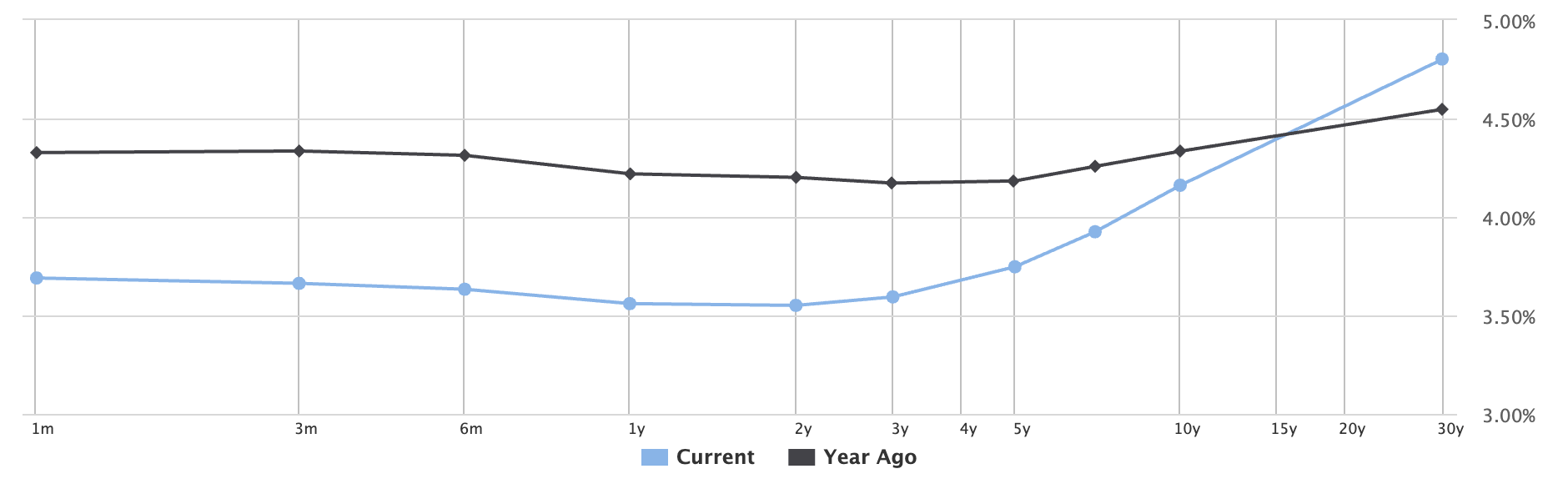
Despite the recent cut in the Fed Funds Rate, yields on longer-dated U.S. Treasuries have risen. As a result, the yield curve has steepened providing plan sponsors and their advisors an opportunity to secure the SFA assets at a time when additional cost savings may be achievable. Furthermore, the greater the cost reduction the longer the coverage period. Please don’t let this opportunity pass you by.

Now 51% of the Median Household Income

By: Russ Kamp, CEO, Ryan ALM, Inc.

You may recall that in April this year I penned a post on the impact of housing costs on one’s ability to fund a retirement fund. Unfortunately, it continues to get worse. According to a Goldman Sachs survey, “New Economics of Retirement,” 42% of Generation Z, Millennials and Generation X state they are living paycheck-to-paycheck, and 74% report struggling to save for retirement due to competing financial priorities – like housing costs, which according to the Planadvisor article in which I found this survey, now account for 51% of the median household income! To put that in perspective, in 2000 the median income needed to fund housing was 33%. Incredible.

It gets worse – truly! If you have a child or two or in my case, five, and you want to provide them with a quality post-graduate experience (college), it will now cost you 85% of one’s income to send them to a private institution. 85%! Sure, your child could go to a public university, but that still will cost a family 25% of their household income.

So, between housing and paying for your child’s college, you’ve already laid out a minimum of 76% of the family income. What about food, healthcare, utilities, property taxes, insurance, clothing, streaming services/cable, etc. Wonder why we have a retirement crisis?

When 42% of Gen X, Millennials, and Gen Z cohort members claim to be living from paycheck to paycheck, it shouldn’t be shocking. What may be more shocking is the fact that only 42% are struggling to get by. Furthermore, it shouldn’t be surprising that the top 10% of earners in the U.S. now account for 49% of the spending!

Can a society/economy function with such disparity? I fear not.

Milliman: Public Pension Funding Improves

By: Russ Kamp, CEO, Ryan ALM, Inc.

Milliman has released the latest results from their public pension fund index (PPFI). As a reminder, this index analyzes data from the U.S.’s largest 100 public DB pension plans. Pension funding improved for the fifth consecutive month. As a result, the PPFI funded ratio advanced from 83.0% at the end of July to 84.2%, as of August 31, 2025.

“Thanks to continued investment gains, 41 of the 100 largest public pension plans were more than 90% funded in August, with 18 of those plans enjoying a funding surplus,” said Becky Sielman, co-author of the Milliman PPFI.

Figure 5: Funded ratios at August 31, 2025

The pension plans collectively saw estimated August returns of 1.6% in aggregate, with plan performance ranging from an estimated 0.8% to 2.3%. The 1.6% gain translated to a $79 billion increase in funded status for the 100 PPFI plans. It is estimated that plan assets rose from $5.5 trillion as of July 31 to $5.6 trillion as of August 31, while the funding deficit between assets and plan liabilities declined from $1.12 trillion to $1.04 trillion during August. 

It is terrific to witness continued asset growth despite several cross currents potentially impacting markets. However, with the prospect for lower interest rates, as the U.S. labor market begins to weaken (ADP reported -32K jobs created in September), the present value of the future benefit payments (liabilities) will rise potentially offsetting future asset performance gains or worse, magnifying asset depreciation. Plan sponsors would be prudent to take some risk from their asset allocation frameworks at this time of improved funding.

Click on the link below to view the entire report.

View the Milliman 100 Public Pension Funding Index.

ARPA Update as of September 26, 2025

By: Russ Kamp, CEO, Ryan ALM, Inc.

Welcome to Autumn. Hopefully, the cooler weather will help the PBGC get through these next three months given that they still have 75 multiemployer pension plans waiting to submit an initial application. The PBGC has been processing about eight applications per month. I don’t think that pace is going to cut it for those sitting at the bottom of the queue. It will be interesting to see what transpires as we approach year-end.

There isn’t much to report regarding last week’s activity, as there were no applications submitted – new or revised. No applications approved. Furthermore, there were no pension funds required to rebate a portion of the SFA received resulting from census errors. Thankfully, there were no applications denied.

So, what was done? There were three more funds added to an already bursting waitlist, including Greater St. Louis Service Employees Pension Plan, Twin Cities & Vicinity Conference Board Pension Plan, and Luggage Workers’ Union Local No. 61 Retirement Plan. They’ll now wait and see whether they are given a chance to submit an initial application prior to the December 31, 2025, deadline. Finally, St. Louis Graphic Arts Pension Plan, which had only asked to be included on the waitlist during the previous week has locked in the SFA valuation date as of June 30th.

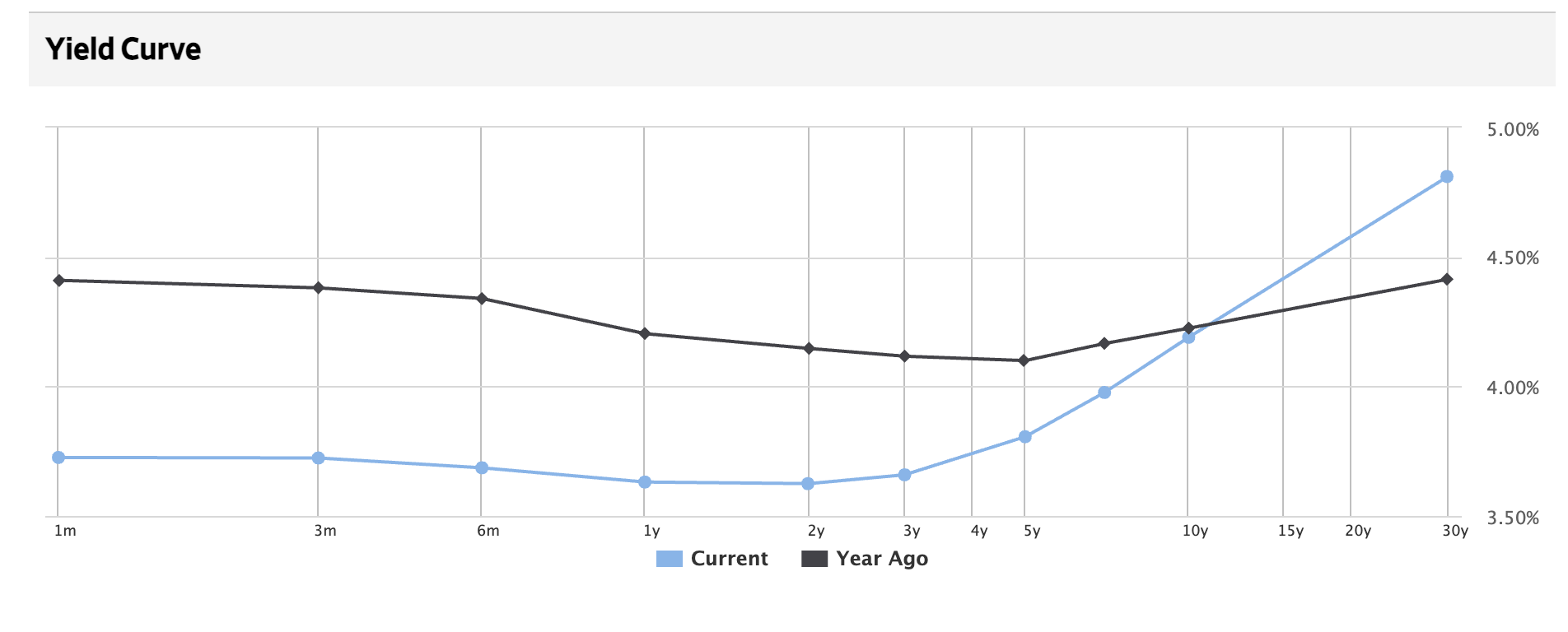
Despite the Federal Reserve’s recent cut in the Fed Funds Rate, longer-term Treasury yields have backed up anywhere from 12-18 bps, providing multiemployer plans the opportunity to defease benefits (and expenses) at higher yields.