ARPA Update as of May 9, 2025

By: Russ Kamp, CEO, Ryan ALM, Inc.

Happy belated Mother’s Day to all the Moms. We hope that you had a special day.

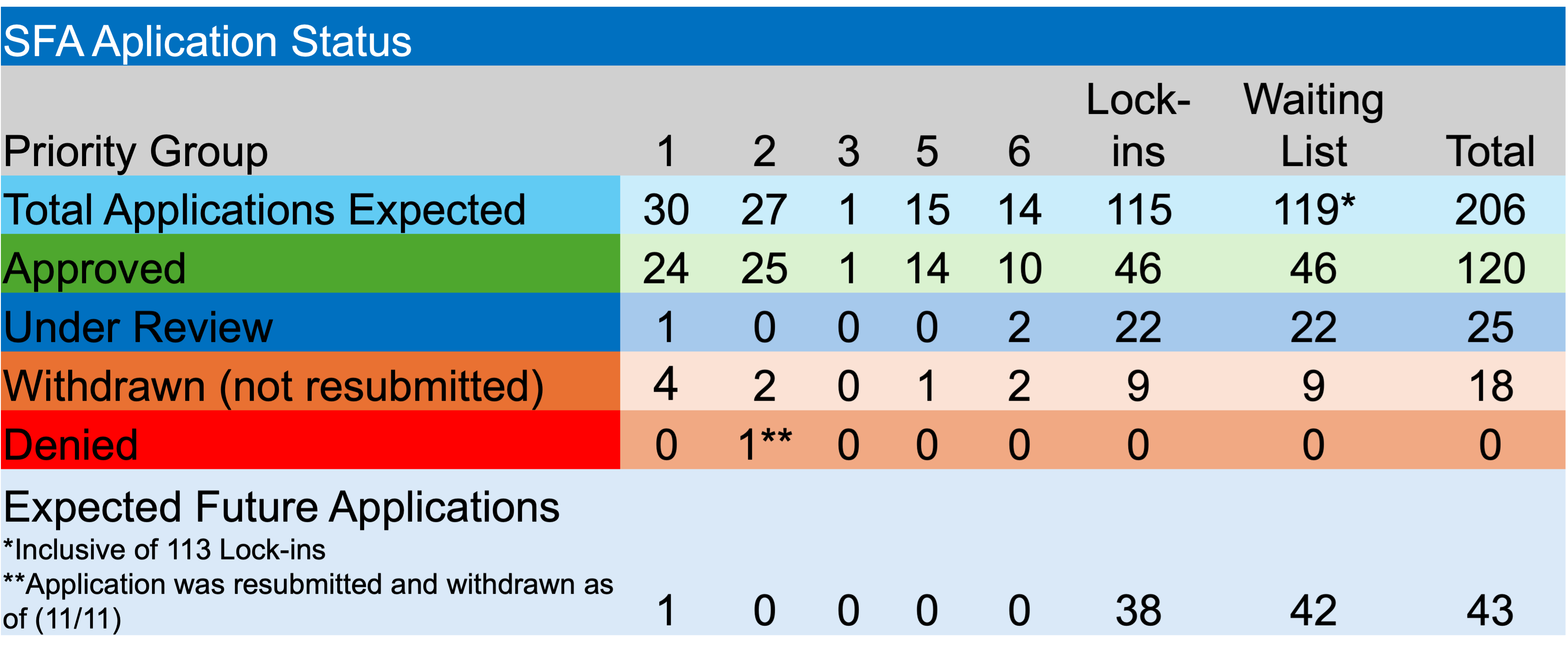
Pleased to report that the PBGC had a very productive week ending last Friday. There were several actions taken including the filing of three initial applications from the waitlist. Alaska United Food and Commercial Workers Pension Fund, Local 73 Retirement Plan, and Local 807 Labor-Management Pension Fund are hoping to secure nearly $300 million for just over 10k plan participants. With these filings, the PBGC currently has 29 applications under review. As a result, their eFiling portal is temporarily closed. As per the legislation, they must act on an application within 120 days. The United Food and Commercial Workers Unions and Employers Pension Plan application reaches that milestone on May 17th. As a reminder, they are seeking $54 million in SFA for there more than 15k members. The PBGC will have its hands full during the next month, as 10 pension plans have applications hitting their 120-day window during June.

In other ARPA news, there were no applications approved, denied, or withdrawn during the past week. However, there was one more fund that repaid a portion of the SFA grant received due to census errors. Local Union No. 863 I.B. of T. Pension Plan repaid $3.2 million in SFA or about 1% of the grant received. To date, 55 plans have reported on potential census errors prior to the PBGC having access to the Social Security Master Death File. Of those 55, 51 have repaid a portion of the proceeds received totaling $214.8 million or 0.44% of the $48.4 billion in SFA received by those funds.

Lastly, there was one more plan added to the waitlist. Greenville Plumbers and Pipefitters Pension Fund becomes the 119th pension fund to seek SFA without being a priority group member. As reflected below, there are 38 pension funds from the waitlist that have yet to file an application with the PBGC.

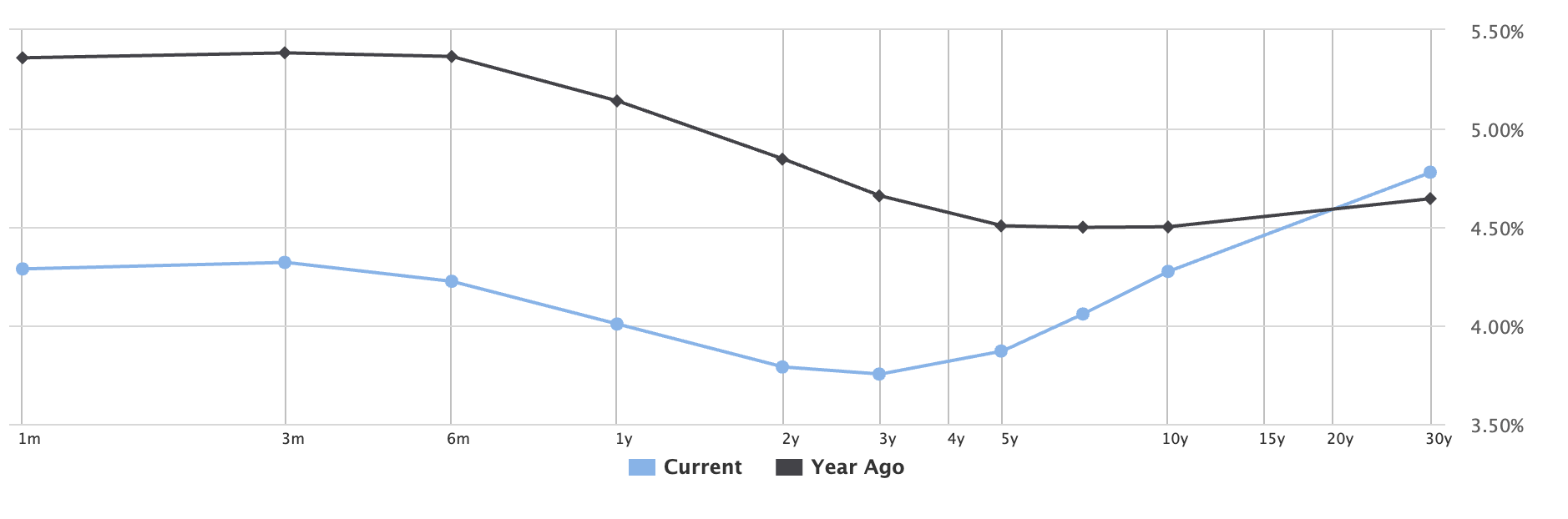
Recent activity within the U.S. Treasury market have pushed long-term rates up. As of this morning, the 30-year Treasury Bond yield is at 4.89%, while the 10-year Treasury Note’s yield is at 4.48%. Both are quite attractive for a plan looking to secure the promised benefits through the SFA grant.
The Benefits of Using Multiple Discount Rates in a Public Pension Plan

By: Russ Kamp, CEO, Ryan ALM, Inc.

Public pension plan sponsors frequently ask us about the impact of investing in a cash flow matching (CFM) strategy on the fund’s ability to achieve the ROA, which is also the discount rate used to value the plan’s liabilities under GASB accounting. As we’ve discussed many times, the plan’s ROA is actually a blend of ROAs with an “expected” return target assigned to each asset class, except for bonds, which uses the YTM of the index benchmark, and then those forecasts are averaged based on the weight of the exposure within the total asset base. So, despite the fact that GASB requires a single rate to discount the plan’s liabilities, multiple ROA targets have been used for years.

We believe that this process can, and should, be refined even more. We believe that the ROA target should be focused on the plan’s liabilities and not just the assets. With a liability focus one gets the following benefits when using multiple discount rates, including:

  • Risk Matching: Applying different discount rates to different asset or liability segments can better reflect the varying risk profiles of those segments. For example, using a lower, market-based rate for secured benefits (through a CFM process) and a higher rate for more uncertain, investment-backed benefits can align present value (PV) calculations more closely with the actual risks being taken within the fund.
  • Improved Accuracy: Multiple rates may provide a more accurate estimate of liabilities, especially when plan assets are invested in a mix of instruments with different risk and return characteristics.
  • Transparency in Funding Status: By separating liabilities based on funding source or risk, stakeholders get a clearer picture of which obligations are well-secured (those that are defeased through CFM) and which may be more vulnerable to market fluctuations (the growth assets).
  • Policy Flexibility: Using a blended discount rate can help manage the transition when lowering the overall discount rate, avoiding sudden shocks to contribution requirements.

We often discuss the need to bring an element of certainty to the management of DB pension plans, which have embraced uncertainty for years. Bifurcating your plans liabilities (retired lives and actives) and assets (liquidity and growth) into two buckets and applying different discount rates to each brings greater certainty to the management of a pension plan. There is no longer any guessing as to how your liquidity bucket will perform, as the asset cash flows are matched to liability cash flows with certainty and the fund’s cost savings and return are both know on the day that the portfolio is constructed. How wonderful!

Improved Corporate Pension Funding – Milliman

By: Russ Kamp, CEO, Ryan ALM, Inc.

Milliman released the results of its 2025 Corporate Pension Funding Study(PFS). The study analyzes pension data for the 100 U.S. public companies with the largest defined benefit (DB) pension plans. Unlike the monthly updates provided by Milliman, this study covers the 2024 fiscal years (FY) for each plan. Milliman has now produced this review for 25 consecutive years.

Here are Milliman’s Key findings from the 2025 annual study, including:

  • The PFS funded percentage increased from 98.5% at the end of FY2023 to 101.1% in FY2024, with the funded status climbing from a $19.9 billion deficit to a $13.8 billion surplus.
  • This is the first surplus for the Milliman 100 companies since 2007.
  • As of FY2024, over half (53) of the plans in the study were funded at 100% or greater; only one plan in the study is funded below 80%. RDK note: This is a significant difference from what we witness in public pension funding studies.
  • Rising U.S. interest rates aren’t all bad, as the funding improvement was driven largely by the 42-basis point increase in the PFS discount rate (from 5.01% to 5.43%)
  • Higher discount rates lowered the projected benefit obligations (PBO) of these plans from $1.34 trillion to $1.24 trillion.
  • While the average return on investments was 3.6% – lower than these plans’ average long-term assumption of 6.5% – the underperformance of assets did not outstrip the PBO improvement. Only 19 of the Milliman 100 companies exceeded their expected returns. 
  • According to Milliman, equities outperformed fixed-income investments for the sixth year in a row. Over the last five years, plans with consistently high allocations to fixed income have underperformed other plans but experienced lower funded ratio volatility. Since 2005, pension plan asset allocations have swung more heavily toward fixed income, away from equity allocations.

“Looking ahead, the economic volatility we’ve seen in 2025 plus the potential for declining interest rates likely means corporate plan sponsors will continue with de-risking strategies – whether that’s through an investment glide-path strategy, lump-sum window, or pension risk transfer,” said Zorast Wadia, co-author of the PFS. “But with about $45 billion of surplus in frozen Milliman 100 plans, there’s also the potential for balance sheet and cash savings by incorporating new defined benefit plan designs.” One can only hope, Zorast.

Final thought: Given the unique shape of today’s Treasury yield curve, duration strategies may be challenged to reduce interest rate risk through an average duration or a few key rates. As a reminder, Cash Flow Matching (CFM) duration matches every month of the assignment. Use CFM for the next 10-years, you have 120 bespoke duration matches.

Source Ryan – Question of the Day.

By: Russ Kamp, CEO, Ryan ALM, Inc.

We often get comments and questions following the posting of a blog. We welcome the opportunity to exchange ideas with interested readers. Here is a recent comment/question from a LinkedIn.com exchange.

Question: In reviewing the countless reports, reading past agendas, and meeting minutes for these 20 plans, I did not notice any CFM or dedicated fixed income strategies employed by any of them. Perhaps there are a couple that I missed that do, or perhaps some have since embarked on such a strategy. Why wouldn’t public fund plan sponsors use Cash Flow Matching (CFM)?

There really isn’t a reason why they shouldn’t as pointed out by Dan Hougard, Verus, in his recent excellent piece, but unfortunately, they likely haven’t begun to use a strategy that has been used effectively for decades within the insurance industry, by lottery systems, and early on in pension management. Regrettably, plan sponsors must enjoy being on the rollercoaster of returns that only guarantees volatility and not necessarily success. Furthermore, they must get excited about trying to find liquidity each month to meet the promised benefits by scrambling to capture dividend income, bond interest, or capital distributions. If this doesn’t prove to be enough to meet the promises, they then get to liquidate a holding whether it is the right time or not.

In addition, there must be a particular thrill about losing sleep at night during periods of major market disruptions. Otherwise, they’d use CFM in lieu of a core fixed income strategy that rides its own rollercoaster of returns mostly driven by changes in interest rates. Do you know where rates are going? I certainly don’t, but I do know that next month, the month after that, followed by the one after that, and all the way to the end of the coverage period, that my clients will have the liquidity to meet the benefit promises without having to force a sale in an environment that isn’t necessarily providing appropriate liquidity.

The fact that a CFM strategy also eliminates interest rate risk because benefit payments are future values, while also extending the investing horizon for the fund’s growth assets are two additional benefits. See, there really is NO reason not to retain a cash flow matching expert like Ryan ALM, Inc. to bring certainty to the management of pensions that have lived with great uncertainty. In doing so, many plans have had to dramatically increase contributions, alter asset allocation frameworks to take on significantly more risk, while unfortunately asking participants to increase employee contributions, work more years, and receive less at retirement under the guise of pension reform. Let’s stop doing the same old same old and explore the tremendous benefits of Cash Flow Matching. Your plan participants will be incredibly grateful.

ARPA Update as of May 2, 2025

By: Russ Kamp, CEO, Ryan ALM, Inc.

I think someone forgot that the calendar flipped from April to May. The April showers have been followed by the May monsoons in New Jersey. The May flowers may be washed out to see!

Regarding the ARPA implementation by the PBGC, the current efiling portal is describes as limited, which is certainly far better than the frequently mentioned “temporarily closed” status. As a result, there were three new applications submitted during the past week. Local 1102 Retirement Trust, IBEW Eastern States Pension Plan, and Local 1922 Pension Plan are each classified as non-priority group members. In the case of Local 1922, its application was revised. In total, these three funds are seeking $53.7 million in special financial assistance (SFA) for just over 6k participants.

In other ARPA news, Aluminum, Brick & Glass Workers International Union, AFL-CIO, CLC, Eastern District Council No. 12 Pension Plan, a Wyomissing, PA based plan, has received approval of its revised application. They will receive $8.5 million for the 580 members of its pension plan. This was the first application approved in nearly a month.

Happy to mention that there were no applications denied, withdrawn, or asked to repay excess SFA during the last week. However, there were two additional plans added to the waitlist. Sports Arena Employees Local 137 Retirement Fund and Retirement Plan of Local 1102 Retirement Fund have been added to the waitlist. In total, 119 non-priority funds have sought SFA through the waitlist process. Neither of these funds locked-in a date for valuation purposes on the discount rate. Four funds have not currently chosen a lock-in date.

There are still 43 plans that have yet to submit an application for review, with all but one of those a non-priority group member. Despite significant recent volatility, U.S. Treasury interest rates, particularly 10- and 30-year maturities, are enjoying fairly robust yields. The 30-year yield is once again above 4.8%. This level of rates provides pension plans receiving the SFA some additional cost reduction to defease benefit payments.

Enhancing the Probability of Achieving the ROA

By: Russ Kamp, CEO, Ryan ALM, Inc.

We are often confronted by plan sponsors and their advisors with the objection of using cash flow matching (CFM) because the “expected return” is lower than the plan’s return on asset assumption (ROA). Given that objection, we often point out that each asset class has its own expected return. The ROA target is developed by weighting each asset class’s exposure by the forecasted return. In the case of the bond allocation, the YTW is used as the target return.

If the plan sponsor has an allocation to “core” fixed income, there is a fairly great probability that our CFM portfolio, which we call the Liability Beta Portfolio (LBP), will outyield the core fixed income allocation thus enhancing the probability of achieving the ROA. This is accomplished through our heavy concentration in A/BBB+ investment grade corporate bonds that will outyield comparable maturity Treasuries and Agencies, which are a big and growing percentage of the Aggregate Index. In most cases, the yield advantage will be 50-100 bps depending on the maturities.

Ron Ryan, Ryan ALM’s Chairman, has produced a very thoughtful research piece on this subject. He also discusses the negative impact on a plan’s ability to achieve the ROA through the practice of sweeping dividend income, interest income, and capital distributions from the plan’s investment programs. Those distributions are better used when reinvested in the investment strategies from which they were derived, as they get reinvested at higher expected growth rates. The CFM program should be the only source to fund net benefits and expenses, as there is no forced selling when benefits and expenses are due.

There is no viable excuse to not use CFM. The benefits from this strategy are plentiful, especially the securing of the promised benefits which is the primary objective for any pension plan. We encourage you to visit RyanALM.com to read the plentiful research on this subject and other aspects of cash flow matching.

Opportunity Cost Goes Both Ways

By: Russ Kamp, CEO, Ryan ALM, Inc.

I had an interesting conversation at the IFEBP Investment forum. It wasn’t the first time that this topic has been raised and I am willing to state that it won’t be the last. I was discussing the benefits of cash flow matching (CFM) with a trustee who raised concern about locking in the asset / liability match, suggesting that by defeasing a period longer than 3-5-years may lead to “regret” if there had been an opportunity to generate a greater return from those assets used to defease a portion of the liabilities.

Anytime an asset allocation decision is taken, there is always the possibility that some combination of asset classes and products would have produced a greater return in the short-term. However, opportunity cost can easily be opportunity lost. When one engages in a CFM strategy, one does so because they understand that the primary objective in managing a DB pension is to SECURE the promised benefits at a reasonable cost and with prudent risk. Managing a pension fund is not a return game despite the prevailing orthodoxy in our industry.

Why would one not want to secure a portion of the asset base providing the necessary liquidity to meet benefits and expenses? It is so comforting, or it should be, not to have to worry about raising liquidity in challenging markets. At the same time, the CFM strategy is buying time for the alpha (risk) assets to grow unencumbered. We normally suggest that a 10-year CFM be implemented, but that decision is predicated on a number of factors specific to that plan. We can, and have, engaged in assignments shorter than 10-years, and CFM provides the same benefits, even if the cost savings may be less than that provided by a longer assignment.

Furthermore, there is always the question of maintaining the maturity of the assignment (5-, 7-, 10- or more years) once the program is up and running. Plan sponsors must decide if the assignment should be allowed to run out after the initial allocation, be maintained at the same maturity, or extended given improved funding. If markets don’t behave there is no obligation to extend the program. If markets get crushed and the sponsor feels that liquidating the CFM portfolio assets could be used to buy “low” that is available given the liquidity profile of investment grade bonds. We don’t understand why one would want to do that since the matching of assets and liabilities creates certainty, which is missing in traditional pension management.

DB pension plans are critical to the long-term financial security of the participants. Securing the promised benefits reduces the possibility that adverse outcomes don’t result in the fund having to take dramatic action such as additional tiers or worse, the freezing of the plan. CFM stabilizes both the funded status for that portion of the fund and contributions. I would think that getting as much into CFM and reducing the uncertainty of managing the plan given our volatile markets should be an unquestionable goal.