Public Pension Funding Stable – Milliman

By: Russ Kamp, CEO, Ryan ALM, Inc.

Milliman has released the output of their Public Pension Funding Index (PPFI), which covers the largest 100 public DB plans. Despite the turbulent markets during the month, the index showed a slight investment gain of 0.4%. This compares to the -0.12% experienced by corporate plans and reported through Milliman’s Pension Funding Index, that covers the top 100 corporate plans.

Among the largest public funds individual plans’ estimated returns ranged from -1.8% to 1.4%. In aggregate, the plans added about $24 billion in market value during the period, increasing AUM to $5.213 trillion at the end of the month. Furthermore, the deficit between plan assets and liabilities was unchanged since March at $1.34 trillion. The PPFI funded ratio rose from 79.5% as of March 31, to 79.6% as of April 30th. If pension liabilities for public plans were valued using the same discount rate as corporate plans do under FASB, liability growth would have been negative, as Milliman reported a 7 basis points increase in the corporate discount rate to 5.57% at April 30th from 5.50% at the end of March in their corporate update. That movement up in rates would have reduced the present value (PV) of those future benefit promises causing the funded ratio to rise some more.

You can find the complete report here.

Union Wins NEW Defined Benefit Pension!!

By: Russ Kamp, CEO, Ryan ALM, Inc.

Anyone who reads this blog knows that we at Ryan ALM, Inc. are huge proponents of defined benefit (DB) plans. We promote the use of DB plans as the only sensible retirement vehicle for the American worker. Blog after blog has discussed ways to secure the benefit promises for those pension plans still operating in the hope that the tide to offloading these critical funds would be slowed, if not stemmed.

When IBM announced that they were going to reopen their plan, I produced the post “Oh, What A Beautiful Morning”, and promised not to sing. I’m also not going to sing today, but I might just shout from the rooftops, if the rain stops in NJ. Why? There is a new DB fund that has just been approved! YES!!

Dee-Ann Burbin, The Associated Press, is reporting that “U.S. meatpacking workers are getting their first new defined benefit pension plan in nearly 40 years under a contract agreement between Brazil-based JBS, one of the world’s largest meat companies, and an American labour union”.

The United Food and Commercial Workers union said 26,000 meatpacking workers at 14 JBS facilities would be eligible for the multi-employer pension plan. “This contract, everything that was achieved, really starts to paint the picture of what everybody would like to have: long-term stable jobs that are a benefit for the employees, a benefit for the employers and a benefit for the community they operate in,” Mark Lauritsen, the head of the UFCW’s meatpacking and food processing division, told the Associated Press in an interview.

In a statement, JBS said the pension plan reflected its commitment to its workforce and the rural communities in which it operates. “We are confident that the significant wage increases over the life of the contracts and the opportunity of a secure retirement through our pension plan will create a better future for the men and women who work with us at JBS.” Lauritsen said DB pension plans used to be standard in the meatpacking industry but were cut in the 1980s as companies consolidated. Big meat companies like Tyson Foods Inc. and Cargill Inc. now offer 401(k) plans but not traditional pensions.

According to Burdin’s article, the union started discussing a return to pensions a few years ago as a way to help companies hang on to their workers. “The good thing about a 401 (k) is that it’s portable, but the bad thing about a 401 (k) is that it’s portable,” he said. “This was a way to capture and retain people who were moving from plant to plant, chasing an extra dime or a quarter”, according to Lauritsen

Workers hailed the plan. “Everything now is very expensive and it’s hard to save money for retirement, so this gives us security,” said Thelma Cruz, a union steward with JBS at a pork plant in Marshalltown, Iowa. A return to DB pension plans is unusual but not unheard of in the private sector. International Business Machines Corp. reopened its frozen pension plan in 2023. Let’s hope that this becomes a trend. As I’ve said many times, asking untrained individuals to fund, manage, and then disburse a “benefit” without disposable income, investment acumen, or a crystal ball is just silly! DB plans help the American worker avoid that trifecta of stumbling blocks!

Where’s The Beef?

By: Russ Kamp, CEO, Ryan ALM, Inc.

In case this little ditty got by you, today is National Hamburger Day. According to the history books, the beef patty that most of us love originated in Hamburg, Germany. It has nothing to do with the meat, which as far as I know was never pork/ham. I bring you this info not only because I am looking forward to my burger later this evening, but because of a lack of “beef” in today’s retirement industry.

Despite adoption of financial wellness programs, millions of workers in their 50s and early 60s remain critically unprepared to fund their retirement, “according to a new report from the Institutional Retirement Income Council”. How bad are the stats? Nearly 50% of Americans aged 55 to 64 have NO retirement savings – zilch, nada, zippo! That info comes courtesy of the Federal Reserve Board’s 2023 Survey of Consumer Finances, which was cited in the IRIC report. Furthermore, for those that have accumulated retirement savings, the median account balance is only $202,000, and totally insufficient for a retirement that could last more than 20 years. Applying the 4% rule to annual withdrawals provides this median participant an annual spending budget of $8,080. That certainly won’t get you much.

It gets worse. According to a bank of America study, “only 38% understand how to properly claim Social Security”. Compounding these issues is the fact that most underestimate how much they might need for health care, estimated at up to $315,000 in medical expenses, per Fidelity Investments.  

IRIC Executive Director Kevin Crain, the report’s author, wrote that the lack of preparedness is already leading to a troubling trend of “delayed retirements, workplace disruption, and heightened financial stress among older employees and their employers.”  

This dire situation needs to be rectified immediately, and the only way to ensure a sound retirement for our American workforce is to once again institute defined benefit (DB) pension plans. Asking untrained individuals to fund, manage, and then disburse a “benefit” through a DC plan without disposable income, investment acumen, or a crystal ball to help with longevity is just silly. There’s just no beef in today’s retirement offerings!

Where’s Clara Peller when we need her the most?

ARPA Update as of May 23, 2025

By: Russ Kamp, CEO, Ryan ALM, Inc.

I hope that you had an enjoyable Memorial Day Weekend. Furthermore, I hope that you took a few minutes to reflect on all those that paid the ultimate sacrifice to ensure that we continue to live in freedom. May they never be forgotten!

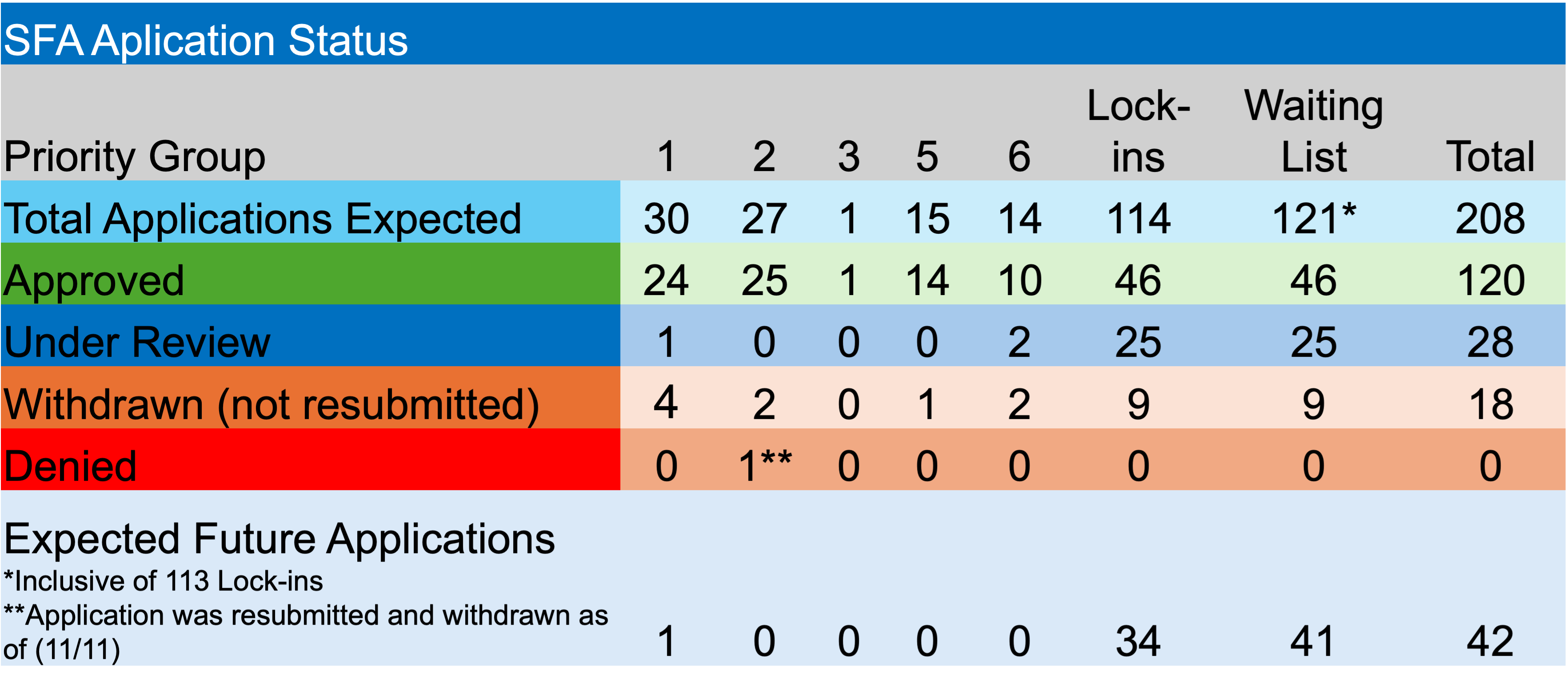
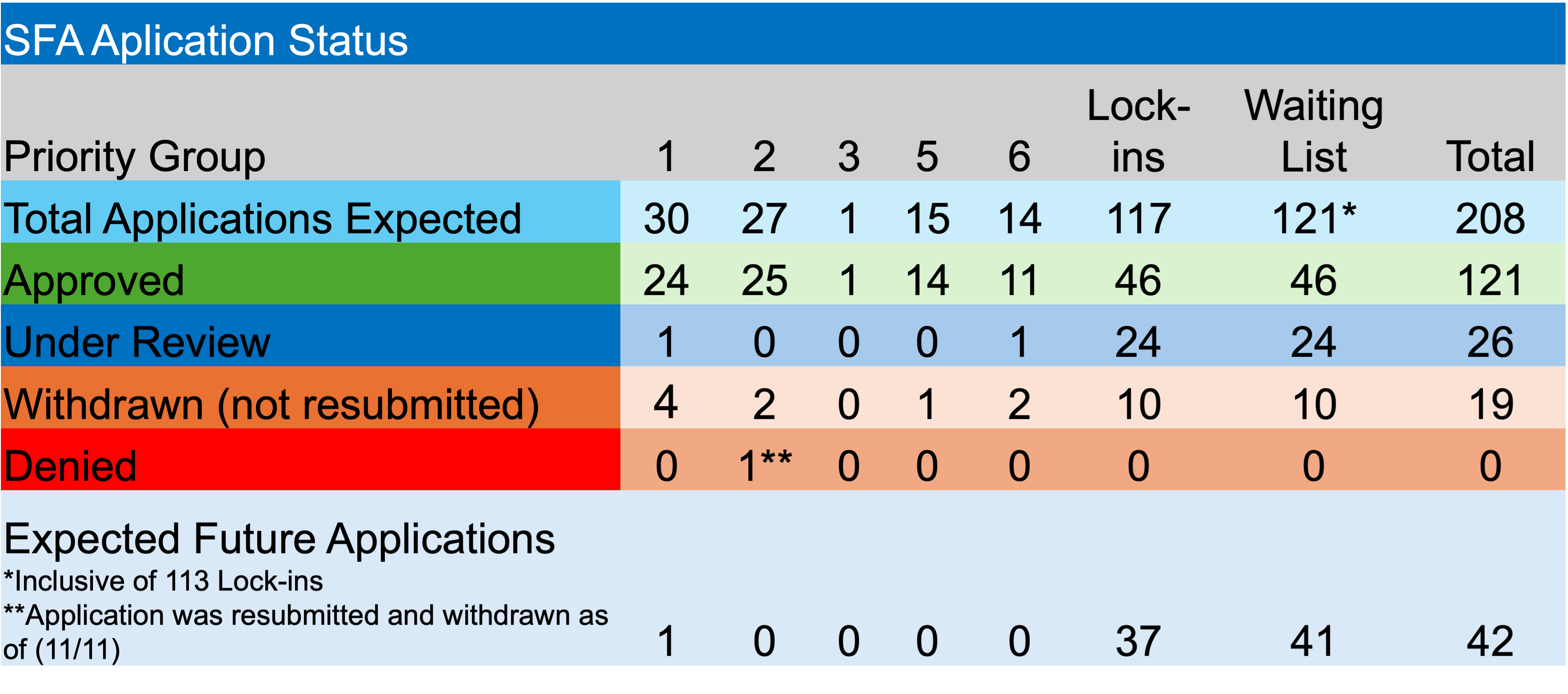
With respect to the implementation of the ARPA legislation, the PBGC is reporting that there were no new applications received. However, there was one application for Special Financial Assistance (SFA) approved, and it was a large grant. Southern California United Food and Commercial Workers Unions and Food Employers Joint Pension Plan, a Priority Group 6 member, had its revised application approved which will provide them with nearly $1.3 billion in SFA to support 193,302 plan participants. Congrats!

In other ARPA news, there were no applications denied and no excess SFA repaid. However, there was one application withdrawn. Warehouse Employees Union Local No. 730 Pension Trust Fund, a non-priority group member, was seeking $110.9 million in SFA. There were no pension funds seeking to be added to the current waitlist, but three of the funds on that list decided to lock-in the SFA measurement date, which just happened to be 2/28/25 for each.

U.S. interest rates rose last week, and the 30-year Treasury Bond yield eclipsed 5% once again. Rates have backed off to start the week, but they remain quite robust providing plan sponsors the opportunity to secure the promised benefits at significant cost reduction. Let’s hope that they remain elevated for the 9 multiemployer plans scheduled to have action taken by the PBGC on the applications in June.

AAA Bonds… A Time That Was

By: Ronald J. Ryan, CFA, Chairman, Ryan ALM, Inc.

The first bond indexes were invented by Art Lipson, my boss, at Kuhn Loeb in the summer of 1973. At that time, the bond market was dominated by AAA Government and corporate bonds. The Kuhn Loeb Government bond index was 100% AAA, and the Kuhn Loeb corporate bond index structure was:    

AAA = 37%    AA = 25%    A = 32%    BBB= 5%

Given the recent downgrade by Moody’s of Treasuries to Aa1 from Aaa we now have an investment grade structure with almost the absence of AAA bonds as evidenced by the Bloomberg Aggregate index:  

AAA = 3.1%   AA = 47.9%   A = 11.4%   BBB = 11.4%   NR = 20.8%   Other = 5.4%

Treasuries and Agencies = 46.08% of the Aggregate index and this exposure will likely grow due to the growing US deficit. This suggests that the Aggregate index yield spread versus A/BBB corporate bonds should widen over time. The Bloomberg Corporate bond index structure is now heavily skewed to A and BBB bonds:  

AAA = 1.1%   AA = 6.3%    A = 45.2%    BBB = 44.9%  Other = 2.6%.

The pension ROA hurdle rate has been in a downward trend for some time and is currently around 6.50% to 7.00% for most pensions. Notably, the ROA is actually a series of ROAs for each asset class weighted to arrive at a single total ROA. The yield of the Bloomberg Aggregate is usually the projected ROA for bonds. The Ryan ALM cash flow matching (CFM) model (we call the Liability Beta Portfolio™  or LBP) will outyield the Aggregate by 50 – 100 basis points depending on the average maturity since it is a corporate bond portfolio skewed to A/BBB+ credits. This means that the LBP will enhance the ROA as shown below which may reduce Contribution costs as well:

                                                    Yield            Weight      ROA          Weight     ROA          Weight     ROA

Bloomberg Aggregate           4.50%             20%       0.90%         30%     1.35%           40%      1.80%

      Ryan ALM LBP                    5.50%             20%       1.10%          30%     1.65%           40%      2.20%

Ryan ALM highly recommends that pensions transfer their current core bond allocations to CFM. The benefits of our LBP are significant and numerous:

  1. LBP matches and fully funds monthly B+E thereby securing the benefits
  2. Enhances ROA by out-yielding index benchmark for fixed income
  3. Provides liquidity to fully fund B+E so no need for cash sweep
  4. Best inflation hedge since it funds actuarial B+E projections
  5. Focuses on actuarial FVs thereby mitigating interest rate risk
  6. By matching FVs CFM should also duration match liabilities
  7. Reduces funding costs by 2% per year = 20% on 1-10 years 
  8. Reduces asset management costs (Ryan ALM fee = 15 bps)
  9. Reduces volatility of the funded ratio + contributions
  10. Buys time for Alpha assets to grow unencumbered

Remember:  the pension objective should be to fully fund and secure the promised benefits in a cost-efficient manner with prudent risk.

U.S. Debt Downgraded – Does That Action Make Sense?

So, Moody’s joined the party and reduced the U.S. credit rating after both S&P and Fitch had previously done so. What a silly (ridiculous) concept!

Identity: All spending = all income


If the U.S. is deficit spending, then the U.S. private sector is reaping the benefits of the income.

So, Moody’s, does the U.S. have a debt problem (NO!) or a demand problem (YES!)? However, it is only a demand problem if the U.S. economy can’t meet the extra demand created from this fiscal deficit through production. The higher inflationary environment during the Covid-19 years was brought about through both greater stimulus and the disruptions to production through the virus’s impact.

What does this mean for pension plans today? The likely scenario given the growing fiscal deficits is higher inflation leading to higher U.S. interest rates. Higher rates will provide plan sponsors with the ability to defease pension liabilities (benefits and expenses) at a much lower cost. The present value of those future payments falls as rates rise. We estimate a roughly 2% cost reduction per year through a cash flow matching (CFM) strategy. Defease liability cash flows for 10-years and you reduce costs by about 20%. Use CFM for a longer period and you can reduce the cost of future benefits by 60+% over 30-years. As a reminder, it was the nearly 40-year decline in U.S. interest rates that crippled many pension plans leading to ever growing liabilities, greater contribution expenses, and the significant reduction in the number of defined benefit pension plans in the private sector.

Secure your benefits at these loftier levels of interest rates and sleep well at night!

ARPA Update as of May 16, 2025

By: Russ Kamp, CEO, Ryan ALM, Inc.

We are pleased to provide the weekly update on the ARPA legislation and the PBGC’s implementation of this critically important pension rescue.

The prior week’s activity was relatively muted. There were no applications submitted to the PBGC, as the eFiling portal remains temporarily closed. In addition, there were no applications approved or withdrawn. There were no fund’s repaying a portion of the SFA because of errors related to census data, as most of the roughly 60 plans have already repaid about 0.4% of the SFA received. However, we did see a second fund’s application denied. United Food and Commercial Workers Unions and Employers Pension Plan application seeking Special Financial Assistance (SFA) as a result of not being eligible.

Multiemployer plans continue to be added to the waitlist hoping that their application will permit them to receive the SFA. There have been 7 funds, including Iron Workers Local 473 Pension Plan (added 5/16), that have been added to the list in 2025. There were only four funds added in 2024 after the initial 109 funds.

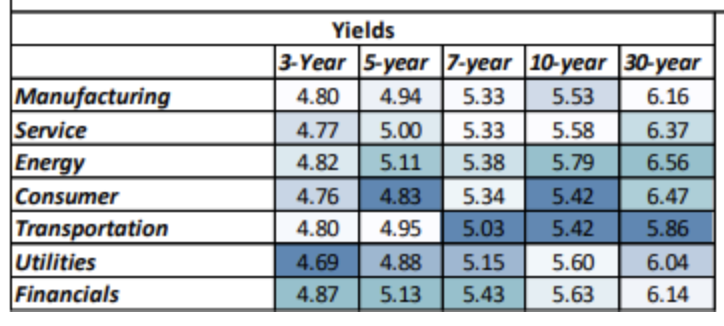
U.S interest rates continue to rise. The yield on the 30-year Treasury bond hit 5% this morning. Corporate spreads for the equivalent 30-year BBB are providing between 6% and 6.5% yields depending on the sector. With yields this robust, plans can significantly reduce the cost of securing the promised benefits.

Bonds Aren’t performance Instruments – Part Deux!

By: Russ Kamp, CEO, Ryan ALM, Inc.

On Tuesday, I produced a post titled “Bonds Are Not Performance Instruments”. I mentioned that fixed income allocations have been a tremendous drag on pension plans and their ability to hit the ROA target. I also mentioned that bonds should be used solely for the cash flows that they produce (interest and principal at maturity).

U.S. Treasury yields are marching higher, which will put further pressure on bond performance. However, the elevated yields are providing plan sponsors with a great opportunity to defease the plan’s liabilities through a cash flow matching (CFM) strategy. Look at the yields below for various investment-grade BBB corporate bonds!

As builders of CFM portfolios, we invest in bonds that will produce the greatest cost savings. As a result, we will overweight the portfolio to A and BBB bonds. Given the “average” ROA is roughly 6.75% for public plans, we can capture a significant percentage of the ROA target through 10-year to 30-year bonds depending on the targeted maturity of the client’s CFM mandate. Why would you not want to improve liquidity, secure the benefits, and buy-time for the alpha assets that can now grow unencumbered? Any fund that has the need for regular liquidity should have an allocation to CFM as its core holding.

Bonds Are NOT Performance Instruments

By: Russ Kamp, CEO, Ryan ALM, Inc.

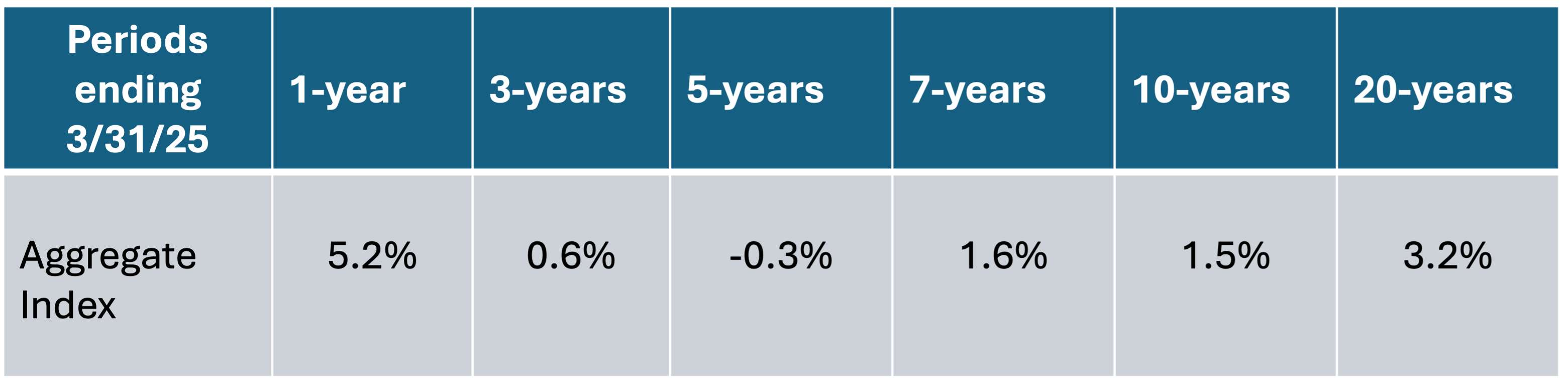
As we wrote a year ago this past April, it is time to Bag the Agg. For public pension plan sponsors and their advisors who are so focused on achieving the return on asset (ROA) assumption, any exposure to a core fixed income strategy benchmarked to the Aggregate index would have been a major drag on the performance since the decades long decline in rates stopped (2020) and rates began to rise aggressively in early 2022. The table below shows the total return of the Bloomberg Aggregate for several rolling periods with returns well below the ROA target return (roughly 7%).

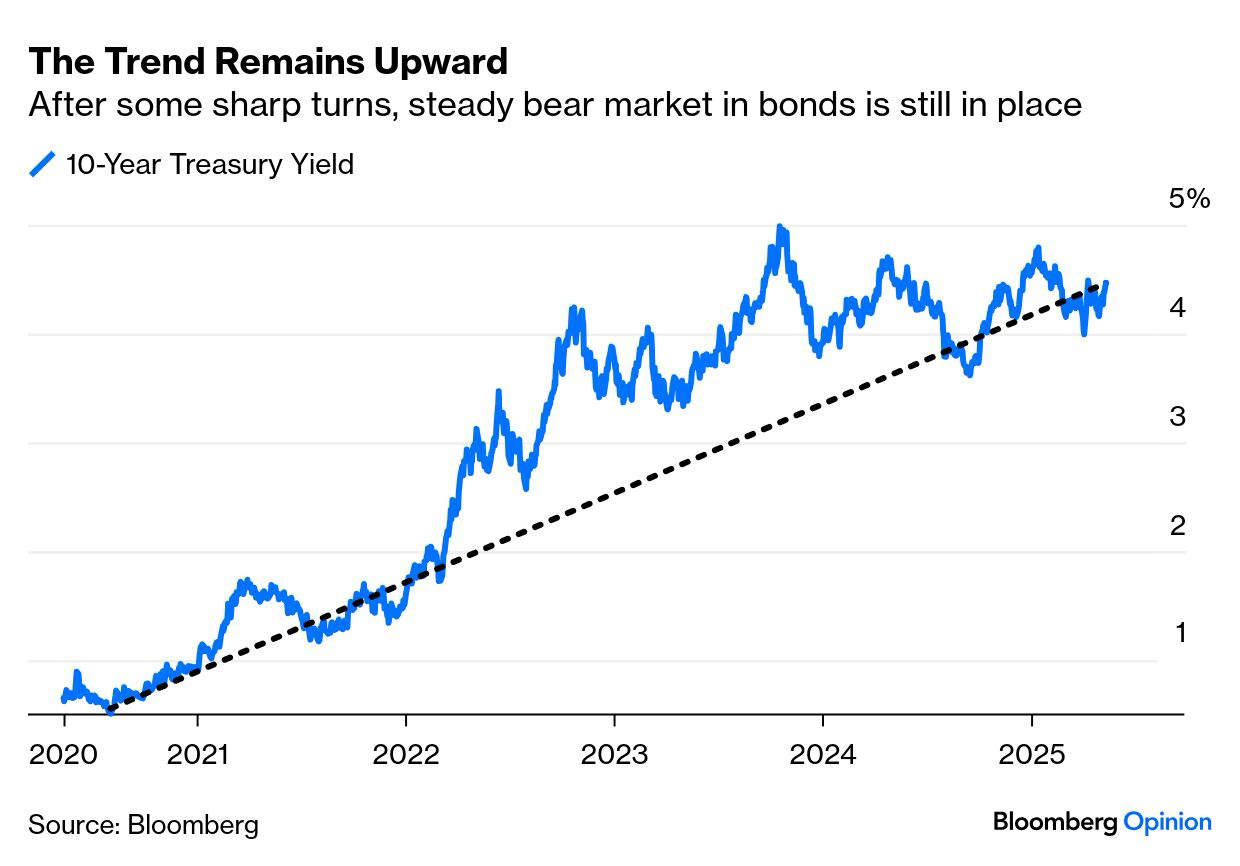
For core fixed income strategies, the YTW should be the expected return plus or minus the impact from changes in interest rates. Again, for nearly 4 decades beginning in 1981, U.S. interest rates declined providing a significant tailwind for both bonds and risk assets. What most folks might not know, from 1953 to 1981 U.S. interest rates rose. Could we be at the beginning of another secular trend of rising rates (see below)? If so, what does it mean for pension plans?

Rising rates may negatively impact the price of bonds, but importantly they reduce the present value (PV) of future benefit payments. They also provide pension funds and their advisors with the option to de-risk the plan through a cash flow matching (CFM) strategy as the absolute level of rates moves closer to the annual ROA. Active fixed income management is challenging. Who really knows where rates are going? But we know with certainty the cash flows that bonds produce (interest income and principal at maturity). Those bond cash flows can be used to match and fully fund liability cash flows (benefits and expenses). A decline in the value of a bond will be offset by the decline in the PV of the plan’s liabilities. So, a 5-year return of -0.3%, which looks horrible if bonds are viewed as performance instruments may match the growth rate of liabilities it is funding. Using bonds for their cash flows, brings certainty and liquidity to the portion of the plan that has been defeased.

Are you confident that your active fixed income will produce the YTW or better? Are you sure that U.S. interest rates are going to fall from these levels? Why bet on something that you can’t control? Convert your active core bond program into a CFM portfolio that will ensure that your plan’s liabilities and assets move in lockstep no matter which direction rates take. Moreover, CFM will provide all the liquidity needed to fund benefits and expenses thereby eliminating the need to do a cash sweep. Assume risk with your growth assets that will now have a longer investing horizon because you’ve just bought plenty of time for them to grow unencumbered.

My Wish List as a Pension Trustee

By: Russ Kamp, CEO, Ryan ALM, Inc.

I’ve been a trustee for a non-profit’s foundation fund. I haven’t been a Trustee for a defined benefit pension plan, but I’ve spent nearly 44-years in the pension industry as both a consultant and investment advisor working with many plan sponsors of varying sizes and challenges. As anyone who follows this blog knows, Ryan ALM, Inc. and I are huge advocates for DB pension plans. We believe that it is critical for the success of our retirement industry that DB pension plans remain at the core of everyone’s retirement preparedness. Regrettably, that is becoming less likely for most. However, if today I were a trustee/plan sponsor of a DB pension plan, private, public, or multiemployer, this would be my wish list:

  • I would like to have more CERTAINTY in managing my DB pension fund, since all my fund’s investments are subject to the whims of the markets.
  • I would like to have the necessary LIQUIDITY to meet my plan’s benefits every month without having to force a sale of a security or sweep income from higher growth strategies (dividends and capital distributions) that serve my fund better if they are reinvested.
  • I would like to have a longer investing HORIZON for my growth (alpha) assets, so that the probability of achieving the strategy’s desired outcome is greatly enhanced.
  • I don’t want to have to guess where interest rates are going, which impact both assets (bond strategies) and liabilities (promised benefits). Bonds should be used for their CASH FLOWS of interest and principal at maturity.
  • I don’t want to pay high fees without the promise of delivery.
  • I’d like to have a more stable funded status/funded ratio.
  • I want annual contribution expenses to be more consistent, so that those who fund my plan continue to support the mission.
  • I want my pension fund to perform in line with expectations so that I don’t have to establish multiple tiers that disadvantage a subset of my fund’s participants.
  • I want my fund to be sustainable, even though I might believe it is perpetual.

Are My Desired Outcomes Unreasonable?

Absolutely, not! However, there is only one way to my wish list. I must retain a Cash Flow Matching (CFM) strategy, that when implemented will provide the necessary liquidity, extend the investing horizon, eliminate interest rate risk, bring an element of certainty to a very uncertain process, AND stabilize both contribution expenses and the funded status for that portion of the portfolio using CFM.

Is there another strategy outside of an expensive annuity that can create similar outcomes? NO! I believe that the primary objective in managing a DB plan is to SECURE the promised benefits at a reasonable (low) cost and with prudent risk. CFM does that. Striving to achieve a return on asset (ROA) through various fixed income, equity, and alternative strategies comes with great uncertainty and volatility.  The proverbial rollercoaster of outcomes. The CFM allocation should be driven by my plan’s funded status. The higher the funded status, the greater the allocation to CFM, and the more certainty my fund will enjoy.

I believe that since every plan needs liquidity, EVERY DB pension fund should use CFM as the core holding. I want to sleep well at night, and I believe that CFM provides me with that opportunity. What do you think?