It May Not Be the Iron Gwazi, But…

By: Russ Kamp, CEO, Ryan ALM, Inc.

I was fortunate to enter the investment industry in October 1981. The 10-year Treasury note’s yield was around 15% at that time. U.S. interest rates would fall (collapse?) for most of the next four decades until they bottomed during the beginning of Covid-19. Oh, it was great to be a bond manager during those decades. You could basically be long duration relative to the Aggregate index with little worry that rates would rise. It was a time to “mint” money in fixed income. Then, it wasn’t!

The beginning of Covid-19 brought about a substantial reaction to the collapse of our economy through major federal stimulus programs. The historic infusion of financial support created excess demand for goods and services at the same time that many of those services were temporarily restricted. The result was the worst inflation shock since the 1970s, which led to the double digit yields mentioned above.

It wasn’t surprising that inflation would appear after decades of it being well contained. It was perhaps the magnitude (9.1% inflation at the peak) of the move that grabbed everyone’s attention. For bond managers, the revival of inflation created an environment that forced the U.S. Federal Reserve to initiate the most aggressive policy shift in quite some time beginning in March 2022. As a result of the Fed’s action, bond managers suffered their worst year ever as represented by the BB Aggregate Index (-13%). The average fixed income manager faired only slightly better than the index according to eVestment’s database, as the median core bond manager produced a -12.8% result for all of 2022.

The following two years have been incredibly volatile for U.S. bond managers. Calendar year 2023 was looking to be a very poor year until the investing community was certain that the Fed had accomplished its objective by the end of that year, and as a result, interest rates fell. For the year, the median fixed income manager was up 6.1%, or a little bit less than 1/2 what they had lost in the previous year. This past year was no better, except that markets were rosier to begin 2024, only to have a challenging conclusion to the year as inflation proved much stickier. The median manager produced only a 2% return for the year, holding on to <1/2 the income while seeing principal losses. Given the topsy turvy nature of the bond market during the last three years, it shouldn’t come as a surprise that the median manager has only generated a -1.9% 3-year annualized result.

The rollercoaster of fixed income returns observed during the last several years may not be as extreme as those we witness in other asset classes, mainly equities, but it is not helpful to the long-term funding of pension plans or endowments and foundations. As most know, changes in interest rates are the greatest risk to fixed income strategies. The 4-decade decline in rates was preceded by a nearly 3-decade rise in rates beginning in the early 1950s. Does the significant rise in rates starting in 2022 mark the beginning of another long-term secular upward trend or is this just a head fake? I wouldn’t want to have to bet on the future of interest rates in order to manage a successful program and you shouldn’t either.

Cash flow matching (CFM) mitigates interest rate risk. The defeasing of benefit payments, which are future values, are not interest rate sensitive since a $1,000 monthly payment in the future is $1k whether rates rise or fall. Furthermore, the cost savings that are produced on the day that the CFM portfolio is built will be maintained whether rates rise or fall. We are seeing at least a -2% reduction in cost per year in our model. Ask us to defease your benefit payments for 10 years and you’ll see a roughly 20% reduction. Longer-term programs (such as 30-years) can see substantial cost savings and annual reductions >-2%/year.

So, I ask, why invest in a core bond product, the success of which is predicated mostly on the direction of interest rates, when one can invest in a CFM strategy that provides the certainty of cash flows to meet benefit payments? Furthermore, CFM portfolios mitigate interest rate risk and extend the investing horizon for your plan’s alpha (growth) assets, while getting you off the rollercoaster of annual returns. Lastly, given the recent rise in U.S. interest rates, building a CFM portfolio with investment grade corporate bonds can produce a YTW of 5.5% or better. Seems like a sleep well at night strategy to me.

BTW, the Iron Gwazi is the world’s steepest and fastest hybrid rollercoaster found at Busch Gardens in Florida. It has a height of 206 feet and a 91 degree drop. It might just rival the feeling one got going through the Great Financial Crisis. That wasn’t any fun!
ARPA Update as of January 17, 2025

By: Russ Kamp, CEO, Ryan ALM, Inc.

I hope that you enjoyed the long holiday weekend. For many of us on the East coast, the holiday’s days and nights were likely spent inside given the frigid temps. Unfortunately, the upcoming week is not going to provide any weather relief.

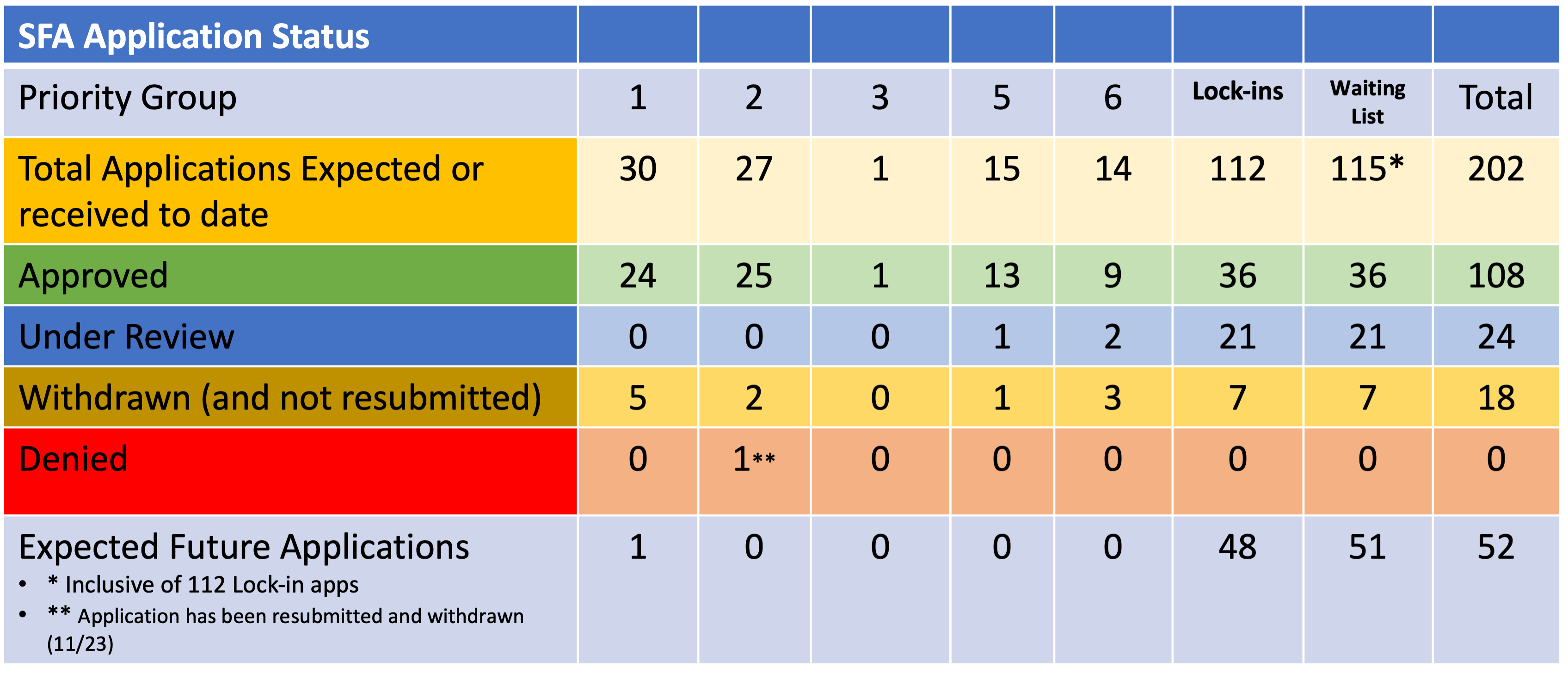
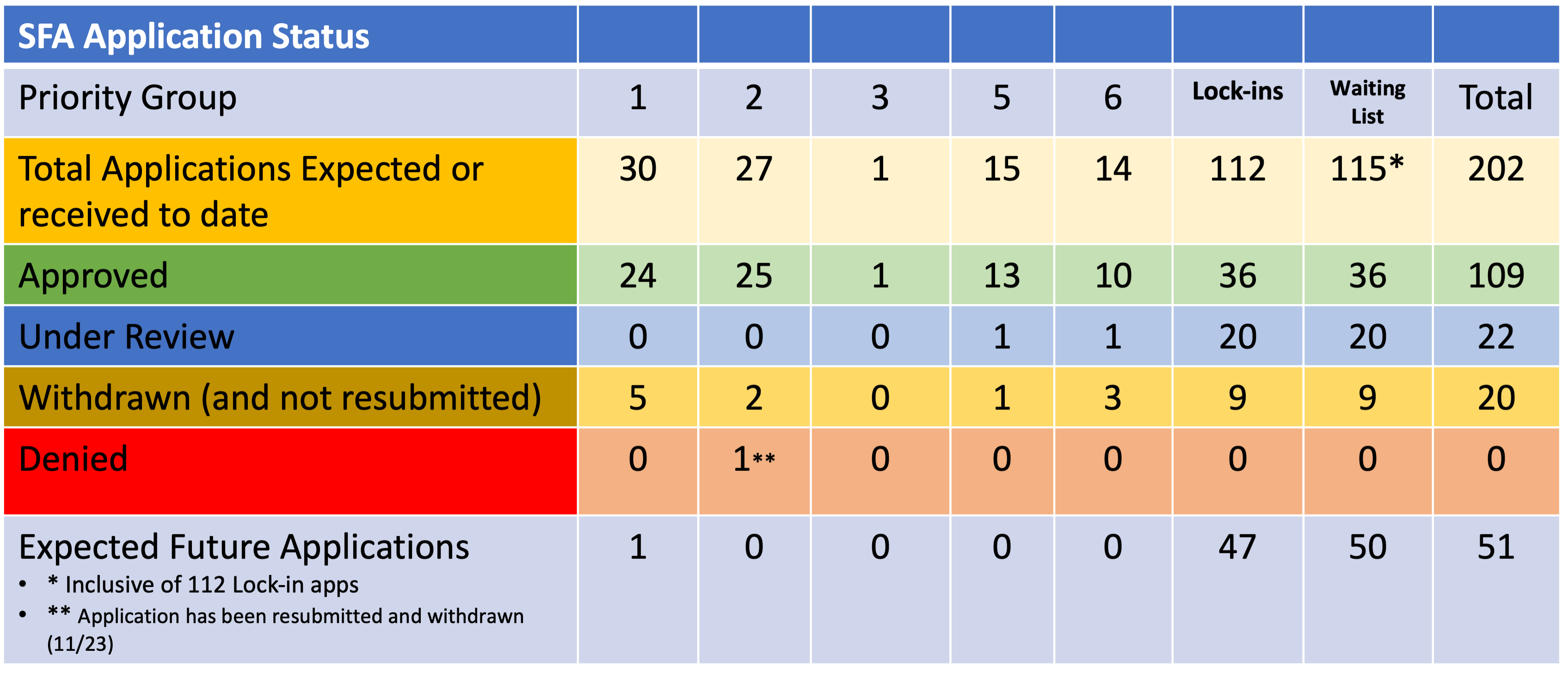
However, this should warm your heart, as the PBGC continued to be active implementing the ARPA legislation that is nearing its fourth anniversary (3/11/21). To date, the PBGC has approved the Special Financial Assistance (SFA) for 109 multiemployer plans. The grants have totaled $70.9 billion and 1,528,409 American workers/retirees have had the promised pension benefit protected, and in some cases, restored.

During the last week, the PBGC accepted one new application, as Greendale, WI based United Food and Commercial Workers Unions and Employers Pension Plan filed a revised application seeking $54.3 million for its 15,420 plan participants. In other news, two funds, Cement Masons Local No. 524 Pension Plan and Local 1922 Pension Plan each withdrew their initial application. The two funds were seeking just over $20 million for roughly 2k members. Finally, the Legacy Plan of the UNITE HERE Retirement Fund, a Priority Group 6 member, received approval of its revised application. They have been awarded $868.8 million in SFA and interest that will go to protecting the retirements for 91,744 participants. Congrats!

The PBGC’s eFiling portal is temporarily closed. According to the PBGC’s website, “the PBGC will accept as many applications as the agency estimates it can process within the statutory 120-day review period. When the number of applications under review reaches that level, the application e-Filing Portal will temporarily close until PBGC has capacity to receive more applications.” There are still an estimated 93 funds going through the process of filing applications SFA grants. 

Hey, Pension Community – We Have Liftoff!

By: Russ Kamp, CEO, Ryan ALM, Inc.

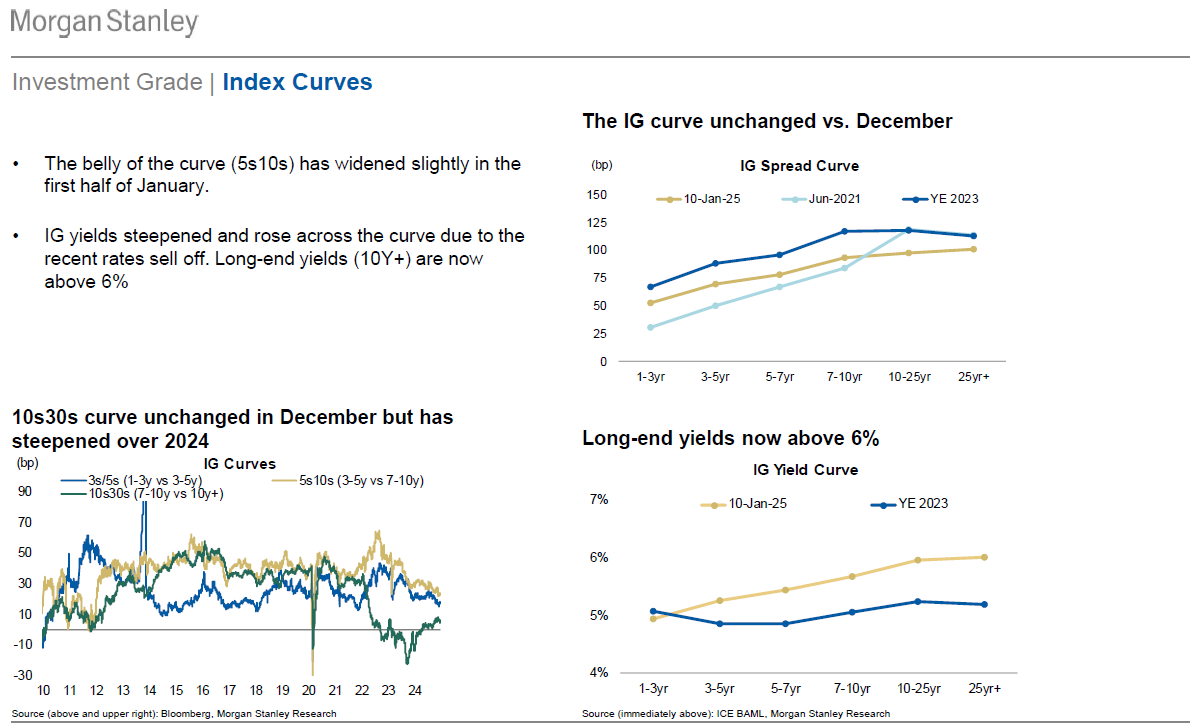
Not since October of 2023 have we seen long-dated Treasury yields at these levels. Currently, the 30-year Treasury bond yield is 5% (12:47 pm EST) and the 10-year Treasury Note’s yield has eclipsed 4.8%. Despite tight credit spreads, long-dated (25+ years) IG corporate bond yields are above 6% today (chart in the lower right corner).

Securing pension liabilities, whether your DB plan is private, public, or a multiemployer plan, should be the primary objective. All the better if that securing (defeasement strategy) can be accomplished at a reasonable cost and with prudent risk. The good news: the current rate environment is providing plan sponsors with a wonderful opportunity to accomplish all of those goals, whether you engage in a cash flow matching (CFM) for a relatively short period (5-years), intermediate, (10ish-years) or longer-term (15- or more years) your portfolio of IG corporate bonds will produce a YTM of > 5.5%. This represents a significant percentage of the target ROA.

Furthermore, as we’ve explained, pension liabilities are future values (FVs), and FVs are not interest rate sensitive. Your portfolio will lock in the cost savings on day one, and barring any defaults (about 2/1,000 in IG bonds), the YTM is what your portfolio will earn throughout the relationship. That is exciting given the fact that traditional fixed income core mandates bleed performance during rising rate regimes. In fact, the IG index is already off 1.2% YTD (<10 trading days).

Who knows when the high equity valuations will finally lead to a repricing. Furthermore, who knows if US inflation will continue to be sticky, the Fed will raise or lower rates, geopolitical risks will escalate, and on and on. With CFM one doesn’t need a crystal ball. You can SECURE the promised benefits for a portion of your portfolio and in the process you’d be stabilizing the funded status and contribution expenses associated with those assets. Don’t let this incredibly attractive rate environment come and go without doing anything. We saw inertia keep plans from issuing POBs when rates were historically low. It is time to act.

ARPA Update as of January 10, 2025

By: Russ Kamp, CEO, Ryan ALM, Inc.

Welcome to the second full week of January. Although the PBGC’s efiling portal remains temporarily closed, there was still some good activity last week, including the approval of another three applications seeking Special Financial Assistance (SFA). Pleased to report that Laborers’ Local No. 265 Pension Plan, Local 734 Pension Plan, and Upstate New York Engineers Pension Fund each a non-priority group member received approval for their revised applications. In total, they will receive $244.6 million in SFA for the 11,374 plan participants. What an exciting way to begin 2025.

In other news, there was one application withdrawn, Warehouse Employees Union Local 169 and Employers Joint Pension Plan, from Elkins Park, PA, withdrew its initial application seeking nearly $90 million in SFA for just over 3,600 members of the plan.

The 108 funds receiving SFA to date have been awarded grants exceeding $70 billion benefiting the quality of life for more than 1.4 million American workers. There is still much more to do (possibly another 94 funds will get SFA), but the program has already been an incredible success. Finally, US Treasury yields continue to rise, providing pension plans with the wonderful opportunity to further de-risk the SFA assets received and those to come. IG corporate bond yields exceeding 6% are not rare. Let us know how we can help you.

Corporate Funding Improved Significantly in 2024!

By: Russ Kamp, CEO, Ryan ALM, Inc.

Milliman is out with the year-end report on corporate pension funding and it tells a beautiful story. The Milliman 100 Pension Funding Index (PFI), is reporting an average 105% funded ratio at the end of 2024 compared to 99.5% at the end of 2023. But wait, assets for the top 100 plans only grew by 4.2%, which must have been below the stated ROA. Furthermore, total assets declined by $26 billion after accounting for benefits and expenses. How is that possible? Oh, I get it, the growth in liabilities matters.

Milliman is reporting that the discount rate used to value corporate pension liabilities increased 59 bps during the year from 5.0% at 12/31/23 to 5.59% as of year-end 2024. That significant move up in rates drove the present value of those pesky liabilities down by -$94 billion creating a $68 billion improvement in the asset/liability relationship and a significantly improved funded ratio! Congrats corporate America and the participants that you serve!

I was recently asked by an industry reporter if the “underperformance” of corporate plans versus other sponsoring groups – public and multiemployer – should be a concern. I, of course said NO, that managing a DB plan is all about the relationship of assets to liabilities. Both could have negative or positive growth rates, but if asset growth exceeds liability growth the plan wins! It is really a simple concept.

Now, I would suggest that corporate America get even more conservative at this time, as we live in an environment of stretched valuations, stubborn inflation, the prospect of higher rates, etc. Congrats on your collective victory. Secure those promises through a cash flow matching (CFM) strategy that will not only provide you with the security that the benefits are protected, but the enhanced liquidity and lengthened investing horizon for any residual growth assets will also be realized.

As always, thanks to Zorast Wadia and the Milliman organization for taking the time to produce this important analysis. Without good data, it is difficult to know how to play the game – assets versus liabilities is the name of the pension game!

Ryan ALM, Inc.’s Q4’24 Newsletter

By: Russ Kamp, CEO, Ryan ALM, Inc.

We are pleased to share with you Ryan ALM Inc.’s Q4’24 Newsletter. As you will read, the fourth quarter saw asset values continue to grow, while the present value of pension liabilities fell due to rising U.S. interest rates. Asset growth has far exceeded liability growth in 2024 leading to improved funded ratios for all DB plan types.

The current level of U.S. rates is supportive of derisking strategies – primarily through cash flow matching (CFM). Given elevated valuations in a number of asset classes and strategies, it makes sense to reduce risk at this juncture before the markets take no prisoners.

As always, we encourage you to reach out to us with your questions. We want to be your source for anything liability-related. Please don’t hesitate.

Will You Do Nothing?

By: Russ Kamp, CEO, Ryan ALM, Inc.

I recently read an article by Cliff Asness of AQR fame, titled “2035: An Allocator Looks Back over the Last 10 Years”. It was written from the perspective that performance for world markets was poor and his “fund’s” performance abysmal during that 10-year timeframe. His take-away: we can always learn from our mistakes, but do we? He cited some examples of where he and his team might have made “mistakes”, including:

Public equity – “It turns out that investing in U.S. equities at a CAPE in the high 30s yet again turned out to be a disappointing exercise”.

Bonds – “Inflation proved inertial” running at 3-4% for the decade producing lower real returns relative to the long-term averages.

International equities – “After being left for dead by so many U.S. investors, the global stock market did better with non-U.S. stocks actually outperforming”.

Private equity – “It turned out that levered equities are still equities even if you only occasionally tell your investors their prices”. When everyone is engaged in pursuing the same kind of investment there is a cost.

Private credit – “The final blow was when it turned out that private credit, the new darling of 2025, was just akin to really high fee public credit” Have we learned nothing from our prior CDO debacle?

Crypto – “We had thought it quite silly that just leaving computers running for a really long time created something of value”. “But when Bitcoin hit $100k we realized that we missed out on the next BIG THING” (my emphasis) “Today, 10 after our first allocation and 9 years after we doubled up, Bitcoin is at about $10,000.”

Asness also commented on active management, liquid alts, and hedge funds. His conclusion was that “the only upside of tough times is we can learn from them. Here is to a better 2035-2045”

Fortunately, you reside in the year 2025, a year in which U.S. equities are incredibly expensive, U.S. inflation may not be tamed, U.S. bonds will likely underperform as interest rates rise, the incredible push into both private equity and credit will overwhelm future returns, and let’s not discuss cryptos, which I still don’t get. Question: Are you going to maintain the status quo, or will you act to reduce these risks NOW before you are writing your own 10 year look back on a devastating market environment that has set your fund back decades?

As we preach at Ryan ALM, Inc., the primary objective when managing a DB pension plan is to SECURE the promised benefits at a reasonable cost and with prudent risk. Continuing to invest today in many segments of our capital markets don’t meet the standard of low cost or of a prudent nature. Now is the time to act! It really doesn’t necessitate being a rocket scientist. Valuations matter, liquidity is critical, high costs erode returns, and no market outperforms always! Take risk off the table, buy time for the growth assets to wade through the next 10-years of choppy markets, and SECURE the promised benefits through a cash flow matching (CFM) strategy that ensures (barring defaults) that the promised benefits will be paid when due.

Thanks, Cliff, for an excellent article!

ARPA Update as of January 3, 2025

By: Russ Kamp, CEO, Ryan ALM, Inc.

Welcome to 2025. May it prove to be an incredible year for all of us.

The PBGC seems to have hit the pause button on the continuing implementation of the ARPA legislation. Not surprising given the holidays and what has been accomplished to date, with more than 100 multiemployer plans approved to receive the Special Financial Assistance (SFA). As we’ve reported throughout the nearly 3 1/2 years of the legislation’s implementation, this was a massive undertaking. Despite a couple of missteps, I believe that the PBGC has done an incredible job. As a result, 1,425,291 plan participants have had their benefits secured and in some cases, restored to the original promise.

Despite the incredible effort to date, there remains much to do with 97 plans still waiting for approval of the submitted applications or to file an initial or revised application. Fortunately, US Treasury yields have once again elevated providing those funds yet to file an opportunity to invest the SFA in a CFM strategy that will secure the promised benefits at reduced cost.

How Many Words Do You Need?

By: Russ Kamp, Managing Director, Ryan ALM, Inc.

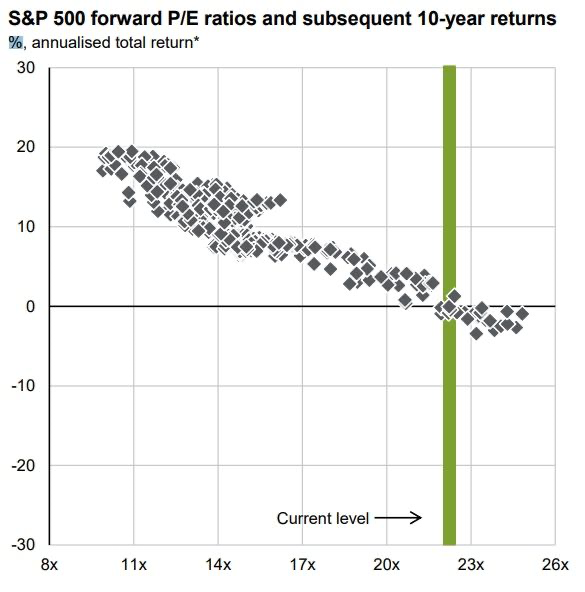
In 1971, David Gates, singer-songwriter for the band Bread, published the song “IF”. The song begins with the lyrics, “If a picture paints a thousand words…”. If David was correct and a picture does in fact paint 1,000 words, then how many words do you think that the picture below is producing? First, I don’t think that you need many words, certainly not 1,000, to know precisely what is being conveyed in the graph below. But, on the other hand, you could probably write 1 million words about the current state of the US equity market, especially large cap stocks, which have performed exceptionally well for the second consecutive year basically on the back of mega technology stocks benefitting from the “promise” of AI.

The S&P 500 has now advanced more than 20% in each of the last two calendar years and four of the last six years. According to Glen Eagle trading, “only three times in history has it done so for a third: 1935-36 (followed by a 39% plunge in 1937), 1954-55 (a 2.6% rise in 1956), and 1995-98 (nearly 20% in 1999)”. But, please don’t forget that the NASDAQ 100 collapsed by more than -80% beginning in March 2000 – 2002. Those stats portend some potentially serious consequences if no action is taken now.

The graph above was produced by Mike Zaccardi, CFA, CMP, who highlights the fact that the current level of the S&P’s forward looking P/E multiple is likely to produce a 10-year annualized return for the S&P 500 that is likely to be negative. If not negative, certainly not robust enough to support US pension plans hoping to generate a roughly 7% annualized return on assets (ROA). That’s the bad news!

The good news is that there is an alternative to letting the equity exposure ride. As I’ve written about recently, US Treasury bond and note yields have risen to levels last witnessed earlier this year. Comparable maturity investment grade corporate bonds have historically average a roughly 1.2% yield premium. If the average spread were realized (they are tight today), one could get a roughly 5.75%-6.00% YTW with little volatility. Adopt a cash flow matching strategy as the core holding creating a level of certainty that is not possible through a traditional asset allocation framework.

Don’t subject the pension assets to unnecessary risk. Regrettably, periods of significant negative returns are not unheard of and often lead to dramatically increased levels of contributions needed to improve the plan’s funded status. As always, we are more than willing to produce a FREE analysis on what could possibly be achieved through the adoption of a CFM strategy. The time to act is now and not after the S&P 500 suffers a correction.

ARPA Update as of December 27, 2024

By: Russ Kamp, Managing Director, Ryan ALM, Inc.

We, at Ryan ALM, Inc., wish for you a happy, healthy, and prosperous New Year in 2025. May the markets continue to treat you well. However, nothing grows to the heavens, so it may be wise to alter one’s asset allocation and reduce risk as the year begins given inflated valuations, particularly for large cap US equities.

Regarding ARPA and the PBGC’s on-going effort implementing this critical legislation, there was a pause in activity during the last week. Good for them, as 2024 has been an incredibly busy and successful year. Regarding last week, the PBGC’s eFiling portal remains temporarily closed, so there were no new applications filed. There also weren’t any applications denied, withdrawn, or approved. Finally, there were no repayments made by funds that had received excess SFA.

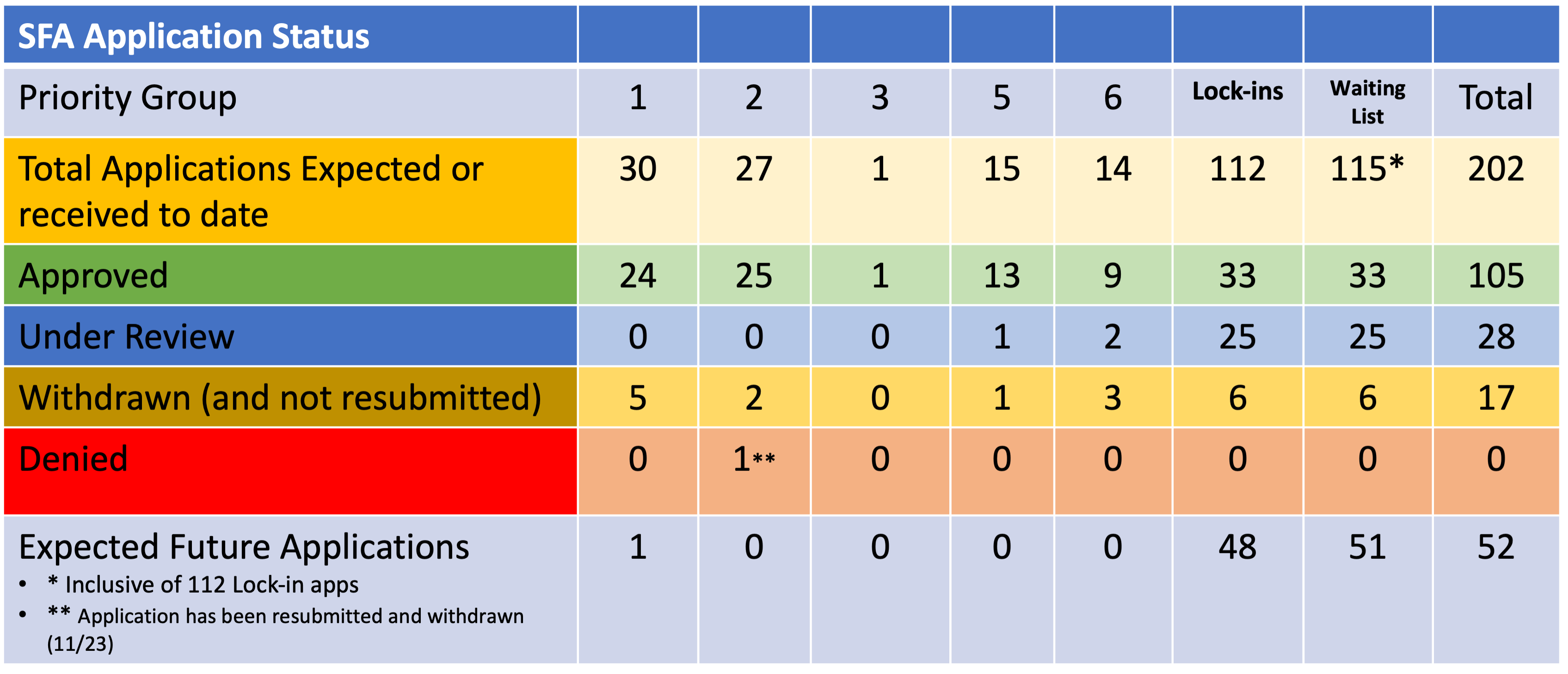
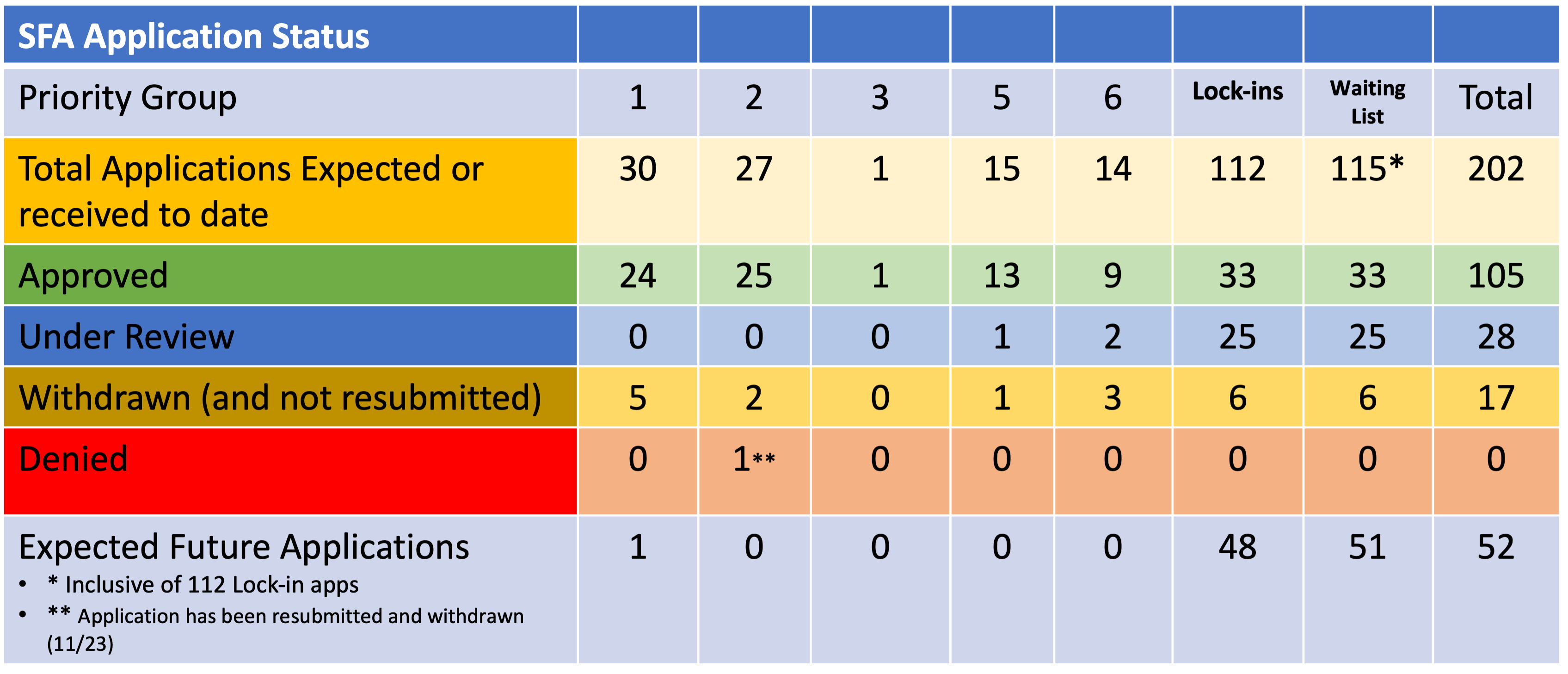
To recap 2024, the PBGC approved 36 applications, awarding more than $16.2 billion in SFA grants that went to support the promised benefits for 458,446 plan participants. WOW! As the chart below highlights, only 15 of the 87 Priority Group members have yet to have the applications for SFA approved. Three of those applications are currently under review. Of the 115 funds seeking support that weren’t initially identified as a Priority Group member, 64 pension plans have participated to some extent in this program with 33 of those applications approved.

US Treasury note and bond yields (longer maturities) have risen sharply in the last few months. They are at levels not witnessed since early this year. As a result, they are providing plan sponsors with a wonderful opportunity to reduce risk without giving up potentially higher returns. We’d be happy to provide a free analysis on what could be achieved within your plan. Don’t hesitate to reach out to us.

Again, Happy New Year!