Not so Fast!

By: Russ Kamp, Managing Director, Ryan ALM, Inc.

You may recall in the 1970s Heinz Ketchup used Carly Simon’s song, “Anticipation” as a jingle for several of its commercials. US bond investors might just want to adopt that song once more as they wait for the anticipated rate cuts from the Federal Reserve’s FOMC. As you may recall, investors pounced early on the perceived likelihood of rate cuts, forecasting multiple cuts and a substantial move down in rates given the expectation of a less than soft landing. As a result, US rates, as measured by the Treasury yields, fell precipitously during a good chunk of the summer, bottoming out on September 16th, which was two days prior to the Fed’s first cut (0.5%).

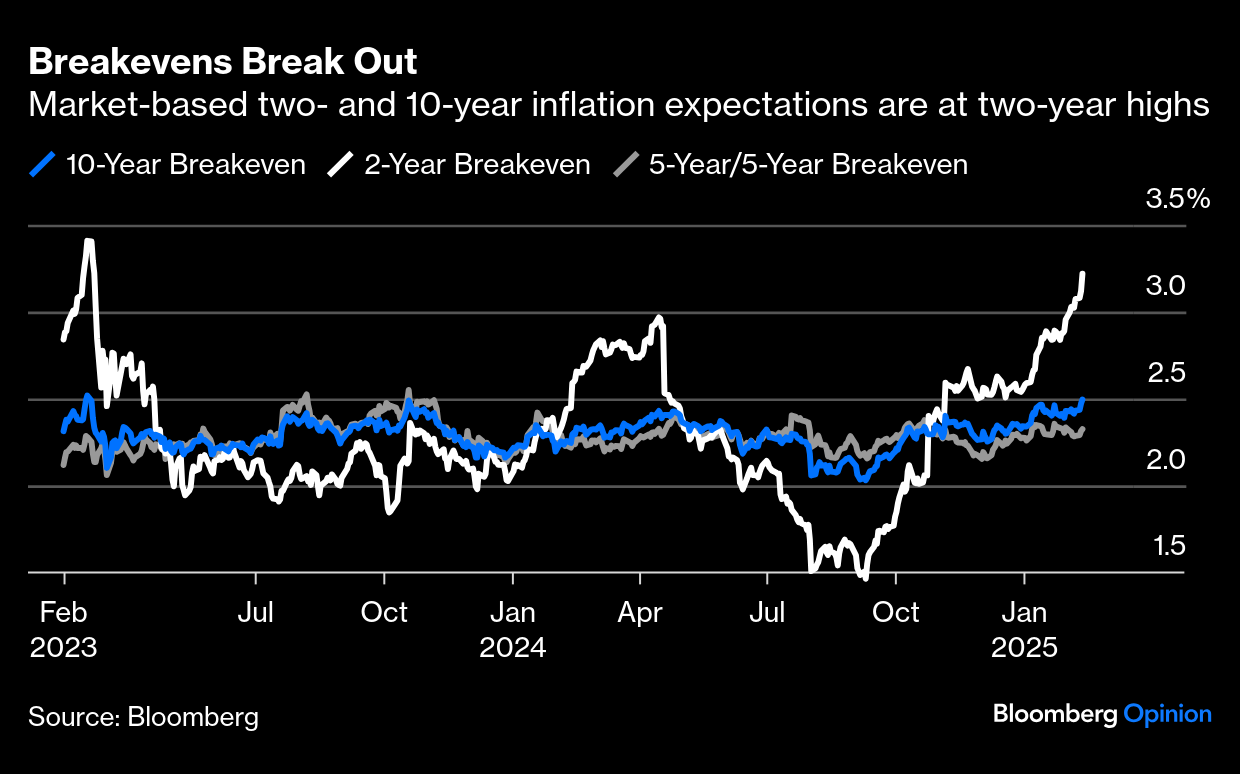
However, economic and inflationary news has been mixed leading some to believe that the Fed may just take a more cautionary path regarding cuts. Those sentiments were echoed by Federal Reserve Chairman Powell just yesterday, who stated during a speech in Dallas, “The economy is not sending any signals that we need to be in a hurry to lower rates.” Not surprising, bond investors did not look favorably on this pronouncement and quickly drove Treasury yields upward and stocks down. If the prospect of lower rates is the only thing propping up equities at this time, investors of all ilk better be wary.

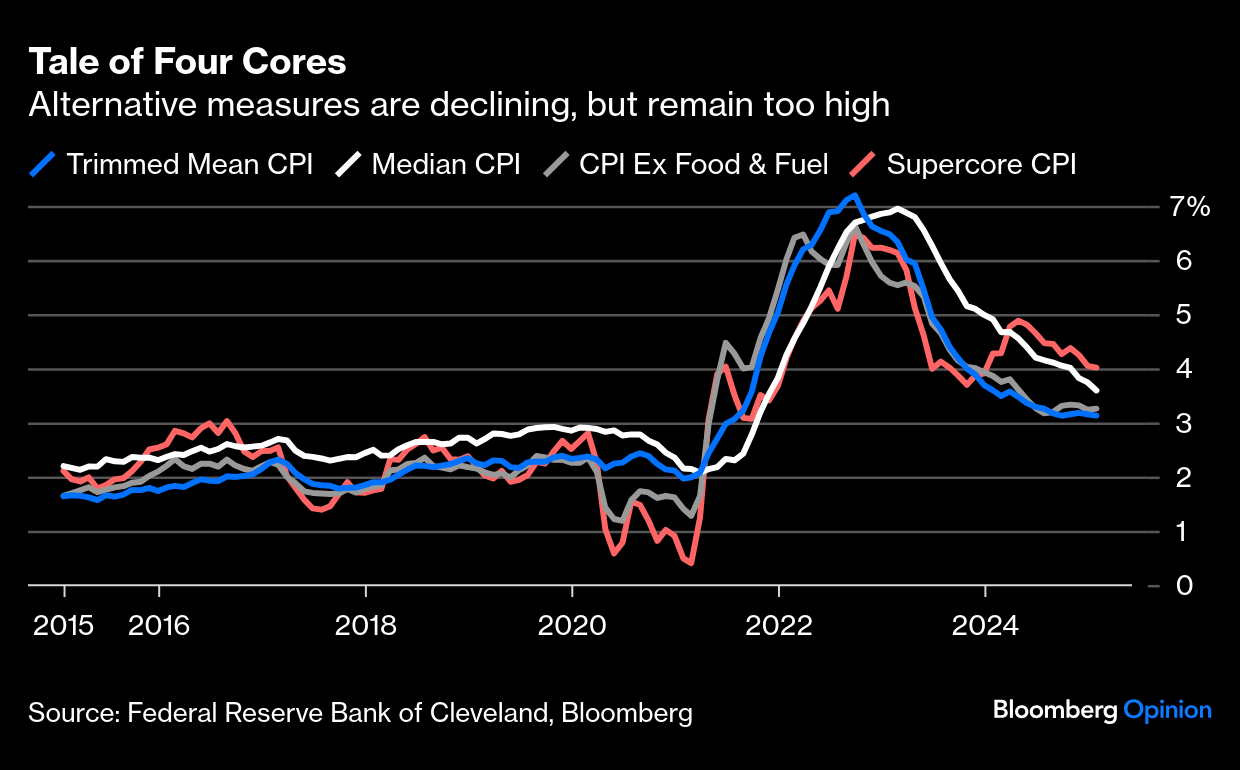
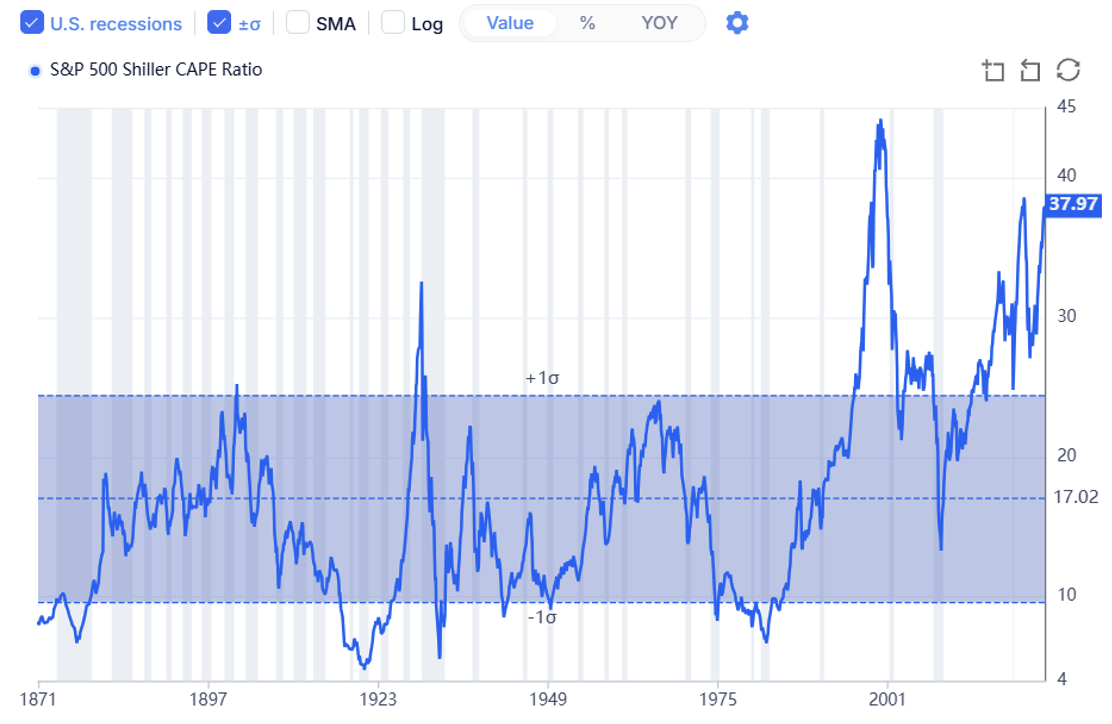
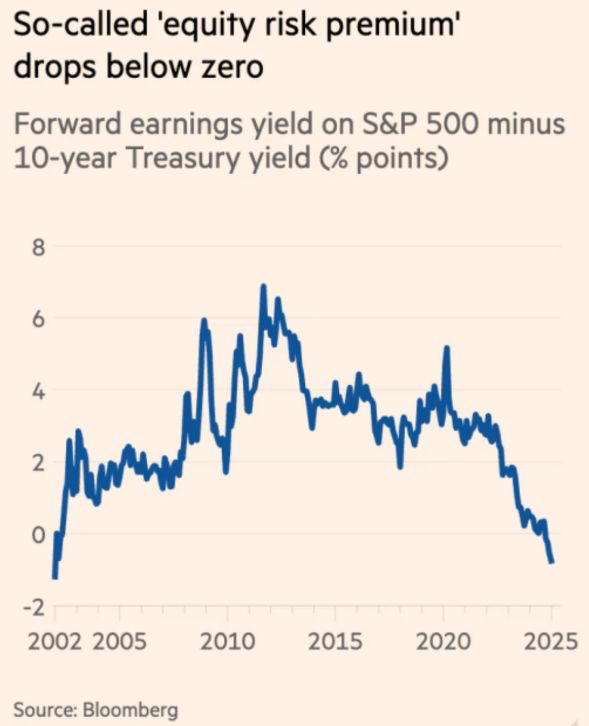
As the above graph highlights, inflation’s move to the Fed’s 2% target has been halted (temporarily?), as Core CPI has risen by 0.3% in each of the last three months. As I wrote above, the prospect of lower rates has certainly helped to prop up US equities. However, rising rates impacts the relationship of equities and bonds. According to a post by the Daily Shot, “the S&P 500 risk premium (forward earnings yield minus the 10-year Treasury yield) has turned negative for the first time since 2002, indicating frothy valuations in the US stock market.”

As a result of these recent moves in the capital markets, US pension plan sponsors would be well-served to use the elevated bond yields to SECURE the promised benefits through a cash flow matching defeasement strategy. As we’ve discussed on many occasions, not only is the liquidity to meet the promised benefits available when needed, this process buys time for the remaining assets to grow unencumbered, as they are no longer a source of liquidity. It is a win-win!

The Joke’s On Us!

By: Russ Kamp, Managing Director, Ryan ALM, Inc.

According to a P&I article, the ECB has undertaken an “exploratory review of bank exposures to private equity and private credit funds in order to better understand these channels and to assess banks’ risk management approaches.” According to P&I, the overarching message was that “complex exposures to private equity and credit funds require sophisticated risk management.”

Yesterday, there was a FundFire article that questioned the effectiveness of the “Yale Model” given the heavy dependence on alternatives and the weak performance associated with those products in recent periods. According to the article, the greater the alts exposure the likely weaker fiscal performance.

In a recent article by Richard Ennis, founder and former chairman of investment consultant EnnisKnupp, he estimates that Harvard University, with about 80% of its endowment assets in alternative investments, spends roughly 3% of endowment value on money management fees annually, including the operation of its investment office.

Given the concerns noted above with respect to fees, risk management, and the overall success of investing in alternative strategies, one would believe that a cautionary tone would be delivered at this time. But alas that isn’t the case when it comes to forging ahead with plans to introduce alternatives into DC plans where the individual participant lacks the necessary sophistication to undertake a review of such investments. According to yet another FundFire article in recent days, Apollo and Franklin are plowing forward with plans to make available alternative investments to the DC participant through a new CIT. Shameful!

I’ve commented numerous times that it is pure madness to believe that the average American worker has the disposable income, investment acumen, and/or the necessary crystal ball to effectively manage distributions upon retirement through a DC offering. Given this lack of investment knowledge, I find it so distasteful that “Wall Street” continues to look at these plans as just another source of high fees and revenue. Where are the FIDUCIARIES?

If the ECB doesn’t believe that their banks have the necessary tools in place to handle these complex investments, how on Earth will my neighbor, family member, former teacher, etc.? Can we please stop this madness!

ARPA Update as of November 8, 2024

By: Russ Kamp, Managing Director, Ryan ALM, Inc.

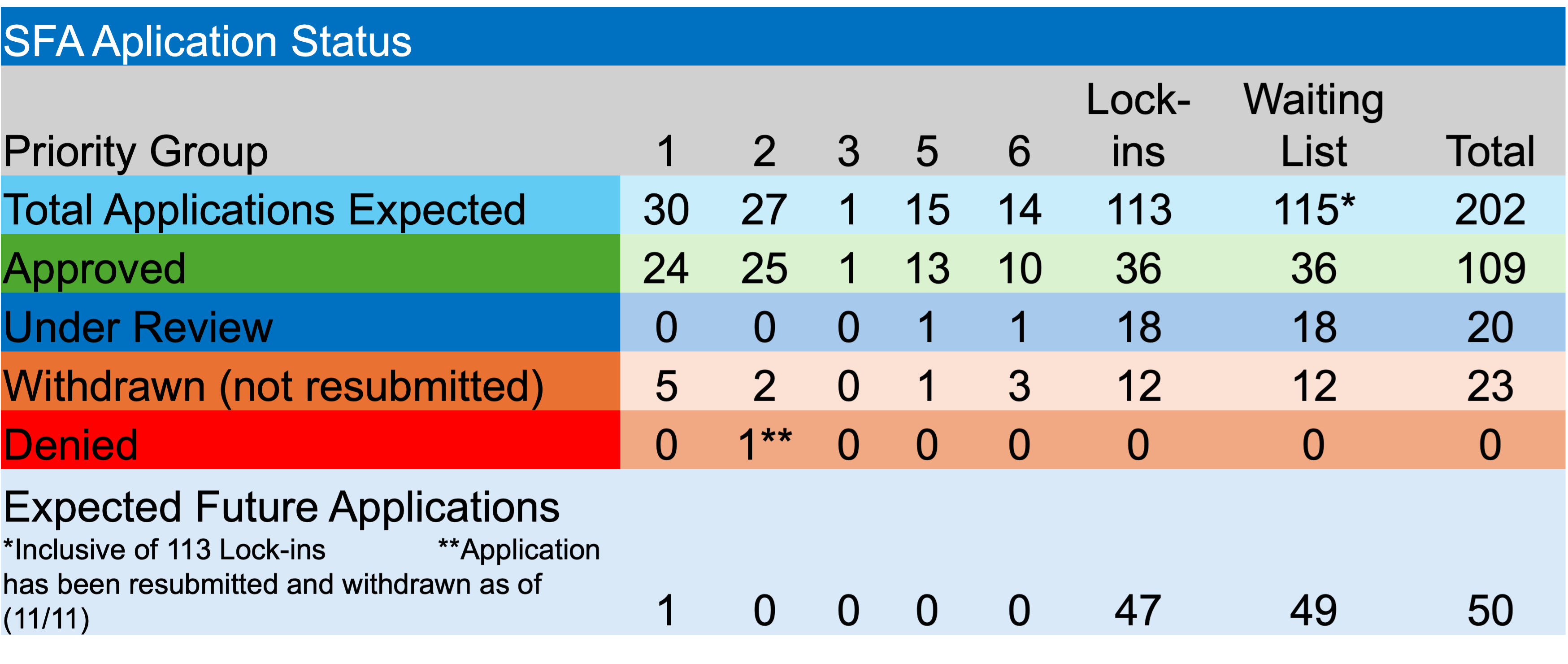
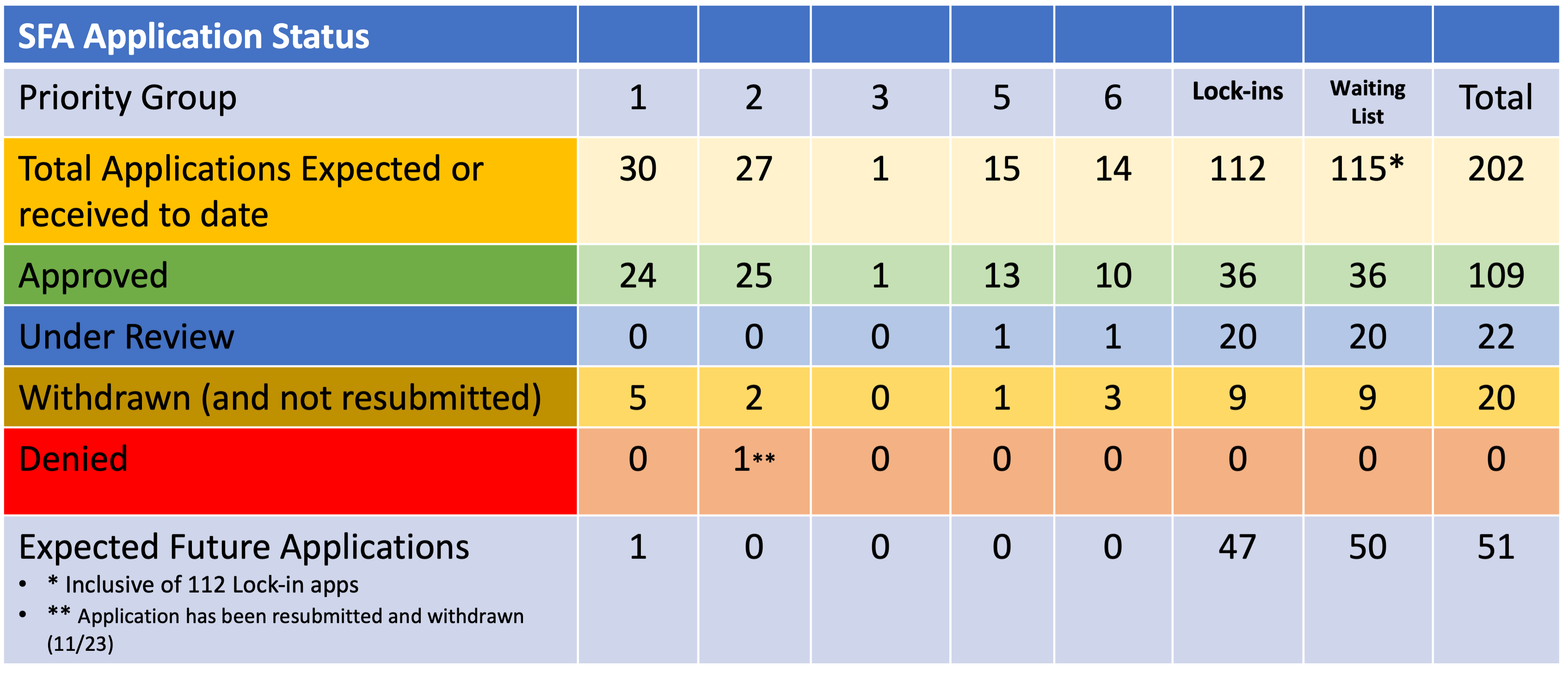
The PBGC continues to implement the ARPA legislation, although last week revealed less apparent activity according to its weekly update. The legislation which was approved in March 2021 and implemented beginning in July of that year, has now been active for about 3 1/3 years. I remain impressed with the PBGC’s effort to-date, as 98 pension plans have received Special Financial Assistance grants and interest totaling more than $69.4 billion. Wow!

Regarding last week’s activity, there was one fund invited to submit an initial application. The Aluminum, Brick & Glass Workers International Union, AFL-CIO, CLC, Eastern District Council No. 12 Pension Plan, is seeking $10.6 million in SFA for 580 plan participants. The PBGC has until March 6, 2025 (I can’t believe that is only 120 days away!) to act on the application.

In other news, Local 734 Pension Plan, an IBT fund out of Chicago, withdrew its initial application seeking $109 million for its 3,453 members. That application had been submitted on July 15, 2024 and it was nearing the PBGC’s 120-day deadline.

There were no applications denied, no excess funds repaid, no applications approved, and no plans added to the waitlist, which continues to list 62 funds yet to file an initial application. Finally, US Treasury interest rates continue to rise across the yield curve providing plan sponsors with the wonderful opportunity to reduce the cost of securing the promised benefits through the SFA grants, while the legacy assets and future contributions benefit from an extended investing horizon.

Another Inconsistency

By: Russ Kamp, Managing Director, Ryan ALM, Inc.

The US pension industry is so critically important for the financial future of so many American workers. The defined benefit coverage is clearly not what it once was when more than 40% of workers were covered by traditional pension. There were a number of factors that led to the significantly reduced role of DB plans as the primary retirement vehicle. At Ryan ALM we often point out inconsistencies and head-scratching activities that have contributed to this troubling trend. One of the principal issues has been the conflict in accounting rules between GASB (public plans) and FASB (private plans). We frequently highlight these inconsistencies in our quarterly Pension Monitor updates.

The most striking difference between these two organizations is in the accounting for pension liabilities. Private plans use a AA corporate yield curve to value future liabilities, while public plans use the return on asset assumption (ROA) as if assets and liabilities move in lockstep (same growth rate) with one another. As a reminder, liabilities are bond-like in nature and their present values move with interest rates. I mention this relationship once more given market action during October.

Milliman has once again produced the results for the Milliman 100 Pension Funding Index (PFI), which analyzes the 100 largest US corporate pension plans (thank goodness that there are still 100 to be found). During the month of October, investment returns produced a -2.53% result. Given similar asset allocations, it is likely that investment results will prove to be negative for public plans, too. We’ll get that update later in the month from Milliman, also. Despite the negative performance result for the PFI members, their collective Funded Ratio improved from 102.5% at the end of September to 103.4% by the end of October.

The improved funding had everything to do with the change in the value of the PFI’s collective liabilities, as US rates rose significantly creating a -0.35%  liability growth rate and a discount rate now at 5.31%. This was the first increase in the discount rate in six months according to Zorast Wadia, author of the PFI. The upward move in the discount rate created a -$51 billion reduction in the projected benefit obligation of the PFI members. That was more than enough to overcome the -$41 billion reduction in assets.

What do you think will happen in public fund land? Well, given weak markets, asset levels for Milliman’s public fund index will likely fall. Given that the discount rate for public pension systems is the ROA, there will be no change in the present value of public pension plans’ future benefit obligations (silly). As a result, instead of witnessing an improvement in the collective funded status of public pensions, we will witness a deterioration. The inconsistency is startling!

Have You Ever Wondered?

By: Russ Kamp, Managing Director, Ryan ALM, Inc.

Ever wonder why future pension contributions aren’t part of the funded ratio calculation, yet future benefit payments are? Ironically, under GASB 67/68, which requires an Asset Exhaustion Test (AET), which is a test of a pension plan’s solvency, future contributions are an instrumental part of the equation. Why the disconnect? 

Also, the fact that future contributions, which in many cases are mandated by legislation or through negotiations, are not in the funded ratio means that the average funded ratio is likely understated. Furthermore, given the fact that the funded ratio is likely understated, the asset allocation, which should reflect the funded status, is likely too aggressive placing the plan’s assets on a more uncertain path leading to bigger swings in the funded ratio/status of the plan as the capital markets do what they do.

As part of the Ryan ALM turnkey LDI solution, we provide an AET, which often highlights the fact that the annual target return on asset assumption (ROA) is too high. A more conservative ROA would likely lead to a much more conservative asset allocation resulting in far smaller swings and volatility associated with annual contributions and the plan’s funded status. As you will soon read, contributions are an important part of the AET for public pensions. When performing the test, you need to account for future contributions from both employees and employers. These contributions, along with investment returns, help to sustain the pension plan’s assets relative to liabilities over time.

Here’s a quick summary of how contributions fit into the asset exhaustion test:

  1. Current Assets: Start with the current market value of the plan’s assets.
  2. Benefit Payments: Forecast the actuarial projections for future benefit payments
  3. Administrative Expenses: Add in the actuarial projections for administrative expenses
  4. Future Contributions: Subtract the actuarial projections for future contributions from employees and employers to get a net liability cash flow.
  5. Investment Returns: Grow the current market value of plan’s assets at the expected investment return on the plan’s assets (ROA) plus a matrix of lower ROAs to create an annual asset cash flow
  6. Year-by-Year Projection: Perform a year-by-year projection to see if the asset cash flows will fully fund the net liability cash flows. Choose the lowest ROA that will fully fund net liability cash flows as the new target ROA for asset allocation

By including contributions in the test, you get a more accurate picture of the plan’s long-term sustainability. So, I ask again, why aren’t future contributions included in the Funded Ratio calculation? Isn’t it amazing how one factor (not including those contributions) can lead to so many issues? With less volatility in funded status and contributions, DB plans would likely have many more supporters among sponsors and the general public (aka taxpayer) . It is clearly time to rethink this issue.

ARPA Update as of November 1, 2024

By: Russ Kamp, Managing Director, Ryan ALM, Inc.

Welcome to November. I’m shocked by how quickly the year is flying by. I’m also thankful that the incessant political commercials will soon be behind us.

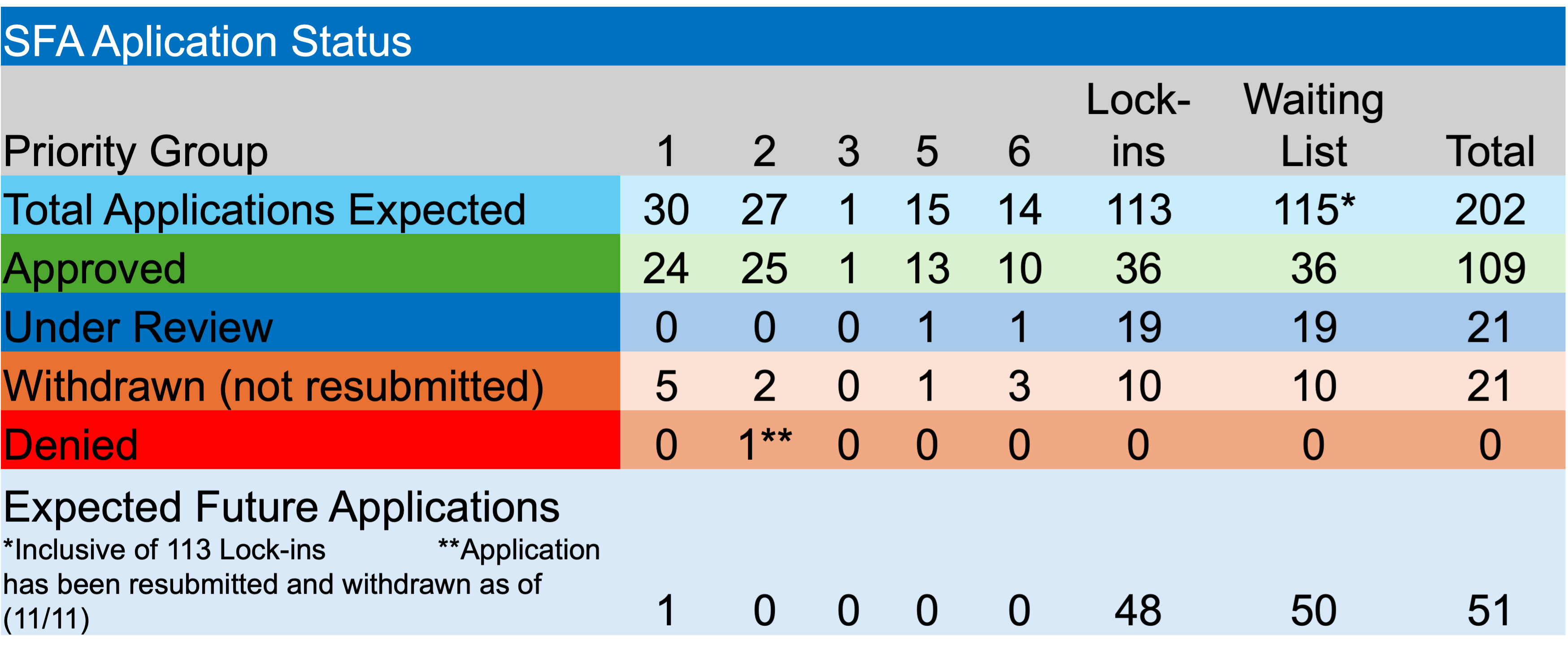
The PBGC had a very good and busy last week, as we witnessed quite a bit of activity in the implementation of the ARPA legislation. Always pleased to announce that three plans received approval for Special Financial Assistance, including the last member of the #6 priority group. Pension Plan of the Marine Carpenters Pension Fund (their initial application), United Food and Commercial Workers Union and Participating Food Industry Employers Tri-State Pension Plan (the Priority Group 6 member), and Local 111 Pension Plan were granted a total of $736.1 million for just over 32k participants.

In addition to the approvals, the eFiling portal was open to Lumber Industry Pension Plan and the Laborers’ Local No. 130 Pension Fund. In the case of the lumber Industry plan, it appears that they get to chop off some of the wait time for approval as their application indicates an expedited review. This plan is seeking $103.2 million for 5,834 members. Local No. 130 filed its initial application in which they are hoping to receive $32.1 million for 641 plan participants.

There were also four plans that withdrew initial applications for SFA. Alaska Plumbing and Pipefitting Industry Pension Plan, Lumber Industry Pension Plan, Upstate New York Engineers Pension Fund, and Pension Plan of the Automotive Machinists Pension Trust were collectively seeking $438.3 million for just under 22k participants. Each of these plans are non-priority funds. Only 15 of the original 87 Priority Group members have not received approval at this time.

Finally, there were no applications denied during the prior week and no funds rebated excess SFA on account of census errors. There were also no pension plans added to the waitlist which stands at 63 that haven’t seen any activity at this time. There hasn’t been a plan added to the waitlist since July 2024 with the addition of the Production Workers Pension Plan.

Pension ROA – Trick or Treat?

By: Ronald J. Ryan, CFA, CEO, Ryan ALM, Inc.

Ron brings to you today a Halloween Special titled, Pension ROA – Trick or Treat? In this research piece, Ron explores how the return on asset assumption (ROA) is calculated and some of the misconceptions associated with targeting this return as the primary objective of pension management. One of those misunderstandings has to do with the expectation for each asset class used in the plan. An asset class, such as fixed income, is only asked to earn the ROA assigned to It by using their index benchmark as the target return proxy. They are NOT required to earn the total pension fund ROA assumption (@ 6.75% to 7% today). This is an important fact to remember in asset allocation.

As always, we encourage your comments and questions. Please don’t hesitate to reach out to us. Have a wonderful Halloween with your family and friends.

“More Needs To Be Done!” – Do You Think?

By: Russ Kamp, Managing Director, Ryan ALM, Inc.

This post is the 1,500th on this blog! I hope that you’ve found our insights useful. We’ve certainly appreciated the feedback – comments, questions, and likes – throughout the years. A lot of good debate has flowed from the ideas that we have expressed and we hope that it continues. The purpose of this blog is to provide education to those engaged in the pension/retirement industry. We have an incredible responsibility to millions of American workers who are counting on us to help provide a dignified retirement. A goal that is becoming more challenging every day.

As stated numerous times, doing the same-old-same-old is not working. How do we know? Just look at the surveys that regularly appear in our industry’s media outlets. Here is one from MissionSquare Research Institute done in collaboration with Greenwald Research. The survey reached a nationally representative sample of 1,009 state and local government workers between September 12 and October 4. What they found is upsetting, if not surprising. According to the research, “81% are concerned they won’t have enough money to last throughout retirement, and 78% doubt they’ll have enough to live comfortably during their golden years.”

Some of the other findings in the survey also tell a sad story. In fact, 73% of respondents are concerned they won’t be able to retire on time, while the same number are unsure whether they’ll have sufficient emergency savings. How terrible. The part about being able to retire “on time” is not often in the workers control wether because of health and the ability to continue to do the required task or as a result of other plans by their employer. Amazingly, public sector workers believe that their current retirement situation is better than those in the private sector. Wow, if that isn’t telling of the crisis unfolding in this country.

Given these results, it shouldn’t be shocking that unions are seeking a return of DB plans as the primary retirement vehicle. We know that asking untrained individuals to fund, manage, and then disburse a “benefit” through a defined contribution plan is poor policy. We’ve seen the results and they are horrid, with median balances for all age groups being significantly below the level needed to have any kind of retirement. Currently, the International Association of Machinists and Aerospace Workers are on strike at Boeing, and a major sticking point is the union’s desire to see a reopening of Boeing’s frozen DB plan.

We’ve also recently seen the UAW and ILA memberships seek access to DB plans. It shouldn’t be a shock given the ineffectiveness of DC plans that were once considered supplemental to pensions. Again, asking the American worker to fund a DC offering with little to no disposable income, investment acumen, or a crystal ball to help with longevity concerns is just foolish. Yes, there is more to do, much more! It is time to realize that DB plans are the only true retirement vehicle and one that helps retain and attract talented workers who aren’t easily replaced. Wake up before the crisis deepens and everyone suffers.

3% Return for the Decade? It Isn’t Far-fetched!

By: Russ Kamp, Managing Director, Ryan ALM, Inc.

This blog is a follow up to a post that I published last week. In that post I cited a recent analysis by Goldman Sach’s forecasting a 3% 10-year return. I concluded the blog with the following: “I wouldn’t worry about the 5% fixed income yield-to-worst (YTW) securing my pension liabilities. Instead, I’d worry about all the “growth” assets not used to secure the promises, as they will likely be struggling to even match the YTW on a CFM corporate bond portfolio.”

How likely is it that Goldman and other financial institutions are “right” in forecasting such a meager return for the next decade? I’m sure that plan sponsors and their advisors are pondering the same question. Well, here is more insight into how one forecasts long-term equity returns (not necessarily Goldman’s forecasting technique) and how one might arrive at such a low equity return (S&P 500 as the proxy) that, if realized, would likely crush pension funding.

Inputs necessary to forecast the future return for the S&P 500 are the current S&P EPS ($255), future expected EPS growth (5.5%) and an assumed P/E multiple in 10 years. Finally, add in the dividend yield (1.3%) and you have your expected annualized return.

Charles DuBois, my former Invesco research colleague, provided me with his thoughts on the following inputs. He believes that nominal earnings growth will be roughly 5.5% during the next decade, reflecting 4% nominal GDP growth coupled with a small boost from increasing federal deficits as a share of GDP and a boost for net share buybacks (1.5% in total). 

Right now, earnings per share for the S&P 500 are forecasted to be about $255 in 2024. If earnings grow by the 5.5%/per annum described above, in 10 years earnings for the S&P 500 will be $428 per share.

The S&P is currently trading at 5,834, which is 22.9X (high by any measure) the current EPS. Let’s assume a more normal, but still historically high, multiple of 18X in 10 years. That gets you to an S&P 500 level of 7,704 or a 2.8% annual rate of gain over the next 10 years.  Add in a 1.3% dividend yield gets you to 4.1%. Not Goldman’s 3%, but close. It is still much lower than the long-term average for the market or the average ROA for most public and multiemployer pension plans.

If one were to assume a 15X P/E multiple in 10 years, the return to the S&P 500 is 0.64%/annum and the “total” return is slightly less than 2.0%. UGLY! Obviously, the end of the 10-year period multiple is the key to the return calculation. But all in all, the low returns that most investment firms (including Goldman) are forecasting seem to be in the right neighborhood given these expectations.

Given the potential challenges for Pension America to achieve the desired return (ROA objective) outcome, a cash flow matching (CFM) strategy will help a pension plan bridge this potentially difficult period. Importantly, by having the necessary liquidity to meet monthly benefits and expenses, assets won’t have to be sold to meet those obligations thus eliminating the potential to lock in losses. Lastly, the roughly 5% yield-to-worse (YTW) on the CFM portfolio looks to be superior to future equity returns – a win/win!

It just might be time to rethink your plan’s asset allocation. Don’t place all of your assets into one return bucket. Explore the many benefits of dividing pension assets into liquidity and growth buckets. Want more info? Ryan ALM, Inc. has a ton of research on this idea. Please go to RyanALM.com/research.

ARPA Update as of October 25, 2024

By: Russ Kamp, Managing Director, Ryan ALM, Inc.

Welcome to the last week of October. Like many of us, I can’t wait to see my children’s and grandchildren’s costumes on Thursday. The weather in NJ will be more like June than the end of October. Enjoy!

With regard to the PBGC’s effort to implement the ARPA pension legislation, last week’s activity was rather muted. I’m happy to report that we had one plan’s application approved, as I.B.E.W. Pacific Coast Pension Fund will receive $75.5 million in SFA and interest for 3,318 plan participants. This brings the number of approved applications to 95 and the total award of SFA to $68.8 billion. There are still 107 applications that are in the queue to eventually (hopefully) receive special financial assistance, with 64 yet to file an initial application.

Also, during the past week, we had the Laborers’ Local No. 265 Pension Plan withdraw its application. That plan is seeking $55.6 million for 1,460 members of its plan. This was the initial application for this fund which had been filed on July 11, 2024. There has been a total of 117 applications filed and withdrawn throughout the ARPA implementation. Some funds have seen multiple applications withdrawn and resubmitted.

Given the limited activity last week, it isn’t surprising to learn that the eFiling Portal remains temporarily closed. There is still much to accomplish with this legislation and time, although not currently an issue, will become one should this process linger beyond 2025.

Lastly, the recent move up in US Treasury rates bodes well for those plans receiving SFA and wanting to use cash flow matching to secure the promised benefits. Ryan ALM is always willing to produce an initial analysis on what can be achieved through CFM in terms of a coverage period. Don’t hesitate to reach out to us.