Benefits of Cash Flow Matching (CFM)

By: Ronald J. Ryan, CFA, Chairman, Ryan ALM, Inc.

The true objective of a pension is to secure and fund benefits in a cost-efficient manner with prudent risk. This is best accomplished by cash flow matching (CFM). In the 1970s and 1980s it was greatly in vogue and called Dedication. CFM aligns the cash flows of assets to match and fully fund the liability cash flows (benefits + expenses (B+E)) chronologically. Since bonds are the only asset class with the certainty of cash flows (principal and interest), bonds have always been the choice to CFM liability cash flows. The benefits of the Ryan ALM CFM approach are numerous and significant:

Reduces Risk – Risk is best defined as the uncertainty of achieving the objective. CFM will secure the objective of paying benefits with certainty.

    Reduces Cost – The cost to fund future B+E is reduced by about 2% per year (1-10 years = 20%).

    Enhances the ROA – There is a ROA for each asset class. For bonds, it is usually the YTM of a generic bond index. The Ryan ALM CFM is heavily skewed to A/BBB+ corporate bonds and will outyield these bond indexes thereby enhancing the ROA for the bond allocation.

    Mitigates Interest Rate Risk – CFM matches and funds actuarial projections of B+E which are all future values. Importantly, future values are not interest rate sensitive. Future values of B+E should be the focus of a pension objective. Present values are interest rate sensitive but that is not the objective. Since CFM will match the liability cash flows it will have the same or similar duration profile and present value interest rate sensitivity. 

    Eliminates Cash Sweep– Many pensions do a cash sweep of all assets to find the liquidity needed to fund current B+E. CFM will provide this liquidity so there is no need for a cash sweep that harms asset growth. This should enhance the ROA of growth assets whose dividends may have been used to fund current B+E. According to a Guinness Global study of the S&P 500 dating back to 1940, dividends + dividends reinvested accounted for about 49% of the S&P 500 total return for rolling 10-year periods and 57% for 20-year periods. CFM buys time for the growth assets to grow unencumbered.

        Reduces Volatility of Funded Ratio and Contributions – CFM will match and fully fund the liability cash flows chronologically thereby reducing or eliminating any funding ratio volatility for the period it is funding. This should help reduce the volatility of contributions as well.

          Provides Accurate Pension Inflation Hedge – The actuarial projections of B+E include inflation. As a result, CFM not only is the proper liability cash flow hedge but is the only accurate way to hedge pension inflation (benefits, expenses, salary, etc.). Please note that pension inflation is not equal to the CPI but can vary greatly.

          Reduces Pension Expense – For corporations, the present value growth of assets versus the present value growth of liabilities in $s creates a line item called pension expense. Corporations want asset growth to match liability growth in $s to avoid a hit to earnings and use a duration match strategy to hedge. CFM will provide a more accurate duration match since it funds monthly liability cash flows and not an average duration. Public plans do not have this earnings issue.

          Don’t hesitate to reach out to us if you’d like to learn more about how Ryan ALM’s Cash Flow Matching capability can benefit your plan. You can always visit RyanALM.com to get additional research insights . Finally, we are always willing to provide a free analysis. All we need are the projected benefits, expenses, and contributions. The further into the future those projection cover the greater the insights.
              Verus: “LDI for Public Sponsors”

              By: Russ Kamp, CEO, Ryan ALM, Inc.

              Dan Hougard, FSA and Associate Director, Actuarial Services at Verus has recently published an excellent thought piece on LDI for public pension plans. In this case, the LDI refers to Cash Flow Matching (CFM). We at Ryan ALM, believe that LDI is the label in which sits both CFM and duration matching strategies. Furthermore, we absolutely agree with Dan’s assessment that public pension plans can benefit in this environment of higher yields despite the accounting differences that may not make the use of CFM obvious.

              As most readers of this blog know, we often criticize public pension accounting (GASB) for pension liabilities that allow the use of the ROA assumption to “discount” liabilities, while corporate/private pension plans use a market-based interest rate (FASB). We applaud Dan for stating that “the purpose of a pension plan’s investment portfolio (assets) is to ensure that the promised benefits (liabilities) can be paid to beneficiaries as they come due”. We at Ryan ALM believe that the primary objective in managing a DB plan is to SECURE the benefits at a reasonable cost and with prudent risk.

              Key highlights from Dan’s research:

              Many plan sponsors approach their investment policy without explicitly focusing on the liabilities

              Because public plans discount liabilities at the ROA the perceived benefit of LDI (CFM) is not as obvious

              Public plans could match longer-duration cashflows combined with “market-based” reporting for a portion of the liabilities – such as all current retirees.

              The lowest risk asset class for pension investors are fixed income securities, as income is used to pay benefits, and securities are held to maturity so there is no interest rate risk.

              During periods of market stress, negative cash flow plans may be forced to sell assets at depressed prices.

              CFM can overcome that challenge by providing the needed cash flow to cover obligations while the return-seeking portfolio grows unencumbered.

              IG credit yields haven’t been this attractive since 2010.

              Public pension portfolios tend to have very uncertain outcomes and carry “tremendous” asset-liability mismatch.

              Finally, CFM “investing can offer considerable value for many pension plans”!

              It is wonderful to see a thoughtful article on this subject. We, at Ryan ALM, often feel as if we are all alone in our quest to protect and preserve defined benefit plans for the masses through cash flow matching, which SECURES the promised benefits at a reasonable cost and with prudent risk. It also allows for a wonderful night’s sleep during periods of excessive uncertainty.

              ARPA Update as of April 25, 2025

              By: Russ Kamp, CEO, Ryan ALM, Inc.

              In some ways it is difficult to believe that we are through 1/3 of 2025, but in other ways it seems like it has been a very long four months.

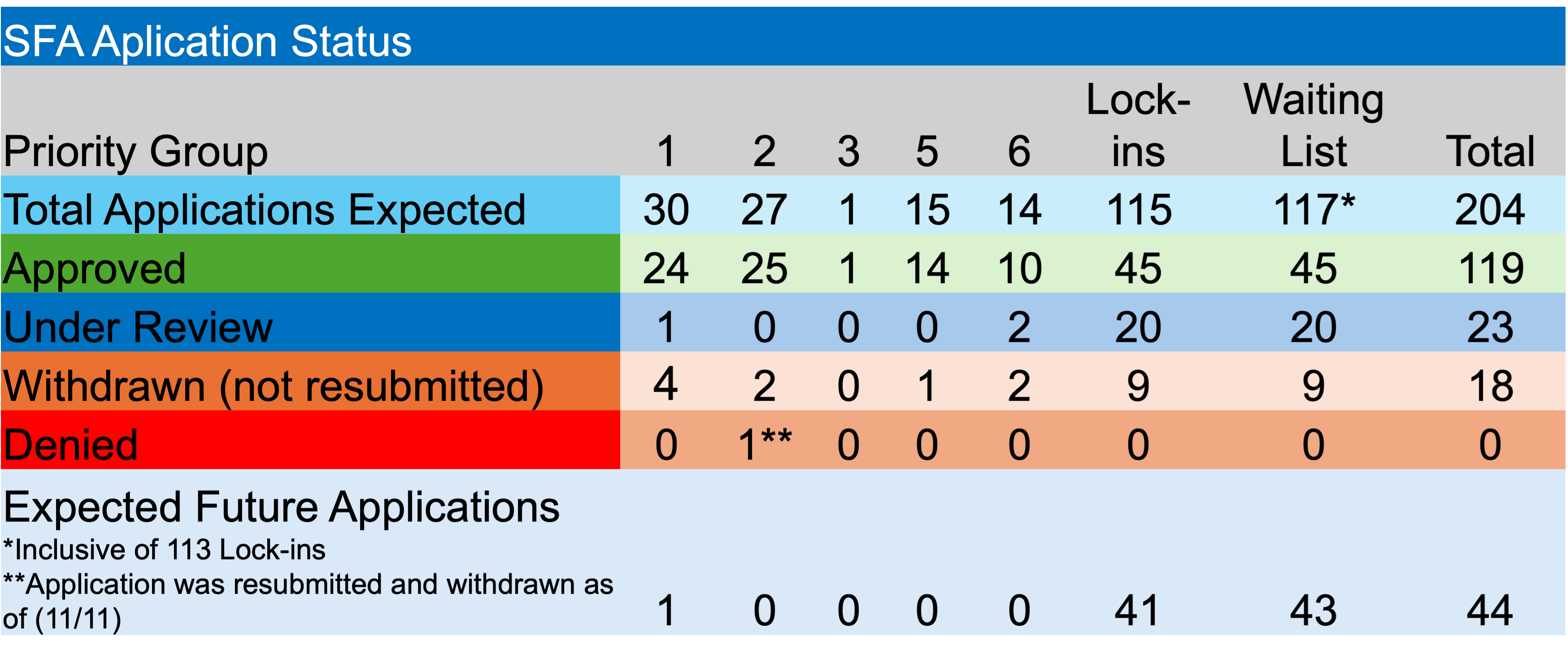
              Regarding ARPA and the PBGC’s implementation of this critical legislation, last week produced modest activity, as reported in the PBGC’s weekly spreadsheet. I’m pleased to report that another two plans, Laborers’ Local No. 91 Pension Plan and Pension Plan of the Asbestos Workers Philadelphia Pension Fund, each submitted revised applications seeking Special Financial Assistance (SFA). These two non-priority group members are hoping to receive a combined $87.3 million in SFA for the 2,057 plan participants.

              In other news, fIUE-CWA Pension Plan repaid a small portion of the SFA that it received. The $2.5 million represented <1% of the total SFA received. To date, 50 plans (or roughly 85% of the potential population), have “settled” with the U.S. Treasury on census errors. Another 4 were found not to have received excess SFA. Finally, there are approximately 6 plans yet to come to some conclusion with the Treasury Department.

              As you can surmise, there were no applications approved or denied, and none withdrawn during the last week. In addition, there were no pension funds seeking to be added to the waitlist. The last entry was in March 2025.

              Volatility remains quite rampant within U.S. markets, both equity and bond. For those soon to receive SFA distributions, higher long-term U.S. Treasury rates make cash flow matching an attractive alternative to either active equity or fixed allocations. Please consider securing those promised benefits through a CFM mandate.

              A Call for Pension Reform – Five Years Later

              By: Russ Kamp, CEO, Ryan ALM, Inc.

              On March 25, 2020, I produced a post titled, “Why Pension Reform is Absolutely Necessary“. A few of you may recall that blog. I penned the post in reaction to a series of statistics that my friend John A. produced. John is a retired Teamster and an incredibly important driver behind efforts to reinstate benefits that had been cut under MPRA. John’s analysis was based on a survey that he conducted on multiemployer plans that had roughly 43,000 plan participants impacted by that misguided legislation. That universe of participants would grow to more than 75,000. What he discovered through his polling and outreach was shocking!

              Their benefit reductions amounted to nearly $34,000,000 / month.  (That is a ton of lost economic activity.)

              95% were not able to work.

              72% were providing primary care for an ailing loved one.

              65% were not able to maintain healthcare insurance.

              60% had lost their home.

              55% were forced to file for bankruptcy.

              80% were living benefit check to benefit check.

              100% of the PBGC maximum benefit payout was inadequate ($12,870 for a retiree with 30-years of work).

              50% of the retirees were U.S. service veterans.

              Shocked? I certainly was and continue to be that our government allowed the benefits to be cut for hard working American workers who rightfully earned them through years of employment.

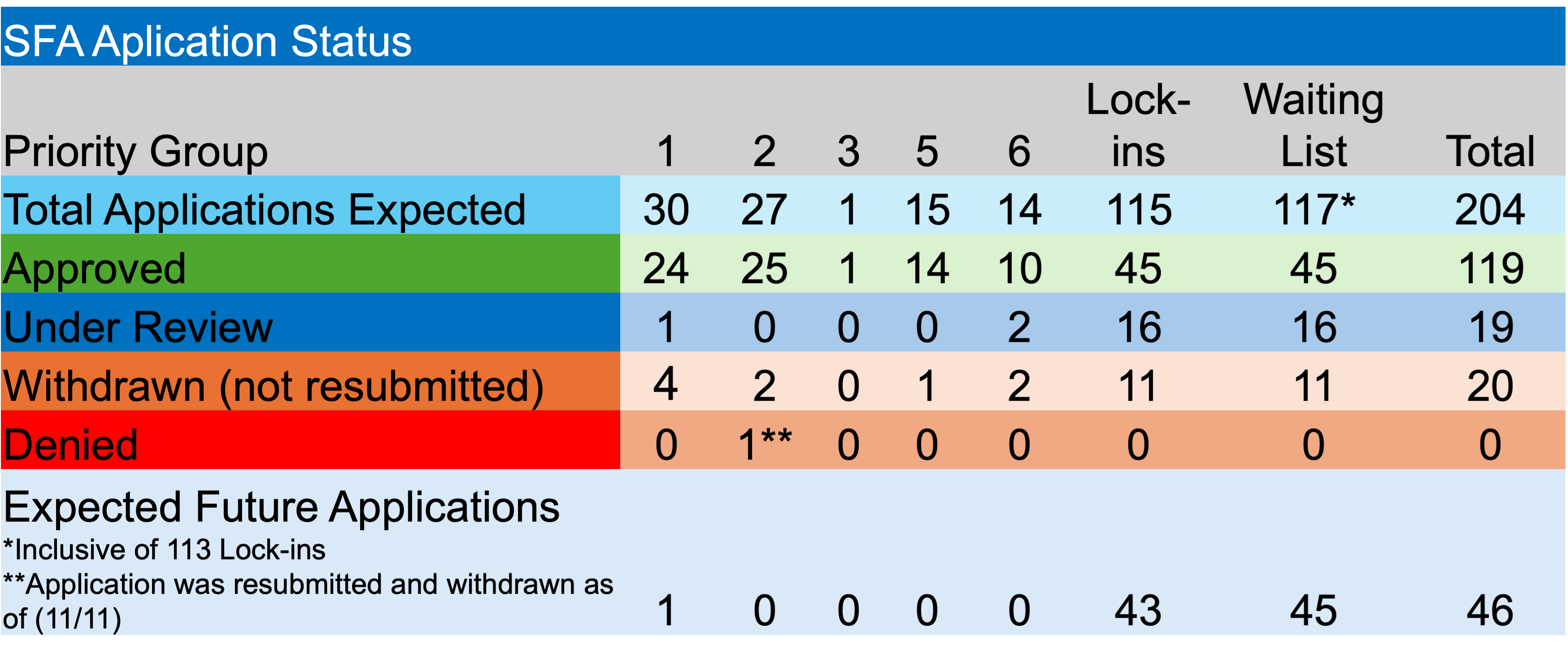
              Where are we today? Fortunately, the got the passage of ARPA pension reform (originally referred to as the Butch Lewis Act) which was signed into law by President Biden in March 2021. Responsibility to implement the legislation fell to the Pension Benefit Guaranty Corporation (PBGC). In my original blog post, I referred to a potential universe of 125 multiemployer plans that might be eligible for Special Financial Assistance (SFA). That list would eventually become 204 plans (see below).

              I’m extremely pleased to announce that 119 funds of the 204 potential recipients have received more than $71.6 billion in SFA and interest supporting the retirements of 1,555,460 plan participants. Awesome! There is still much to do, and hopefully, the sponsors of these funds will prove to be good stewards of the grant $s by conservatively investing the SFA and reserving the risk taking for the legacy assets that have time to wade through challenging markets.

              What an incredible accomplishment! So many folks would have been subject to very uncertain futures. The securing of their benefits goes a long way to allowing them to enjoy their retirement years. Unfortunately, there are too many American workers that don’t have a defined benefit plan. In many cases they have an employer sponsored defined contribution plan, but we know how challenging it can be for those participants to fund, manage, and disburse that benefit. For many others, there is no employer sponsored benefit. Their financial futures are in serious jeopardy.

              That said, what appeared to be a pipe dream once the U.S. Senate failed to take up the BLA legislation has become an amazing success story. Just think of all the economic activity that has been created through these monthly payments that certainly dwarf the $34 million/month mentioned above. Congrats to all who were instrumental in getting this legislation created and passed!

              Housing: A Major Impediment to Saving for Retirement

              By: Russ Kamp, CEO, Ryan ALM, Inc.

              The demise of defined benefit (DB) pensions is putting great financial pressure on individuals to save for retirement through a defined contribution (DC) program. I’ve often railed about asking untrained individuals to take on the responsibility to fund, manage, and then disburse a “benefit” through a DC plan, arguing that most Americans don’t have the necessary disposable income, investment acumen, or a crystal ball to help with longevity issues.

              Many (most)Americans are financially strapped and there are many contributors to this crisis, including student loan debt, monthly childcare expenses, food, medical insurance, car/home insurance, and housing costs to name but a few. I could address each of these and the impact that they have on the average American worker, but let’s focus on housing today. The cost of buying and maintaining a residence is suffocating. Property taxes often add the equivalence of a monthly “mortgage” on top of one’s monthly mortgage, especially if you live in high tax states such as New Jersey.

              Here are some startling facts when comparing the impact of housing costs on families from the 1950s to today’s circumstances. It wasn’t unusual to have only one member of a couple (mostly the male) working outside the home in the 1950s. That ability has nearly vanished today. Why? Well for one, the average home was <$7,400 in the early ’50s and the average family income was roughly $3,300. So, for slightly more than 2Xs one’s family income you could own your roughly 1,000 square foot home.

              Today, the median home is priced at $431k according to Redfin, while the median household income is <$80k. Maryland leads that way at just over $94,000, while Mississippi trails all states at $44k. It now costs more than 5Xs one’s family income to purchase a home in the U.S. By the way, the “average” home in the ’50s would be worth about $98k in today’s $s so about 23% of what it actually costs to buy today. Oh, my! The housing market has dramatically outpaced inflation during the last 7 decades, and there doesn’t seem to be an end to the escalation despite the greater home prices and today’s interest rate environment.

              Just the housing costs alone are a great burden of the American worker. Add to this expenditure all that was mentioned above and then some, and you shouldn’t be surprised that median 401(k) balances are as anemic as they are. Let’s work together to bring back traditional DB plans so that most Americans will have a decent opportunity to retire before their 80th birthday!

              WHY?

              By: Russ Kamp, CEO, Ryan ALM, Inc.

              Why do we have two different accounting standards in the U.S. for valuing pension liabilities?

              Why does it make sense to value liabilities at a rate (ROA) that can’t be used to defease pension liabilities in this interest rate environment?

              Why do we continue to create an asset allocation framework that only guarantees volatility and not success?

              Why do we think that the pension objective is a return objective (ROA) when it is the liabilities that need to be funded and secured?

              Why haven’t we realized that plowing tons of plan assets into an asset class/strategy will negatively impact future returns?

              Why are we willing to pay ridiculous sums of money in asset management fees with no guaranteed outcome?

              Why is liquidity to meet benefits an afterthought until it becomes a major issue?

              Why does it make sense that two plans with wildly different funded ratios have the same ROA?

              Why are plan sponsors willing to live with interest rate risk in the core bond allocations?

              Why do we think that placing <5% in any asset class is going to make a difference on the long-term success of that plan?

              Why do we think that moving small percentages of assets among a variety of strategies is meaningful?

              Why do we think that having a funded ratio of 80% is a successful outcome?

              Why are we incapable of rethinking the management of pensions with the goal to bring an element of certainty to the process, especially given how humans hate uncertainty?

              WHY, WHY, WHY?

              If you are as confused as I am with our current approach to DB pension management, try cash flow matching (CFM) a portion of your plan. With CFM you’ll get a product that SECURES the promised benefits at low cost and with prudent risk. You will have a carefully constructed liquidity bucket to meet benefits and expenses when needed – no forced selling in challenging market environments. Importantly, your investing horizon will be extended for the growth (alpha) assets that haven’t been used to defease liabilities. We know that by buying time one dramatically improves the probability of a successful outcome. Furthermore, your pension plan’s funded status will be stabilized for that portion of the assets that uses CFM. This is a dynamic asset allocation process that should respond to improvement in the plan’s funded status. Lastly, you will be happy to sit back and watch the mayhem in markets unfold knowing that you don’t have to do anything except sleep very well at night.

              Public Pension Funding Declines

              By: Russ Kamp, CEO, Ryan ALM, Inc.

              Milliman analyzes data from the nation’s 100 largest public defined benefit plans and publishes that information through the Public Pension Funding Index (PPFI). They have recently released output from the index through March 31, 2025. The PPFI funded ratio fell in March from 81.1% as of February 28, to 79.5% as of March 31, following two rather benign months to begin 2025.

              Milliman has assigned blame for the decline in the plans’ funded ratios to the uncertainty related to trade and tariff policies as the key drivers to the negative result. The 100 public plans experienced an estimated combined monthly return of -1.6%. According to Milliman, “individual plans’ returns ranged from -3.1% to -0.1%”. The -1.6% aggregate return created Investment losses totaling $83 billion while bringing total assets for the PPFI plans to $5.2 trillion in assets as of March 31. 

              Public pension plan liabilities grew during the month (at the ROA and not a true discount rate), from $6.52 trillion at the end of February to $6.54 trillion at the end of March. The funding gap between plan assets and plan liabilities expanded to $1.34 trillion as of March 31.   

              Regrettably, five plans fell below the 90% funding mark, leaving only 25 plans above this funding threshold, while another 12 plans are less than 60% funded (UGH!). I suspect that many of the plans with funded ratios at or above 90% actually have funded ratios below that threshold when a market-based discount rate is used given that Milliman estimated the discount rate for private plans was 5.49% in their March 2025 update. A higher discount rate reduces the present value of those future promises.

              View the Milliman 100 Public Pension Funding Index.

              ARPA Update as of April 18, 2025

              By: Russ Kamp, CEO, Ryan ALM, Inc.

              For those that observe, we hope that you had a Blessed Easter or a Happy Passover.

              Regarding ARPA and the PBGC’s activity last week, we’ll refer to it as muted. There were no new applications submitted, as the eFiling portal remains temporarily closed. In fact, there haven’t been any applications submitted since April 3rd. In addition, there weren’t any applications denied (fortunately) or approved or withdrawn. Also, no multiemployer plans were seeking to be added to the waitlist. I guess that took the religious week seriously and rested, but not just on the 7th day!

              There was one piece of news. Southwest Ohio Regional Council of Carpenters Pension Plan repaid a portion of the Special Financial Assistance that they received. They repaid $5.5 million on a grant of $177 million or 3.1%. This represents the second largest refund to date, with only Retirement Plan of Local 1482 – Paint and Allied Products Manufacturers Retirement Fund returning a greater sum at 3.9% of the SFA. Fifty-three plans have now returned $209.0 million from grants totaling $47.8 billion or 0.44%. It is estimated that another 6-7 plans might have to rebate a portion of their SFA.

              U.S. interest rates continue to rise. For those plans hoping to receive SFA in the near future, defeasing those promised benefits is becoming less expensive providing for greater cost savings and longer coverage periods. We are happy to provide SFA recipients with a free analysis on how a cash flow matching (CFM) strategy can benefit your plan.

              The Intrinsic Value of Bonds

              Ronald J. Ryan, CFA, Chairman

              The true value of bonds is the certainty of their cash flows (interest + principal payments). I don’t believe there is another asset class with such attributes. This is why bonds have traditionally been the asset choice for LDI strategies in general and, defeasement specifically. Given that the true objective of a pension is to secure benefits in a cost-efficient manner with prudent risk then cash flow matching with bonds is a best fit. In the 1970s and 1980s cash flow matching was called Dedication and was the main pension strategy at that time.

              Today we live in a volatile and uncertain financial world. Volatility of a pension’s funded status is not a good thing and leads to volatility in contribution costs which are calculated annually based on the present value of assets versus the present value of liabilities. Since 2000 contribution costs have spiked and for many pension plans are 5 to 10x higher than 1999. One would think that a prudent plan sponsor would install a strategy to derisk their pension and reduce or even eliminate this volatility. Cash flow matching (CFM) is the answer. CFM fully funds and matches the monthly liability cash flows (future values) thereby eliminating the present value volatility that plaques most pensions.

              As our name implies, Ryan ALM is an Asset Liability Manager specializing in CFM. As the founder of Ryan ALM, my experience with CFM goes back to the 1970s when I was the Director of Fixed Income research at Lehman Bros. Our current CFM model (Liability Beta Portfolio™ or LBP) is a cost optimization model that will fully fund monthly liability cash flows at the lowest cost to the plan sponsor. Our model will reduce funding costs by about 2% per year (1-10 years of liability cash flows = 20% cost reduction). Moreover, there are several other significant benefits to our LBP:

              • LBP de-risks the plan by cash flow matching benefit payments with certainty
              • LBP provides liquidity to fully fund liabilities so no need for a cash sweep
              • Mitigates interest rate risk since it is funding benefits (future values)
              • LBP reduces asset management costs (Ryan ALM fee = 15 bps)
              • Enhances ROA by out-yielding active bond management 
              • Reduces volatility of the funded ratio + contributions
              • Buys time for Alpha assets to grow unencumbered

                “Where is the knowledge we have lost in information” T.S. Eliot

              P&I: “Not The Time To Panic” – Frost

              By: Russ Kamp, CEO, Ryan ALM, Inc.

              There is hardly ever a good time to panic when managing a defined benefit pension plan. No one ever wants to be a forced seller because liquidity is needed and not available. Too often what looks like a well-diversified portfolio suddenly has all assets correlating to 1. I’ve seen that unfold many times during my nearly 44-years in the business.

              It is critically important that the appropriate asset allocation framework be put in place long before one might be tempted to panic. As we’ve mentioned many times before, having all of your eggs (assets) in one basket focused on a return objective (ROA) is NOT the correct approach. Dividing assets among two buckets – liquidity and growth – is the correct approach. It ensures that you have the necessary liquidity to meet benefits and expenses as incurred, and it creates a bridge over uncertain markets by extending the investing horizon, as those growth assets are no longer needed to fund monthly payments.

              Furthermore, the liquidity portfolio should be managed against the plans liabilities from the first month as far out as the allocation to the liquidity bucket will take you. Why manage against the liabilities? First, the only reason the plan exists is to meet a promise given to the participant. The primary objective managing a pension should be to SECURE the promised benefits at a reasonable cost and with prudent risk. Second, a cash bucket, laddered bond portfolio or generic core portfolio is very inefficient. You want to create a portfolio that defeases those promises with certainty. A traditional bond portfolio managed against a generic index is subject to tremendous interest rate risk, and there certainly seems to be a lot of that in the current investing environment.

              The beauty of Cash Flow Matching (CFM) is the fact that bonds (investment grade corporate bonds in our case) are used to defease liabilities for each and every month of the assignment (5-, 10-, 20- or more years). Liabilities are future values (FV) and as such, are not interest rate sensitive. A $1,000 benefit payment next month or any month thereafter is $1,000 whether rates are at 2% or 10%. If one had this structure in place before the market turbulence created by the tariff confusion, one could sleep very comfortably knowing that liquidity was available when needed (no forced selling) and a bridge over trouble waters had been built providing ample time for markets to recover, which they will.

              Yes, now is not the time to panic, but continuing to ride the rollercoaster of performance created by a very inefficient asset allocation structure is not the answer either. Rethink your current asset allocation framework. Allow your current funded status to dictate the allocation to liquidity and growth. The better funded your plan, the less risk you should be taking. DB pension plans need to be protected and preserved. Creating an environment in which only volatility is assured makes little sense. It is time to bring an element of certainty to the management of pensions.