PBGC Increases Premium Rates – Why?

By: Russ Kamp, CEO, Ryan ALM, Inc.

The demise of the defined benefit (DB) plan, most notably within the private sector, is harming the American worker and significantly reducing the odds of a dignified retirement. The Federal government should be doing everything that it can to protect the remaining pensions, including keeping fees low to ensure that these critically important retirement vehicles continue to operate. But unfortunately that doesn’t seem to be the case in this particular situation.

I have been very impressed with and supportive of the PBGC’s effort implementing the ARPA pension legislation, but I question the need to raise premium rates for 2026, which the PBGC has just announced. Why? As of fiscal year-end 2024, the PBGC’s single employer insurance program had a $54.1 BILLION surplus, as assets totaled $146.1 billion and liabilities stood at $92.0 billion. Despite these significant excess resources, the PBGC is increasing rates for the “flat rate premium per participant” in single-employer plans to $111 per participant in 2026 from $106. This 4.7% increase was described in a Chief Investment Officer article as modest! That increase doesn’t seem modest anyway you look at it, but certainly not when one remembers that $54 billion surplus. What is the justification? The rate per $1,000 in “unvested benefits”, not subject to indexing, was frozen by Congress in Section 349 of the SECURE 2.0 Act of 2022 and therefore remains $52. Seems like we need more legislation to freeze the flat-rate premium.

Despite the significant improvement in the multiemployer pension program due to the Special Financial Assistance (SFA) related to ARPA pension reform, that insurance pool is still underwater. As a result, multiemployer plans that only pay a per-participant premium will see the per-participant rate for flat rate premiums rise to $40 from $39 next year. That amounts to an increase of 2.6%. So, the program that is underwater sees a premium increase of 2.6%, while the insurance pool with the massive surplus gets an outsized 4.7% increase? I guess one must work for the government to understand that decision.

Again, we need to do much more to protect DB pensions for all American workers. Asking untrained individuals to fund, manage, and then disburse a “retirement benefit” with little to no disposable income, low investment knowledge, and no crystal ball to help with longevity considerations is just poor policy doomed to failure. We are the wealthiest country in the world, yet we can’t seem to figure out how to control costs associated with retirement, healthcare, education, childcare, etc. and in the process, we are crippling a majority of American families. It isn’t right!
ARPA Update as of February 28, 2025

By: Russ Kamp, CEO, Ryan ALM, Inc.

Welcome to March!

We are pleased to provide you with the latest update on the PBGC’s implementation of the ARPA pension legislation. The last week saw moderate activity, as the PBGC’s eFiling portal was temporarily open providing three funds, Local 810 Affiliated Pension Plan, Aluminum, Brick & Glass Workers International Union, AFL-CIO, CLC, Eastern District Council No. 12 Pension Plan, and Sheet Metal Workers’ Local No. 40 Pension Plan the opportunity to submit revised applications seeking Special Financial Assistance. The PBGC has until June 26, 2025, to act on the applications that combined are seeking $112.6 million in SFA for 3,001 plan participants.

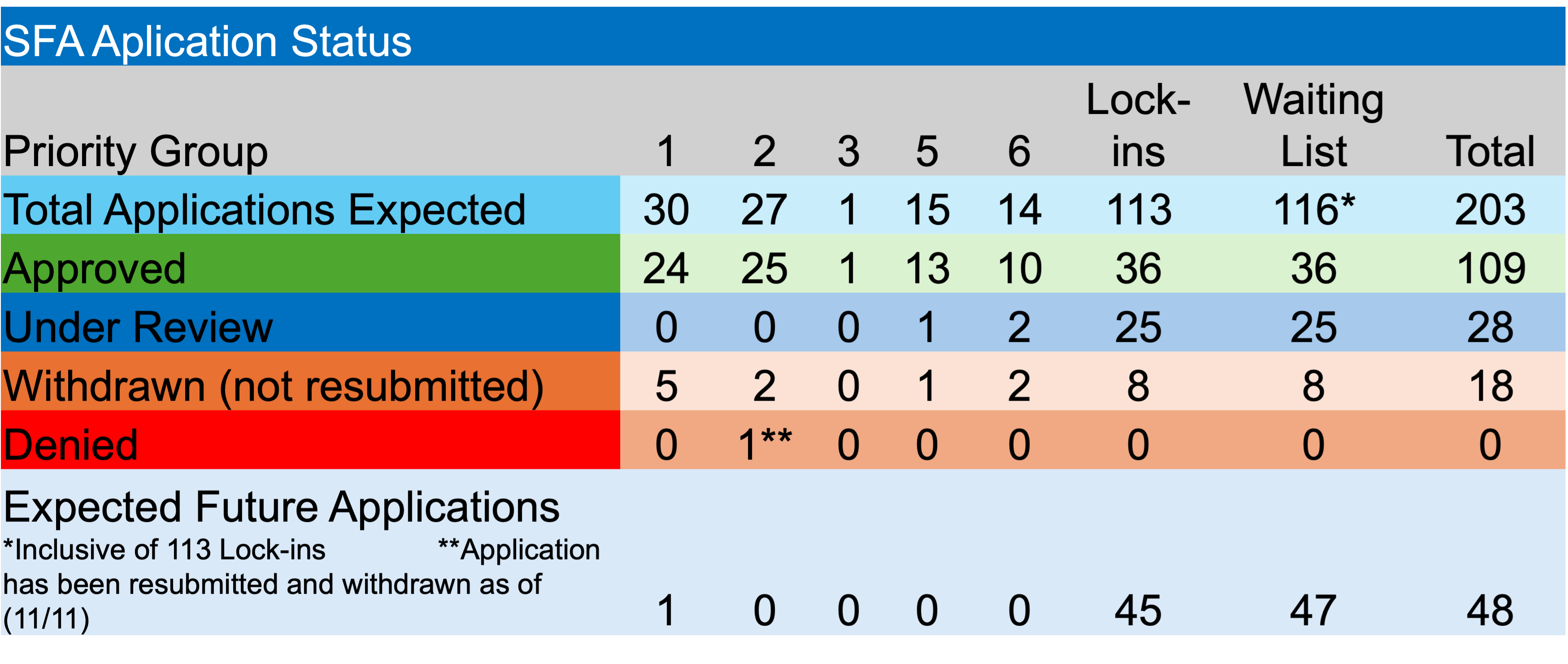
In addition to the above-mentioned filings, one pension fund, Roofers and Slaters Local No. 248 Pension Plan, a Chicopee, MA-based fund, withdrew its initial application that was looking for roughly $8.4 million in SFA for 202 members of the plan. As I said, there was moderate activity last week. Fortunately, no multiemployer pension plans were denied SFA and no other plans repaid excess SFA as a result of census issues. There were also no plans approved or added to the waitlist, which contains the names of 116 plans, of which 47 have yet to submit an application.

As you may recall, I wrote a post last week titled, “A Little Late to the Party!“. The gist of the article had to do with an effort on the part of a couple of Congressmen to get the Justice Department involved in the repayment of any excess SFA funds that have been distributed to the 60 funds that received SFA prior to the use by the PBGC of the Social Security Administrations Death File Master. As I’ve reported, this process is well underway (41 funds have repaid a portion of the SFA to date), having begun back in April with the Central States plan. It is unfortunate that pension plans used to have access to this master file, but that ability was rescinded years ago over privacy concerns. ARPA has been a huge success. The repayment of excess SFA should not taint the tremendous benefit that this legislation has brought.

ARPA Update as of May 10, 2024

By: Russ Kamp, Managing Director, Ryan ALM, Inc.

Another Monday brings the weekly update on the PBGC’s effort to implement the pension rescue under ARPA. As noted previously, activity has definitely slowed in recent weeks, and the week ending May 10, 2024 is no exception. I can report that the only activity on the PBGC’s ARPA spreadsheet is a withdrawal of a previously revised application. Employers’ – Warehousemen’s Pension Plan, a non-priority plan out of Los Angeles, was seeking $40 million in Special Financial Assistance (SFA) for just over 1,800 plan participants. The latest version of the application had been filed on March 4, 2024.

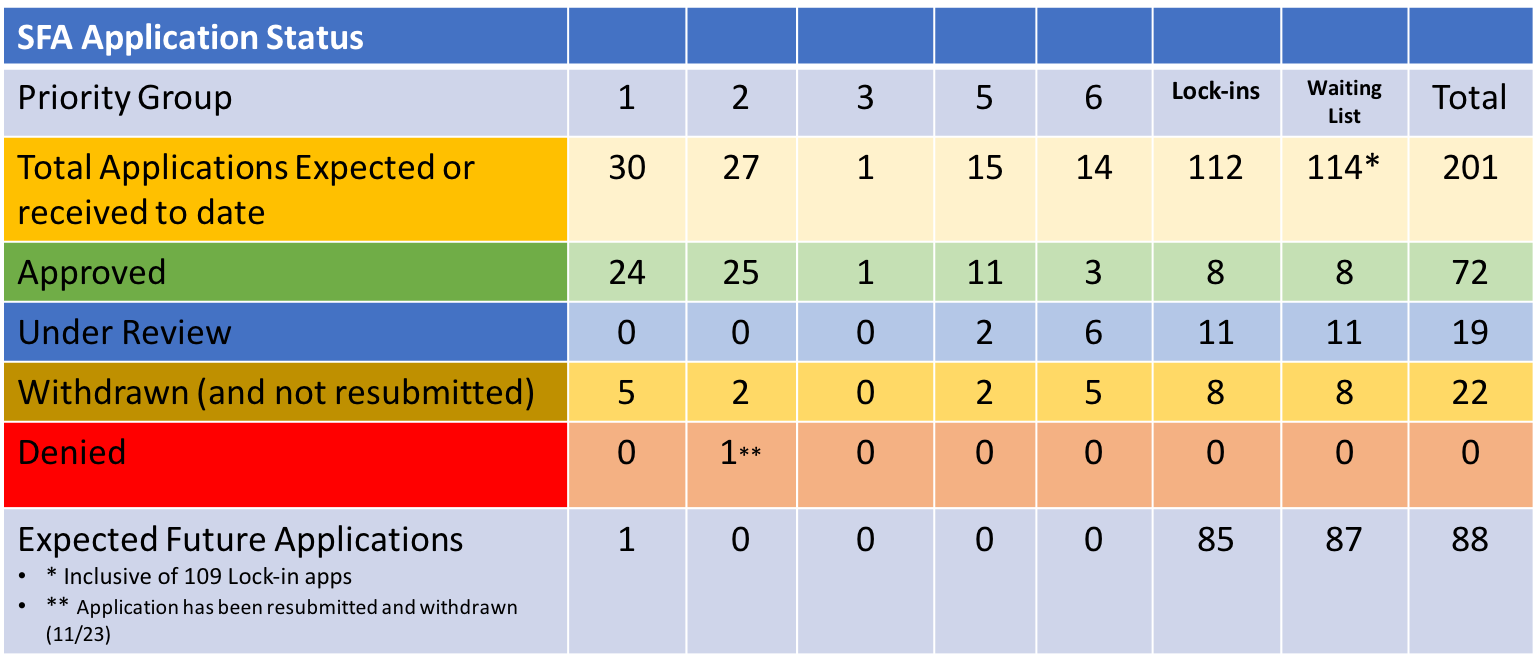
Unfortunately, there were no additional applications submitted or approved. At the same time, there were no additional applications withdrawn or denied. Lastly, no plans that might have received excess SFA have returned those excess assets at this tie outside of Central States. There remain 129 plans to still have their applications for SFA reviewed and approved.

Glen Eagle Trading reported the following in a recent email, that In 2023, a survey found that 78% of Americans live paycheck-to-paycheck, up six percentage points from the previous year. Unfortunately, in yet another survey 29% of Americans don’t earn enough to cover basic living costs. The ability to fund a retirement is getting to be more challenging than ever, which is why DB pension systems need to be be protected and preserved. The ARPA pension legislation is going a long way to securing pensions for millions of American workers who were on the verge of losing most, if not everything, that they had earned and counted on for their “golden years”.

ARPA Update as of March 22, 2024

By: Russ Kamp, Managing Director, Ryan ALM, Inc.

“March Madness” is upon us. How’s your bracket doing? I still have my champion in the running, but not much more than that.

The past week was very quiet with regard to the ARPA legislation and activity associated with its implementation. We did have one fund submit an application for Special Financial Assistance (SFA). United Food and Commercial Workers Union and Participating Food Industry Employers Tri-State Pension Plan, a Priority Group 6 member, submitted a revised application on March 16th. This fund is seeking SFA in the amount of $638.3 million for the fund’s 29,233 members. The PBGC will now have until July 14, 2024 to act on the application.

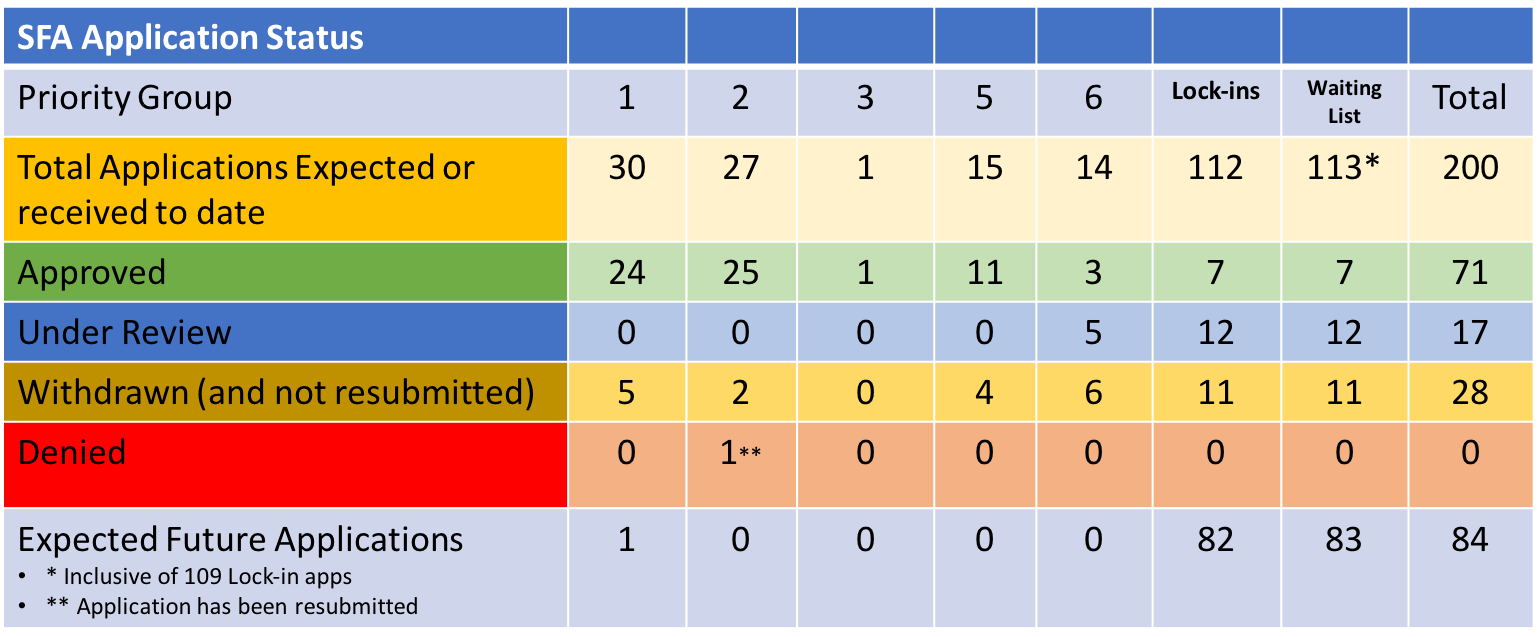
Besides the filing by the UFCW, there was little to show last week, as there were no applications approved, denied, or withdrawn. Furthermore, unlike the prior week, there were no additions to the waitlist which continues to have 113 funds listed of which 27 have been invited to submit an application. To-date, 71 funds have received SFA in the amount of $53.6 billion. These proceeds include the grant, interest, and any FA loan repayments.

Like the picking of the NCAA tournament bracket, for which there are no perfect submissions remaining, the capital markets are highly uncertain. Yes, the US equity market has enjoyed a robust 5-6 months period, but how predictive is that for the next six months or longer? Those yet to receive the SFA should seriously consider an investment strategy that takes the uncertainty of the markets out of the equation. I am specifically referring to the use of investment grade bonds to defease the promised benefit payments as far into the future that the SFA allocation will cover. Once the matching of asset cash flows to the plan’s liability cash flows is done, that relationship is locked in no matter what transpires in the capital markets. Any risk taken by recipients of these assets should be done in the legacy portfolio where a longer investing horizon has been created. Fortunately, US interest rates remain elevated significantly from when the ARPA program began in 2021. The timing couldn’t have been better.