Defined Benefit Pension Plan: “Absolute Truths”

By: Russ Kamp, Managing Director, Ryan ALM, Inc.

The four senior team members at Ryan ALM, Inc. have collectively more than 160 years of pension/investment experience. We’ve lived through an incredible array of markets during our tenures. We have also witnessed many attempts on the part of Pension America to try various strategies (schemes) to meet the promises that have been made to the pension plan participants. Regrettably, defined benefit (DB) pension plans continue to be tossed aside by corporate America in favor of defined contribution (DC) plans. Both public and multiemployer plan sponsors would be wise to adopt a strategy that seeks more certainty in order to protect and preserve these critically important retirement vehicles before they are subject to a similar fate.

We’ve compiled a list of DB pension “Absolute Truths” that we believe return the management of pension plans back to its roots when “SECURING the promised benefits at a reasonable cost and with prudent risk” was the primary objective. The dramatic move away from the securing of benefits to today’s arms race focus on the return on asset assumption (ROA) has eliminated any notion of certainty in favor of far greater variability in likely outcomes.

Here are the Ryan ALM DB Truths:

  • Defined Benefit (DB) plans are the best retirement vehicles!
  • They exist to fulfill a financial promise that has been made to the plan participant upon retirement.
  • The primary objective in managing a DB plan is to SECURE the promised benefits at a reasonable cost and with prudent risk.
  • The promised benefit payments are liabilities of the pension plan sponsor.
  • Liabilities need to be measured, monitored, and managed more than just once per year.
  • Liabilities are future value (FV) obligations – a $1,000 monthly benefit is $1,000 no matter what interest rates do. As a result, they are not interest rate sensitive.
  • Plan assets (stocks, bonds, real estate, etc.) are Present Value (PV) or market value (MV) calculations. We do not know the FV of assets except for bonds cash flows (interest and principal at maturity)
  • In order to measure and monitor the funded status, liabilities need to be converted from FV to PV – a Custom Liability Index (CLI) is absolutely needed.
  • A discount rate is used to create a PV for liabilities – ROA (publics), ASC 715 (corps), STRIPS, etc.
  • Liabilities are bond-like in nature. The PV of future liabilities rises and falls with changes in the discount rate (interest rates).
  • The nearly 40-year decline in US interest rates beginning in 1982 crushed pension funding, as the growth rate for future liabilities far exceeded the growth rate of the PV of assets.
  • The allocation of plan assets should be separated into two buckets – Liquidity (beta) and Growth (alpha).
  • The liquidity assets should consist of a bond portfolio that matches (defeases) asset cash flows with the plan’s liability cash flows (benefits and expenses (B&E)).
  • This task is best accomplished through a Cash Flow Matching (CFM) investment process.
  • The liquidity assets should be used to meet B&E chronologically buying time for the alpha assets to grow unencumbered in their quest to meet future liabilities.
  • The Growth assets will consist of all non-bonds, which can now grow unencumbered, as they are no longer a source of liquidity. Growth assets will fund future liabilities.
  • The Return on asset (ROA) assumption should be a calculated # derived through an Asset Exhaustion Test (AET)
  • The pension plan’s asset allocation should be responsive to the plan’s funded status and not the ROA.
  • As the funded status improves, port alpha (profits) from the Growth portfolio into the Liquidity bucket (de-risk) extending the cash flow matching assignment and securing more promises.
  • This de-risking ensures that plans don’t continue to ride the asset allocation rollercoaster leading to volatile contribution costs.
  • DB plans are a great recruiting and retention tool for managing a sponsor’s labor force.
  • DB plans need to be protected and preserved, as asking untrained individuals to fund, manage, and then disburse a “benefit” through a Defined Contribution plan is poor policy.
  • Unfortunately, doing the same thing over and over and… is not working. A return to pension basics is critical.

You’ve made a promise: measure it – monitor it – manage it – and SECURE it…   

Get off the pension funding rollercoaster – sleep well!

Must We Continue to Just Shift Deck Chairs on the Titanic?

By: Russ Kamp, Managing Director, Ryan ALM, Inc.

You may not have been following Ryan ALM’s blog through the many years that I have been producing posts in which I’ve touched on this subject. We at Ryan ALM continue to question the logic of focusing on the return on asset assumption (ROA) as the pension plan’s primary objective.  We especially challenge the notion that shifting a couple of percent from one asset class to another produces meaningful results for the pension system’s asset allocation and long-term funding success.

Day after day, I read, as I’m sure that you do, articles, blogs, emails, etc. highlighting a new product or twist to an existing one that will just “rock your world” and assist you on the road to achieving the return on asset (ROA) assumption. It doesn’t matter whether your plan is a public fund, multiemployer pension, or a private plan, the continued focus on the ROA as the primary objective for both plan sponsors and their asset consultants is leading everyone down the wrong path. You see, most of the retirement community has been sold a bag of rotten goods claiming that a plan needs to generate the ROA, or it will not meet its funding goals. I say, “Hogwash”! I’d actually like to say something else, but you get my drift.

So, when valuations for most asset classes seem to be stretched, as they do today, where does a pension plan go to allocate their plan’s assets? Well, this “issue” has plan sponsors once again scratching their collective heads and doing the Curly shuffle.  You see, they have once again through the presumed support of their consultants, begun to approach asset allocation as nothing more than rearranging the deck chairs on the Titanic.

Despite tremendous gains from both equity and fixed income bull markets, these plans are willing to “let it ride” instead of altering their approach to possibly reduce risk, stabilize the funded status, and moderate contribution expense. Can you believe that one of the country’s largest public plans has recently decided (I’m sure that it took a long time, too) to roll back fixed income exposure by 2% and equity exposure by 1% from 55% to 54%?  Are you kidding me? Is that truly meaningful or heroic?

Please note that generating a return commensurate with the ROA is not going to guarantee success. Furthermore, since most public pension plans are currently underfunded on an actuarial basis (let alone one based on market values) meeting this ROA objective will only further exacerbate the UAAL, as the funded status continues to slip. You see, if your plan is 80% funded, and that is the “average” funded ratio based on Milliman’s latest work, you need to outperform your plan’s 7% ROA objective by 1.75% in order to maintain the current funded status. Here’s a simple example as a proof statement:

Assets = $80   Liabilities = $100   ROA = 7.00%   Asset growth = $5.60   Liability growth = $7.00

In order for asset growth = $7.00, assets would need a 8.75% ROA

Given that reality, these plans don’t need the status quo approach that has been tried for decades. Real pension reform must be implemented before these plans are no longer sustainable, despite the claim that they are perpetual.  As an industry, we have an obligation to ensure the promised benefits are there when needed. Doing the same old, same old places our ability to meet this responsibility in jeopardy. If valuations are truly stretched, don’t leave your allocations basically stagnant. Take the opportunity to try something truly unique.

It is time to approach asset allocation with a renewed focus. Instead of having all of your plan’s assets tied to achieving the ROA, divide them into two buckets – liquidity and growth. The liquidity bucket will utilize a cash flow matching (CFM) strategy to ensure that monthly payments of benefits and expenses (B+E) are available, as needed, chronologically. The asset cash flows from the CFM strategy will be carefully matched against the liability cash flows of B+E providing the necessary liquidity. This provides the growth bucket (all non-bond assets) with an extended investing horizon, and we all know how important a long time horizon is for investing. Importantly, the growth assets will be used down the road to meet future pension liabilities and not in the short-term to meet liquidity needs. The practice of a cash sweep to meet ongoing liquidity has negatively impacted long-term returns for many pension systems.  Let bonds fund B+E so the growth assets can grow unencumbered.

Focusing on products and minor asset class shifts will waste a lot of your time and not produce the results that our pension plans need. Ensuring the appropriate funding to meet the promises given to the plan participant takes real reform. It starts with eliminating the single focus on the ROA. Pension plan liabilities need to be invited to the asset allocation dance, since paying a benefit is the only reason that the fund exists in the first place.

Liquidity Management Needs to be a Focus!

By: Russ Kamp, Managing Director, Ryan ALM, Inc.

I’ve produced several posts addressing the important issue of liquidity for pension plans. You may recall my 8/14/24 post titled “A Liquidity Crunch?” that referenced issues within private equity as a result of the lack of distributions or the March 28, 2024 post titled, “The Importance of Liquidity”, which referred to a terrific article penned by Jack Boyce. There have been several others, but the issue isn’t being addressed with the appropriate urgency, so I’ll continue to elevate our concerns. As we’ve stated many times, the only reason that a pension plan exists is because of promised benefits that have been made to the plan participant. It is that promise that must be met each and every month upon retirement. There are costs associated with meeting this commitment, so both the benefit and those expenses must be funded effectively and efficiently. At present, they are not!

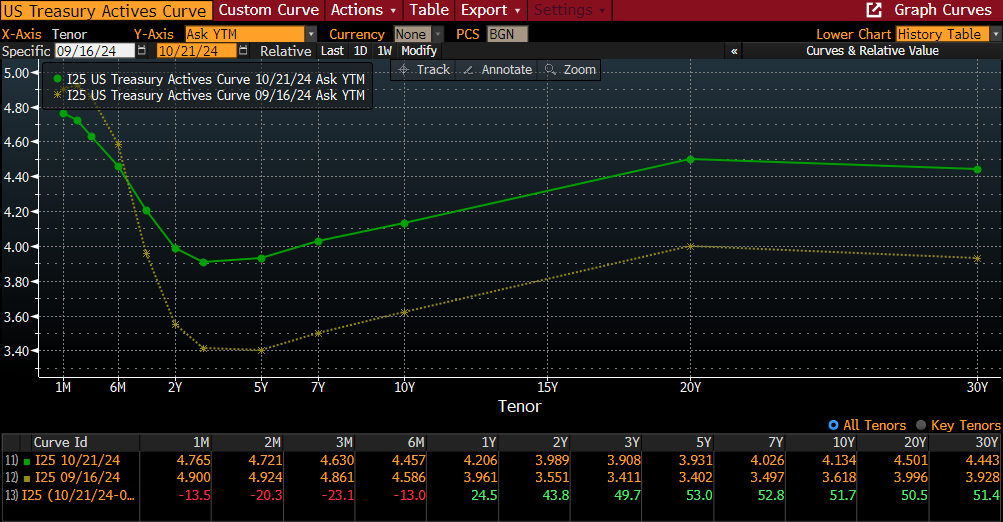
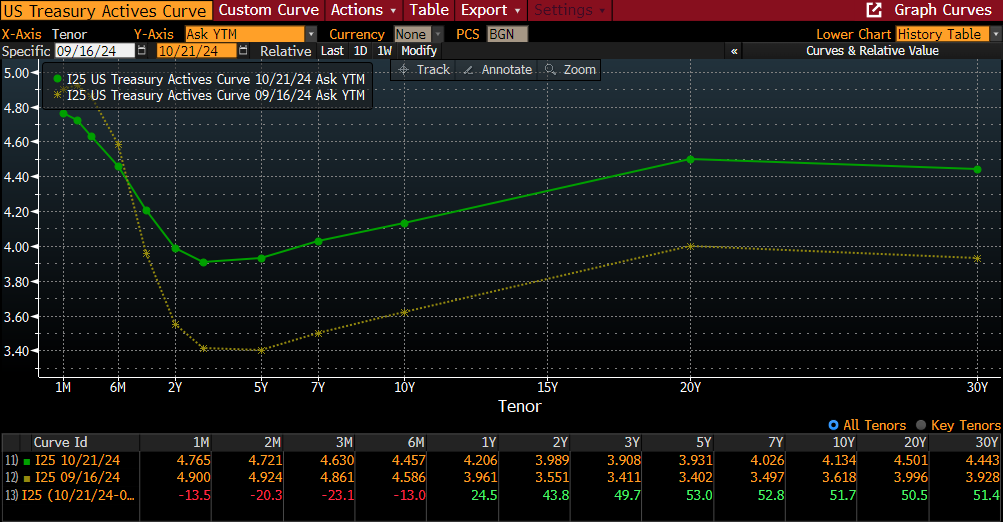
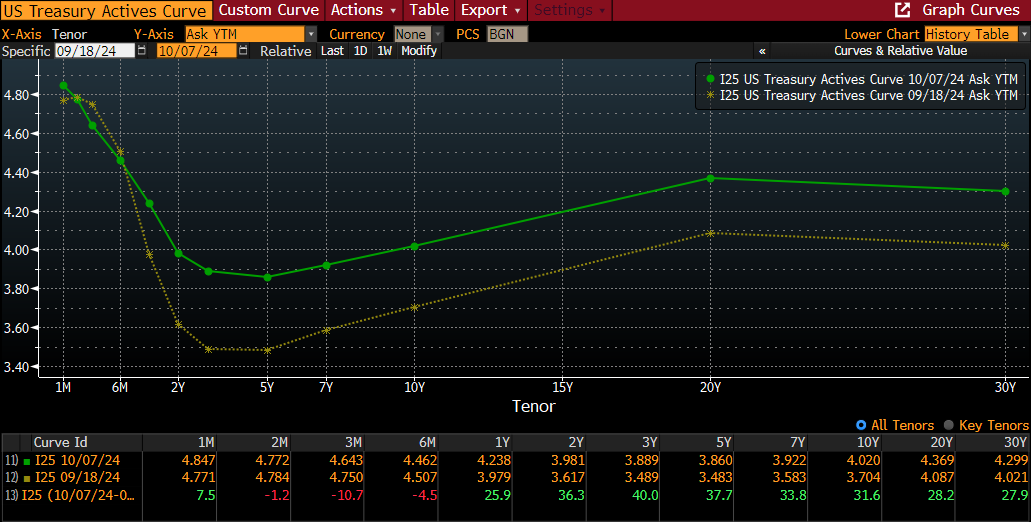
Is the above picture representative of the available liquidity in your plan? Has the significant movement into alternatives reduced for you the number of investment strategies within your asset allocation framework that can provide liquidity when called upon? Is the changing shape (steepening) of the US Treasury yield curve reducing the return available on cash thus making the holding of cash reserves less palatable? Has your practice of doing a “cash sweep” of dividends, interest, and capital distributions each and every month created headaches for you?

We’d like to speak with you about a strategy – cash flow matching (CFM) – that can dramatically improve your liquidity, while enhancing the return associated with “cash reserves” thus reducing the potential negative impact on your pursuit of the required ROA. Wouldn’t you like liquidity to be abundant similar to the picture below? How comforting would it be to know that each and every month your plan has the necessary asset cashflows to meet the liability cashflows of benefits and expenses without having to liquidate assets that may be transacted at less than opportune times?

Cash flow matching (CFM) has been around for decades. CFM is often how insurance companies and lottery systems meet their future obligations. They take a present value calculation of that future promise and they fund an investment grade bond program that will carefully match asset cash flows with the liability cash flows so that your required liquidity is available monthly. There is no need to do a cash sweep! If you aren’t familiar with Guinness Global Investors (UK), they have determined through their research that the practice of sweeping dividends is harmful (very) to long-term equity returns. In fact, they found that on a 10-year rolling basis going back to 1940, that dividends contributed 47% of the total return. More starkly, on a 20-year rolling basis, that contribution escalates to 57% – wow! The ability to reinvest those dividends into potentially higher returning equities is quite powerful. A CFM strategy will enable your plan to eliminate the ill effects of the cash sweeping practice and allow growth assets to grow unencumbered.

At Ryan ALM, Inc., liquidity management has always been a focus of ours since all we do is provide asset cash flows through our CFM product to meet those pesky monthly obligations. Let us help you craft a “liquidity policy” that makes sense. Furthermore, through our Custom Liability Index (CLI) we will map for you the needed liquidity as far into the future as you want to fund. Lastly, we’ll construct an investment grade bond portfolio that will ensure the necessary asset cash flows are available monthly (barring any defaults, which are incredibly rare within the IG universe). This portfolio should be the core holding within your plan. All other assets now have seen the investing horizon extended since they are no longer a source of liquidity. As you know, time is a critical variable in the success or failure of an investment program. The more time that one has to invest, the higher the probability of success. We stand ready to assist you.

ARPA Update as of September 20, 2024

By: Russ Kamp, Managing Director, Ryan ALM, Inc.

Welcome to Autumn! It has always been my favorite season since I was a young boy. I would often listen to NY Giants football on the radio as I spent Sunday afternoons outside in the crisp fall air while raking leaves or lying in a freshly created pile. Unfortunately, the Giants weren’t very good in the ’60s and ’70s. I guess what goes around comes around.

I knew that this day would come since I publish an update on the weekly activity associated with the ARPA pension legislation. There was no obvious activity by the PBGC last week. In their latest update, the PBGC is not reporting any new applications received (the efiling portal remains temporarily closed), no applications were approved, denied, or withdrawn, no plans repaid a portion of the SFA due to census errors, and finally, no multiemployer plans sought inclusion on the waiting list. Oh, well. Even the PBGC needs a rest once in a while.

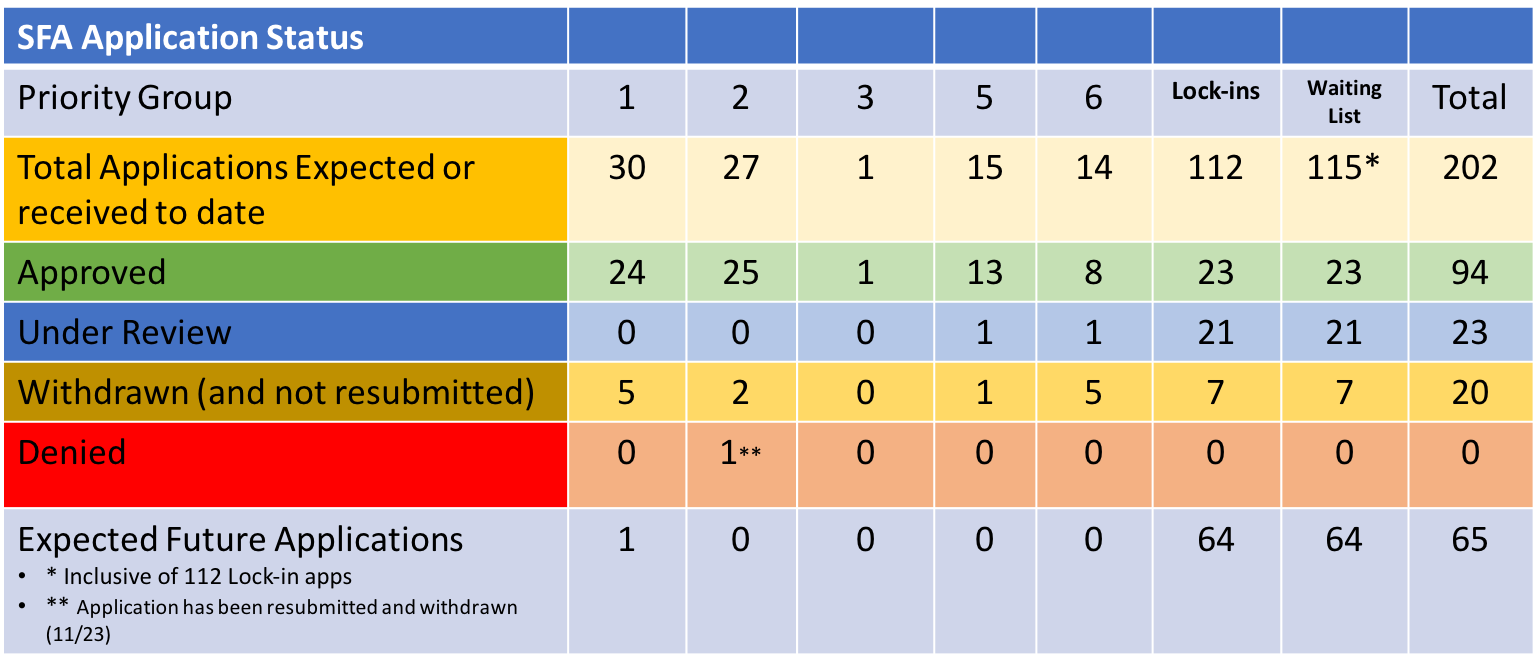
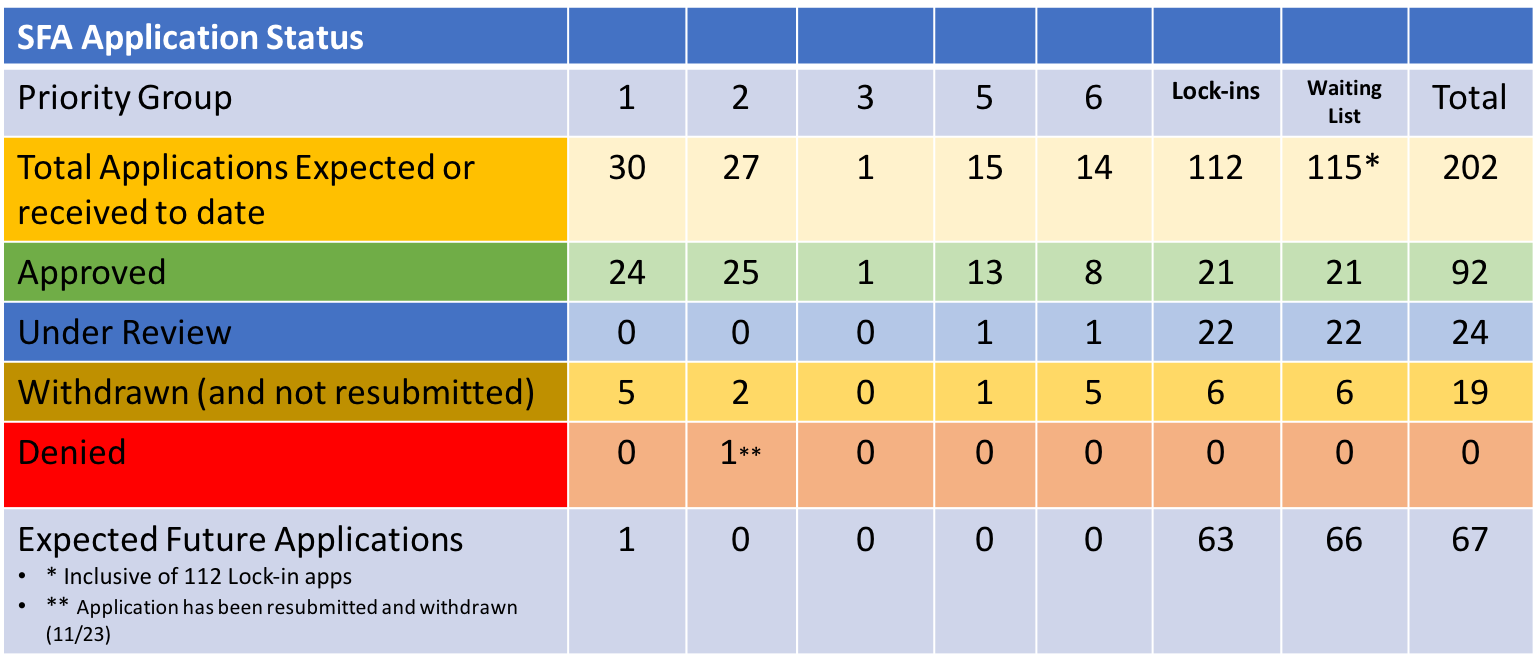
Perhaps the PBGC was focused on the Fed’s interest rate policy decision like the rest of us. So, I’ll take advantage of the clean slate and use my weekly update to summarize where we are at this stage of the PBGC’s implementation of the ARPA pension legislation which began in July 2021. To date, 92 multiemployer plans have received Special Financial Assistance totaling $68.0 billion in grants (inclusive of supplemental awards, interest, and FA Loan Repayments). Of the 92 approved applications, 38 (41.3%) were the initial application attempt. There has been only one plan that had its application denied for ineligibility. Bakery Drivers Local 550 and Industry Pension Fund had its initial application denied in January 2023. A subsequent application was withdrawn in July 2023.

There are currently 23 applications before the PBGC. Five of those 23 will have the 120-day review period elapse in October. There is still one Priority Group 1 member that hasn’t filed an application out of the 30 funds identified as Priority Group 1 eligible. In addition, there are currently 18 applications that were withdrawn that have yet to refile. As I’ve previously reported, 14 funds have repaid a portion of the SFA received because of overpayment due to incorrect census data. There may be more to come.

The Waitlist had 115 multiemployer plans at one time. Twenty-one of those plans have received SFA grants, another 21 are presently under review, while five applications were withdrawn and not refiled. That leaves 69 plans that have yet to get PBGC approval to submit the initial application. While last week may have been “quiet” for the PBGC from an external point of view, a tremendous effort has been put forth to get to this point with potentially lots more to go.

POB Discussions Back on the Table?

By: Russ Kamp, Managing Director, Ryan ALM, Inc.

Cash Flow Matching (CFM) has enjoyed a renaissance within the pension community since US interest rates began rising in March 2022. The expanded use has not been limited to the beneficiaries of the Special Financial Assistance (SFA) paid through grants as a result of the ARPA pension reform being passed in March 2021. As a reminder, SFA proceeds are to be used exclusively to fund benefits (and expenses) as far into the future as the allocation will go. Protecting the precious grant proceeds has led to multiemployer pension plan sponsors and their advisors mostly using the 67+% in fixed income in defeasement strategies. We, at Ryan ALM, have certainly benefitted from this trend and applaud them for this decision.

In addition to multiemployer plans, both public and private (corporate) pension plans, as well as E&Fs have used CFM to bring an element of cash flow certainty (barring any defaults) to the management of pension assets and the generation of liquidity without being forced to sell assets, which can be very painful during periods of great uncertainty/volatility. These entities join insurance companies and lottery systems that have engaged in CFM activities for decades.

However, there remains a belief that CFM strategies only work during periods of high interest rates. We disagree, since liquidity is needed on a continuous basis. We believe that the use of CFM should be dictated by a number of factors, such as the entities funded status, ability to contribute, and the current fixed income exposure, as well as those liquidity needs. Unfortunately, it appears that interest rates have peaked for the time being. During the Summer of 2023, we were constructing CFM portfolios with a 6+% YTW, capturing most of the average ROA with little volatility. It was a wonderful scenario that unfortunately was not taken advantage of by most sponsors.

Today we are still able to build through our investment grade corporate bond focus portfolios with a YTW around 4.6%. Given the aggressive move down in Treasury yields during the last few months, we think that bond investors have gotten ahead of the Fed at this point as they are discounting about 150 bps of Fed rate cutting. Despite progress in the inflation fight, “sticky” inflation remains in excess of 4%. The US labor market’s unemployment rate is only 4.2%. Wage growth remains above 4%, while initial jobless claims remain at modest levels. Furthermore, the Atlanta Fed’s GDPNow model is forecasting growth for Q3’24 at 3.0% as of September 17, 2024. None of these metrics signal recession to me. How about you?

If you are of the mindset that a 4.6% YTW isn’t providing you with enough return, just think what you’d get from traditional active fixed income portfolios should rates rise once more. Please remember 2022’s -13% total return for the BB Aggregate Index. We frequently write about the need for plan sponsors to think outside the box as it relates to the allocation of assets. We believe that your plan’s assets should be bifurcated into two buckets – liquidity and growth. While the CFM portfolio is providing your plan with the necessary liquidity on a monthly basis, the growth assets can now grow unencumbered. These assets will be used at a later date to meet future benefits and expenses. With a CFM portfolio, plan sponsors can reduce or eliminate the need to do a “cash sweep” that takes away reinvestment in the growth portfolio.

In addition to believing that CFM is still a viable strategy in this environment, the decline in US Treasury yields is once again opening a door for sponsors to consider a pension obligation bond (POB). The 10-year Treasury Note yield is only 3.66% as of 6 pm EST (9/17) or roughly slightly more than half of the average public fund ROA. Estimates place the average funded ratio for public plans at 80%. For a plan striving for 7%, an 8.4% annual return must be created, or the plan’s funded status will continue to deteriorate unless contributions are increased to offset the shortfall. For plans that have funded ratios below the “average” plan, it is imperative that the deficit is closed more quickly. Issuing a POB and using the proceeds to close that gap is a very effective strategy. Corporate plans frequently issue debt and use the proceeds for a number of purposes, including the funding of pension funds.

We’d recommend once again that the proceeds received from a POB be used in a defeasement strategy to meet current liquidity needs and not invested in a traditional asset allocation framework with all of the uncertainty that comes from investing in our capital markets. Why risk potential losses on those assets when a CFM strategy can secure the Retired Lives Liability? It is truly unfortunate that most plan sponsors with underfunded plans didn’t take advantage of the historically low interest rates in 2020 and 2021. Cheap money was available for the taking. It is also unfortunate, that those plans that did take advantage of the rate environment likely invested those proceeds into the existing asset allocation. As you might recall, not only did the BB Aggregate decline -13% in 2022, the S&P 500 fell -18% that year, too.

Managing a DB pension plan comes with a lot of uncertainty. At Ryan ALM, we are trying to bring investment strategies to your attention that will provide certainty of cash flows, which will help stabilize the fund’s contributions and funded status. Don’t be the victim of big shifts in US interest rate policy. Use bonds for their cash flows and secure the promises for which your plan exists in the first place. A defeasment strategy mitigates interest rate risk because the promises (benefits and expenses) are future values, which are not interest rate sensitive. That should be quite comforting. Let us know how we can help you. We stand ready to roll.

ARPA Update as of September 13, 2024

By: Russ Kamp, Managing Director, Ryan ALM, Inc.

Will it be 25 or 50? That is the big question on nearly every investor’s mind this week. Will the Federal Open Market Committee cut rates by 0.25% or 0.5% on Wednesday. Any cut would mark the first such move by the Federal Reserve since 2020. Despite the uncertainty as to the Fed’s potential action, the PBGC was undaunted as they had another busy week implementing the ARPA pension legislation.

There is plenty to highlight from last week’s activity, as three funds received approval of their applications seeking Special Financial Assistance (SFA), one fund repaid a portion of its SFA grant, while another withdrew its initial application. There were no applications filed this past week as the PBGC’s filing portal is temporarily closed. Multiemployer plans seeking SFA may still “request to be placed on the waiting list in accordance with the instructions in PBGC guidance.”

The three funds receiving SFA were Teamsters Local Union No. 469 Pension Plan, Pension Plan Private Sanitation Union, Local 813 I.B. of T., and Local Union No. 226 International Brotherhood of Electrical Workers Open End Pension Trust Fund. These funds were each non-Priority Group members and the applications were the initial filings for each. In total, these pension plans will receive $238.3 million in SFA and interest for just over 6k members.

Local 1783 I.B.E.W. Pension Plan, an Armonk, NY non-Priority Group member, withdrew its initial application. They were seeking $42.2 million in SFA for the 850 plan participants. The Alaska Iron Workers Pension Plan received approval for its application in January 2023. They have just agreed to return $384,111.74 from the $53.5 million received in February 2023, as a result of a census error. This is the fourteenth plan to return a portion of the SFA due to overpayment.

As one can see, the PBGC has approved 92 of a potential 202 applications (45.5%) at this time for a total of $68 billion in SFA, including interest FA loan repayments. As a reminder, plans receiving SFA proceeds must keep those separated from the plan’s current fund (legacy assets). Despite the recent decline in US interest rates, defeasing benefits and expenses as far into the future as the SFA grant will cover is still the proper course of action. I produced a post last Friday on the correct approach to cash flow matching for those considering such a strategy.

Cash Flow Matching Done Right!

By: Russ Kamp, Managing Director, Ryan ALM, Inc.

Most of us seek to climb the “ladder to success”. We also use ladders for important everyday activities. I’ll soon be back on a ladder myself, as year-end approaches and the Christmas lights are placed on my home. Despite the usefulness of ladders, there is one place where they aren’t necessarily beneficial. I’m specifically addressing the use of ladders for bond management as a replacement for a defeasement strategy.

There are still so many misconceptions regarding Cash Flow Matching (CFM). Importantly, CFM is NOT a “laddered bond portfolio”, which would be quite inefficient and costly. It IS a highly sophisticated cost optimization process that maximizes cost savings by emphasizing longer maturity bonds (within the program’s parameters capped at the maximum year to be defeased) and higher yielding corporate bonds, such as A and BBB+.

Furthermore, it is not just a viable strategy for private pension plans, as it has been deployed successfully in public and multiemployer plans for decades, as well as E&Fs. It is also NOT an all or nothing strategy. The exposure to CFM is a function of several factors, including the plan’s funded status, current allocation to core fixed income, and the Retired Lives Liability, etc. Many of our clients have chosen to defease their pension liabilities from 5-30 years or beyond. When asked, we recommend a minimum of 10 years, but again that will be a function of each plan’s unique funding situation.

CFM strategies are NOT “buy and hold” programs. CFM implementations must be dynamic and responsive to changes in the actuary’s forecasts of benefits, expenses, and contributions. There are also continuous changes in the fixed income environment (I.e. yields, spreads, credits) that might provide additional cost savings that need to be monitored and managed. Plan sponsors may seek to extend the initial length (years) of the program as it matures which will often necessitate a restructuring or rebalancing of the original portfolio to maximize potential funding coverage and cost reductions.

CFM programs CANNOT be managed against a generic index, as no pension plan’s liabilities will look like the BB Aggregate or any other generic index. Importantly, no pension plan’s liabilities will look like another pension plan given the unique characteristics of that plan’s workforce and plan provisions. The appropriate management of CFM requires the construction of a Custom Liability Index (CLI) that maps the plan’s liabilities in multiple dimensions and creates the path forward for the successful implementation of the asset/liability match.

Importantly, CFM programs are NOT going to negatively impact the plan’s ability to achieve its desired ROA. In fact, a successful CFM program, such as the one we produce, will actually enhance the probability of achieving the return target. How? Your plan likely has an allocation to core fixed income. Our implementation will likely outyield that portfolio over time creating alpha as well as SECURING the promised benefits. Given the higher corporate bond interest rates, an allocation to this asset class can generate a significant percentage of the ROA target with risks substantially below those of other asset classes.

When done right, a successful CFM implementation achieves the following:

Provides liquidity to meet benefits and expenses

Secures benefits for the time horizon the CFM portfolio is funding (1-10 years +)

Buys time for the alpha assets to grow unencumbered

Out yields active bond management… enhances ROA

Reduces Volatility of Funded Ratio/Status

Reduces Volatility of Contribution costs

Reduces Funding costs (roughly 2% per year in this rate environment)

Mitigates Interest Rate Risk for that portion of the portfolio using CFM as benefits are future values that are not interest rate sensitive.

No laddered bond portfolio can provide the benefits listed above. Whether you are responsible for a DB pension, an endowment or foundation, a HNW individual, or any other pool of assets, you likely have liquidity needs regularly. CFM done right will greatly enhance this process. Call on us. We’ll gladly provide an initial analysis on what can be achieved, and we will do it for FREE.

Oh, The Games That Are Played!

By: Russ Kamp, Managing Director, Ryan ALM, Inc.

Managing a defined benefit pension plan should be fairly straightforward. The plan sponsor has made a promise to each participant which is based on time of service, salary, and a multiplier as the primary inputs. The plan sponsor hires an actuary to do the nearly impossible of predicting the future benefits, administrative expenses, salaries, mortality, etc., which for the most part, they do a terrific job. Certainly in the short-term. Since we have a reasonable understanding of what that promise looks like, the objective should be to SECURE that promise at a reasonable cost and with prudent risk. Furthermore, sufficient contributions should be made to lessen the dependence on investment returns, which can be quite unstable.

Yet, our industry has adopted an approach to the allocation of assets that has morphed from focusing on this benefit promise to one designed to generate a target return on assets (ROA). In the process, we have placed these critically important pension funds on a rollercoaster of uncertainty. How many times do we have to ride markets up and down before we finally realize that this approach isn’t generating the desired outcomes? Not only that, it is causing pension systems to contribute more and more to close the funding gap.

Through this focus on only the asset-side of the equation, we’ve introduced “benchmarks” that make little sense. The focus of every consultant’s quarterly performance report should be a comparison of the total assets to total liabilities. When was the last time you saw that? Never? It just doesn’t happen. Instead, we get total fund performance being compared to something like this:

Really?

Question: If each asset class and investment manager beat their respective benchmark, but lost to liability growth, as we witnessed during most of the 2000s: did you win? Of course not! The only metric that matters is how the plan’s assets performed relative to that same plan’s liabilities. It really doesn’t matter how the S&P 500 performed or the US Govt/Credit index, or worse, a peer group. Why should it matter how pension fund XYZ performed when ABC fund has an entirely different work force, funded status, ability (desire) to contribute, and set of liabilities?

It is not wrong to compare one’s equity managers to an S&P or Russell index, but at some point, assets need to know what they are funding (cash flows) and when, which is why it is imperative that a Custom Liability Index (CLI) be constructed for your pension plan. Given the uniqueness of each pension liability stream, no generic index can ever replicate your liabilities.

Another thing that drives me crazy is the practice of using the same asset allocation whether the plan is 60% funded or 90% funded. It seems that if 7% is the return target, then the 7% will determine the allocation of assets and not the funded status. That is just wrong. A plan that is 90% funded has nearly won the game. It is time to take substantial risk out of the asset allocation. For a plan that is 60% funded, secure your liquidity needs in the short-term allowing for a longer investment horizon for the alpha assets that can now grow unencumbered. As the funded status improves continue to remove more risk from the asset allocation.

DB plans are too critically important to continue to inject unnecessary risk and uncertainty into the process of managing that fund. As I’ve written on a number of occasions, bringing certainty to the process allows for everyone involved to sleep better at night. Isn’t it time for you to feel great when you wake up?

The Heavyweight Fight May Be Tilting Toward Fiscal Policy

By: Russ Kamp, Managing Director, Ryan ALM, Inc.

You may recall that on March 22, 2024, I produced a post titled, “Are We Witnessing A Heavyweight Fight?”. The gist of the blog post was the conflict between the Fed’s desire to drive down rates through monetary policy and the Federal government’s ongoing deficit spending. At the time of publication, the OMB was forecasting a $1.6 trillion deficit for fiscal year 2024. As I noted in a post on Linkedin.com this morning, the budget office has revised its forecast that now has 2024’s fiscal deficit at $2.0 trillion.

This additional $400 billion in deficit spending will likely create additional demand for goods and services leading to a continuing struggle for the Fed and the FOMC, as they struggle to contain inflation. I also reported yesterday that rental expenses had risen 5.4% on an annual basis through May 31, 2024. Given the 32% weight of rents on the Consumer Price Index (CPI), I find it hard to believe that the Fed will be successful anytime soon in driving down inflation to their 2% target.

As a result, we believe that US interest rates are likely to remain at elevated levels to where they’ve been for the past couple of decades. These higher levels provide pension plan sponsors the opportunity to use bonds to de-risk their pension plans by securing the promised benefit payments through a defeasement strategy (cash flow matching). Furthermore, higher rates provide an opportunity for savers to finally realize some income from their fixed income investments. So, higher rates aren’t all bad! I would suggest (argue) that rates have yet to achieve a level that is constraining economic activity. Just look at the Atlanta Fed’s GDPNow model and its 3.0% annualized Real GDP forecast for Q2’24. Does that suggest a recessionary environment to you?

For those investors that have only lived through protracted periods of falling rates and/or an accommodative Federal Reserve, this time may be very different. Forecasts of Fed easing considerably throughout 2024 have proven to be quite premature. As I stated this morning, “investors” should seriously consider a different outcome for the remainder of 2024 then they went into this year expecting.

ARPA Update as of June 21, 2024

By: Russ Kamp, Managing Director, Ryan ALM, Inc.

I suspect (can only hope) that you woke up yesterday morning just itching to see what news I was going to share as it related to ARPA and the PBGC’s implementation of that critical legislation. Sorry to have disappointed you. Like most everyone else, my day just got away from me.

However, I do have some exciting news to share which might just make up for the disappointment of having to wait one day to get the weekly update. As we’ve been writing, the PBGC was running up against many application review and determination deadlines this month. As a result, they have announced that five funds had their applications approved for Special Financial Assistance (SFA). Terrific!

The five funds are the Retail, Wholesale and Department Store International Union and Industry Pension Plan, the Bakery and Confectionery Union and Industry International Pension Fund, United Food and Commercial Workers Unions and Employers Midwest Pension Plan, GCIU-Employer Retirement Benefit Plan, and the Pacific Coast Shipyards Pension Plan. These funds represent three Priority Group 6 members and two that came through the non-priority waitlist. In total, they will receive nearly $5.8 billion in SFA for just over 200k in plan participants. The Kansas Construction Trades Open End Pension Trust Fund is the last application that needs action in June. There are four that have July deadlines.

There were no new applications submitted to the PBGC, as the portal remains temporarily closed, no applications denied or withdrawn, and none of the plans that have received SFA were forced to return a portion of the proceeds as a result of overpayment identified through a death audit of the plan’s population.

Fortunately, the US interest rate environment and current economic conditions remain favorable for those potential SFA recipients to SECURE promised benefits far into the future without subjecting the grant proceeds to unnecessary risk associated with a non-cash flow matching assignment. Remember that the sequencing of returns is a critical variable when contemplating an asset allocation framework. If your SFA portfolio suffers significant losses in the early years, you negatively impact the coverage period. We’ll be happy to model your plan’s liabilities for free. Don’t hesitate to reach out to us if we can be a resource for you.