ARPA Update as of June 6, 2025

By: Russ Kamp, CEO, Ryan ALM, Inc.

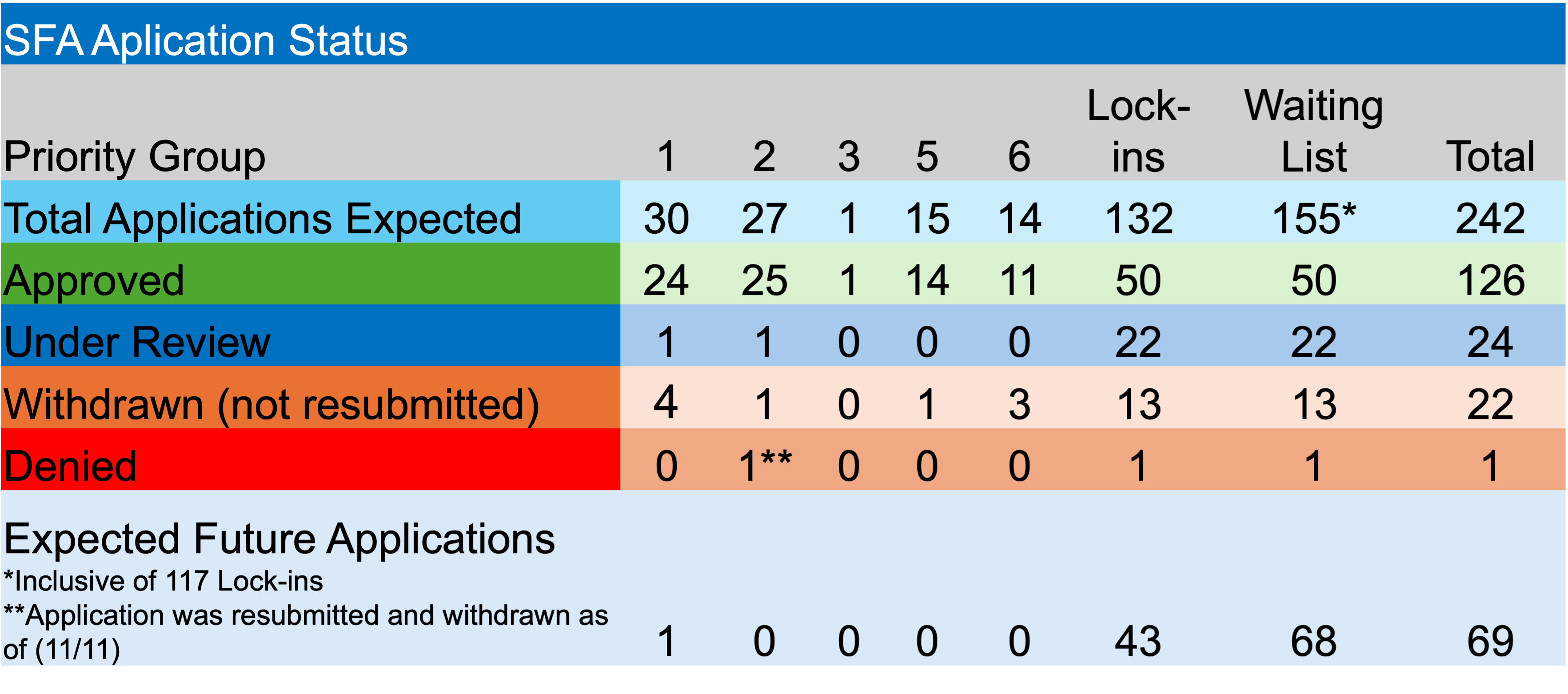
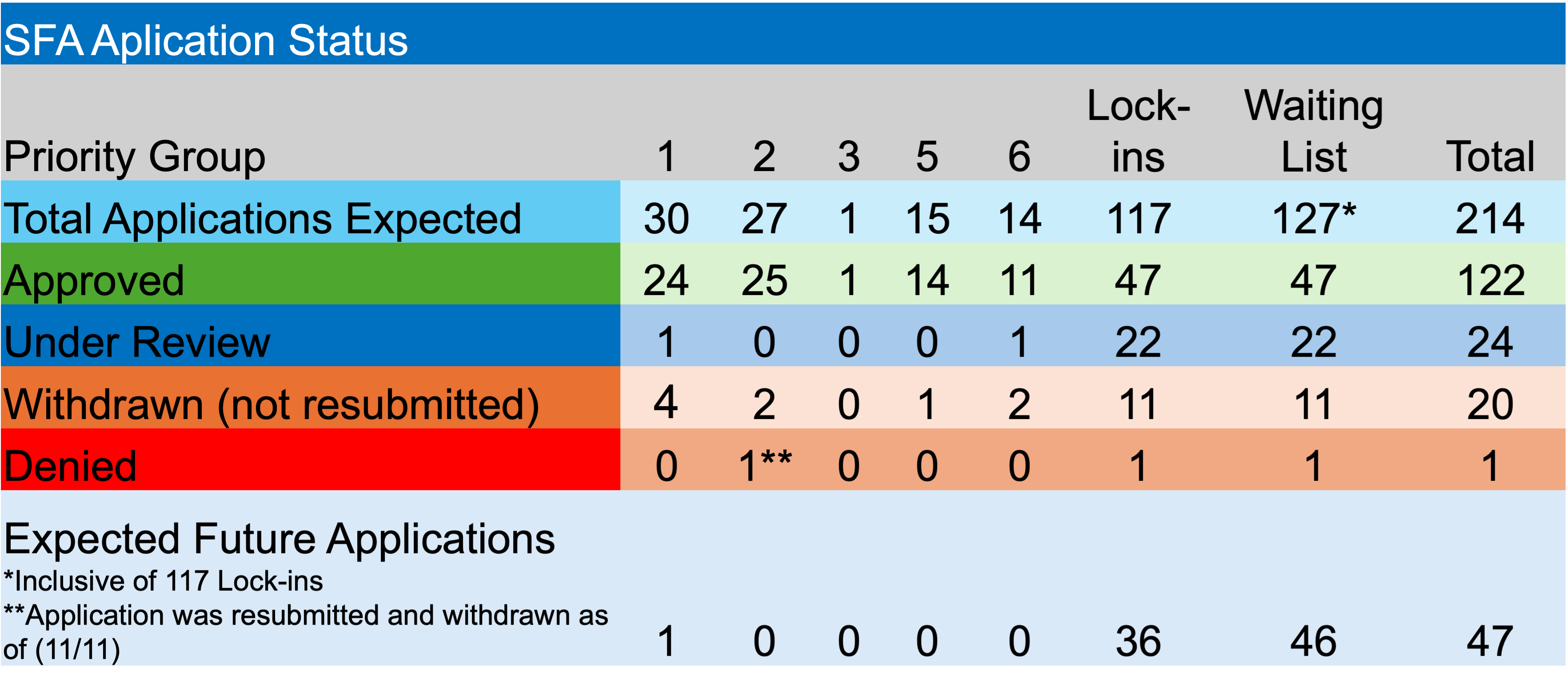
Pleased to provide you with another weekly update on the PBGC’s implementation of the critically important ARPA pension legislation. We are roughly 1 1/2 years from the completion of this program and yet, more pension funds are seeking to be added to the waitlist. In just the past week, another six funds were added to the list, including Bakery and Sales Drivers’ Local 33 Partitioned Pension Fund, Oregon Printing Industry Pension Trust, Local No. 171 Pension Plan, Licensed Tugmen’s and Pilots’ Pension Fund, San Diego Plasterers Pension Trust, and the Ironworkers Local No. 6 Pension Plan. In total 132 funds sought SFA that weren’t part of the original six priority groups that became five after further review.

There were no new applications submitted during the prior 7-day period, as the PBGC’s eFiling portal remains temporarily closed. There are currently 19 applications with the PBGC, including one Priority Group 1 member and a recently submitted Priority Group 2 application. There remains one application with a June 2025 deadline for action. Happy to report that two funds received approval for their applications, including New Bedford Longshoremen’s Pension Plan and Cement Masons Local No. 524 Pension Plan, both of which are non-priority group members. In total, they will receive just under $6 million in SFA plus interest for the 280 plan participants.

There were no plans asked to repay a portion of the SFA due to census errors and no plans had their applications denied. There were two plans running up against the PBGC’s 120-day window that withdrew applications, including Teamsters Local 277 Pension Fund and Laborers National Pension Fund.

Given uncertainty related to the impact of the tariffs on consumption, jobs, earnings, etc. The Federal Reserve remains cautious in its approach to future rate movements. As a result, U.S. interest rates have migrated higher providing plan sponsors with a wonderful opportunity to defease the promised benefit payments and in the process extend the potential coverage period. As always, we are willing to provide a free analysis to help any SFA recipient think through an appropriate asset allocation framework.

ARPA Update as of May 30, 2025

By: Russ Kamp, CEO, Ryan ALM, Inc.

Welcome to the last update for May 2025. It sure seems like the year is flying by. Are we having fun yet?

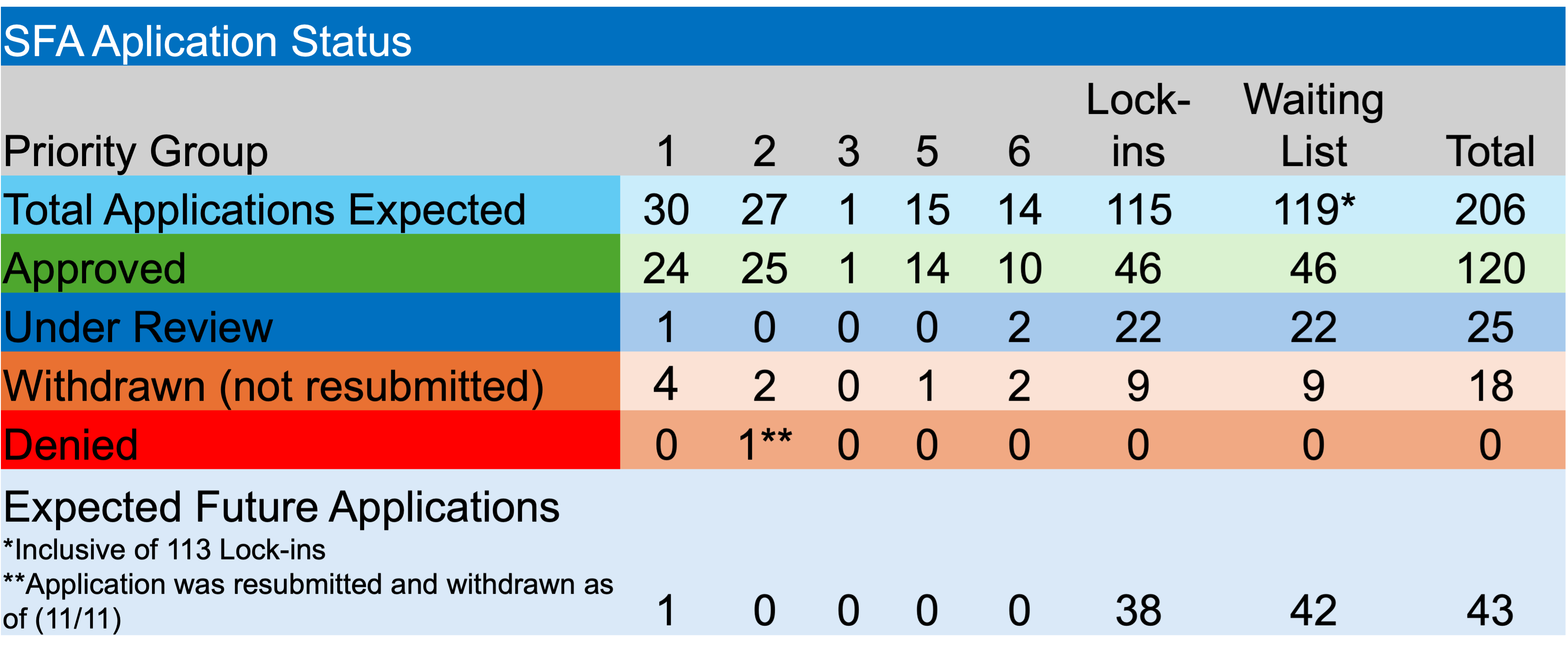
It has been nearly four years (July 2021) since the PBGC began implementing the ARPA pension legislation. Despite a few stumbles, I think that the program has been a huge success. Somewhat surprisingly, we are still seeing multiemployer pension plans being added to the waitlist as they seek a share of the Special Financial Assistance (SFA). In fact, an additional 5 funds were added to the waitlist in the last week.

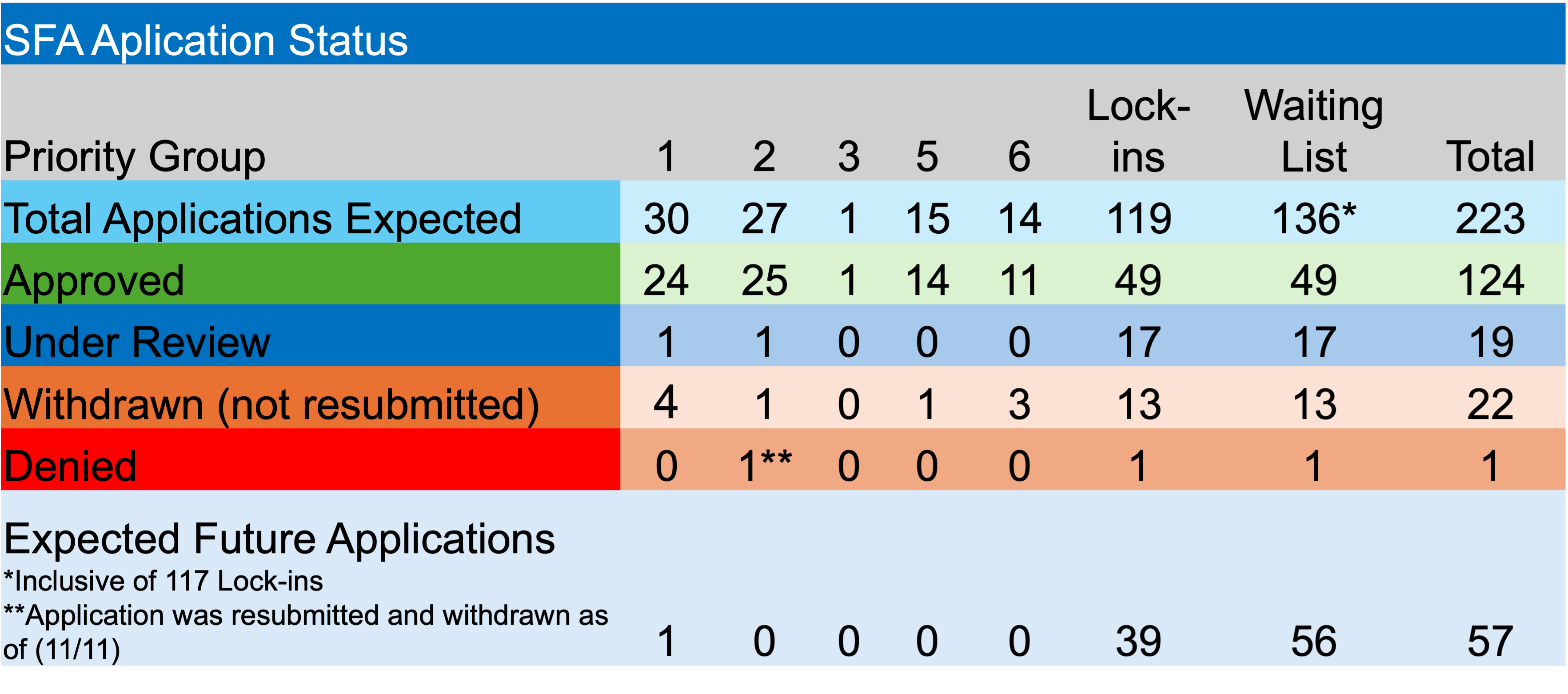
In other news, there were no applications submitted to the PBGC for review, as their eFiling portal remains temporarily closed. There are currently 24 applications in the PBGC’s queue, with seven needing to be completed in some way by the end of June and another seven by the end of July. There was one application approved, as Sheet Metal Workers’ Local No. 40 Pension Plan received approval for an SFA grant of $9.9 million including interest for the plan’s nearly 1,000 participants.

There was one application withdrawn, as Retail Food Employers and United Food and Commercial Workers Local 711 Pension Plan withdrew a revised application seeking $64.2 million in SFA for the plans 25,306 participants. Perhaps the third submission will prove successful. Lastly, there were no applications denied nor asked to repay a portion of the SFA grant. As I’ve been reporting, we are likely very near the end of the census error issue repayments.

When the original Butch Lewis Act (BLA) was being legislated it was estimated that approximately 114 multiemployer plans would be eligible for a “loan”. There are currently 100 more funds seeking support. If I remember correctly, everything needs to wrap up regarding this legislation by December 31, 2026. Clearly, there is still a ton of work ahead for the PBGC.

ARPA Update as of May 9, 2025

By: Russ Kamp, CEO, Ryan ALM, Inc.

Happy belated Mother’s Day to all the Moms. We hope that you had a special day.

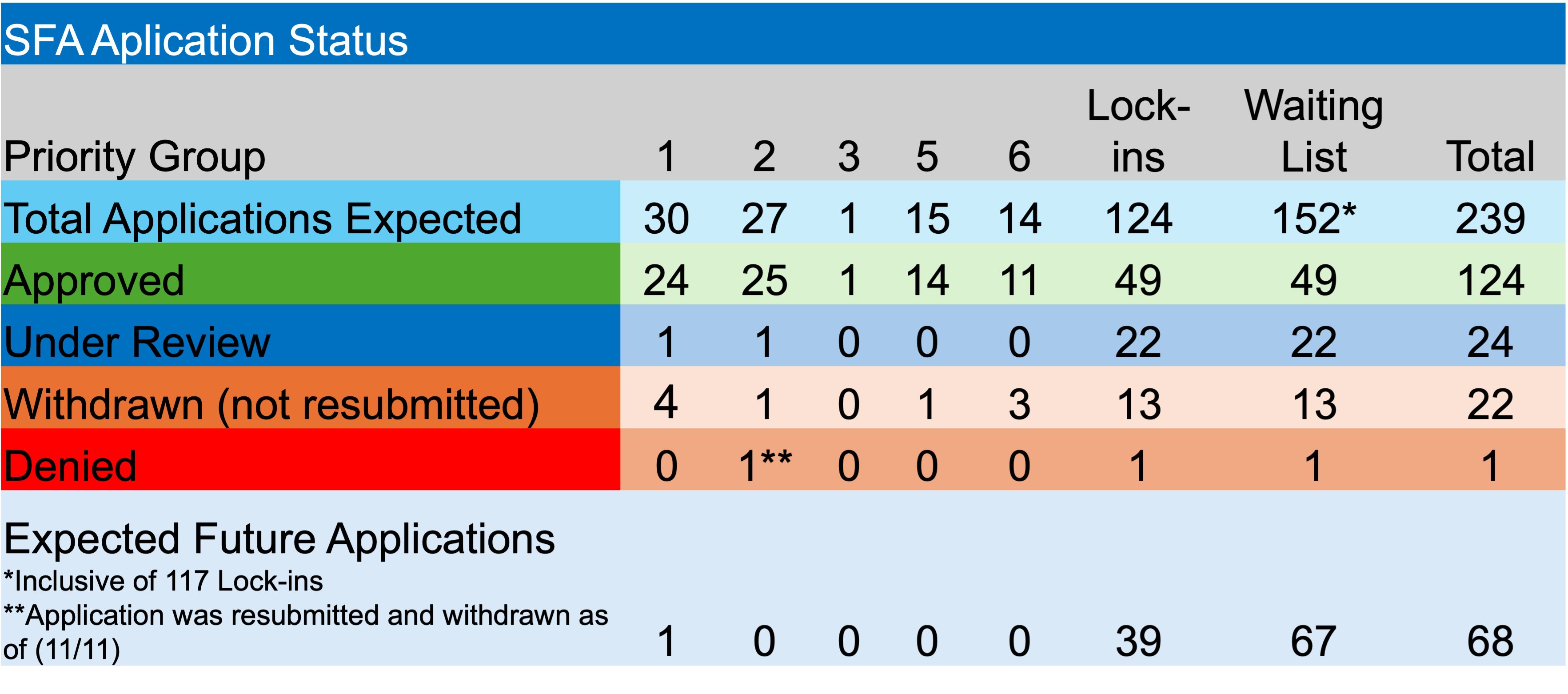
Pleased to report that the PBGC had a very productive week ending last Friday. There were several actions taken including the filing of three initial applications from the waitlist. Alaska United Food and Commercial Workers Pension Fund, Local 73 Retirement Plan, and Local 807 Labor-Management Pension Fund are hoping to secure nearly $300 million for just over 10k plan participants. With these filings, the PBGC currently has 29 applications under review. As a result, their eFiling portal is temporarily closed. As per the legislation, they must act on an application within 120 days. The United Food and Commercial Workers Unions and Employers Pension Plan application reaches that milestone on May 17th. As a reminder, they are seeking $54 million in SFA for there more than 15k members. The PBGC will have its hands full during the next month, as 10 pension plans have applications hitting their 120-day window during June.

In other ARPA news, there were no applications approved, denied, or withdrawn during the past week. However, there was one more fund that repaid a portion of the SFA grant received due to census errors. Local Union No. 863 I.B. of T. Pension Plan repaid $3.2 million in SFA or about 1% of the grant received. To date, 55 plans have reported on potential census errors prior to the PBGC having access to the Social Security Master Death File. Of those 55, 51 have repaid a portion of the proceeds received totaling $214.8 million or 0.44% of the $48.4 billion in SFA received by those funds.

Lastly, there was one more plan added to the waitlist. Greenville Plumbers and Pipefitters Pension Fund becomes the 119th pension fund to seek SFA without being a priority group member. As reflected below, there are 38 pension funds from the waitlist that have yet to file an application with the PBGC.

Recent activity within the U.S. Treasury market have pushed long-term rates up. As of this morning, the 30-year Treasury Bond yield is at 4.89%, while the 10-year Treasury Note’s yield is at 4.48%. Both are quite attractive for a plan looking to secure the promised benefits through the SFA grant.

ARPA Update as of May 2, 2025

By: Russ Kamp, CEO, Ryan ALM, Inc.

I think someone forgot that the calendar flipped from April to May. The April showers have been followed by the May monsoons in New Jersey. The May flowers may be washed out to see!

Regarding the ARPA implementation by the PBGC, the current efiling portal is describes as limited, which is certainly far better than the frequently mentioned “temporarily closed” status. As a result, there were three new applications submitted during the past week. Local 1102 Retirement Trust, IBEW Eastern States Pension Plan, and Local 1922 Pension Plan are each classified as non-priority group members. In the case of Local 1922, its application was revised. In total, these three funds are seeking $53.7 million in special financial assistance (SFA) for just over 6k participants.

In other ARPA news, Aluminum, Brick & Glass Workers International Union, AFL-CIO, CLC, Eastern District Council No. 12 Pension Plan, a Wyomissing, PA based plan, has received approval of its revised application. They will receive $8.5 million for the 580 members of its pension plan. This was the first application approved in nearly a month.

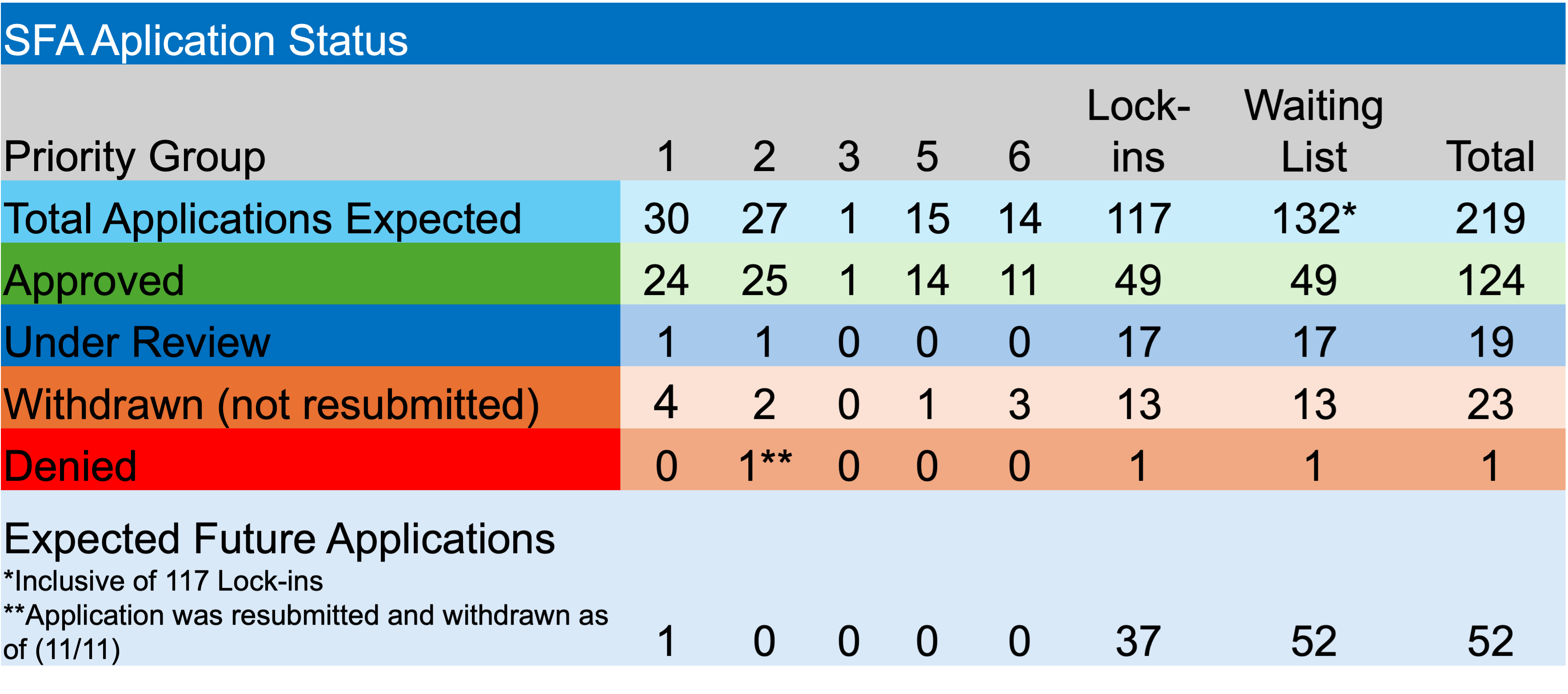
Happy to mention that there were no applications denied, withdrawn, or asked to repay excess SFA during the last week. However, there were two additional plans added to the waitlist. Sports Arena Employees Local 137 Retirement Fund and Retirement Plan of Local 1102 Retirement Fund have been added to the waitlist. In total, 119 non-priority funds have sought SFA through the waitlist process. Neither of these funds locked-in a date for valuation purposes on the discount rate. Four funds have not currently chosen a lock-in date.

There are still 43 plans that have yet to submit an application for review, with all but one of those a non-priority group member. Despite significant recent volatility, U.S. Treasury interest rates, particularly 10- and 30-year maturities, are enjoying fairly robust yields. The 30-year yield is once again above 4.8%. This level of rates provides pension plans receiving the SFA some additional cost reduction to defease benefit payments.

A Call for Pension Reform – Five Years Later

By: Russ Kamp, CEO, Ryan ALM, Inc.

On March 25, 2020, I produced a post titled, “Why Pension Reform is Absolutely Necessary“. A few of you may recall that blog. I penned the post in reaction to a series of statistics that my friend John A. produced. John is a retired Teamster and an incredibly important driver behind efforts to reinstate benefits that had been cut under MPRA. John’s analysis was based on a survey that he conducted on multiemployer plans that had roughly 43,000 plan participants impacted by that misguided legislation. That universe of participants would grow to more than 75,000. What he discovered through his polling and outreach was shocking!

Their benefit reductions amounted to nearly $34,000,000 / month.  (That is a ton of lost economic activity.)

95% were not able to work.

72% were providing primary care for an ailing loved one.

65% were not able to maintain healthcare insurance.

60% had lost their home.

55% were forced to file for bankruptcy.

80% were living benefit check to benefit check.

100% of the PBGC maximum benefit payout was inadequate ($12,870 for a retiree with 30-years of work).

50% of the retirees were U.S. service veterans.

Shocked? I certainly was and continue to be that our government allowed the benefits to be cut for hard working American workers who rightfully earned them through years of employment.

Where are we today? Fortunately, the got the passage of ARPA pension reform (originally referred to as the Butch Lewis Act) which was signed into law by President Biden in March 2021. Responsibility to implement the legislation fell to the Pension Benefit Guaranty Corporation (PBGC). In my original blog post, I referred to a potential universe of 125 multiemployer plans that might be eligible for Special Financial Assistance (SFA). That list would eventually become 204 plans (see below).

I’m extremely pleased to announce that 119 funds of the 204 potential recipients have received more than $71.6 billion in SFA and interest supporting the retirements of 1,555,460 plan participants. Awesome! There is still much to do, and hopefully, the sponsors of these funds will prove to be good stewards of the grant $s by conservatively investing the SFA and reserving the risk taking for the legacy assets that have time to wade through challenging markets.

What an incredible accomplishment! So many folks would have been subject to very uncertain futures. The securing of their benefits goes a long way to allowing them to enjoy their retirement years. Unfortunately, there are too many American workers that don’t have a defined benefit plan. In many cases they have an employer sponsored defined contribution plan, but we know how challenging it can be for those participants to fund, manage, and disburse that benefit. For many others, there is no employer sponsored benefit. Their financial futures are in serious jeopardy.

That said, what appeared to be a pipe dream once the U.S. Senate failed to take up the BLA legislation has become an amazing success story. Just think of all the economic activity that has been created through these monthly payments that certainly dwarf the $34 million/month mentioned above. Congrats to all who were instrumental in getting this legislation created and passed!

ARPA Update as of April 11, 2025

By: Russ Kamp, CEO, Ryan ALM, Inc.

For those observing, may you have a good Passover and a Happy Easter. I was busy this past weekend stuffing 220 eggs with goodies for our 11 grandkids! Let’s hope that weather cooperates. I’m not overly confident on that happening given that we actually had snow during the weekend in northern NJ.

With regard to ARPA and the PBGC’s implementation of this critical legislation, three more plans received approval of their applications during the past week. Bricklayers Pension Fund of West Virginia (revised), United Wire, Metal and Machine Pension Plan (initial), and Local 945 I.B. of T. Pension Plan (revised), all non-priority group members, will receive a combined $289.1 million in Special Financial Assistance (SFA), including interest and FA loan repayments. This brings the total number of pension plans receiving SFA to 119 funds and more than $71.6 billion in grants.

There was no apparent activity beyond the approvals mentioned above, as the PBGC’s eFiling portal remains temporarily closed. The prior week also saw no applications withdrawn or denied, no excess SFA repaid, and no new plans added to the waitlist.

Of the 87 pension plans with a priority designation, 74 have now received approval for an SFA grant (85%) – outstanding! The PBGC still has quite a bit of work to do with 85 plans still in the queue for approval. Fortunately, the challenging capital markets have seen U.S. interest rates rise providing plan sponsors recipients of the SFA to realize greater cost savings and extended coverage through cash flow matching strategies. There is little reason to take on unnecessary risk while uncertainty rules the day.

ARPA Update as of March 28, 2025

By: Russ Kamp, CEO, Ryan ALM, Inc.

Welcome to the last update of March. If you are a fan of both Men’s and Women’s college basketball, there wasn’t as much “madness” as usual during the respective tournaments, as all #1 seeds made the men’s Final Four, while only teams seeded either #1 or #2 made the woman’s Final Four. However, these teams should make for a very exciting and competitive games as they conclude. I’m still waiting for Fordham to get there one day.

Now onto the task at hand. Regarding ARPA and the PBGC’s implementation of this critical legislation, last week was fairly busy. Three non-priority group funds, including United Food and Commercial Workers Unions and Participating Employers Pension Plan, Roofers Local 88 Pension Plan, and Chicago Truck Drivers, Helpers and Warehouse Workers Union (Independent) Pension Fund, filed initial applications seeking a total of $241.7 million in Special Financial Assistance (SFA) that will support the promised benefits for 14,769 workers. There are 22 funds that currently have an application before the PBGC.

In addition to the new fillings, Oregon Processors Seasonal Employees Pension Plan, received approval of its revised application. They will receive $19.9 million in SFA and interest to help cover the promised pensions for 7,279 members. There were no applications denied during the previous week, but there were a couple of initial applications from non-priority group members withdrawn. Distributors Association Warehousemen’s Pension Trust and Alaska Teamster – Employer Pension Plan were seeking $206.6 million in SFA for nearly 12,200 participants.

In other ARPA news, the PBGC recouped  $994,701.30 or 1.55% in excess SFA paid by The Newspaper Guild International Pension Plan. The PBGC has now recouped $202.2 million in excess SFA from grants totaling $47.5 billion or 0.42% of the proceeds. These funds, including another 4 that didn’t receive any excess proceeds, were among the roughly 60 that received awards before they were given access to the Social Security’s Master Death File.

Lastly, there was one more multiemployer fund added to the waitlist. The Plasterers Local 79 Pension Plan becomes the 117th plan to be placed on the waitlist. Fortunately, the PBGC has begun the process on all but 45 of those.

Lessons Learned?

By: Russ Kamp, CEO, Ryan ALM, Inc.

My wife and I are rewatching The West Wing, and we are often amazed (disappointed) by how many of the social issues discussed 20 years ago when the show first aired that are still being debated today. It really just seems like we go around in circles. Well, unfortunately, the same can be said about pensions and supposed pension reforms. We need to reflect on what lessons were learned following the Great Financial Crisis of 2007-2009, when pension America saw its funded status plummet and contribution expense dramatically escalate. Have we made positive strides?

Unfortunately, with regard to the private sector, we continued to witness an incredible exodus from defined benefit plans and the continued greater reliance on defined contribution plans, which is proving to be a failed model. That activity appears to have benefited corporate America, but how did that action work for plan participants, who are now forced to fund, manage, and then disburse a “retirement” benefit through their own actions, which is asking a lot from untrained individuals, who in many cases don’t have the discretionary income to fund these programs in the first place.

With regard to public pension systems, we saw a lot of “action”. There were steps to reduce the return on asset assumption (ROA) for many systems – fine. But, that forced contributions to rise rapidly, creating a greater burden on state and municipal budgets that resulted in the siphoning off of precious financial resources needed to fund other social issues. In addition, there was great activity in creating additional benefit “tiers” (tears?), in which newer plan participants, and some existing members, were asked to fund more of their benefit through new or greater employee contributions, longer tenures before retirement, and more modest benefits to be paid out at retirement. Again, I would argue are not pension lessons learned, but are in fact benefit cuts for plan participants.

Fortunately, for multiemployer plans, ARPA pension legislation has gone a long way to securing the funded status and benefits for 110 plans that were once labeled as Critical or worse, Critical and Declining. There are another 90 pension plans or so to go through the application process in the hopes of securing special financial assistance. But have we seen true pension reform within these funds and the balance of plans that had not fallen into critical status?

It seems to me that most of the “lessons learned” have nothing to do with how DB pension plans are managed, but rather asks that plan participants bear the consequences of a failed pension model. A model that has focused on the ROA as if it were the Holy Grail. Pension plans should have been focused on the promise (benefit) that was made to their participants, and not on how much return they could generate. The focusing on a return target has certainly created a lot more uncertainty and volatility. As we’ve been reporting, equity and equity-like exposure within multiemployer and public pension systems was greater coming into 2025 then the levels that they were in 2007. What lesson was learned?

Pension America is once again suffering under the weight of declining asset values and falling interest rates. When will we truly learn that continuing to manage DB plans with a focus on return is NOT correct? The primary objective needs to be the securing of the promised benefits at a reasonable cost and with prudent risk. Shifting wads of money into private equity or private credit and thinking that you’ve diversified away equity exposure is just silly. I don’t know what the new administration’s policies will do for growth, inflation, interest rates, etc. I do know that they are currently creating a lot of angst among the investment community. Bring some certainty to the management of pensions through a focus on the promise is superior to continuing to ride the rollercoaster of performance.

ARPA Update as of February 28, 2025

By: Russ Kamp, CEO, Ryan ALM, Inc.

Welcome to March!

We are pleased to provide you with the latest update on the PBGC’s implementation of the ARPA pension legislation. The last week saw moderate activity, as the PBGC’s eFiling portal was temporarily open providing three funds, Local 810 Affiliated Pension Plan, Aluminum, Brick & Glass Workers International Union, AFL-CIO, CLC, Eastern District Council No. 12 Pension Plan, and Sheet Metal Workers’ Local No. 40 Pension Plan the opportunity to submit revised applications seeking Special Financial Assistance. The PBGC has until June 26, 2025, to act on the applications that combined are seeking $112.6 million in SFA for 3,001 plan participants.

In addition to the above-mentioned filings, one pension fund, Roofers and Slaters Local No. 248 Pension Plan, a Chicopee, MA-based fund, withdrew its initial application that was looking for roughly $8.4 million in SFA for 202 members of the plan. As I said, there was moderate activity last week. Fortunately, no multiemployer pension plans were denied SFA and no other plans repaid excess SFA as a result of census issues. There were also no plans approved or added to the waitlist, which contains the names of 116 plans, of which 47 have yet to submit an application.

As you may recall, I wrote a post last week titled, “A Little Late to the Party!“. The gist of the article had to do with an effort on the part of a couple of Congressmen to get the Justice Department involved in the repayment of any excess SFA funds that have been distributed to the 60 funds that received SFA prior to the use by the PBGC of the Social Security Administrations Death File Master. As I’ve reported, this process is well underway (41 funds have repaid a portion of the SFA to date), having begun back in April with the Central States plan. It is unfortunate that pension plans used to have access to this master file, but that ability was rescinded years ago over privacy concerns. ARPA has been a huge success. The repayment of excess SFA should not taint the tremendous benefit that this legislation has brought.

A Little Late to the Party!

By: Russ Kamp, CEO, Ryan ALM, Inc.

P&I is running a story today about two U.S. Congressmen, Representatives Tim Walberg, R-Mich., and Rick Allen, R-Ga., who have produced a Feb. 20 letter to Attorney General Pam Bondi regarding excess Special Financial Assistance (SFA) payments to multiemployer plans under the ARPA pension legislation that has been implemented/overseen by the PBGC. They are demanding that the Justice Department look into the erroneous payments made to some of the SFA recipients base on incorrect census data.

This issue was first raised by the PBGC’s Office of Inspector General back in November 2023 when they found that while the agency required the pension fund to provide a list of all plan participants and proof of a search for deceased participants, “the PBGC did not cross-check that information with the Social Security Administration’s Death Master File — the source recommended by the Government Accountability Office for reducing improper payments to dead people.” Good catch, PBGC. Clearly, no one wants to see incorrect payments made, but for these Congressman to be encouraging a review at this time seems a little misplaced, as the repayment of excess funds has been ongoing since last April when Central States, Southeast & Southwest Areas Pension Plan repaid $126.7 million representing 0.35% of the SFA grant received.

Since the repayment by Central States, the PBGC has worked diligently with 60 pension plans that received SFA prior to the use of the SSA’s DMF to make sure that any excess SFA is recaptured. As of February 21, 2025, 38 plans have repaid $180 million in excess SFA from total grants paid of $43.6 billion or 0.41%. The 38 plans represent 63% of the cohort that might have received excess grant money. Is the $180 million earth-shattering? No. Will it dramatically impact the Federal budget deficit running at roughly $2 trillion per year? Again, no. Might this unfortunate situation tarnish the huge success that ARPA has been? Unfortunately, it just might.

For these Congressman to only now seek to get the Justice Department involved seems misplaced as nothing more than a political hit job. Instead of creating waves, they should be celebrating the fact that ARPA has helped to secure the rightfully earned retirement benefits for 1.53 million American workers and retirees (oh, and they are taxpayers, too) through nearly $71 billion in SFA grants to date. The amount of economic activity created from these monthly benefits will support local businesses and jobs for years to come. Fortunately, there are still more than 90 multiemployer plans that might yet collect some SFA grant money. Let’s hope that they do.

None of the members of these plans ever wanted to be in a situation where their earned benefits might be slashed or worse, eliminated. Yet, that’s exactly where they found themselves following the passage of MPRA. Thank goodness that ARPA was signed into law in March 2021 before more damage was done to struggling multiemployer funds. I’m not sure that I can point to another piece of pension legislation enacted during my 43-year career that has had such a beneficial impact on our pensioners. Most of what I’ve witnessed is the whittling away of benefits.