Hall of Famer? She Absolutely is!

By: Russ Kamp, Managing Director, Ryan ALM, Inc.

Markets Group has published an interview that Christine Giordano conducted with Robin Diamonte, CIO, RTX. In addition, Markets Group will hold a ceremony inducting Robin into the Chief Investment Officer Hall of Fame in Boston during the 11th Annual New England Institutional Forum on Sept 25-26. I wish that I could be there to help celebrate Robin’s splendid career.

The interview should be required reading for anyone in the pension arena. She got a wonderful start in this industry working for and with Britt Harris, another outstanding CIO, while they were at Verizon (I knew them when it was GTE).

Here are a couple of quotes that truly speak to her knowledge of the space. They just so happen to echo what we at Ryan ALM, Inc. have been espousing for decades. “It’s about understanding what the focus is or the mission of your group. Back in the 1990s, chief investment officers and investment teams really didn’t understand what liabilities were. All we were really is a moneymaker for the company. We provided great returns. We outperformed our liabilities.” There are still a lot of plans that pay little heed to the promises that have been given, focusing instead on achieving the ROA, which even if attained, doesn’t guarantee success.

Robin added, “Then over time, we had a couple of crises. We had the tech bubble bust, and then the global financial crisis. We had perfect storms during those periods where equity markets went down and interest rates went down at the same time. Many of the corporations found that their funded status went from well over 100% down into the 70s, and that happened with UTC (United Technologies).” Yes, markets can behave like rollercoasters leading to significant swings in the plan’s funded status and contribution expenses.

She continued, “I think it was the immediate realization of our mission is not to get great investment returns, our mission is to get great investment returns, but also understand what our liabilities were.” Yes, you, as a plan sponsors, have made a promise and we believe that the promise is what should drive asset allocation decisions and not some ROA that is often chosen for other reasons.

That realization lead her to this conclusion, “the mission at that point when our funded level was only 70% was, “Let’s fill in the gap so that we get to 100% or 110% or whatever is needed. We do that in a way that we’re not taking a lot of risk versus our liabilities.” Absolutely right! That is why she is a Hall of Famer in my book.

I also want to commend her for the outstanding work she did as a member of the PBGC’s Advisory Committee. She was instrumental in bringing ALM/LDI insights to the PBGC which has helped them to greatly improve this organizations balance sheet. Congratulations, Robin. There is no finer plan sponsor to induct into the CIO hall of fame than you.

POB Discussions Back on the Table?

By: Russ Kamp, Managing Director, Ryan ALM, Inc.

Cash Flow Matching (CFM) has enjoyed a renaissance within the pension community since US interest rates began rising in March 2022. The expanded use has not been limited to the beneficiaries of the Special Financial Assistance (SFA) paid through grants as a result of the ARPA pension reform being passed in March 2021. As a reminder, SFA proceeds are to be used exclusively to fund benefits (and expenses) as far into the future as the allocation will go. Protecting the precious grant proceeds has led to multiemployer pension plan sponsors and their advisors mostly using the 67+% in fixed income in defeasement strategies. We, at Ryan ALM, have certainly benefitted from this trend and applaud them for this decision.

In addition to multiemployer plans, both public and private (corporate) pension plans, as well as E&Fs have used CFM to bring an element of cash flow certainty (barring any defaults) to the management of pension assets and the generation of liquidity without being forced to sell assets, which can be very painful during periods of great uncertainty/volatility. These entities join insurance companies and lottery systems that have engaged in CFM activities for decades.

However, there remains a belief that CFM strategies only work during periods of high interest rates. We disagree, since liquidity is needed on a continuous basis. We believe that the use of CFM should be dictated by a number of factors, such as the entities funded status, ability to contribute, and the current fixed income exposure, as well as those liquidity needs. Unfortunately, it appears that interest rates have peaked for the time being. During the Summer of 2023, we were constructing CFM portfolios with a 6+% YTW, capturing most of the average ROA with little volatility. It was a wonderful scenario that unfortunately was not taken advantage of by most sponsors.

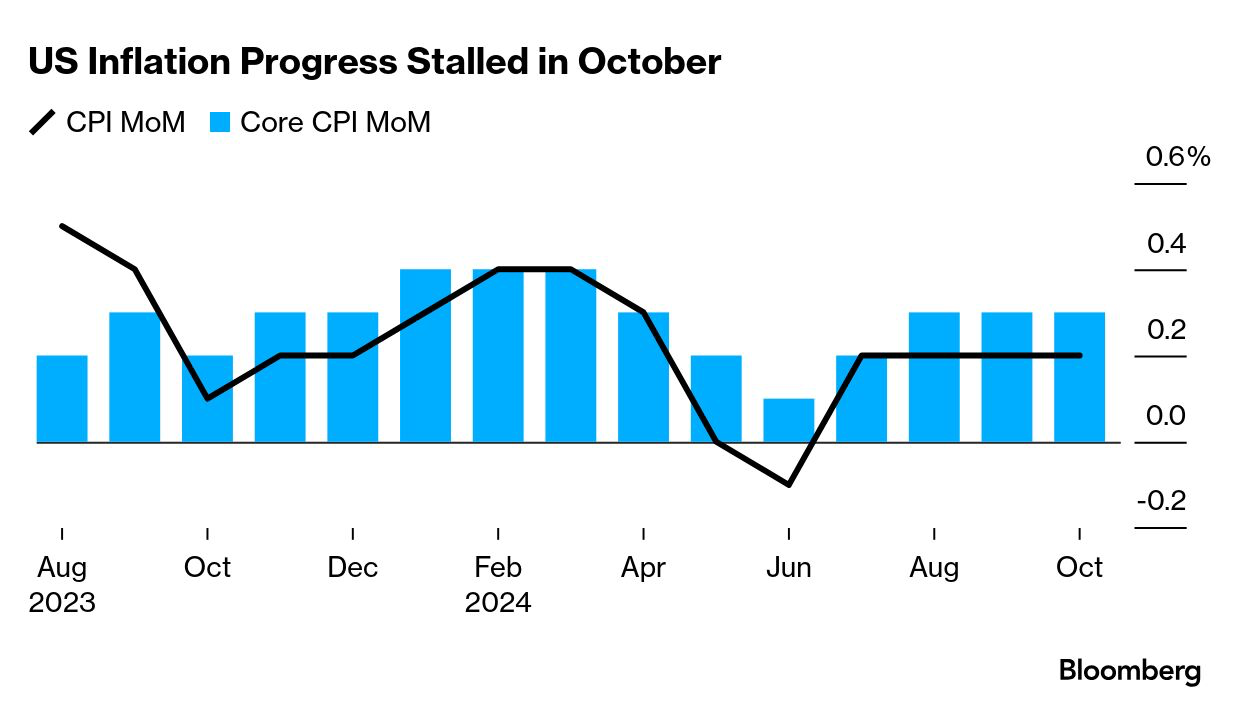
Today we are still able to build through our investment grade corporate bond focus portfolios with a YTW around 4.6%. Given the aggressive move down in Treasury yields during the last few months, we think that bond investors have gotten ahead of the Fed at this point as they are discounting about 150 bps of Fed rate cutting. Despite progress in the inflation fight, “sticky” inflation remains in excess of 4%. The US labor market’s unemployment rate is only 4.2%. Wage growth remains above 4%, while initial jobless claims remain at modest levels. Furthermore, the Atlanta Fed’s GDPNow model is forecasting growth for Q3’24 at 3.0% as of September 17, 2024. None of these metrics signal recession to me. How about you?

If you are of the mindset that a 4.6% YTW isn’t providing you with enough return, just think what you’d get from traditional active fixed income portfolios should rates rise once more. Please remember 2022’s -13% total return for the BB Aggregate Index. We frequently write about the need for plan sponsors to think outside the box as it relates to the allocation of assets. We believe that your plan’s assets should be bifurcated into two buckets – liquidity and growth. While the CFM portfolio is providing your plan with the necessary liquidity on a monthly basis, the growth assets can now grow unencumbered. These assets will be used at a later date to meet future benefits and expenses. With a CFM portfolio, plan sponsors can reduce or eliminate the need to do a “cash sweep” that takes away reinvestment in the growth portfolio.

In addition to believing that CFM is still a viable strategy in this environment, the decline in US Treasury yields is once again opening a door for sponsors to consider a pension obligation bond (POB). The 10-year Treasury Note yield is only 3.66% as of 6 pm EST (9/17) or roughly slightly more than half of the average public fund ROA. Estimates place the average funded ratio for public plans at 80%. For a plan striving for 7%, an 8.4% annual return must be created, or the plan’s funded status will continue to deteriorate unless contributions are increased to offset the shortfall. For plans that have funded ratios below the “average” plan, it is imperative that the deficit is closed more quickly. Issuing a POB and using the proceeds to close that gap is a very effective strategy. Corporate plans frequently issue debt and use the proceeds for a number of purposes, including the funding of pension funds.

We’d recommend once again that the proceeds received from a POB be used in a defeasement strategy to meet current liquidity needs and not invested in a traditional asset allocation framework with all of the uncertainty that comes from investing in our capital markets. Why risk potential losses on those assets when a CFM strategy can secure the Retired Lives Liability? It is truly unfortunate that most plan sponsors with underfunded plans didn’t take advantage of the historically low interest rates in 2020 and 2021. Cheap money was available for the taking. It is also unfortunate, that those plans that did take advantage of the rate environment likely invested those proceeds into the existing asset allocation. As you might recall, not only did the BB Aggregate decline -13% in 2022, the S&P 500 fell -18% that year, too.

Managing a DB pension plan comes with a lot of uncertainty. At Ryan ALM, we are trying to bring investment strategies to your attention that will provide certainty of cash flows, which will help stabilize the fund’s contributions and funded status. Don’t be the victim of big shifts in US interest rate policy. Use bonds for their cash flows and secure the promises for which your plan exists in the first place. A defeasment strategy mitigates interest rate risk because the promises (benefits and expenses) are future values, which are not interest rate sensitive. That should be quite comforting. Let us know how we can help you. We stand ready to roll.

ARPA Update as of September 13, 2024

By: Russ Kamp, Managing Director, Ryan ALM, Inc.

Will it be 25 or 50? That is the big question on nearly every investor’s mind this week. Will the Federal Open Market Committee cut rates by 0.25% or 0.5% on Wednesday. Any cut would mark the first such move by the Federal Reserve since 2020. Despite the uncertainty as to the Fed’s potential action, the PBGC was undaunted as they had another busy week implementing the ARPA pension legislation.

There is plenty to highlight from last week’s activity, as three funds received approval of their applications seeking Special Financial Assistance (SFA), one fund repaid a portion of its SFA grant, while another withdrew its initial application. There were no applications filed this past week as the PBGC’s filing portal is temporarily closed. Multiemployer plans seeking SFA may still “request to be placed on the waiting list in accordance with the instructions in PBGC guidance.”

The three funds receiving SFA were Teamsters Local Union No. 469 Pension Plan, Pension Plan Private Sanitation Union, Local 813 I.B. of T., and Local Union No. 226 International Brotherhood of Electrical Workers Open End Pension Trust Fund. These funds were each non-Priority Group members and the applications were the initial filings for each. In total, these pension plans will receive $238.3 million in SFA and interest for just over 6k members.

Local 1783 I.B.E.W. Pension Plan, an Armonk, NY non-Priority Group member, withdrew its initial application. They were seeking $42.2 million in SFA for the 850 plan participants. The Alaska Iron Workers Pension Plan received approval for its application in January 2023. They have just agreed to return $384,111.74 from the $53.5 million received in February 2023, as a result of a census error. This is the fourteenth plan to return a portion of the SFA due to overpayment.

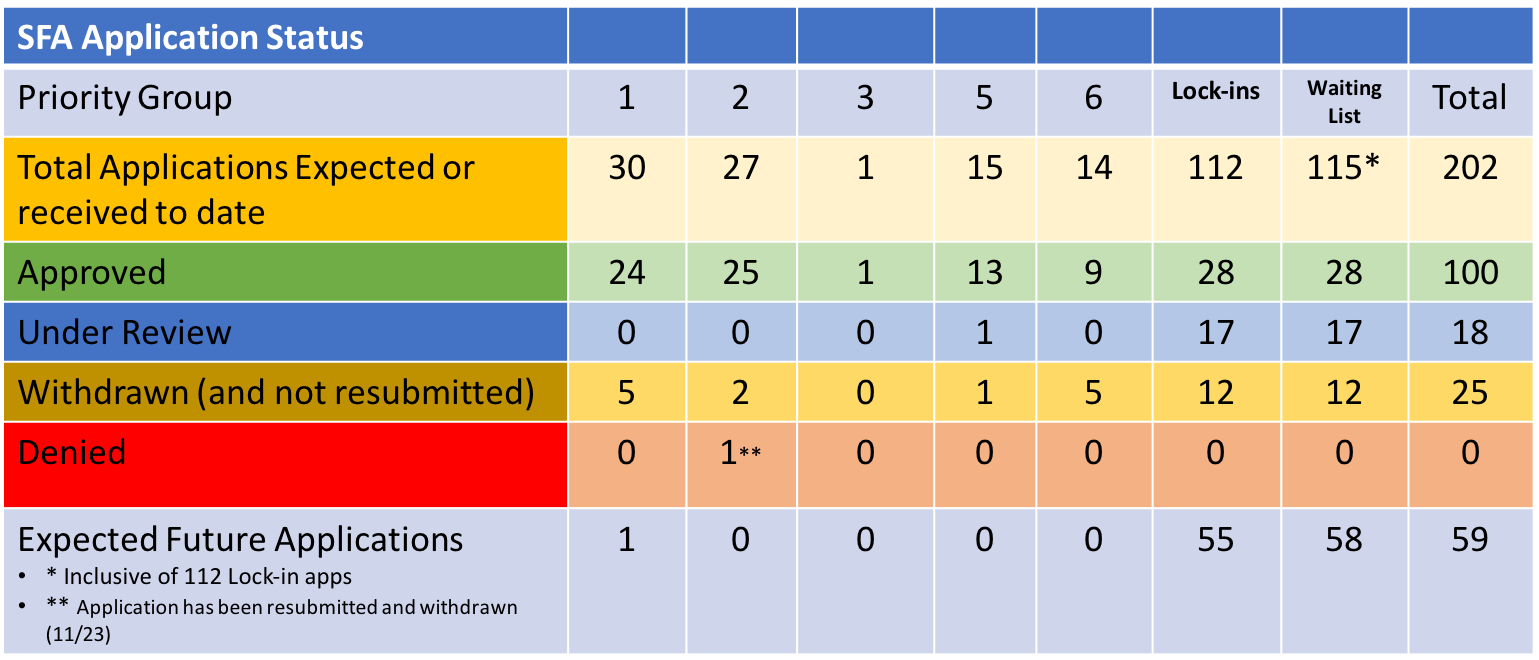
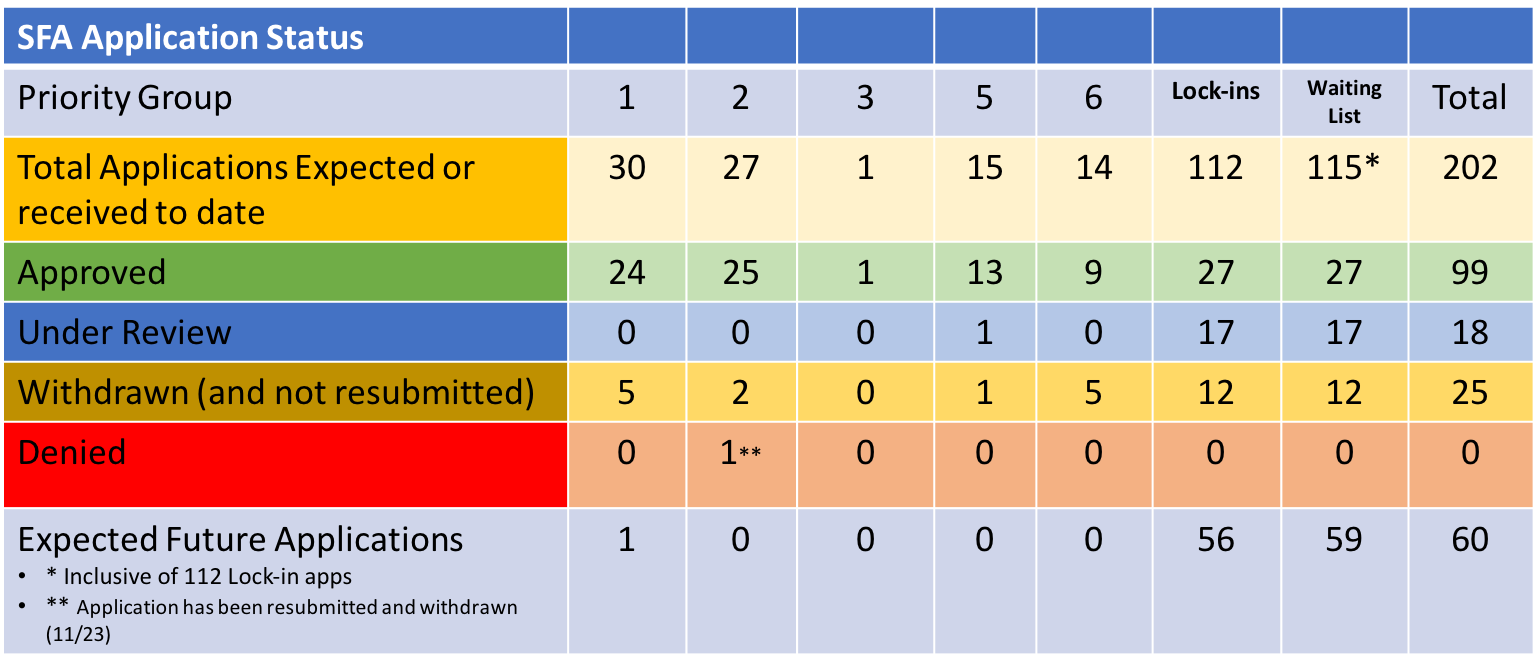
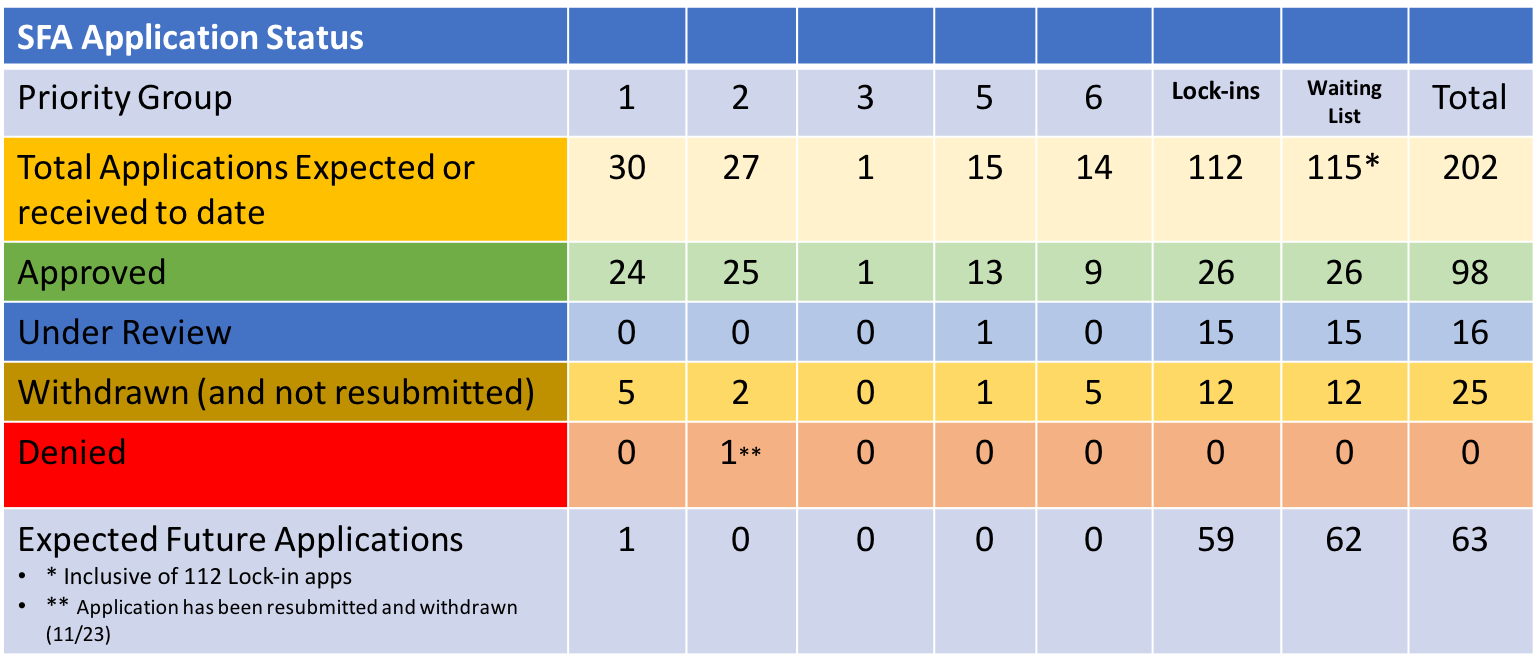
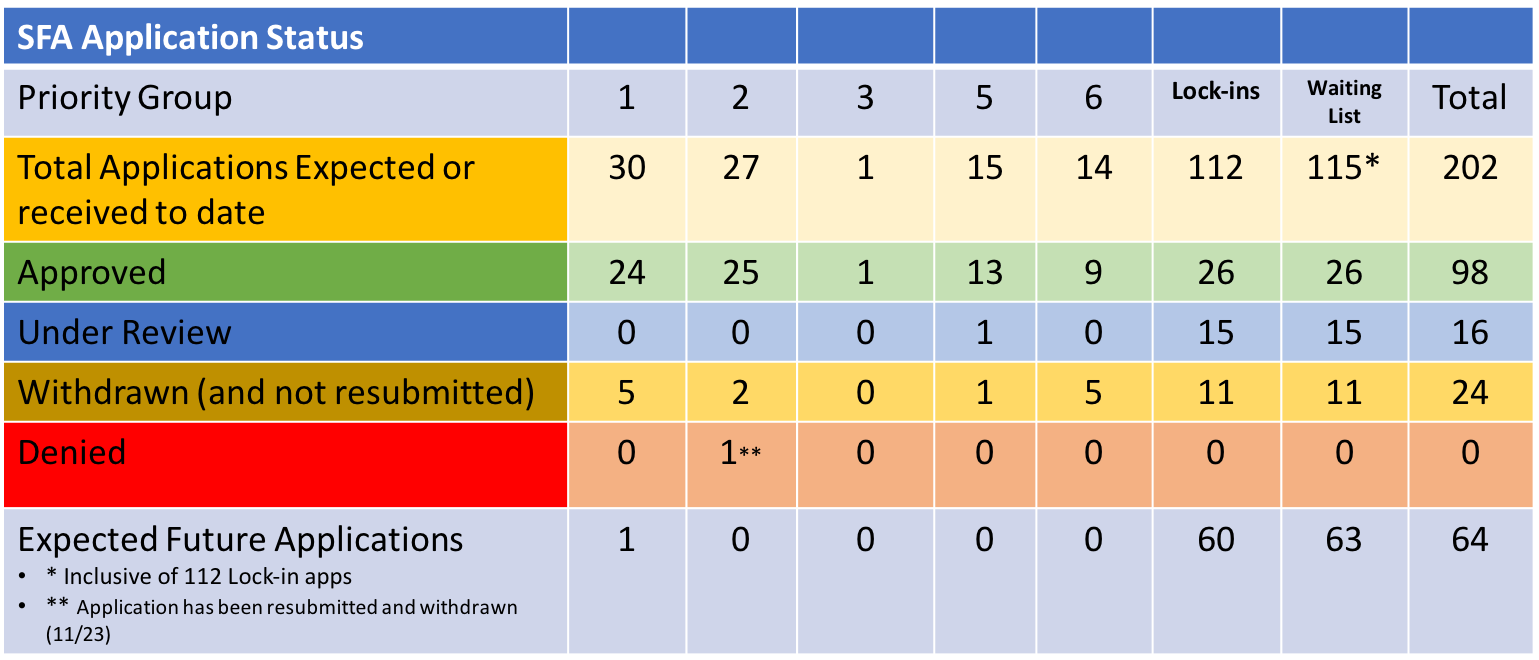
As one can see, the PBGC has approved 92 of a potential 202 applications (45.5%) at this time for a total of $68 billion in SFA, including interest FA loan repayments. As a reminder, plans receiving SFA proceeds must keep those separated from the plan’s current fund (legacy assets). Despite the recent decline in US interest rates, defeasing benefits and expenses as far into the future as the SFA grant will cover is still the proper course of action. I produced a post last Friday on the correct approach to cash flow matching for those considering such a strategy.

Cash Flow Matching Done Right!

By: Russ Kamp, Managing Director, Ryan ALM, Inc.

Most of us seek to climb the “ladder to success”. We also use ladders for important everyday activities. I’ll soon be back on a ladder myself, as year-end approaches and the Christmas lights are placed on my home. Despite the usefulness of ladders, there is one place where they aren’t necessarily beneficial. I’m specifically addressing the use of ladders for bond management as a replacement for a defeasement strategy.

There are still so many misconceptions regarding Cash Flow Matching (CFM). Importantly, CFM is NOT a “laddered bond portfolio”, which would be quite inefficient and costly. It IS a highly sophisticated cost optimization process that maximizes cost savings by emphasizing longer maturity bonds (within the program’s parameters capped at the maximum year to be defeased) and higher yielding corporate bonds, such as A and BBB+.

Furthermore, it is not just a viable strategy for private pension plans, as it has been deployed successfully in public and multiemployer plans for decades, as well as E&Fs. It is also NOT an all or nothing strategy. The exposure to CFM is a function of several factors, including the plan’s funded status, current allocation to core fixed income, and the Retired Lives Liability, etc. Many of our clients have chosen to defease their pension liabilities from 5-30 years or beyond. When asked, we recommend a minimum of 10 years, but again that will be a function of each plan’s unique funding situation.

CFM strategies are NOT “buy and hold” programs. CFM implementations must be dynamic and responsive to changes in the actuary’s forecasts of benefits, expenses, and contributions. There are also continuous changes in the fixed income environment (I.e. yields, spreads, credits) that might provide additional cost savings that need to be monitored and managed. Plan sponsors may seek to extend the initial length (years) of the program as it matures which will often necessitate a restructuring or rebalancing of the original portfolio to maximize potential funding coverage and cost reductions.

CFM programs CANNOT be managed against a generic index, as no pension plan’s liabilities will look like the BB Aggregate or any other generic index. Importantly, no pension plan’s liabilities will look like another pension plan given the unique characteristics of that plan’s workforce and plan provisions. The appropriate management of CFM requires the construction of a Custom Liability Index (CLI) that maps the plan’s liabilities in multiple dimensions and creates the path forward for the successful implementation of the asset/liability match.

Importantly, CFM programs are NOT going to negatively impact the plan’s ability to achieve its desired ROA. In fact, a successful CFM program, such as the one we produce, will actually enhance the probability of achieving the return target. How? Your plan likely has an allocation to core fixed income. Our implementation will likely outyield that portfolio over time creating alpha as well as SECURING the promised benefits. Given the higher corporate bond interest rates, an allocation to this asset class can generate a significant percentage of the ROA target with risks substantially below those of other asset classes.

When done right, a successful CFM implementation achieves the following:

Provides liquidity to meet benefits and expenses

Secures benefits for the time horizon the CFM portfolio is funding (1-10 years +)

Buys time for the alpha assets to grow unencumbered

Out yields active bond management… enhances ROA

Reduces Volatility of Funded Ratio/Status

Reduces Volatility of Contribution costs

Reduces Funding costs (roughly 2% per year in this rate environment)

Mitigates Interest Rate Risk for that portion of the portfolio using CFM as benefits are future values that are not interest rate sensitive.

No laddered bond portfolio can provide the benefits listed above. Whether you are responsible for a DB pension, an endowment or foundation, a HNW individual, or any other pool of assets, you likely have liquidity needs regularly. CFM done right will greatly enhance this process. Call on us. We’ll gladly provide an initial analysis on what can be achieved, and we will do it for FREE.

Falling Rates – Not A Panacea For Pensions

By: Russ Kamp, Managing Director, Ryan ALM, Inc.

Milliman has reported that pension funding for Corporate plans declined in August. The Milliman 100 Pension Funding Index (PFI) recorded its most significant decline of 2024, as the funded ratio fell from 103.6% to 102.8% as of August 31, 2024. No, it wasn’t because markets behaved poorly, as the month’s investment gains of 1.81% lifted the combined plans’ market value by $17 billion, to $1.347 trillion at the end of the period. It was the result of falling US interest rates that impacted the liability discount rate on those future promises.

According to Milliman, the discount rate fell from 5.3% in July to 5.1% by the end of August. That 20 basis points move in rates increased the projected benefit obligations (PBO) for the index constituents by $27 billion. As a result, the $10 billion decline in funded status reduced the funded ratio by 0.8%. The index’s surplus is now at $36 billion.

Markets seem to be cheering the prospects of lower US interest rates that may be announced as early as September 18, 2024 following the next FOMC. Remember, falling rates may be good for consumers and businesses, but they aren’t necessarily good for defined benefit pension plans unless the fall in rates rallies markets to a greater extent than the drop in rates impacts the growth in pension liabilities.

“With markets falling from all-time highs and discount rates starting to show declines, pension funded status volatility is likely in the months ahead, underscoring the prudence of asset-liability matching strategies for plan sponsors”, said Zorast Wadia, author of the PFI. We couldn’t agree more with Zorast. As we’ve discussed many times, Pension America’s typical asset allocation places the funded status for DB pension on an uncomfortable rollercoaster. Prudent asset-liability strategies can significantly reduce the uncertainty tied to current asset allocation practices. Thanks, Milliman and Zorast, for continuing to remind the pension community of the impact that interest rates have on a plan’s funded status.

ARPA Update as of September 6, 2024

By: Russ Kamp, Managing Director, Ryan ALM, Inc.

Football season has kicked off in earnest. If you are a NY Giants fan, as I’ve been for nearly 60-years, you are already looking forward to hockey! It wasn’t any better for fans of Notre Dame’s football team, which somehow lost to Northern Illinois.

Now on to the important “stuff”. With regard to the PBGC’s effort implementing the ARPA pension legislation, last week was quiet. There were no new applications filed or withdrawn. There were no new applications approved, but there was one fund that received payment on 9/3 for its approved application. Printing Local 72 Industry Pension Plan received $39.4 million in SFA including interest. In addition, there were no plans added to the waitlist at this time.

Carpenters Industrial Council of Eastern Pennsylvania Pension Fund repaid excess SFA as a result of incorrect census data. They forfeited $106,298.69 from the original grant payment of $14.1 million or 0.75% of the proceeds. At this time, 13 funds have repaid $139.3 million or 0.36% of the grants. Of course, most of the rebate was from Central States, as its repayment makes up 91% of the total funds recaptured.

Uncertainty surrounding the upcoming Presidential election and the potential impact on markets (bonds and stocks) from the candidates’ policies (taxes, capital gains, social safety net, geopolitics, etc.) should keep recipients of the SFA taking precautions before diving into an asset allocation decision at this time.

Overbought?

By: Russ Kamp, Managing Director, Ryan ALM, Inc.

One of the greatest attributes of managing a cash flow matching (CFM) portfolio is the fact that we don’t have to predict the direction of US interest rates. Most of us don’t have a clue about the direction, let alone the magnitude of the potential move. With CFM, you build the portfolio, and the cost reduction (savings) is locked in on day one, as future values are not interest rate sensitive.

Clearly, we and the plan sponsor community would like to see US rates remain fairly elevated, as higher rates equate to lower cost and more savings when using a CFM strategy. They also mean that coverage of the annual return on asset (ROA) objective is more certain, as opposed to traditional asset allocation frameworks that come with incredible volatility (annual standard deviation) and greater uncertainty in this environment.

All this said, we, at Ryan ALM, are still students of the markets, especially related to interest rates and the factors that impact those rates, such as GDP growth, labor markets, wages, inflation, geopolitical risk, etc. Clearly, the US investing community is excited at the prospect of the Fed’s FOMC cutting rates on September 18th. There appears little question that the Fed will act at that meeting. What is unknown at this time, is the magnitude of the potential cut. Will it be 25 bps or 50 bps or something entirely different. Who knows? However, those engaged in fixed income management certainly seem to have decided that rates will fall precipitously, as the Fed finally realizes the “error” of its way and reduces rates in a very meaningful way.

However, as the chart above highlights, rates have moved rather dramatically already without any action by the Fed. Since May 31, 2024, US Treasury yields for both 2-year and 3-year maturities have fallen by >0.9%. By almost any measure, US rates were not high based on long-term averages. Sure, relative to the historically low rates during Covid, US interest rates appeared inflated, but as I’ve pointed out in previous posts, in the decade of the 1990s, the average 10-year Treasury note yield was 6.52% ranging from a peak of 8.06% at the end of 1990 to a low of 4.65% in 1998. I mention the 1990s because it also produced one of the greatest equity market environments. Given that the current yield for the US 10-year Treasury note is only 3.74%, I’d suggest that the present environment isn’t too constraining. In fact, I’d suggest that the environment is fairly loose.

Could it be that there’s been an overreaction to the potential Fed easing? Might Fed action that results in smaller and fewer cuts lead to yields backing up from these levels? Again, who knows? Since none of us do, why don’t you get out of the guessing game and retain a strategy that doesn’t need rates to move down in order to add value. Bring a significant degree of certainty to the management of pensions where great uncertainty is the present name of the game.

Pension Myth #1: Earn the ROA…All is Well!

By: Russ Kamp, Managing Director, Ryan ALM, Inc.

We are pleased to share with you a recent white paper produced by Ron Ryan, Ryan ALM’s CEO. In this excellent piece, Ron reminds us of the fallacy that achieving the ROA as an underfunded DB pension system will make everything good – it won’t! As he correctly points out, the funded ratio may remain the same, but the funded status will continue to deteriorate. If the pension plan is 60% funded, at a market value of $100, that system has a funded status deficit of $40. If that 60% funded plan achieves the 7% ROA, assets will grow by $4.20. However, liabilities at that same discount rate will grow at $7. After 5 years, the funded status will have deteriorated by >40% and the deficit will now be >$56.

DB Pension systems that are poorly funded need to work extra hard to keep pace with the growth in the promised benefits or contribute significantly more to close the funding gap. There aren’t many plan sponsors in a position to contribute whatever is necessary to keep the plan in good funded status. Ron also discusses the need for plan sponsors to produce an Asset Exhaustion Test (AET), which is a requirement under GASB 67/68. It is a test of solvency. Ryan ALM modifies the AET to accurately determine the required ROA to fully fund the liability cash flows. Has your actuary produced the AET for your plan? If not, would you like Ryan ALM to calculate the ROA needed to fully fund your plan?

Please don’t hesitate to reach out to us with any questions that you might have regarding this white paper. Also, don’t hesitate to go to RyanALM.com for all the research that we’ve produced throughout the years. We look forward to being a resource for you.

ARPA Update as of August 30, 2024

By: Russ Kamp, Managing Director, Ryan ALM, Inc.

We hope that you enjoyed a terrific Labor Day Weekend with family and friends. I can’t believe that we are 2/3rds of the way through 2024. Can you?

With regard to the PBGC’s effort implementing the ARPA legislation, there wasn’t a ton of apparent activity last week. We did have Teamsters Local 11 Pension Plan, a North Haledon, NJ (about 10 minutes from my home) non-priority plan file its revised application seeking $27.3 million in Special Financial Assistance (SFA) to help support the benefit promises to 2,012 plan participants.

There were no SFA awards last week. Furthermore, there were no applications denied or withdrawn. However, we continue to see some previous SFA recipients repay excess grant awards. In the last week, Laborers’ Pension Plan Local Union No. 186 and IBEW Local No. 237 Pension Plan repaid a total of $76,898.71 on grants of $79.8 million or 9.6 bps. Since the issue of overpayments due to incorrect census data was first recognized, nine pension plans have repaid a total of $138 million (mostly Central States) or 0.36% of the grants awarded.

There is still much to be done by the PBGC in completing the ARPA implementation. There are 113 potential applications that have yet to be approved, and in many cases, even reviewed (69). At this time, 44% of the expected applications have received SFA totaling $67.7 billion in SFA grants. That is an incredible total of benefits that have been secured. Let’s hope that the investment programs implemented are also securing those assets that have been received and benefits that have been promised.

Thank You, President Grover Cleveland

By: Russ Kamp, Managing Director, Ryan ALM, Inc.

As we get set to gather with family and friends for the upcoming Labor Day Weekend, let us reflect on the history of this Federal holiday. The Industrial Revolution during the late 19th Century led to the rise of labor unions advocating for workers’ rights, better working conditions, and fair wages. The first “Labor Day” parade, which featured a large gathering of workers, was organized by the Central Labor Union in New York City on September 5, 1882. While this gathering signaled the labor movement’s growing unity and determination to fight together for better working conditions, it would still be more than 15 years before the Labor Day Act was officially signed into law by President Grover Cleveland on June 28, 1894.

During the interim, and throughout the 1880s, numerous strikes and protests occurred, further highlighting the discontent of the working class. Notable events included the Haymarket Affair (aka Haymarket Riot) in May 1886, which was a rally organized in Haymarket Square, Chicago, IL to protest the killing of striking workers gathered to demand an eight-hour workday. Also, the Pullman Strike in 1894, which led to a nationwide railroad boycott and significant unrest, which finally brought labor issues to the forefront. It was after the Pullman Strike (May 11, to July 20, 1894) that the U.S. government sought to appease labor by establishing Labor Day as a federal holiday.

Despite the recognition (celebration) of Labor Day as a Federal holiday, the Labor movement in the United States has experienced many peaks and valleys since 1894. During the early 20th Century, the labor movement gained significant strength, leading to major labor laws, improved working conditions, and culminating with the establishment of the eight-hour workday. But there were tragic events, too. The Triangle Shirtwaist Factory fire is one of the deadliest industrial disasters in U.S. history. This fire caused death of 146 mostly young immigrant woman and ultimately led to significant reforms in safety standards.

Times weren’t as rosy during President Wilson’s eight-year tenure in office, as union membership and activities were disrupted by vigilante groups supported by American corporations. However, shortly thereafter, Ford Motor Company adopted the two-day weekend in 1926 to improve worker productivity and morale (I thought it was created to allow us to watch football). The conclusion of World War II witnessed a rebirth for Unions that once again thrived as the post-war economic expansion led to greater wages and benefits for workers, including more secure retirement benefits due to greater use of defined benefit pension plans.

Regrettably, during the later stages of the 20th century, union membership once again began to decline, this time due to a series of factors that combined to reduce labor’s overall influence including globalization, changes from a manufacturing-led to a service-focused economy, technological advancements, and anti-union legislation. However, in recent years, there has been a renewed interest in labor issues, with movements advocating for higher minimum wages, better working conditions, and support for gig economy workers. In addition, the PBGC is currently implementing the Butch Lewis Act, which was attached to ARPA in March 2021, with the goal to protect and preserve the promised retirement benefits for millions of American workers.

Again, as we sit back and enjoy good company, food, beverages, and a little R&R, remember the sacrifices made by countless American workers and their unions who sought better working conditions, wages, benefits, etc. that we all enjoy today. It’s through the strength of unions that further gains will be made.

“True heroism is remarkably sober, very undramatic. It is not the urge to surpass all others at whatever cost, but the urge to serve others at whatever cost.” — Arthur Ashe