ARPA Update as of January 31, 2025

By: Russ Kamp, CEO, Ryan ALM, Inc.

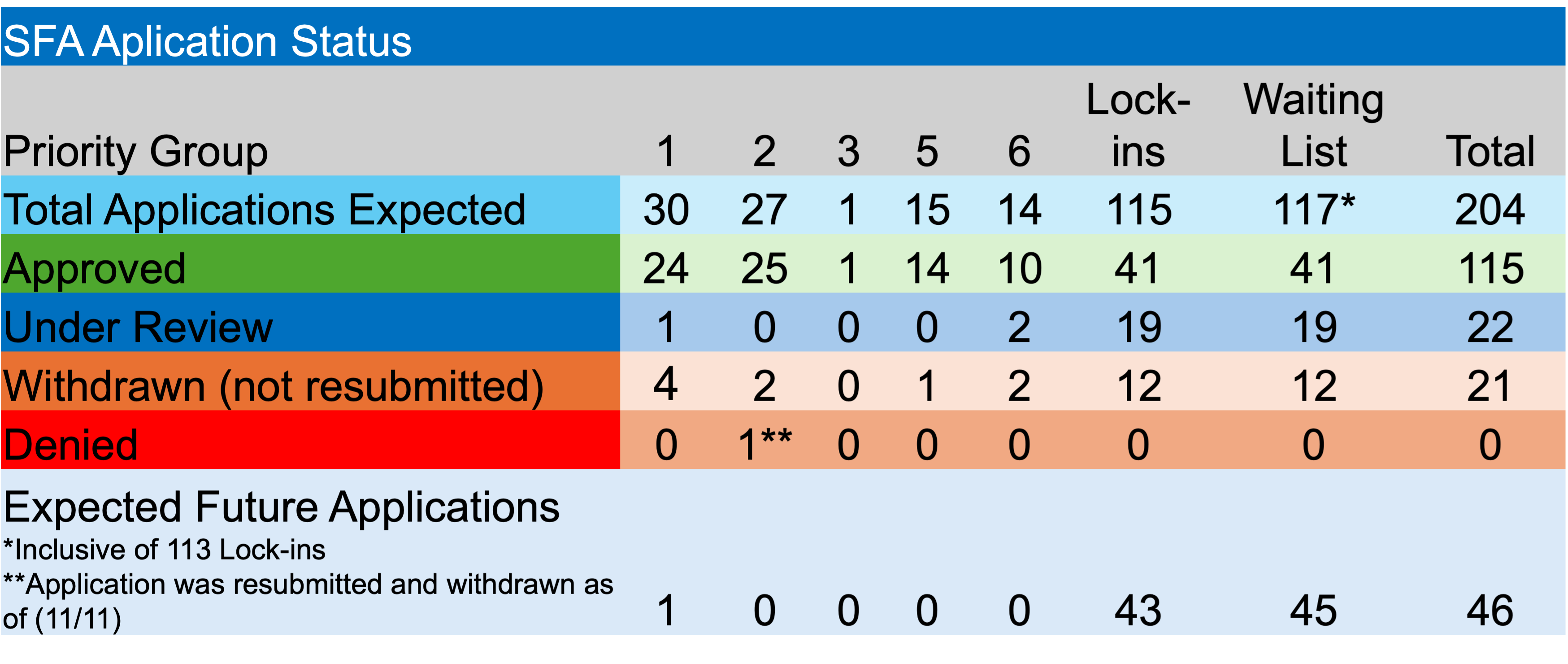
Somewhat shockingly, one month of 2025 is now in the books. That said, the PBGC continues to implement the ARPA legislation, which will soon celebrate its fourth anniversary since being signed into law on March 11, 2021. By all measures, this has been an incredibly successful program, with much yet to be accomplished with 93 pension plans still in the process of securing Special Financial Assistance (SFA).

The last few weeks have witnessed a moderation in the pace of implementation. The prior week saw no new applications received or approved. There was one application withdrawn, as Rocky Hill, CT-based, Sheet Metal Workers’ Local No. 40 Pension Plan withdrew their initial application seeking $18.8 million in SFA for 984 plan participants. In addition, there was one plan, St. Louis Motion Picture Machine Operators Pension Fund, that locked in the measurement date (liability valuation) as of October 31, 2024. They submitted the request as of January 24, 2025. With this action, there are only 2 plans of the 115 non-priority plans to have not locked in a valuation date.

I’ve previously mentioned the onerous impact of MPRA which passed in 2014. Fortunately, the PBGC/ARPA provided SFA of $477 million to restore to the 18 plans affecting 11 unions that under MPRA had reduced benefits an average of 22% for 60,620 retirees in pay status with some plans reducing benefits as much as 55 percent. These plans received an additional $3.5 billion in SFA to help ensure they remain solvent and able to pay all 87,862 participants in those plans their full retirement benefits through at least 2051.

One of Only Two – Time For Change

By: Russ Kamp, Managing Director, Ryan ALM, Inc.

The United States of America and Denmark share several commonalities. Both countries have democratic political systems. Each country enjoys a high standard of living. Both have a commitment to human rights and environmental concerns, with Denmark being a leader in renewable energy and sustainability, while the U.S. is witnessing a growing movement on those fronts. Both countries value education, enjoying high literacy rates. There is also a shared military alliance through NATO. What you might not realize is that the U.S. and Denmark are the ONLY countries that have a self-imposed statutory debt limit. Sure, there are other countries, such as Switzerland, that have mandatory balanced budget provisions which effectively limit the amount of debt , but they aren’t specified debt limits.

The U.S. first instituted a statutory debt limit with the Second Liberty Bond Act of 1917, setting the aggregate amount of debt that could be accumulated through individual categories like bonds and bills. The purpose in creating this legislation was to finance the country’s involvement in World War 1. The legislation allowed the U.S. to raise $9.5 billion in bonds that would be issued by the U.S. government. These bonds were marketed to the general population and to institutional investors to gain their support for the war. Was there a First Liberty Bond Act? Yes, that act had been passed earlier in 1917 allowing the government to issue $2 billion in bonds in order to support the war.

Importantly, and why we are where we are today with regard to the current deficit, the Second Liberty Bond Act program continued after the war. It set a precedent for public financing of government initiatives through bond sales. Although the debt limit was established in 1917 which allowed the Treasury to issue bonds without specific Congressional approval, the “limit” has been raised more than 100 times since then and roughly 78 times since 1960 alone. As a result, the US debt has risen from around $250 billion during World War II, to about $2.1 trillion during the Reagan years, to $5.6 trillion at the conclusion of the 1990s, and to today’s $36 trillion. So, why do we have a debt limit when it has been elevated so many times previously and to a magnitude certainly not contemplated in 1917?

The political brinkmanship associated with the debt limit debate rarely serves a purpose, often unnecessarily frightening Americans and our capital market participants. As we brace for another “discussion”, is maintaining a debt “limit” at all necessary? NO! Today’s federal deficit is in no way constraining to future generations. I’ve referenced Warren Mosler and his book, “The 7 Deadly Innocent Frauds of Economic Policy” on many occasions. He covers the topic of our government debt and whether we are leaving our debt-burden to our children, grandkids, etc. Mosler states, “the idea of our children being somehow necessarily deprived of real goods and services in the future because of what’s called the national debt is nothing less than ridiculous.”

As Mosler explains, that the financing of deficit spending is of “no consequence”. He further explains that when the “government spends, it just changes numbers up in our bank accounts.” The government doesn’t borrow money, it moves funds from checking accounts at the Fed to savings accounts (Treasury securities) at the Fed. The good news, is that the entire federal deficit ($36 trillion or so) is nothing more than the economy’s total holdings of savings accounts at the Federal Reserve. The private sector now has an asset equivalent to the deficit. How wonderful! Can you imagine if we didn’t have the ability to deficit spend. Think of all the stimulus that would have been removed from our economy that supported jobs, wages, and demand for goods and services.

The major issue with our ability to deficit spend has nothing to do with financing it, but everything to do with providing too much stimulus that creates demand for goods and services that exceeds our economy’s ability to meet such demand. So, I ask again, does having a debt limit (ceiling) make sense? No, unless you enjoy all the grandiose speeches from the halls of Congress based on little knowledge of how our monetary system truly works. Finally, I’d like to give a special nod to Charles DuBois, my former colleague at Invesco, who spent hours educating me on this subject. Thanks, Chuck!

ARPA Update as of December 6, 2024

By: Russ Kamp, Managing Director, Ryan ALM, Inc.

You have to be excited as a Mets fan given yesterday’s news that Juan Soto will be joining the organization on a massive contract. The $765 million is a staggering figure. Let’s see what happens to ticket prices and TV streaming services from a cost standpoint.

Since ARPA was passed in 2021 and signed into law in March of that year, there have been folks upset that the government is using “tax revenue” to rescue pensions for multiemployer plans. Well, in the latest update provided by the PBGC, we note that the Pressroom Unions’ Pension Plan, a non-priority group member, will receive $63.7 million to protect and preserve the promised pensions for 1,344 plan participants. That seems very reasonable since this grant will likely cover these benefit payments for roughly the same time frame that Soto will be a Met (15 years), at only $12.7 million more than just one year of Soto’s contract.

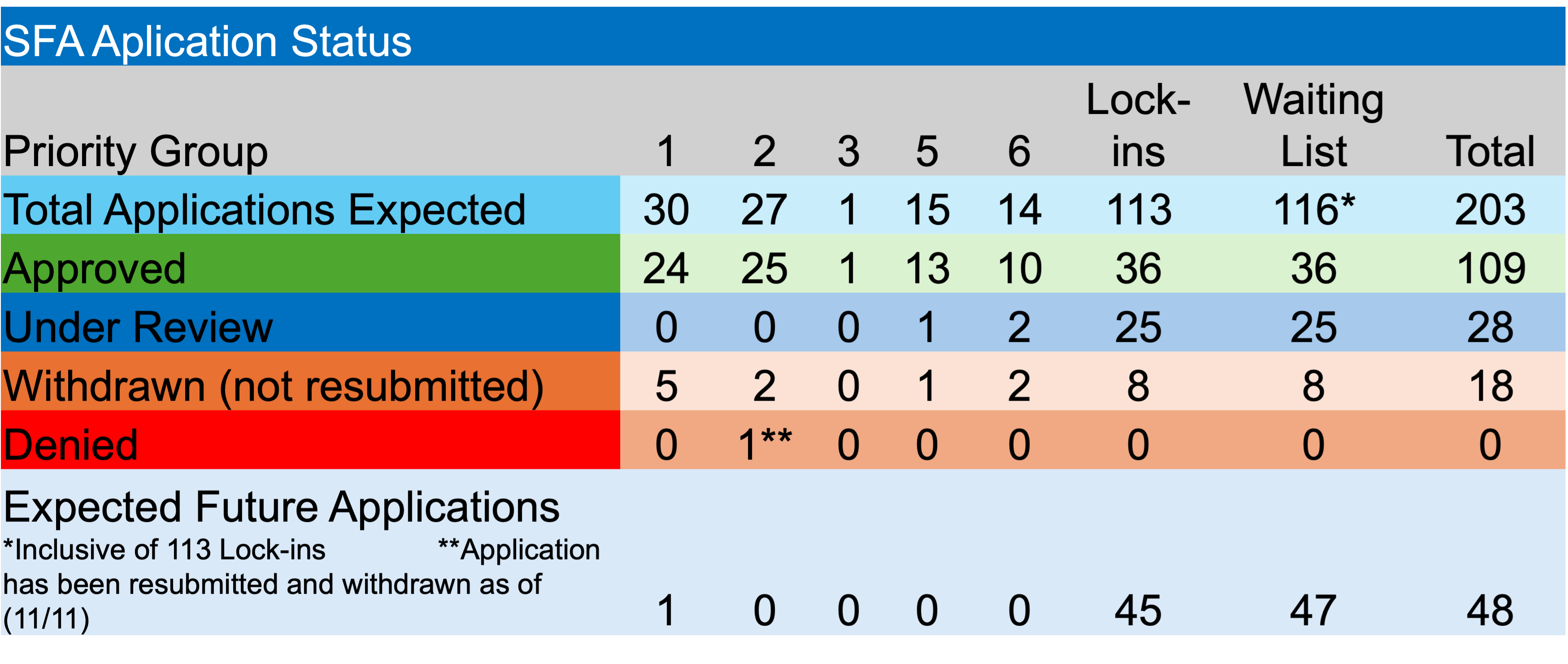
In other ARPA news, the e-filing portal is listed as “limited”, which according to the PBGC means that “the e-Filing Portal is open only to plans at the top of the waiting list that have been notified by PBGC that they may submit their applications. Applications from any other plans will not be accepted at this time.” PA Local 47 Bricklayers and Allied Craftsmen Pension Plan was the only plan to file an application (revised) last week. They are seeking $8.3 million in SFA for 296 members in the fund.

In other news, three funds, including Toledo Roofers Local No. 134 Pension Plan, Freight Drivers and Helpers Local Union No. 557 Pension Plan, and PACE Industry Union-Management Pension Plan, were asked to repay a total of $7 million in excess SFA due to census issues. The rebate represented 0.45% of the $1.6 billion received in SFA grants. Happy to report that there were no applications denied or withdrawn during the prior 7-day period.

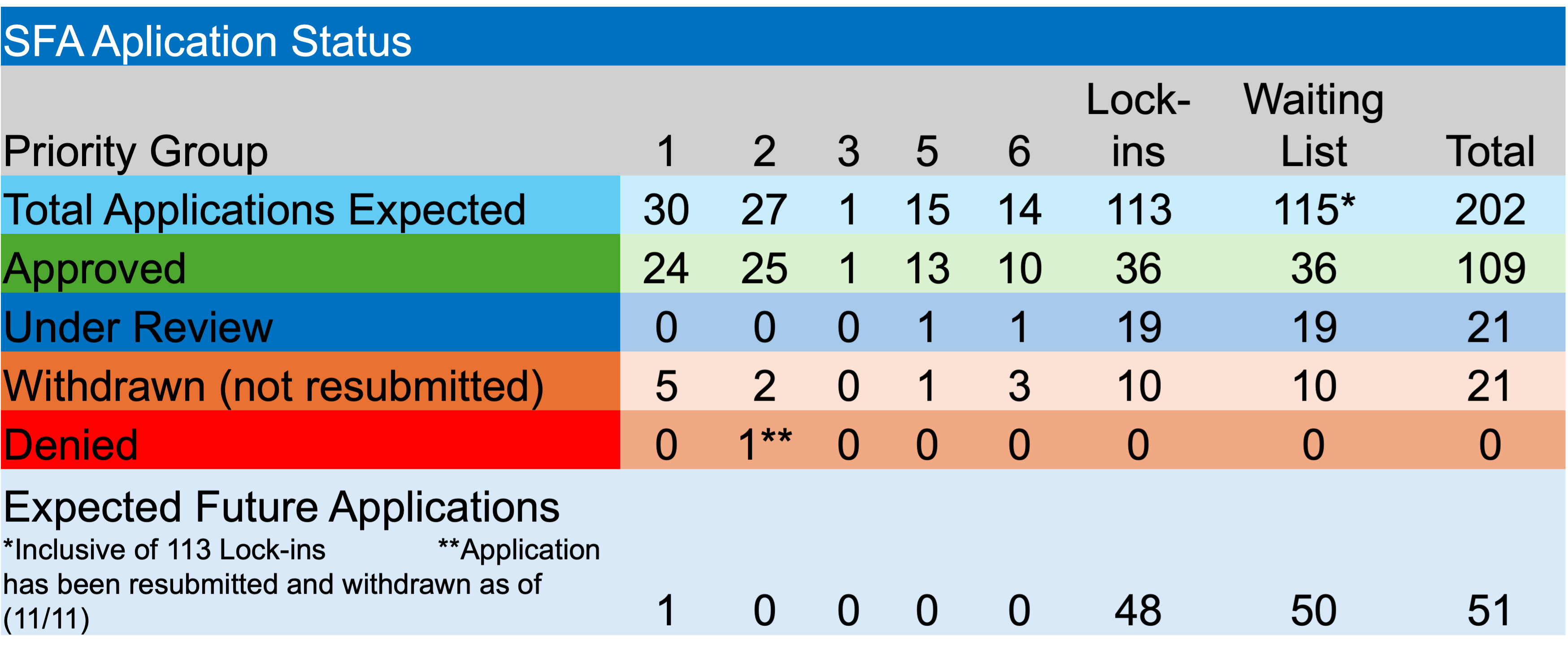
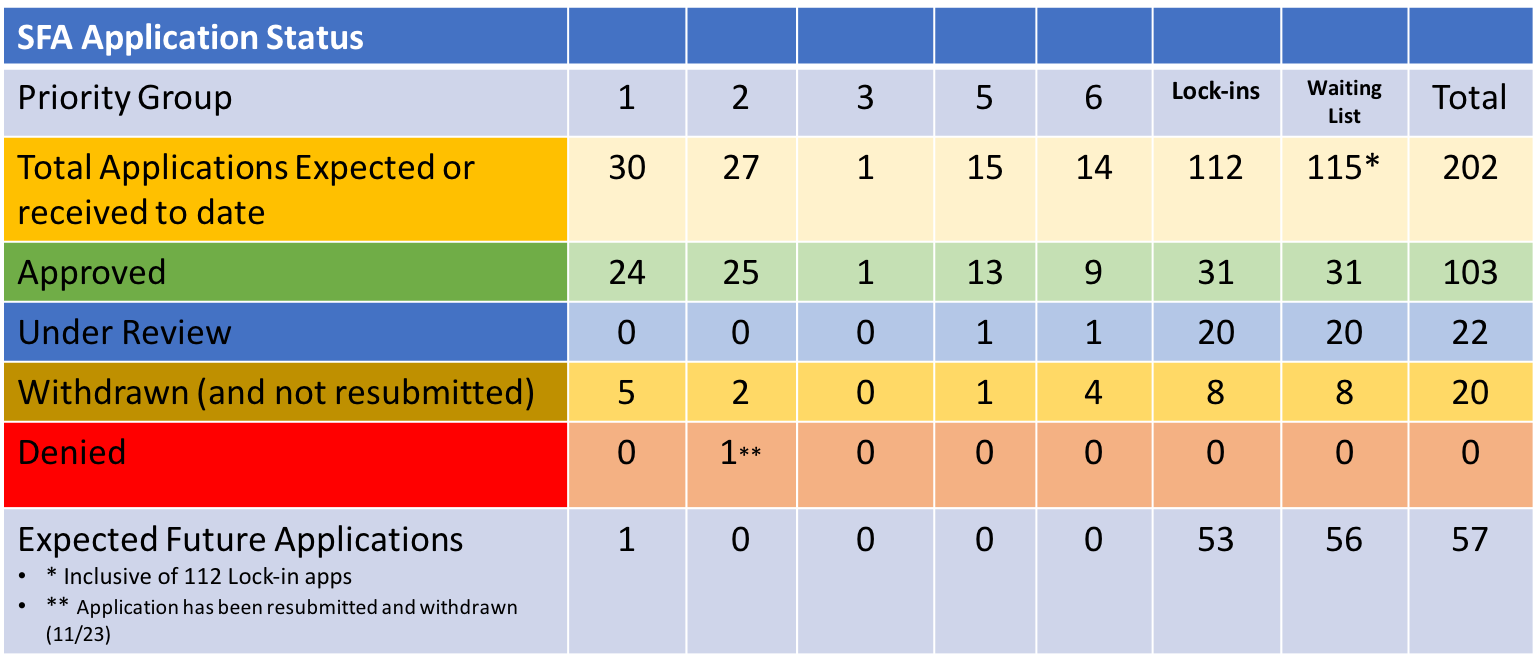
As the chart above highlights, there are still 57 plans that have yet to file an application seeking SFA support. Estimates range from another $10 – $20 billion being allocated to the remaining entities.