ARPA Update as of April 26, 2024

By: Russ Kamp, Managing Director, Ryan ALM, Inc.

Can you believe that a 1/3 of 2024 will soon be behind us? It is finally feeling like Spring in NJ today.

There is not much to discuss regarding the PBGC’s implementation of the ARPA pension legislation. According to the latest update, there were no new applications filed, approved, denied, or withdrawn. However, there was one fund that received the SFA. United Food and Commercial Workers Union Local 152 Retail Meat Pension Plan, a Mount Laurel, NJ, plan received SFA and interest in the amount of $279.3 million for the more than 10k plan participants.

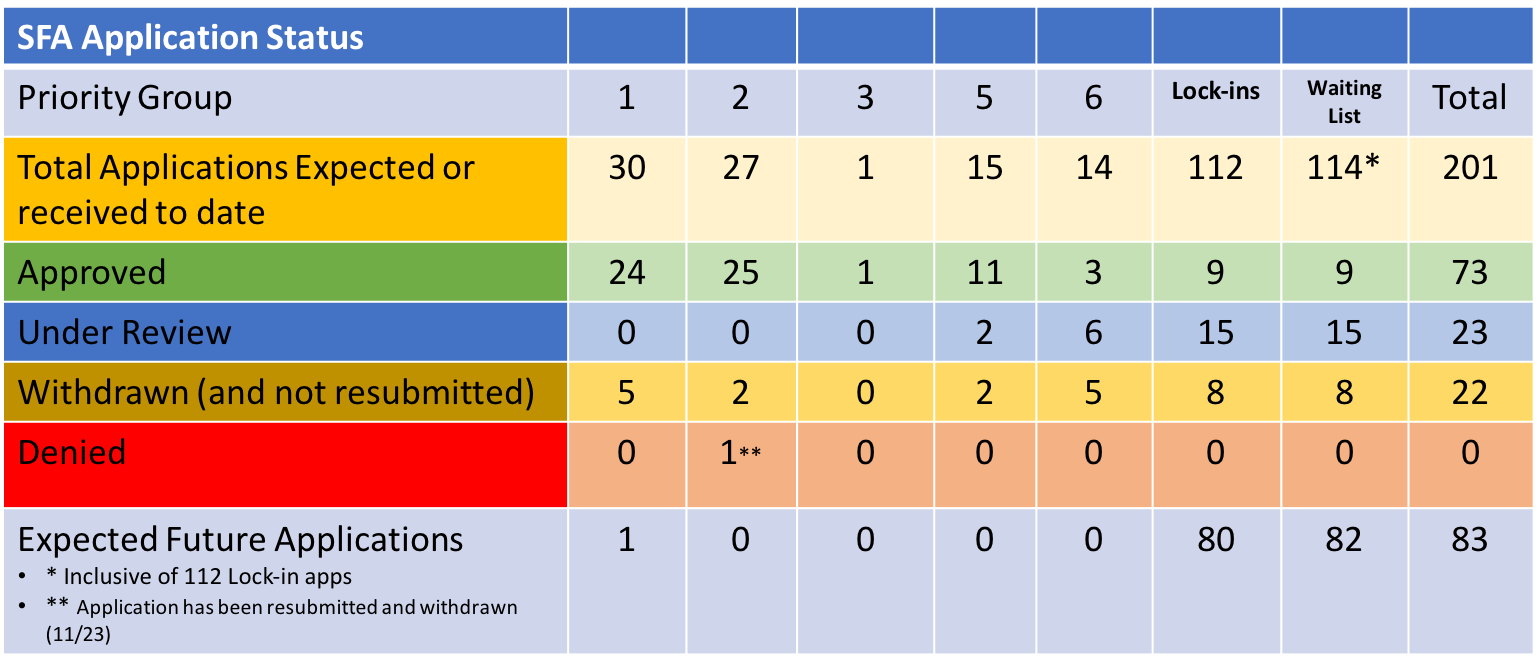
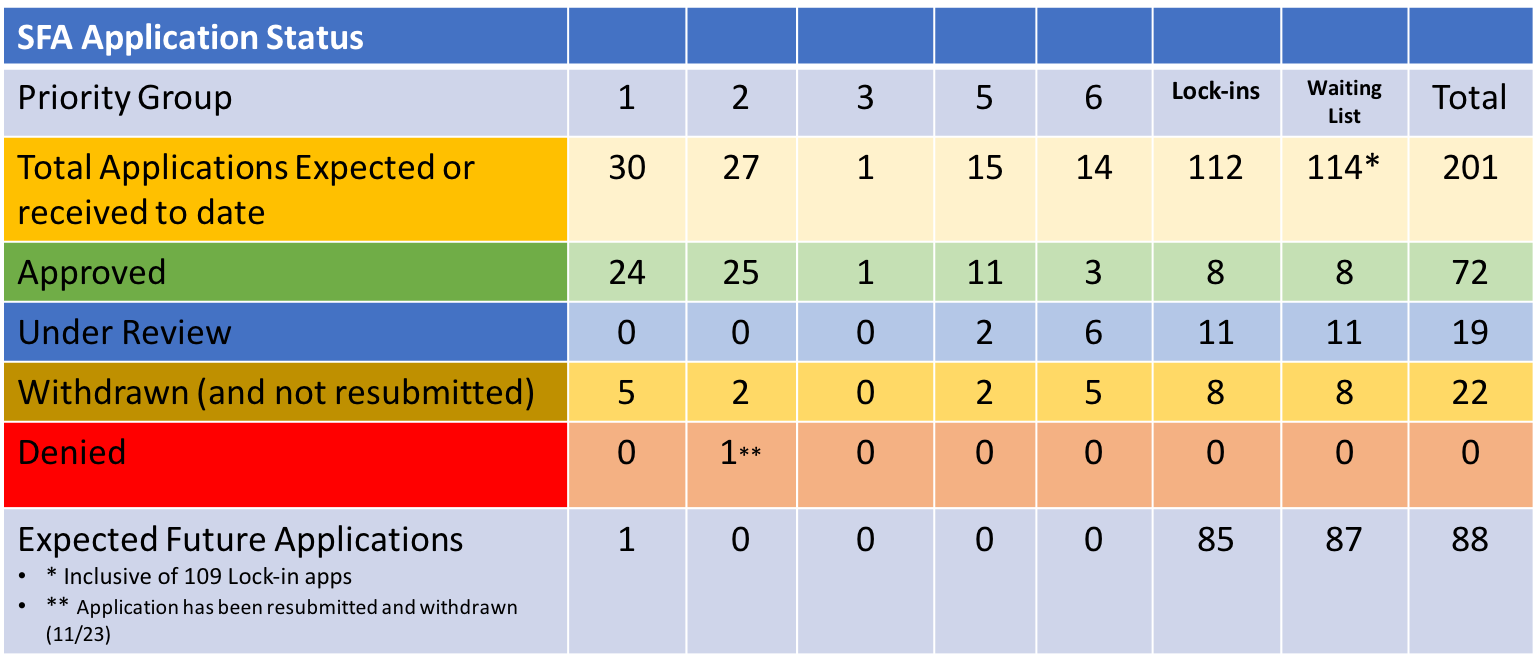
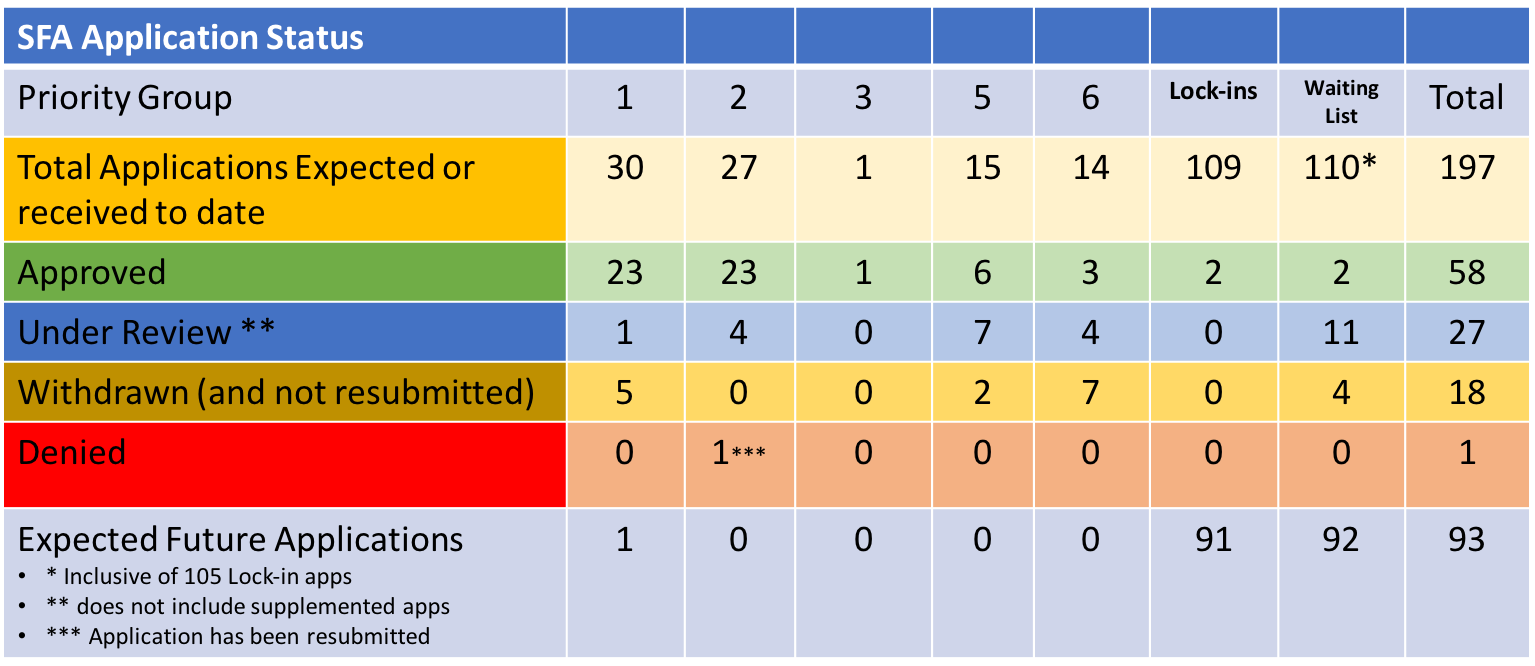
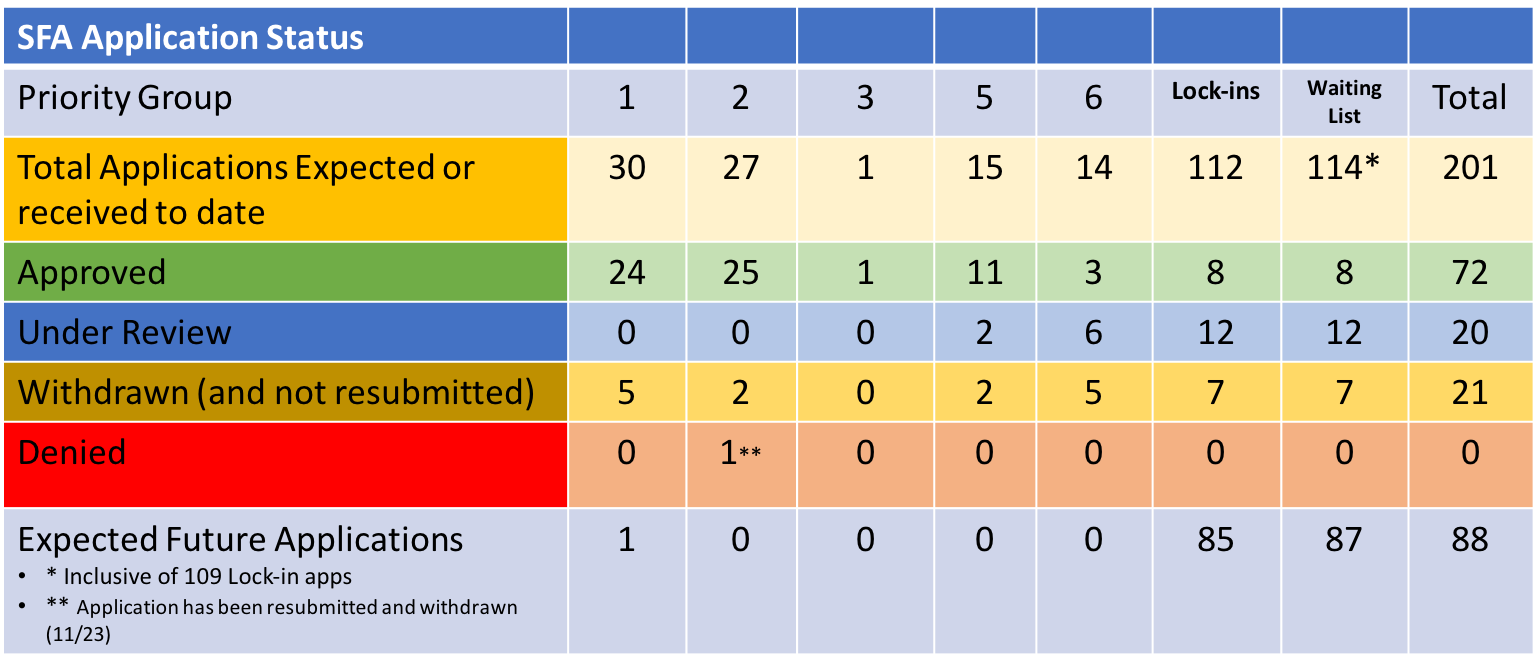
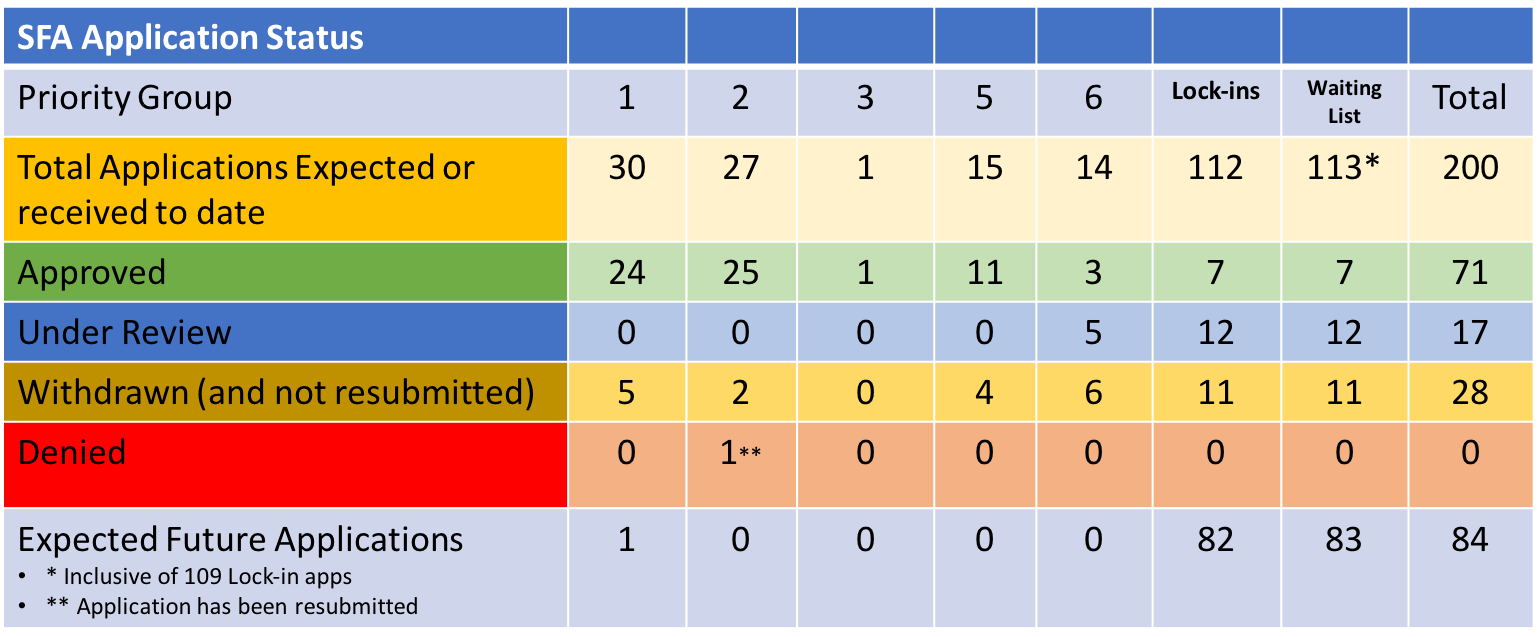
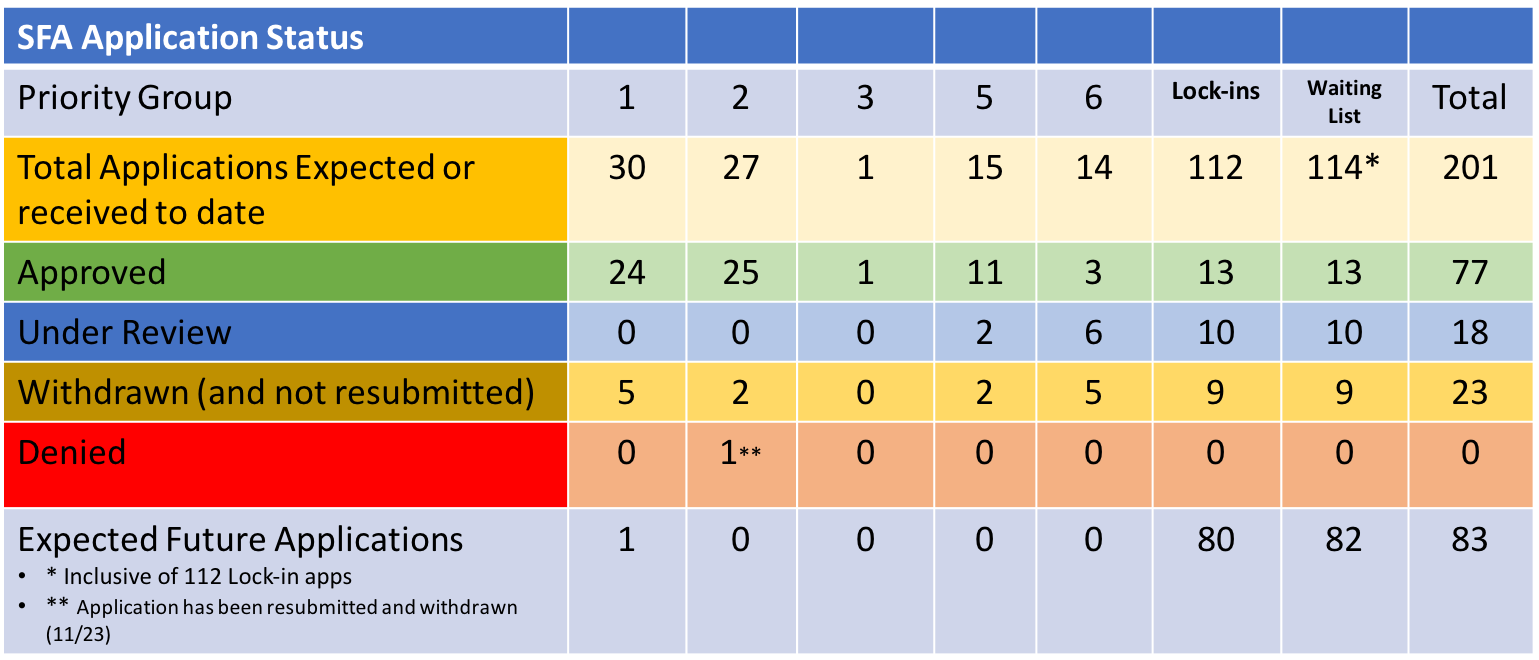
There currently are 114 names on the waitlist. Of those, 27 have been invited to submit applications. As the data above reflects, 8 of those applications have been approved, 12 are currently under review, while another 7 have been withdrawn presumably to have the submission corrected and resubmitted. In addition to that activity, 112 of the 114 funds have locked-in a valuation date for SFA measurement (discount rate). Ninety-two percent of those chose 12/31/22, while 2 have no lock-up and the other 9 have chosen dates between December 31, 2022 and November 30, 2023. As a reminder, the SFA is based on a series of discount rates. The lower the rate, the greater the potential SFA. Using the 10-year Treasury yield as a proxy for the discount rate, those plans locking in an evaluation date as of year-end 2022 have done alright, as the yield at the end of 2022 was 3.88%, while it currently stands at 4.63% (4/29 at 3:39 pm).

We’ll have to see if the others have faired as well. In the meantime, the higher US interest rates have certainly helped from an investment standpoint, as the current environment is providing 5%+ YTM investment grade bond portfolios. The higher rates reduce the cost of those future promises while extending the coverage period to secure benefits through a cash flow matching investment strategy.

ARPA Update as of March 22, 2024

By: Russ Kamp, Managing Director, Ryan ALM, Inc.

“March Madness” is upon us. How’s your bracket doing? I still have my champion in the running, but not much more than that.

The past week was very quiet with regard to the ARPA legislation and activity associated with its implementation. We did have one fund submit an application for Special Financial Assistance (SFA). United Food and Commercial Workers Union and Participating Food Industry Employers Tri-State Pension Plan, a Priority Group 6 member, submitted a revised application on March 16th. This fund is seeking SFA in the amount of $638.3 million for the fund’s 29,233 members. The PBGC will now have until July 14, 2024 to act on the application.

Besides the filing by the UFCW, there was little to show last week, as there were no applications approved, denied, or withdrawn. Furthermore, unlike the prior week, there were no additions to the waitlist which continues to have 113 funds listed of which 27 have been invited to submit an application. To-date, 71 funds have received SFA in the amount of $53.6 billion. These proceeds include the grant, interest, and any FA loan repayments.

Like the picking of the NCAA tournament bracket, for which there are no perfect submissions remaining, the capital markets are highly uncertain. Yes, the US equity market has enjoyed a robust 5-6 months period, but how predictive is that for the next six months or longer? Those yet to receive the SFA should seriously consider an investment strategy that takes the uncertainty of the markets out of the equation. I am specifically referring to the use of investment grade bonds to defease the promised benefit payments as far into the future that the SFA allocation will cover. Once the matching of asset cash flows to the plan’s liability cash flows is done, that relationship is locked in no matter what transpires in the capital markets. Any risk taken by recipients of these assets should be done in the legacy portfolio where a longer investing horizon has been created. Fortunately, US interest rates remain elevated significantly from when the ARPA program began in 2021. The timing couldn’t have been better.

Overpayment of SFA to be Refunded

By: Russ Kamp, Managing Director, Ryan ALM, Inc.

As those who regularly follow the Ryan ALM Inc. blog know, we report each week on the status of the PBGC’s effort to implement the ARPA legislation for multiemployer plans. In those updates, we have been reporting that the apparent slowdown in the processing of the special financial assistance (SFA) applications had to do with incorrect population surveys funds that have filed applications and in some circumstances have received SFA payouts.

We are finally starting to get some clarity on the situation in terms of who is involved and what is required of the funds that have received excess SFA grant money. In the most notable example, Central States, Southeast & Southwest Areas Pension Plan (CS) which received $35.8 billion in SFA in December 2022, has been informed that an excess SFA payment of $127 million was granted. This was the result of including 3,479 deceased participants in the eligible population. As a result, CS is required to repay the excess grant proceeds.

According to the Department of Labor, there are no consequences for those plans that have received excess grant money provided that they return those funds. According to a ai-cio.com article, “the DOL noted that this mistake was not made by the pension plan.” Unfortunately, the PBGC did not use the Social Security Administration’s death master file (DMF), a database that pension plans can’t access, when initially auditing SFA applications. They have since begun to use the DMF as of November 2023. “While these excess payment amounts may represent only a small fraction of total SFA payments, they would not otherwise have been paid and, as such, must be refunded to the United States government,” the PBGC said in a statement.

PBGC Announces Maximum Benefit Coverage for 2016

The PBGC has just announced the maximum benefit coverage for both a single-employer plan and a multi-employer plan. The difference in coverage among the two plan types is huge!  Here is the PBGC’s release:

PBGC Maximum Insurance Benefit Level for 2016

FOR IMMEDIATE RELEASE
October 28, 2015

WASHINGTON – The Pension Benefit Guaranty Corporation announced today that the annual maximum guaranteed benefit for a 65-year-old retiree in a single-employer plan remains at $60,136 for 2016. The guarantee for multiemployer plans also remains unchanged.

Single-Employer Plan Guarantee

The PBGC maximum guarantee for people covered by single-employer plans is linked to a cost-of-living adjustment, or COLA, in Social Security law. Next year, SSA’s cost-of-living-adjustment will be zero. Accordingly, the maximum guarantee for the agency’s single-employer program will not change from the current 2015 levels.

The single-employer guarantee formula provides lower amounts for people who begin getting benefits from PBGC before age 65, reflecting the fact that they will receive more monthly pension checks over their expected lifetime. Amounts are higher for benefits starting at ages above 65.

Also, benefits are reduced for retirees who select to have payments sent to a beneficiary following their death. A table showing the 2016 single-employer guarantee amounts payable at ages other than 65 is available on PBGC’s website. Because the age 65 amount isn’t changing, the 2016 table is identical to 2015.

In most cases, the single-employer guarantee is larger than the pension earned by people in such plans. According to a 2006 study, almost 85 percent of retirees receiving PBGC benefits at that time received the full amount of their earned benefit. (For more information see the entry “Making Sense of the Maximum Insurance Benefit” in PBGC blog, Retirement Matters.)

The published maximum insurance benefit represents the cap on what PBGC guarantees, not on what PBGC pays. In some cases, PBGC pays benefits above the guaranteed amount. This depends on the retiree’s age and how much money was in the plan when it terminated.

For more information about how the single-employer guarantee works, see PBGC’s fact sheet Pension Guarantees.

Multiemployer Plan Guarantee Limit

The PBGC maximum guarantee for participants in multiemployer plans is also based on a formula prescribed by federal law. Unlike the single-employer formula, the multiemployer guarantee is not indexed (i.e., it remains the same from year to year) and does not vary based on the retiree’s age or payment form.

Instead, it varies based on the retiree’s length of service. In addition, the multiemployer guarantee structure has two tiers, providing 100 percent coverage up to a certain level, and 75 percent coverage above that level. For a retiree with 30 years of service, the current annual limit is 100 percent of the first $3,960 and 75 percent of the next $11,760 for a total guarantee of $12,870. This limit has been in place since 2001.

About PBGC

PBGC protects the pension benefits of more than 40 million of America’s workers and retirees in nearly 26,000 private-sector pension plans. The agency is directly responsible for paying the benefits of more than 1.5 million people in failed pension plans. PBGC receives no taxpayer dollars and never has. Its operations are financed by insurance premiums and with assets and recoveries from failed plans.

Bad Policy – AGAIN!

Further hikes in PBGC premiums will help pay for a federal budget bill agreed to by the White House and congressional leaders late Monday.

But, at what cost to our economy and employees?

According to P&I, the budget deal, which lays out a two-year budget and extends the federal debt limit until March 2017, raises per-person premiums paid to the Pension Benefit Guaranty Corp. from $64 in 2016 to $68 in 2017, $73 in 2018 and $78 in 2019. The 2015 rate is $57. Variable rate premiums would increase to $38 by 2019 from the current $24.

The proposal also calls for extending pension funding stabilization rules for two more years, until 2022, to allow sponsors to use higher interest rates when calculating contribution rates. Regrettably, this is nothing more than fuzzy math, and it continues to mask the true economics for DB plans.

“Once again the employer-sponsored system is being targeted for revenue,” said Annette Guarisco Fildes, president and CEO of the ERISA Industry Committee, who predicted that the premium hike will give defined benefit plan sponsors “more reasons to consider exit strategies.” We, at KCS, absolutely agree. DB plans need to be preserved. Punishing sponsors by raising PBGC premiums is not supportive.

“It’s an incredibly bad idea and it’s going to have, in the long run, devastating consequences for the (defined benefit) system,” said Deborah Forbes, executive director of the Committee on Investment of Employee Benefit Assets, in an interview.

According to P&I, PBGC officials had not called for additional premium increases in the single-employer program on top of ones already scheduled. “PBGC’s finances for the single-employer program have been improving steadily over the past few years, and there is really no reason to increase single-employer premiums at this time,” said Michael Kreps, a principal with Groom Law Group.

We’ve witnessed a precipitous decline in the use of DB plans during the last 30+ years. The elimination of DB plans as THE primary retirement vehicle and the move toward DC offerings to fill that gap is creating an environment in which there will be grave social and economic consequences. Enough already! Wake up Washington before the slope gets too slippery.