Pension Reform or Just Benefit Cuts?

By: Russ Kamp, CEO, Ryan ALM, Inc.

According to NIRS, at least 48 U.S. states undertook significant public pension reforms in the years following the global financial crisis (GFC), with virtually every state making some form of change to its public pension retirement systems. I’ve questioned for some time that those “reforms” were nothing more than benefit cuts. When I think of reform, I think of how pension plans are managed, and not what they pay out in promised benefits. However, this wasn’t the case for those 48 states which mostly asked their participants to contribute more, work for more years, and ultimately get less in benefits.

Equable Institute released the second edition of its Retirement Security Report, a comprehensive assessment of the retirement income security provided to U.S. state and local government workers. The report evaluated 1,953 retirement plans across the country to determine how well public employees are being put on a path to secure and adequate retirement income. Unfortunately, the reports findings support my view that pension reforms were nothing more than benefit cuts. Here are a couple of the points:

Retirement benefit values have declined significantly: The expected lifetime value of retirement benefits for a typical full-career public employee has dropped by more than $140,000 since 2006, primarily due to policy changes after the Great Recession such as higher retirement ages, longer vesting, and reduced COLAs.

Only 46.6% of public workers are being served well by their retirement plans.

Yes, newer plan designs are allowing for greater portability through hybrid and defined contribution plans, but as I’ve discussed in many blog posts, asking untrained individuals to fund, manage, and then disburse a “benefit” without the necessary disposable income, investment acumen, and a crystal ball to help with longevity issues is poor policy. We have an affordability issue in this country and it is being compounded by this push away from DB pensions to DC offerings.

Pension reform needs to be more than just benefit adjustments. We need a rethink regarding how these plans are managed. As we have said on many occasions, the primary objective in managing a pension plan is not one focused on return, which just guarantees volatility in outcomes. Managing a pension plan, public or private, should be about securing the promises that were given to the plan’s participants. That should be accomplished at a reasonable cost and with prudent risk.

Regrettably, most pensions are taking on more risk as they migrate significant assets to alternatives. In the process they have reduced liquidity to meet benefits and dramatically increased costs with no promise of actually meeting return projections. Furthermore, many of the alternative assets have become overcrowded trades that ultimately drive down future returns. Higher fees and lower returns – not a great formula for success.

It is time to get off the performance rollercoaster. Sure, recent returns have been quite good (for public markets), but as we’ve witnessed many times in the past, markets don’t always cooperate and when they don’t, years of good performance can evaporate very quickly. Changing one’s approach to managing a pension plan doesn’t have to be revolutionary. In fact, it is quite simple. All one needs to do is bifurcate the plan’s assets into two buckets – liquidity and growth – as opposed to having 100% of the assets focused on the ROA. Your plan likely has a healthy exposure to core fixed income that comes with great interest rate risk. Use that exposure to fill your liquidity bucket and convert those assets from an active strategy to a cash flow matching (CFM) portfolio focused on your fund’s unique liabilities.

Once that simple task has been done, you will now have SECURED a portion of your plan’s promises (benefits) chronologically from next month as far into the future as that allocation will take you. In the process the growth assets now have a longer investing horizon that should enhance the probability of achieving the desired outcome. Contribution expenses and the funded status will become more stable. As your plan’s funded status improves, allocate more of the growth assets to the liquidity bucket further stabilizing and securing the benefits.

This modest change will get your fund off that rollercoaster of returns. The primary objective of securing benefits at a reasonable cost and with prudent risk will become a reality and true pension reform will be realized.

Lessons Learned?

By: Russ Kamp, CEO, Ryan ALM, Inc.

My wife and I are rewatching The West Wing, and we are often amazed (disappointed) by how many of the social issues discussed 20 years ago when the show first aired that are still being debated today. It really just seems like we go around in circles. Well, unfortunately, the same can be said about pensions and supposed pension reforms. We need to reflect on what lessons were learned following the Great Financial Crisis of 2007-2009, when pension America saw its funded status plummet and contribution expense dramatically escalate. Have we made positive strides?

Unfortunately, with regard to the private sector, we continued to witness an incredible exodus from defined benefit plans and the continued greater reliance on defined contribution plans, which is proving to be a failed model. That activity appears to have benefited corporate America, but how did that action work for plan participants, who are now forced to fund, manage, and then disburse a “retirement” benefit through their own actions, which is asking a lot from untrained individuals, who in many cases don’t have the discretionary income to fund these programs in the first place.

With regard to public pension systems, we saw a lot of “action”. There were steps to reduce the return on asset assumption (ROA) for many systems – fine. But, that forced contributions to rise rapidly, creating a greater burden on state and municipal budgets that resulted in the siphoning off of precious financial resources needed to fund other social issues. In addition, there was great activity in creating additional benefit “tiers” (tears?), in which newer plan participants, and some existing members, were asked to fund more of their benefit through new or greater employee contributions, longer tenures before retirement, and more modest benefits to be paid out at retirement. Again, I would argue are not pension lessons learned, but are in fact benefit cuts for plan participants.

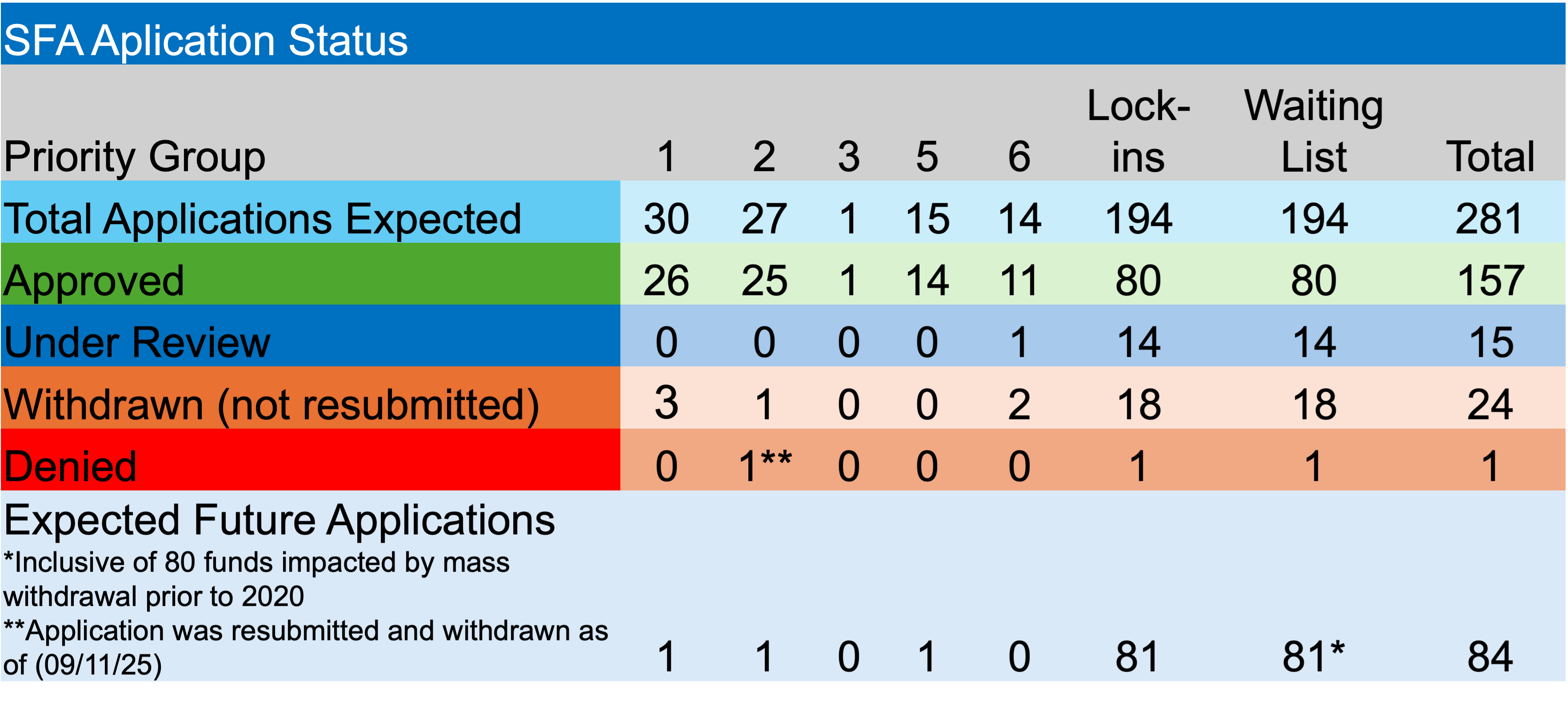
Fortunately, for multiemployer plans, ARPA pension legislation has gone a long way to securing the funded status and benefits for 110 plans that were once labeled as Critical or worse, Critical and Declining. There are another 90 pension plans or so to go through the application process in the hopes of securing special financial assistance. But have we seen true pension reform within these funds and the balance of plans that had not fallen into critical status?

It seems to me that most of the “lessons learned” have nothing to do with how DB pension plans are managed, but rather asks that plan participants bear the consequences of a failed pension model. A model that has focused on the ROA as if it were the Holy Grail. Pension plans should have been focused on the promise (benefit) that was made to their participants, and not on how much return they could generate. The focusing on a return target has certainly created a lot more uncertainty and volatility. As we’ve been reporting, equity and equity-like exposure within multiemployer and public pension systems was greater coming into 2025 then the levels that they were in 2007. What lesson was learned?

Pension America is once again suffering under the weight of declining asset values and falling interest rates. When will we truly learn that continuing to manage DB plans with a focus on return is NOT correct? The primary objective needs to be the securing of the promised benefits at a reasonable cost and with prudent risk. Shifting wads of money into private equity or private credit and thinking that you’ve diversified away equity exposure is just silly. I don’t know what the new administration’s policies will do for growth, inflation, interest rates, etc. I do know that they are currently creating a lot of angst among the investment community. Bring some certainty to the management of pensions through a focus on the promise is superior to continuing to ride the rollercoaster of performance.