
By: Russ Kamp, CEO, Ryan ALM, Inc.
Have you noticed the Treasury yield curve recently? There’s a great flattening occurring and it is quite beneficial for cash flow matching (CFM) assignments in the 1- to 10-year range. Bond math tells us that the longer the maturity and the higher the yield, the greater the cost reduction when securing future benefits. Our CFM strategy reduces the cost of future benefits by roughly 2% per year or >20% over 10-years. However, most of our clients have asked us to secure only the next 10-years, so capturing longer maturity is somewhat constrained, as we will not own bonds outside the range that we are covering. So the higher yields are quite beneficial. Can you imagine reducing future benefit costs by more than 40% for assignments stretching 20-years or longer?
Despite the fact that the Fed has only raised rates once since 2023, market participants have been demanding higher yields to compensate for the greater inflation and uncertainty. As a result, Treasury yields have elevated during the prior 12-months.
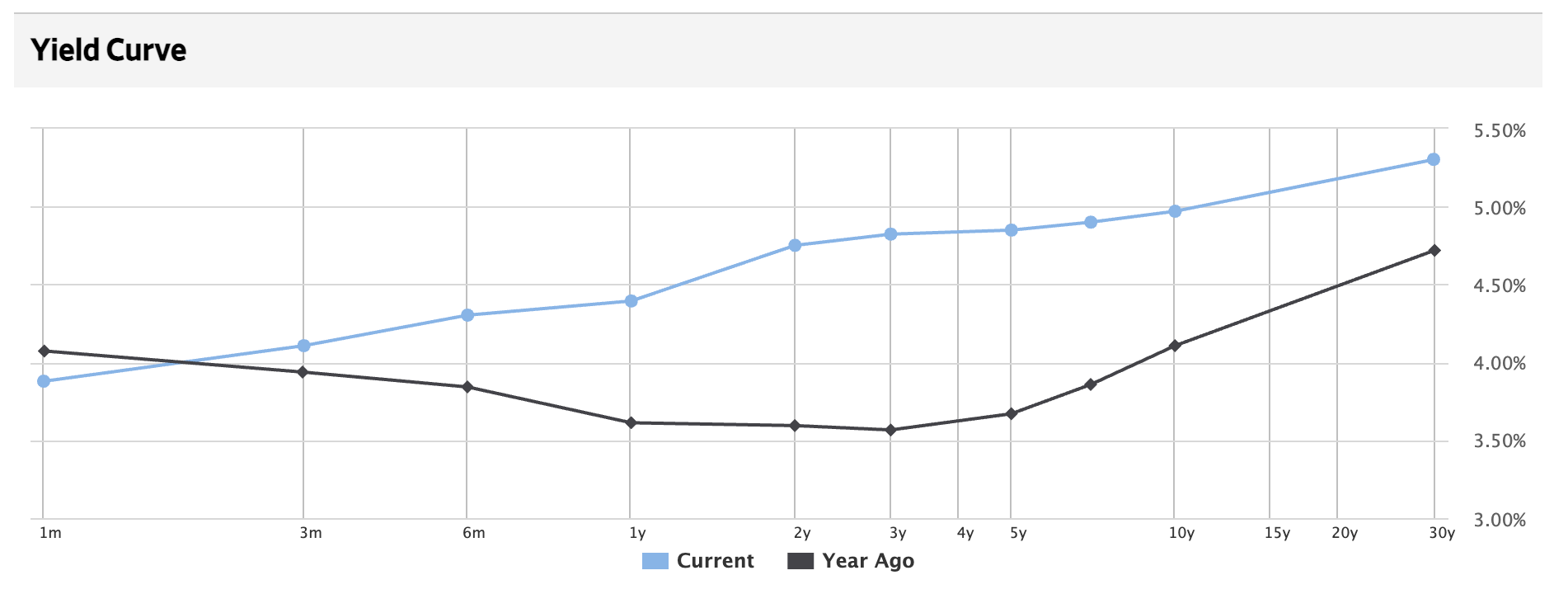
Graph provided by the WSJ
As the information below highlights (rates as of 10:29 am EST) greatest move up in rates has occurred in the 2-year to 5-year segment of the curve. In fact, the 2-year yield is at its highest in 27-years.
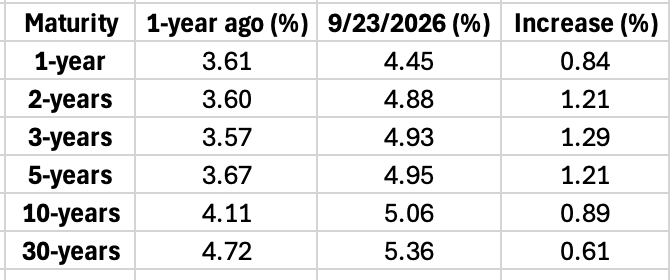
Treasury yields in the 2- to 5-year maturities are closing in on 5% levels. Should inflation persist and the Fed once again raise rates, it is not unreasonable to believe that 5% levels will be breeched providing plan sponsors of defined benefit plans with a wonderful opportunity to de-risk a portion of their plans for the next 10-years. That coverage extends the investing horizon for the residual assets of the plan and dramatically enhancing the probability that those strategies achieve the desired performance goals.
As always, we are pleased to provide a free analysis for any plan sponsor who would like to understand the impact that cash flow matching can have on your pension plan. Like Mikie, if you try us, you’ll like us!

