Ryan ALM’s Q4’22 Newsletter

By: Russ Kamp, Managing Director, Ryan ALM, Inc.

We are pleased to share with you the Ryan ALM, Inc. Q4’22 Newsletter. As you will note, it was an incredibly challenging year for Pension America if your accounting methodology followed GASB accounting standards and less of a challenging year if you used FASB to mark to market your plan’s liabilities. There are other goodies in here including links to some key research insights and the Ryan ALM blog, where we’ve produced nearly 1,200 posts on a variety of pension and economic issues. We encourage your questions and feedback.

The Search for Intelligent Life at the US Treasury

By: Ronald J. Ryan, CEO, Ryan ALM Inc.

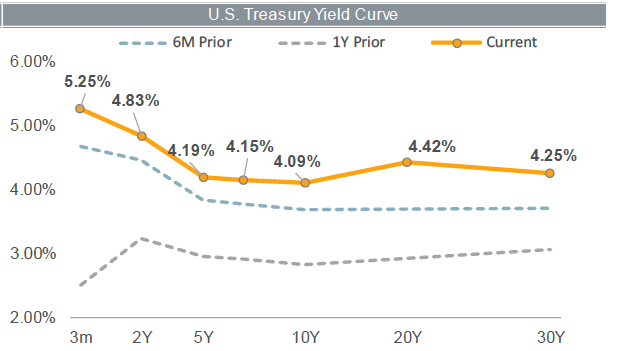
The USA is the largest debtor nation in the world with $23.7 trillion outstanding in US Treasury marketable securities. Such debt comes in the form of routine Treasury auctions of Bills, Notes, Bonds, TIPS, and FRN (floating rate notes). The average maturity of such debt is basically unchanged for the last 22 years at an average maturity = 68 months. When interest rates went to historic low levels in 2019 – 2021, a prudent debtor would have refinanced at these very low rates and lengthened maturity significantly. But the US Treasury is very mechanical and for the most part, engages in refundings of expiring debt. A corporate Treasurer would have issued very long bonds of 50 to even 100 years. Although the average interest rate of our debt is low at 2.24%, we have 23.2% of our debt maturing in one year. We issued $15.5 trillion in auction issues in the last 12 months. Every 100 basis points in higher rates equates to an extra $155 billion in extra interest expense.   

Pension Alert – ROA/TSY10 Gap is Narrowest in Decades

By: Russ Kamp, Managing Director, Ryan ALM, Inc.

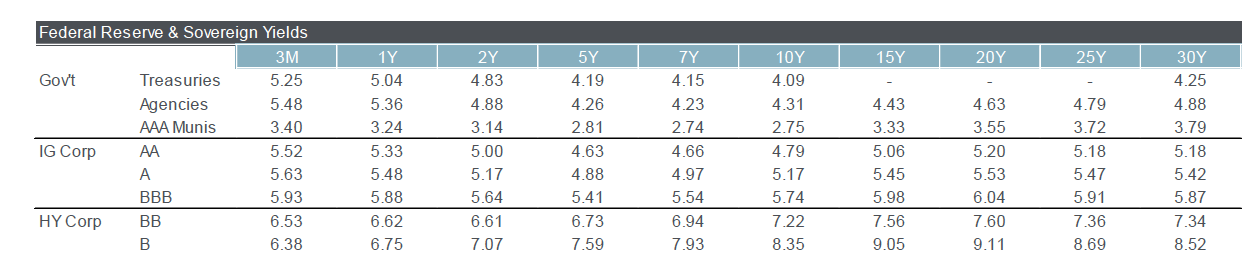
We’ve just published a Pension Alert that highlights the fact that rising bond yields have closed the gap between the 10-year Treasury Note and the average public fund Return on Asset assumption (ROA) to its narrowest margin in decades. This should be exciting news for the plan sponsor and asset consulting communities, and it should lead to greater exposure to fixed income. As Ron Ryan points out in his “Alert”, a pension fund can achieve roughly 72% of the ROA through an allocation to investment-grade fixed income. How comforting it is for plan sponsors to know that utilizing fixed income to a greater extent significantly reduces the variability of their potential outcomes, as bonds have a much lower standard deviation than do equities and equity-like products.

If the US Federal Reserve is true to its word, US interest rates are likely to continue to rise, with the Federal Funds Rate likely elevating above 5% during this rising rate cycle. As Ron points out, we are huge proponents of using a Cash Flow Matching strategy in lieu of an active total return seeking fixed income mandate which further reduces the uncertainty of achieving a plan’s objective of securing the promised benefits with modest cost and prudent risk. It has been a long time coming, but fixed income is back, and plan sponsors would be wise to use it to a greater extent. Enjoy Ron’s piece, as it is quite inciteful.

ARPA Update as of January 13, 2023

By: Russ Kamp, Managing Director, Ryan ALM, Inc.

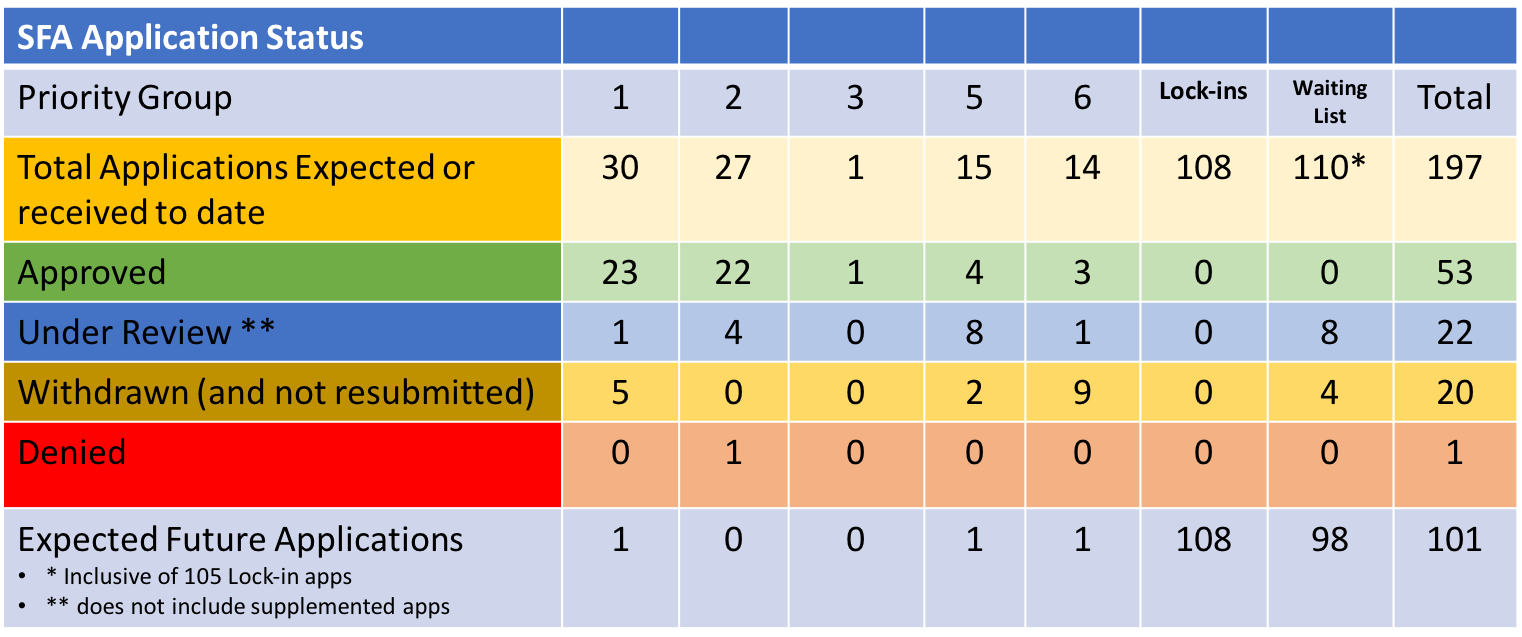
We are pleased to provide you with our weekly ARPA update. Is the third time truly the charm? After submitting and withdrawing two previous SFA applications, the Southern California, Arizona, Colorado & Southern Nevada Glaziers, Architectural Metal & Glass Workers Pension Plan has submitted another revised application (1/10/23). The Priority Group 1 plan is seeking $429.6 million in SFA support for its 3,606 plan participants. The PBGC has until May 10, 2023, to act on this application.

In other ARPA news, there were no applications approved or denied during the most recent week. However, there was one application that was withdrawn. The Plasterers and Cement Masons Local No. 94 Pension Fund, a MPRA Suspension plan (Priority Group 2) has withdrawn its application effective January 11, 2023. They were seeking $3.3 million for its 108 participants. There are currently three funds, including the Plasterers, that have withdrawn applications that have yet to refile. In the case of the America’s Family Benefit Retirement Plan, they have previously submitted two applications, while the Ironworkers Local Union No. 16 Pension Plan has yet to resubmit an application following the withdrawal of its initial filing.

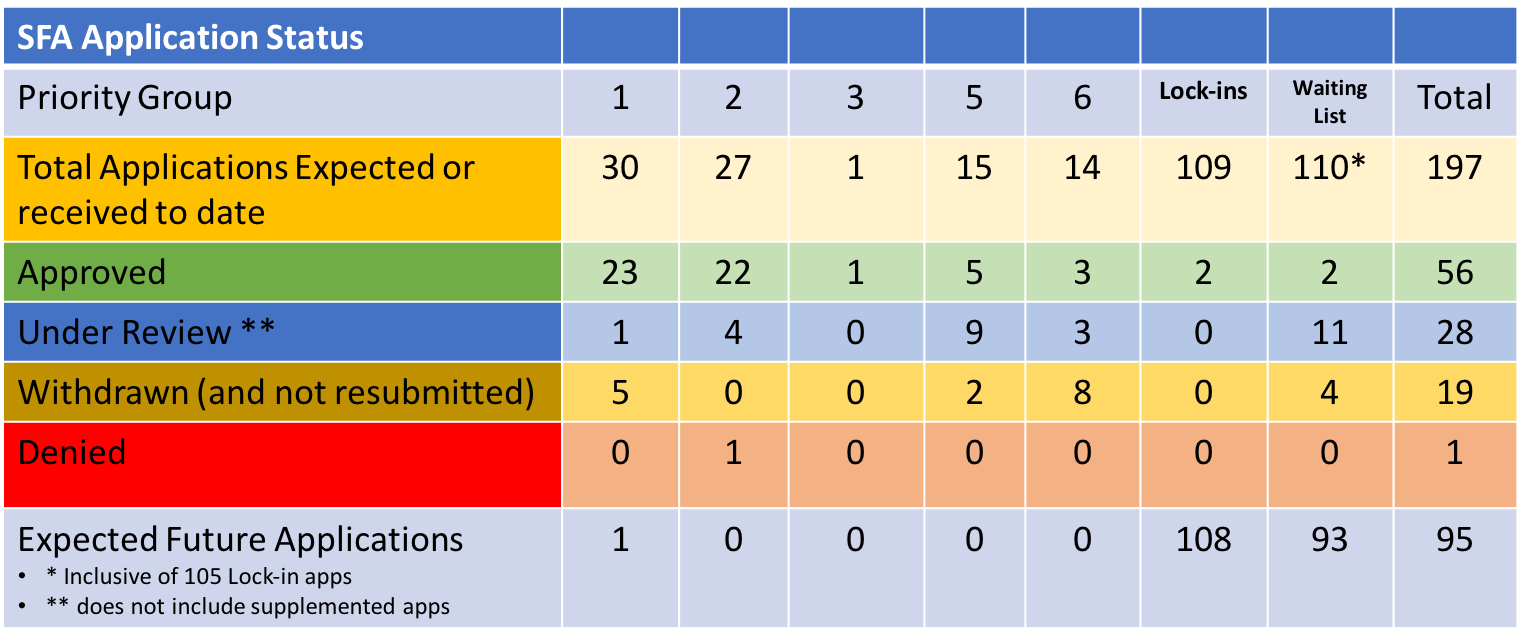
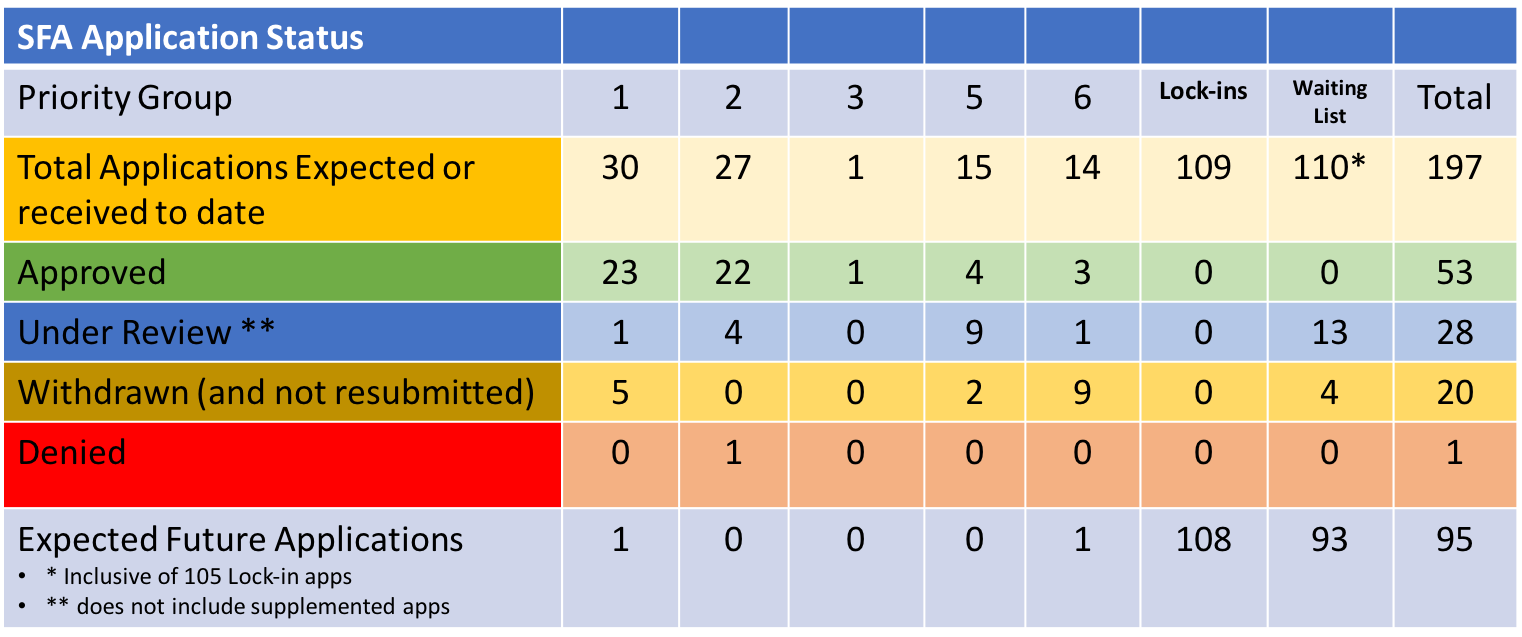
As a reminder, February 11, 2023, is the tentative start date for Priority Group 6 plans, those seeking SFA in excess of $1 billion, to begin filing applications. As the chart above highlights, the PBGC is expecting 14 large plans to file during that window. Much more to come!

No improvement During the 2H’22

By: Russ Kamp, Managing Director, Ryan ALM, Inc.

Equable Institute has released a year-end update to their State of Pensions 2022 report. They’ve concluded that the aggregate funded status of US state and local retirement plans deteriorated from 2021’s 83.9% to 77.3%, based on the available data as of year-end. Unfortunately, this reverses nearly half the gain achieved in 2021 following the incredibly strong market performance. Equable further estimates that total unfunded liabilities are roughly $1.45 trillion. Of course, this estimate is based on using the return on asset (ROA) as the discount rate under GASB accounting rules.

Public pension systems averaged -6.14% for the fiscal year ending June 30, 2022, dramatically underperforming the roughly 7% ROA objective. Furthermore, performance remained flat during the second half of 2022 putting pressure on the first 6 months of 2023 to see dramatic improvement or suffer the consequences of two consecutive subpar performance years. Of course, underperformance of this magnitude creates contribution volatility and plays havoc with state and municipal budgets.

It is this funding volatility that needs to be minimized. As exciting as 2021 may have been from a performance standpoint, extraordinary performance years can not be counted on going forward as inflation remains well above the Federal Reserve’s 2% objective which will lead to continuing rising rates and the potential for a US recession and rising unemployment. None of those events will support higher equity returns. As we’ve mentioned on multiple occasions, pension America would be well served by adjusting the asset allocation focus away from the ROA onto plan liabilities. It is the promise that needs to be funded and secured. Achieving the ROA but failing to beat liability growth is not a success!


PBGC Update as of January 6th, 2023

By: Russ Kamp, Managing Director, Ryan ALM, Inc.

After some fairly intense activity for the PBGC to end 2022, the new year began with a much more measured pace! We are pleased to once again provide this weekly update regarding the ARPA legislation and the beneficiaries of the Special Financial Assistance (SFA). Last week, there were two supplemental applications filed by Priority Group 1 plans. The Cement Masons Local 783 Pension Plan and the Cement Masons Local Union #681 Pension Plan filed their respective applications on January 6th. They are seeking a relatively insignificant combined sum ($61,070) in addition to what they originally received earlier this year. The two plans cover 246 participants, who likely feel that every $ received is significant.

In addition to these two filings, there was an application withdrawn on January 5th. The Ironworkers Local Union No. 16 Pension Plan, a priority group 2 plan (MPRA Suspension), withdrew its initial application seeking $74 million for the 996 plan participants. They submitted the application in late September. Hopefully, they will resubmit a revised application shortly allowing them to get on the PBGC’s radar soon.

Fortunately, there were no applications that were denied during the last week. But, there were also no applications approved. As the chart below reflects, there is still much more activity to come!

Fighting the Fed – What’s the Implication?

By: Russ Kamp, Managing Director, Ryan ALM, Inc.

Four decades of falling rates and easy (supportive) monetary policy certainly have combined to create an expectation among US investors that US interest rates will be low forever and that the Fed will step in at the first sign of weakness. This assumption has led investors to the idea that a great pivot will soon occur or that at the very least, the Fed will engineer a “soft” landing in which employment isn’t harmed, wages fall back to <2% annual growth, inflation quickly evaporates, and stocks can once again resume their upward trajectory. In fact, they so believe this theory that they have driven long-term US interest rates down to levels not seen in months. In the process, they have created a more challenging environment for the Fed to actually accomplish its principal objective of thwarting inflation.

Despite the Fed’s aggressive action during the past 10 months, financial conditions appear to be “normal” as depicted in the chart above. Where is the tightness? For all the handwringing regarding the massive upswing in rates, it certainly doesn’t appear to me that the Fed has actually accomplished much of anything, yet! Sure, inflation, as measured by the CPI, and fallen from the current peak of 9.1% to 7.1%, but that is still 7% inflation!! Employment remains strong, as we’ve recently seen as unemployment is now at 3.5%, job openings remain at 1.7/for every unemployed individual, initial unemployment claims have once again fallen, and wage growth is still >4% annually, despite some recent moderation. These all paint an incredibly healthy economic environment in which demand for goods and services will remain strong.

The Fed Governors have all been singing from the same hymnal, as they expect the Fed Funds Rate to continue to rise above 5%. None of the Governors expect any “pivot” in 2023. Where’s the disconnect? Again, most investors have not lived through a period of sustained inflation and rising rates. Recent aggressive Fed action has been undertaken from a base of historically low rates that were fueled by the pandemic. That level of rates was neither sustainable nor fundamentally driven. It was an action that needed to be taken given the circumstances. Getting to the current level of rates is more of a reset to where we were than a terminal point in the Fed’s war on inflation. As investors continue to fight the Fed, they are only making the Fed’s battle more challenging, which will likely lead to an even more aggressive Fed policy action. This battle has implications for US pension plan sponsors and their advisors. Should they stick with the status quo once again and hope that the Fed is wrong and that investors are right, or should they adopt a different approach that maximizes liquidity while buying time for the fund’s alpha assets to grow? I know what I’d do.

UK Pension Market Seems Quiet – Will that Last?

By: Russ Kamp, Managing Director, Ryan ALM, Inc.

September’s wild ride within the UK pension market has been replaced by relatively calm seas since. But is that situation an illusion? The following chart highlights some major concerns, as UK Gilts are being sold at record levels by foreign investors.

As a reminder, failed policy decisions by the former UK Prime Minister led to a vicious cycle of rising UK interest rates and Gilts sales. Those actions combined to nearly cripple the UK pension system as levered, and in some cases HIGHLY levered, duration strategies utilizing derivatives forced plan sponsors to seek liquidity to meet nearly daily margin calls. The collateral for the most part was Gilts, and the forced selling was only stopped when the UK’s Bank of England stepped into the fray by buying multiple billions of Gilts. That action certainly worked in the short term, but where are we today?

The continuing selling of Gilts (estimated at 38 billion Pounds for the three months from September through November) represents the greatest monthly average sum since the BOE started keeping records of such transactions in 1982. Foreign investors own nearly 30% of the UK debt. This selling pressure comes at a challenging time, as the UK Treasury is facing one of its largest Gilts funding needs in the next financial year at nearly $300 billion, while the BOE simultaneously tries to unwind more than 40 billion Pounds in Gilts under its October QE program. I’m not yet sure how this impacts the UK pension system. Have they sufficiently unwound highly levered LDI duration strategies utilizing derivatives or are they continuing to sit with those positions? Perhaps one or more of our readers could share some insights with us based on specific knowledge of the current UK pension market.

In any case, 2023 may be another challenging year for UK markets and the pension systems that operate within them. Clearly, there is much more to the story, and we will bring it to you as it unfolds. Stay tuned!

Ryan ALM Q4’22 Pension Monitor

By: Russ Kamp, Managing Director, Ryan ALM, Inc.

We are pleased to present the Ryan ALM Pension Monitor for Q4’22. We once again highlight for our readers the returns for both assets and liabilities for the calendar year 2022 for Private, Public, and Multiemployer (union) plans. The asset allocations highlighted in the monitor are based on the annual study by P&I, while the liability data is derived through Ryan ALM’s work in this space. I would encourage you to also review Ron Ryan’s post, “Was 2022 a GOOD or BAD year for Pensions?” which dives more deeply into the question that he poses, especially how one’s perception of 2022 is very much driven by the accounting rules.

As always, please don’t hesitate to reach out to us with any comments, questions, and/or concerns. We stand ready to assist. You can also go to RyanALM.Com to find significant published work on a variety of ALM and pension issues. Thank you for your continuing interest in and support of Ryan ALM.

Was 2022 a GOOD year or a BAD year for Pensions?

By: Ronald J. Ryan, CEO, Ryan ALM, Inc.

Well, assets had a BAD year with negative growth rates for the major asset classes:

S&P 500              -18.1%                       

BB Aggregate     -13.0% 

According to the Ryan ALM Pension Monitor, pension assets had a 2022 return of -8.7% (corporations), -7.2% (Publics), -8.7% (Unions) using the P&I asset allocation weights, which are updated annually.

But to answer the question posed above… it all depends on how a plan sponsor accounts for liabilities. FASB and IASB (International Accounting Standards Board) use market value (MV) accounting. Under ASC 715 (FASB) accounting rules, corporations are required to price liabilities using an AA corporate zero-coupon yield curve. Ryan ALM is one of the few vendors that provide these ASC 715 discount rates. Since interest rates rose significantly in 2022, Ryan ALM calculates that a 12-year duration liability schedule priced at ASC 715 discount rates would show a growth rate of -26.6%.

GASB is the accounting standard for Public pensions. GASB allows for the ROA to be chosen as the discount rate. Multiemployer pension plans use the ROA as their discount rate under ASC 960 accounting rules. The ROA is a forecast of future asset growth… and not a very good one at that. How this applies to liability growth bewilders me. How could you have a constant positive return? The ROA is certainly not an interest rate and it further ignores market conditions and volatility. Furthermore, you cannot buy the ROA to defease liabilities.

Currently, most Public and Multiemployer pensions have a ROA of 7.00% so they see liability growth at 7.00% for 2022. The differences in liability growth calculations are astounding:

                                    ASC 715 = -26.6%                 ROA = 7.00%

So, to answer the question… corporate pensions had a GREAT year where assets outgrew liabilities by 17.9% based on the Ryan ALM Pension Monitor. This should result in pension INCOME which enhances EPS as well as reduce contribution costs in 2023. But Public pensions and Multiemployer pensions had a HORRIFIC year where assets underperformed liabilities by -14% to -16%. This will result in higher contribution costs in 2023.

Why do we have (allow) such a different approach to pricing liabilities? To understand the true economic reality of your funded status, it would be wise to use MV accounting just like you do on the asset side so you can compare apples to apples. This was the message from the Society of Actuaries in 2004 in their research paper titled “Principles Underlying Asset Liability Management (ALM)”. 

Ryan ALM provides a Custom Liability Index (CLI) that prices liabilities at both the ROA and ASC 715 so plan sponsors, their consultants, and ALM can understand the true economic reality of liability growth and compare it to accounting valuations. The CLI should be the proper benchmark for any pension and the focus of asset allocation and ALM. Using the ROA creates confusion and results in a comparison of apples to oranges and not the desired assets to liabilities.