Public Pension ALERT – ASOP 4 now Effective!

By: Ryan ALM, Inc

ASOP 4 requires pricing liabilities (as an adjunct to funding requirements) at yields for Low Default-Risk Obligations (LDROM) that are reasonably consistent with cash flow matching liability cash flows. Ryan ALM feels strongly that only two discount rate choices meet these new rules: U.S. Treasury STRIPS and ASC 715 yield curves.

Ryan ALM is one of few vendors that supply both STRIPS and ASC 715 discount rates. We’ve recently posted a research piece on ASOP 4 on our website at RyanALM.com. Please don’t hesitate to contact us for more info and to explore how Ryan ALM can assist you with this new requirement.

ARPA Update as of February 17, 2023

By: Russ Kamp, Managing Director, Ryan ALM, Inc.

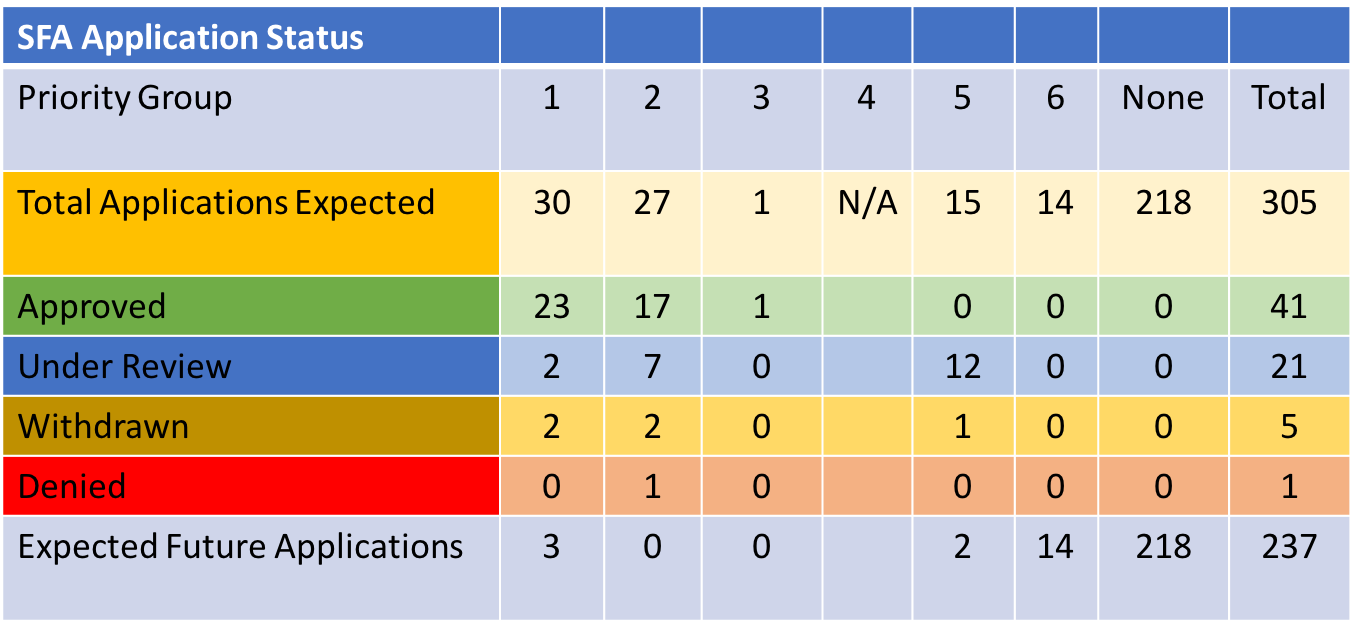
We are pleased to provide you with the weekly update on the implementation of the ARPA pension legislation. It took the New England Teamsters Pension Plan no time at all to file its application for Special Financial Assistance (SFA). This plan is categorized as a Priority Group 6 member. Those plans were only able to begin filing as of February 11th, which is exactly what they did becoming the first and only Priority Group 6 member to file as of yet. New England teamsters is seeking $5.5 billion in SFA for its 72,141 participants.

In other news, the PBGC approved the supplemental SFA applications for 4 plans, including the Retirement Plan of Local 1482 – Paint and Allied Products Manufacturers Retirement Fund, the Freight Drivers and Helpers Local Union No. 557 Pension Plan, the Sheet Metal Workers Local Pension Plan, and the Gastronomical Workers Union Local 610 and Metropolitan Hotel Association Pension Fund. These entities sought a combined $25.8 million in Supplemental SFA for their combined 6,700 participants. They will actually receive $26.7 including interest. There are still a lot of activity remaining for the PBGC, as each Priority Group still has applications that need to be filed and reviewed except for Priority Group 3 (Central States).

There were no applications either denied or withdrawn during the previous week.

The information in the graph above is limited to the initial applications (or revised initial applications) and does not include supplemental applications. We revise this data as the PBGC updates their weekly spreadsheet.

The Median Inflation Input is Rising – Uh, Oh!

By: Russ Kamp, Managing Director, Ryan ALM, Inc.

The Federal Reserve claims to be data driven. If that is truly the case, we are likely in for a longer rising interest rate cycle. I’m not referring to either of today’s major statistical releases – Retail Sales and the NAHB Homebuilder Survey – both of which blew past expectations. No, I’m basing my expectations based on the information produced by the Cleveland Fed that measures the median price increase for all of the CPI constituents. Regrettably, this index continues to rise.

Despite the positive inflation trend related to Goods, which clearly showed a transitory nature and one related to production disruptions, the median constituent in the inflation calculus is rising, with half of the inputs now above 7%. It isn’t just eggs, folks! This latest development clearly demonstrates to me that the Fed has accomplished little to date. They certainly have a major job ahead of them if they truly want an environment in which inflation moderates (plummets) to 2%. As we’ve been saying since the onset of this inflationary cycle, strong labor markets that are enjoying above trend wage growth are not likely to suffer significantly diminished demand for goods and services, which is exactly what we are currently experiencing. 

One can blame the warm weather all they want when it comes to retail sales, home buying activity, travel, etc, but the fact is that this enhanced demand is keeping inflation elevated. As we’ve been stating, the strong labor market and decent wage growth will make it difficult for the Fed to tamp down inflation unless they get much more aggressive. Forget about a great “pivot” occurring anytime in 2023.

If Not the Big Trends, When?

By Russ Kamp, Managing Director, Ryan ALM, Inc.

Asset allocation decisions shouldn’t be taken lightly, and a long-term structured approach should prove superior over time compared to trying to “time” the market with dynamic shifts that can be costly and lead to regret as markets quickly snap back. For plan sponsors and their advisors who were fortunate to establish a long-term asset allocation in the early 1980s that had decent exposure to fixed income, you captured an incredible trend of falling inflation and US interest rates. You almost didn’t have to do anything else as the nearly four-decade rally made most of us look very smart.

You don’t often have the chance to capture a trend (paradigm shift) of this magnitude and when you can, it is likely prudent not to waste the opportunity. So, I was taken aback when I read something in P&I today when a member of a pension staff declared that “big macro trends are UNLIKELY to impact our strategic asset allocation decisions”. If the big trends don’t, then when? For those that might not remember, the last four decades of falling rates and inflation were preceded by nearly 30 years of rising rates! Did rates rise and fall consistently during each of these bespoke periods – NO. But nothing ever does. Having the ability to participate in a trend that favors a certain path is nothing to take lightly.

Calendar year 2022 was challenging for fixed-income managers, as rising rates played havoc with bond returns (BB Agg -13%). There is no greater ongoing risk to bonds than interest rate increases – none! US interest rates continue to rise as inflation remains stubbornly high (6.4% annualized through January 2023). The Fed is not likely done with increases in the Fed Funds Rate. If that is true, bonds will continue to be hurt. Why sit back and let this trend harm your bond allocation and ultimately your plan’s funded status. Inaction is as much a decision as action.

There is a fixed-income strategy that has been around for more decades than you can imagine. Cash Flow Matching (CFM) is a defeasement strategy that insulates your plan from the uncertainty of US interest rates, by carefully matching bond cash flows (Interest and Principal) with the ongoing benefits and expenses of the plan. You are funding and matching future values which are not interest rate sensitive. Since CFM will outyield liabilities, it will also outperform liabilities in present value growth. Rates go up – no problem, as liability growth is negative. US interest rates fall, again no problem as asset growth will mirror but outgrow liability growth. Not only are the assets and liabilities now working in conjunction with each other, but your plan has also dramatically improved the liquidity necessary to meet the monthly payments.

I don’t know with certainty where inflation will be in 3-5 years and as a result, I don’t know where US interest rates will be. I SUSPECT that they will be higher than they currently are, but I’m not willing to make investment decisions based on a guess. Eliminate the uncertainty. Use your bond allocation to SECURE the promised benefits while eliminating the onerous effects of rising rates.

The 5% Yield Level Has Been Breached

By: Russ Kamp, Managing Director, Ryan ALM, Inc.

With great anticipation market participants once again were focused on the release of the US inflation number for January. The CPI posted a 0.5% increase in January, slightly above the consensus of 0.4% and the year-over-year increase was 6.4%, which came in hotter than the 6.2% expectation. Yes, this marks the seventh consecutive month of declining US inflation, but clearly, the pace of moderation has slowed considerably. Furthermore, the 6.4% annualized inflation is still dramatically above the Fed’s 2% objective.

The initial reaction for both equity and bond investors was quite muted, which is a bit surprising because of the consistent messages being delivered by the Federal Reserve governors that sit on the FOMC that they will not stop increasing US interest rates prematurely. A 6.4% inflation rate suggests to me that the Fed still has its work cut out for them. It doesn’t appear that they will get to their preferred inflation measure of 2% in 2023.

What we have seen now in the bond markets are Treasury yields up across the yield curve, including for both the 6-month and 12-month T-bills which now have yields above 5% (both at 5.03% at 1:30 pm. This marks the first time in this interest rate cycle that yields for Treasuries have breached the 5% level. It was 2007 when the 6-month Treasury Bill last had a yield above 5%. How high will they go? Keep listening to the Fed. They haven’t been wrong yet.

ARPA Update as of February 10, 2023

By: Russ Kamp, Managing Director, Ryan ALM, Inc.

The anticipation of the “big game” impacts us all in a variety of ways. It appears to have distracted the PBGC, too, as little was accomplished last week as it relates to the implementation of the ARPA legislation to rescue struggling multiemployer pension plans.

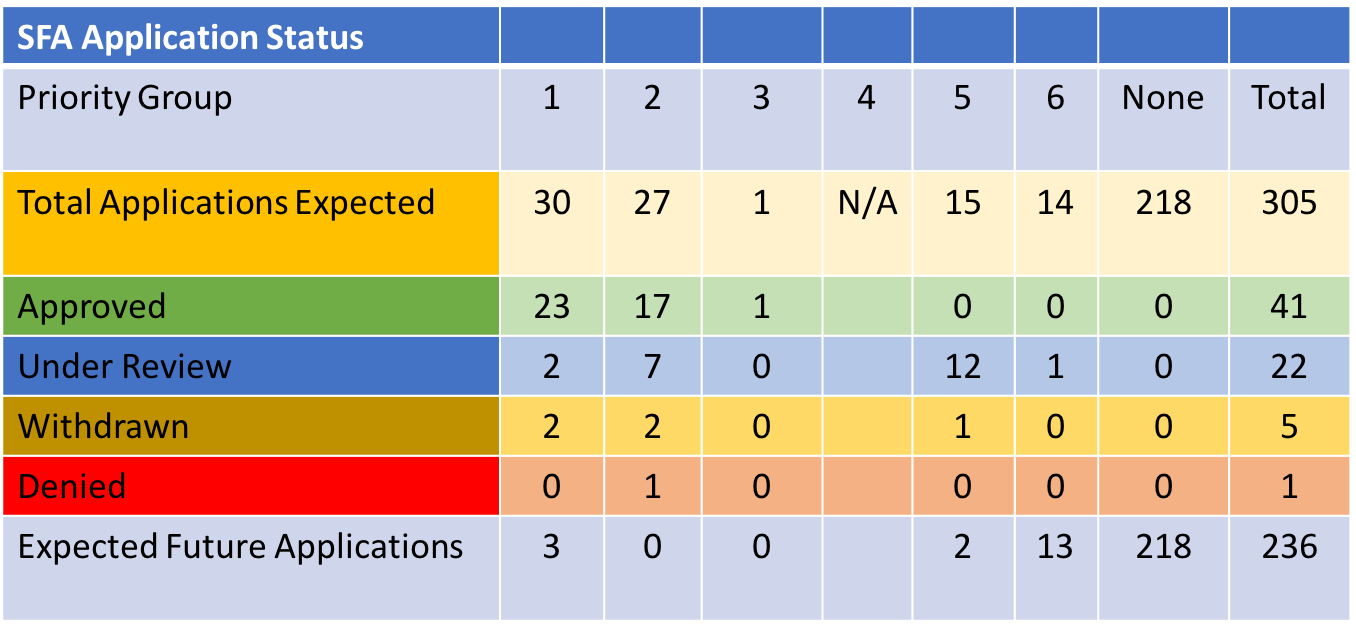
There were no new applications filed with the PBGC seeking Special Financial Assistance (SFA) and no applications that were either approved or denied. However, there was one plan that withdrew its application. The Defined Benefit Plan for the Operative Plasterers’ and Cement Masons’ International Association Local Union 394 Pension Trust Fund (say that 10 times fast!), a Priority Group 5 plan seeking $6.9 million in SFA for its 464 plan participants, withdrew its initial application on February 7th.

In other news, the PBGC did announce last week that the window for Priority Group 6 plans, the last official “priority” window, has opened effective February 11th. As the chart below indicates, there are 14 Priority Group 6 plans that could potentially file an SFA application.

Finally, it is left to be seen just what the process will look like for the more than 200 unclassified plans that could potentially file an application with the PBGC to receive SFA for their struggling plans. Will the process be orderly or will it devolve into a free-for-all?

Did They Stop Hitting Snooze on the Alarm Clock?

By: Russ Kamp, Managing Director, Ryan ALM, Inc.

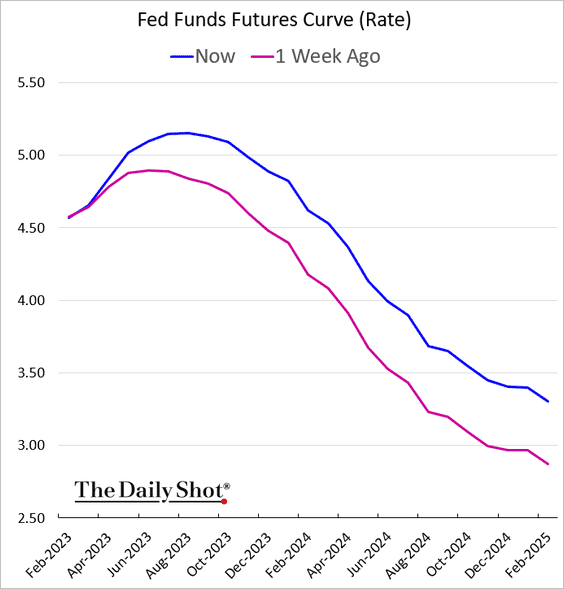
Could it be that the investing community is finally waking up to the fact that the US Federal Reserve is serious about combating inflation by raising the Fed Funds Rate well above the recent consensus? (see graph below) How many times do we need to hear Fed Governors mention that a great pivot is NOT about to happen in 2023? I’ve heard members of the FOMC indicate that the target FFR is 5.4% or higher. Why hasn’t that resonated with investors? I read just today that some members are even talking about 6% on the FFR. What a shock that must be to those investors that have just been hitting snooze on their alarm clock in anticipation that a little more sleep will help them get through their nightmare. Well, it is time to stop hitting snooze and wake up to the fact that inflation will not be eradicated anytime soon. The Fed mantra remains higher for longer.

Don’t panic plan sponsors of pension plans. Rising US interest rates are a positive development for your plans in terms of both liabilities and assets! With regard to your liabilities (promised benefits), rising rates reduce the present value (PV) of those future value (FV) benefit payments (and expenses). Those operating in the private sector certainly appreciate that fact as they are obligated to use market rates (ASC 715 discount rates) to value a plan’s liabilities. Unfortunately, the public pension ignores market rates and uses the ROA as its discount rate which is always a fairly steady positive growth rate.

With regard to the impact on the asset side, 2022 was a challenging year for most pension plans. But with rates rising, corporate bond portfolios are producing yields in excess of 5%-5.5%, which gets a plan fairly close to the target ROA with much less volatility than a traditional asset allocation. Furthermore, bonds are not a performance instrument in a rising rate environment, but they are a great source of cash flow (liquidity) to fund required benefits and expenses (liabilities). Use bonds to create a cash flow matching portfolio that defeases benefits and expenses chronologically from next month as far out as your bond allocation can go. The benefits are enormous. We explain all of them in various blog posts and research (White Papers) that can be found at Ryanalm.com. We are here to answer any of your questions. Please don’t hesitate to reach out to us.

This Time Might Be Different!

By: Russ Kamp, Managing Director, Ryan ALM, Inc.

It is understandable why the investment community still believes that the Fed will cut rates at some point during 2023. As I’ve mentioned many times that unless you are my age and in the business for 40+ years, you have always experienced the Fed stepping into the fray and providing support whenever markets became wobbly. That support was in the form of a reduction in the Fed Funds Rate (FFR). I would suggest that the Fed’s game plan is very different this time. Why? They have said so! Many times!

Yet, their proclamations seemed to have fallen on deaf ears. According to Neel Kashkari president and CEO of the Federal Reserve Bank of Minneapolis, the target rate for the FFR is 5.4%, and he said just this morning that they could go beyond that level depending on what continues to happen in the US labor market and with wage growth. 5.4% or more! Janet Yellen, US Treasury Secretary, stated yesterday that recessions don’t happen in environments with 500+K job growth, 3.4% unemployment, and 4.4% annual wage growth.

However, I read this morning in a Bloomberg email that the current inverted yield curve, which has been inverted for the last seven months beginning in July, would have to see 2-year yields snap down rapidly since the 10-year has never “uninverted” before by having its yield rise through the 2-year Treasury yield (6 previous observations). That might have been the case, but again, we’ve enjoyed four decades of an incredible tailwind provided by falling inflation and lower US interest rates. That scenario no longer exists. With the prospect of a 5.4% FFR, why would the US 2-year Treasury yields fall rapidly? Core inflation remains stubbornly high. Employment remains solid. Wage growth is providing workers with opportunities to demand goods and services. Where is the recession? It certainly doesn’t seem immediate. Given those conditions, where is the 2-year Treasury yield going other than possibly up? 

Please stop looking at the last four decades of Fed policy as a clear indication of what they intend to do today. I was always taught to NOT ignore the Fed. The Fed has certainly been very transparent about the fact that they don’t see the FFR being cut in 2023. The FFR is 4.5%-4.75% today. The 2-year Treasury Note has a yield of 4.45%. The 10-year yield is at 3.65% (10:30 am). If the Fed achieves its current target for the FFR of 5.4%, is it truly realistic to presume that the 2-year Treasury yield is going to fall dramatically from its current level and get below the 3.65% 10-year Treasury yield? I believe that it is much more likely that the entire yield curve ratchets higher. Despite the Fed’s actions to date, little has been accomplished to get inflation (price stability) back to its 2% target. The US employment picture is just too strong for that to happen at this time.

Normal 0 false false false EN-US ZH-CN X-NONE


Financial Conditions Have Eased!

By: Russ Kamp, Managing Director, Ryan ALM, Inc.

At yesterday’s press conference following the release of the latest Fed Fund Rate (FFR) increase, Federal Reserve Chairman Powell was asked if he believed that financial conditions have eased, which would make the Fed’s job of combating inflation that much more challenging. His reply was somewhat shocking to me, as he said “no”. Really? The investment community has been aggressively buying US Treasury securities in the face of Fed tightening. How much? The US 10-year Treasury yield is currently 3.36% (9:15 am) having peaked at 4.25% just 3 months ago (10/24/22). That certainly seems like significant easing to me, and it isn’t relegated to the 10-year either, as the yield curve’s inversion has grown steeper.

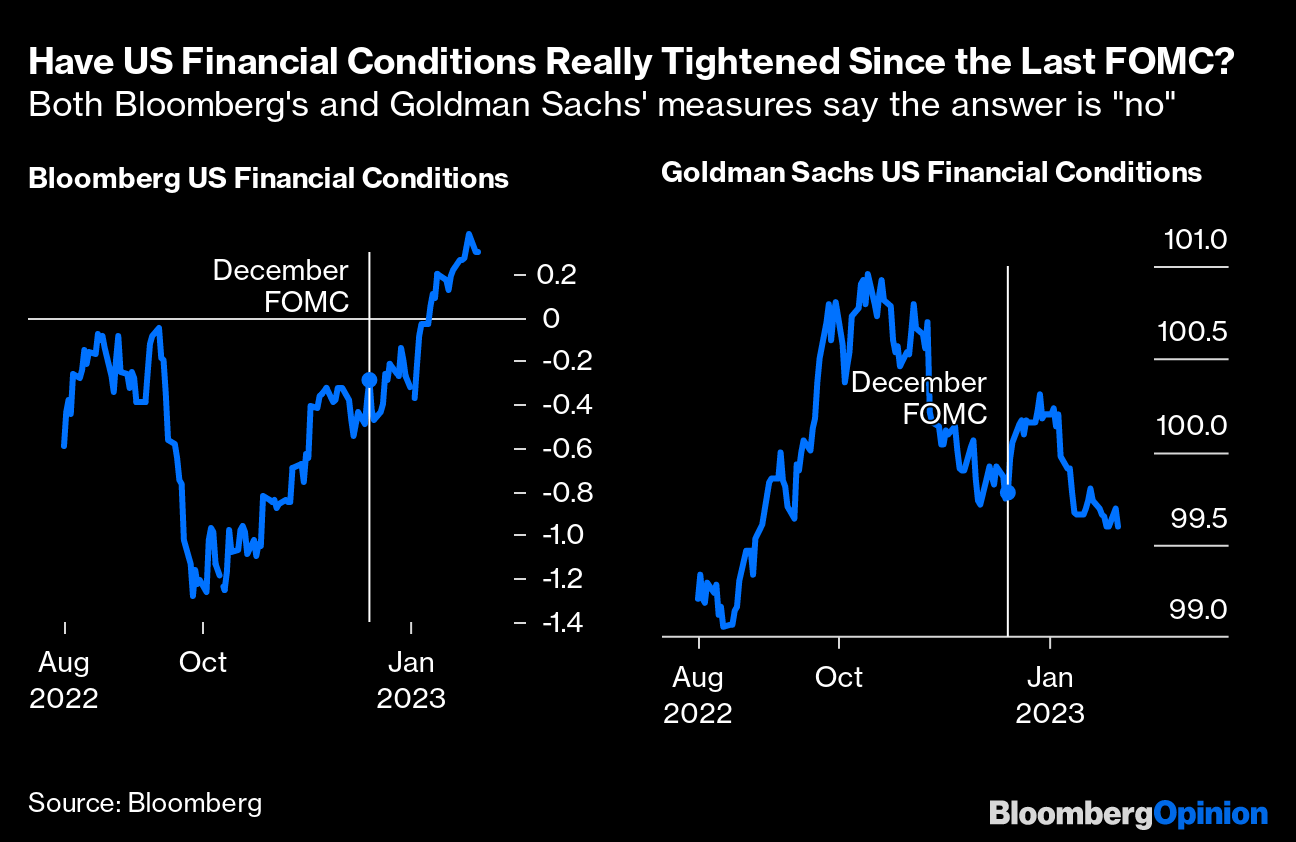
As further proof of financial conditions easing, I share with you two charts. The graph on the left is from Bloomberg and the one on the right is produced by Goldman Sachs.

Bloomberg’s financial conditions reading shows easing when the line is rising, while Goldman’s highlights easing when the line is falling. Clearly, these two readings are in sync. Both measures are revealing considerable easing. Powell may not believe that conditions have eased, but clearly, economic growth is not being thwarted to any great measure. We still have an incredibly strong labor market environment with wage growth that may be moderating still showing 5%+ annual growth. Mortgage and auto loan rates have fallen by 1% or more from peaks achieved in the fourth quarter.

Again, Powell may not currently recognize the easing, but eventually, he’ll have to come to that conclusion. Powell and the Fed Board have reiterated their posture of further increases, yet those pronouncements are being ignored by the “STREET”. If in fact, economic conditions have eased (dramatically) the Fed may be forced to continue to raise the Fed Funds Rate aggressively until they actually achieve the desired 2% inflation rate. The investment community cheered Powell’s comments regarding the future path of smaller increases, and I believe that they still anticipate rate cuts before year-end. I just don’t see it and neither does the Fed. One of these entities (the Fed or investment community) will have significant egg on its face come December. How that translates into market performance is anyone’s guess at this point.

History Does Have a Way of Repeating!

By: Russ Kamp, Managing Director, Ryan ALM, Inc.

Yesterday was a strong day for the Nasdaq 100 index capping off an incredible January 2023. In fact, the WSJ is heralding this performance (+11.5% for the initial month of 2023) as the strongest beginning to a calendar year for the Nasdaq since 2001, when the index rose an amazing 14.2%. But wait! Didn’t that performance occur within a bear market environment (3/2000 – 10/2002) in which the Nasdaq 100 would eventually decline 83% from start to finish? Is this month’s performance the start of a bull market rally or a great month in the continuing saga of last year’s bear market in which the Nasdaq declined -32.5%?

Market participants have certainly cheered every anecdotal piece of evidence potentially indicating that inflation’s peak is long behind us. They fully anticipate that the Fed will soon come to their collective senses by stopping the Fed Fund Rate increases to be soon followed by an easing trend. If they are right, perhaps January’s strong performance will be only the beginning of a sustained rally, but what happens to equities, including the Nasdaq, if the Fed isn’t convinced and they continue to elevate rates? What happens if our current historically strong labor market doesn’t weaken? What if the current level of interest rates isn’t capable of thwarting economic activity? What if? What if? What if?