It Would Have Been Perfect

I frequently get comments on the blogs that I produce. I love the feedback, even when I am being called a putz or worse! There is a gentleman who has engaged more often than most everyone else who yesterday commented that H.R. 397 (The Butch Lewis Act – BLA) would have had a painful start had this rescue program been implemented in January or February of 2020. This statement couldn’t be more wrong! My support for this legislation has never been stronger.

As a reminder, the BLA calls for low-interest loans to be provided to multiemployer pension systems designated in Critical and Declining status, which numbered roughly 125 at the start of the year (it is many more today). These systems would calculate what is needed to defease ALL of the Retired Lives Liability. The proceeds from the loan HAVE to be used for this purpose. Plan sponsors and their consultants cannot play games by trying to arbitrage between the loan interest rate and the return on asset assumption. It is that exact reason that pension obligation bonds have failed in most cases.

In this case, the bond portfolio cash flow matched to the plan’s Retired Lives Liability would have moved in lockstep with the plan’s liabilities negating the lower interest rates that are negatively impacting plan liabilities in today’s environment. It would have provided the cash flow necessary to meet benefit payments, removed interest rate risk for that portion of the portfolio, while importantly extending the investing horizon for the remainder of the assets that now have time to navigate through these difficult markets, as they try to beat future liability growth.

The fact that Congress has failed to provide this necessary support has only exacerbated a very challenging situation. Unfortunately, these Critical and Declining plans will have seen a tremendous asset loss combined with incredible growth in pension liabilities as long-rates have plummeted. Funded ratios have collapsed and as a result, the cost to protect and preserve the benefits for 1.4 million American workers and retirees has grown substantially. It is shameful!

However, it is not too late and this legislation should be passed immediately before these plans all fade away. Although the underfunding may have grown, the cost of the loan has gotten a lot cheaper for these challenged plans, as the loan interest rate is predicated on the U.S. Treasury 30-year bond plus 25 bps. Today, that would mean a loan rate of only a little over 1.5%!! Most multiemployer plans have some exposure to fixed income. For those that would qualify for a loan, the proceeds would be used to meet current benefits, while the current assets and contributions could be used to meet future liabilities. Any existing fixed income exposure could be used to rebalance to equities and alternatives at these depressed levels. Let’s get this done now before it becomes a moot point!

Not Sure That Is Enough

On March 2nd, New Mexico Gov. Michelle Lujan Grisham signed a bill to reform state employee pensions (all, but teachers). The reforms adjust contributions from both employees and taxpayers, partially freeze COLAs for three years, and eliminates automatic COLAs after the 3-year period is over, which will now be based on performance of the fund. The goal was to secure the funded ratio from declining further. Nice goal, but how do the measure above secure anything? They increase funding and reduce benefits, which on the margin will help, but they did nothing to secure the benefits and reduce the volatility of the current asset allocation.

As we’ve witnessed in the last 2-3 weeks, traditional public plan asset allocations are too risky, and New Mexico’s 7.25% ROA is certainly not conservative. If New Mexico’s goal was to actually stabilize and then improve the funded ratio (now 70% on a GASB basis) they should insist that a portion of the assets, perhaps their current fixed income allocation, be used to cash flow match their Retired Lives (RL) liability out 10-years, if possible. This would place the fund on a glide path toward full funding. Allowing the remaining assets to be focused on future liabilities and any residual RL liabilities.

Permitting the fund’s assets to be entirely at the mercy of the markets is a losing game. We’ve witnessed what markets can do to the funded ratios/status of pension plans on so many occasions that one must wonder what it will finally take to once again manage pension plans as lottery systems, where the future liability is discounted to present value terms and secured with the appropriate level of funding. Plan participants shouldn’t have to worry about the promised benefit, but they do because of so many notable failures and legislation that allows for poorly funded plans to seek relief from their obligations. These situations wouldn’t exist if plans were managed versus their liabilities and not some made up ROA.

It Was Nice While It Lasted

According to Russell Investments that tracks twenty large corporate pension plans with assets greater than $20 billion, which they’ve been doing since 2005, 2019 saw the lowest combined contribution amount since 2008. The prior two years witnessed exceptionally strong contributions, as the companies received favorable tax treatment on contributions. Last year’s contribution totaled $11.9 billion compared to $28.1 billion in the prior year. Russell has estimated that 2020’s contributions should total about $13.3 billion, which includes GE’s intention to inject $4 billion or more.

But alas, the significant decline in U.S. interest rates, particularly in long bonds, and a substantial hit to assets will likely force greater contributions to be made to sure up these systems. Interestingly, despite the out-sized returns from the markets in 2019, the pension underfunding among these 20 large corporate plans grew to $151 billion from $137 billion in 2018. Combined assets were $830 billion at year end, while liabilities stood at $981 billion. The Russell organization attributed the growth in the deficit to declining interest rates. Funny, that is something that both multiemployer and public plans pretend not to notice.

While corporate pension systems have done a better job of managing their plan’s asset allocation against plan liabilities they are not immune from the market action that we’ve recently witnessed, especially since many are trying to hedge their liabilities through duration matching schemes and not the more exact approach, which is cash flow driven investing (CDI). We’d be happy to speak to you about the differences.

Yeah, I Think That We Have!

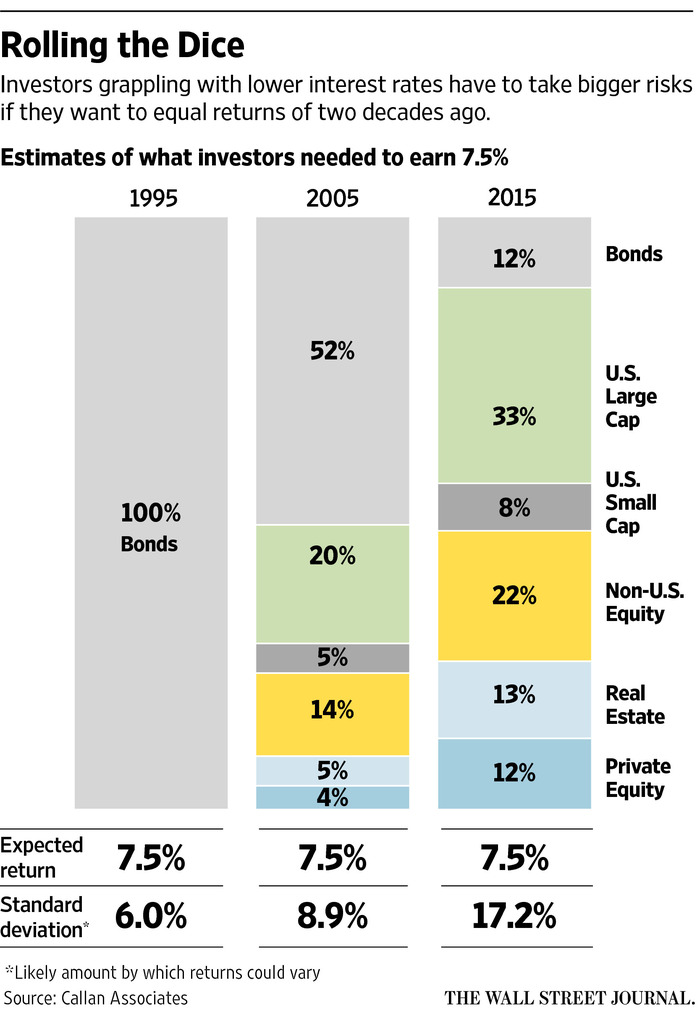
On January 29, 2020, I penned a post on this blog asking the question “have we outsmarted ourselves?” Well, I don’t think that there is any question that we, as an industry, have, and it is crushing the very funds that we were tasked with trying to help. The whole idea that managing a pension has morphed into a return seeking game is the biggest problem of all. DB pension plans should have focused on the promised benefits (plan liabilities) and NOT the return on asset assumption, which isn’t a calculated number in the first place and achieving that number doesn’t guarantee a successful outcome.

Had these plans remembered that the only thing that matters is securing the promised benefits at low cost and appropriate risk, we wouldn’t be once again subjecting the plan’s assets to the proverbial asset allocation roller-coaster and plan participants to an uncertain retirement future. P&I recently published an article that highlighted the boring nature of Idaho’s (PERS) 70/30 asset allocation, which doesn’t seem so boring, but rather aggressive. However, according to a leading consultant quoted in the article, “we’ve seen public pension funds tiptoe away from 60/40” and “if anything, it’s now 80/20, an even greater reliance on return-seeking assets.” Oh, my!

Where is the reference to plan liabilities or funded status driving asset allocation? Why does it make sense that asset allocation is driven by the ROA? If two plans have 7.25% as their ROA, should they have the same asset allocation even if one plan is 60% funded and the other is 90%? Of course they shouldn’t, but in our industry more times than not they do.

How has that move into more equity-like product paid off? It shocks me to think that a majority of plans had greater equity exposure at the start of this year than they had in 2007. When will we learn? A pension plan should always be on a glide path to full funding, whether they are 50% funded or 90%. A single asset allocation geared to the ROA is what is wrong. Pension plans should utilize a bifurcated approach to managing their assets. A cash flow matching bond portfolio should be used to defease the first 10 years of the Retired Lives liability. This will improve liquidity, eliminate interest rate risk, secure benefits, and extend the investing horizon for the remainder of the assets that now have time to capture the liquidity premium. The balance of the assets can be managed more aggressively as they are no longer a source of liquidity. Their goal and objective is to outperform future liabilities.

According to the same article, public pension systems have roughly 21% in fixed income. It is a very good time to shorten both maturity and duration to take advantage of the historic move in US rates. Bonds with maturities greater than 10-years should be used to build the cash flow matching program. As rates find a more normal level, liability growth will likely be negative allowing for a potentially rapid recovery in funded status.

POBs – The Time Is Right!

Now is not the time to put one’s head in the sand. There are incredible opportunities to be captured. For one, public pension systems looking to close some of their funding gap should take advantage of the lower valuations in equities and the incredibly supportive interest rate environment to issue a pension obligation bond (POB). Historically, many POBs have failed to improve funding because the timing on the bond was wrong and the execution was flawed.

Don’t take the proceeds from your bond and put it in a traditional asset allocation. Take the proceeds from your POB and defease as much of the Retired Lives Liability as possible. The current assets should then be managed more aggressively, as they now have a longer time horizon and no call on them for liquidity purposes. Given the extremely low yields on US debt, bonds will likely not return much for the next 5-10-years. As a result, you will want to use bonds for their cash flow and known terminal value to fund promised benefits. With the significant decline in equity prices, you have a wonderful opportunity to buy lower than just 2-3 weeks ago when equities were at record levels.

Again, DB pension systems have been hurt by recent market events, but sitting on the sidelines is not the right game plan. It is time to take advantage of those opportunities that exist, while positioning your plan for greater success in the future. Call us; we can help you navigate these rough waters.

Ryan ALM Alert – Now Is The Time!

On February 26, I wrote that given the market action in US government bonds that it might be the prudent time to sell anything 10-years and out. At that time the 10-year Treasury had a yield of 1.33%, while the 30-year Treasury bond was yielding 1.82%. Nine days later and the 10- and 30-year are yielding 0.71% and 1.26%, respectively (as of 9:35 am). Incredible, yes, but it provides plan sponsors with a unique opportunity. There have been tremendous gains from your active fixed-income portfolios. Even if rates fall from these levels, the overall return will be muted. Now is the time to rotate active fixed-income into a cash flow matching strategy that defeases your plan’s Retired Lives liability. We’d recommend cash flow matching the next 10-years liabilities chronologically. Use bonds for their income and known terminal value to secure the promised benefits.

In periods of uncertainly there is opportunity. This may prove to be the trade of the century!

And These Plans De-risked – mostly!

According to a recent P&I article, three different reports on the funded status of Corporate DB plans highlighted the fact of what we at Ryan ALM have been stating, February was ugly, and this for a universe of pension plans that in many cases have taken steps to de-risk. Studies by Wilshire, Northern Trust, and Mercer each indicated that falling asset levels and rising liabilities combined to reduce funded ratios by anywhere from 5% (Mercer) to 3.9% (Wilshire) within the month. The aggregate funding for Corporate DB plans is somewhere between Mercer’s 79% to Northern Trust’s 81.3%.

The start to 2020 is the worst beginning of a calendar year for corporate funded ratios dating back to January 2013 when Wilshire began reporting on the funded status of corporate DB plans. Mercer estimated that the significant decline in funded ratios increased the funding deficit for the S&P 1,500 companies by $125 billion, bringing the total deficit to $527 billion.

As we reported yesterday, multiemployer and public pension systems that have been slow to develop de-risking strategies will have seen as much as a 17% shortfall in their funded status, according to the Ryan ALM pension monitor. Pension systems should not be subjected to the whims of the market as they have been. This volatility in funded status manifests in escalating contribution expenses.

How bad? Ugly!

The start to 2020 has been nothing short of UGLY for pension America. A generic asset allocation produced a -4.93% return for the first two months (2/29/20) while Ryan ALM’s liability index was up 12.01% for the same time frame. The nearly 17% underperformance of assets to liabilities is crushing the funded status of all plans that haven’t taken the steps to manage assets versus plan liabilities, which would include most of the multiemployer and public pension systems. These plans, in many cases, are already on life-support. When will a new course be chosen? Plan participants throughout America are counting on all of us to protect the promises that have been made. Doing the same old, same old has failed miserably. The time to act is now before these critically important plans are no longer viable.

It’s The Accounting Rules!

I was asked a question by the moderator (a plan sponsor) at the Opal/LATEC conference regarding the reason that DB pension systems are struggling to meet the promised benefits. Obviously, there are many contributors to this problem, but I reminded folks at the conference that the issues all start with the pension accounting rules. This subject was brought to my attention many years ago by Ron Ryan, Ryan ALM, who wrote a wonderful book on the pension crisis in which he highlights the fact that differences in valuing pension liabilities has lead to significant funding differences between corporate plans that are much better funded and all others. I would highly recommend that you spend a little time with this book to truly appreciate Ron’s point of view.

Because of the accounting rules, DB pension systems consistently underfunded their plans while simultaneously injecting more risk into the asset allocation process than was necessary. Today, multiemployer and public DB pension systems have more aggressive asset allocations than they had prior to the GFC. Market action of the last 10 or so days dramatically impacts the funded status of these systems, which may ultimately impact their long-term viability.

BLA Loans at <2%!

Remember H.R. 397? This is the Rehabilitation for Multiemployer Pensions Act of 2019 (aka the Butch Lewis Act). It called for the setting up of a new agency within the U.S. Treasury Department called the Pension Rehabilitation Administration (PRA). It was to provide low-interest rate loans based on the prevailing 30-year U.S. Treasury Bond plus 25 bps. Unfortunately, nothing has happened with the legislation once it got passed by the House (July 2019) and went before the Senate.

As we wrote in a blog post from earlier today, pension plans are getting spanked with the combination of falling rates and equities, but one thing that is working in the favor of the sponsors of eligible Critical and Declining plans is their cost has been nearly cut in half. That’s right, the cost has been nearly cut in half as the current yield on the 30-year U.S. Treasury bond is 1.62% (as of 3:50 pm today), while on April 18, 2018 when we presented to House staff the yield on the same bond was at 3.14%. Being able to fund these struggling plans with the very cheap financing is an unexpected bonus. To think that a plan could get a 30-year lease on life at an interest rate of below 2% (including the 25 bps) is almost too good to believe.

Will our leaders in DC squander this opportunity?