More Thoughts on the Benefits of Rising Rates on Pensions

By: Russ Kamp, Managing Director, Ryan ALM, Inc.

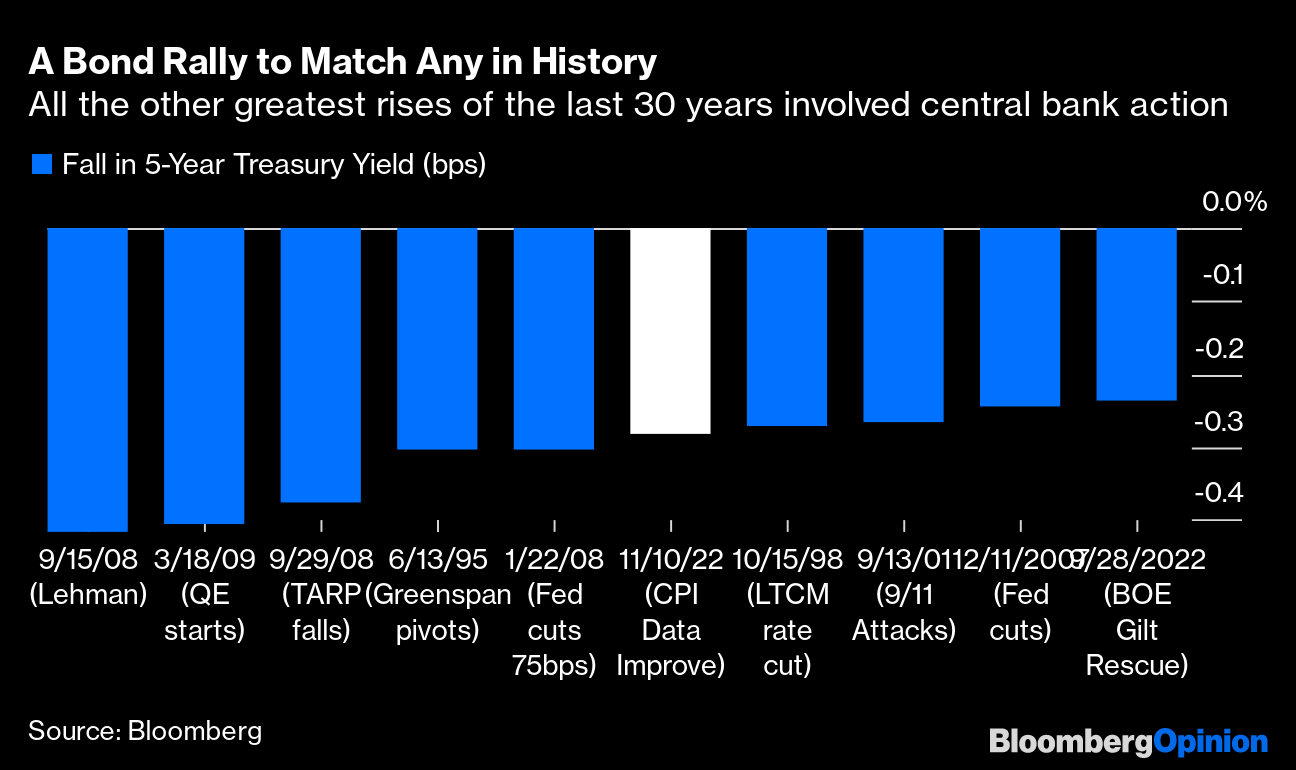
You may recall that I wrote on May 3rd that rising US interest rates might just be the antidote needed to slow the demise of DB pension plans, as rising rates make the present value (PV) of those future benefit payments cheaper. Happy to report that Bloomberg’s John Authers has written on this subject in his daily blog (which is always excellent). Importantly, John wrote, “If pension managers can match their liabilities with yields at their present level, they have a huge incentive to buy bonds. Yes, yields might rise still further, but the opportunity to be able to finance their pension guarantees with certainty may not come again.” All hail, John!

A rising US interest rate environment will create significant headwinds for a traditional fixed-income portfolio. Instead, have the wind at your back by using bond cash flows to match pension liability cash flows and you have SECURED the promises chronologically for as far out as the allocation will permit. Why live with great uncertainty regarding the plan’s funded status? Bi-furcate your plan’s asset allocation. First, establish a cash flow matching strategy by replacing your current core and core-plus fixed income allocation to help stabilize your funded ratio. Second, let the remainder of your assets now occupy an alpha bucket used to enhance the funded status. Furthermore, given what has transpired in the markets to date, you are buying time for the alpha assets to grow unencumbered without being a source of liquidity that would lock in recent losses.

Now is not the time to just sit on the sidelines…be responsive!

ARPA Update Through May 6th

By: Russ Kamp, Managing Director, Ryan ALM, Inc.

We are pleased to see an acceleration in the approval process for ARPA/SFA applications. As of Friday, May 6, 2022, 23 applications have now been approved by the PBGC. These 23 funds are expected to receive $6.5 billion in Special Financial Assistance (SFA) grants which will be used to partially secure the promised benefits for 123,486 plan participants, while importantly restoring benefits that had been reduced through MPRA. This is a monumental accomplishment that is still only in the second inning of the legislation’s implementation.

To date, 10 funds have received the SFA payments. My question: What have the plan sponsors done with the proceeds? According to the PBGC’s interim rules, only investment-grade fixed-income securities can be used in the segregated SFA bucket. We know that a rising interest rate environment is hurting total return-seeking fixed income portfolios and the US Federal Reserve has indicated that they are not yet done addressing inflation which likely means further interest rate increases. Those plans receiving recent payments from the PBGC will not have been hurt as much as those plans that were “fortunate” to be paid earlier in the year. Have any of these plans done as we suggested and defeased their liability cash flows with bond cash flows? As a reminder, this is the only way to SECURE the promised benefits for as long as the SFA allocation lasts. Are they sitting in cash hoping that the PBGC produces less constrained investment guidelines?

At Ryan ALM, we believe that the intent of the legislation was to secure the promised benefits chronologically as far out as the allocation could go. It won’t come close to the 30-years (2051) that the legislation had hoped to achieve, but it is still found money that should be used to “guarantee” that monthly benefits will be paid as promised as far into the future as possible. Both equity and fixed income markets have declined significantly to begin 2022. Some in the industry are suggesting that it might make sense to expand the list of permissible investments to take advantage of lower valuations. But is their crystal ball any better than my very foggy one? Do they truly know how low these markets can go? We’ve seen nearly 50% equity declines twice in the last two decades. Is a decline of that magnitude possible? I hope not, but I have no way of knowing where equity (and bond) valuations will eventually settle.

As a result, don’t play the total return game. Don’t try to time these markets. Implement a strategy that truly secures those promised benefits as far out as possible. Buying time for the legacy assets to recoup current losses is critical. Using the SFA bucket for all of the plan’s liquidity needs is the intent of the ARPA legislation. We urge SFA recipients to use these grants in a way that maximizes the value of investment grade bonds. By establishing a defeased bond portfolio assets and liabilities become matched. A cash flow matching strategy mitigates interest rate risk as the defeased portfolio is matching future values (benefits) that are not interest-rate sensitive. Given the higher interest rates there is a very good chance that the SFA allocation can secure 10 or more years!

Here are the ten funds that have received the SFA payout.

Local 138 Pension Trust Fund

Idaho Signatory Employers-Laborers Pension Plan

Bricklayers and Allied Craftworkers Local 5 New York Retirement Fund Pension Plan Road Carriers

Local 707 Pension Plan

Local 408 International Brotherhood of Teamsters, Chauffeurs, Warehousemen and Helpers of America Pension Plan

Milk Industry Office Employees Pension Trust Fund

Local 584 Pension Trust Fund

Teamsters Local 641 Pension Plan

Laborers’ Pension Plan Local Union No. 186

San Francisco Lithographers Pension Plan

I’m interested to learn what they’ve done with the SFA assets. Please share the details with me if you know. Thanks!

How to Properly Invest the SFA

By: Russ Kamp, Managing Director, Ryan ALM, Inc.

There seems to be a school of thought evolving within SFA eligible multiemployer plans on how to invest the grant’s proceeds. We are hearing that plan sponsors and their advisors will invest the SFA assets in investment-grade fixed-income as instructed by the PBGC’s Interim, Final Rules. However, we are led to believe that they are investing with the goal of generating a total return and not for the bonds’ cash flows which can be used to secure the promised benefits. Their goal is to pay benefits as quickly as possible from this segregated bucket given the low return expectation from fixed income while hoping that the legacy assets generate outsized returns to compensate for the SFA bucket’s lower expected returns. This is the wrong approach, especially given that we are living in a likely persistently rising rate environment in which interest rate risk is the single greatest driver of negative returns. Plan sponsors should be trying to manage these assets within the spirit of the legislation.

Here is our roadmap on how we believe that these critically important assets should be invested.

ARPA’s goal/objective:

To fund and secure the promised benefits chronologically.

Section 9704 of ARPA provides Special Financial Assistance (SFA) to pension plans who are in critical funding status as follows:

“The amount of financial assistance… shall be such amount required for the plan

to pay all benefits due during the period beginning on the date of payment of the

special financial assistance payment under this section and ending on the last day

of the plan year ending in 2051, with no reduction in a participant’s or beneficiary’s

accrued benefit…”.

Note: Based on how the SFA is calculated, plans will not come close to securing 30-years of benefits, but they should strive to defease and secure as many years as possible.

What we know:

  • The SFA assets must be segregated from the fund’s legacy assets
  • Based on the Interim, Final Rules, only Investment-grade bonds can be used for investment purposes

Funding and Securing the promised benefits:

The only way to secure the promised benefits for as long as possible is to use a cash flow matching strategy (CDI) that matches and funds liability cash flows with asset cash flows (income, principal, and re-invested income) chronologically.

The process:

Ryan ALM, Inc using the actuarial output from the SFA candidate’s actuarial firm we will create a Custom Liability Index (CLI) that becomes the plan’s roadmap for their pension liabilities… the portfolio’s index benchmark!

We then produce a cost-optimized cash flow matching portfolio (Liability Beta Portfolio™ or LBP) that will maximize the SFA assets while securing the promised benefits at the lowest cost to the plan.

Note: Importantly, bond math drives the cost optimization model. The longer the maturity and the higher the yield… the lower the cost. The longest maturity in the LBP will not exceed the longest benefit payment that is cash flow matched.  

Based on the CLI data, Ryan ALM will build an LBP or CDI portfolio by overweighting longer maturity, higher yielding investment-grade bonds (skewed to A/BBB+) within the constraints of the cash flow limitations. For instance, if the SFA can secure 8-years of benefits based on the output from the CLI, the longest maturity in our portfolio will be 8-years. If we can go out 11-years, then we cap the longest maturity bond at 11 years.

The LBP will be carefully crafted to match the fund’s cash flow needs chronologically from the next benefit payments as far out as the SFA allocation will support. The portfolio will be 100% corporate investment-grade bonds with a heavy emphasis on A/BBB+ rated bonds (higher yields produce cost savings).

Once the LBP has been constructed, the plan’s assets and liabilities will move in lockstep. It does not matter the direction of interest rates as the cash flows are matching future values which are not interest-rate sensitive. This is the significant advantage of using a CDI approach instead of a total return-oriented bond product.

Why one shouldn’t use a total return-oriented bond program:

Bonds are interest-rate sensitive. The longer the maturity the greater the interest rate risk. Bond prices fall when interest rates rise. After a 39-year bull market for bonds and historically low-interest rates, it is highly likely that US interest rates rise from current levels especially given current inflation trends and Fed monetary policy. If the SFA assets are managed against a generic bond index and rates continue to rise, there is a serious mismatch of asset cash flows versus the liability cash flows. It is likely that some of the portfolio’s holdings will have to be liquidated each month to meet cash flow needs causing losses on the bonds and subjecting the portfolio to liquidity risk. Moreover, the popular bond index benchmarks (i.e. the Aggregate) are heavily skewed to low-yielding Treasury/Agency/AAA bonds with a high percentage in long maturity bonds. A total return focus certainly doesn’t fund and secure benefit payments in a cost-efficient manner.

Proper Fixed Income Strategy

Adopt a CDI approach that will secure the promised benefits chronologically in a cost-efficient manner. Avoid a total return focus of bonds managed to a generic bond index which will mismatch asset cash flows versus liability cash flows. Avoid taking losses for immediate liquidity needs. Using bonds here for SFA can eliminate the need for a bond allocation in the legacy assets that can now grow unencumbered to meet liabilities past the horizon that the SFA funds.

Could Rising Rates be THE Antidote?

By: Russ Kamp, Managing Director, Ryan ALM, Inc.

As everyone knows, corporate defined benefit (DB) plans have been disappearing like the dinosaur. However, rising US interest rates following a 39-year bond bull market might just prove to be the antidote needed to stem this tide. Milliman’s 2022 Pension Funding Study is out, and as usual, it provides a great overview of the top 100 corporate plans (ranked by plan assets). Corporate funding has improved dramatically in the last several years as investment returns have eclipsed the average plan’s return on asset (ROA) assumptions by a substantial sum. At year-end 2021, corporate pension funding stood at 96.3% compared to 88.1% at year-end 2020. According to the study, only 1 of the 100 plans in this study failed to see improvement in their funded status.

Furthermore, expenses associated with offering a DB plan have fallen substantially. In fact, the aggregate improvement in funding created $18.1 billion in pension earnings (credit) in 2021. There were 53 plans in this study that reported pension earnings in 2021. Importantly, this is the first time that we have had pension earnings since 2001. In addition, and despite the increase in PBGC premiums, total PBGC expenditures fell during fiscal 2021, too. These developments are potentially watershed events.

Despite the struggles year-to-date for both the bond and equity markets, corporate funding has likely continued to improve as the present value impact on plan liabilities from rising US interest rates will have been greater than the losses incurred on the asset side of the pension ledger. Could funded ratios eclipse 100%? If the Federal Reserve is true to its word and given its hyper-focus on inflation, US interest rates could see substantial increases. If such an action occurs, it would not be surprising to once again see aggregate funding achieve fully-funded status. Would this success encourage Corporate America to reduce actions designed to eliminate pensions, such as Pension Risk Transfers (PRT)? We could only hope. Furthermore, the “Great Resignation” that we’ve been witnessing may be tempered with the ongoing support of DB pension systems.

It is also critically important to understand that pension risk transfers are not a panacea. According to Milliman, “PRTs in the form of buyout programs are deemed by plan sponsors to be an effective way to reduce a pension plan’s balance sheet footprint, but generally they have an adverse effect on the plan’s funded status (my emphasis), as assets paid to transfer accrued pension liabilities are higher than the corresponding actuarial liabilities that are extinguished from plans. Much of this incongruity stems from Financial Accounting Standards Board (FASB) pension plan valuation rules, which differ from an insurance company’s underwriting assessment of the same liabilities.” Moreover, we are now witnessing a positive impact on the income statement thru pension income for the first time since the 1990s.

With lower costs, improved funded status, and a need to keep staff during these volatile and challenging times, is it too much to hope that a new day may be dawning for traditional DB pension plans? There are wonderful investment strategies that can be used to lock in the improved funding and secure the promised benefits. We believe that a cash flow matching strategy can secure benefits at a much lower cost than a PRT. We also believe that cash flow matching is the only LDI/ALM strategy that also ensures the necessary liquidity to meet the promised benefits and corresponding expenses. We’d welcome the opportunity to provide assistance to any plan looking for ways to keep its pension plan thriving. Lastly, asking untrained employees to fund, manage, and then disburse a “retirement” benefit through a defined contribution plan is not a good policy. These supplemental plans may also create an unintended consequence given the portability. Let’s go back to the future!

ARPA Update Through April 29, 2022

By: Russ Kamp, Managing Director, Ryan ALM, Inc.

A massive Blue Fin Tuna was caught off the coast of Florida a couple of days ago. The 832-pound tuna may prove to be a Florida state record, but it doesn’t compare to the whale of a pension plan that has filed for Special Financial Assistance (SFA) with the PBGC. The Central States, Southeast & Southwest Areas Pension Plan filed the application on April 28th seeking more than $35.1 billion in SFA grant assets to secure the promised benefits for 364,908 plan participants. This plan, if the application is approved, will claim about 35%-38% of the total estimated cost of the ARPA rescue plan assets. The Central States is the first Priority Group 3 plan to file since becoming eligible on April 1st.

In other news, members of the PBGC were quite busy last week approving applications for SFA grants for an additional 7 funds, including three Priority Group 2 applications. The new approvals will help cover the promised benefits for 99,588 participants, as they are expected to receive roughly $3.7 billion in grants. Since last July, 20 plans have had the SFA applications approved covering >117,000 participants with $6.08 billion in grants.

Despite the positive momentum now being witnessed, multiemployer plans (and their advisors) are still waiting for the PBGC’s Final, Final Rules as to how the SFA and legacy assets should be managed. As we’ve discussed, those plans that have already received their assets may have been hurt in this rising rate environment. However, those plans that have yet to receive the approved assets are lucky, as they will now have an opportunity to use the SFA grant assets to defease their plan’s liabilities at higher interest rates, which reduces the economic present value of that future liability payment.

Another Wasted Opportunity?

By: Russ Kamp, Managing Director, Ryan ALM, Inc.

I published a year-end post (actually December 27, 2021). Here was the concluding paragraph:

So, in conclusion, 2021 was a terrific year for pensions. Now what? Given the improved funding and general expectations for more challenging environments for both equity and bond markets, plan sponsors should seriously consider reducing risk. It would be a travesty to waste all this good news by letting asset allocations remain static and subject to the whims of the markets. Use this unique time to reconfigure your fixed-income exposure to better manage assets versus plan liabilities. This reconfiguration will dramatically improve the plan’s liquidity while eliminating interest rate risk for the portion of the portfolio that will now focus on defeasing liabilities. This action will also buy time for the plan’s alpha assets (non-fixed income) to grow unencumbered, as they are no longer a source of liquidity to meet benefits and expenses. Furthermore, the buying of extra time allows markets to recover should we witness another major market correction. As we conclude 2021 we celebrate the great success enjoyed by Pension America. But, now is not the time to sit on one’s laurels.

Markets are down across the board, the US Federal Reserve is threatening to aggressively pursue a higher rate strategy to thwart inflation, the war in Ukraine continues unabated, and yet little has been done by Pension America to take some risk off the table. What will it take to finally get away from the pursuit of the ROA and focus on securing the promised benefits? There are consequences to maintaining the status quo. Please refer to my February 24, 2022 blog post for a reminder. Such an unnecessary waste!

It Hasn’t been Ideal, But…

By: Russ Kamp, Managing Director, Ryan ALM, Inc.

The start to 2022 hasn’t been great unless you are a long-suffering Mets Fan – great 5-run rally in the 9th to win last night. But I digress. It has been a very challenging environment for our capital markets, which usually means that Pension America is suffering, too. But is that the case this time? The best (most ideal) environment for Pensions is one in which interest rates are rising (liabilities down) and asset levels are flat to up. We haven’t experienced that scenario in quite some time, as we’ve lived through a protracted fall in US interest rates that has harmed pension funding for decades.

Corporate pension sponsors appreciate this fact as FASB mandates a liability discount rate that is market-price based, unlike GASB’s accounting standard that permits public pension systems to utilize the return on asset (ROA) assumption for the discounting of their pension liabilities. This masking of the true level of pension liabilities has been harmful in that decisions related to benefits, contributions, and asset allocation have been made with less than accurate economic information.

Fortunately, in 2022 the US interest rate rise has had a greater impact on a plan’s liabilities than the markets have had on plan assets given the longer average duration of pension liabilities. As we reported in the Ryan ALM Q1’22 Newsletter, plan assets outperformed plan liabilities by roughly 7.2% when using FAS AA Corporate discount rates. We’d already been encouraging plan sponsors to take some risks off the table to preserve the funding gains that had been achieved in 2021 given very strong (unsustainable) market returns. With the continuing improvement in the average plan’s funded status through March 31, 2022, it becomes even more imperative that these gains be preserved.

One easy way to achieve this outcome is to migrate longer maturity fixed income portfolios from a return-seeking mandate to one that cash flow matches pension liabilities chronologically from the next month as far out as the current allocation will permit. This ensures that the fixed income assets will have a shorter duration than the plan’s duration of the liabilities, which is generally somewhere from 10-15 years depending on the maturity of the plan’s workforce. Importantly, a cash flow matching portfolio will ensure that assets and liabilities will move in lockstep with each other stabilizing the funded status for that segment of the portfolio.

If rates continue to rise in a secular trend for many months, long-maturity bonds and pension liabilities will go down in present value significantly. Most total return-focused bond portfolios look like their index benchmark with a sizable amount in maturities longer than 10 years. Cash flow matching is skewed to a much shorter maturity/duration profile which will be much less interest rate sensitive thereby outperforming not only current bond index benchmarks but liabilities as well. We’ve seen the impact of falling rates and falling asset values (’00-’02 and ’07-’09) on pension funding. That combination can be devastating. Fortunately, 2022 hasn’t produced such a combination. Our current scenario of higher rates could be the solution to funding liabilities at lower costs and enhancing the funding status if we transfer from a total return focus on bonds to a cash flow match focus of liabilities chronologically.

Do you know how your plan’s liabilities have performed? If not, call us. We will be happy to provide you with the appropriate insights through our Custom Liability Index (CLI).

We’ve Only Just Begun

By: Russ Kamp, Managing Director, Ryan ALM, Inc.

In 1970, the Carpenters released the song “We’ve Only Just Begun”, as part of the album “Close to You”. I mention this because there are a couple of lines from the song that I believe speak to participants in our current capital market environment. “Sharing horizons that are new to us. Watching the signs along the way.” As I wrote recently, it is a new day for many in our industry who haven’t lived through a protracted rise in US interest rates let alone worked in our industry since the last bond bear market ended in 1981. Everyone is looking for “the sign” that will make their crystal ball a little less foggy. I suspect that they haven’t found it yet given how surprised so many seemed to be when Fed Chairman Powell announced last Wednesday that the next rate move was likely to be 50 bps. We are still so confused by that market reaction since we’ve been regularly writing about the Fed’s intentions.

Want another potential sign? Bank of America strategists are out with a note highlighting the fact that during “the week through April 20, investors pulled $19.6 billion from U.S. large caps, the largest exit since February 2018.” This is in sharp contrast to the fact that nearly $100 billion had been invested into equities so far in 2022 continuing a trend of massive flows into US equities that we previously commented on in 2021. As we reported late last year, BofA had noted that record flows were pouring into US funds outpacing the total of the previous 19-years combined. Our market performance is driven by fund flows. Massive movements in equity fund flows will drive markets up or down, as either the stocks are bought boosting their price, or sold driving prices downward. It is a self-fulfilling prophecy. If we are finally seeing US equity fund flows reversing it could mean big trouble for the broad market. We’ll continue to monitor this trend to see if April’s withdrawals continue into late Spring.

ARPA Update as of April 22, 2022

By: Russ Kamp, Managing Director, Ryan ALM, Inc.

Another week, and a little more progress. Happy to report that the PBGC approved three additional Priority Group 1 applications last week. The pensions systems receiving approval included, the Retirement Benefit Plan of GCIU Detroit Newspaper Union 13N with Detroit Area Newspaper Publishers (that’s a mouthful), Graphic Communications Union Local 2-C Retirement Benefit Plan, and the Teamsters Local 617 Pension Plan. These plans represent just under 2,000 participants bringing the total number of participants seeing their benefits protected for some period to 17,917. Of the 13 applications that have been approved by the PBGC, seven have received the Special Financial Assistance. One plan, America’s Family Benefit Retirement Plan, withdrew its application. To date, all pension plans that have withdrawn an application have refiled.

As we nearly complete April marking the 9th month of ARPA activity, we still don’t have the Final, Final Rules that are to be provided by the PBGC. Again, I’m told that any changes to the legislation will not result in a clawback of previously paid SFA proceeds. Let us hope! While we wait, significantly rising US interest rates are impacting investment-grade bonds. As I wrote last week, plans that have already received their SFA must hold those assets in IG bonds. If the SFA proceeds had been used to defease plan liabilities, those assets are moving in lockstep with promised benefits, and that relationship is locked in as soon as the portfolio is constructed. Furthermore, the more rates rise, the lower the cost to defease future liabilities.

Plans that used bonds as total return assets, instead of liquidity assets, have suffered significant negative price returns this year. As we’ve witnessed so far in 2022, markets can suffer negative returns. If the list of permissible investments is expanded, the only guarantee is that the segregated SFA assets will have greater volatility, but no greater guarantee of success in securing benefits. I am hoping that the PBGC upholds the intent of the legislation which was to protect and preserve the promised benefits for as long as possible. They should allow for the plan’s legacy assets to be managed as aggressively as the plan would want as the SFA assets will take care of the liquidity for nearly a decade or more.

Would You Invest differently?

By: Russ Kamp, Managing Director, Ryan ALM, Inc.

What is the value of time? When it comes to investing, time can be a wonderful tool. When you have a long time horizon, you can seek out investments that have the greatest potential for long-term success. Importantly, you can invest in the knowledge that you can wait out any short-term downturn. Unfortunately, our pension industry has morphed into a “what have you done for me last quarter” mentality. Quarterly reviews measure recent performance differences relative to generic indexes as if they are meaningful. One stock or one bond performing badly can create an underperformance that isn’t reflective of the manager’s long-term capability, yet we scour these performance books each and every quarter as if they were Gospel looking to glean an insight that will provide us with a reason to keep or terminate a manager/strategy. How silly!

As a result, we have created an atmosphere in which a majority of managers have become benchmark huggers, yet they still charge active management fees. What has this wrought? Persistent underperformance on the part of active managers on a net of fees basis. Furthermore, these products ride the rollercoaster of uncertainty given the significant beta exposure to the index benchmark. As we possibly (likely) enter a new investing environment brought about by rising US interest rates, does maintaining a quarterly focus help or hurt pension systems? We’d unequivocally state that having a short-term focus is absolutely the wrong approach.

Don’t despair, for there is a way for Pension America to achieve both short-term (liquidity) and long-term goals. Instead of having ALL of the assets focused on achieving a return on asset (ROA) assumption, bi-furcate your portfolio into liquidity and growth buckets. The liquidity bucket will consist of bonds, and only bonds, whose cash flows of principal, income, and re-invested income, will be used to match net liability cash flows chronologically (after contributions). This “bucket” will provide all of the liquidity necessary to meet benefits and expenses for as far out as the allocation can fund. The good news: as rates rise the cost to fund those benefits gets lower allowing the plan sponsor to either cash flow match more payments or allocate fewer resources to secure the promised benefits.

The remaining growth assets now have an extended time horizon in which to grow unencumbered, as they are no longer a source of liquidity. Furthermore, these assets should be given a wider range from which to operate. Constraining products to narrow benchmarks reduces the efficiency of investing, as the information ratio is a function of the forecasting ability of the strategy and the breadth of the universe from which they are choosing their portfolio holdings. Unconstrained portfolios that now have perhaps as much as 10-years to operate should provide more stable returns as they are no longer tethered to a beta benchmark subject to normal market cycles.

As we have stated many times, defined benefit plans need to be preserved and protected. But approaching the problem in a similar fashion to how we’ve done so for the past 40-years is silly. We’ve all benefited from the significant wind at our backs as interest rates collapsed. Today those winds are blowing directly into our faces and it isn’t a fun feeling. Buying time should permit you the opportunity to invest very differently. If done successfully DB plans should be able to weather this storm.