MPRA Suspension & Partition Plans slow to file

The 18 Pension plans that received approval under MPRA to file for benefit relief have been slow to file their application for Special Financial Assistance (SFA). These plans were part of Priority Group 2 under the PBGC’s pecking order that permitted filing to begin on 1/1/22. To date, only Local 805 Pension and Retirement Plan has filed its application. Given that nearly 6 months have elapsed since the PBGC announced their “Interim Final Rules” in July 2021, one would think that applications would have been filed immediately upon the designated date. That clearly hasn’t been the case.

There is some speculation that more than one of these plans may not file for the SFA given the issues related to the legislation’s implementation and the likelihood that any SFA received would not be nearly sufficient to cover the prescribed 30-year time (until 2051) frame for the securing of benefits and expenses. These plans, using MPRA, have restructured their payouts to current beneficiaries and future retirees hoping to extend that life of the plan. A “reworking” of the benefits for plans that receive the SFA may create greater headaches than those that exist today. The truly sad part of this legislative failure is the expectation that benefits were to be restored to those participants who saw in many cases draconian cuts. A decision to not file for the SFA will be devastating news to the tens of thousands of plan participants that were celebrating the passage of ARPA last March.

My hope would be that any plan that has cut benefits under MPRA should gladly accept this grant from the Federal government to restore benefits. The SFA grant won’t likely cover more than 8-10 years of benefits, but it certainly buys time for future legislative efforts to bring effective change that actually accomplishes the intended action of protecting and preserving benefit payments for the next 30-years. These poor participants have gone above and beyond in their effort to help get legislation passed. It would be a slap in their face if a decision were made to forgo the receipt of this government largesse.

Asset Allocation Should be Based on the Funded Status

There are supporters and critics of almost any action or decision, especially in today’s hyperactive social media environment. The movement to consolidate downstate fire and police pension systems in Illinois is no exception. There were 649 police and fire plans merged for investment purposes into two large funds with about $15 billion in total AUM at the time of the consolidation. The primary motivation was to gain access to more investment opportunities because of scale, while also capturing some economies of scale in terms of fees, as many (roughly 65%) of these plans were <$20 million. I’m sure that there were other factors, as well.

What concerns me about this recent action has to do with asset allocation decisions based on the funded status of the individual systems that have been rolled up into these larger entities. Every plan’s funded status, contribution history, and unique liabilities should be factored into an asset allocation framework. However, that is not the case here. Every plan gets the same asset allocation depending on the pool that they invest in. How does this make sense? Asset allocation decisions should reflect the funded status. A plan that has a 90% funded ratio should NEVER have the same asset allocation as a plan that is 40% funded. Yet, that is precisely what will happen in Illinois.

Plans that are well funded should be able to reduce the risk inherent in the asset allocation, while those plans that are challenged from a funding standpoint should be given the opportunity to inject more risk into their asset allocation framework. We’ve seen what can happen to a well-funded plan when markets get hit, and they will again. Most public pension systems were overfunded in the late ’90s. Instead of securing the promised benefits and winning the battle, plans reduced their fixed income exposure and ramped up equity and alternative allocations. This decision proved disastrous, as two major market corrections decimated the funded status of Pension America during the ’00s leading to an explosion in contribution expenses as a direct result of this action.

We are once again at a point where public pension funds (and those of corporate America and multiemployer plans) have seen improvement in their funded status. It would be fiduciarily imprudent to not take risk off the table at this time. With equity valuations teetering at very expensive levels and US interest rates forecast to rise, perhaps rapidly so, markets could destabilize fairly quickly. It’s not like we haven’t seen this story play out before our very eyes. I applaud Illinois for trying to do something to sure up their unfunded police and fire plans, but not providing each system with the opportunity to tailor their plan’s asset allocation is a huge mistake. I wouldn’t want to be the municipal finance officer who has to inform their citizens that the 90+% funded plan is now at 65%.

Lotteries are a Cash Flow Matching Proof Statement

Let’s talk about the Mega Millions Lottery, which is now offered in 45 US states and 2 additional territories. I wish that I were ready to announce that I’d won the $632 million from last night’s drawing, but alas, I’m not that lucky! However, the 2 winners will soon have to decide whether they take their winnings in a lump sum or in 26 annual payments. Most winners take the lump sum believing that they’ll generate a return greater than the annual growth rate factored into the future payouts. But, if they were to take the annual payments, how does the lottery system ensure that the proceeds are there when needed?

Let’s assume in this case that the winning ticket pays $10 million in total. The owner of the winning ticket is now going to own a series of 26 yearly payments that add up to $10 million. The lucky gal would receive the first payment for 2.5 percent of the total, or $250,000 (some taxes would be withheld from each check), two weeks after submitting the winning ticket. One year later, they would receive a check for 2.7 percent, or $260,000. Each year, the amount of the check goes up by a tenth of a percent with the last payment at 5 percent, or $500,000. In order to guarantee that the funds for all of these payments are available, the Lottery sponsor buys U.S. Treasury Bonds called STRIPS. (Separate Trading of Registered Interest and Principal of Securities). These are also known as zero-coupon bonds.

A zero-coupon bond pays a certain amount of money when it matures (future value). The longer the amount of time before the bond matures, the less it will cost you today (present value) to fund that future liability. Have you heard of any lottery systems going broke or being significantly underfunded? I haven’t! This is a “sleep well at night” strategy that doesn’t inject unnecessary volatility into the process. The liability is known (future payout) and the funding is secured using fixed income instruments. This is how defined benefit pensions (DB) were managed decades ago. Liabilities were known, monitored, and managed using defeasance and immunization strategies. The sponsoring entity wasn’t trying to achieve a return as an asset objective hoping that a collection of assets actually provided the “forecasted” return. Why do we live with that risk today?

The volatility in return patterns witnessed within DB plans since 2000 plays havoc with the contributions necessary to make up for any shortfall. As a reminder, most pension plans were well overfunded in the late ’90s. Instead of securing the victory, we saw asset allocation strategies reduce fixed income exposure, the only asset that resembles a plan’s liabilities, and instead, they injected more equity risk into the equation. This “strategy” failed miserably when markets got crushed on two different occasions during the ’00s (2000-02 and 2008). As a result, contribution expenses skyrocketed, and funded ratios plummeted. Not good!

Today, funded ratios have improved, but contribution expenses are still significantly elevated from 2000, as deficits are being amortized. Why did Pension America move away from the goal of securing the promised benefits with little risk toward a funding strategy that was predicated on taking more risk? Lottery systems are thriving in the US and around the world. On the other hand, defined benefit pension systems are under great pressure because of the costs associated with providing the promised benefit. Shouldn’t Pension America rethink the current strategy? Wouldn’t we be much better off securing a portion (Retired Lives Liability) of the promised benefits today? We believe that plans should bifurcate the asset allocation to Beta (defeased portfolio) and Alpha (risk/growth assets) buckets that serve to secure near-term funding needs while allowing the risk assets to grow unencumbered to meet future liabilities. Why would you ever want to use dividends and income from growth assets to fund assets? Let the Beta assets be the liquidity necessary to provide proper funding in securing benefits while reducing contribution costs and volatility.

Most plans have an allocation to fixed income already within the asset allocation. That exposure is likely to come under great pressure as the 39-year bull market for bonds ends. Convert your traditional return-seeking bond allocation to a cash flow matching strategy that will secure benefits and expenses for some # of years determined by the size of the current fixed income allocation. The remaining risk/growth assets can now grow unencumbered as they are no longer a source of liquidity. If interest rates go up, cash flow matching will enjoy lower funding costs while return-seeking bonds will receive a negative return. DB pension plans need to be protected and secured but managing them with a return focus instead of a liability focus only increases the odds that problems will present themselves sooner than later… remember the 2000-02 and 2008 corrections. It is time to get off this rollercoaster.


The Genie is Out of the Bottle!

Since peaking at $68,789 per Bitcoin on 11/10/21, the price has fallen by more than 35% to just over $44,000 as I write this note. So much for the inflation hedge expectation and uncorrelated nature of this entity to other “asset” classes. Furthermore, it continues to trade like a “meme” stock. Oops!

“And Isn’t It Ironic? Don’t You Think”

Thank you, Alanis Morrissette, for coming up with a song title that is just perfect for today’s blog. Many industry practitioners have been complaining loudly, including us at Ryan ALM, that the discount rate used in the ARPA legislation (the 3rd segment under PPA + 200 bps) is wrong! This discount rate understates the “true” level of a plan’s liabilities. Instead of the one that was in the legislation, we should be using all three segments under PPA without any additional basis points penalty. As a result, the Special Financial Assistance (SFA) is much smaller than these struggling pension plans should be getting to fortify their funded status and preserve the promised benefits to pensioners through 2051.

However, many of the same industry voices are arguing that it is absolutely appropriate to use the return on asset assumption (ROA) to value a plan’s liabilities on an ongoing basis. HUH? Public pension systems operate under GASB accounting rules that permit this inappropriate accounting methodology instead of the discount rate required under FASB, which is much more of a true market-based rate. Multiemployer plans operate under a FASB hybrid system, with many (most?) using the ROA to “value” their plan’s liabilities. As a result, most multiemployer pension plans have funded ratios that are overstated, as their plan’s liabilities are understated in this historically low-interest-rate environment.

This action causes many problems, including the belief that the “ONLY” objective for multiemployer plans is to achieve the ROA! That is so wrong! The primary objective in managing a pension plan is to SECURE the promised benefits at a reasonable cost and with prudent risk. The pension objective is absolutely not to achieve a ROA target that in many cases has been determined through a “Goldilocks” approach. Pension plans of all types have been hurt by the significant decline in US interest rates since the bond bull market began in July 1982. As a result of this incredible fall in rates, the present value of plan liabilities has grown disproportionately relative to the benefit that the assets would have gained from a similar fall in rates, given the difference in the duration of a plan’s liabilities and its average fixed income exposure.

However, the absence of a true focus on pension liabilities, especially among public and multiemployer plans, masks this development. It doesn’t mean that the problem isn’t real, it does mean that many decisions with regard to asset allocation and benefits have been based on the wrong set of valuations. Now is the time for a re-thinking as an industry no matter what the accounting rules might suggest. After 39-years of US rates falling to incredibly low levels, we may finally be on the verge of seeing rates rise given the current inflationary environment. If rates rise, the present value of your plan’s liabilities will fall. In this scenario, a plan “wins” if assets outperform plan liabilities whether the targeted ROA is achieved or not. A 3% absolute return on pension assets outperforms a -3% on liabilities growth rate. It won’t take much of a backup in rates for a plan’s liabilities to dramatically underperform. 

Most pension systems have an average duration of their liabilities between 10-15 years depending on the maturity of the plan. In an environment in which US rates move 100 bps higher, a plan with a 12-year duration would see the present value of those liabilities decline by 12%, and with a YTM of liabilities (@ 2%) the pension plan experiences a -10% liability growth rate. A plan’s assets achieving only a 3% return would look heroic relative to liabilities despite not achieving the ROA’s hurdle. During the truly remarkable decline in rates, pension liabilities dramatically outperformed assets, even for those plans that regularly achieved or exceeded their return target.

So, is the SFA understated because of the wrong discount rate being used, or is the average multiemployer pension system’s funded ratio/status wrong because we are hiding behind accounting rules that mask the true story? Unfortunately, it is both! As an industry, can we finally commit to a TRUE accounting of our liabilities? Not having the truth means that actions taken are likely based on the wrong set of data which will invariably lead to the wrong conclusions. Ron Ryan wrote an award-winning book several years ago titled, “The U.S. Pension Crisis”. He lays the blame for our current situation on the “inappropriate accounting rules”. I couldn’t agree more. Pension America’s DB plans need to be protected and preserved, but that won’t happen until we truly know the scope of the funding issues.

Pension America – What a Year!

As anyone knows who regularly follows this blog, Ryan ALM and I are huge fans of defined benefit pension plans (DB), and we work tirelessly trying to preserve and protect them. This doesn’t mean that we don’t appreciate defined contribution plans (DC) – we do – but supplemental (to DB plans) as savings vehicles. We also understand the motivation on the part of sponsors to migrate from DB plans (they don’t want to own the liability), but we still feel that it is an unfortunate trend. All that said, 2021 was a terrific year for sponsors of DB plans whether they were public, multiemployer, or private pensions. Capital markets and legislative initiatives combined to create an extremely favorable environment for Pension America. A year in which the average funded status improved, and in some cases, to levels not seen since the end of 1999. There are so many possible highlights to focus on, but I want to keep this post relatively short, so I’ll focus on the American Rescue Plan Act (ARPA), pension obligation bonds (POBs), equity markets, and US interest rates.

Legislation: It was extremely disappointing that the Butch Lewis Act (BLA) was never taken up by the US Senate in 2019, but we did get “Son of BLA” in the form of the American Rescue Pension Act (ARPA). This legislation was passed and signed into law in March. The Pension Benefit Guaranty Corporation (PBGC) was tasked with implementing this legislation. We are pleased to see following months of review, the “First Tier” applications are finally being approved (two so far). The Special Financial Assistance (SFA) will begin to flow to these plans soon. As a reminder, these grants are being given to multiemployer plans that are in Critical and Declining status and either currently insolvent or on the verge of insolvency. Importantly, benefits to participants that were cut under MPRA are to be reinstated if their pension plan receives an SFA grant.

Pension Obligation Bonds (POBs): Municipalities and states are aggressively using POBs to improve the economics of their pension systems. The historically low US interest-rate environment is providing a unique arbitrage opportunity. POBs have been around since the mid-’80s, but the pace at which they are being offered has established a new record. Only 2003 saw more $s committed to POBs than in 2021. Several entities, including the Center for Retirement Research at Boston College and the League of Municipalities, continue to be opposed to their use. We, at Ryan ALM, are supportive of POBs provided that the proceeds from these bond offerings are used to defease the plan’s Retired Lives Liability and NOT injected into the plan’s existing asset allocation, especially given current market fundamentals and valuations for both bonds and equities. Ryan ALM believes that POB proceeds should mirror the same asset allocation and objective of ARPA – secure the benefits! Plan Sponsors should invest POB proceeds in investment-grade fixed-income securities to defease projected benefits chronologically.

Equity Markets: The US stock market, as measured by the S&P 500 is up more than 27% YTD. This is the second-best annual return since 2013’s +32% result. Despite the wonderful performance result, all is not rosy. The Federal Reserve’s historic stimulus has potentially created an asset bubble rarely seen before. Equities have benefited tremendously since the Great Financial Crisis through this abundant liquidity (QE1, QE2, QE forever). Despite the stimulus, GDP growth has been modest at 2.3% per year since 2010. Wage growth, until recently has been weak with real annual increases of only 0.26% compared to 0.7% during the ’90s, and the labor market, as measured by the Labor Participation Rate, has shrunk to levels not seen since 1976 (<62%). Furthermore, roughly 85% of active equity managers have failed to beat the S&P 500 this year. A major contributor to this relative underperformance is the concentration within the S&P 500 to mega Technology stocks that continue to lead markets higher. This concentration in leadership tends to favor passive investment vehicles and 2021 is no exception. We should all be asking what the next 10-years will bring for equities.

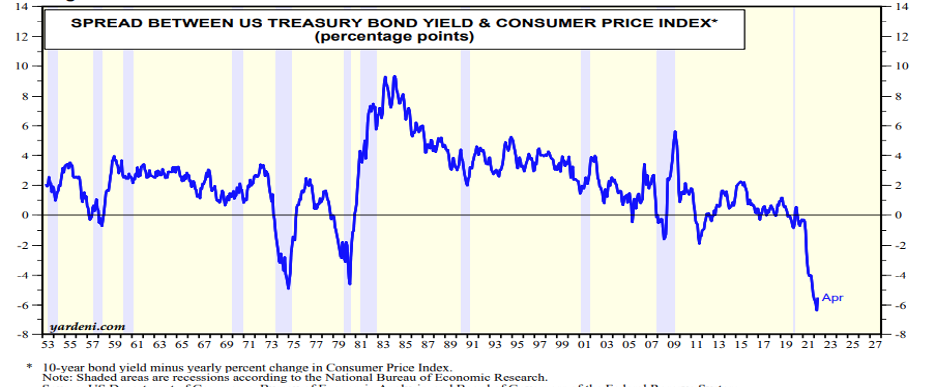
US Interest Rates: The onset of Covid-19 brought the US economy to its knees in early 2020. As a result, US interest rates fell to levels not seen before (1.02% for the 30-year and 0.50% for the 10-year). As we began 2021 expectations were firmly established that rates would have to rise, and that expectation was quickly realized, as the US 30-year Treasury Bond saw its rate rise from 1.66% on the first trading day to 2.46% by early March. With inflation picking up to levels not seen since the early 1980s, most market participants felt that rates would continue to rise throughout the year and into 2022. Well, that didn’t happen, and as of today’s writing, the yield on the US 30-year Treasury sits below 2%. Will it remain there? Unlikely, as the Federal Reserve is expected to raise short rates at least 3 times next year. For pension America, any rise in rates helps reduce the present value of a plan’s liabilities, but it can be nasty for the plan’s fixed-income exposure if the allocation is focused on total return and long maturities.

So, in conclusion, 2021 was a terrific year for pensions. Now what? Given the improved funding and general expectations for more challenging environments for both equity and bond markets, plan sponsors should seriously consider reducing risk. It would be a travesty to waste all this good news by letting asset allocations remain static and subject to the whims of the markets. Use this unique time to reconfigure your fixed-income exposure to better manage assets versus plan liabilities. This reconfiguration will dramatically improve the plan’s liquidity while eliminating interest rate risk for the portion of the portfolio that will now focus on defeasing liabilities. This action will also buy time for the plan’s alpha assets (non-fixed income) to grow unencumbered, as they are no longer a source of liquidity to meet benefits and expenses. Furthermore, the buying of extra time allows markets to recover should we witness another major market correction. As we conclude 2021 we celebrate the great success enjoyed by Pension America. But, now is not the time to sit on one’s laurels.

The Possible Revision is Misplaced

The passage of the American Rescue Plan Act (ARPA) earlier this year was wonderful news for struggling multiemployer pension systems. For those Tier one plans eligible to file for Special Financial Assistance (SFA) immediately (July 2021) it was the life preserver needed to keep these plans afloat. For Tier 2 filers (beginning December 27, 2021) it is an opportunity to reinstate previously cut benefits under MPRA making whole participants who have struggled under the unfair economic burden brought on by sometimes massive reductions. Given these developments, I hesitate to once again raise concerns about the legislation and possible PBGC rule changes.

The PBGC was tasked with providing ARPA implementation rules. They presented their “Interim Final Rules” this past July. Those rules were met with a lot of industry blowback, especially as it related to the discount rate used to value plan liabilities, potential investments in the segregated SFA bucket, and the calculations used to determine the possible SFA allocation in the first place. Both Ron Ryan and I submitted comments to the PBGC during the feedback period. I won’t rehash those now. That said, I am very concerned about one possible revision that I am hearing may be included in the PBGC’s “Final Final Rules” that might be released as soon as January 2022.

The original intent of this legislation was to provide funding that would “ensure” benefits and expenses were paid for 30-years or until the end of the plan year 2051. Based on how the SFA is to be determined that “goal” is nothing more than a pipe dream. Based on our analysis and those of other industry experts, we believe that most plans won’t receive enough SFA funding to be able to protect benefits beyond 8-10 years. The disconnect is startling!

Currently, the SFA assets are only permitted to be invested in investment-grade (IG) bonds, with a maximum of 5% held in high yield securities, but only if they were originally purchased as IG bonds. There is also a provision within the legislation that allows for the PBGC to determine potentially other investments as being acceptable, too. In their Interim Rules, they did not expand the list of permitted investments, but we are hearing rumors that the January Final Rules may include an expanded list. This is where I am most concerned.

If the original intent of the legislation was to “SECURE” the promised benefits, how does expanding the list of acceptable investments to include equities (my guess) do anything to secure those promises? The PBGC was right in limiting the original list of permissible investments to only IG bonds. Bonds are the only asset with a known terminal value and cash flows that have been used for decades to defease liabilities (lottery systems, insurance companies, and yes, pension plans). The SFA assets should be used to defease the plan’s liabilities as far out as possible. This is a “sleep well at night” strategy that ensures those promises will be met for as long as the SFA assets exist. While the segregated SFA portfolio is paying benefits (and expenses), the legacy assets and future contributions can grow unencumbered. It is in this portfolio (alpha/growth) where the list of acceptable investments should be as broad as possible.

One can debate all they want about the current valuations for US equities, but the fact remains that equities are much more volatile than bonds. Given that the SFA assets are likely much smaller than needed to ensure 30-years of benefit payments, why does a plan, their consultant/actuary, or the PBGC want to inject more risk into the process potentially reducing further the timeframe to meet benefits? One doesn’t have to go back too far in history to know that we’ve experienced two shocking market corrections in the last two decades. Do we really want 8-10 years of “guaranteed” benefits to become 4-5 years or worse?

If the PBGC does anything to “improve” the Interim Rules they should address the discount rate embedded in the legislation. It is the use of the 3rd segment (PPA) plus 200 basis points that is having the greatest negative impact on the amount of the SFA to be received by these troubled plans. The use of an appropriate discount rate of all three segments under PPA with no added kicker would dramatically increase the size of the SFA and guarantee many more years of benefit coverage. But we know that the cost of this legislation (roughly $95 billion) is a source of “great concern” despite the government spending trillions of $s on other projects. Expanding the list of permissible investments does very little to secure more benefits, but it would dramatically increase the uncertainty regarding how many years of benefits are actually protected. More to come!

Idaho Signatory Gets Early Gift

Christmas came early for participants in the Idaho Signatory plan. The Pension Benefit Guaranty Corporation (PBGC) announced on Thursday, December 23rd that it had approved the plan application for the Idaho Signatory Employers-Laborers Pension Plan (Idaho Signatory) in Portland, Ore. The plan covers 682 participants in the construction industry and will receive $13.9 million in special financial assistance (SFA), including interest to the expected date of payment to the plan.

The plan, like the other 19 that have filed for the SFA in tier one, was expected to run out of money in 2022. In their announcement, the PBGC indicated that as a result of this grant the benefits paid to participants would average about 15% more than the PBGC “guarantee” had the application been denied and the plan been absorbed by the PBGC’s insurance pool. This accepted application is the second to be approved in the last week. Hopefully, we’ll continue to see grants approved for all the plans filing for this absolutely necessary support.

SFA For Local 138 Approved

In yesterday’s post, we speculated that we might hear something by the end of the day regarding the acceptance or rejection of Local 138’s ARPA application for Special Financial Assistance (SFA). I’m thrilled to report that the PBGC sent out a press release yesterday afternoon announcing that Local 138’s application had been supported. According to the release the “Local 138 Pension Plan based in Baldwin, N.Y., which covers 1,723 participants in the transportation industry, will receive $112.6 million in special financial assistance, including interest to the expected date of payment to the plan.”

As we also mentioned in recent posts, “Final, Final Rules” on how to invest the proceeds have not been announced. In their release, the PBGC stated that they are reviewing the feedback received following the release of the “Interim Final Rules” in July and that the Final Rules “MAY” reflect some of the input. What seems apparent to me is the fact that the discount rate won’t be adjusted given that the SFA that has been approved for Local 138 would reflect the current discount rate of the 3rd Segment (PPA) plus 200 basis points. That is truly unfortunate, as the use of this rate dramatically reduces the potential SFA payment.

Any assistance that these struggling multiemployer plans get is terrific, but the thought that 30-years of future benefit payments would be secured is nothing but a pipe dream at this time. Let’s hope that those plans receiving the SFA can secure the benefit payments for the next 8-10 years, which would buy time for not only the legacy assets to grow unencumbered but perhaps a few tweaks to the current legislation should the PBGC’s “Final Rules” not meaningfully change. The next plan up is Idaho Signatory Employers-Laborers Pension Plan. More to come!

Now How Long Will It Take?

As we recently reported, Local 138’s ARPA application reaches its 120th day under review at the PBGC today (December 21st). No news is good news with regard to this Special Financial Assistance (SFA) application, as the PBGC is required to notify a plan only if the application has been rejected for one of a plethora of reasons. The fact that 138 has not been notified suggests to me that their application has been accepted despite the fact that the PBGC’s website still says that the application is under review. Perhaps will see an update later today.

Now the waiting to receive the SFA funds begins. Unfortunately, I sometimes feel as if the multiemployer pension system is playing a massive game of red light, green light that you and I played as kids, except that there is too much at stake for the participants in these plans. According to the ARPA legislation, the “Special financial assistance issued by the corporation shall be effective on a date determined by the corporation, but no later than 1-year after a plan’s special financial assistance application is approved by the corporation or deemed approved.” Why one year? It doesn’t seem possible that it would take one year from the time that the SFA application has been approved to the point that a single lump-sum payment can be wired to the plan’s custodian.

Here’s my greatest concern: markets (equity) are near or at historic levels. A traditional asset allocation will have significant exposure to equities and equity-like asset classes. Negative cash flow from these Critical and Declining pension systems on a monthly basis is difficult to manage. Not getting the SFA proceeds for a year opens these plans to unnecessary liquidity risk. Why? If SFA assets were received promptly the proceeds would be invested in investment-grade bonds per the legislation’s mandate and the SFA assets would be used to meet the monthly benefit payments. We would prefer that the SFA assets be used to defease (cash flow match or CDI) the current Retired Lives Liability as far out as possible (likely around 8-10 years depending on the plan). This action ensures that the plan has the liquidity necessary to meet those monthly flows without having to force liquidity from the equity managers that might be under stress as the markets turn. Furthermore, should the US equity markets experience another major decline, the availability of SFA assets to meet benefit payments means that the investment horizon has been extended for equities allowing for them to grow unencumbered while allowing for recovery of those potential losses.

There are enough documented issues with regard to this ARPA rescue plan. Imposing unnecessary delays on pension plans that have gotten approval for their SFA applications is just further salt in the wounds inflicted by previous failed attempts at improving the soundness of these struggling multiemployer systems. Get the SFA money to these plans ASAP. They can then secure the promised benefits for at least some period of time despite the fact that the 30-year “guarantee” is nowhere close to being a reality.