There is NO Pivot on the Horizon!

By: Russ Kamp, Managing Director, Ryan ALM, Inc.

Another day of jobs data and another sell-off in the market by participants hoping for some sign that the US Federal Reserve will be forced to pivot away from its crusade to thwart decades-high inflation. Guess what? It isn’t going to happen – sorry. Once again, we’ve had an employment report that came in at roughly forecasted expectations (263k vs. 275k). In the process, the unemployment rate fell from 3.7% to 3.5%. Earlier this week I produced a post titled, “What Has the Fed Accomplished?”, in which I questioned what had changed from last week, month, quarter, or year-to-date, that would have had equity and bond markets rallying significantly to begin this week.

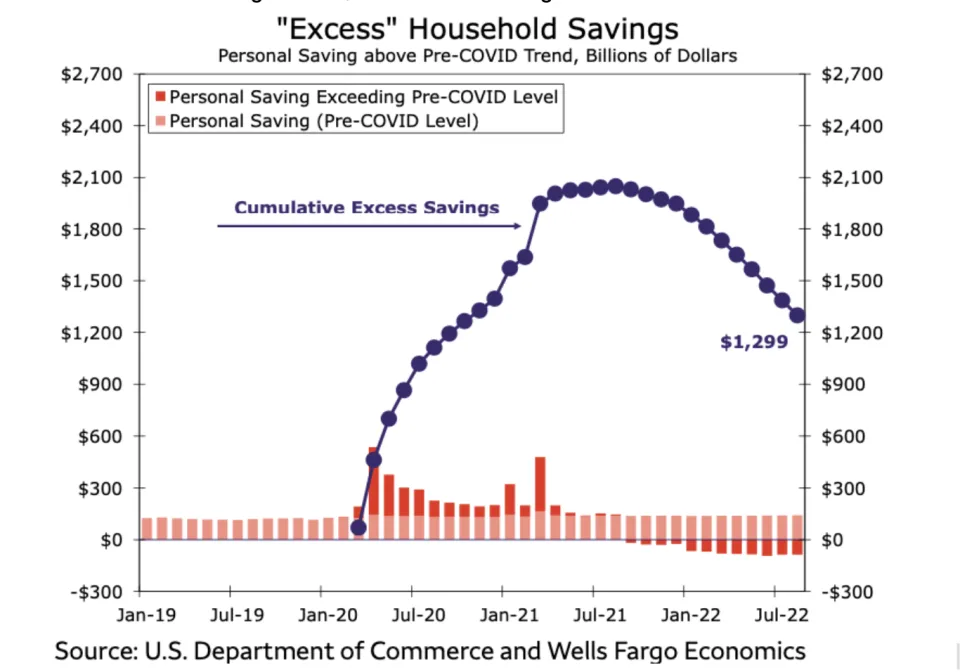
We continue to see a historically strong employment picture in which wages are growing, albeit by a lesser amount than inflation. Furthermore, there is still “excess” savings (estimated at $1.2 trillion) as a result of the incredible stimulus provided during the peak of the Covid-19 pandemic. Many US consumers are flush despite the inflationary impact. We will continue to witness strong demand until the employment picture is significantly altered. That clearly hasn’t happened yet. Yes, initial jobless claims were higher than last week and job openings fell relative to previous releases, but in neither case were they substantial enough to change the minds of Fed governors, who continue to sing from the same hymnal.

If 4.625% is the target for the Fed Fund’s Rate at some point in 2023, there is a lot more pain to be realized in traditional fixed income and equity allocations. Sitting back and letting this scenario unfold is not prudent. Yes, we’ve seen markets come back from the depths before, but in every case during the last four decades, we had an accommodative Fed to help prop up risk assets. They aren’t in a position to do that this time. Convert your current fixed income exposure from a return-seeking mandate to a cash flow matching strategy that will fund promised benefits, improve liquidity, and mitigate interest rate risk for that portion of the account, while buying time for equities and other alpha-generating assets to grow unencumbered. Plan sponsors and their advisors can continue to hope that the Fed was only kidding, or they can act to limit the damage already inflicted in 2022 before it gets much worse as we move into 2023.
The Fed’s Headwind Revisited

By: Russ Kamp, Managing Director, Ryan ALM, Inc.

Despite the recent equity and bond market rally, we believe that the Fed still has its work cut out for them. We published a post last week titled, The Fed’s Headwind? in which I wrote about strong employment and rising sentiment combining to create a substantial headwind for the Fed in trying to combat excessive inflation. Here is a wonderful chart that further supports our contention that demand for goods and services will not be thwarted at this level of interest rates given that the American consumer is still flush.

The consumer is still flush

Nearly $1.3 trillion in excess savings are available to consumers. The Covid windfall peaked at nearly $2.1 trillion in July 2021. Consumption since then has eaten into this windfall but much is left to allocate to further economic activity. Given these surplus savings, strong employment, and rising wages, albeit less than inflation, the Fed will likely have to continue to aggressively elevate interest rates. A late-day rally has US equities rising once more, but bonds are off quite a bit today as yields once again rise. The ADP National Employment Report came in at 208,000 today when forecasters were looking for 200,000. We truly haven’t seen a chink in the employment armor at this time. Perhaps Friday’s US Employment Report will begin to show some weakness. I wouldn’t be surprised if it doesn’t.

A Less Secure Future?

By: Russ Kamp, Managing Director, Ryan ALM, Inc.

I published a post on August 31, 2022, titled, “Let’s Get Realistic“. I provided a bit of a rant regarding the reporting for DC plan participants looking at an account balance of $1,000,000. I indicated that I thought any analysis done with this balance was unrealistic given that the median account balance for 55-64-year-olds according to Vanguard’s annual report was only a little more than $89,000. When applying the “4%” rule, a target percentage for withdrawals that would “ensure” that the participant didn’t exhaust their account balance in retirement, the annual amount to safely withdraw was a whopping $3,560/year. Oh, my.

Well, the news that I’m about to share doesn’t make this scenario any brighter. First, Vanguard has published additional information suggesting that <15% of their 401(k)/IRA participants have an account balance that is >$250,000. At $250,000 the 4% rule would produce an annual distribution of $10,000. That sum isn’t going to provide anyone with a dignified retirement. To make matters worse, recent research produced by Richard Sias and Scott Cederburg, finance professors at the University of Arizona; Michael O’Doherty, a finance professor at the University of Missouri, and Aizhan Anarkulova, a Ph.D. candidate at the University of Arizona, suggests that the 4% rule is really a 1.9% rule! The study is entitled “The Safe Withdrawal Rate: Evidence from a Broad Sample of Developed Markets.”

The implications are extraordinary. Regrettably, they too referenced an account holder with $1,000,000 in retirement assets. Why? Is this chosen threshold to make all of us in the industry feel as if we’ve really helped most people secure a dignified retirement? Let’s play the game. A holder of $1m would see their annual distribution fall from $40,000/year to a meager $19,000. But a more realistic application of the updated 1.9% rule would suggest that the median 55-64-year-old would now get to safely withdraw $1,691/year. Some retirement that will fund!

DC plans have been around for a long time, and many members of the private sector have only had exposure to DC offerings throughout their careers. We can’t use a lack of time in a plan as an excuse anymore. DC plans were intended to be supplemental to DB plans. They aren’t anymore. They are it! This social experiment is failing and those that we are supposed to be serving will suffer the consequences. I don’t know if the right answer for a plan participant is 4%, 1.9%, 6%, etc. I do know that DB plans provide a superior experience for the masses. The failure to maintain DB plans will produce profoundly negative outcomes. I’m not proud of our industry that this is the best we can do! Are you?

What Has the Fed Accomplished?

By: Russ Kamp, Managing Director, Ryan ALM, Inc.

The US equity and bond markets rallied significantly yesterday. Why? What changed from last Friday, last week, last month, last quarter, or year-to-date? The US continues to live with excessive inflation and the US Federal Reserve continues to say that it is committed to raising the Fed Funds Rate until they have accomplished its objective of driving inflation down and creating price stability. They are motivated by not wanting to risk a repeat of the Fed’s two-step in the 1970s!

Inflation will not be contained until demand for goods and services is weakened. Have they impaired the consumer at this point? No, if one looks at the following graph from the Daily Shot.

The US consumer continues to be employed and they are spending what they’ve earned. It certainly doesn’t seem like anything has changed since last week other than the calendar flipped, and we are now in October bringing with it the first day of trading in 2022’s fourth quarter. Federal Reserve Vice Chair Lael Brainard said the “US central bank will need to keep interest rates high for some time to bring inflation down”, even as she acknowledged the need to watch global financial-stability risks from rising borrowing costs.

The global financial markets have benefitted tremendously from the incredible tailwind of accommodative Fed policy for nearly four decades. Have we forgotten that there are risks associated with “investing”? Believing that interest rates and inflation were always going to be low was a critical mistake. We are now paying the piper.

ARPA Update as of September 30, 2022

By: Russ Kamp, Managing Director, Ryan ALM, Inc.

Members of the PBGC have their work cut out for them, as last week was particularly robust in terms of new applications for Special Financial Assistance (SFA) under ARPA. There were nine applications submitted last week, with six of those being initial applications (all Priority Group 1 or 2 members), two were supplemental applications, and the ninth was a revised supplemental submission.

The plans filing applications included the United Furniture Workers Pension Fund A, Plasterers Local 82 Pension Fund, Bakery Drivers Local 550 and Industry Pension Fund, Retirement Benefit Plan of GCIU Detroit Newspaper Union 13N with Detroit Area Newspaper Publishers, Ironworkers Local Union No. 16 Pension Plan, Graphic Communications Union Local 2-C Retirement Benefit Plan, Plasterers and Cement Masons Local No. 94 Pension Fund, Alaska Ironworkers Pension Plan, and the Local Union No. 466 Painters, Decorators and Paperhangers Pension Plan. The supplemental filings are in italics, while the plan submitting a revised supplemental application is highlighted in bold. The total amount of SFA sought is $518 million. The PBGC has 120 days to act on these submissions.

There was only one plan, Local Union No. 466 Painters, Decorators and Paperhangers Pension Plan, that withdrew an application (9/28), but they quickly resubmitted a revised application on 9/30/22. There were no applications approved or denied during the last week. With regard to plans being denied SFA under ARPA, there haven’t been any to date since applications were first filed in July 2021.

I remain concerned that there is a misunderstanding regarding the term return-seeking assets (RSA) for investments within the SFA bucket. As I’ve stated before, investments in investment grade (IG) bonds are return-seeking if they are not used to cash flow match (defease) the pension plans Retired Lives Liability chronologically from the first month’s payment as far out as the allocation lasts. Given the uncertainty in the bond markets because of high inflation, rising rates, and the Fed’s commitment to higher for longer, this misunderstanding could be quite costly. I’ve reached out once again to the PBGC encouraging them to provide clarification. 

We are supportive of the PBGC’s desire to minimize exposure to RSA (33% of the SFA), but given its current interpretation of IG bonds, we remain quite concerned. Generic bond indexes are producing significant negative year-to-date returns. The SFA bucket is a sinking fund and the sequencing of returns is critical to the success of this program. Witness steep drawdowns in the initial years and the SFA could be substantially and negatively impacted. As a reminder, the goal of the legislation is to FUND the promised benefits as far out into the future as possible. Putting all of the SFA into risky strategies does nothing to secure those promises. I’ll keep you informed as to whether or not I hear back from the PBGC.