We can’t Have Social Insecurity

According to a recent study by Nationwide, 49% of adults who have been retired for 10 or more years rely primarily on Social Security for their income, while 43% of recent retirees are in the same boat.  It is great that they have this safety net to fall back on, but the fact that so many of our retirees are so reliant on this benefit is clearly a reflection of the poor state of our retirement industry. An industry where defined benefit pension plans have mostly disappeared within the private sector and one in which folks are forced to depend on their ability to fund, manage, and disburse a retirement plan.

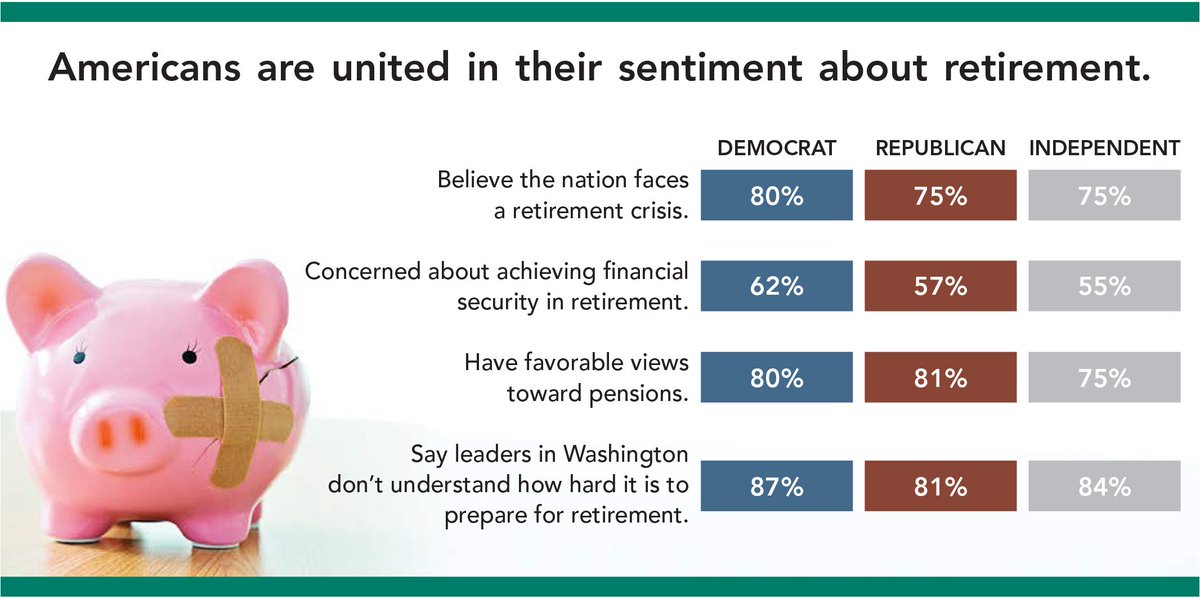
Worse than having so many need this benefit, is the fact that many in Congress, past and present, truly believe that monies “set aside” in the Social Security Trust Fund will not be able to meet future needs (see the chart below) and that significant changes must be brought about to “rescue” this vital program.

By thinking that the U.S. Government will not be able to meet future Social Security payments, Congress has been fretting about how to “save” this benefit for the generations of retirees to come. Some of those considerations include:

  • Reducing benefits (always the most obvious fall-back position)
  • Raising the Social Security tax rate (presently 12.4%, split between employee and employer).
  • Raising the amount of income subject to Social Security tax (capped at $128,400 in 2018).
  • Raising the full retirement age once again.  It is currently either 66 or 67 depending on the year in which you were born.
  • Reducing annual cost-of-living payouts (COLAs). Seniors are already short-changed through the use of CPI-U and not the CPI-E. A further hurdle in getting annual increases might just prove devastating to millions.

Given how critically important Social Security is to the livelihoods of so many Americans, it is almost inconceivable that Congress would act to dramatically alter this benefit. I would like to encourage them instead to spend some time reading Warren Mosler’s brilliantly insightful book, “The 7 Deadly Innocent Frauds of Economic Policy”, which clearly lays out the case that the U.S. Government can always meet its debt obligations, including Social Security.

As a reminder, the U.S. enjoys the benefits of having a fiat currency.  The potential impact from spending what is necessary to meet future Social Security needs is to create demand for goods and services that exceed our country’s ability to meet that demand.  Currently, that is not an issue as we have an abundant and underutilized capacity. Furthermore, and according to Mosler, “we know that the government neither has nor doesn’t have dollars. It spends by changing numbers up in our bank accounts and taxes by changing numbers down.”

Lastly, we have the capability and means to improve our retirement industry, and therefore the lives of our future retirees. Let’s challenge ourselves to look beyond the status quo before a greater share of our population is primarily relying on the Social Security system during their “golden” years!

Degree Inflation By Corporate America?

The U.S. economy would seem to be on a good footing based on an unemployment rate of 3.7%, which represents the lowest figure since December 1969.  In addition, there were 7 million job openings as of September 30, 2018, and “only” 6.8 million officially unemployed.  However, there seems to be a trend, developed during the last decade or so, in which Corporate America is requiring a college degree for jobs that have historically not needed one.

According to Joseph Fuller, Forbes, this “degree inflation,” was predicated “on the belief that these college-educated employees would be smarter, more productive, and more engaged than workers without a degree.” But, only about one-third of the US adult population has attained a four-year college degree. According to Mr. Fuller, “the result is a misalignment between supply and demand for these kinds of jobs.”

Furthermore, studies have shown that these degree-holders doing jobs that would ordinarily only require a high school degree are not performing at a higher level. Worse, they tend to be less engaged and have higher turnover rates. By requiring a college degree, companies are holding back many working-Americans from achieving a career path to a better standard of living.

Thinking that the only way to achieve future success is to attain a college degree, many high school graduates are going to college and incurring massive educational expenses when the job that they ultimately occupy didn’t need a degree at all.  There is a correlation to the tremendous expansion in the use of student loans ($1.5 trillion in debt) that we’ve witnessed since 2006.

Today, we have more than 40 million Americans with student loans and those outstanding balances have more than doubled to roughly $34,900 per student in just the last 12 years. Worse, we now have more than 11.5% of outstanding student loan debt that is 90-days or more dilinquent.

The great recession is likely to blame for this unfortunate trend, as recent college graduates during that time were happy to get any job so that they could actually begin to repay their student loan debt.  Taking any job, especially one in which you are over-qualified, keeps others out of the workforce and wage growth lower than we should be witnessing with these levels of unemployment.

Lastly, the impact from these trends has forced many younger Americans to remain at home with relatives. We have the greatest percentage of 18-34 year-olds living at home or with other family than we’ve ever had.  This has a profound impact on the economy.  This trend will only be reversed if Corporate America would once again require only a high school degree for jobs that have historically only needed one.

A Very Real and Painful Reality

It is truly unbelievable that the Joint Select Committee failed to produce a viable piece of legislation to protect the pensions for millions of Americans in Multiemployer pension systems by their self-imposed deadline (November 30th). I know that they’ve announced that they will continue talking, but talk is cheap, and as they play their collective fiddle, many Americans are seeing their financial futures go up in flames.

You may recall that earlier this year we wrote a post titled, “Let’s Focus On Carol” (8/22/18).  Her story had been shared with me to highlight the potential impact to retirees who found themselves in struggling (failing) pension plans. Under MPRA, many plans have been seeking benefit cuts and more than a handful have been granted “relief”. Well, it is certainly no relief to the pensioners who are seeing their futures darkened.

Carol has shared with me an update on her situation.

“Well, I just got the letter from the PBGC confirming the cuts. It seems that between transferring the “original plan” to a new “successor plan” and taking 61% of my pension and a % from other retirees, the original plan will avoid running out of money in the future. So, on January 1, 2019, instead of my regular pre-taxed check of $2,249.00, I will receive a “new” pre-taxed check of $889.14. The way the letter is written, it almost sounds as if we should be happy that they found a way to keep Local 805 afloat. I am numb…. can’t even function. How could the government approve these cuts knowing that by doing so, they are putting people out on the streets? A cut of $20.00 a month is one thing, but cutting $1,359.86 from my income every single month will put me in an early grave (my emphasis). I feel like I’m living a nightmare….Is there any help for me after January 1st when the first cut comes?”

It truly is incredible (inconceivable?) that any government agency would permit the slashing of benefits to our retirees of this magnitude. Don’t they get that these individuals won’t have any recourse but to fall onto the social safety net, which they would absolutely prefer not to do? Furthermore, don’t they realize the potential impact on our economy from the lack of spending that will result from these terrible cuts?

Lastly, the draft legislation that has been floated calls for as much as $3 billion per year going to the PBGC to “sure up” this insurance fund and to meet future calls on this capital. If protecting the taxpayer was the rationale to not going forward with the Butch Lewis Act, how is a direct payment to the PBGC better than a 30-year loan to these struggling pension plans that would have protected the benefits for the pensioners in the critical and declining systems while extending the life of these plans? It certainly seems to me that loans totaling $30-$40 billion paid back in 30 years is far superior then paying the PBGC $3 billion per year with no cap on the number of years.


The Non-recovery For Most

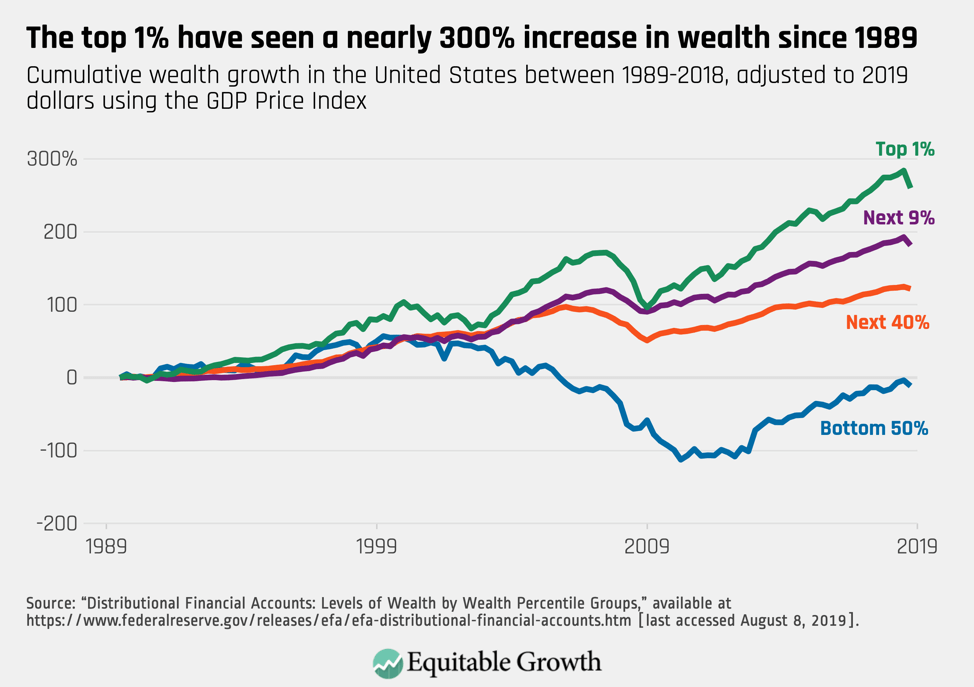
Working American Families are struggling in this economic environment. The lack of wealth and income growth prevents these families from buying homes in good neighborhoods with superior educational systems, becoming mobile in pursuit of new opportunities, starting a business, saving for retirement, providing their children with educational opportunities, and paying for the emergency that never occurs at an opportune time.

It is truly shocking how the median family has seen their wealth collapse since the great financial crisis (GFC).  As the chart below highlights, the median family’s wealth is 40% lower as of 2016 than it was in 2007 (using 2016’s $s). One of the primary reasons is the changing labor force dynamics where incomes are less stable as hours worked become more volatile.

The top 10% of income earners in 2016 controlled nearly 70% of all the wealth in the U.S., which is up substantially since 1989.  Furthermore, the share of families with no or negative wealth has climbed 50% (14.9% of Americans) since the GFC. This disparity is manifesting in many different ways, including stock and home ownership, where the top 10% of earners own 90% of the stock, while home ownership has fallen nationally to only about 62%, which is down from more than 68% before the last recession.

This unfortunate and unacceptable situation will likely continue to impact more and more Americans, who are being asked to fund more of their retirement and healthcare in an environment of lower wage growth and less stable incomes.

Not For The Faint Of Heart

The name of the game for most plan sponsors, especially those representing public and multiemployer pension systems, is to beat the return on asset assumption (ROA).  As regular readers of this blog know, we espouse a different view that would suggest that the primary objective when managing a DB plan should be to improve the funded status while meeting the promise (liability) at the lowest cost and least risk.

For plan sponsors with more than a little experience, the decade of the ’90s was a magnificent period for return seekers. The decade of the ’00s – not so much!  However, the last 10+ years bull market in U.S. equities has made up for many sins from earlier this century, but unfortunately, plan funded status hasn’t dramatically improved and contribution expense certainly hasn’t been reigned in.

Well, if your focus continues to be on return and not cost, the next 10 years may be as ugly, if not worse, than the early 2000s provided to investors. The following is a note that I saw on the subject:

Jack Bogle, the founder of Vanguard, is a legendary name is investing. Not only did he found and grow one of the largest asset managers in the world, but he has a habit of being right when he predicts returns. Well, he has just made another prediction, and unfortunately it is not one that investors will like. He thinks returns over the next decade are going to lag their historical levels badly. His forecast is that investors can expect a 1.75% net return with a 50%/50% stock-bond portfolio over the next decade.

As I explained to a plan sponsor acquaintance this morning, the possibility of only getting a 1.75% annualized return would send most people running for the hills or worse, trying to inject more risk into their asset allocation process with the hope of driving greater returns.  But, the 1.75% decade-long return may actually look okay relative to liability growth if U.S. interest rates rise meaningfully during this period. Pension plan liability “growth” could actually be quite negative. However, in order to monitor that situation one can’t continue to only use GASB accounting (use of ROA to discount liabilities) to value their liabilities. A true mark-to-market valuation must be done.


No Action Taken By The JSC – Yet

Senators Say Meaningful Progress Has Been Made Toward a Bipartisan Proposal and Work will Continue Until Job is Done

WASHINGTON, D.C. Today, U.S. Senators Rob Portman (R-OH) and Sherrod Brown (D-OH) released the following statements as they continue working together to find a solution to the pension crisis threatening 1.3 million Americans, 60,000 Ohioans, and thousands of small businesses around the country. Portman and Brown are both members of the House and Senate Joint Select Committee on Pensions. When the committee was created, it was expected members would vote on a package by November 30th. The senators say that while they have made significant progress and a bipartisan solution is attainable, more time is needed. So the committee will continue its work. In a joint statement with Brown, Committee Co-Chairman Orrin Hatch (R-UT) made the same commitment to continue working with Portman, Brown and other members of the committee past November.

“We have made important progress towards reaching an agreement to help resolve this multiemployer pension crisis and these efforts must continue until we complete our work,” said Portman. “Without action, the multiemployer pension system will collapse, leaving many Ohio workers and retirees impoverished and forcing many employers to go bankrupt.  That’s an unacceptable outcome, and I will continue to work with my bipartisan colleagues until we solve this pension crisis once and for all.” 

“Ohio workers, retirees, businesses and taxpayers are counting on Congress to solve this crisis and we will not stop working until the job is done,” Brown said. “Working together, Rob and I have made significant progress on the committee and we know that with more time a bipartisan agreement is achievable. We are grateful to Ohio workers, retirees and businesses whose tireless efforts have brought us this far and we are committed to continuing our work until Congress passes the solution Ohioans deserve.”

Extremely Grim and Troubling

The Center for Disease Control and Prevention has reported that the U.S. has suffered a declining life expectancy again, and it marks three consecutive years for this terrible trend. Life expectancy in the U.S. has fallen 0.3 years since 2014, which is incredible given the trend to longer lives witnessed by most developed nations.  As a point of comparison, Japan leads in life expectancy at slightly more than 84 years. The U.S. has fallen to 29th place in the world rankings.

According to the CDC&P and the WSJ, which reported on the release of this data, the main culprits are suicides and overdoses (deaths from synthetic opioids rose 45% in 2017), both impacted by the state of mind of many Americans (despair).  Incredibly, this is occurring during a supposed period of economic expansion and prosperity, but we all know that the economic benefits have not trickled down to many.   In fact, suicides have increased by more than 33% since 1999. Furthermore, the data suggest that significant differences exist based on where one lives, with rural Americans suffering to a far greater extent than those living in cities.

There is some hope expressed in the data that opioid and suicide deaths may be plateauing, but the evaluation period (first few months of 2018) is certainly not long enough to get one too excited.  Furthermore, despite advances in mental healthcare, drug treatment, improved opioid prescriptions monitoring, and the greater availability of medication to reverse opioid overdoses, root causes for this heightened despair must be addressed.

The U.S. labor force has undergone significant change with a greater emphasis being placed on as needed employment. In addition, we do have a significant percentage of our workforce that are underemployed and for those, not in the workforce, a significant mismatch exists between desired skills and current capability, with little ability to retrain many of our more mature workers. It is a dangerous combination for many of our displaced workers.

There really is no excuse that the United States with its abundant wealth and superior medical capability should have a declining life expectancy.  None!

Boomers Retiring Later

As I’ve mentioned many times, I am a huge fan of the work being done by the folks at the Center for Retirement Research at Boston College.  Their reports and blog posts are always insightful and tremendously helpful to me in my work.  However, the most recent one has me scratching my head a bit as the title is “Boomers Find Reason To Retire Later”, and the gist of the post suggests that this is a good thing primarily because remaining in the labor force should improve one’s retirement security – work longer, have to save less.

They go on to suggest that there are many drivers, including Social Security changes, the demise of DB plans and greater reliance on defined contribution programs, the loss of post healthcare retirement benefits, etc.  I don’t know about you, but those seem to be negative developments that are forcing workers to remain in the labor force longer than they might want to.

Fine, the shift to more of a service economy, which they reference, from one heavily dependent on manufacturing does mean that one could conceivably do the work for longer, but we’ve read studies suggesting that more than 1/3 of Americans over 65 would like to remain actively engaged, but that only about 14% are still working.  In addition, they cite the fact that there are many more college graduates today than years ago and that those with college degrees tend to stay in the workforce longer.  Could it be that the tremendous growth in student loan debt is forcing this behavior, as the ability to set aside assets for retirement is postponed until much later as student loan debt is serviced?  This is particularly relevant especially for those dependent solely on retirement benefits from a DC plan?

Lastly, they highlight the effect of more women being in the labor force, and that married couples tend to retire at the roughly the same time.  Given that the “average” couple has a male partner that is 3 years older than their wife, this helps with retirement, too.  However, marriage trends have turned negative in the U.S. with only about 50% of adults married, which is down from a peak of 72.4% in 1960 and off by about 9% in the last decade.

I believe that Americans are remaining in the workforce longer (when they have control of that decision) because of significant changes that make retiring earlier almost a thing of the past. The demise of DB plans and loss of post healthcare benefits has played a significant role. Social Security changes for those born after 1959 are also impacting the decision to exit the workforce.  Furthermore, the explosion in student loans and use of 401(k)-type plans will continue to drive this trend upward.  Problem: our 62.9% labor participation rate is down substantially from 2007 and may not grow much in the future due to numerous factors including the greater impact from technology.


Caveat Emptor – Revisited

Regular readers of the KCS blog may recall a post that we produced on July 30, 2018, regarding cryptocurrencies. We had discovered a chart that highlighted the fact that most cryptos had failed as of that date, and we were concerned based on comments that we had heard at various industry conferences that DB plan sponsors and their consultants might be contemplating a potential investment into one or more of these instruments.  Let’s hope that they didn’t!

Earlier today, Bitcoin’s price was at $3,729 down from $6,404 one month ago and more than 80% off the high established on December 16, 2017 ($19,650) – oh, my. Based on the chart that we presented, Bitcoin was one of the few “success” stories, while more than 1,000 other cryptos had failed already.

In a challenging environment for most asset classes and products, it isn’t surprising that gimmicky investments, such as cryptos, capture the imagination.  However, as we’ve mentioned many times, the focus should be on the promise that was made to participants and use that insight to drive asset allocation and investment structure decisions. You’ll get a very different answer to the difficult question of how do I secure those liabilities.

Happy Thanksgiving!

I want to wish you and yours a Happy Thanksgiving holiday from my family and me. May the beginning of this holiday season be truly memorable!

089fe4564a32b38edd44b8f5f50565cb-xlarge

We are blessed in so many ways, but there are many among us who are in need of assistance at this time. During this holiday season, let us all strive to do just a little more to help our family members, friends, and neighbors during their time of need.

In 1863, President Abraham Lincoln proclaimed that a day should be set aside to reflect on all our blessings. Lincoln saw reason for thanks despite trying times (the country was in the grip of the Civil War). Given the trying times that many in our country have faced this year (fires, floods, hurricanes, poverty, etc.), a day such as Thanksgiving is critically important for all of us.