ARPA – “The Almost Rescue Plan”

The Pension Benefit Guaranty Corporation (PBGC) released their long-awaited American Rescue Plan Act (ARPA) guidelines. They had 120 days from the time that the legislation was signed by President Biden to inform the public on how this legislation would be implemented. I’d give them a C-, at best!

Importantly, retirees who had seen their benefits slashed under MPRA will FINALLY be made whole (18 multiemployer plans). I still shake my head at the fact that our “leaders” had passed legislation in 2014 that permitted promised (earned) benefits to be taken away from retirees, and in many cases after they had already retired through no fault of their own. Thankfully, help is now arriving for these retirees, but it could be a ways off based on the PBGC’s priority filing schedule. According to PBGC’s release, participants in these plans can have their benefits restored prior to their priority group (Group 2) being able to submit an application, but they must file with the US Treasury Department to accomplish this objective. Make up payments for those that had received cuts can only be made after their pension fund submits an application and receives Special Financial Assistance (SFA). This could take some time.

Where I take great umbrage is in the PBGC’s interpretation of how the SFA should be calculated. Instead of taking a present value calculation of what it would take to secure the next 30-years of promised benefits (until 2051), the PBGC has decided that plans should include current assets, future contributions, and the earnings from both before determining the “gap” that exists in order to meet the 30-years of benefit payments. What this does is effectively doom those plans that are receiving the SFA to insolvency in 2051, as NOTHING will be left to meet benefit payments in 2052 and beyond. Again, great that current retirees are going to be made whole, but it does nothing to secure the benefits of those younger workers that will be just starting a career and contributing to their union’s plan with the hope that they too will have a retirement benefit waiting for them when they finally retire. Can you imagine making a mortgage payment only to have someone else live in your house?

It gets worse. The discount rate used in the legislation does not reflect reality. The legislation calls for the PPA’s 3rd segment rate plus 200 bps (5.5% currently) instead of PPA’s 1st, 2nd, and 3rd rates weighted to the projected benefit payments that will be made during the next 30 years. This higher discount rate will significantly reduce the SFA so that the SFA will likely fall about 40% short of what is truly needed to ensure that the promised benefits are there until 2051.

According to the PBGC they were not able to address this discount rate because it was specifically stated in the legislation. Where are the pension experts in the room when you need them? Furthermore, the PBGC has reiterated that the SFA assets received should be segregated from current assets. The SFA assets must be invested in investment grade (IG) bonds with the exception of a maximum 5% that could be held in High Yield instruments that may have started out as IG but suffered downgrades since being purchased. The yield differential between the discount rate and the potential return on the SFA assets is what creates that additional roughly 40% shortfall. Again, good luck!

It appears to me that the legislation was passed with a targeted dollar amount as a goal, but that fact wasn’t disclosed. The legislation scored by OMB had an $86 billion price tag. According to PBGC’s Friday release, the “price tag” is estimated at $94 billion today. If the discount rate and SFA calculations had been adjusted as I suggest, the price tag would have been far greater. Instead of doing the right thing to secure the benefits for retirees without destroying these plans in the future, they chose to be penny wise and pound foolish.

The social safety net is going to be a lot more expensive when current employees see their pension plans collapse in less than 30-years. What appeared to be landmark legislation when it was first signed in March is now just another “Almost Rescue Plan Act”. When will we finally do right by the American worker?

After a brief respite…

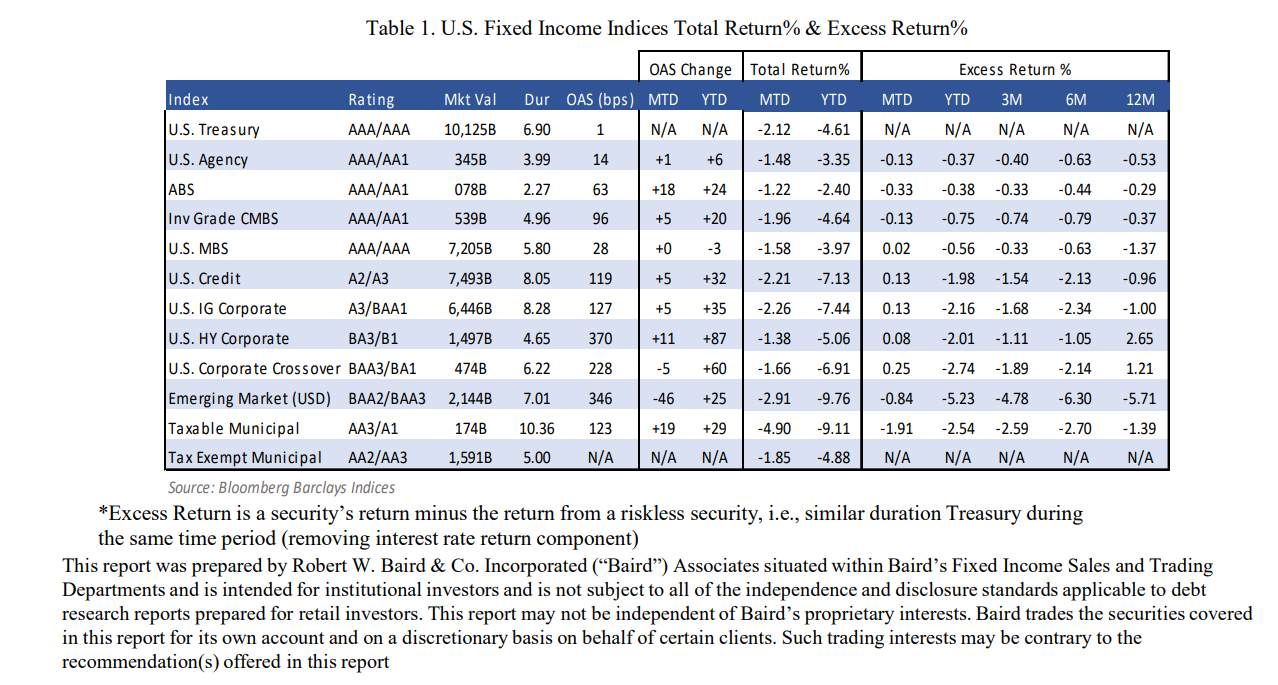
With most of the pension world expecting US interest rates to rise, the opposite has occurred and rather dramatically. US 30-year Treasury bond yields have collapsed 51 bps since May 12th, while the US 10-year Treasury note yield is down 41 bps during the same time frame. Since most DB pension plans, especially in the public sector, have liabilities with 10-15 year durations the impact on liabilities and funded ratios has been significant. For instance, a -40 bps move on 10-year duration liabilities = 4% growth, while a similar interest rate change on a 15-year duration liability = 6% growth. The improved funded status that we witnessed earlier this year may prove to be an illusion if asset levels follow a similar path to bond yields. Why subject plan assets to the whims of the markets? Cash flow match a portion of your assets (perhaps your bond allocation) to your plan’s liabilities and secure the promised benefits while eliminating interest rate risk for that portion of the liabilities that are defeased.

Creating more volatility

An interesting analysis by Deutsche Bank suggests that public pension systems should have rebalanced a greater sum of plan assets to fixed income following the terrific first quarter performance provided by US equity markets. DB’s analysis found that public pension system’s added only $3.6 billion to fixed income as opposed to >$130 billion had they maintained a static allocation from the previous quarter. Clearly, this hesitancy to rebalance has helped in the short-term as equities continued to advance, but what does this suggest for the future? We’ve been taught that buying low and selling high is a winning strategy. We also know that trying to time markets is also incredibly difficult, which is why asset allocation targets and ranges around those targets have been established as a tried and true discipline.

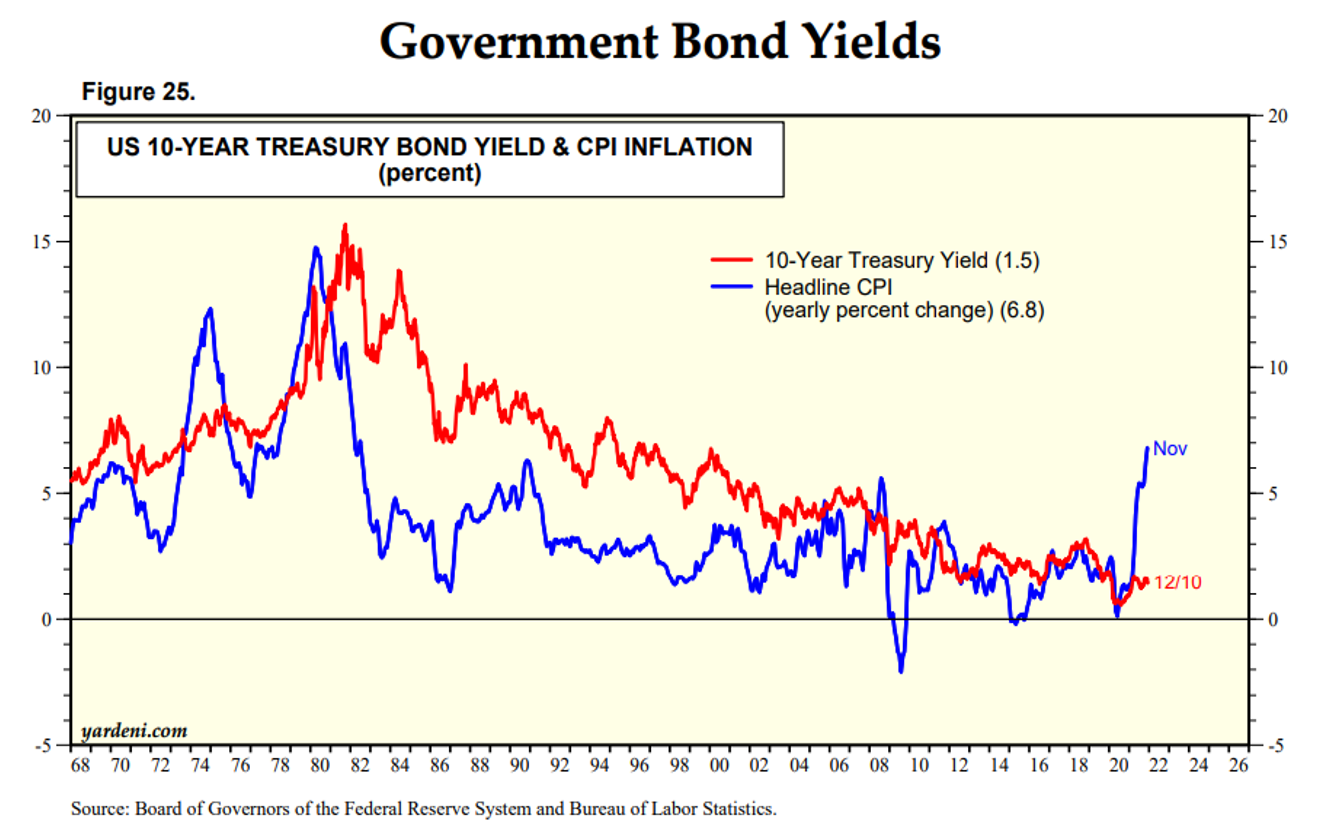
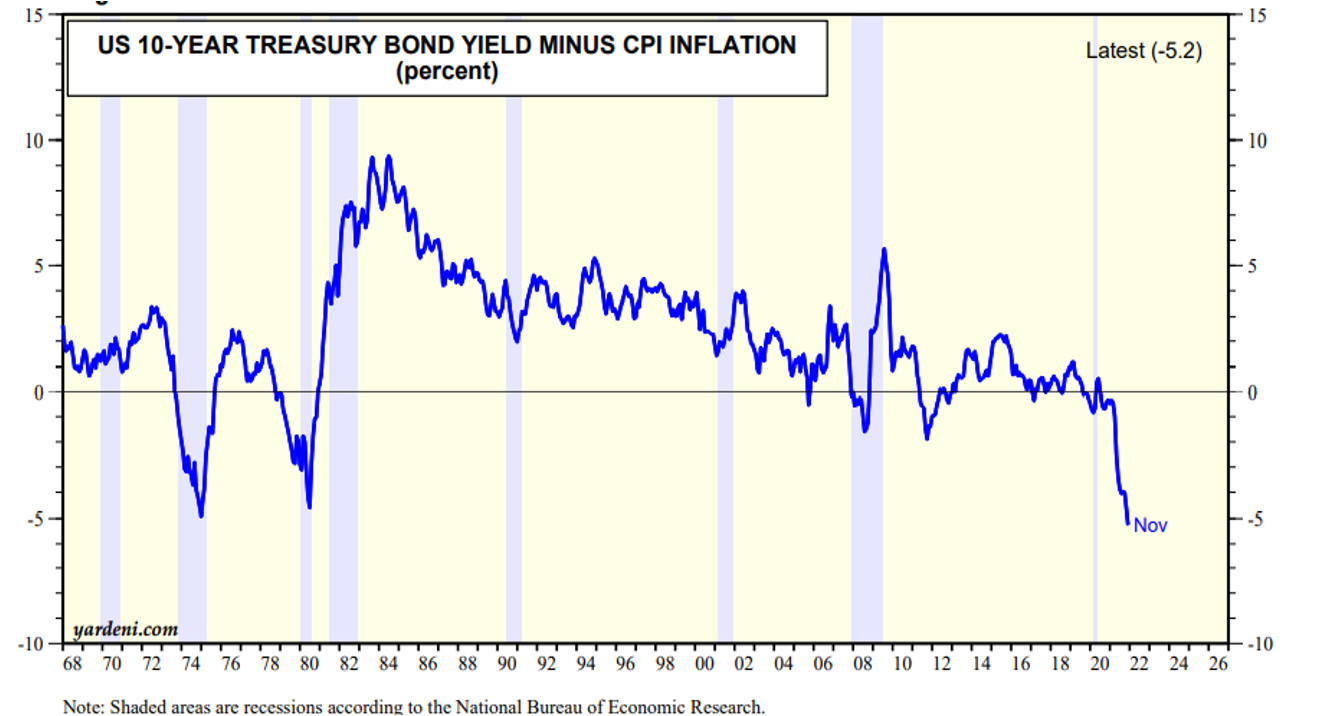
There are numerous forces at work impacting this lack of an asset allocation action, including an expectation that the US would experience rising interest rates due to escalating inflationary concerns. A move upward in rates would likely lead to a very challenging environment for the typical bond manager. There is also the continuing focus on achieving the return on asset objective (ROA) that drives most asset allocation decisions. However, markets don’t always behave as we might expect. Instead of rising, US interest rates have resumed their march lower, with both the US 10-year Treasury note and US 30-year Treasury bond hitting interest rate levels not seen since early to mid-February.

By continuing to expose these pension systems to greater equity exposure than long-term asset allocation frameworks have determined is appropriate injects more risk into these plans. I don’t know how equities will perform during the next 6-months to a year nor do I have any clue as to where interest rates will go. Unless one is truly confident in one’s ability to forecast these markets, prudence suggests following the course that has been determined through previous analysis. We think that taking equity risk off the table at this time makes sense. Furthermore, we’d suggest using bonds for their cash flows by matching the plan’s liabilities, which provides the plan with a number of benefits that have been discussed in previous posts.

A guide for single-employer plans

The American Rescue Plan Act (ARPA) has brought many benefits to our retirement industry. I’ve been mostly focused on the significant impact that ARPA is likely to have on multiemployer plans, but the benefits for single-employer plans are vast, as well. Specifically, minimum contributions are likely to be lower and amortization periods start anew and are extended from 7 to 15 years.

Zorast Wadia, Principal, Consulting Actuary, Milliman, has produced a wonderful article on this subject. His piece “Defined Benefit Pension Funding Resurrection” covers important topics such as contributions, amortization periods, PBGC premiums, asset allocation, de-risking strategies, benefits, taxes, etc. With regard to asset allocation, Zorast believes that “it is a good idea for plan sponsors to revisit their plan asset allocations to make sure their funding and investment policies are in sync.” He further suggests that “with funded ratios immediately improving under ARPA and minimum required contributions significantly muted over the next several years, shifting asset allocations from equities into fixed income seems like a viable alternative”. We absolutely agree, especially given current valuations for US equities.

Defined benefit plans are the key to a successful retirement. Any legislation designed to reduce the cost of providing this important benefit, while possibly extending their use, is welcomed.

Challenging the Status Quo

The following is an excerpt taken from Thomas Jefferson’s letter to James Madison. It reads, “I hold it that a little rebellion now and then is a good thing, and as necessary in the political world as storms in the physical…An observation of this truth should render honest republican governors so mild in their punishment of rebellions as not to discourage them too much. It is a medicine necessary for the sound health of government.” As we get set to celebrate our nation’s rebellion this Fourth of July, these words remind me how important it is in our pension/investment industry to challenge the status quo.

We’ve witnessed a significant decline in the use of defined benefit plans. Is this a good thing? I’ve written quite often that I believe that it isn’t, as we are asking untrained individuals to fund, manage, and then disburse a retirement benefit through a defined contribution-type fund with little know-how on how to accomplish this task. There are many reasons why DB plans have lost favor with pension sponsors, despite most American workers favoring them. One of the primary reasons has been the volatility in funded status and contribution expenses, which have resembled a ride on a roller-coaster. I believe that this has been brought about by the continuing focus on “achieving” a return on asset assumption (ROA) as opposed to the promise made to the plan participant (secure plan benefits or liabilities)… this is the reason that the plan exists in the first place.

Fortunately, despite this funding issue for many public fund plans they continue to provide these important retirement vehicles to their workforce. But will they be able to continue? Perhaps, but a change in how they are managed must be implemented. The “rebellion” that I encourage starts with a return to pension basics. It calls for a commitment on the part of everyone involved in pension management to focus first and foremost on the plan’s funded ratio (assets/liabilities) and funded status (assets – liabilities) to drive asset allocation and investment structure decisions.

Since every plan’s liabilities are unique, no generic index is appropriate for this evaluation. Each plan must have a routine (quarterly) review of how assets are performing relative to their liabilities. Once the plan’s liabilities and cash flows have been modeled the allocation of assets can be done and monitored. But unlike today’s strategy of having asset allocation focus on the ROA we recommend that the plan’s assets be bifurcated into beta and alpha buckets. The beta portfolio will consist of fixed income assets whose objective is to cash flow match (defease) and fund the plan’s benefit chronologically in a cost efficient manner with acceptable risk. The alpha bucket (the growth portfolio) will be invested in a variety of investment options that can now grow unencumbered since they are no longer a source of liquidity.

The defeasing of assets to liabilities is a strategy currently used by insurance companies and lottery systems. More importantly, it is how DB pension systems were run prior to the adoption of a return-oriented focus. The time is now to return to pension basics. To paraphrase Jefferson, a little rebellion now and then is a good thing, and as necessary in the investment industry as storms in the physical! Are you ready to join us in this quest?

Because They Can’t Afford to Wait!

I’ve been blessed to be in the pension/investment industry for 40 years, and I truly believe that we possess tremendous responsibility to those that we serve – mainly the plan participant. But I’m often frustrated by the fact those that we have been asked to serve are not reaping the benefits that they were promised or deserve. I recently came across an article that touched upon Social Security. The gist of article pertained to a survey conducted by a major investment management organization whose primary focus was on when eligible recipients were likely to begin to claim the SS benefit (age 62-70). According to the survey, only 13% of those >60-years-old who haven’t begun collecting their benefit said that they would wait until age 70 to maximize their benefit. Of those currently receiving a SS check, only 5% had waited to age 70.

Here’s the issue: “Social security is the primary source of income for the majority of Americans we surveyed, which is why we were surprised to see so many deciding to take early SS payments at age 62, sacrificing their full benefits by tapping them early”. “It might come down to not being able to afford to wait”. Do you think? From the same survey: “for 52% of non-retired Americans and 58% of those retired, Social Security will be the primary source of income in retirement”. As a reminder, the average monthly SS benefit is only $1,543/month. By taking it early at age 62, the beneficiary is forfeiting 30% of their possible benefit had they waited to full retirement age. When asked, 64% of those not retired and 62% of those that have retired said that benefits wouldn’t be enough to live on.”

Is the fact that a majority of Americans will be forced to live primarily on SS benefits something for us as a retirement industry to be proud? The demise of defined benefit plans and the rise of defined contribution plans in their stead is not helping matters. This substitution is creating an untenable situation for many Americans that are now asked to fund, manage, and then disburse a benefit with little experience and knowledge to do so. Unfortunately, DC offerings are proving to be glorified savings accounts for many Americans. They are often used to bridge periods of unemployment until a new job is found or retirement is thrust upon them. The gap between employment and the ability to claim SS can be years. Assets that were supposed to be used for “retirement” are often exhausted during this process. Regrettably, most American workers haven’t come close to saving enough to weather such a storm let alone have a dignified retirement. The fact that this survey even mentioned that taking SS benefits prematurely might come down to affordability speaks to the dramatic lack of understanding as to what is truly occurring in our country.

Many people in our industry have done just fine from a financial perspective. Why is it that the people we are supposed to be serving haven’t? Why do we have a majority of Americans living on very meager SS benefits? I find this shameful!

Pension Oversight Boards

Pension Oversight Boards are getting some press recently, and in many cases the coverage is pretty negative. Many US states have adopted independent oversight boards to monitor the activities of state-sponsored defined benefit pension systems. As an example, Ohio has what is known as the Ohio Retirement Study Council (ORSC) and according to their website, “the general purpose of the Ohio Retirement Study Council is to provide legislative oversight as well as advise and inform the state legislature on all matters relating to the benefits, funding, investment, and administration of the five state retirement systems in Ohio.” That is a lot of responsibility, especially given the fact that the 5 DB plans that they oversee have combined assets >$200 billion and more than 2 million participants. So, how do they do that?

I’m not looking to pick on any one oversight board because these committees have great responsibility and, in many cases, lack the tools necessary to provide appropriate oversight. That said, I think that generally their focus is misplaced. In the case of Ohio, each fund has a substantial team supported by consultants, actuaries, investment managers, custodians, etc. These paid professionals should be permitted to do their job. If they fail, it should be up to the individual boards to act. There is no way that an oversight board has the knowledge or time to monitor investment decisions originating in each of these funds.

The most important job for the oversight board should be to make certain that the plan’s liabilities (the promise to participants) are in focus. At the end of the day this is the only reason why a pension plan exists. They should insist that these plans are run in such a way that the promised benefits are secured at both reasonable cost and risk. In order to monitor these funds appropriately, the oversight boards should get a quarterly update on how each fund’s assets are performing relative to the plan’s liabilities (funded status). Each liability stream is unique to that particular fund and it is imperative that a custom liability index (CLI) is produced on a regular basis (quarterly), as liabilities are bond-like in nature and move with changes in the interest rate environment. The CLI should value the liabilities at both the ROA and ASC 715 (AA corporate yield curve) discount rates so the oversight board can see the difference between actuarial valuation and economic valuation of the funded status. It should be noted here that Moody’s has chosen the ASC 715 discount rates to assess credit ratings.  As a reminder, asset allocation should be driven by the funded status and not the return on assets assumption (ROA).

In addition, the oversight committee should ensure that the annual required contribution is being paid in full. Why have an actuary go through this annual exercise only to have someone decide not to make the ARC? Public pension systems that are struggling with poor funded status can often attribute their issues to a lack of discipline in making the required contributions. By habitually underfunding their plans, they force the assets to try to work harder. This ensures greater risk without the promise of greater return.

I believe that independent oversight boards are an essential part of our defined benefit landscape, but until they focus their attention on liabilities and cash flows, they are not going to be as effective as they could be.

Recognizing Reality is a Good Thing!

Headline: Kentucky Teachers Retirement System adds $3 billion in unfunded liabilities to their books basically overnight. In actuality, they really didn’t. What they did do was to reduce a high discount of 7.5% to a more reasonable assumption of 7.1%. Do we hear 6.5%? In addition, they adjusted the assumptions for annual salary increases from 3.5% to 2.75% and extended longevity for the average participant. These are all very reasonable. Yes, on paper it looks as if Kentucky’s taxpayers are on the hook for more (roughly $200 million per year), but in actuality, they were already on the hook for much more than that! These moves are just more in line with reality! Good for them. The fact that accounting rules and actuarial practices allow public pension plans to discount their liabilities at the return on asset assumption (ROA) distorts economic reality, especially in an historically low interest rate environment. Economic reality and greater transparency would actually reveal a funded status that is not 54%, but something dramatically lower.

The argument in using the ROA to discount a plan’s liabilities has been that public pension plans are perpetual – baloney! We’ve seen a number of situations over the years that had public fund DB plans being shuttered and hybrid or DC plans being offered in their place to new employees. Furthermore, even without freezing and terminating, the use of multiple tiers reflects the reality that the original promise wasn’t going to be met for the entirety of the plan’s participants. Adopting a truer, more realistic, discount rate for the pricing of liabilities will help keep these plans better funded, as annual contributions will be greater. Please note that corporate pensions use market value discount rates and are much better funded. It also means that asset allocations can be less risky. Given current extreme valuations for both equities and bonds, this might just be a very good time to act. We congratulate KY on taking these steps and hope that other public pension systems follow a similar course.

When will they become a focus?

Summer is here. It officially started at 11:30 pm (DST) on Sunday, June 20th (Happy Father’s Day). Maybe that is why I’m feeling restless today and perhaps a little rambunctious. That said, I need to get something off my chest! I recently had the opportunity to view a quarterly report for a major public pension system. The report by the asset consultant was massive (thank God I didn’t drop it on my foot!), as it contained 282 pages and every conceivable metric to evaluate an investment manager’s performance. Despite the 282 pages, there was not a single reference to the pension plan’s liabilities – not one! A comparison of the plan’s total assets to total liabilities should be on the first page. There is nothing more important! It doesn’t matter how assets do versus the plan’s return on assets (ROA) assumption or some hybrid index. It the total assets fail to beat liability growth the plan loses. As a reminder, these plans only exist because a promise was made to a plan participant. It is that promise (the liability) that must be funded.

At Ryan ALM we believe that the primary pension objective in managing a defined benefit plan is to SECURE the promised benefits in a cost-efficient manner with prudent risk. The ONLY way that this objective is met is to measure and monitor the plan’s liabilities on a regular basis. Since most actuaries only produce annual reports on the plan’s liabilities, it behooves plan trustees to find an alternative source for this information. The plan’s liabilities must be used to drive investment structure and asset allocation. I’ve written plenty on this subject in many different blog posts that can be found at Kampconsultingblog.com, so I won’t repeat myself now.

But where are trustees getting the knowledge necessary to focus on plan liabilities to make these critically important asset allocation decisions? I’ve been very pleased during the last several decades to see the effort put forward to educate public pension trustees through organizations such as FPPTA, IPPFA, MACRS, TexPERS, and many more. They have invested many $s and hours into making sure that plan trustees know everything about the asset-side of the pension equation, but how much time do they spend on liabilities? If you were to take a look at the tests that trustees need to take in order to get a certificate, what percentage of that test would be on plan liabilities? Unfortunately, I would guess very little to none. This needs to change.

As I shared the other day, tremendous asset growth has been achieved during the fiscal year 2021. As Moody’s has suggested, it is time to take some risk off the table so that plans don’t continue to risk these gains or worse. But a plan sponsor will need to know the liability side of the pension equation to make the necessary decisions. Waiting until the next actuarial report is produced is not an option.

Public DB Plans Should Heed Their Advice

Moody’s has recently published a very balanced analysis on the current state of public pension systems. Most of the article discusses the outstanding, perhaps historic, performance results achieved during fiscal year-to-date 2020-2021. Let’s hope that the last couple of weeks in this fiscal year don’t bring any surprises. As a result of the terrific performance and slightly higher interest rates, most DB plans have witnessed improvement in the plan’s funded status. There weren’t many people in our industry who would have expected this performance turnaround when we were living through the depths of uncertainty brought on by the Covid-19 pandemic during 2020’s first quarter.

Despite the rosy performance picture, Moody’s does remind us that “unless US public pension systems move to significantly de-risk their investment portfolios, the potential downside to government credit quality from their reach-for-yield strategies will remain” even after these recent outsized returns. Given the heavy exposure to both equities and alternatives, the average public pension fund’s asset allocation “carries significant volatility risk”. Whether these pension plans de-risk remains quite uncertain. But according to Moody’s, given the 7% target return, the average asset allocation has a one-in-six chance of producing a -5% return or worse annual result. They also suggest that these mature systems, with their large benefit payouts, could see funding gains evaporated and funded status fall to June 2020 levels should the poor performance results occur.

When we at Ryan ALM discuss de-risking DB plans, we are not encouraging a UK-like process. According to John Authors, Bloomberg, the average UK pension plan has reduced equity exposure from 61% to 20% during the last 15 years, as UK regulators encouraged DB pension systems to de-risk. We believe that costs will be dramatically increased if the US were to adopt a similar approach. At Ryan ALM, we suggest that DB pension plans convert their current fixed income exposure from a return-seeking focus to a cash flow matching mandate that enhances liquidity, removes interest rate risk, secures the promised benefits, while also extending the investing horizon for the alpha portfolio that will have a significant exposure to equities and alternatives.

Letting your winnings ride in Las Vegas may occasionally prove fruitful, but it shouldn’t be the approach used to manage DB pension plans. After this incredible performance year, plans would be wise to take some chips off the table and finally begin to manage their plan’s assets versus plan liabilities. Everyone will sleep better at night knowing that the promised benefits have been secured.