How’s Your Liquidity?

By: Russ Kamp, Managing Director, Ryan ALM, Inc.

Many pension systems lack a formal liquidity policy. As a result, they often ask their custodians to sweep cash (residual cash among managers, dividends, interest, and distributions) from wherever they can find it. But is that the right approach to meeting monthly benefits and expenses? We’d say NO primarily for the reason that the total return of the S&P 500 benefits greatly from dividends and dividends reinvested over 10- and 20-year timeframes. In fact, one study suggests that nearly 50% of the total return of the S&P 500 is generated through the distribution of dividends and their reinvestment. Sweeping cash dividends may dramatically reduce future equity returns. But even worse than sweeping cash is having to sell equity and fixed income exposures – since you aren’t selling alternatives – when your liquidity needs exceed available cash.

Do you believe that liquidity is abundant at this time with significant corrections occurring in both domestic equity and US bonds, let alone foreign securities? How likely is it that you can sell what you need without increased transaction costs? I’m not referring to commission costs, which are just the tip of the iceberg. Below the surface exist execution costs and unexecuted orders that can dramatically increase costs for the plan. Sure, plan sponsors and their advisors may use periods of dislocation such as this one to rebalance back to policy normal levels and skim a little for benefit payments, but how realistic is that when both stocks and bonds are getting smacked? Again, your alternative exposure has likely grown on a relative basis (perhaps because there is no current market value) when compared to bond and equity allocations, but are you going to be able to reduce exposure to these alternative funds that often come with 10-year lock-ups? Likely not.

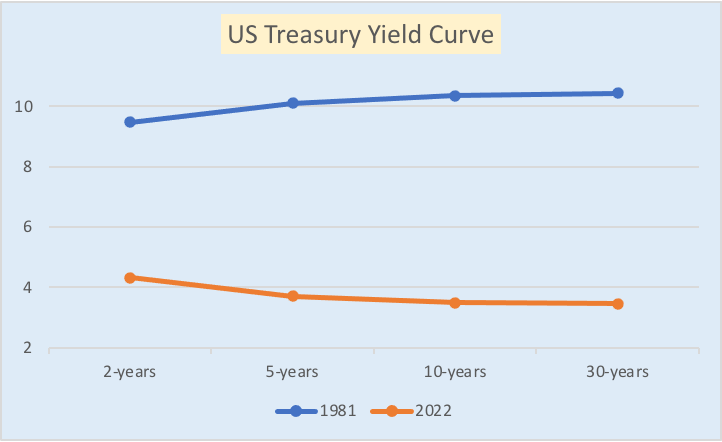
Is there an alternative to this questionable activity? Sure. In an environment of rising (rapidly) US interest rates, total return core bond strategies will get crushed, as witnessed so far in 2022 as the BB Aggregate Index is down more than 11% as of yesterday’s close. Regrettably, rates look as if they will continue to rise putting additional pressure on your fixed-income assets. We’d suggest converting a traditional bond mandate from one seeking a total return to one that SECURES the fund’s promised benefits by matching asset cash flows (principal and income) to the plan’s liability cash flows.

Not only does a cash flow matching (CDI) strategy protect the funded status for that portion of the pension plan, but liquidity is no longer an issue, as the assets and liabilities cash flows are matched to meet every payment chronologically as far out as the CDI allocation will fund. There is no more scurrying for cash or forced liquidations where the transactions may not be possible without greater cost. Furthermore, there is no longer an exposure to an asset class that won’t add value as long as rates are rising (bonds). The bond allocation will now meet all of your liquidity needs. In this environment, a 10-year cash-flow matching portfolio has a yield in the high 4% area and, given how rates are moving, it wouldn’t be surprising to see these portfolios with yields well into the mid 5% range soon.

So, if liquidity is an issue, we have a solution! If significantly underperforming bond portfolios are an issue, we have a solution! If you want to maximize the potential equity return from investments such as the S&P 500, we have a solution! It has been decades since we last suffered through a protracted rising rate environment. It can be quite destructive to a pension plan’s assets and funded status. Protect your funded status and stabilize contribution expenses by adopting a tried and true many decades old approach – cash flow matching. Don’t just ride the asset allocation rollercoaster up and down. Jump off now and try something that will truly provide numerous benefits. This strategy will help both you and the plan’s participants sleep well at night.

ARPA Update as of June 10, 2022

By: Russ Kamp, Managing Director, Ryan ALM, Inc.

Either the Summer doldrums have set in as it relates to the PBGC and ARPA activity or everyone is just waiting on the Final, Final Rules to be approved and published. There was hardly any activity last week. Only Local 557 (Freight Drivers and Helpers Pension Plan) resubmitted their application which had been withdrawn on May 24th. The new application is seeking $186.5 million in SFA proceeds up from the initial request of $185.3 million. No additional applications were filed, none were rejected, and no others were withdrawn. Ho-hum!

With regard to the Final Rules, I pray that they don’t loosen the guidelines on permissible investments. Why? Just look at what is happening in the capital markets. The ARPA legislation providing the Special Financial Assistance sought to SECURE the promised benefits. That can only be accomplished through the purchase of bonds and the defeasing of liability cash flows through the cash flows (principal and interest) from the bond portfolio. An investment-grade bond portfolio attempting to generate a total return has been crushed in this environment, as US interest rates continue to rise and likely will for the foreseeable future. Why jeopardize this precious resource trying to “earn” a few more $s? Securing the benefit will ensure that assets are readily available to meet the promised benefits for years to come. Let’s stop playing games with the lives of plan participants.

Vanguard Drops A Bomb

By: Russ Kamp, Managing Director, Ryan ALM, Inc.

Vanguard is out with their annual survey results accumulated from their millions of account holders. To listen to many in our retirement industry, you’d think that everything is just hunky-dory. They often cite the total amount of retirement assets that have been accumulated, while also referencing the “average” account balance within defined contribution plans. Well, the use of these metrics is dramatically hiding the truth of what the “average” American hoping to retire is facing.

According to Vanguard’s output, the median 401(k) balance is a paltry $35,000. They also indicated that 40% of the DC account holders had saved <$20,000. Sure, there is a subset of Americans that have accumulated tremendous wealth that will help them retire, but what about the significant majority of American workers who have very little to fall back on. These numbers reported by Vanguard are staggering especially when one reflects on the fact that we’ve had an incredible 40-year investing period driven by significantly falling interest rates and incredibly modest inflation. If American workers can’t save during that period, how bad will it be for them in an environment in which inflation continues to run unabated, US interest rates rise, and stocks and other assets, including real estate, get crushed?

The demise of traditional defined benefit (DB) plans is forcing untrained individuals to fund, manage, and then disburse their own retirement benefit with little knowledge on how to accomplish that objective. Why did we think that this transition from DB to DC was going to go smoothly? DC plans were never intended to be anyone’s primary retirement tool. They were developed to be supplemental to the DB plan. How has that gone? Lest we forget, these numbers from Vanguard are for individuals that actually have a 401(k) sponsored by their employer. There is a good chunk of American workers that don’t have access to a retirement plan through work. We know that most Americans ONLY save through employer-sponsored programs. Add together those with modest balances and those with no plan, and you have a crisis that will produce significant long-term negative consequences.

Workers who had accumulated some retirement savings as of 2007 witnessed their 401(k) becoming a 201(k) in a relatively short period of time. Worse, you were financially crippled if you had just retired because the sequencing of returns is particularly onerous for those stuck with only a DC option. For those still in the workforce in 2007, you were forced to work many more years just to get back to even. A successful retirement shouldn’t be predicated on when you retire! Trying to retire this year or next? How’s your target-date fund doing? These “conservative” options are anything but that! Both bonds and equities are being hammered at present. The toll could be devastating. We need to preserve and protect DB plans. Everyone should have the opportunity to retire with dignity. Not just the top 10% of income earners.

“Higher and For Longer”

On May 25th I wrote a post regarding the prospect of “higher and for longer” and said that those four words scared the hell out of me. Well, based on the latest CPI reading of 8.6%, the prospect of higher for longer seems more likely. Markets may finally be coming to a similar conclusion as both bond and stock markets are off substantially. Why did it take so long to sink in? The FOMC meets again next week. It wouldn’t shock me if they announce that September’s meeting will also result in a 50 bps increase in the Fed Fund’s Rate. More to come.

Are These Really the Reasons?

By Russ Kamp, Managing Director, Ryan ALM, Inc.

There was an article in today’s WSJ that addressed the issue of transparency among hedge funds, private equity, and private debt offerings. There are a plethora of institutional entities imploring the SEC to require greater disclosure. Not surprising that this objective is being met with harsh criticism from the targeted investment firms. I’m all for more transparency and disclosures and the idea that performance is going to be hurt by enhanced reporting doesn’t carry water in my opinion.

That said, I am much more interested in the following paragraph that was embedded in the article: “Many pension plans are having a hard time meeting their payout obligations to members, the result of decades of underfunding, benefit overpromises, and unrealistic demands from unions. This year’s simultaneous decline in stocks and bonds has only made matters worse. To compensate, many pension plans are increasingly putting their money into private-market investments like hedge funds, private-equity funds, and private debt funds.” Do we really believe those are the primary reasons for poor pension funding where it exists? Furthermore, do we really believe that investing greater and greater sums of money into HFs, PE, and PD will be the Holy Grail to full-funding success? I certainly don’t!

Sure, there have been some entities that haven’t fully funded that annual required contribution, but many funds have met those obligations. Aren’t benefits, as well as other plan provisions, part of a negotiation process? Since when do unions make demands on their own without a counterparty involved in the process? No, the biggest contributor to poor funding among some pension systems has to do with not having the right objective in place. Our industry is enamored with the idea that achieving a target return solves all problems. It doesn’t. Given this unhealthy pursuit, it isn’t surprising that plans and their advisors are allocating more money to these private alternatives. Just remember that too much money into any asset class can significantly diminish future returns.

If generating a return is not the primary objective then what is? It is the SECURING of the promise that has been made to a plan participant that guarantees a certain payout each and every month in retirement until death. Meeting that objective is the only reason why that plan exists. Given that reality, it becomes obvious why that promise needs to be secured in such a fashion as to significantly reduce funding volatility. There is no reason to blame the size of the benefit or the union’s demands. Once that benefit has been agreed to the process becomes very simple as B+E=C+I, where contributions (C) and investment gains (I) and the existing corpus must be sufficient to meet the promised benefits (B) plus the expenses (E) necessary to meet those benefit payments.

With greater and greater emphasis on investments to drive success, we get potentially greater variability in a plan’s funded status as markets and market returns are not linear. Pension systems need to spend more time understanding their plan’s specific liabilities and then managing plan assets versus those promises and not some generic asset-based index. The roller-coaster gyrations that traditional asset allocations follow lead to significant volatility in contribution expenses. Get off that roller-coaster. Put in place a bifurcated approach to pension asset allocation that will enhance liquidity to meet the promises while buying time for all the private investments to which plans have flocked. Bonds are NOT going to be return generators in a rising interest rate environment. I have no idea how high rates will go, but I do know that their trajectory is higher – the Fed told me and everyone else. Use your plan’s fixed-income cash flows to meet your plan’s liability cash flows. Securing the promised benefits for the next 10-years or so buys ample time for your alpha assets (non-bonds) to achieve their expected outcomes.

Pension plans are much too important to rely solely on markets to create success. Put in place an objective to secure the promised benefits that elevates the probability of success!

ARPA Update Through June 3, 2022

By: Russ Kamp, Managing Director, Ryan ALM, Inc.

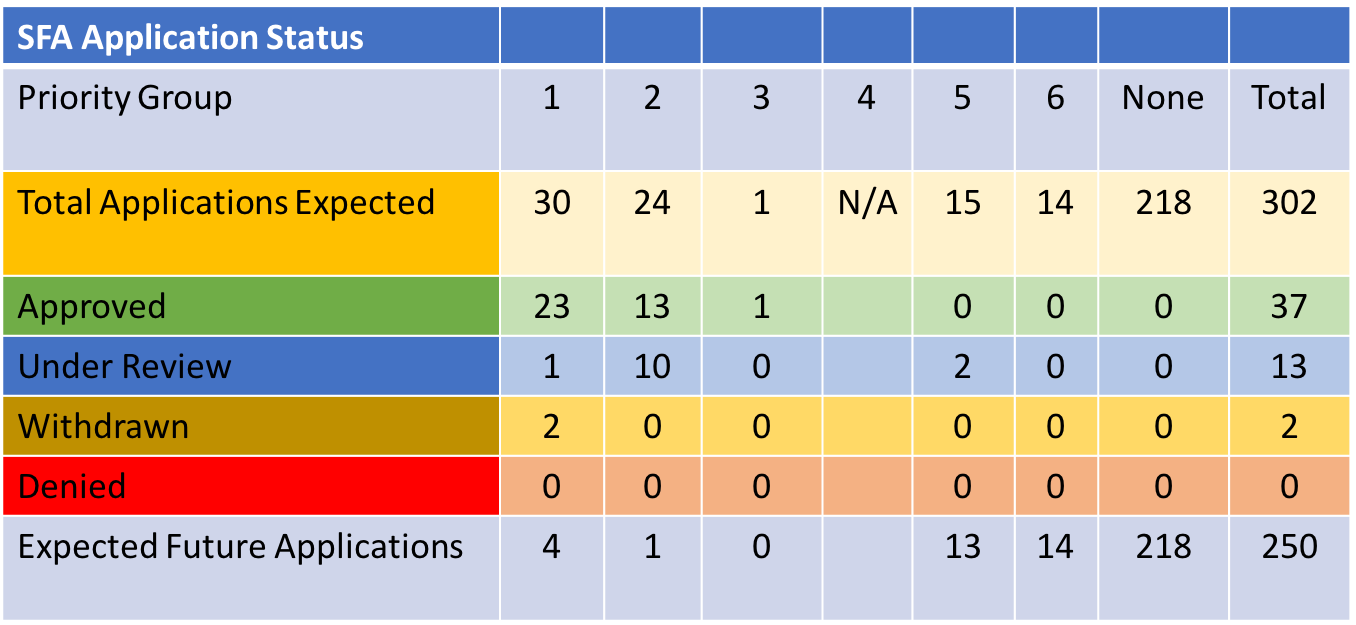
There was modest activity last week as it relates to the ARPA pension legislation, as only one plan, Mid-Jersey Trucking Industry and Teamsters Local 701 Pension and Annuity Fund, received approval from the PBGC on their application for Special Financial Assistance. This fund will receive $142.2 million to help stabilize and secure the promised benefits for 1,623 plan participants. To date, $6.7 billion in SFA support has been approved by the PBGC and of that total, $6.45 billion has been disbursed including three more funds last week. There were no new applications submitted among Priority Group 1, 2, and 3 plans. Priority Group 4 candidates may begin filing their applications on July 1, 2022.

All attention continues to be focused on the Office of Management and Budget (OMB) which received the PBGC’s Final, Final Rules about two weeks ago. We should be hearing something soon from them. Have a great week, and as always, don’t hesitate to reach out to us if we can be of any assistance to you.

SFA Discount Rates – Part II

By: Russ Kamp, Managing Director, Ryan ALM, Inc.

What do you do on a rainy day? If you are in NJ, you may just decide to read through 38 ARPA/SFA applications residing on the PBGC’s website. Sounds like fun, right?

Today’s blog is a follow-up to yesterday’s post when we discussed the importance of the discount rate used for the SFA calculation. We specifically mentioned that smaller is better, and I wanted to get a sense of how many plans were submitting applications with discount rates lower than the 3rd segment (PPA) plus 200 bps that is embedded in the legislation. Well, it turns out to be quite a few – fortunately!

For instance, 25 Priority Group 1 applications have been filed. This group consists of plans that are already insolvent or were projected to become insolvent before 3/11/2022. Their actuaries did a fine job lowering the discount rate to reflect the poor (critical) funded status. In fact, all but 7 of the 25 had a discount rate lower than the 3rd segment plus 200 bps rate. The average discount rate for the 25 applications was only 3.94% and they ranged from 0% to 5.38%.

On the other hand, of the 12 Priority Group 2 plans, those plans that are expected to be insolvent within one year of the date the plan’s application is filed or those that Implemented MPRA benefit suspensions before 3/11/2021, only 1 plan had a discount rate lower than the legislation’s rate – Freight Drivers and Helpers Local Union No. 557 Pension Plan. That fund’s discount rate was a very conservative 4%. There remains only 1 Priority Group 3 submission (Central States) and given their extremely poor funded status it shouldn’t come as a surprise that they are using a 3% discount rate for SFA purposes.

Again, the lower the discount rate the greater the present value (PV) cost of those future benefits and expenses and the greater the gap when netting out current assets, future contributions, and investment earnings. I can’t imagine that these plans and their actuaries knew this legislation was forthcoming. The fact that they used such conservative discount rates is a testament to their professionalism. I suspect that most of the plans yet to file will have discount rates at or above the 3rd segment plus 200 bps rate, but I’ve been surprised before. We’ll keep you updated as additional applications are submitted. We are about to enter Summer in NJ where afternoon storms are not rare. I’ll need something to do!

The Size of the SFA Very Dependent on the Discount Rate

By: Russ Kamp, Managing Director, Ryan ALM, Inc.

We’ve had the opportunity to produce Custom Liability Indexes (CLIs) for several multiemployer plans going through the ARPA/SFA process. In all but one case, the SFA grant received or likely to be received falls far short of the goal to secure 30-years of benefits through 2051. Why? More than anything, it really comes down to the discount rate used by the multiemployer plan. The ARPA legislation allows a plan’s actuary to use the lower of either ARPA’s 3rd segment (PPA) plus 200 bps rate (roughly 5.5%) or the plan’s current discount rate. Most plans have been using a discount rate equal to the return on asset assumption (ROA) or one quite similar (>7%). The one case where our CLI shows full 30-year coverage of pension liabilities net of forecasted contributions is for a plan that adopted a 4% discount rate given its severe funding challenges.

As a reminder, the size of the SFA is determined through multiple factors, such as the size of the current legacy assets, the discount rate used to determine the present value of the plan’s future liabilities, future “earnings”, and forecasted/estimated contributions. A discount rate much greater than the ARPA rate will significantly reduce the future value of the benefit payments. We’ve encouraged the PBGC through our outreach to use all three segments and not just the 3rd segment rate while eliminating the kicker of 200 bps. It is inconsistent and unfair to use the third segment rate (20+ years) since benefits are paid chronologically and the SFA grant may only be able to fund less than the next 20 years of benefits. Although the PBGC hasn’t released its Final Final Rules (as they are still being reviewed by the OMB), it is highly unlikely that the discount rate formula will be amended given the potentially dramatic increase in the cost of the legislation currently estimated at about $95 billion.

I mentioned above that the plan using the 4% discount rate could defease net pension liabilities through 2051. How comforting would that be to plan participants? If the pension plan were to use the contributions to support the current legacy assets, the SFA assets alone would defease 15-years and 9 months of benefit payments – still very attractive! My question to our readers, would you rather use contributions to support a full defeasement through 2051, as the legislation intended, or use future contributions (which are truly unknown) to support the legacy assets with the hope that future returns on those contributions would be outsized relative to the return generated by the cash flow matching strategy (CDI)? Please remember that plans receiving SFA assets cannot increase benefit payments prior to 2051’s conclusion. The higher potential return on future contributions would have to be used to beef up the number of assets to meet pension promises after 2051. If risk is best defined as the uncertainty of achieving the objective, wouldn’t it be most risk-averse to use contributions and the SFA grant to fund benefits as far out as possible through a cash flow matching strategy?

Like future contributions, future returns are not guaranteed either. A plan striving for a 7% annual return may have a two standard deviation (95% of observations) volatility in the return pattern of +/- 24% to 30%. One way to reduce some of the uncertainty would be to include only those contributions that have been fully negotiated in the net calculation of future benefit payments. If a plan has a 3- or 5-year negotiated rate for their contributions, only use those contributions in the cash flow matching strategy which would extend the life of the CDI program beyond the 15+ years. Again, how comforting it is for both sponsor and participant to know that the promised benefits have been absolutely secured for that length of time.

ARPA Update as of May 27, 2022

By: Russ Kamp, Managing Director, Ryan ALM, Inc.

Before getting into the most recent update regarding the ARPA legislation, I’d like to express my sincere gratitude to the men and women who gave the ultimate sacrifice to defend our nation. God Bless you and your families.

Activity surrounding ARPA/SFA was fairly modest last week following several weeks of intense activity. There were no new applications filed or approved. Fortunately, there were none that were denied. However, there were two plans New York State Teamsters Conference Pension and Retirement Fund and Freight Drivers and Helpers Local Union No. 557 Pension Plan, both Priority Group 2 members, which withdrew their applications. The NYS Teamsters had filed their initial application on 1/28/22, so they were within days of getting their application acted on, while the Freight Drivers submitted their application on March 4, 2022. There have been dozens of applications withdrawn to date, but in every case, a new application was submitted. It shouldn’t be long until we see new applications filed on behalf of these two plans that represent just under 36,000 plan participants.

As we reported last week, the PBGC has sent its Final, Final Rules to the OMB and it shouldn’t be too much longer before we get the update that everyone has been waiting for since the Interim Final Rules were announced last July. Have a great week, and please don’t hesitate to reach out to us with any questions/comments.

“Higher and For Longer”

By: Russ Kamp, Managing Director, Ryan ALM, Inc.

According to the US Federal Reserve’s minutes from early in May, there is a chance that the Fed will have to raise US interest rates “higher and for longer” than originally anticipated. Those four words scare the heck out of me! Yet, the US equity market rallied on the news. Sure, there was no indication that the Fed was contemplating Fed Fund rate increases greater than 50bps at each of the next two meetings, but that isn’t guaranteed. It also isn’t guaranteed that the inputs (war, covid-19, production bottlenecks, etc.) to this inflation crisis will have been eradicated by the end of July 2022.

Perhaps equity market participants feel that interest rates having to rise higher and for longer indicates that a recession isn’t in the near future. Perhaps. But, at some point in the not-to-distant-future bond yields will hit an inflection point that puts real pressure on equities. Remember, pension systems used to have substantial exposure to bonds. Regrettably, that exposure was trimmed quite significantly and consistently as yields fell below the return on asset assumption (ROA) back in 1988. This migration from fixed income to equities and alternatives certainly helped to boost the performance of those asset classes as positive cash flow drives markets higher.

What is likely to happen when holding bonds at attractive yields and with more modest variability starts to impact those fund flows into non-bond asset classes? Could we see significant selling pressure within equities? As pension systems look to de-risk their pension liabilities, they aren’t going to maintain the same level of equity and alternative exposure. At what level of interest rates is that inflection point? We’ve benefited tremendously from a nearly 40-year bond bull market in which plummeting interest rates pushed forward the incredible gains achieved in a variety of markets – real estate, equities, bonds, alternatives, etc. Do you recall how challenging the environment was prior to 1982? It was ugly!

While we sit back and wait for the Federal Reserve to do their thing for potentially longer, US fixed-income investors with a total return focus will get spanked. We’ve already experienced the most challenging performance environment for bonds in the last four decades. If the Fed is true to its pronouncements, total return fixed income programs will continue to see significant losses in principal. Regrettably, the current level of rates (income) isn’t substantial enough to offset much of that principal loss. Now is the time to convert traditional return-seeking strategies to cash flow matched investments that are tailored to meet your plan’s liability cash flows. Importantly, by defeasing benefit payments that are future values, a cash flow matching strategy mitigates interest rate risk. In addition, should we see both equities and bonds sell off, a cash flow matching strategy buys time for the non-bond assets to recover as they are no longer a source of liquidity.

Again, I don’t know about you, but the phrase “higher and for longer” scares me. Given the improved funding that was observed throughout Pension America in 2021 isn’t de-risking the prudent approach as opposed to “guessing” how the Fed will act and more importantly, how the market will respond? Be responsive to today’s environment.