We Can’t Do The Same Old, Same Old

I frequently write about the state of multiemployer plans in the U.S. There is a “grading” system that makes it easy to identify more successful plans (Green) from those that are in trouble, which are defined in not so favorable terms as Critical and Declining. Regrettably, we don’t have a similar warning system for our public funds, although many of us know that states such as Connecticut, Illinois, and my home state, New Jersey, would certainly not receive a grade of green, but likely one that has them more appropriately designated as being on life support.

Pension plans used to be managed like a lottery system where future promises (liabilities) were known and a present value calculation was used to determine the assets needed to defease that promise. Those assets were then basically set aside until the promised payout was due. Regrettably, we’ve gotten away from that course of action and decided that generating the highest return was the more effective approach to ensuring that future promises were funded and paid. Unfortunately, what has happened is that the funded status for these systems has deteriorated, returns have fallen short, plans have had to reduce benefits, add tiers, and contribute significantly more to these pension plans.

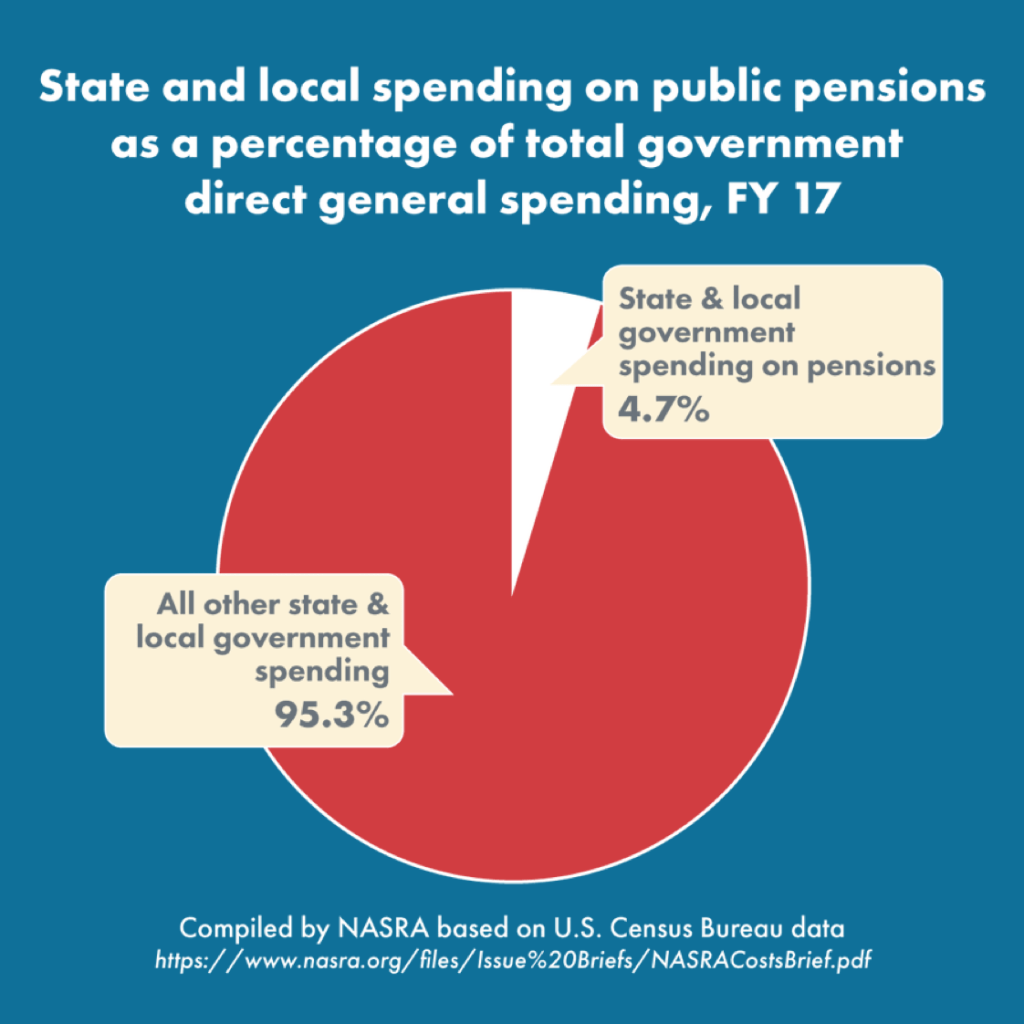
Many of the states have resorted to significantly increasing taxes to meet their pension promises. How has that worked? Well, according to data from the US Census Bureau, millions of Americans have fled high-tax states, such as Connecticut, Illinois, New Jersey, and New York to find more economically palatable locations, such as Texas, whose population growth was greater during the last decade than all of Connecticut. In fact, four of the six highest-tax states in 2010 were among the nine with population growth below 1 percent for the decade in which the US’s population grew by 6%. None of the 10 states with population growth over 11% for the last 10 years were among the 20 highest-tax states early in the decade and it shouldn’t be surprising to read that four were among the seven with no personal income or investment taxes.

So if public pension systems think that they can continue to ramp up taxes on their residents without consequence they will be sadly mistaken. Those days are over. Pension systems need to reduce the volatility of the plan’s asset allocation and the variability in both funded status and contribution expense. Doing the same old, same old has proven to be an unsuccessful approach.  It is time to go back to the future! We can help!

Appalling!

I first mentioned Carol’s plight in August 2018 when her story was brought to my attention. As you may recall, Carol was a retired Teamster who had been promised a benefit for life upon taking early retirement. Regrettably, her union plan (Local 805) filed for benefit relief under MPRA and was granted that relief effective January 1, 2019. The impact on her financially has been harsh. The psychological impact may be more damaging.

Ron Ryan and I continue to run around the country bringing Carol’s and other’s stories to one conference after another (IFEBP, Opal, MIA, etc.) in an attempt to put a face on the pension crisis that is unfolding in our country. We find it shameful, and totally unacceptable, that we have legislation that permits the rug to be pulled out from under the feet of these retirees who worked hard every day believing that their hard work would be rewarded with a pension in retirement. But, through no fault of their own, that promise has not been kept.

I’m also guilty of not providing more frequent updates as to the impact that these decisions are having on the lives of people like Carol. For instance, the following was shared on Facebook several months ago.

“Hi everyone,
I haven’t been too active on the site lately…mainly because I started shutting down when the reality of a FOR SALE sign was stuck in my front lawn. I do my best thinking in the middle of the night, so last night I wrote down what I was feeling. I sent it to Russ Kamp and Karen Ferguson of Pension rights. I don’t know if I should send it anywhere else. I am pasting it in this message for some advice. Thanks, Carol
Carol Podesta-Smallen
Thu 8/22/2019 1:38 AM
  • russellkamp@gmail.com;
  • R Kamp;
  • Karen Ferguson
I am 8 months into my $1,578.00 monthly pension cut and I’ve completely depleted my savings. My house has been on the market for 1 month, I have been looking for an apartment to rent because, as my brother pointed out, no one will give me a mortgage because I don’t make enough money. But now it seems I am going to have a problem even renting because once they do a check on my income and see how little I make per month, there will be fear that I won’t be able to pay my monthly rent! I have tried to find out where I stand in the Section 8 line, and was told that the information I seek is not available to me…once again I ask, where do I go from here? I really prayed that this would be resolved by now, but it’s not, and that word SHELTER keeps popping into my head. All I did by draining my savings account was to put off the inevitable. I think I faked myself into thinking all was well by keeping up with the payments, and now that there is nothing left, all the fear came rushing back. A mental breakdown is not out of the question, as I think malfunction is the only way an overloaded brain can stop.

Time and again I’ve been told that I’m not alone… why then, do I feel so alone?…just like a needle in a haystack.

Sincerely,

Carol Podesta-Smallen
Local 805

We cannot allow these cuts to continue. Legislation needs to be enacted immediately before this punishment is levied onto others who are in plans that are designated as Critical and Declining. As you know, H.R. 397 (the Butch Lewis Act) was passed in July 2019. It has sat in the Senate since. Every month that goes by jeopardizes the financial future for nearly 1.4 million pension participants that reside in pension systems that are teetering on the brink of failure. It isn’t fair and it isn’t right! Each month of delay increases the likelihood of more failures while increasing the cost of corrective action by roughly $750 million per month (Cheiron). How is this acceptable to anyone?

There Are More Than Two Ways!

I am at the Made In America conference in Las Vegas.  I enjoy this particular event because the crowds tend to be smaller providing the participants with more of an opportunity to interact. This particular gathering has a really good mix of agenda items and presentations, but I was reminded once again how our industry continues to focus exclusively on the asset side of the pension equation. Hopefully, my session, “Managing Through A Liability Lens”, will wake them up to the fact that pension plan liabilities exist and that assets need to be managed against them.

Day one had us hear once again that there are only two ways to improve funding: 1) contribute more, and 2) earn more on the investments. Yes, those are two ways, but not the only way to see funded status improved. Unfortunately, as I stated above, pension liabilities are like Mr. Cellophane of the pension world, especially when plans elect to use the same discount rate for both assets and liabilities (ROA). In an environment that values liability growth at 7.5% each and every year, it is no wonder that most plan sponsors and consultants forget that liabilities are bond-like in nature and that they don’t grow at the same rate as pension assets.

Because liabilities are bond-like, they move up and down in value with changes in interest rates. Regrettably (for pension systems), we’ve basically been on a slippery slope of declining US rates for much of the last 4 decades. As a result, plan liabilities have dramatically outperformed plan assets during this period and particularly in the last 20 years. I would guess that most sponsors think that 2019 was an incredible year for pension funding as assets enjoyed a magnificent 12-months, but they would be mistaken as the significant decline in US long-term rates boosted liability growth to as much as 25.6% when pricing liabilities using PPA spot rates and 22.2% when using ASC 715 rates (AA Corporate).

Unfortunately, this phenomenon has had the biggest impact on public pension systems that have habitually maintained higher return on assets assumptions which acts to keep contributions lower than they should have been.  Pension America’s precarious position would not be so severe if WE, as an industry, had collectively focused more attention on the promises that were made to our employees. I’ll update you tomorrow on whether any rotten fruit was thrown in my direction during my discussion.

What You Should Expect From Social Security in 2020

Every year brings something new to the Social Security system if only a slight inflation adjustment and 2020 is no different. The Social Security Administration announced in October that benefits would increase by 1.6 percent in 2020.

For a recipient earning $1,479, the average monthly benefit among all retired workers, checks will increase to about $1,503 per month. If my math is correct, that equates to an additional $24/month. Please don’t plan to spend all of it too soon.  For Social Security calculations, the standard CPI is inferior for this purpose, as the CPI-E, which measures inflation for Seniors, should actually be used. It is estimated that the CPI-E is 0.2% higher annually than the Standard CPI. Not that the 0.2% would be a financial windfall, but every little bit helps. As you know, cost-of-living adjustments, which began in 1975, are implemented in order to counteract the effects of inflation.

The maximum Social Security benefit for a worker retiring at full retirement age will rise to $3,011 per month in 2020, from $2,861 per month last year. There is a retirement earnings test that is applied to those who claim Social Security while still working. The test takes two main factors into account: your age and income.

In the first case, the retirement earnings test withholds benefits before you reach full retirement age if your income exceeds a certain threshold – and then adds them back once you reach full retirement age. That threshold amount for 2020 is $18,240.

A higher threshold applies to those will reach full retirement age during the year. For 2020 it is $48,600. The program withholds $1 in benefits for every $2 of earnings in excess of the lower exemption amount, and $1 for every $3 in excess of the higher exemption amount.

What you shouldn’t fear is Social Security running out or money. It is a fallacy to believe that there exists a “lockbox” that contains all of our contributions. The US enjoys the benefits of having a fiat currency and all of the federal debt held in U.S. dollars. We absolutely have the ability to meet all future calls on Social Security benefits. What we should fear is our august Congress not understanding this concept and acting rashly to address the impending “crisis”. More to come on this issue.

PBGC Arranged Merger – A First

The Pension Benefit Guaranty Corporation announced on January 14, 2020, the first merger of two multiemployer plans under the Multiemployer Pension Reform Act of 2014. The two plans are the Local 1000 Pension Fund, which covers more than 400 participants, and the Local 235 Pension Plan, which has more than 1,100 participants. Local 1000’s plan is in Critical and Declining status, while 235’s plan is in the green zone. Local 1000’s plan was forecast to become insolvent by 2026.

These two unions had merged years ago, but their plans remained separate and distinct. According to PBGC’s Executive Director, Gordon Hartogensis “Through this facilitated merger, we are preventing a failing plan from going broke and preserving benefits in a financially responsible way.” The agency will commit to providing $8.9 million in each of the next three years, which they have determined is enough to maintain the benefit levels for the participants in both plans, while saving the PBGC additional financial stress should Local 1000 collapse.

“By law, PBGC may not approve a facilitated merger that harms the solvency of the agency’s Multiemployer Program. PBGC approved this merger after determining that the merger reduces PBGC’s expected long-term loss with respect to the Local 1000 Plan and that providing financial assistance to the merged plan will not impair the agency’s ability to meet its existing financial assistance obligations to other multiemployer plans.” (PBGC Website)

On the surface, this arrangement seems like a smart approach to an on-going funding issue for many struggling multiemployer plans. Congress continues to kick the pension reform can down the road, and as we learned recently from Cheiron’s updated study, the funding problem just gets worse and worse to the tune of $750 million/month.

Of course, I have not seen any actuarial studies regarding this arrangement. It has not been announced what the funded status will be following this merger nor how this impacts future negotiated contributions from both employees and employers.  In addition, I don’t know how this might change the return on asset assumption or the plan’s asset allocation. Lot’s of questions to be answered, but if benefits can be maintained for both entities, it seems like a win for all parties.

Who knows whether or not this first merger will open the floodgates to many more, but at least those participants in Local 1000’s plan can sleep better at night knowing that their benefit will be there each month as promised!

Fiscal Responsibility?

We have recently reported on the $1.02 trillion federal deficit for 2019. What amazes me is that we are constantly told that the Republican lead U.S. Senate can’t support H.R. 397 (the Butch Lewis Act) and nearly 1.4 million multiemployer pension plan participants because it wouldn’t be “fair” to the American taxpayer.  Please stop with this charade.  The total cost to save the critical and declining pensions is a drop in the bucket compared to the lost annual economic activity produced by the benefit payments and the lost revenue collected in taxes by federal, state, and municipal entities.

The CBO’s analysis found “that under H.R. 397, the government would disburse $39.7 billion in loans to certain multiemployer pension plans. (That total excludes some forms of assistance that resemble loans but do not receive FCRA treatment because they do not meet the definition of a loan under FCRA.) Under CBO’s official approach (which excludes grant assistance), the present value of loan repayments would total $7.9 billion, CBO estimated, leading to a net subsidy cost of $31.8 billion. Under the alternative approach (which includes grant assistance), the estimated net subsidy cost would be $5.8 billion because some loans would be repaid using grant assistance. The subsidy cost for all loans (regardless of the estimating approach) would be recorded as direct spending.”

The $39.7 billion would represent <4% of the current deficit, if accounted for in one year, but less than 0.1% per year if spread over the life of the loans, which is 30 years. Any claim on the part of our Washington DC leadership that the failure to address our burgeoning pension crisis is because they are trying to protect the U.S. taxpayer is a joke. As we reported, the federal deficit has and will continue to be stimulative to our economy, and shouldn’t create inflationary pressures provided the additional demand for goods and services can be met by our economy’s ability to meet that demand.

No one in DC has earned the right to call themselves fiscally conservative!


U.S. Budget Deficit Hits $1.02 Trillion in 2019

The U.S. Treasury released data highlighting that the fiscal budget deficit topped $1 trillion for calendar year 2019 for the first time since 2012, increasing 17.1% in 2019 from 2018’s budget deficit that had grown by more than 28.2% from the previous year. Tax receipts increased by 5%, as corporate taxes rebounded, but outlays were up 7.5% to $4.5 trillion as federal spending for both the military and healthcare increased. This trend has continued into 2020’s budget with the deficit growing by 12% through the first 3 months.

Importantly, this fiscal stimulus continues to support the U.S. stock market, as the deficit, a liability of the U.S. government, is an asset of the private sector. According to a WSJ article, “annual deficits are projected to more than double as a share of the economy over the coming decades, as a wave of retiring baby boomers pushes up federal spending on retirement and health-care benefits.” Again, this is not necessarily bad news if the demand for goods and services fueled by this incredible stimulus doesn’t exceed our economy’s ability to meet that demand through greater production.

Ryan ALM Quarterly Newsletter

We are happy to share with you the latest quarterly newsletter from Ryan ALM. As we note in our analysis, pension assets enjoyed a terrific 2019, but the advantage relative to liabilities was not nearly as great as one would think as a significant decline in longer-term interest rates propelled liability growth. In fact, a generic asset allocation inclusive of US (60%) and international equities (5%), US fixed income (30%), and cash (5%) only bested ASC 715 (formerly FAS 158) discount rates by 0.4%, while trailing PPA Spot Rates by 3.1%. Of course, a fixed discount rate of 7.5% (GASB) was easily beaten in 2019, but it isn’t a true reflection of how a public pension system’s liabilities behaved.

Furthermore, public systems with a significant funding gap would have to have dramatically outperformed liabilities to have not seen the funding deficit further increase. Unfortunately, since 2000, liability growth has dwarfed pension asset growth by 164%. Given the extended bull market run in both equities and fixed income, now is the time to consider removing some risk from traditional pension asset allocation structures.  In the Ryan ALM newsletter, we address this idea and others. Please don’t hesitate to reach out to us to discuss a path forward.

Why Fight For DB Pensions?

Very simply, we fight for DB pensions because the benefits that they produce are a significant engine to growth in the U.S.  In fact, in 2016, spending of public pension benefits generated $1.2 trillion in total economic output, supporting 7.5 million jobs across America. Importantly, this spending resulted in $202.6 billion in federal, state, and local tax revenue. The magnitude may be different, but multiemployer plans also generate significant economic activity leading to healthy tax revenue for federal and local entities.

The cavalier approach to pension reform by our august leaders will create economic hardship for not only the plan participants but the local economies in which they live. The proposed loan sum associated with the Butch Lewis Act (H.R. 397) legislation that passed the House in July is a drop in the bucket compared to the lost economic activity that will result.  We already have a significant wealth gap in this country. Let’s not exacerbate an already awful situation.

It Could Have Been Better

As the 2010’s come to a close, I should be looking back on the prior 10 years in awe of what has been achieved in the capital markets that have witnessed a tripling of stock returns using the S&P 500 as a proxy. Furthermore, I’ve often said how truly blessed I am to have found a career in the investment/retirement industry that has now spanned 38+ years, but as I reflect on the last decade I feel almost empty. The changes that I’ve witnessed in our industry have not transformed positively the lives of most plan participants.  The on-going elimination of defined benefit plans and the greater use of defined contribution plans has destabilized the retirements for many Americans.

Maybe it is the fact that the last 10-years have treated only a small percentage of Americans favorable? For the “average” American family it is the second consecutive decade that feels lost. Inflation for the bottom 99% of us is greater than that of the top 1%, especially as it relates to day-care, health-care, housing, education, etc. Until recently, there had been little wage growth in the last 20+ years, yet our employees are expected to fund their own retirement. Little legislation has been achieved that actually saves the retirements for our workers. As the legislative can is kicked down the road, more and more Americans are on the verge of losing their promised benefits after years of service and hard work.

Annie Lowrey, a staff writer at The Atlantic, has penned a wonderful article that captures my concerns and sentiments so well.  What should be a time to celebrate seems rather a hallow exercise at this time. We need to reflect on what could have been and begin to address the issues that are negatively impacting a wide swath of our population. Retirements are a small part of the equation, despite my nearly singular focus on the issue. We need true leadership emanating from our elected officials in DC. Where have all the statesmen and stateswomen gone? America is a great country with unlimited potential, but if we truly believe that 13+ years of <3% GDP growth is going to get the job done, we are just kidding ourselves! We’ve wasted enough time.

As we embark on 2020, I’d love to see the US Senate finally bring forward the House’s HR 397 Bill (the Butch Lewis Act). This is the only legislation that actually saves pensions for our workers. All other proposals basically drive pension systems into oblivion and rely on the PBGC to pay the crumbs that remain. The U.S. has the financial means to help American families meet their basic needs. It shouldn’t cost one their arm and leg to buy a home, protect their health, and achieve a level of education that would permit them the opportunity to gain employment.

As a broader vision, I want the members of my generation who find themselves with their hands on the levers of influence in our economy and government to remember their responsibility to their fellow man, the helping hands they received from individuals and common resources that propelled their good fortune and to take the steps necessary to return control of our economic growth to the common American family for the good of us all.