Would You Invest differently?

By: Russ Kamp, Managing Director, Ryan ALM, Inc.

What is the value of time? When it comes to investing, time can be a wonderful tool. When you have a long time horizon, you can seek out investments that have the greatest potential for long-term success. Importantly, you can invest in the knowledge that you can wait out any short-term downturn. Unfortunately, our pension industry has morphed into a “what have you done for me last quarter” mentality. Quarterly reviews measure recent performance differences relative to generic indexes as if they are meaningful. One stock or one bond performing badly can create an underperformance that isn’t reflective of the manager’s long-term capability, yet we scour these performance books each and every quarter as if they were Gospel looking to glean an insight that will provide us with a reason to keep or terminate a manager/strategy. How silly!

As a result, we have created an atmosphere in which a majority of managers have become benchmark huggers, yet they still charge active management fees. What has this wrought? Persistent underperformance on the part of active managers on a net of fees basis. Furthermore, these products ride the rollercoaster of uncertainty given the significant beta exposure to the index benchmark. As we possibly (likely) enter a new investing environment brought about by rising US interest rates, does maintaining a quarterly focus help or hurt pension systems? We’d unequivocally state that having a short-term focus is absolutely the wrong approach.

Don’t despair, for there is a way for Pension America to achieve both short-term (liquidity) and long-term goals. Instead of having ALL of the assets focused on achieving a return on asset (ROA) assumption, bi-furcate your portfolio into liquidity and growth buckets. The liquidity bucket will consist of bonds, and only bonds, whose cash flows of principal, income, and re-invested income, will be used to match net liability cash flows chronologically (after contributions). This “bucket” will provide all of the liquidity necessary to meet benefits and expenses for as far out as the allocation can fund. The good news: as rates rise the cost to fund those benefits gets lower allowing the plan sponsor to either cash flow match more payments or allocate fewer resources to secure the promised benefits.

The remaining growth assets now have an extended time horizon in which to grow unencumbered, as they are no longer a source of liquidity. Furthermore, these assets should be given a wider range from which to operate. Constraining products to narrow benchmarks reduces the efficiency of investing, as the information ratio is a function of the forecasting ability of the strategy and the breadth of the universe from which they are choosing their portfolio holdings. Unconstrained portfolios that now have perhaps as much as 10-years to operate should provide more stable returns as they are no longer tethered to a beta benchmark subject to normal market cycles.

As we have stated many times, defined benefit plans need to be preserved and protected. But approaching the problem in a similar fashion to how we’ve done so for the past 40-years is silly. We’ve all benefited from the significant wind at our backs as interest rates collapsed. Today those winds are blowing directly into our faces and it isn’t a fun feeling. Buying time should permit you the opportunity to invest very differently. If done successfully DB plans should be able to weather this storm.

You Should Believe the Fed

Please don’t tell me that the equity market’s afternoon swoon has to do with Powell indicating that a 50 bps move is on the table (if not locked in). Where have you been hiding if that is the case? Once again, the Fed’s greatest focus right now is on inflation. As Powell has said, “Economies don’t work without price stability.” In order to fight inflation, you need to remove stimulus from the economy. They don’t care what the impact is on markets. That isn’t their role nor should it be.

Is the Credit Rating Stupor About to End?

I warned bond investors just the other day about potential default risk escalating. The WSJ published an article yesterday about the potential impact of rising rates on leverage loans, which financed nearly $1 trillion in acquisitions just in 2021. Quarterly repricing helps investors, but it can damage the borrower. Roughly 15% of the outstanding loans are in companies that have a coverage ratio of <1.5X. The average company is >3X. The rapidity by which the Fed is raising rates may become a heavy burden for many lower quality bonds.

Rising Rates and the Impact on ARPA

By Russ Kamp, Managing, Director, Ryan ALM, Inc.

There was a little more activity related to ARPA and SFA approvals, which I will address in my next update. However, the bigger news surrounding ARPA is the impact of rising rates on both pension assets and pension liabilities. For those plans that have filed applications already, the impact of rising rates has more of an impact on the asset side of the equation. As a reminder, SFA assets are to be kept separate from the plan’s legacy assets. Under the Interim, Final Rules, the SFA assets received (7 funds have been paid to date) are to invest those proceeds in investment-grade fixed income. They can do that in one of two ways: either create a total return-focused portfolio or a cash flow match portfolio of plan assets to plan liabilities – the strategy that we at Ryan ALM espouse.

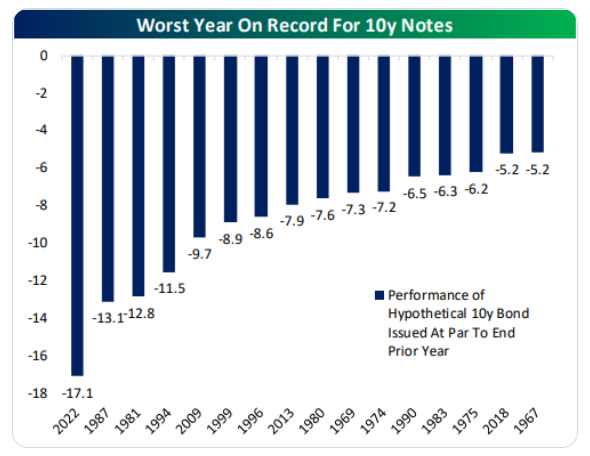
I suspect that those that have received their payouts have likely invested those assets in an IG portfolio designed to outperform some generic index – likely the BB Aggregate Index. If so, their assets have taken it on the chin as rising rates have impaired bond prices. For instance, the Aggregate index has declined on a total return basis by -8.8% YTD through April 19th. The biggest annual loss since 1981 is <3%. Oh, boy!

Depending on the size of the SFA payment, a pension system might be able to defease 8-12 years of pension liabilities. The present value (PV) of pension liabilities falls as interest rates rise, which provides a plan that is defeasing liabilities the opportunity to defease more of those future payments. As mentioned, the assets get hurt in a rising rate environment, but higher rates also help reduce future costs. Furthermore, once the defeasing strategy is constructed, the savings to the plan are locked in and assets and liabilities move in tandem whether that is up or down. Interest rate risk has been eliminated.

Now the liability news. The ARPA legislation calls for eligible pension plans to use either PPA’s 3rd Segment Rate + 200 basis points or the plan’s current discount rate, whichever is lower. A higher discount rate reduces the economic present value of pension liabilities, which impacts the amount of SFA to be received, so a rising rate environment would reduce the present value of that future liability. Fortunately, the legislation uses a 24-month average (unadjusted) to calculate the current 3rd Segment Rate, which as of April is 3.29% before the addition of the 200 bps. Despite the significant rise in rates in 2022, the 3rd segment +200 bps rate has not moved much at all, as US interest rates were in the 4% range for the 3rd Segment in 2020. As that year falls out of the 24-month calculation it is being replaced by a slightly lower # at this time.

We, at Ryan ALM, are not in the business of predicting rates. We are in the business of SECURING the promised benefits. Allowing pension assets to potentially swing wildly as a result of harmful interest rate moves is not a sound financial strategy. We highly recommend that plan sponsors defease pension liabilities with the SFA proceeds. As a reminder, the ARPA legislation’s goal was to secure the promised benefits for 30-years. We know that isn’t going to happen because of how the SFA is being calculated, but there is no reason to not secure benefits for as long as possible. Doing so allows the pension plan’s legacy assets to now grow unencumbered as they build to meet future pension liabilities. Rising interest rates are not a panacea for pension assets, but they do help pension liabilities and defeasement strategies. More to come on this subject!

Is the Credit Rating Stupor About to End?

By: Russ Kamp, Managing Director, Ryan ALM, Inc.

S&P is out once again with its outstanding research on corporate defaults with the publication of the “2021 Annual Global Corporate Default And Rating Transition Study”. Despite significant issues related to business continuity from Covid-19, supply chain disruptions, inflation, etc. global corporation defaults remained incredibly low. As the chart below reflects, the last 40-years for investment-grade bonds reveal almost no defaults. Is the party about to end?

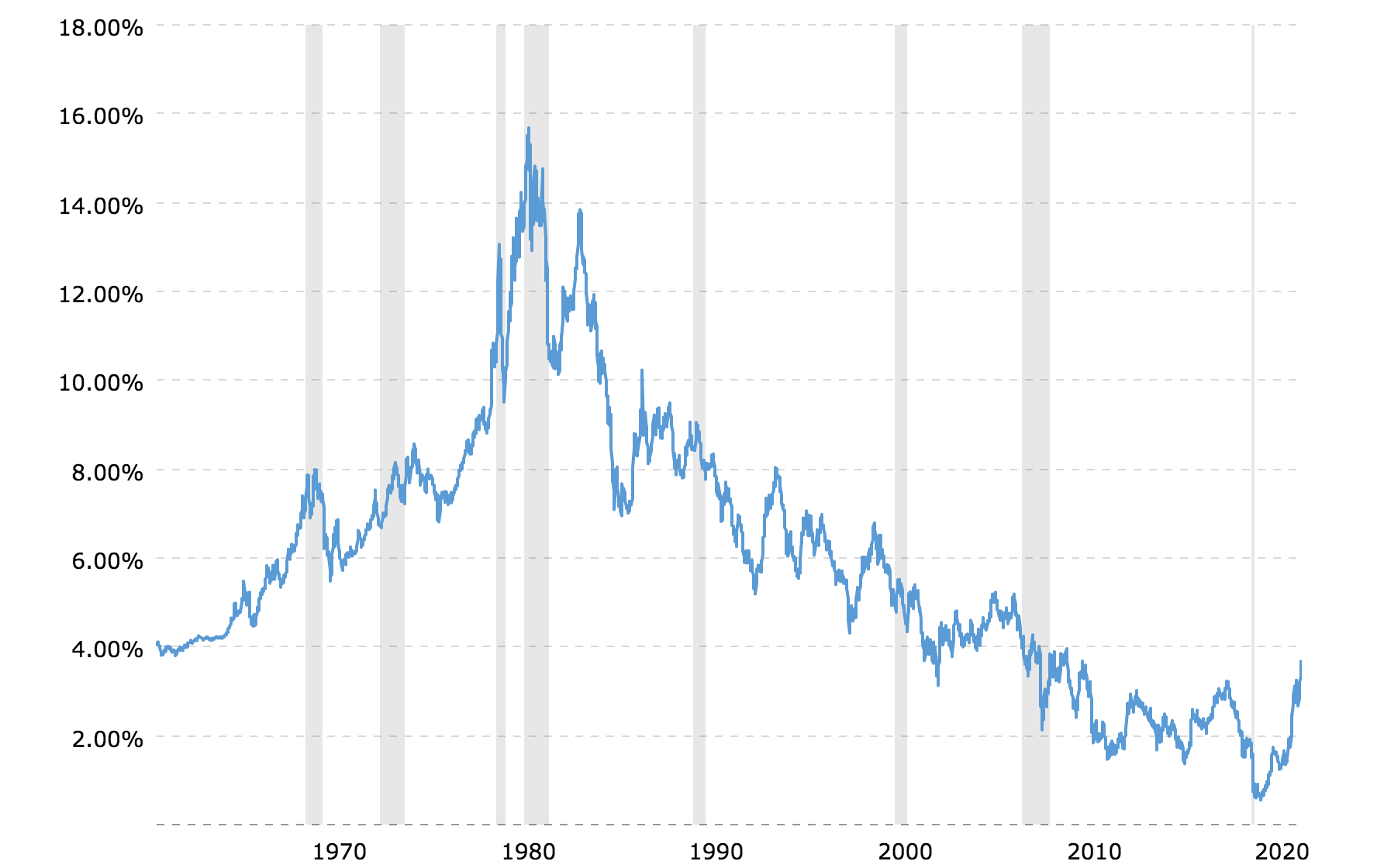
The US bond market has enjoyed an unparalleled 39-year bull market that has seen interest rates fall from the mid-teens in 1981 to historically low levels until recently. The US Federal Reserve has embarked on a potentially aggressive tightening path that may lead to significantly higher US interest rates. How will this trend impact those companies that have maintained their IG rating despite having modest interest coverage ratios that may become quite challenged in the near future? As a reminder, a significant majority of corporate debt issuance has been rated BBB, and that category now makes up >50% of all IG debt outstanding. Another interesting fact, despite the relative calm, overall credit quality has deteriorated. According to the S&P report, the “ratings distribution among companies we rate remained weak, with 14.5% of ratings at ‘B-‘ or lower as of year-end, up from 7.4% 10 years earlier.” Could this be the canary in the coal mine?

Total return bond products have had a very difficult start to 2022, with the Bloomberg Barclays Index (still the dominant index for Pension America) down 6% in the first quarter. To date, these bond funds have only had to deal with interest rate risk. Let’s see what happens when defaults escalate.

ARPA Update Through April 15th

By: Russ Kamp, Managing Director, Ryan ALM, Inc.

We hope that you had a wonderful Easter or Passover celebration this past weekend. With regard to the PBGC’s latest update (as of April 15th), no new plans filed an application. The last to do so was the New York-based, Pension Plan of the Printers League – Graphic Communications International Union Local 119B, New York Pension Fund, covering 1,213 participants. This plan has filed an SFA application to receive roughly $85 million. To date, none of the Priority Group 3 members (>350,000 participants) have submitted an application with the PBGC.

We are pleased to report that two plans that had received prior notice that their applications had been approved received the payments totaling $238 million and covering 2,250 participants. This activity brings to seven the number of approved and paid SFA applications. Each of these plans filed its application under the Priority Group 1 category. As we reported last week, 36 plans have filed an application with the PBGC representing a very small percentage of the expected number of applications and $s associated with this legislation. Obviously, there is much more to come.

Ryan ALM Q1’22 Pension Monitor

We are pleased to share with you the Ryan ALM Q1’22 Pension Monitor. Despite the fact that pension assets had a challenging quarter, pension liabilities fell to a greater extent, as US interest rates rose rapidly in response to the US Federal Reserve’s intent to aggressively address the current inflationary environment. US corporate plans operating within a FASB construct appreciate this fact. Those plans – public and multiemployer pension systems – utilizing accounting methods under GASB are probably unaware that pension liabilities had substantial negative economic growth during the quarter, as they use the return on asset (ROA) assumption as the discount rate for their pension liabilities. Under this accounting framework, it appears that pension assets dramatically underperformed liability growth.

Given the significant differences produced by these two accounting methodologies, it is no wonder that inappropriate decisions with regard to contributions and benefits are made from time to time. An aggressive Fed may lead to significantly higher US interest rates. Will this action have a greater impact on pension assets or liabilities? Check-in with us at either ryanalm.com or kampconsultingblog.com to see how this story unfolds.

Not a Correlation of 1, But Certainly Strongly Positive

Bitcoin recently staged a strong recovery bringing the price back to nearly $47,000 after having tested the $32,000 level. Was this “recovery” driven by the currency’s own fundamentals or was it the result of the Nasdaq 100, which also enjoyed a strong rally in March? I’ve mentioned on several occasions that I believed that Bitcoin was trading more like a meme stock than an inflation hedge. Here’s a recent chart highlighting the correlation of Bitcoin with Nasdaq’s performance, which indicates an all-time high correlation of 0.695. I’m not surprised.

ARPA Update as of April 8, 2022

By: Russ Kamp, Managing Director, Ryan ALM, Inc.

The PBGC has provided its most recent update on the filing of SFA applications and approvals. Since August 2021, 36 multiemployer pension plans have filed for Special Financial Assistance (SFA) under ARPA. To date, 10 plans have received approval from the PBGC totaling $2.04 billion of which $1.1 billion has been paid. All of the pension plans that have filed their applications have been in either Priority Group 1 or Priority Group 2. Priority Group 3 plans (those >350,000 participants) were eligible to begin filing as of April 1st. Fortunately, none of the plans that have filed applications have had their potential award rejected.

Given the estimated $95 billion in potential cost assigned to this legislation, there is much activity remaining, as only 2.1% of the estimated cost of the legislation has been awarded to date. Recent 2022 market performance for assets may help plans that have yet to file. A lower starting asset base will enhance the potential grant award. Lastly, we are still awaiting word from the PBGC on their Final, Final Rules. It has been nearly 9 months since the PBGC announced its Interim Final Rules.

Ryan ALM, Inc. Q1’22 Newsletter

We are pleased to share with you the Ryan ALM, Inc. Newsletter for the first quarter of 2022. Despite a very rough start to the year for the capital markets, the present value of pension liabilities (based on an average 12-year duration) underperformed the “average” asset allocation, by roughly 4.4%. As a result, Pension America once again witnessed an improving funded status. For pension plans that use GASB for their accounting standard, this outperformance on the part of plan assets versus plan liabilities may be hidden from view.