NASDAQ’s eVestment Consultant Capital Markets Outlooks 2024

By: Russ Kamp, Managing Director, Ryan ALM, Inc.

Nasdaq eVestment has published capital market forecasts gathered from 11 leading asset consulting firms. The 2024 capital markets outlooks in their report were gathered across the self-authored documents in Nasdaq eVestment’s “Market Lens” from 11 consulting firms (AON, Callan, Cambridge, Cliffwater, Fiducient Advisors, Meketa, NEPC, RVK, Segal Marco Advisors, Verus, and Wilshire), who presented their findings to public plans. This report specifically focuses on the 10-year nominal, risk and return expectations from these consultants. I don’t mean to spoil that outcome, but the ending isn’t pretty.

According to this collection of forecasts, inflation is expected to average 2.34% for the next 10 years. US Large Cap (presumably the S&P 500) is only expected to produce a 6.3% annualized return or roughly 4.0% “real”. Worse, that 6.3% return is attached to an estimated 16.9% annual standard deviation. Despite less the stellar results for non-US equities, forecasts are for slight improvement relative to US equities, but only marginally so at 7.04%. However, it is accompanied with 19.2% annual volatility. The existence of a small cap “premium” is being called into question as small cap, which has dramatically underperformed large cap (15.0% (S&P 500) versus 8.9% (R2000)) for the last 5-years through July 31, 2024. That said, this collection of consultants believe that US-small cap can outperform large cap by 13 bps during the next 10-years, but in order to accomplish that feat, annual volatility is predicted to be 21.8% or roughly 5% greater than US-large cap.

With regard to alternatives, which seem to be drawing the most attention and cash flow activity, hedge funds (4.71%), private debt (8.28%), private equity (9.21%), real assets (7.71%), and real estate (6.90%) are also forecast to produce returns below historic norms. Furthermore, outside of hedge funds (6.85%), these forecasted results are accompanied by significant volatility projections. Private equity, the darling of the alternative set is forecast to produce annual volatility of 23.76% around that 9.2% forecasted 10-year result. Is the 9.2% worth the higher fees, lack of liquidity, and minimal transparency?

The darling of these forecasts is related to bonds, which may not have the highest predicted returns, but those forecasted results are achieved with very reasonable annual volatility. For instance, US core portfolios (likely related to the BB Aggregate) are forecast to generate a 4.8% 10-year result with only a 5.1% annual standard deviation. Interesting to note that the 4.8% estimated core fixed income return is 69% of the US – large cap return forecast but comes with only 26% of the annual risk. Furthermore, US short government/credit expectations call for a potential return of 4.28% for only a 2.83% annual variation. We are often asked to defease 1-5 years of a pension plan’s liabilities, which benefits from the attractive return/risk characteristics at the front of the yield curve.

I recently produced a blog post on the evolution of pension asset allocations and the tremendous change in the annual volatility associated with the migration of assets from traditional equity and fixed markets into various alternatives. Given the much higher fixed income returns now available to pension plan sponsors, hopefully asset allocations will once again reflect this reality at much more modest levels of risk.

From the report: “The higher interest rates of the last two years mean that many investors should be able to take on less risk than they have over the past decade if they want to achieve their target returns.” – Meketa

Again, the primary objective in managing a defined benefit plan is to SECURE the promised benefits at a reasonable cost and with prudent risk. It isn’t a return objective, which is a good thing given the 10-year projections cited in this report. Use the attractive fixed income yields to secure benefits (Retired Lives Liability) as far into the future as your fixed income allocation will cover. Not only do you have a dramatically improved liquidity profile, but you’ve just bought significant time for those non-bonds to achieve the forecasted returns, while wading through all that volatility.

Social Security and the Misplaced Scare Mongering!

By: Russ Kamp, Managing Director, Ryan ALM, Inc.

I will produce another blog post on Social Security in October when the official COLA is announced. Currently, estimates are targeting an increase of roughly 2.6% for 2025 benefits. That is truly unfortunate because “Sticky” and “Core Sticky” inflation are far outpacing the likely 2.6% adjustment. Furthermore, the “Common Man” inflation rate is still in excess of 4%. This metric measures the inflation associated with “staples” and not discretionary items.

I’m bringing this to your attention today because of a note that I read in the Glen Eagle trading “Market Moment”, which I very much enjoy getting on a roughly weekly basis. In today’s email, they mentioned that “nearly half of workers plan to claim Social Security benefits before reaching full eligibility due to fears of the program running out of money or needing funds. The most popular ages to file are 65 (23%) and 62 (12%). Only 10% plan to wait until age 70 to receive the maximum benefit.” That is truly unfortunate. Most Americans have been told that Social Security is running out of money. In fact, they are warned that the end is coming soon. What a bunch of baloney. There are many reasons why folks choose to take this important benefit prematurely, but it should not occur because one feels that the SS “fund” will dry up.

As I’ve reported in previous blog posts, it is a fallacy to believe that there exists an “operational constraint on the government’s ability to meet all Social Security payments in a timely manner. It doesn’t matter what the numbers are in the Social Security Trust Fund account, because the trust fund is nothing more than record-keeping, as are all accounts at the Fed.” (Warren Mosler, “Seven Deadly Innocent Frauds of Economic Policy”) He continues, “When it comes time to make Social Security payments, all the government has to do is change numbers up in the beneficiary’s accounts, and then change numbers down in the trust fund accounts to keep track of what it did. If the trust fund number goes negative, so be it. That just reflects the numbers that are changed up as payments to beneficiaries are made.”

I worry about those individuals who decide to take the “benefit” at 62-years of age as they reduce future earnings from Social Security by 30%! That is a massive cut on a monthly basis. Furthermore, it never resets and future COLAs are predicated on the reduced amount. You also potentially impact what your surviving spouse my receive should you pass first. The US government enjoys the benefits of having a fiat currency. As long as our debts continue to be funded by US $s, we have no fear of SS running out of money. Congress making poor decisions as a result of its collective lack of knowledge on how our monetary system truly operates should be of greater concern. More to come in a couple of months.

ARPA Update as of August 23, 2024

By: Russ Kamp, Managing Director, Ryan ALM, Inc.

Welcome to the last week of August. How did that happen? We wish for you a wonderful and safe Labor Day Weekend, especially for those families depositing children back at schools scattered throughout the US.

With regard to the implementation of the ARPA legislation, two more plans filed applications with the PBGC seeking Special Financial Assistance (SFA). Those plans include United Food and Commercial Workers Union and Participating Food Industry Employers Tri-State Pension Plan, a Priority Group 6 member and the
Pressroom Unions’ Pension Plan, a non-Priority plan. Both have submitted revised applications. In the case of the UFCW plan, they are seeking $638.1 million for its more than 29K members, while the Pressman are seeking $59.2 million for its 1,344 participants.

In other ARPA news, three pension plans, including Idaho Signatory Employers-Laborers Pension Plan, Local Union No. 466 Painters, Decorators and Paperhangers Pension Plan, and United Independent Union – Newspaper Guild of Greater Philadelphia Pension Plan have agreed to repay the excess SFA received as a result of census errors, which amounted to $681,669.11 or 0.21% of the SFA grants.

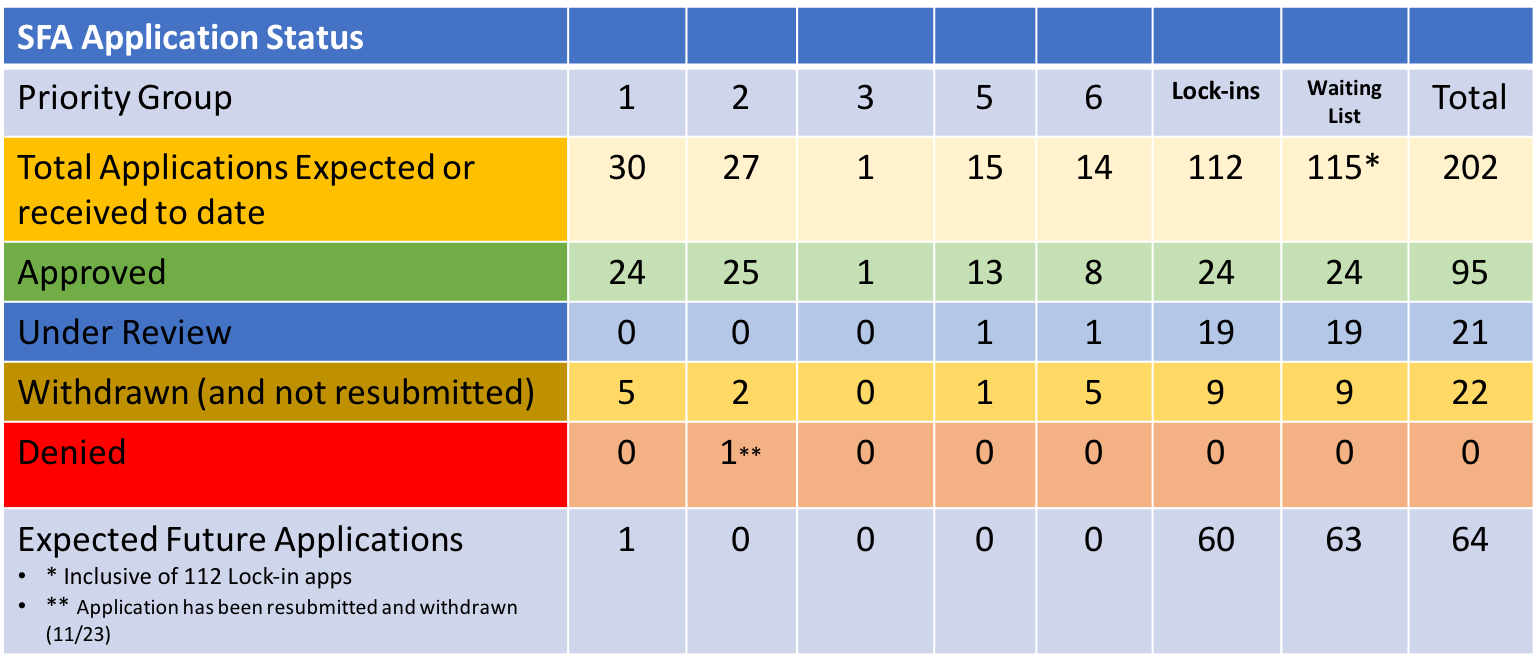
There were no applications approved or denied during the week, and there were no applications withdrawn. Finally, there were no additional multiemployer pension plans seeking to be added to the waitlist, which currently stands at 69 applications that haven’t been submitted at this point.

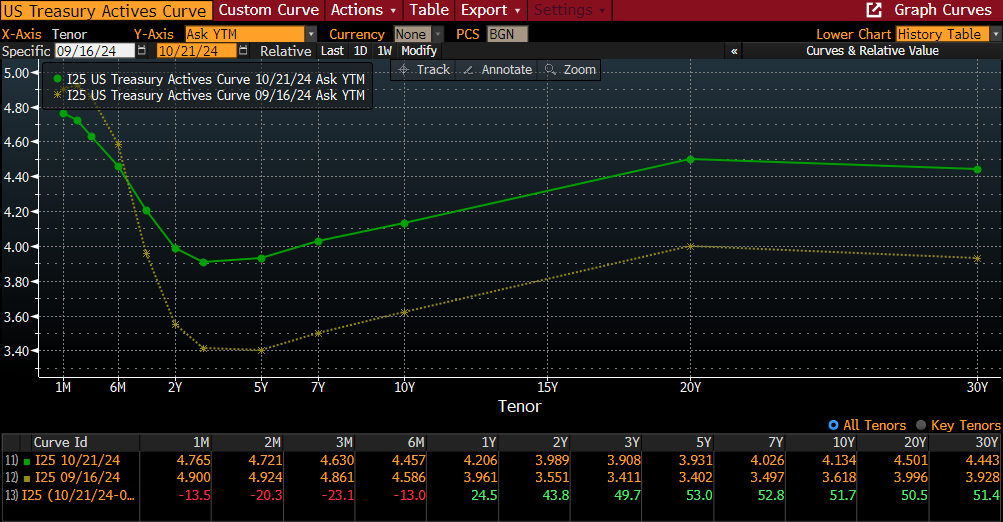
Falling US rates would ordinarily help those plans seeking SFA as the lower discount rate inflates the present value of those liabilities. However, only a few of the applicants on the waiting list haven’t locked in the rate at this time. For those plans that have recently received grants or those that are hoping to have applications approved, the lower rate environment works against them in their pursuit to secure the promised benefits as far into the future as the allocation will go.

How Comforting is +/- 33.6%?

By: Russ Kamp, Managing Director, Ryan ALM, Inc.

I very much enjoyed my two days attending the NCPERS conference. Not only did I get the opportunity to share some insights related to cash flow matching (CFM) and the application of this strategy for negative cash flow plans, but I also had the opportunity to listen to wonderful presentations related to a number of relevant topics. The Folks at NCPERS did a terrific job assembling a content rich forum.

One of the presentations that most impressed me was Gene Kalwarski’s. Gene is the CEO for Cheiron, a leading actuarial firm, and someone with whom I had the opportunity to meet through our work on the Butch Lewis Act. He and his firm did an incredible job analyzing 114 multiemployer plans that were thought to be potentially eligible for SFA at that time. At NCPERS, Gene’s presentation was focused on asset allocation for mature plans. He emphasized, and I absolutely agree, that more mature plans need a different asset allocation reflecting, in many cases, different liquidity needs, as they become more cash flow negative.

Regrettably, our industry continues to pursue a return focus, no matter how mature a plan may be, by cobbling together plan assets with the ultimate goal of achieving a return on asset (ROA) target. As I’ve written about this subject quite often, that objective hasn’t guaranteed success for the plan sponsor, but it has led to a significant increase in volatility, whether that be the funded ratio or contributions. Just how bad has the volatility of returns become? Gene presented the information in the graph below, which was produced by Callan.

It is incredible to see just how much risk plan sponsors are assuming through today’s asset allocation. Callan estimated that a pension system could strive for 7% in 1992 and would only expect a 1 standard deviation (SD) observation of +/- 3.2%. In other words, 68% of the time, that plan would have expected a return of +3.8% to +10.2%. Rather tame, wouldn’t you agree? By 2007, and just in time for the Great Financial Crisis, that 7% return objective came with a 1 SD observation of +/- 9.4%, meaning that plans should have expected that roughly 2/3rds of the time a result of between -2.4% and + 16.4%. Not great, but not horrible either.

Fast forward to 2022, or just in time for both equities and bonds to suffer meaningful losses, that 7% target now came with a 1 SD observation of +/- 16.8%. Wow! With that risk profile, a plan sponsor should not have been surprised with a return between -9.8% and +23.8%. That’s a far cry from the days when 68% of the observations fell between 3.8% and 10.2%. Unfortunately, that 1 SD observation only measures expectations for 13 out of 20 years. Since we can’t ignore the other 7 years, as much as we might like to, let’s extend the analysis to include 2 SD events or 95% of the observations (19/20 years). In this scenario, today’s asset allocation would create a range of results of -26.6% and +40.6%. That canyon of expectations should be horrifying! Why would any pension professional structure an asset allocation with such a potential dispersion?

In addition to the uncertainty of outcomes, this new asset allocation comes with increased fees, less liquidity, more opaqueness, and greater complexity. What a bargain! So, as many public pension systems mature, they enter the negative cash flow territory, in which liquidity to meet ongoing benefit payments becomes a greater challenge. Yet, these plans have truly hamstrung themselves through the migration of assets into alternatives. According to Callan, that allocation to alternatives is on average at least 30%, if not more depending on private debt usage today.

Given this incredible reality, mature public pension funds must begin to think of a strategy that will reliably provide the necessary liquidity to meet current benefits and expenses, while growing the corpus to close the funding gap that exists for most plans given the fact that Milliman has estimated that the average public pension system is only 80% funded. Cash Flow Matching (CFM) is the answer. Plan’s need to get away from a singular focus on return and begin to create an asset allocation strategy that bifurcates the assets into liquidity and growth buckets. The liquidity bucket will provide all of the necessary funds to meet benefits (and expenses) chronologically through a defeased bond strategy, while the growth bucket (non-bonds) will benefit from the extension of the time horizon. The objective for the growth bucket is future liabilities.

We, at Ryan ALM, Inc., are experts in CFM. We would be pleased to provide you with a free analysis of how CFM could positively impact your plan’s asset allocation, liquidity, transparency, etc. No pension plan sponsor should live in a world in which annual outcomes can be as wide as the Grand Canyon. How do you sleep at night given the current asset allocation frameworks come with a range of results at +/- 33.6% for 2 SD observations?

The Latest Iteration of the “High School Dance”

By: Russ Kamp, Managing Director, Ryan ALM, Inc.

It has been a very, very long time since I was in high school, and as a result, things may be different today.  But what I remember about my high school days and the dances at Palisades Park (NJ) Jr. Sr. High School, were that the boys stood on one side of the gym and the girls stood on the other.  Occasionally a couple of girls would dance, but there was little fraternizing among the boys and girls.

Well, I get the same sense about the management of DB pension plans today, as I did at those dances a very long time ago.  It seems to me that we have on one side of the “gym” assets and on the other side is liabilities, and hardly, if ever, the twain shall meet.  As a result, DB plans haven’t found their rhythm and there is no dancing!

Sure, we get periodic updates from a number of industry sources highlighting how the funded status is improving or deteriorating, with the latest for me occurring at the NCPERS conference in Boston during the last couple of days.  But we don’t seem to get a lot of direction on how we should mitigate the volatility in the funding of these extremely important retirement vehicles except to contribute more or pay out less.  I can say with certainty that striving to achieve the ROA isn’t the solution that will eliminate the volatility.  That’s been tried, and DB plans continue to see extreme volatility in their funded ratios mostly based on what’s transpiring in the equity markets.

For far too long, the asset side of the pension equation has dominated everyone’s focus, and as a result, a plan’s specific liabilities are usually only discussed when the latest actuarial report is presented, which is often on a one or two-year cycle.  This isn’t nearly frequent enough. We suggest that the primary objective for the assets should be the plan’s liabilities, and that every performance review should start off with this comparison.  However, in order to get an accurate accounting of the liabilities one needs to measure and monitor them on a regular basis. This activity requires a Custom Liability Index (CLI). No generic fixed income index can adequately represent a pension plan’s unique liabilities, although that is the course of action that most plans have pursued.

In order to preserve critically important DB plans we need the plan’s assets and liabilities dancing as one. Without this, DB plans continue to face a very uncertain future. Are you ready to bring both parties to the dance floor? Don’t be shy!

ARPA Update as of August 16, 2024

By: Russ Kamp, Managing Director, Ryan ALM, Inc.

It is hard to believe that we are nearly two-thirds of the way through 2024. Wasn’t it just Memorial Day and the start of Summer? Furthermore, the PBGC has now been engaged in managing/administering the ARPA legislation for more than 3 years. That also doesn’t seem possible!

There wasn’t a ton of obvious work, as the PBGC’s weekly update only revealed two multiemployer plans filing applications for Special Financial Assistance (SFA) and another plan that received approval for their application. Let’s start with the money. The Retirement Benefit Plan of the Newspaper and Magazine Drivers, Chauffeurs and Handlers Union Local 473 (say that 10 times fast), a non-priority plan, received approval of its revised application. They will receive $31.6 million in SFA plus interest to be used to support the promised benefits for 804 plan participants.

As the information above highlights, there have been 89 successful applications to date. Those SFA recipients have been allocated $67.7 billion in grants for the benefit of 1.34 million American workers. Incredible. There is still more to do, as the 89 successful applications only represent 44% of the potential beneficiaries.

Regarding the rest of the week’s activity, Local 1034 Pension Plan, a non-priority group member, and Southwestern Pennsylvania and Western Maryland Area Teamsters and Employers Pension Fund, a Priority Group 5 member, both submitted revised applications. They are collectively seeking $173.4 million in SFA for just over 4k members. There were no applications denied or withdrawn during the prior 7 days, nor were any plans asked to return a portion of the SFA for overpayment. Lastly, there were no additional plans added to the waitlist, which continues to have 116 members (69 that have yet to file).

The Thawing Out of Corporate Frozen Pension Plans

By: Ronald Ryan, CEO, and Russ Kamp, Managing Director, Ryan ALM, Inc.

Milliman recently published an article that explains in detail what they called a “Goldilocks” moment for corporations to reopen their frozen DB pension plans. The article identifies and answers 10 frequently asked questions. Ryan ALM applauds Milliman for their very insightful review of this opportunity at this moment in time. We encourage all sponsors of corporate DB plans to read this timely article.

We would like to add our thoughts on this evolution, too. As corporate DB plan sponsors have learned, you do not want to have a volatile funded status that leads to higher contribution costs, PBGC variable premiums, and pension expense noted on their income statements. One way to address this potential volatility is through de-risking strategies. Fortunately, the time is right given higher US interest rates to defease pension liabilities in a cost-efficient manner with prudent risk. We believe that the most effective way to de-risk is through a strategy known as Dedication or Cash Flow Matching (CFM). Given that US interest rates are at their highest in 20+ years, CFM provides the certainty of funding liability cash flows in a very cost-efficient manner.

The Ryan ALM CFM product (Liability Beta Portfolio™ or LBP) will fully fund liability cash flows (benefits and expenses) at a cost savings of about 2% per year (50% – 60% on a 1-30 year liability cash flow assignment). Such cost savings is realized upon the implementation of our LBP so the plan sponsor realizes immediately the enormous benefit. Importantly, the LBP portfolio is 100% investment grade bonds and in harmony with each client’s investment policy statement (IPS). Since our LBP matches and fully funds monthly liability cash flows, we will provide a more precise duration match of the plan’s liabilities, and immunize interest rate risk since we are defeasing benefits that are future values. Given our emphasis on using IG corporate bonds (BBB+ or better), the LBP portfolio should outyield the ASC 715 discount rate (AA corporates) thereby enhancing pension income or reducing pension expense. As you can see, there are so many benefits to using CFM.

Ryan ALM’s experience with CFM goes back to the 1970s when Ron Ryan was the Director of Fixed Income Research at Lehman Bros. As a result, we believe that we have one of the most experienced CFM teams in the fixed income industry today with over 160 years of fixed income experience. We offer any corporate DB plan the opportunity to evaluate our value added capability by offering a FREE analysis, including the production of a Custom Liability Index and an LBP. All we need to receive from the sponsor and/or their actuary are the liability cash flow projections of benefits, expenses, and contributions. Through this free snap shot you will come to appreciate the many benefits of our turnkey asset/liability management capability. What’s the downside?

A Liquidity Crunch?

By: Russ Kamp, Managing Director, Ryan ALM, Inc.

Interesting article in FundFire today addressing the issue of a “liquidity crunch” as the over-commitment to private equity and the lack of distributions is forcing pension plan sponsors to seek their own liquidity through transactions in the secondary market. This isn’t a new issue, but one that is getting more press today. That said, we’ve seen this scenario play out many times before in our industry which has a tendency to overwhelm good ideas with too much money.

What I found most interesting is the fact that so much money is now chasing secondary opportunities (estimated at $70 billion in Q1’24), as if this opportunity were immune to also being overwhelmed. In fact, according to the FundFire article, “Secondaries took up a larger chunk of fundraising in the first quarter of this year than any other year going back to 2008.” What’s interesting about that time frame, we were dealing with a major repricing of all assets at that time. It made sense to be a provider of liquidity at deep discounts to previous valuations. However, that isn’t the case right now. Sellers (pension plans) have over committed and private equity portfolios aren’t returning capital at the same level that they’d previously done.

In addition, the article went on to say that a “potential rate decrease on the horizon, has created a greater confidence on secondary buyers putting forth a strong price for sellers.” Really? A strong price for sellers would mean to me the potential to overpay for the opportunities in the secondary market. If that is the case, future returns will be negatively impacted. Where’s the opportunity?

For plan sponsors needing liquidity, don’t be a forced seller of assets that in many cases don’t have natural liquidity. Bifurcate your plan’s asset allocation into two buckets: liquidity and growth. The liquidity bucket should be built using investment grade corporate bonds that defease near-term liabilities (next 10-years) allowing for the growth assets, including your private equity, to now grow unencumbered. Bonds are the only asset class with a known terminal value and contractual semi-annual payouts. Use that information to construct a portfolio that ensures (barring defaults) the necessary liquidity to meet the promises that have been made to your participants. With regard to the growth assets, extending the investing horizon will dramatically enhance the probability that the strategy will meet its long-term return objectives. Regrettably, most pension systems live in a quarter-to-quarter cycle of evaluation.

Lastly, before allocating to an asset class or making additional allocations, understand the natural capacity of that strategy. As mentioned earlier, we have a tendency to overwhelm good ideas. Don’t be the last one on the boat that is about to go over the falls! You want to be the seller to all those still trying to get on the boat.

Would You Call This Result a Success?

By: Russ Kamp, Managing Director, Ryan ALM, Inc.

Let me start off by stating unambiguously that I’m a huge supporter of defined benefit (DB) plans. Despite many recent improvements in defined contribution (DC) plans, such as auto-enrollment, auto-escalation, etc., I believe that DC plans should not be anyone’s primary retirement vehicle and that they should maintain their role as a supplemental to traditional pension plans. I maintain that asking untrained individuals to fund, manage, and then disburse a “benefit” with little to no disposable income, investment acumen, or a crystal ball to help with longevity and drawdown issues is an incredibly difficult task.

Given that we’ve had four plus decades of DC usage, how are we doing? According to the following information from Fidelity that runs through March 31, 2024, I’d say not very well. Would you disagree?

Importantly, there is a fairly significant subset of the American workforce that doesn’t have access to any employer sponsored plan – DB or DC. This is particularly troubling since most people don’t save outside of an employer sponsored plan. That reality makes the above information that much worse. That said, the fact that those in their 50s have a median balance (can we please stop using average balances) of only $64,300, how dignified will their golden years be? According to the St. Louis Federal Reserve’s data base (FRED), longevity for the average American is about 77.4 years. If one retires at 65-years-old and lives an average life that $64k will have to cover roughly 13 years which translates into almost $5,000/year ($416/month) before any investment gains or losses throughout the coverage period.

Given this reality, we need to double-down on our effort to protect and preserve DB pension plans. Refocusing on the true pension objective of SECURING the promised benefits at both a reasonable cost and with prudent risk would go a long way to reducing the volatility associated with funding these critically important funds. The current US interest rate environment is providing plan sponsors with the opportunity to reduce risk within a traditional asset allocation framework. As the funded status improves, more risk can be withdrawn from the asset allocation further stabilizing the funded ratio and contribution expenses. Given the information provided by Fidelity, we truly can’t rely on DC offerings as anyone’s primary retirement vehicle. It is time to act.

ARPA Update as of August 9, 2024

By: Russ Kamp, Managing Director, Ryan ALM, Inc.

Congrats to USA medal winners at the recently concluded Paris summer games. I’m still in awe of so many of the performances. Speaking of performances and medals, the PBGC deserves a medal at this time for their performance in implementing the ARPA legislation. Sure, there have been some fits and starts along the way, but the for the most part, their performance has been stellar. At the conclusion of this legislative effort, there may be more than 200 multiemployer plans receiving SFA. The significance to these funds and more importantly, the plan participants should not be minimized. Let’s not forget Carol, and the tens of thousands like her.

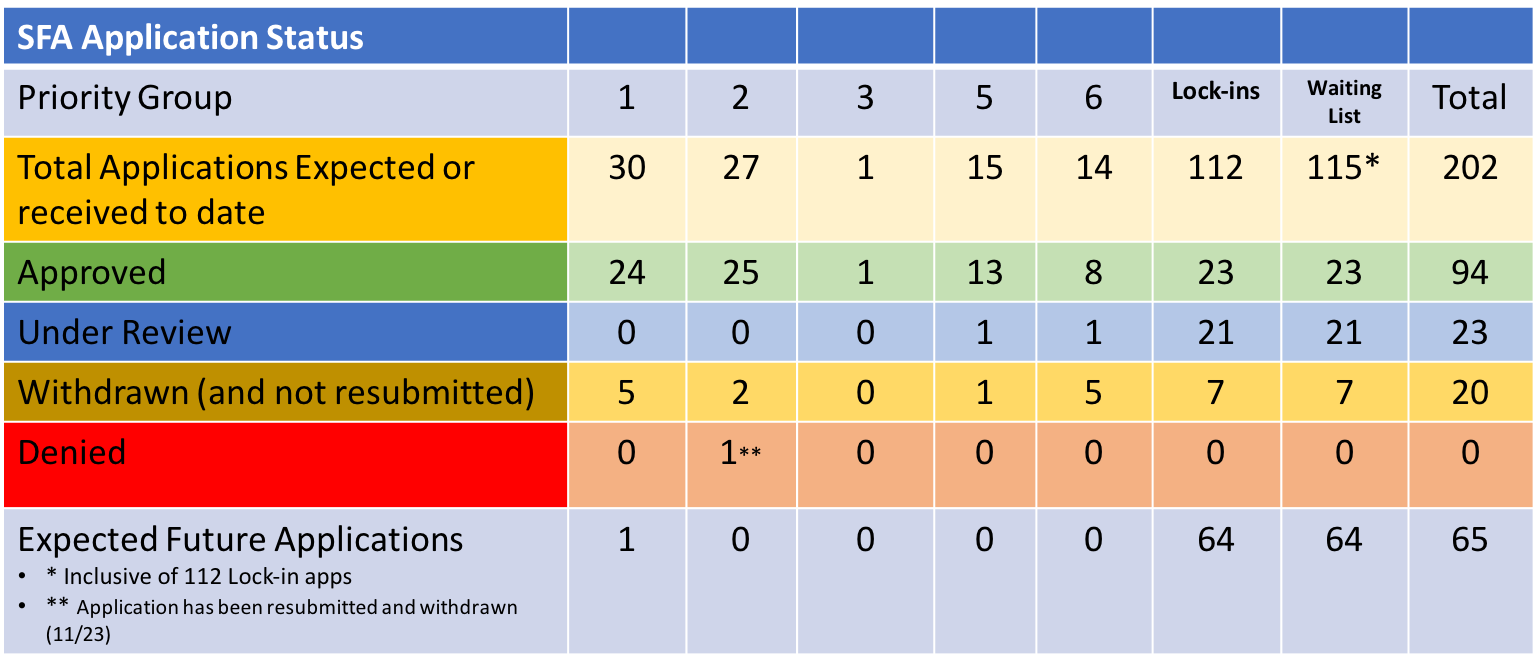
Last week saw a little reported action, with only one fund filing an application and another withdrawing one. It was the Employers’ – Warehousemen’s Pension Plan, which filed a revised application seeking $38.5 million for 1,821 plan participants. The Pressroom Unions’ Pension Plan has withdrawn its initial application which sought $59.3 million in SFA for the 1,344 members of that pension plan.

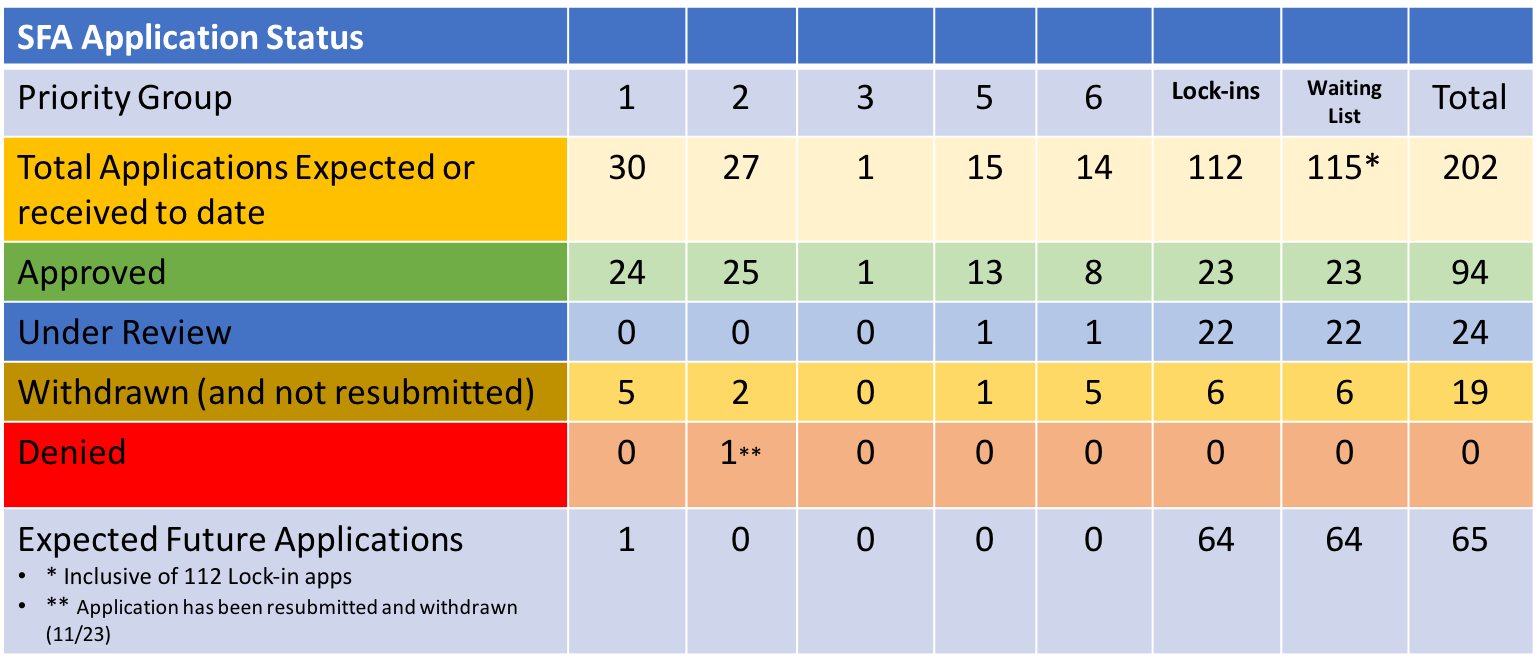
As the chart above highlights, there are still potentially 69 applications seeking SFA to be filed. In addition, there are 23 applications presently under review (all non-priority group members) and another 7 that submitted applications that have not yet been revised and resubmitted. As mentioned previously, there is still much work to be done by the PBGC.

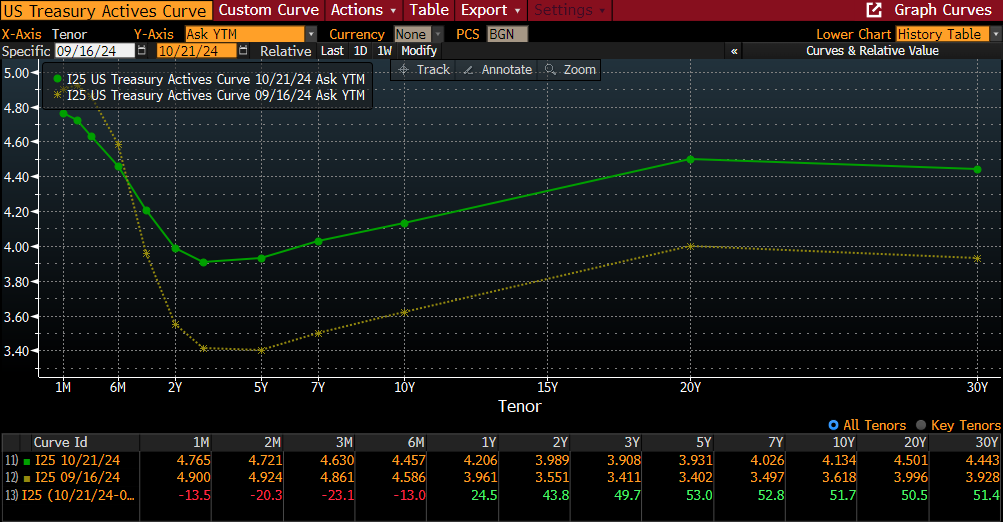
US Treasury interest rates which fell rapidly last Monday in the wake of the Japanese carry trade unwinding, have bounced back rather impressively since then providing plan sponsors with the ability to secure the promised benefits at lower cost with the help of the SFA proceeds.