
By: Russ Kamp, CEO, Ryan ALM, Inc.
Kudos to the PBGC that put their collective heads down and got to work despite the turmoil in the global markets. The placement of tariffs on basically everyone and everything has created significant uncertainty for our markets. Let’s hope that the legacy assets in these ARPA eligible plans don’t get crushed.
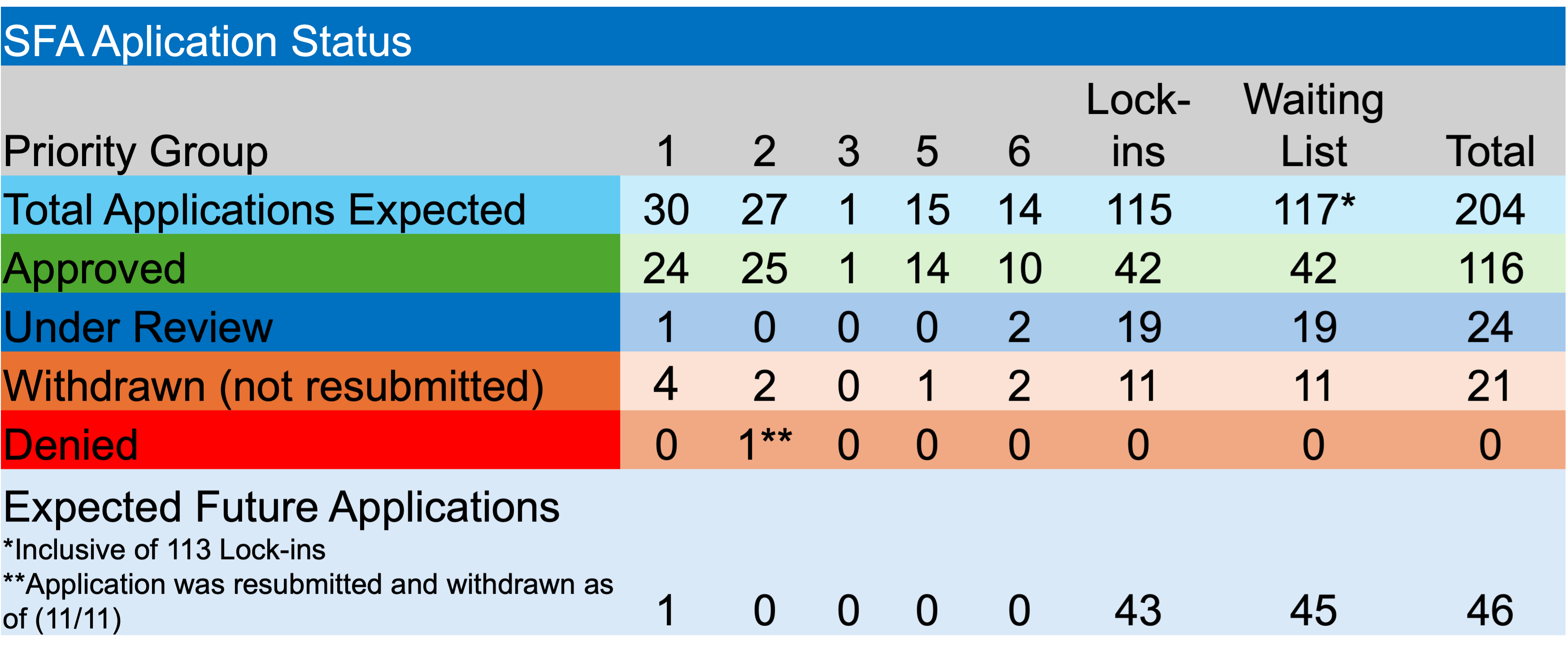
Regarding last week’s activity, the PBGC allowed the submission of two revised applications. Laborers’ Local No. 130 Pension Fund, a non-priority group member is seeking $30.2 million in Special Financial Assistance (SFA), and Southern California United Food and Commercial Workers Unions and Food Employers Joint Pension Plan, a priority group 6 plan is hoping to secure $1.19 billion in SFA. In addition, PA Local 47 Bricklayers and Allied Craftsmen Pension Plan, a non-priority group member was approved for $9.1 million in SFA and interest.
Fortunately, there were no applications denied, but there were two applications withdrawn, including Dairy Industry-Union Pension Plan for Philadelphia and Vicinity, a non-priority group member seeking roughly $51 million in SFA with an initial application, and Southern California United Food and Commercial Workers Unions and Food Employers Joint Pension Plan, a Priority Group 6 applicant, which was seeking $1.19 billion in SFA through a revised application.
Lastly, three additional plans have repaid a portion of the SFA received due to census errors. Local 408 International Brotherhood of Teamsters, Chauffeurs, Warehousemen and Helpers of America Pension Plan, Plasterers Local 82 Pension Fund, and Plasterers and Cement Masons Local No. 94 Pension Fund agreed to return $1.35 million from grants totaling $131.2 million or 1.03% of the award. To date, 48 funds have repaid a portion of the SFA totaling $202 million or just 0.43% of the grants. Four other plans did not have errors with their census data. There are roughly 8 plans that still need to go through a death audit.
The recent market activity is making it challenging for plans that are expecting to receive grants in the near future. The decline in U.S. interest rates will impact what is achievable through fixed income. Lower rates will increase the cost to defease liabilities and reduce the coverage period of secured benefits. But potential equity investments, which can be as much as 33% during any 12-month period, may not yet have bottomed given the uncertain impact of tariffs on inflation, corporate profits, and consumer behavior.
 Ryan ALM Blog